

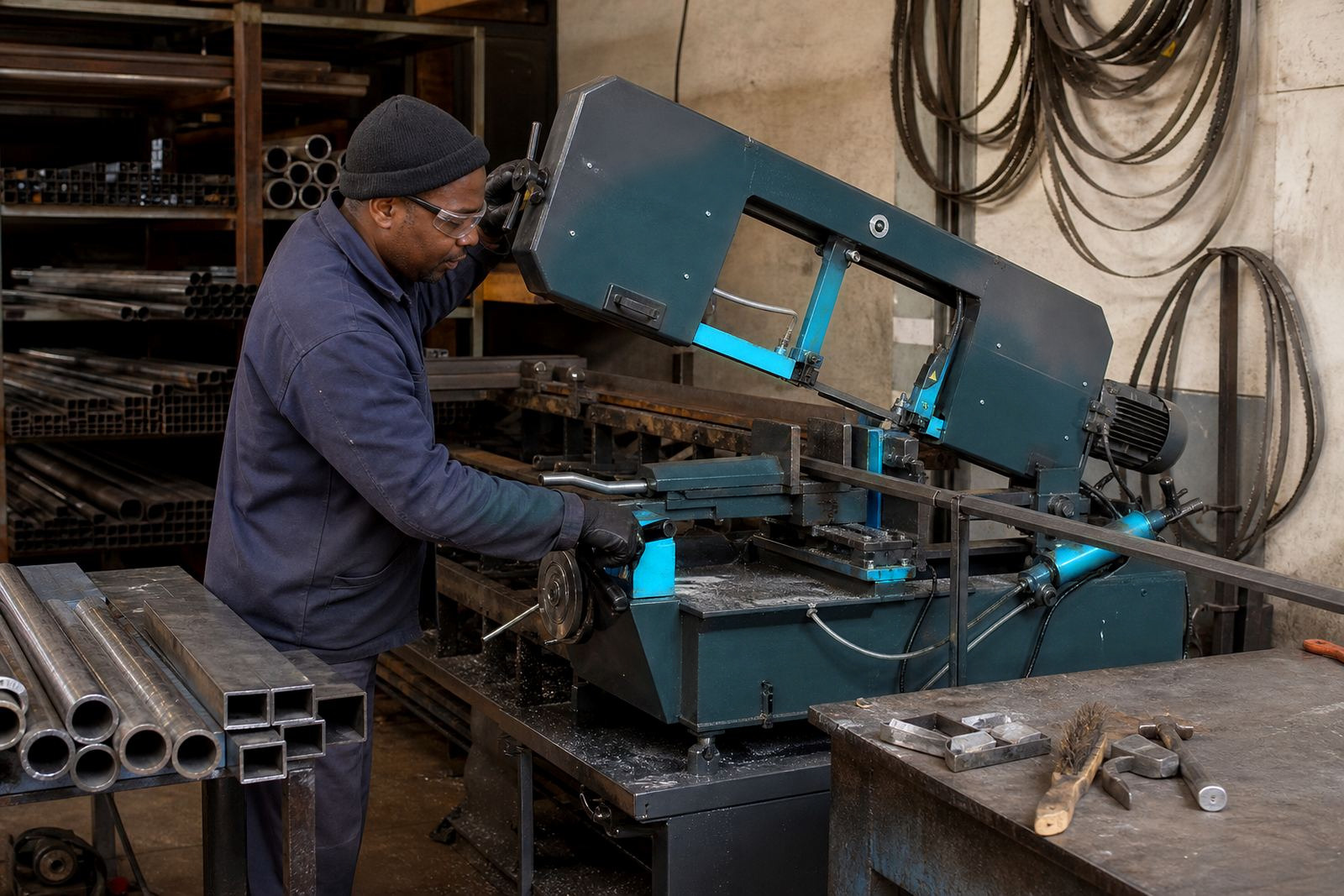
Blades matched to the cut, not guessed
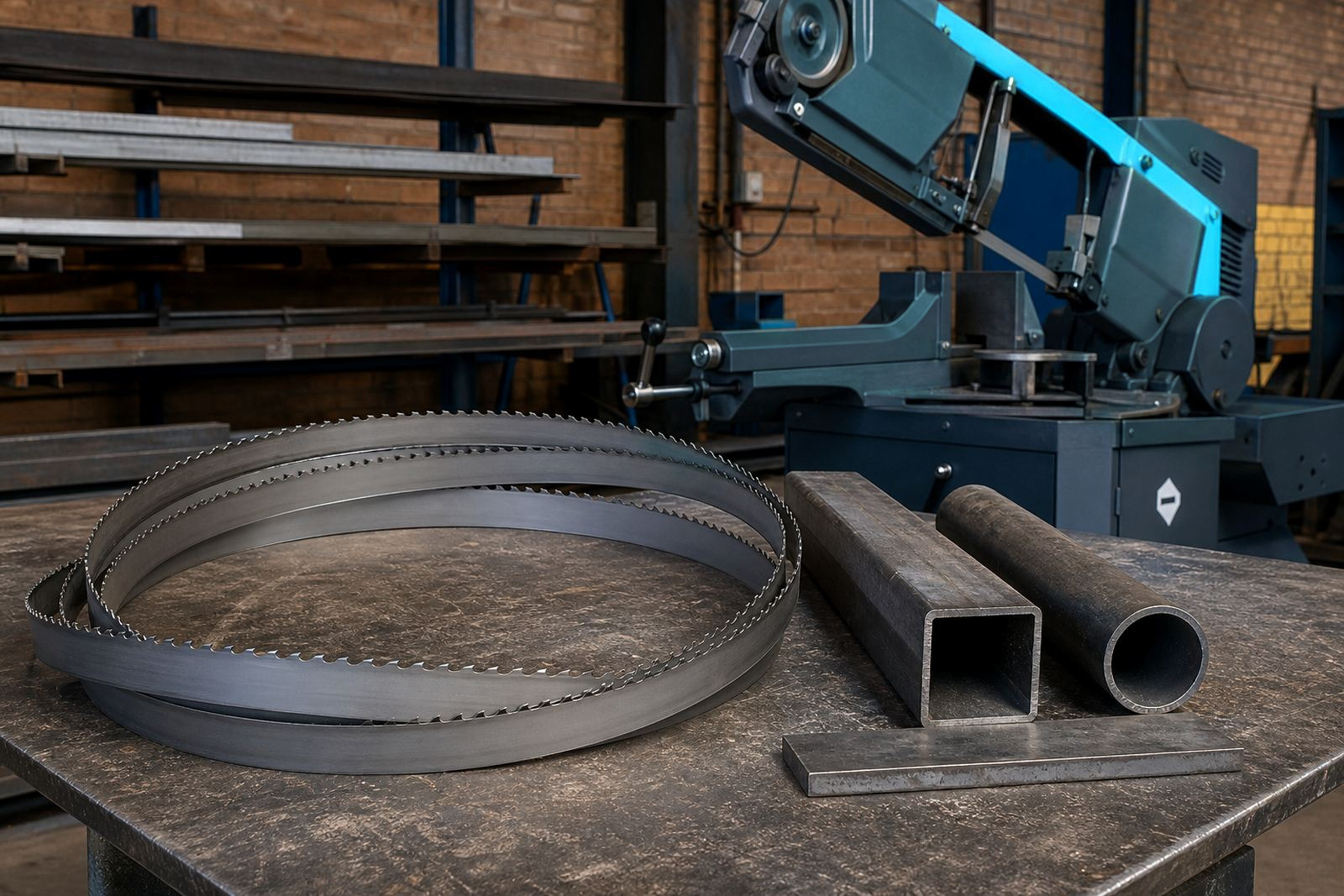
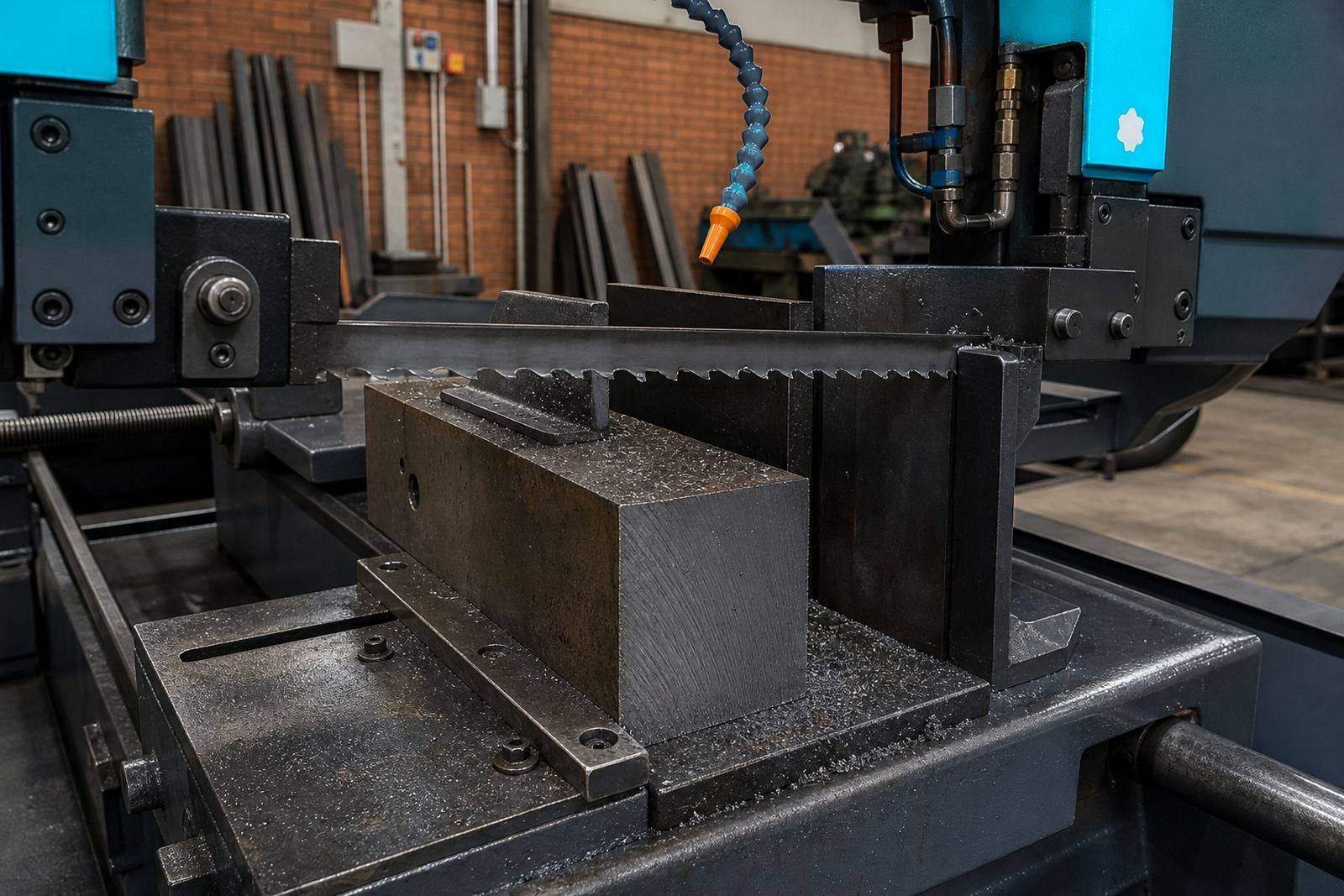
A straight cut in mild steel bar needs a different blade from a bundle of thin wall tube or a solid section with scale on it. Tooth pitch, blade width, thickness and set shape how the blade enters the material, clears chips and holds its line through the job.
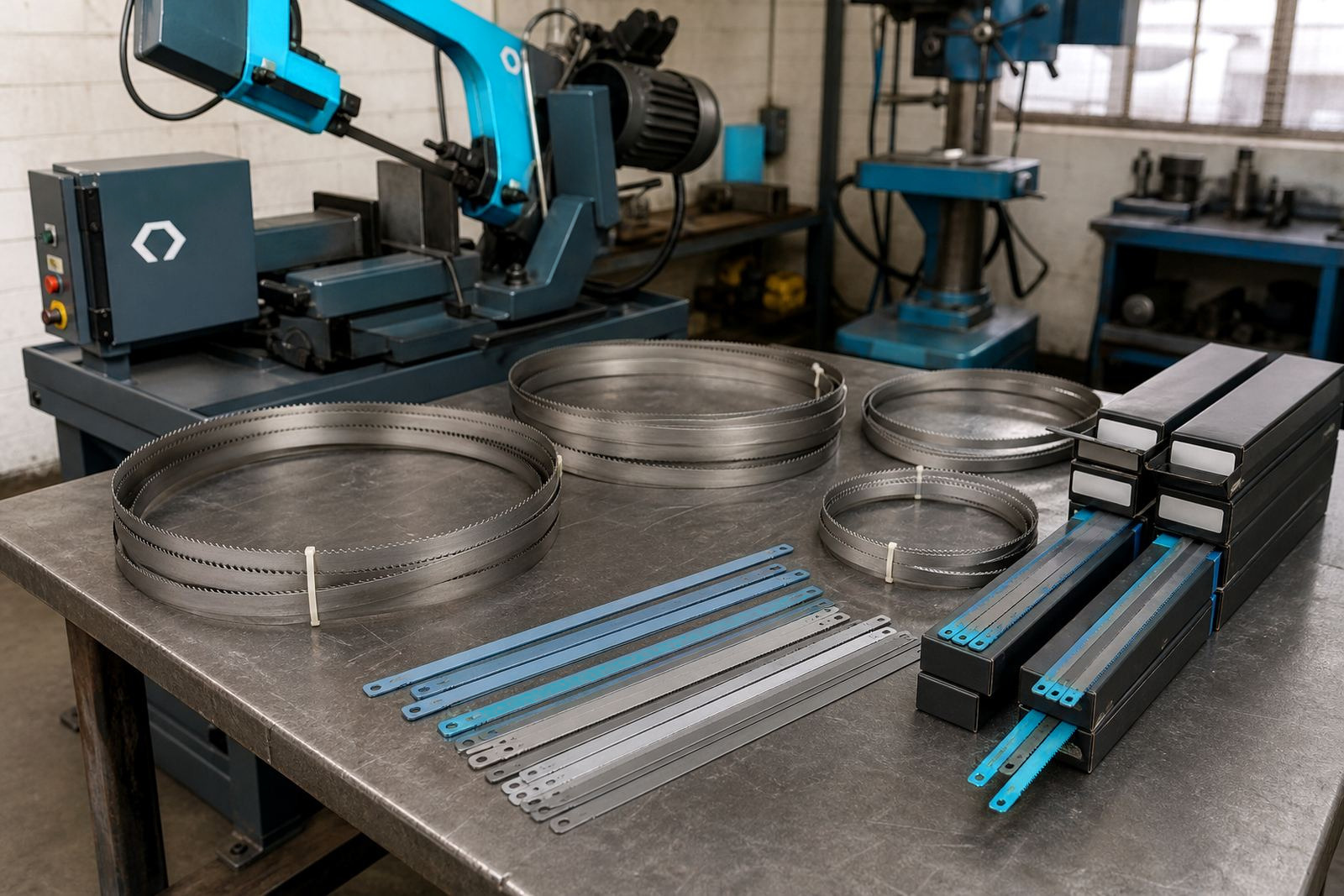
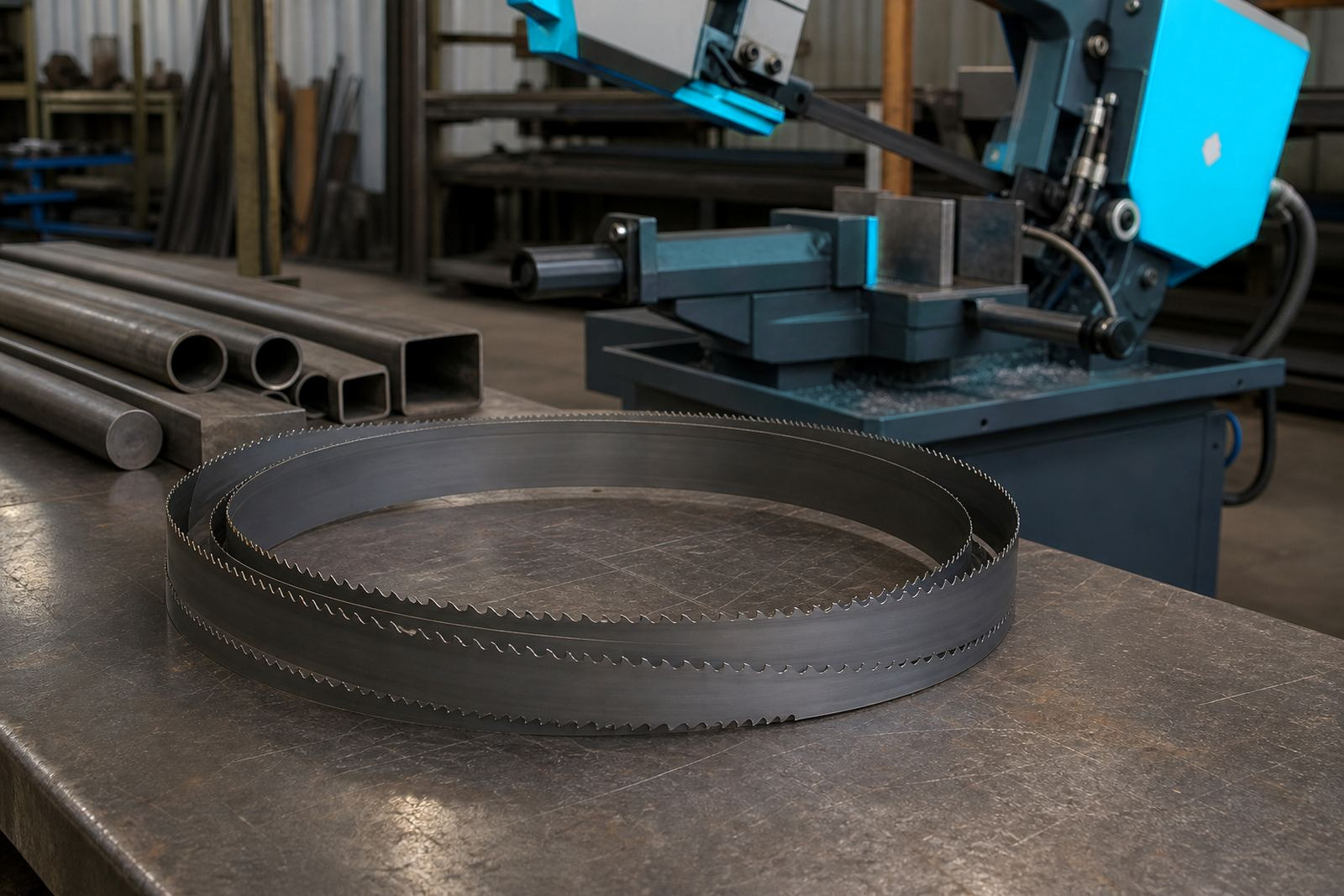
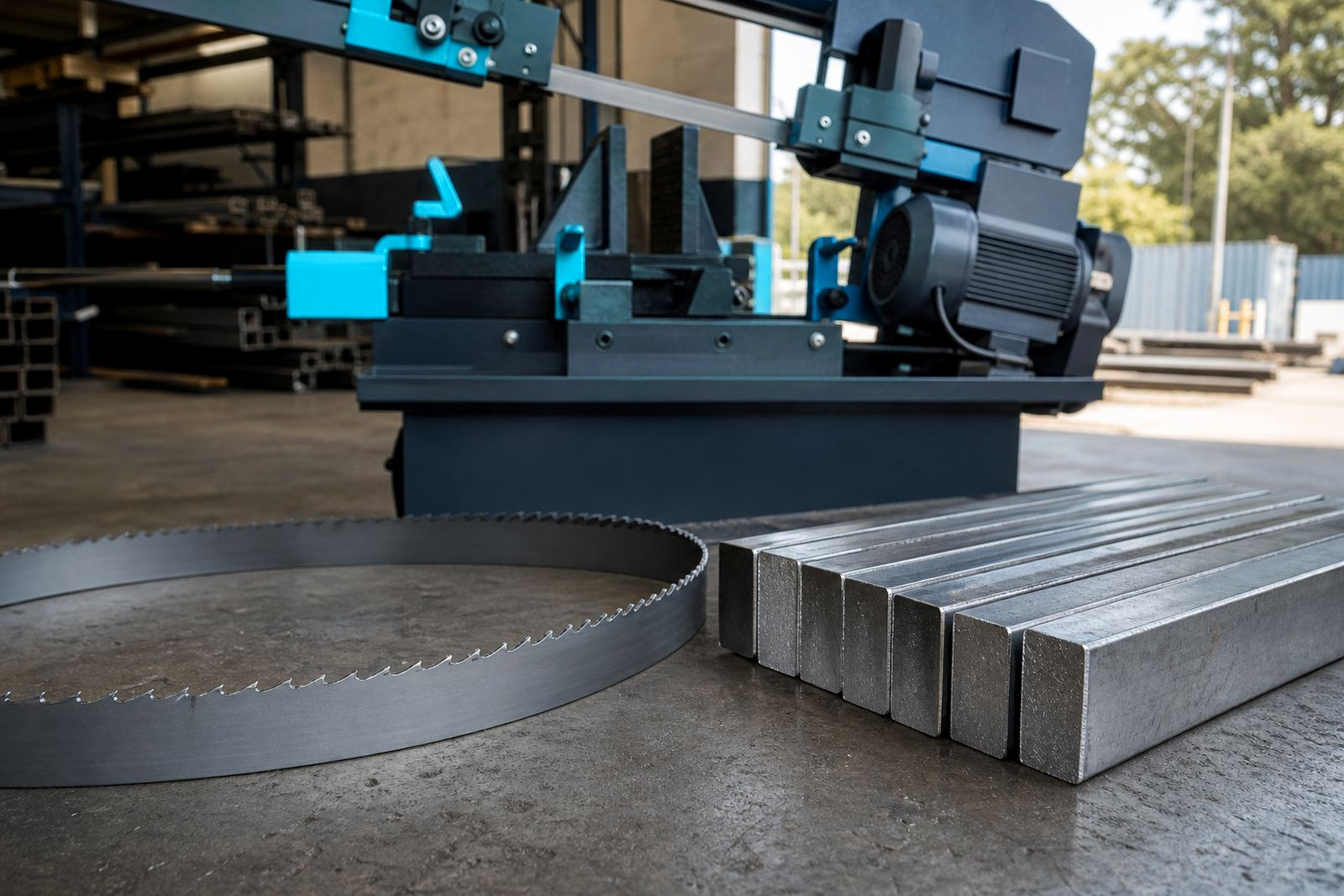
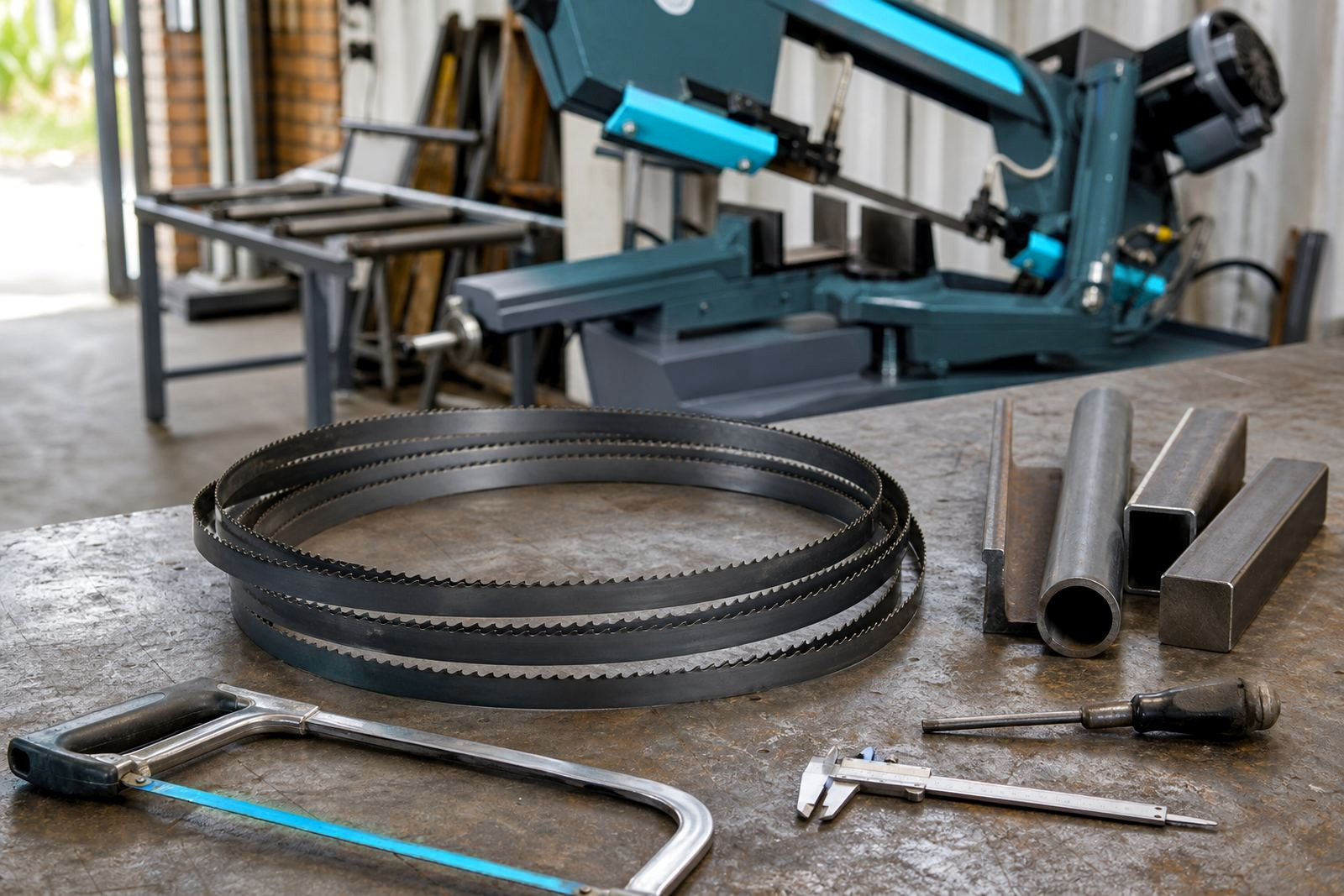
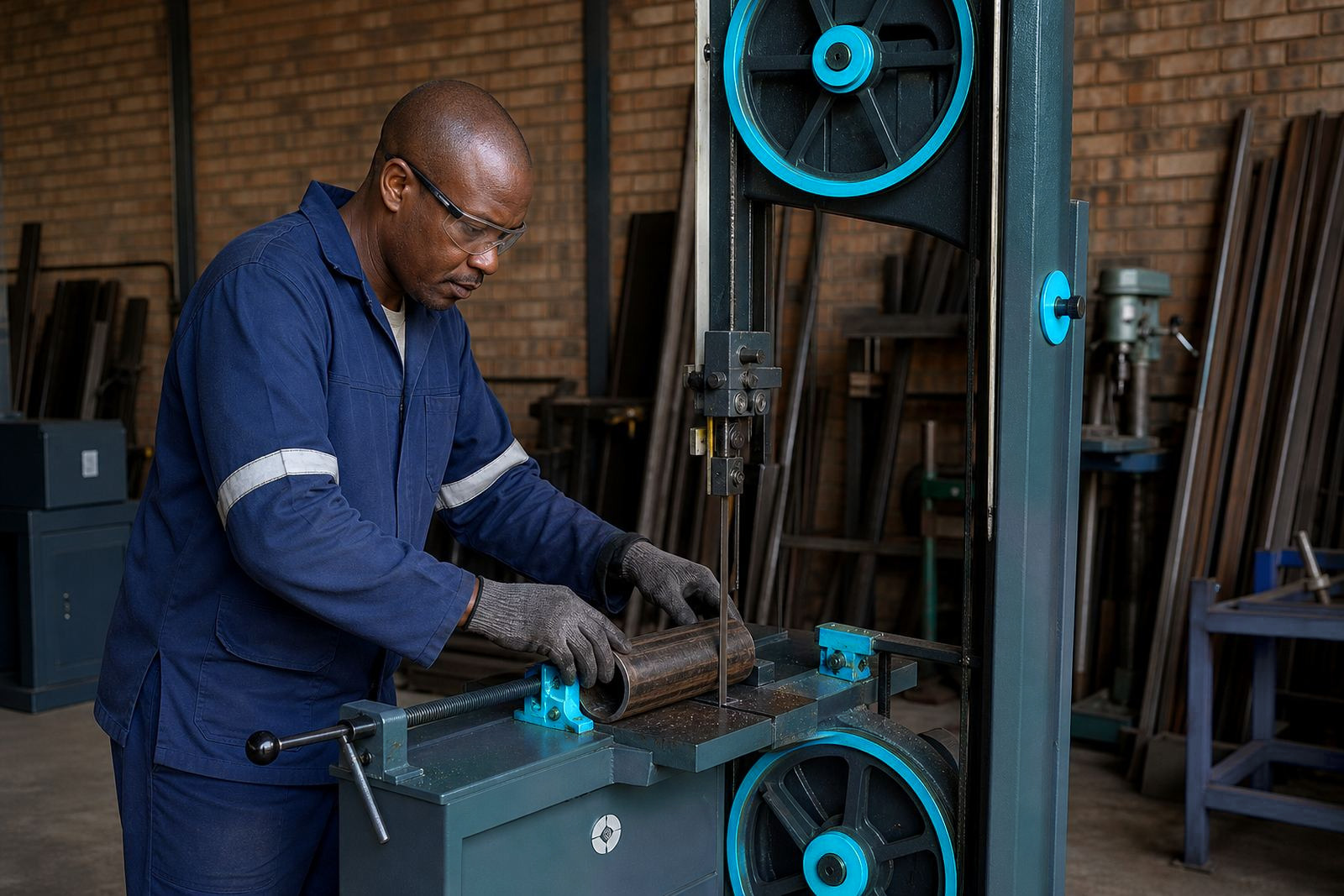
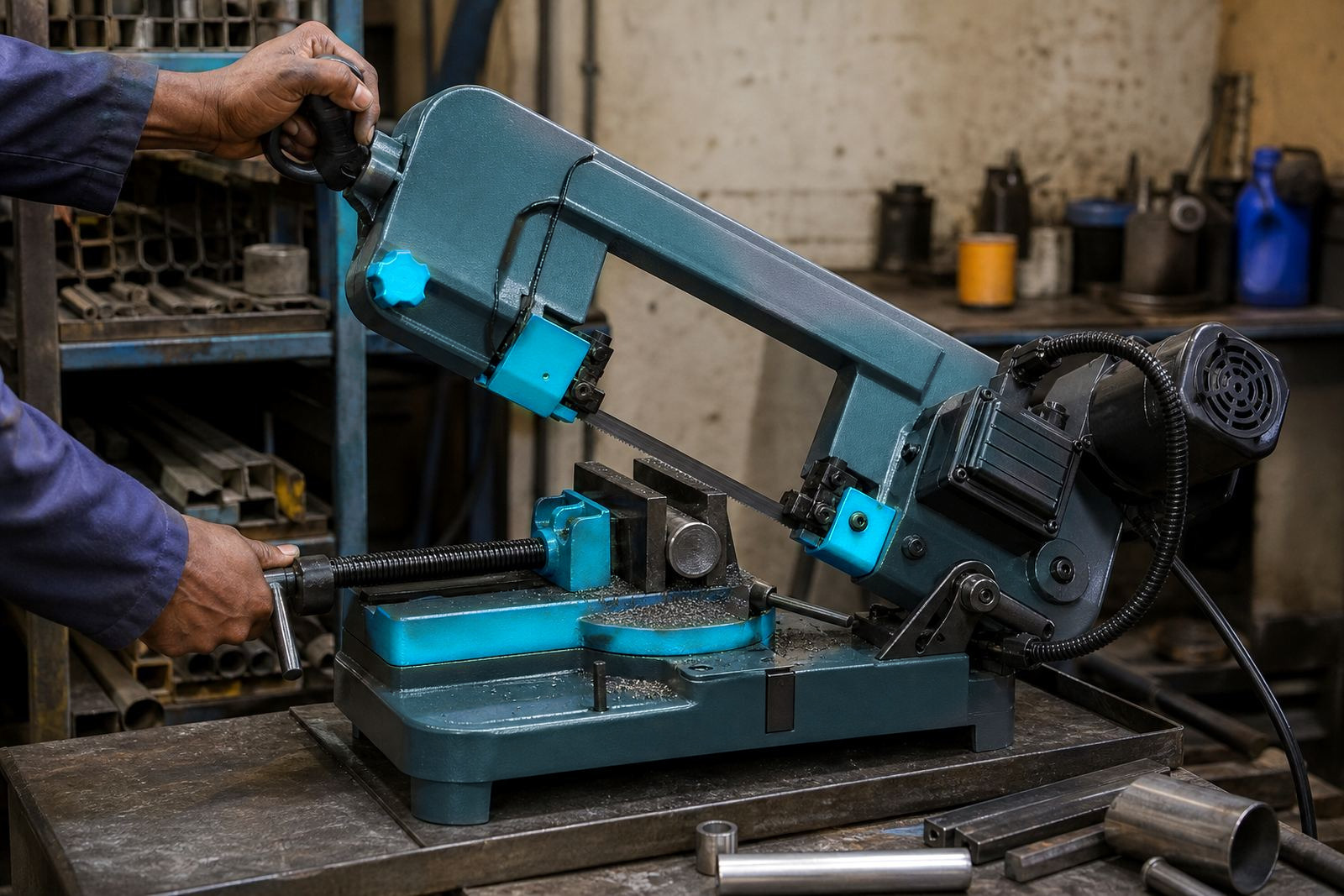
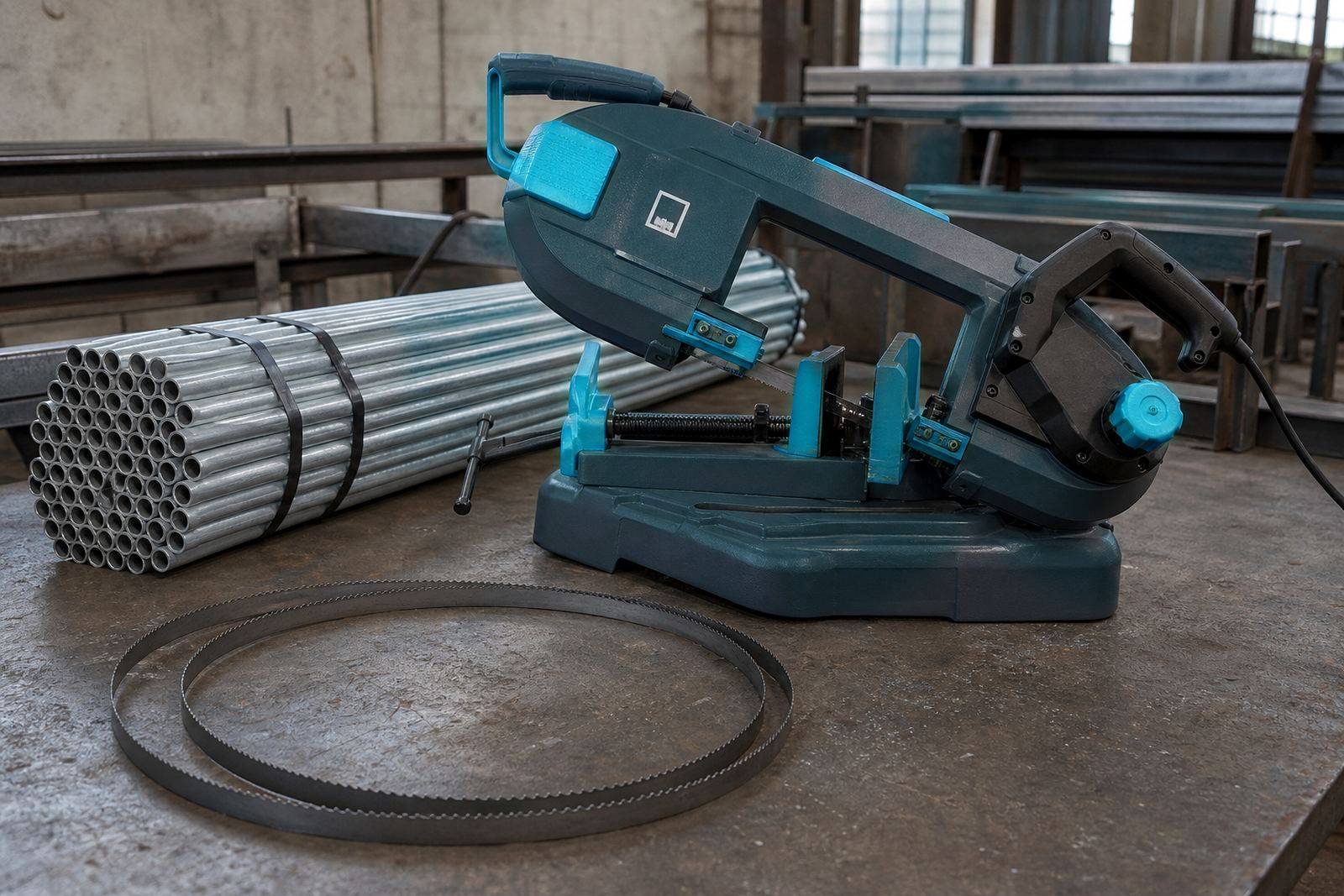
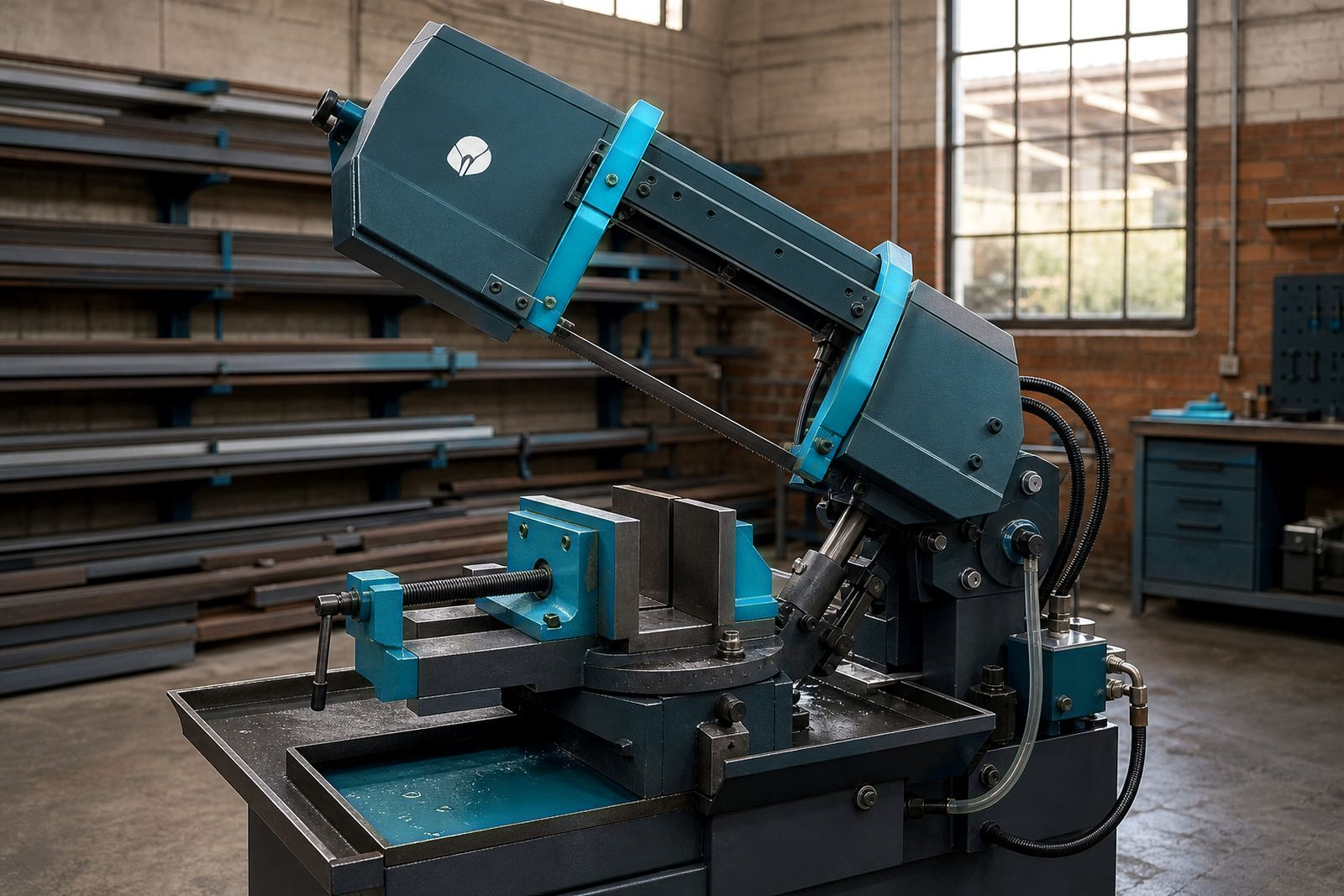
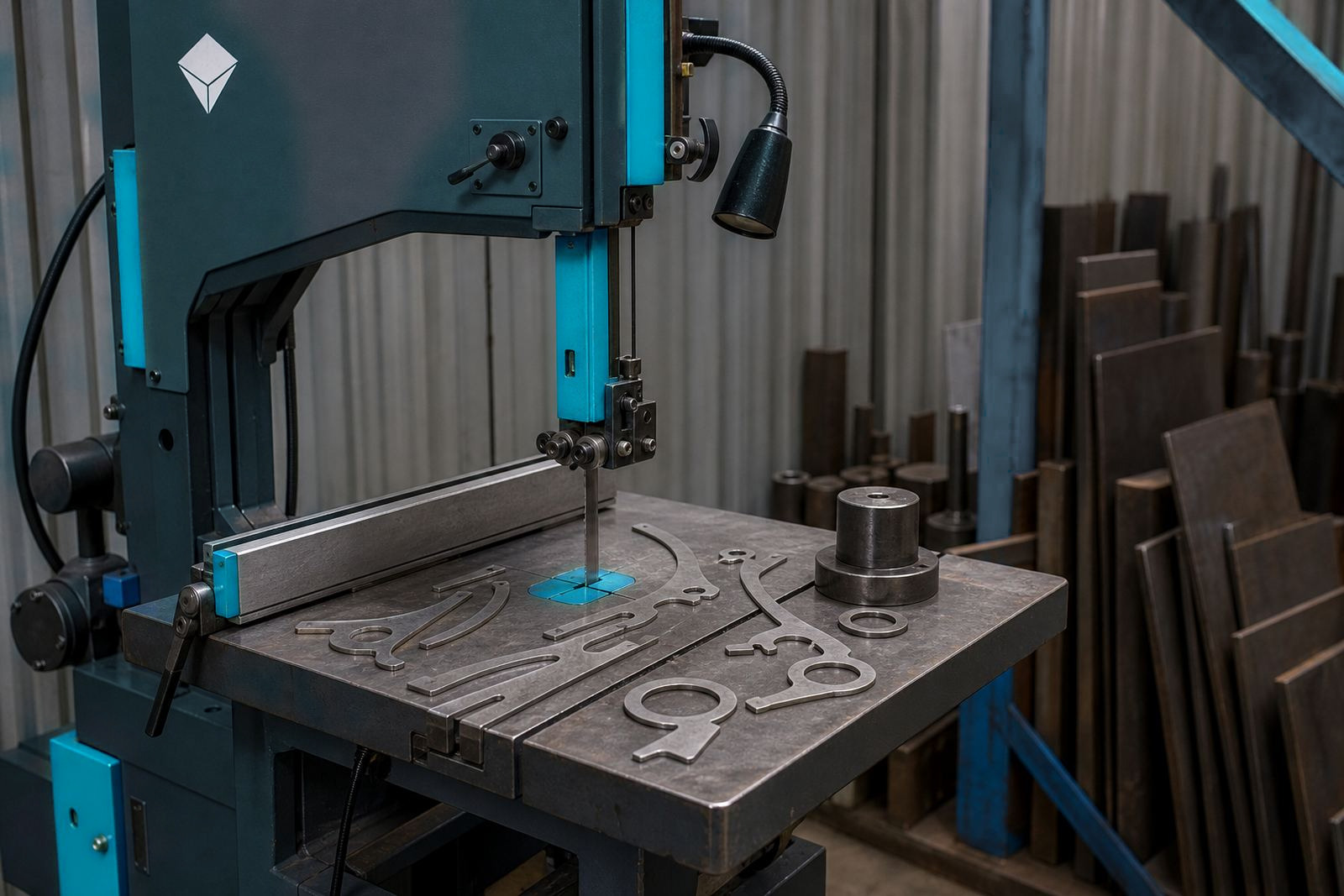
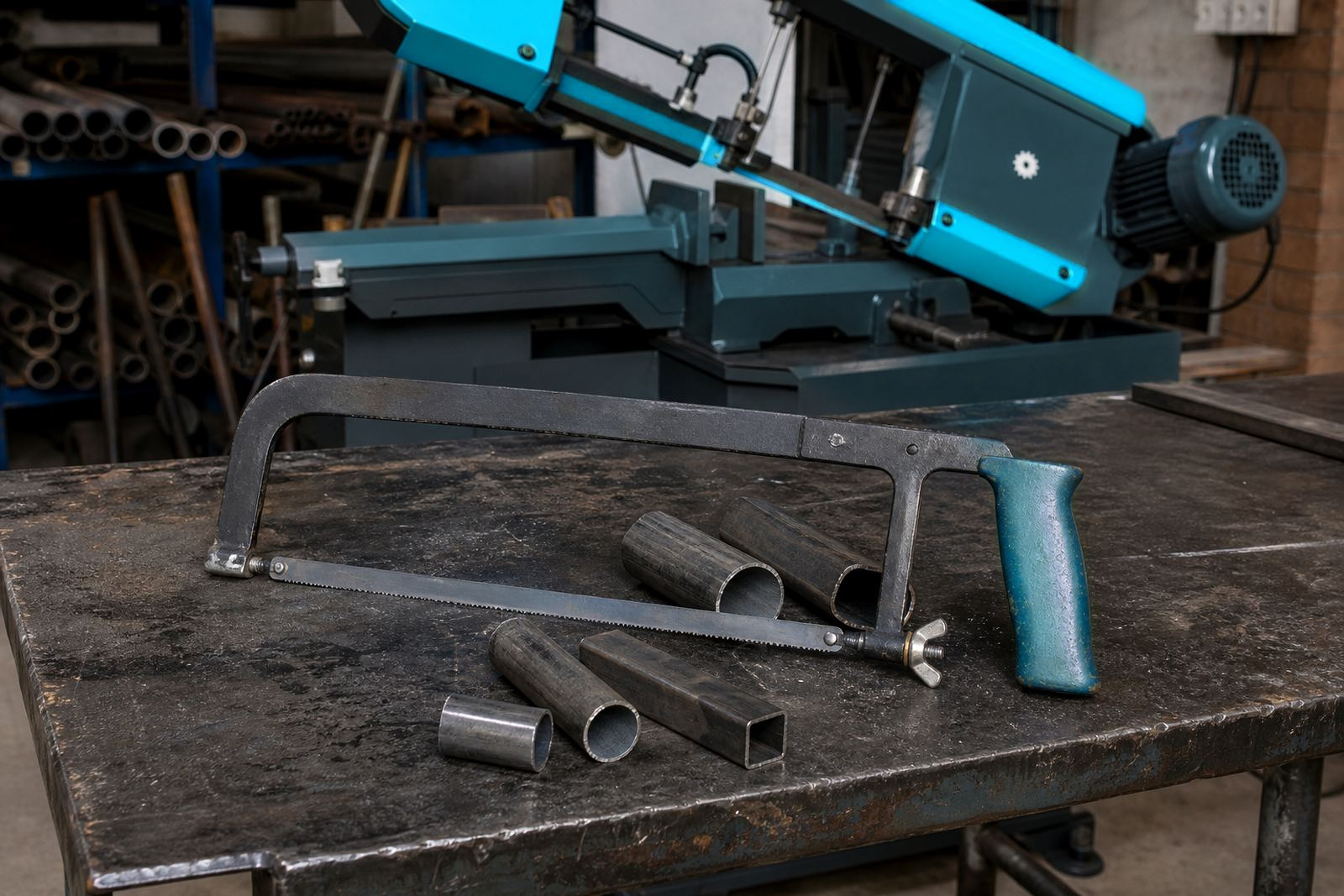
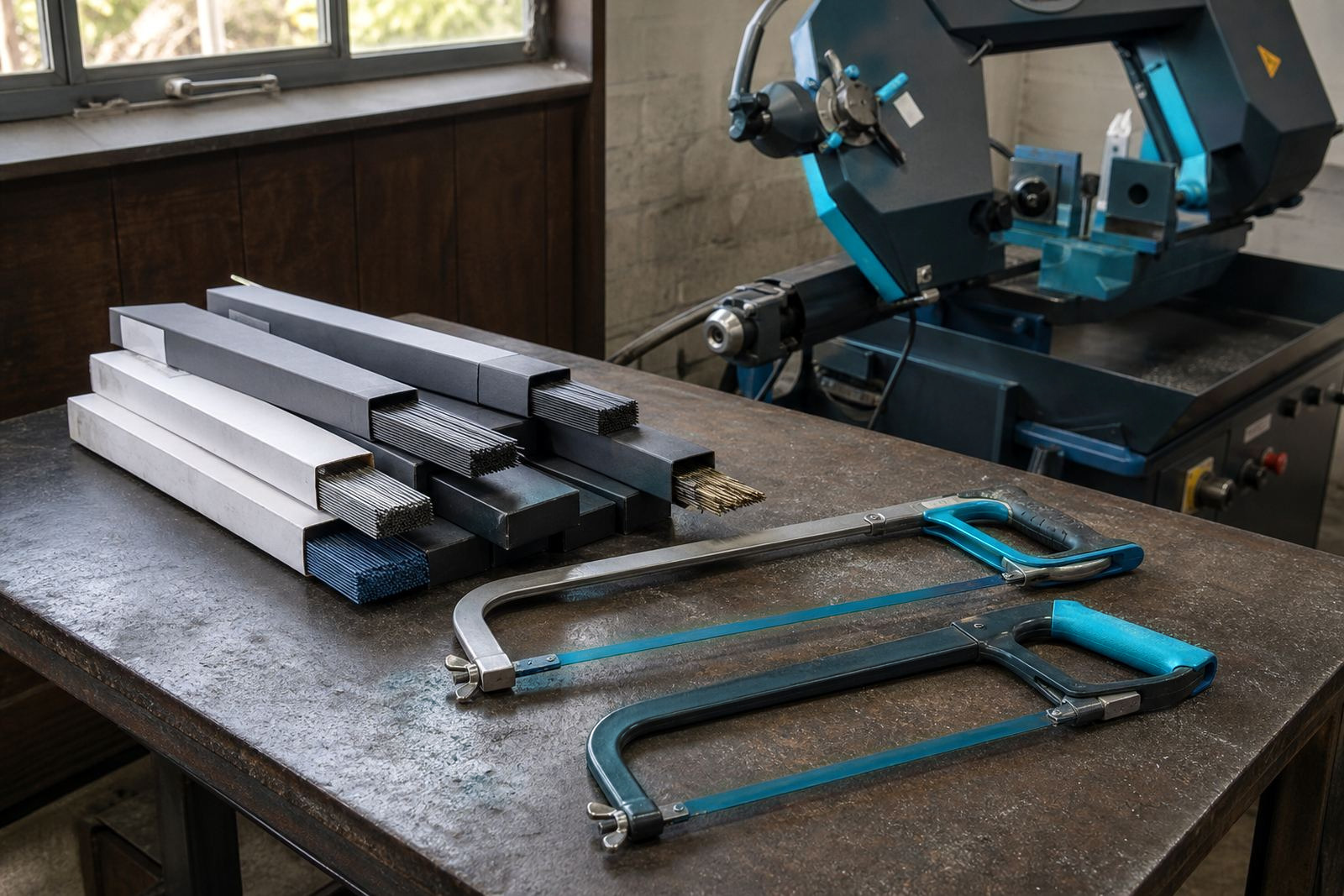
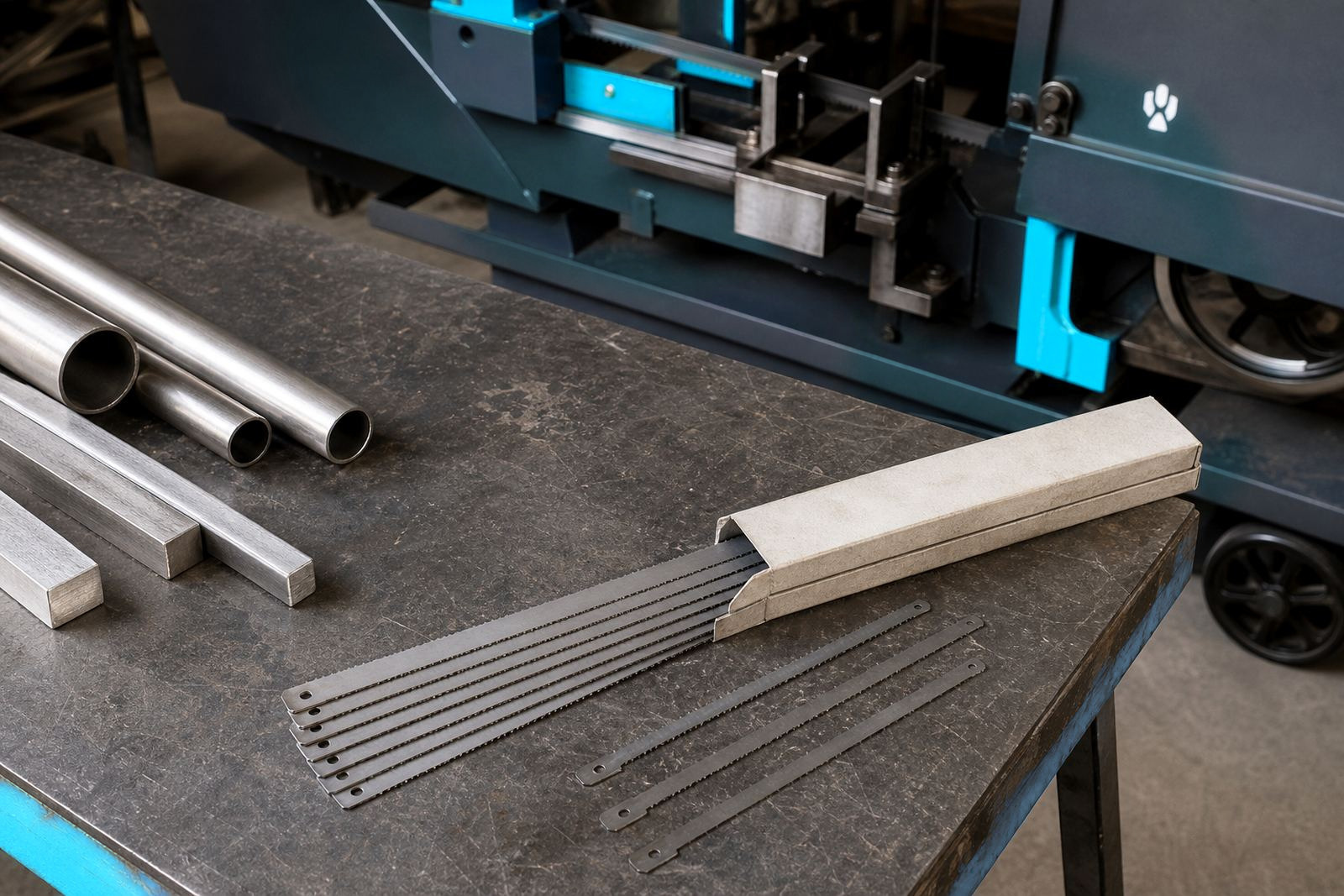
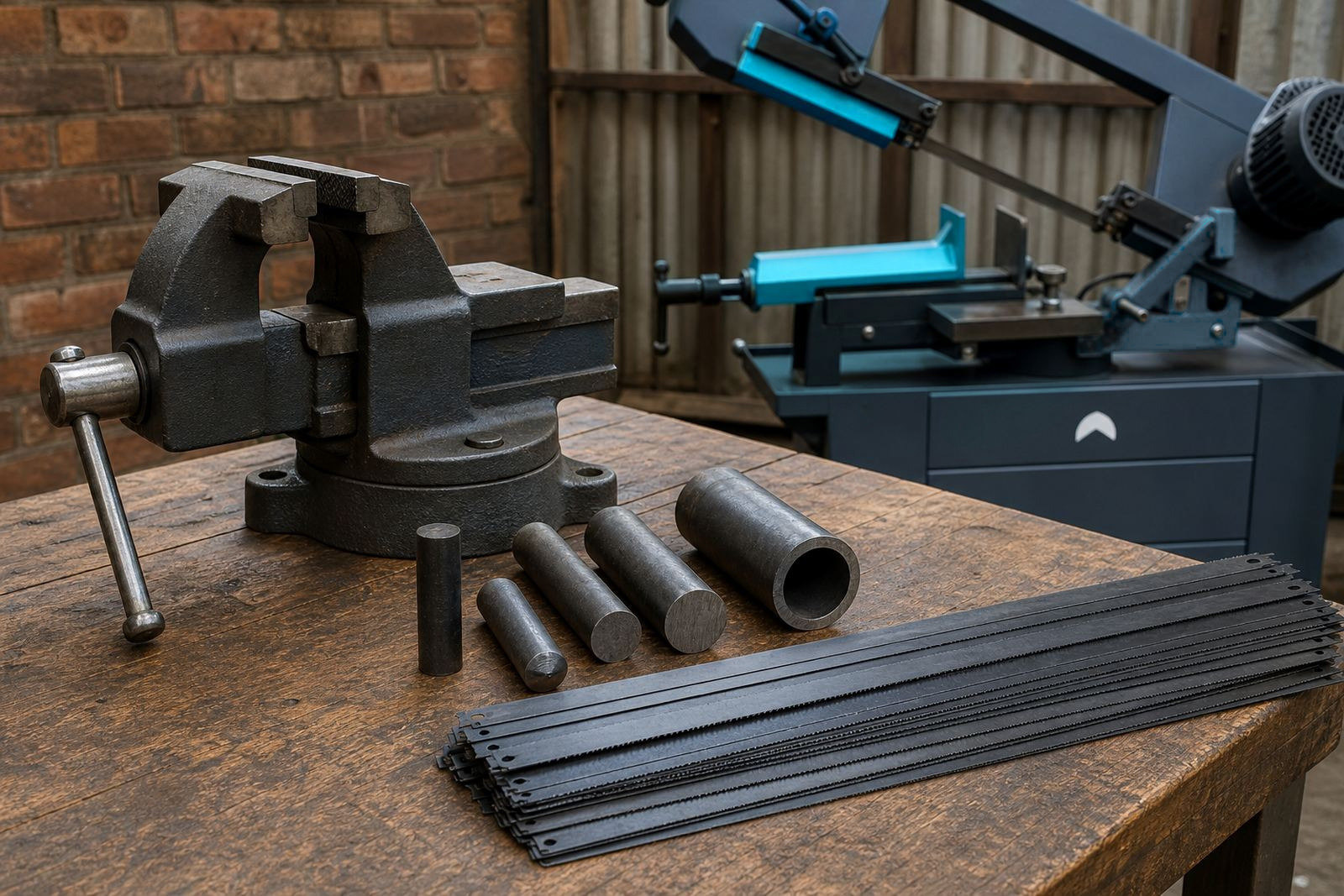
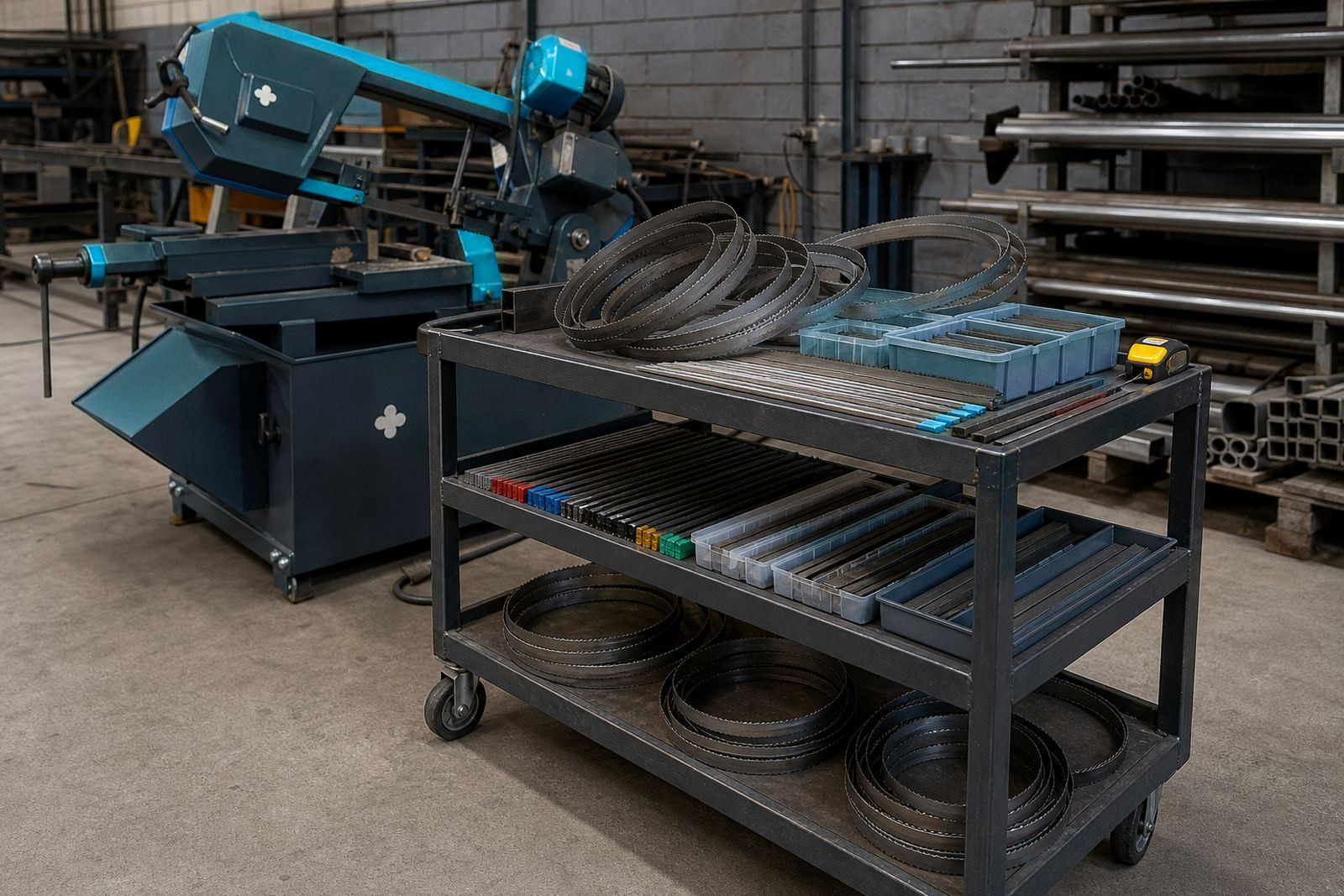
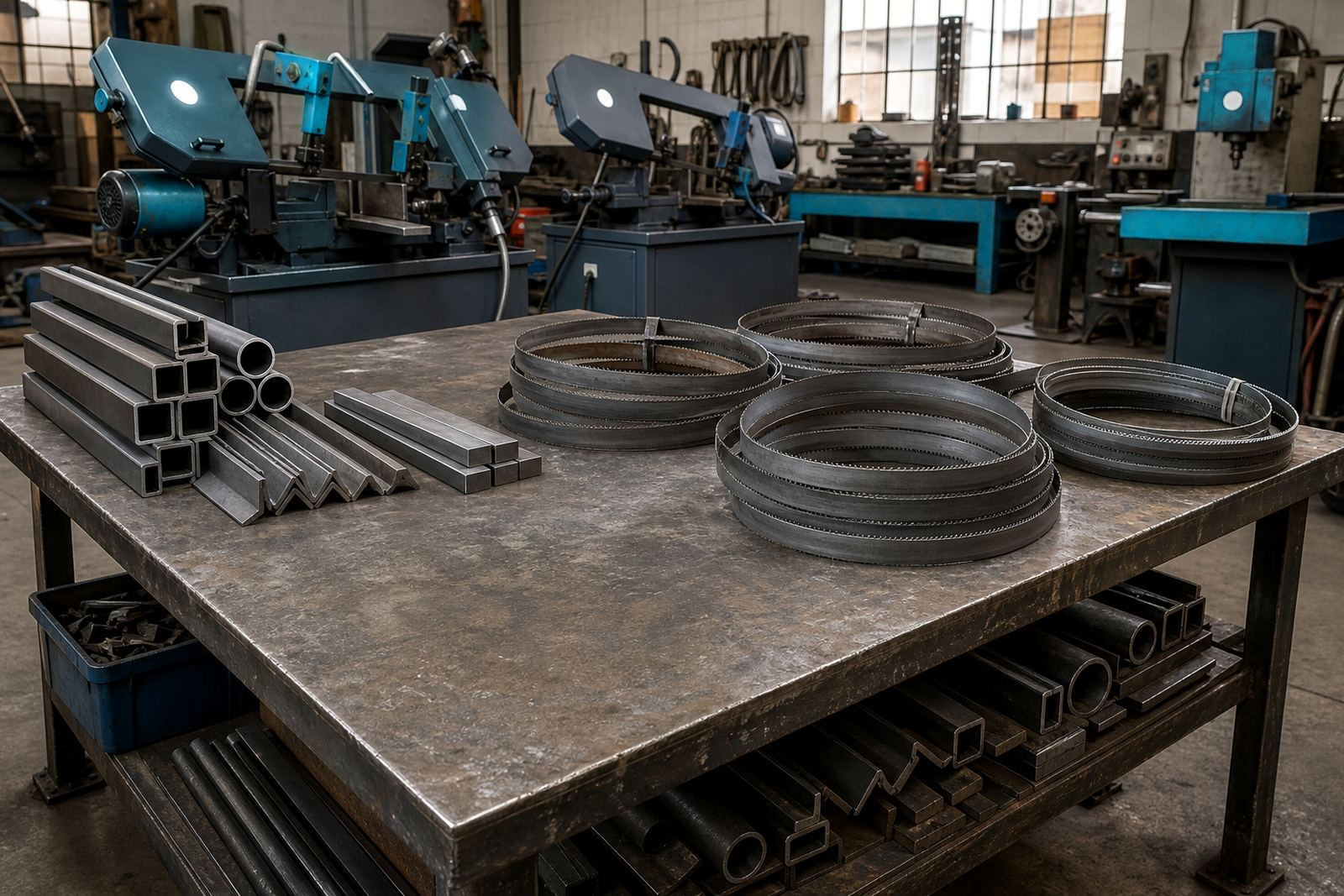
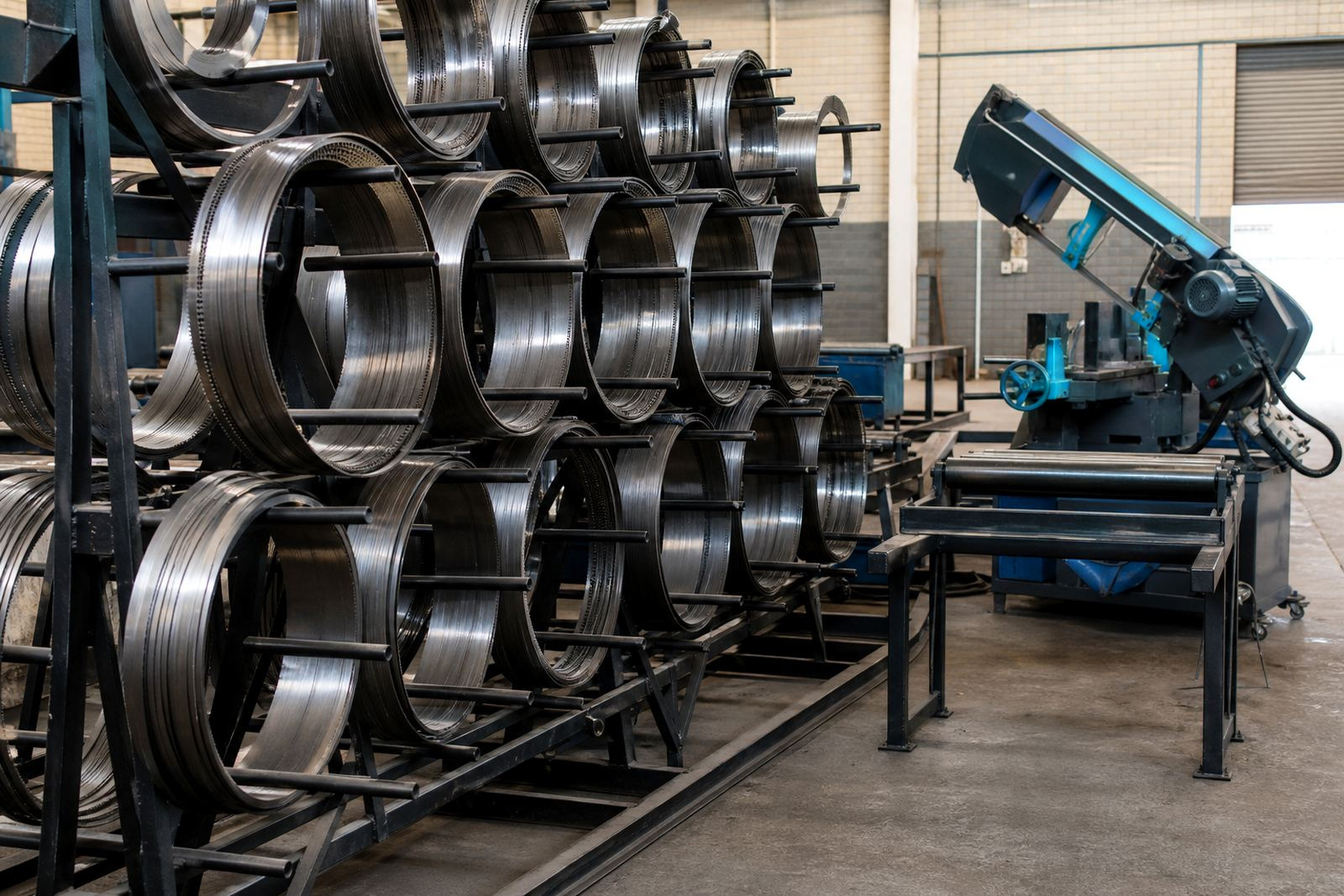
Our saw blades range covers bandsaw blades and hacksaw blades for day-to-day workshop work, from general cutting to heavier metal removal. Match the blade to the material and the machine so the cut runs cleanly and the blade works within its normal range.
Bi-metal, carbon steel and when each suits
Bi-metal blades are used where the teeth must stay sharp while the backing stays flexible. For varied steel jobs, a bi-metal saw with a high speed tooth edge is often used, including M42 types for heavier pieces and longer production runs. Carbon steel blades suit lighter manual saw work, softer sections and shorter jobs where cost control stays important.
- Bi-metal blades for mixed metalwork and tougher sections
- Carbon steel blades for lighter duty and manual cutting
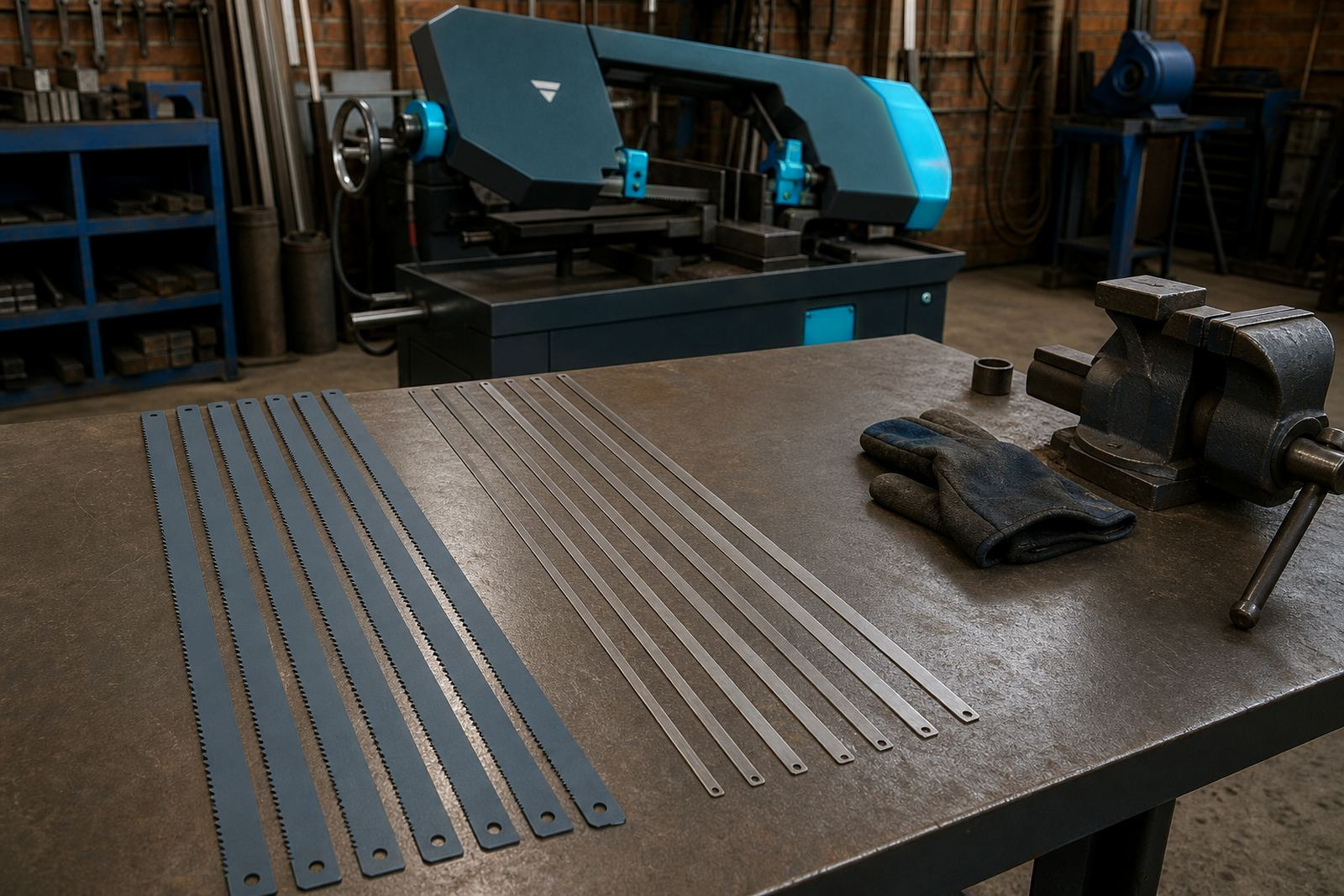
- Starter kits for shops setting up a basic blade stock
- Common sizes for bandsaws and hacksaws used across workshops
Tooth pitch, variable pitch and chip control
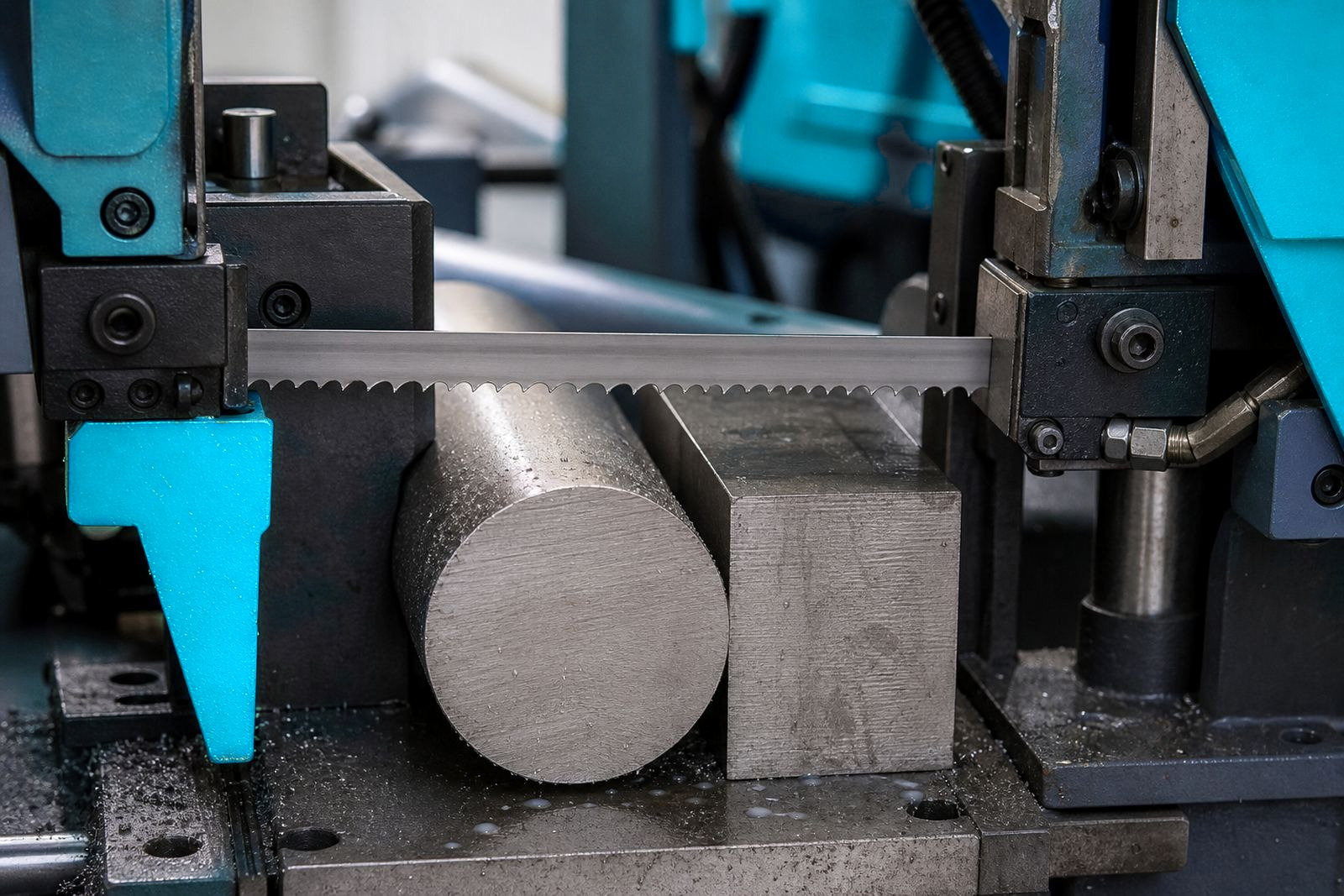
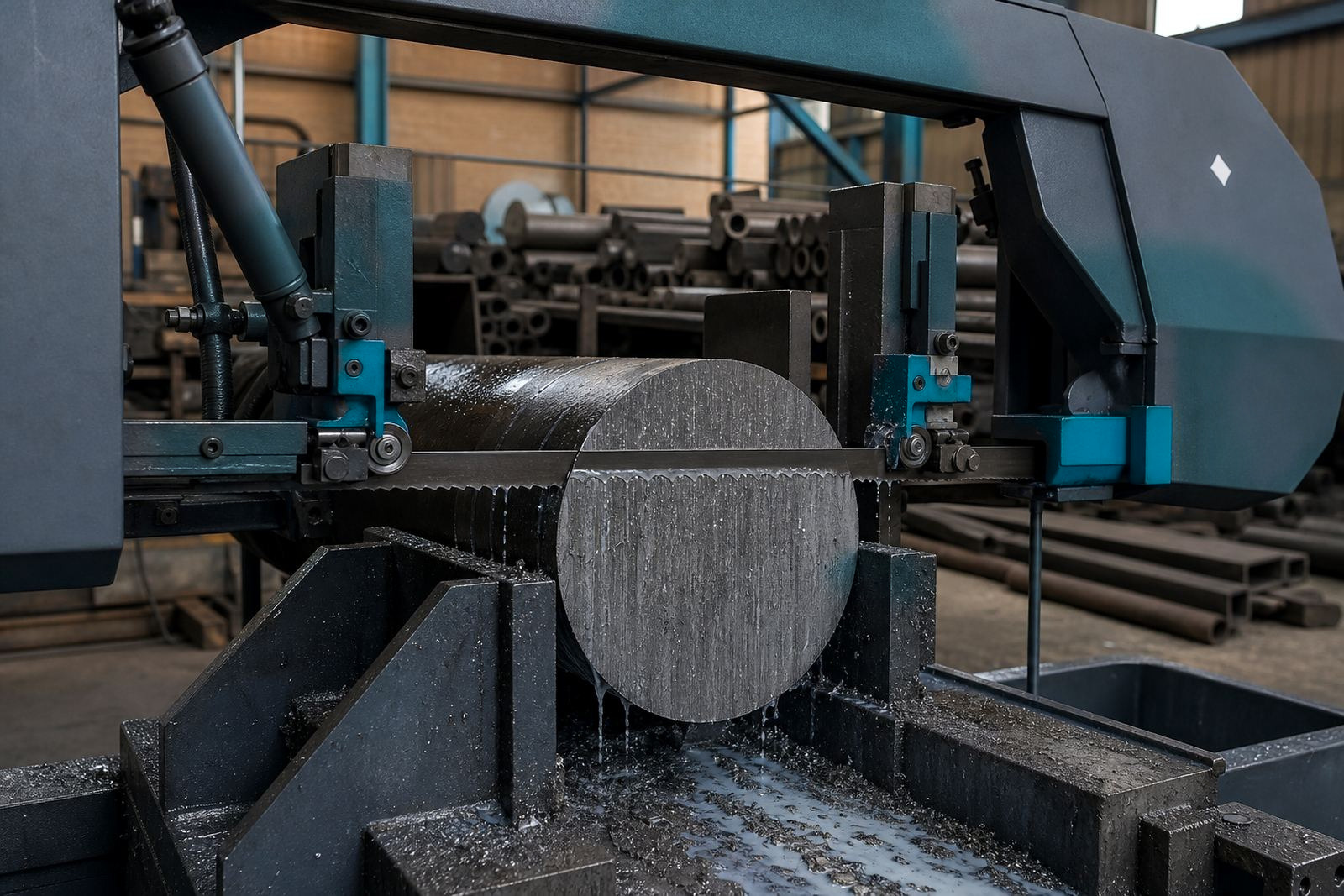
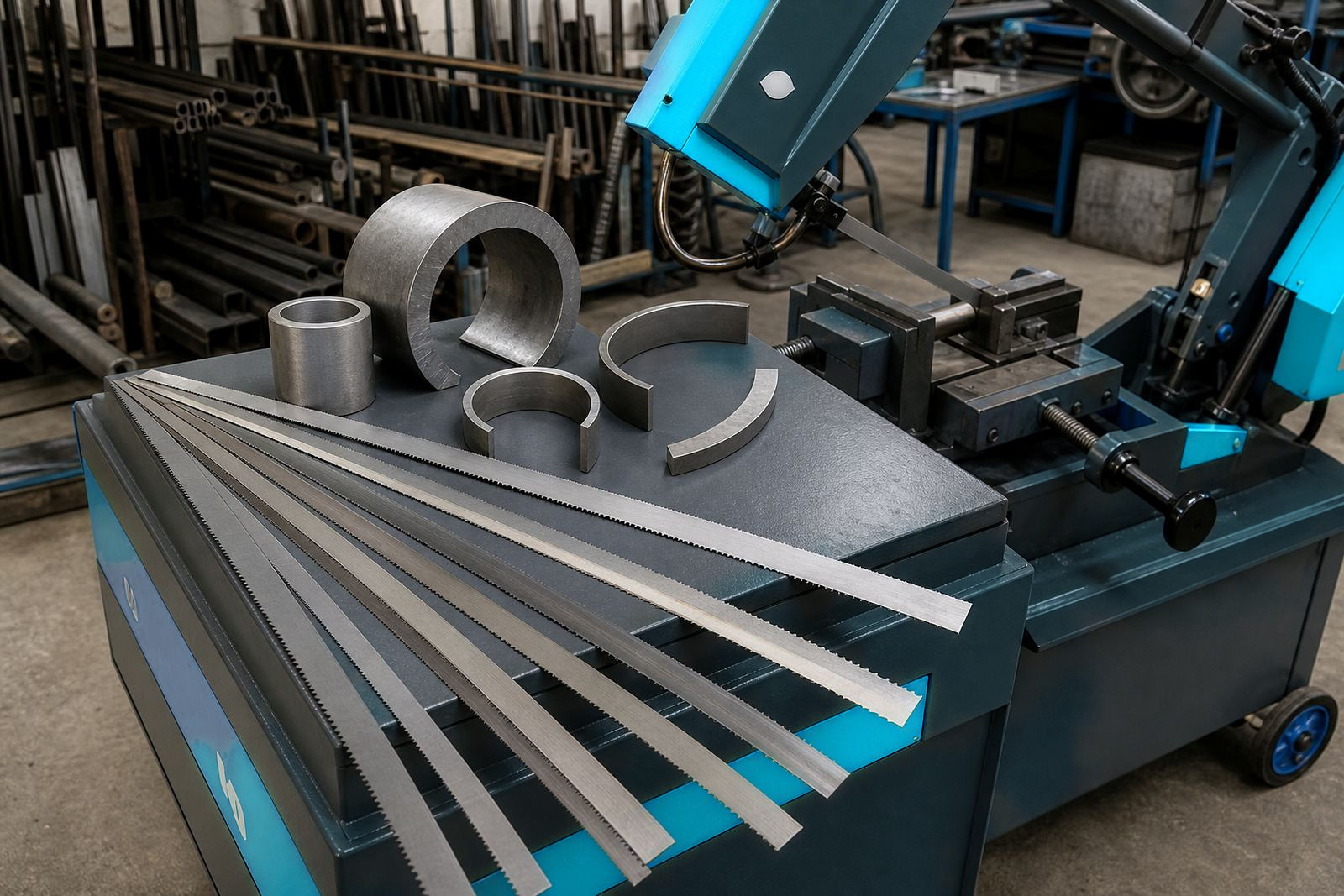
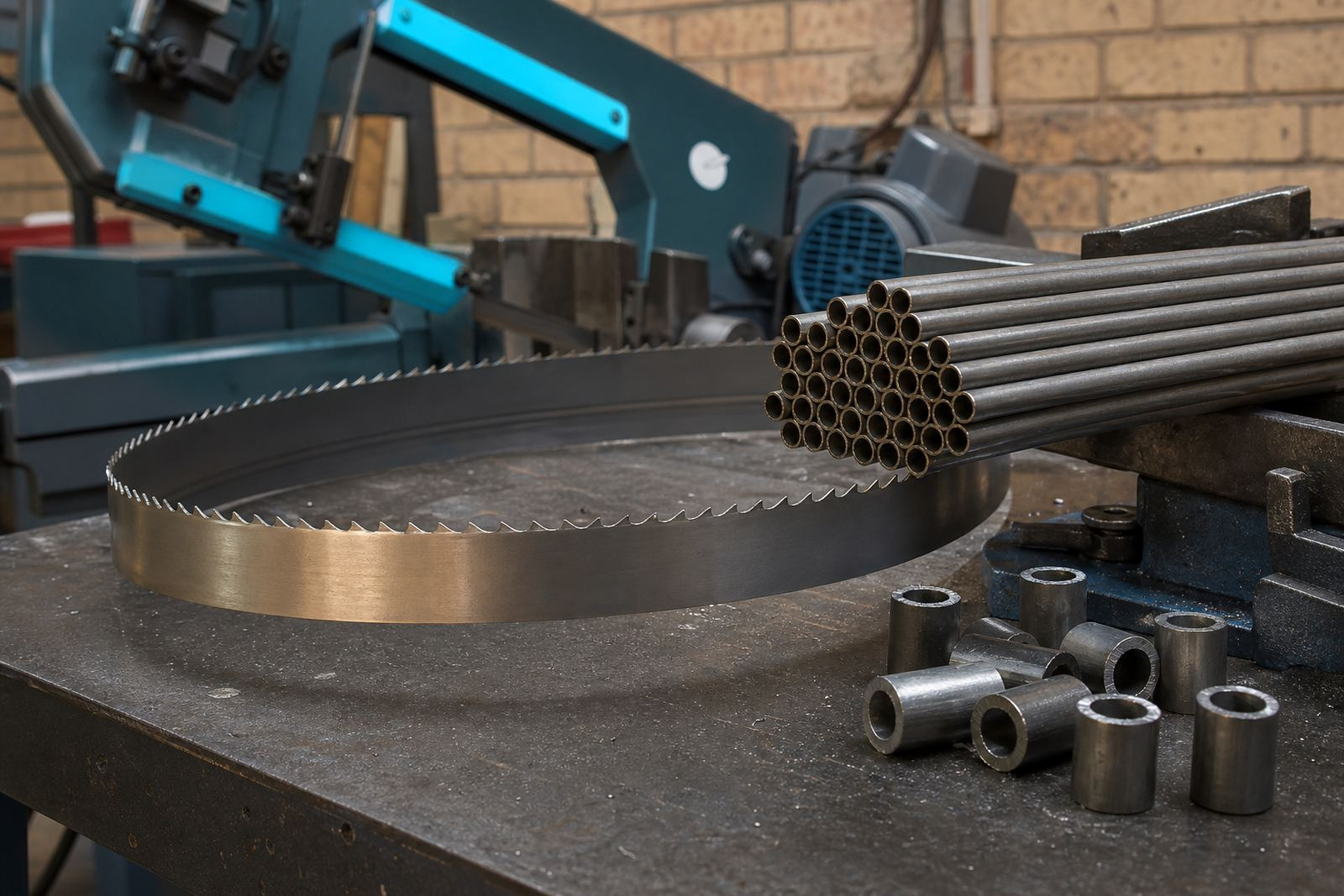
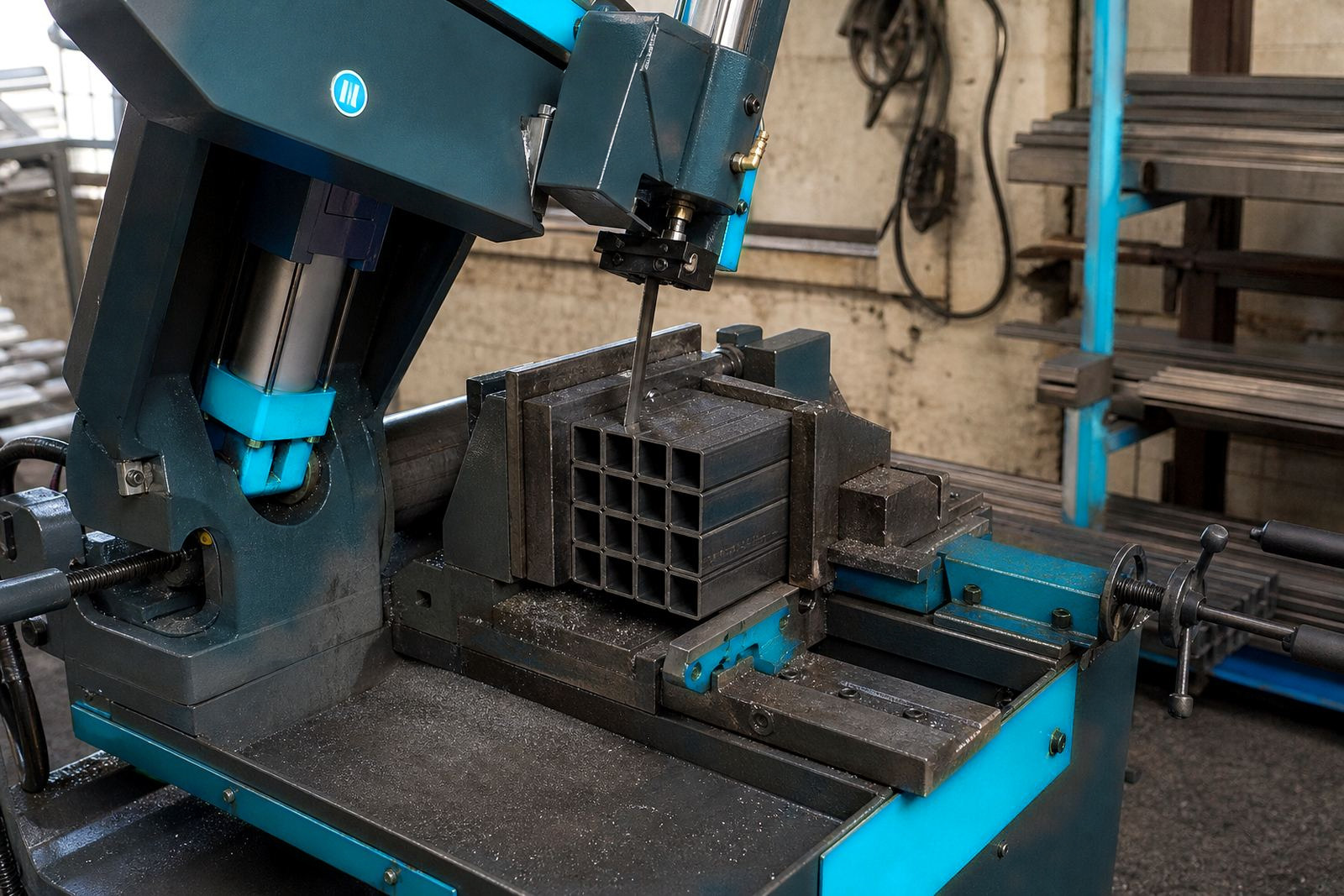
The tooth pitch, measured in TPI, must suit the size and shape of the work. Thin wall material and small sections suit fine pitch blades, while thicker stock suits coarse pitch blades where more chip space is needed. Variable pitch blades help reduce vibration on awkward profiles and can smooth the cut on mixed section work.
If the pitch is too fine, teeth can rub and overheat. If it is too coarse, the blade may snag or leave a rougher face. We help match pitch to the actual job, because one workshop can cut light tube in the morning and solid rounds after lunch.
Width, thickness and the way a blade tracks
Blade width affects how tightly a blade can turn and how steadily it tracks through the saw. Narrower blades suit curved or manual work, while wider blades give better support on straight cuts and heavier machine work. Thickness affects the blade's stiffness and how it responds under feed pressure.
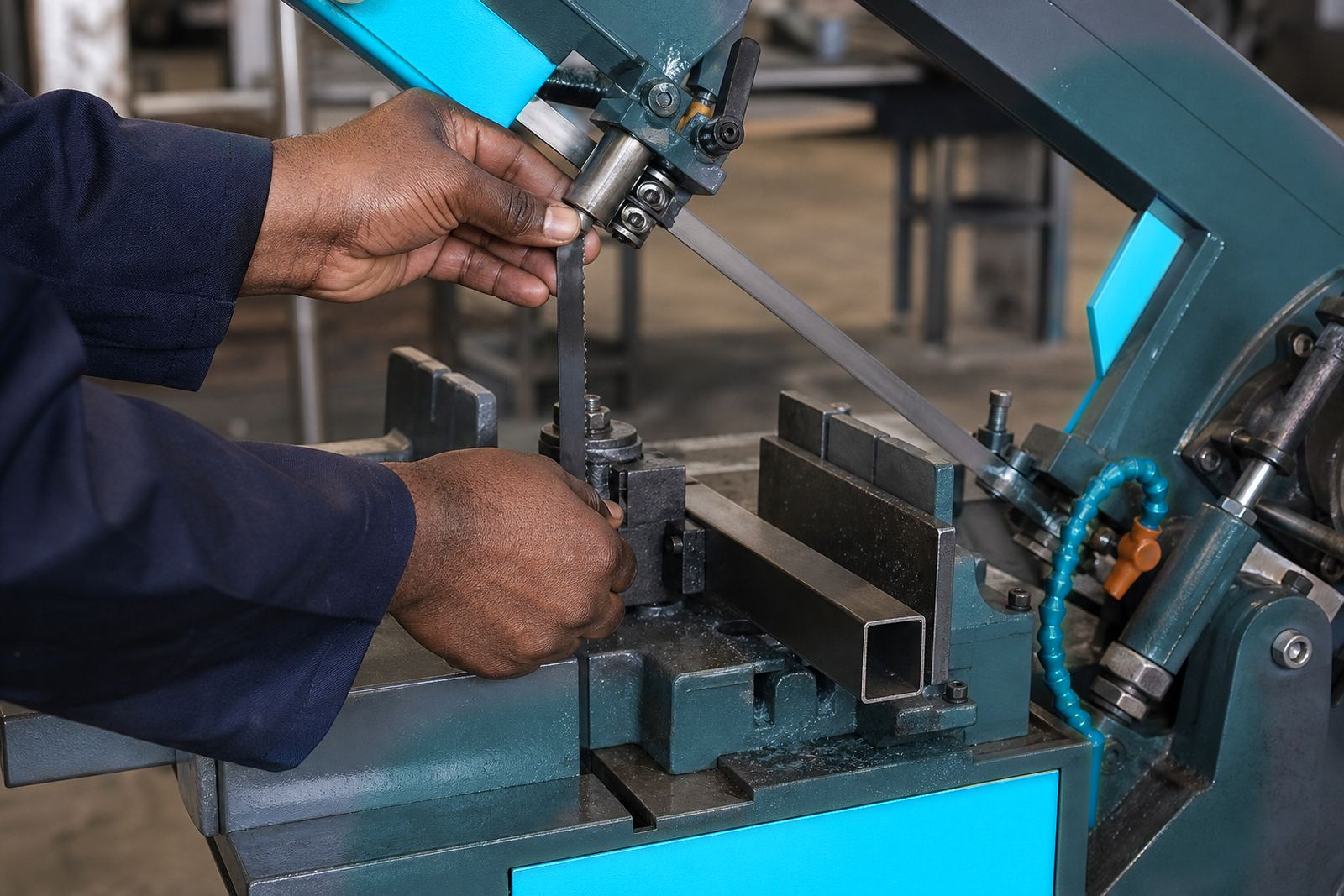
When the width is wrong for the machine or the job, the blade can drift, twist or wear unevenly. We look at the machine guide condition, the throat depth and the type of cut, then pair that with a blade size that sits properly in the saw.
Run-in, feed speed and coolant checks
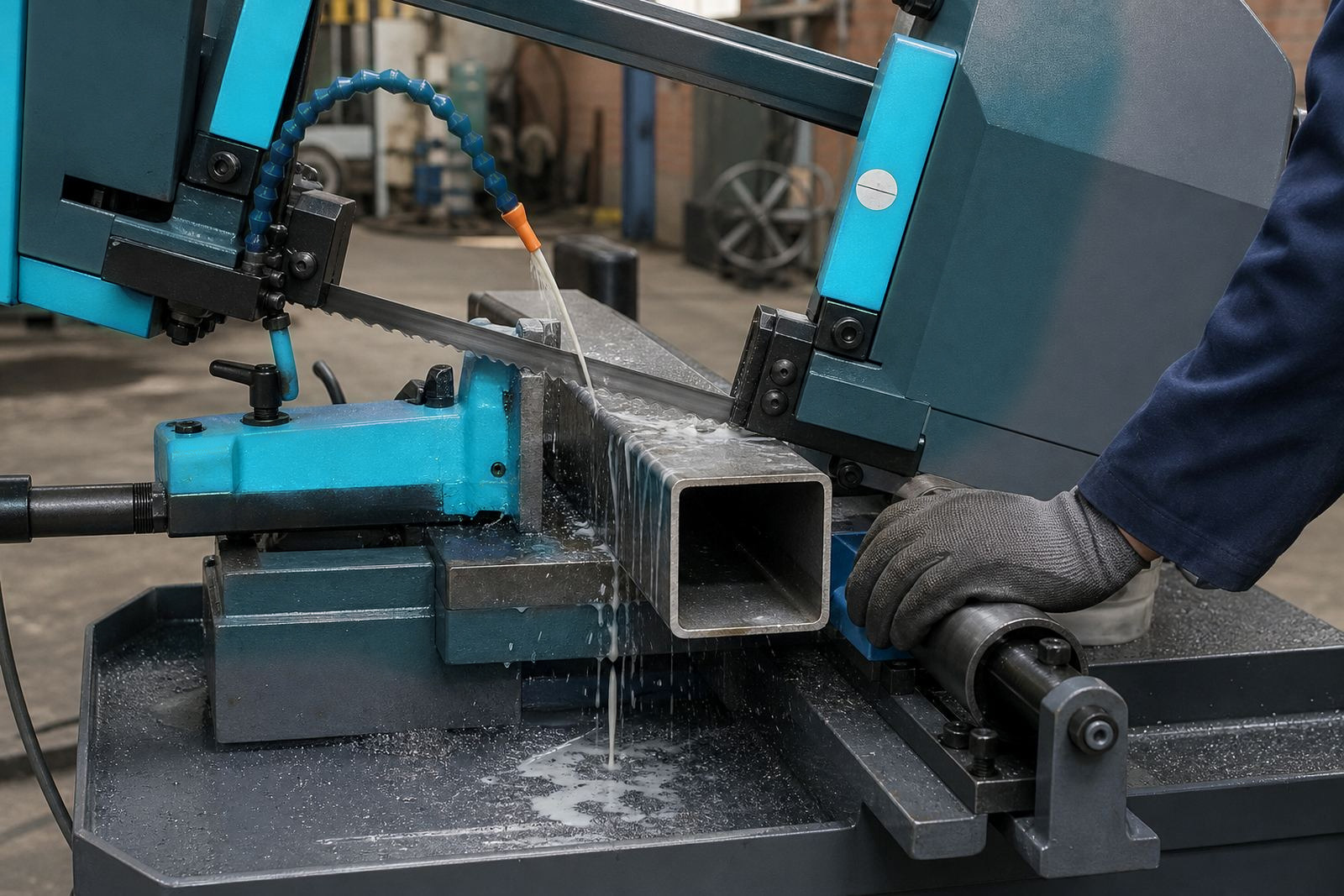
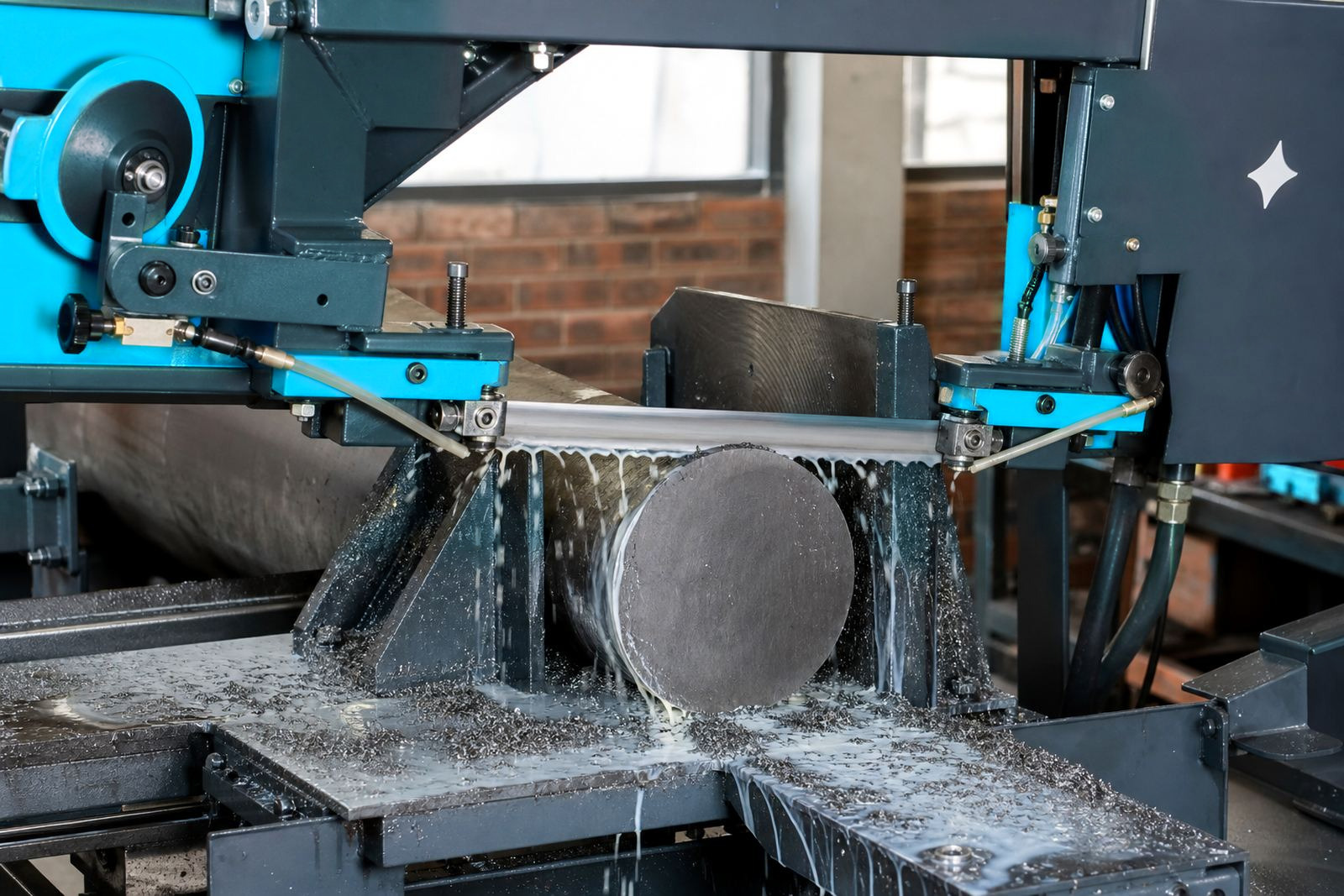
Before full production load is applied, run a new blade in carefully so the tooth tips bed in. Feed speed also has to suit the material and the tooth form, because too much pressure can strip teeth and too little can make the blade rub. On machine saw work, check coolant on longer cuts and harder steels where heat builds quickly.
- Start with a lighter feed on a fresh blade
- Keep the cut steady rather than forcing the saw
- Check coolant flow and concentration where the machine uses it
- Watch for blue chips, squeal or heavy tooth wear
Weld-to-length, verification and failure review
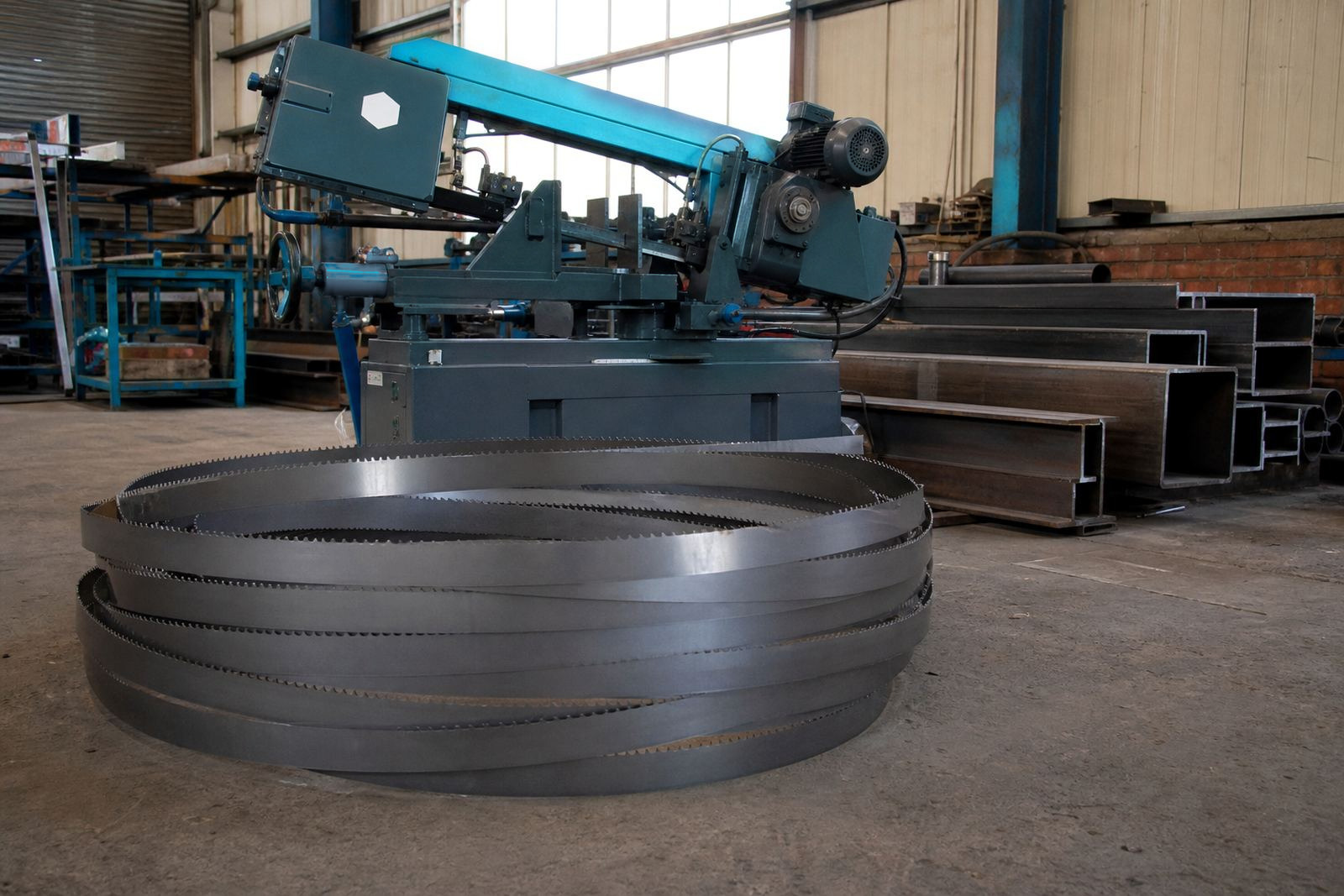
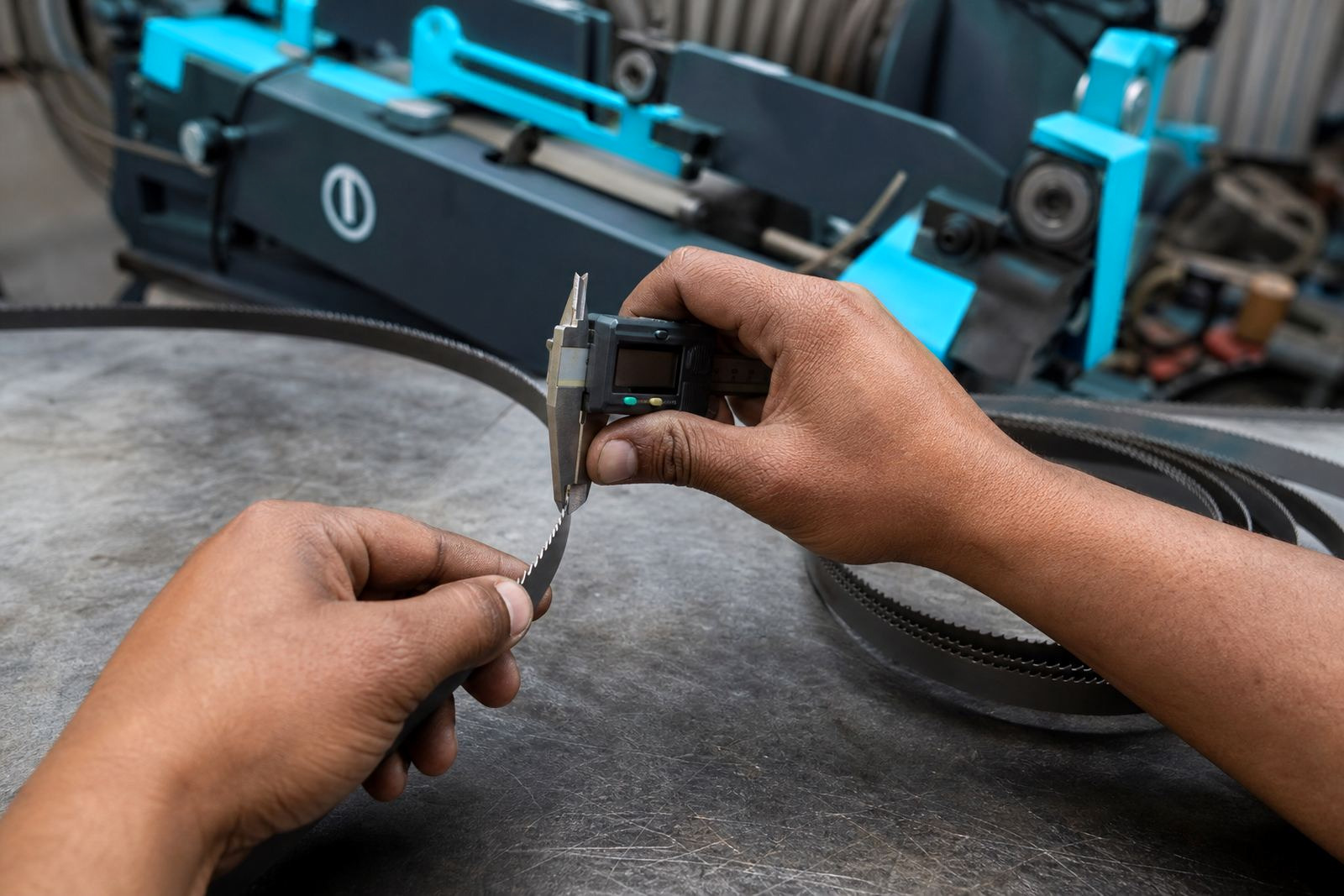
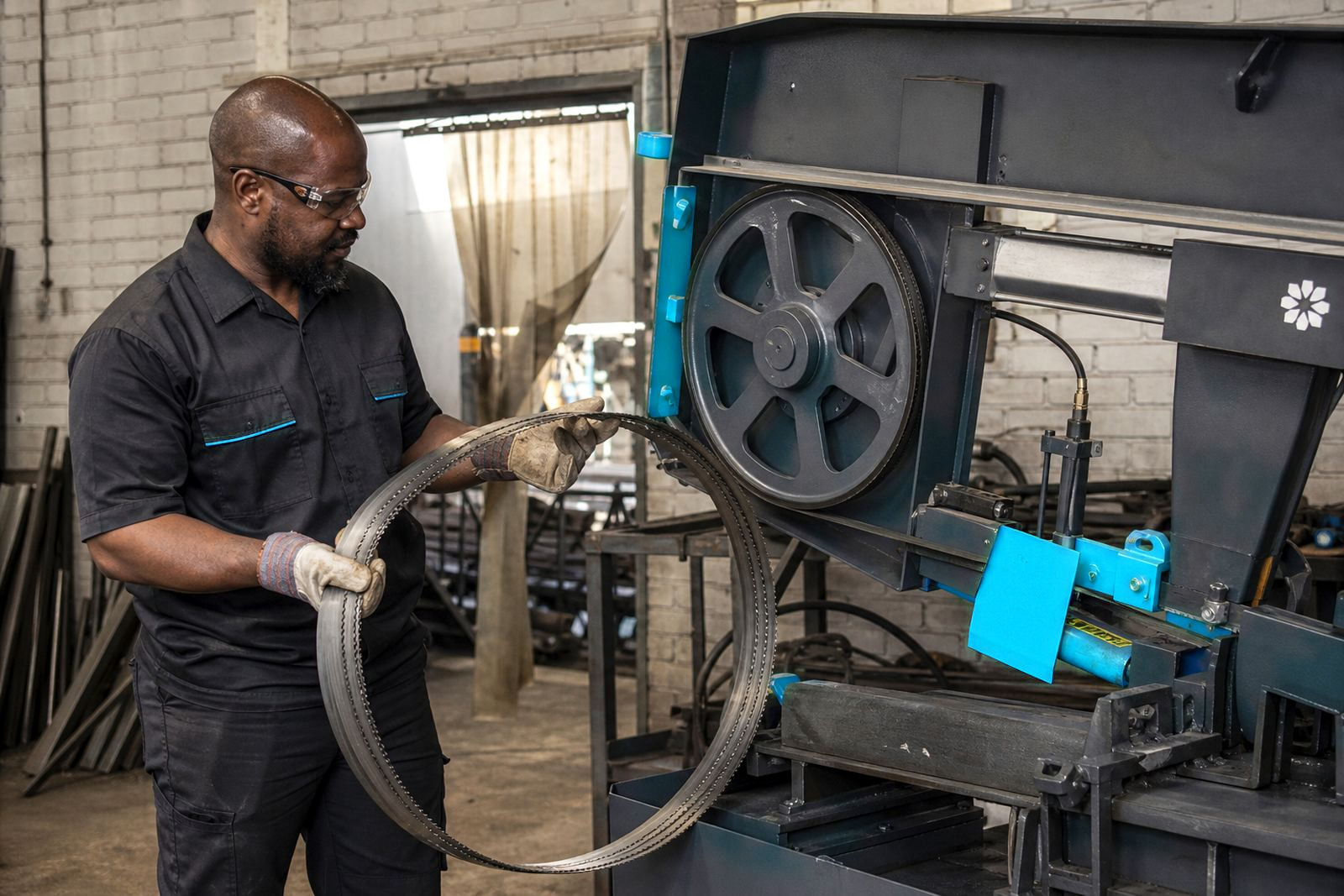
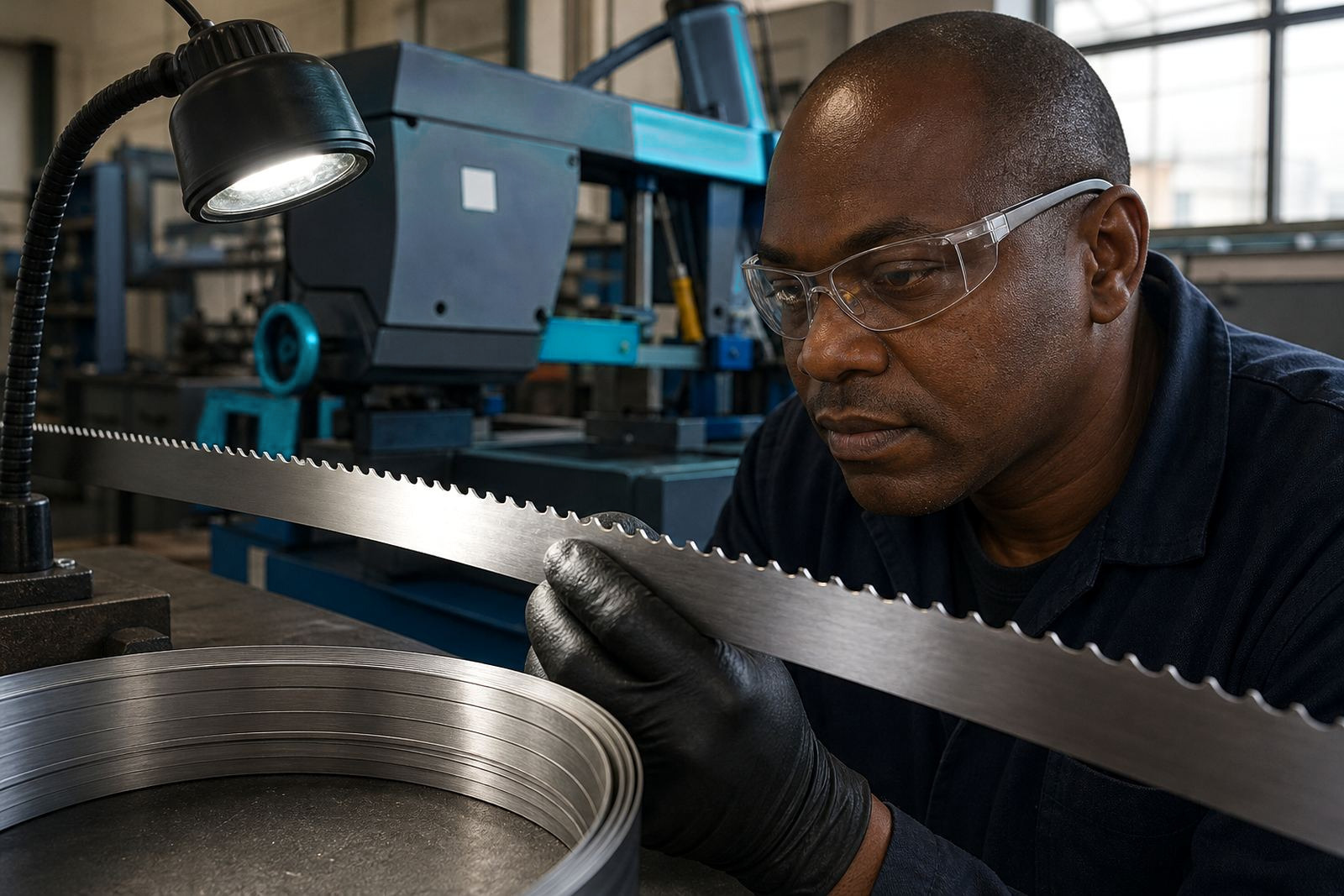
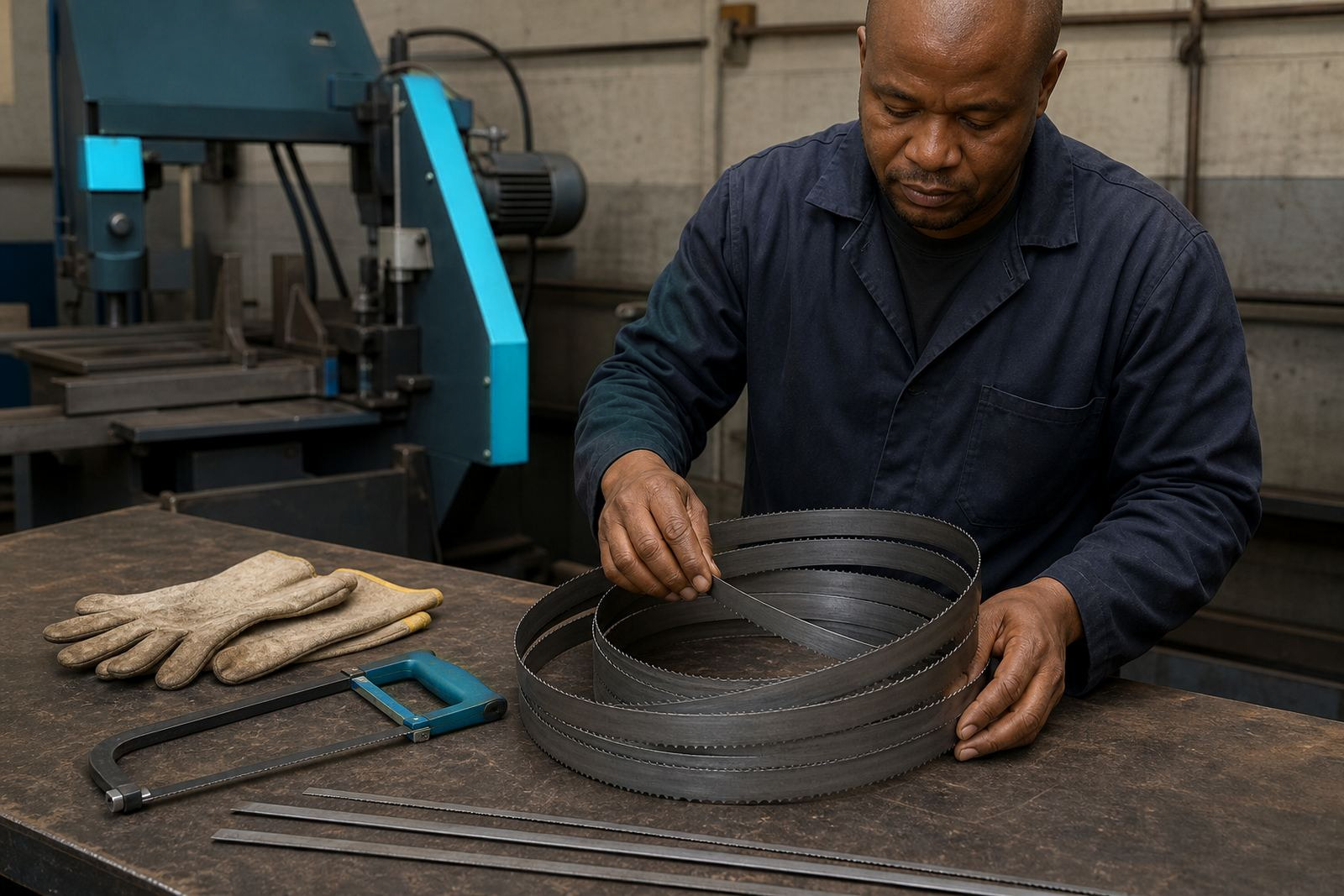
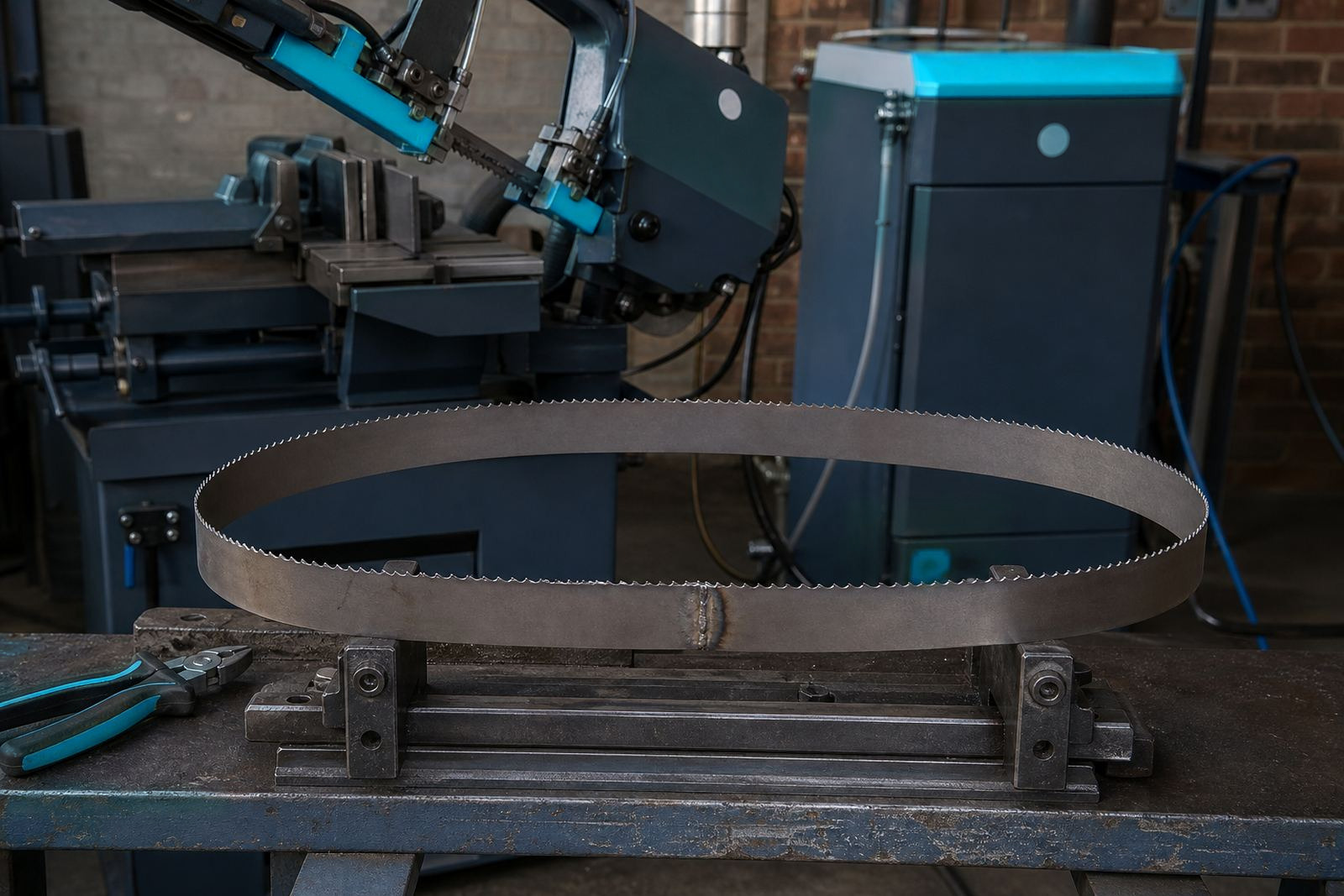
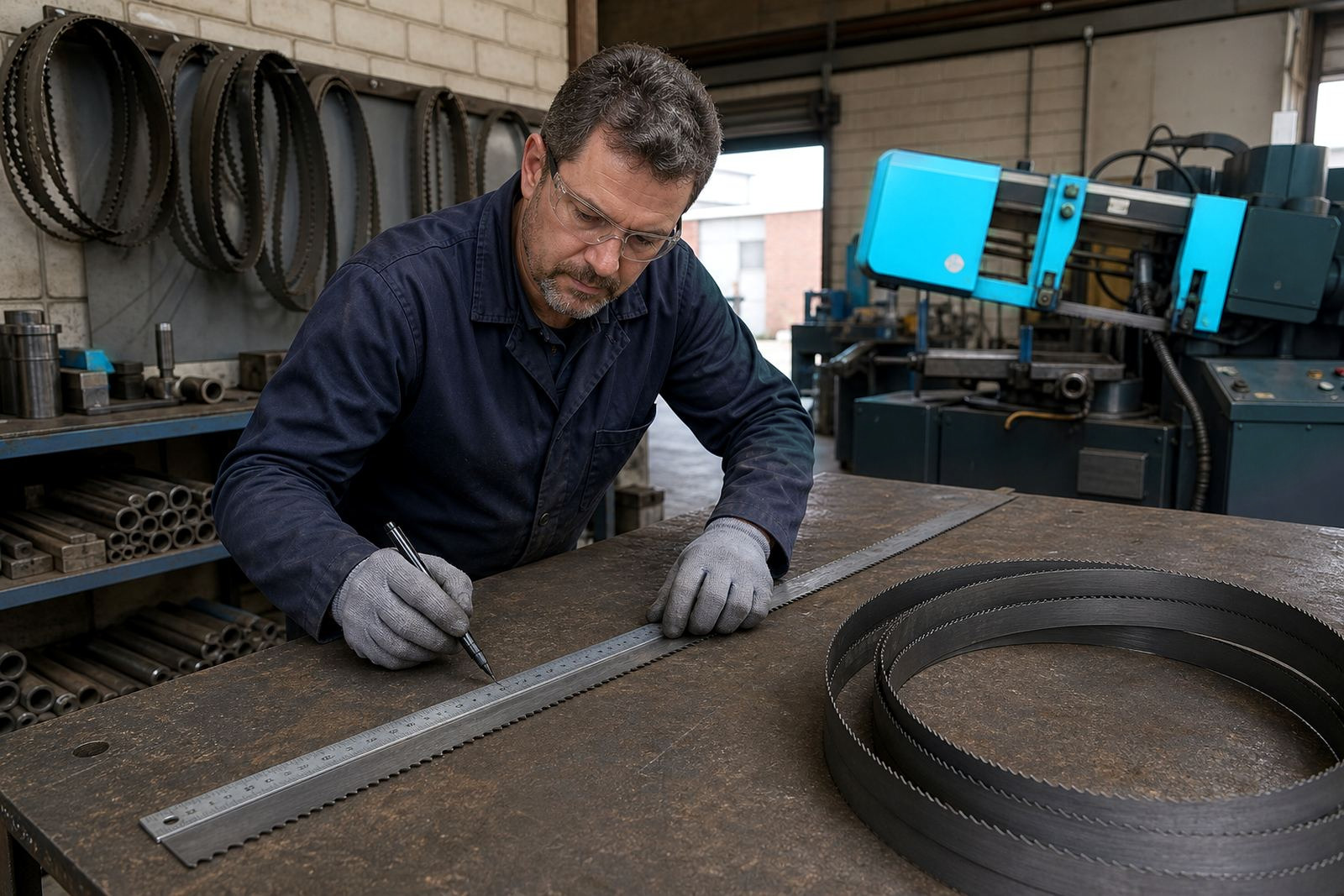
Workshops often need blades welded to exact length for a specific machine, and that service avoids the waste of oversized stock lying around. Length verification helps confirm the blade will fit the saw before it goes into the frame. If a blade breaks early or wears unevenly, a failure review can point to pitch, guide wear, feed pressure or a set problem rather than replacing the same issue twice.
Manual saw support is also part of the range, because not every workshop runs the same machines or cutting pattern. Length, join and fit are checked along with the tooth form.
Starter kits and stock planning for busy benches
Workshop starter kits give a practical base stock when you do not need every possible size in stock. They can cover the common blade widths, pitches and lengths used on recurring jobs, then add special sizes as the work changes. Stock standardisation helps keep the bench organised, especially where more than one machine is cutting the same family of material.
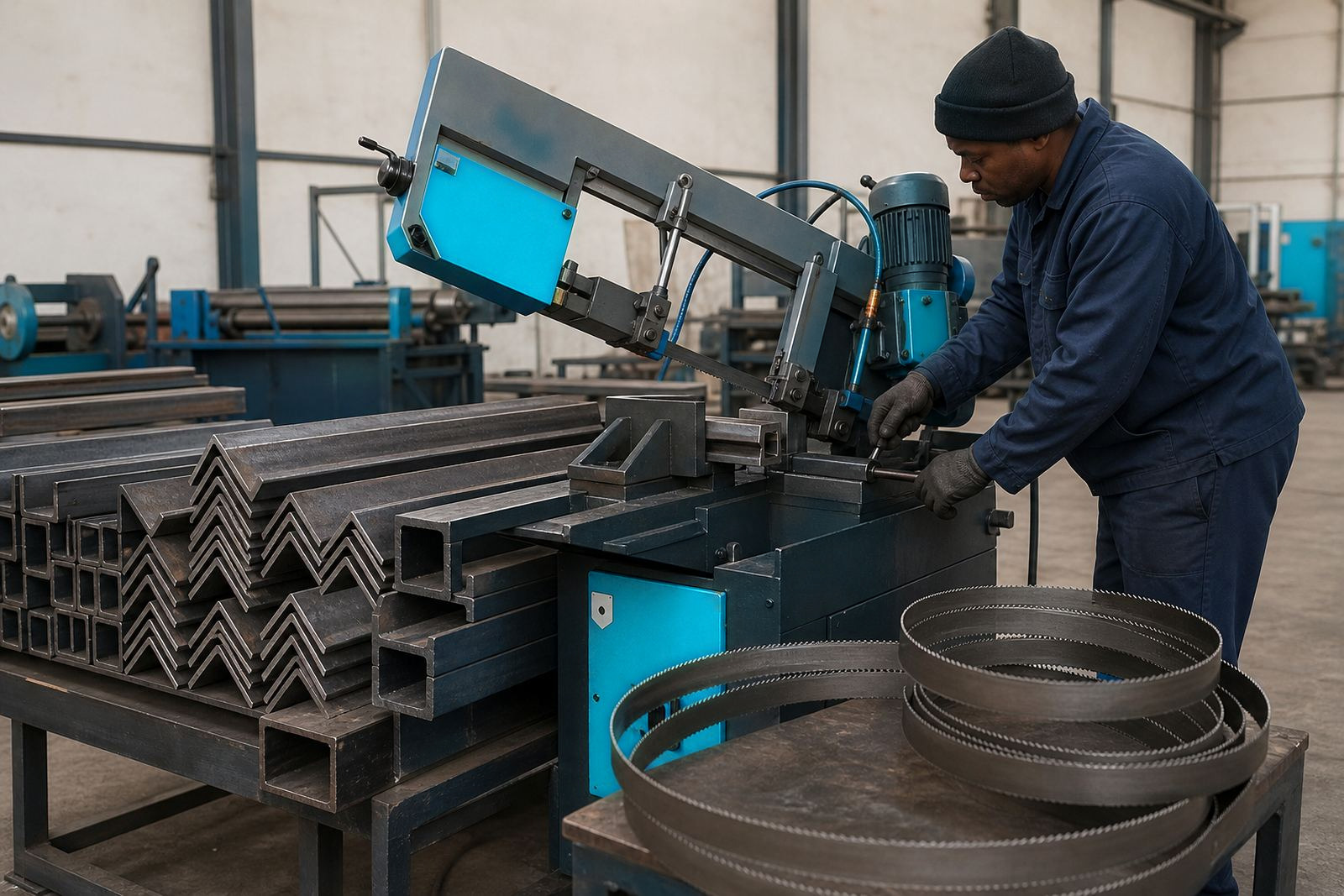
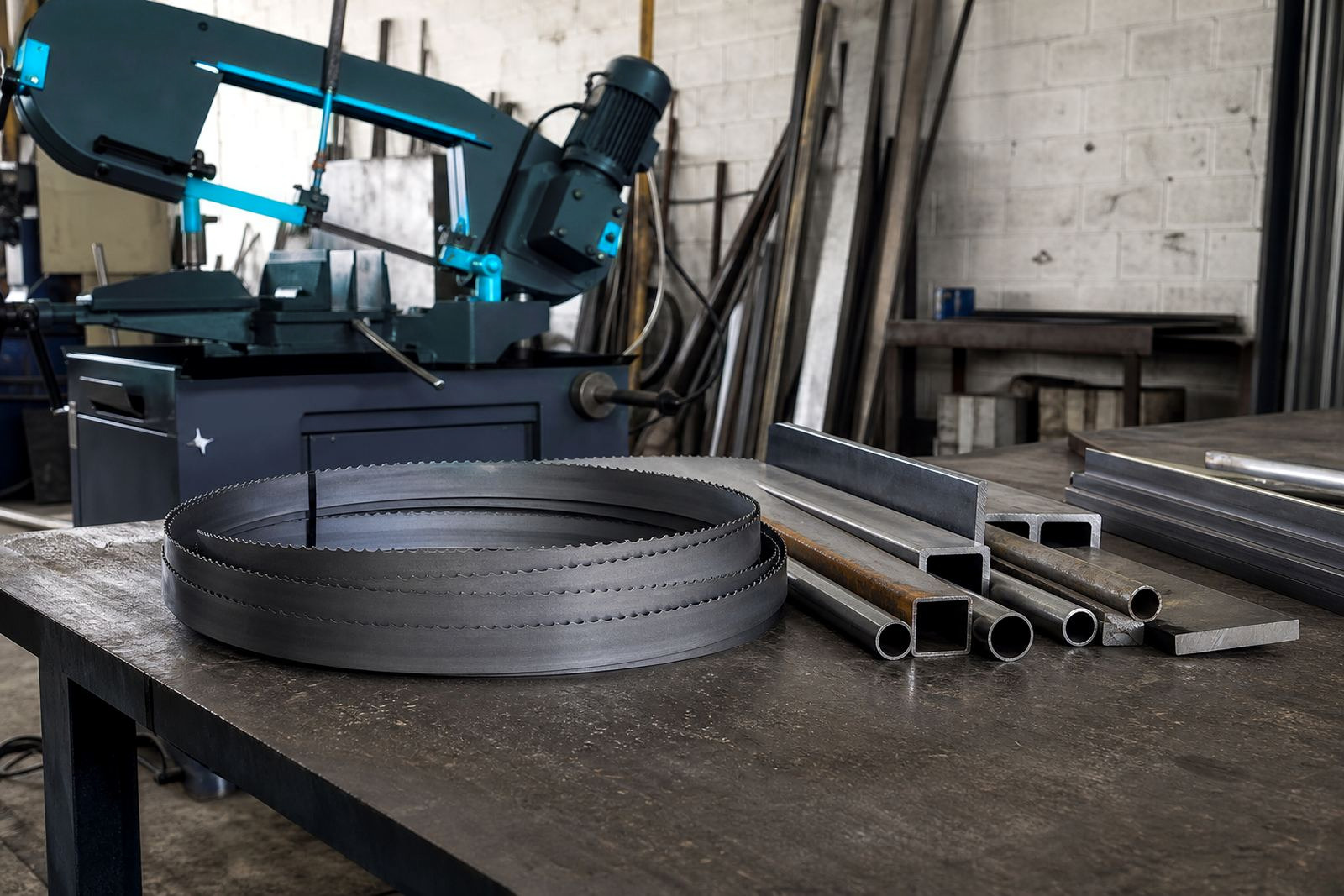
For teams handling recurring steel sections, pipe, bar and mixed offcuts, the best setup is usually a short list of proven blade types with clear labels for job use. Saw room management stays simpler and guesswork at the machine drops.