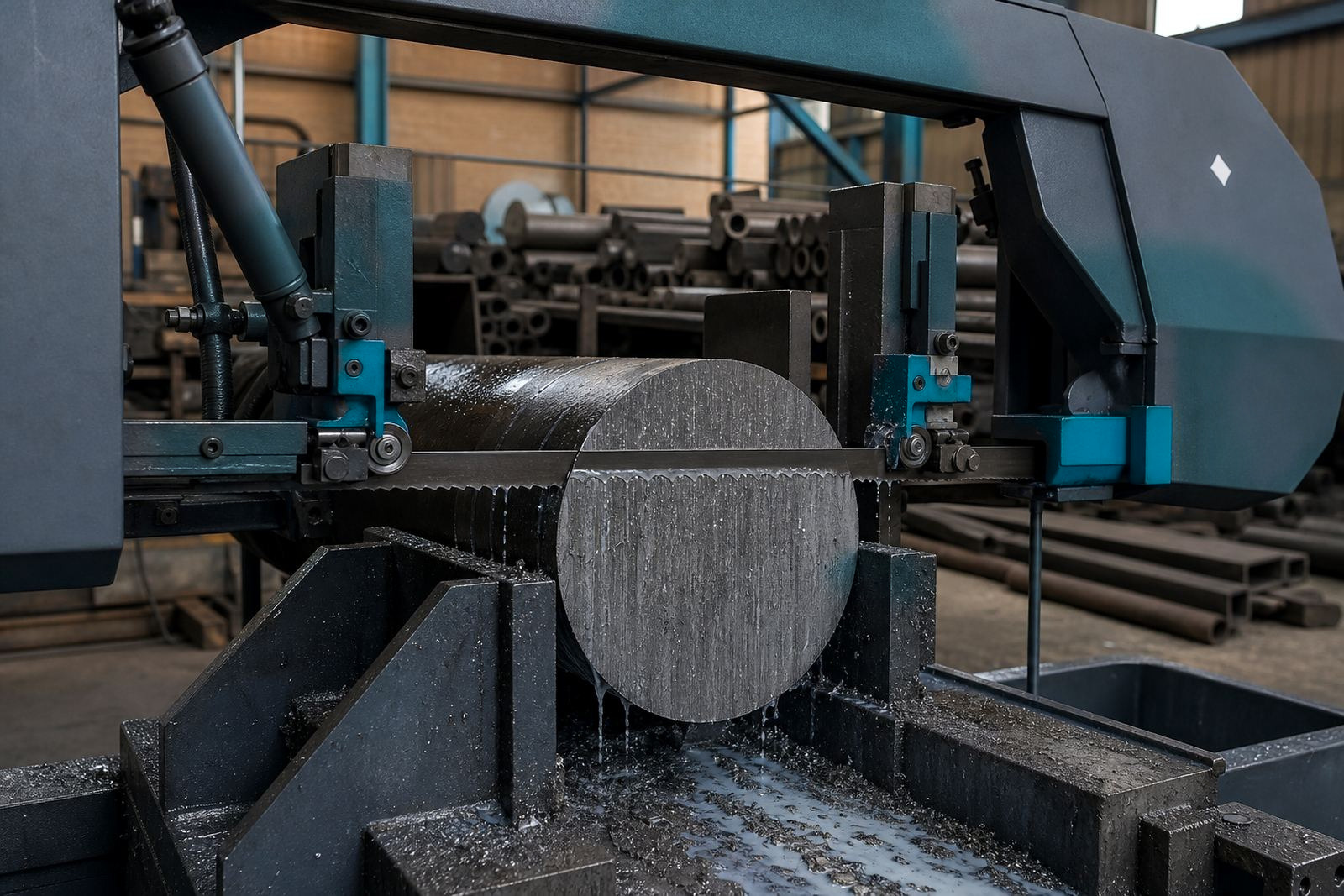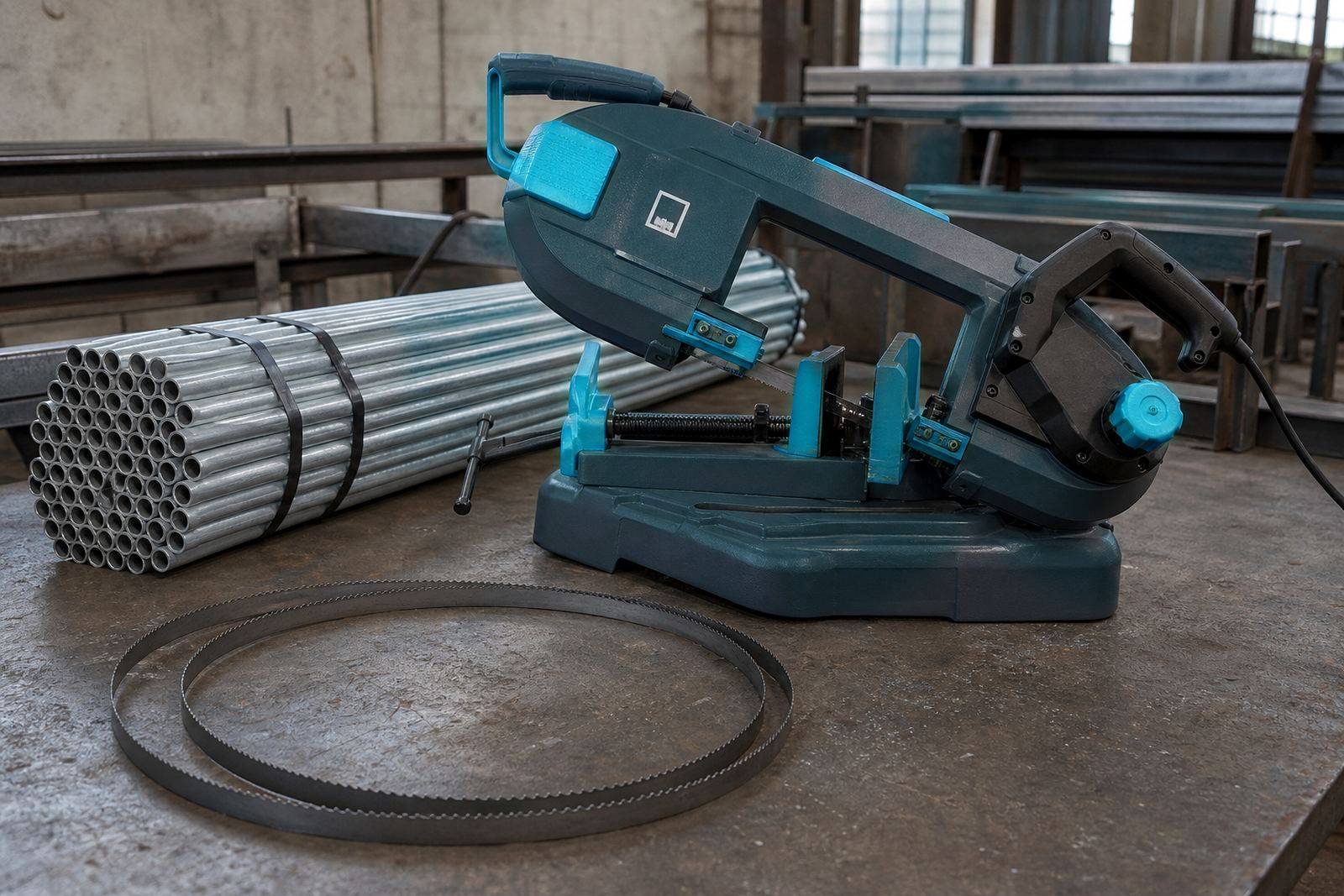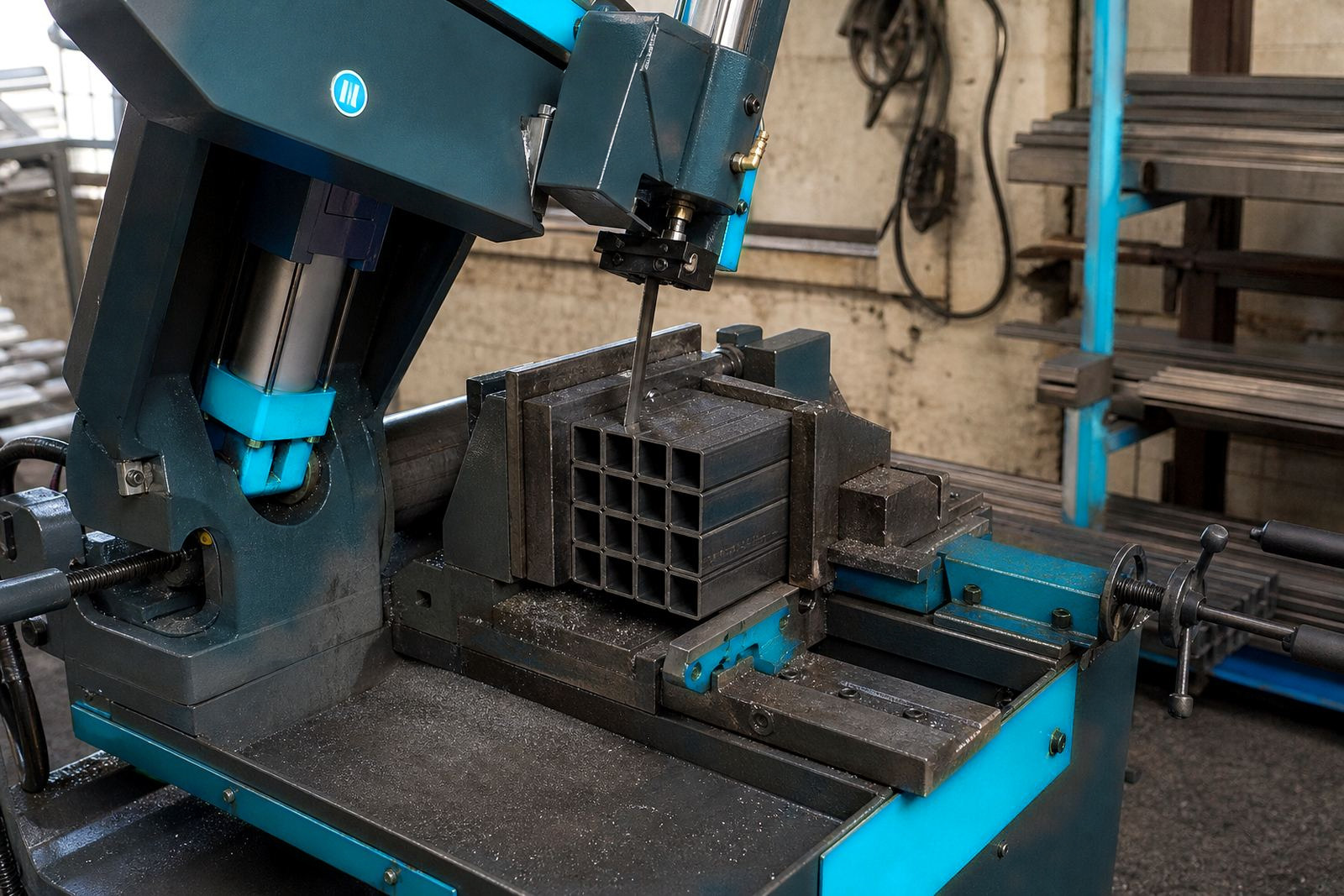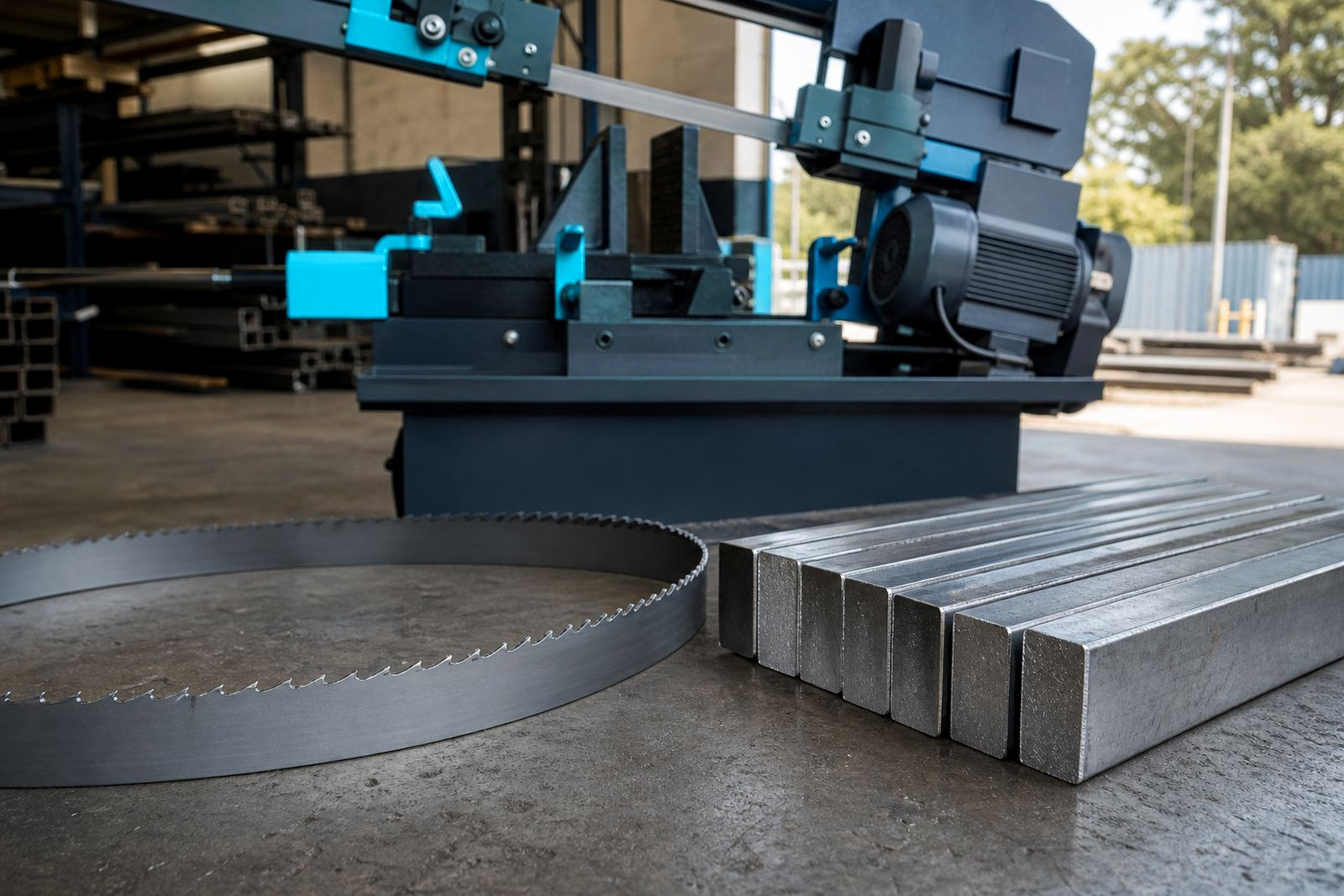
Constant pitch for repeat cutting on known sections
A constant pitch M42 blade carries the same tooth spacing along the working length, so the cut behaves in a familiar way from one job to the next. A practical option for batch work on tube, bar, solid sections and structural material when the diameter or wall thickness stays fairly regular.
In a workshop, this style is often chosen where one machine sees the same material through most of the shift. The blade can be set up with the machine, run in carefully, then kept on that material type instead of being pushed across mixed sizes that need different tooth geometry.
- Best suited to repeated cutting on one size range
- Useful where the operator wants a steady tooth rhythm
- Works well with controlled feed and speed settings
- Can be supplied to length for the machine frame
M42 tooth form, widths and thicknesses that match the job
M42 bi-metal blades use a high speed steel edge welded to a flexible backing strip. That combination gives a stronger cutting edge for metalwork while the body can handle the bend around the wheels and guides. On constant pitch blades the tooth form, set and backing are matched to the section being cut, so the edge clears chips without packing them into the gullets.
Match the blade width and thickness to the pitch. Wider blades run straighter on larger machines and heavier sections, while narrower blades suit smaller saws and tighter wheel diameters. Thickness affects stability and flexibility, so the machine fit and wheel size need to line up with the blade choice, sharp edges on the stock can also affect how long the blade stays true.
- M42 bi-metal for harder wear than plain carbon steel
- Common widths used for workshop saws and production frames
- Blade thickness selected for machine guide capacity and wheel size
- Tooth set chosen to clear swarf without rubbing the cut face
Where constant pitch earns its keep
This blade type suits fabrication shops, maintenance teams and production lines that cut the same material repeatedly. It is a sound fit for mild steel bar, thin to medium wall tube, box section and selected solid sections where the cutting pattern stays consistent. If the job swings between small and large sections, or between thin wall and heavy solid stock, a variable pitch blade may be the better match.
For regular orders, stock standardisation helps because the operator knows the pitch, width and cutting feel before the first clamp is closed. That saves time in sorting blade types on the rack and keeps the saw set around one material group rather than a mix of jobs that fight each other.
- General fabrication and maintenance workshops
- Batch cutting on one material size or close sizes
- Manual and semi-automatic bandsaws with regular setup
- Sites that want one blade pattern for a known cut list
Fitting, run-in and machine checks before the first cut
A new constant pitch blade should be fitted squarely, tensioned to the machine maker’s range and tracked correctly on the wheels. Guides need to sit close to the blade without pinching it, and the weld area must pass through the guides without catching. If the saw frame, vice or guide blocks are worn, the blade may wander even when the pitch is right.
Run the blade in gently. Use a lighter feed and sensible speed for the first cuts so the tooth tips can settle before full production work begins. That first stage is often rushed, then the blade overheats or loses teeth early. Coolant, where the machine uses it, should reach the cut line and flush chips away instead of leaving them welded into the gullet.
- Check wheel condition, guide wear and blade tracking
- Use a lighter feed during the first cuts
- Match speed to the section and material hardness
- Keep coolant flowing to the cutting zone where fitted
Ordering the right blade length and pitch without guesswork
For ordering, give blade length, width, thickness, tooth pitch and what you are cutting. If the saw takes a welded loop, the frame opening and machine model must be measured correctly so the blade sits under tension without being forced. Our weld-to-length service suits machines that need a specific stock length or saws using an odd size not kept ready on the shelf.
For constant pitch blades, the tooth count per inch or metric equivalent should suit the section size. Finer pitch works better on thin wall material and smaller cross sections, while coarser pitch is used on heavier sections that need a deeper chip pocket. The wrong choice can chatter, burn, or strip teeth before the blade has settled into the cut.
- Blade length for the exact saw frame and wheel size
- Width and thickness that suit the guide capacity
- Pitch to match the smallest and largest section in the batch
- Material type, including mild steel, alloy steel or tube
Care that keeps the edge usable for longer
Blade life depends on how the saw is loaded and how the cut is handled. A constant pitch blade should not be forced through the work, because too much feed can roll the teeth and too little feed can let them rub until the edge goes blue. Chips should clear freely, and if the cut starts to squeal or drift, the operator should check feed, speed, coolant and vice pressure before the next piece.
Keep spare blades laid flat or hanging to prevent kinks. Avoid scraping the teeth against the bench, and keep the weld area clean when moving the loop between jobs. A small nick on the set can grow into a line of broken teeth on the next heavy cut, so handle blades with care.
- Keep the blade dry and stored without twists
- Inspect the tooth line before fitting
- Watch for blueing, chatter marks and crooked cuts
- Review feed and coolant if the cut starts changing
Key facts
| Blade type | M42 bi-metal constant pitch bandsaw blade |
|---|---|
| Pitch | Constant pitch, selected to suit section size and material |
| Widths | Common workshop widths available to suit machine guides |
| Thickness | Selected to match wheel size, stability and flexibility |
| Use case | Repeat cutting on consistent sizes of metal stock |
| Service options | Weld-to-length, length verification, fit checks and blade selection help |