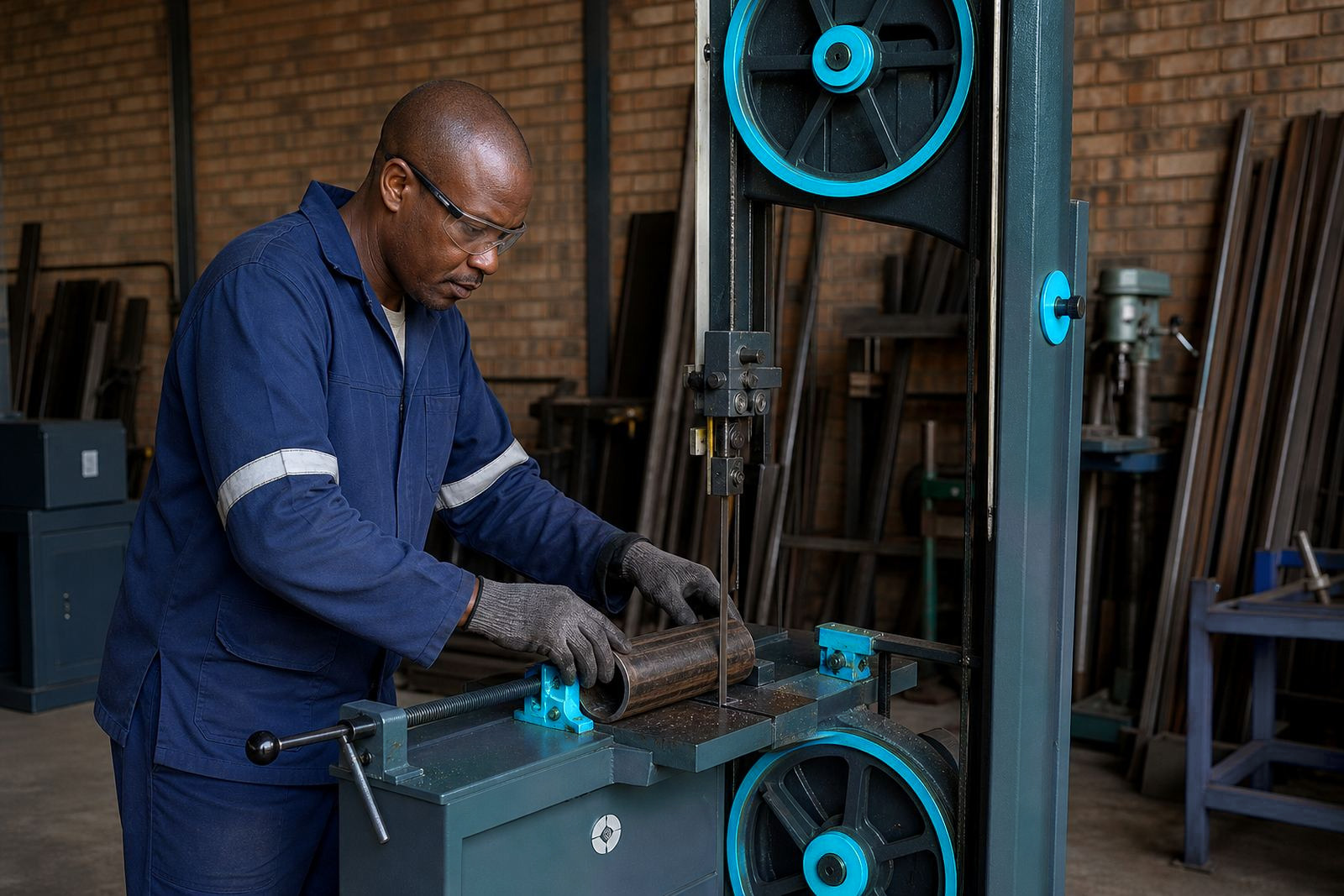
Blades matched to the machine, not guessed at
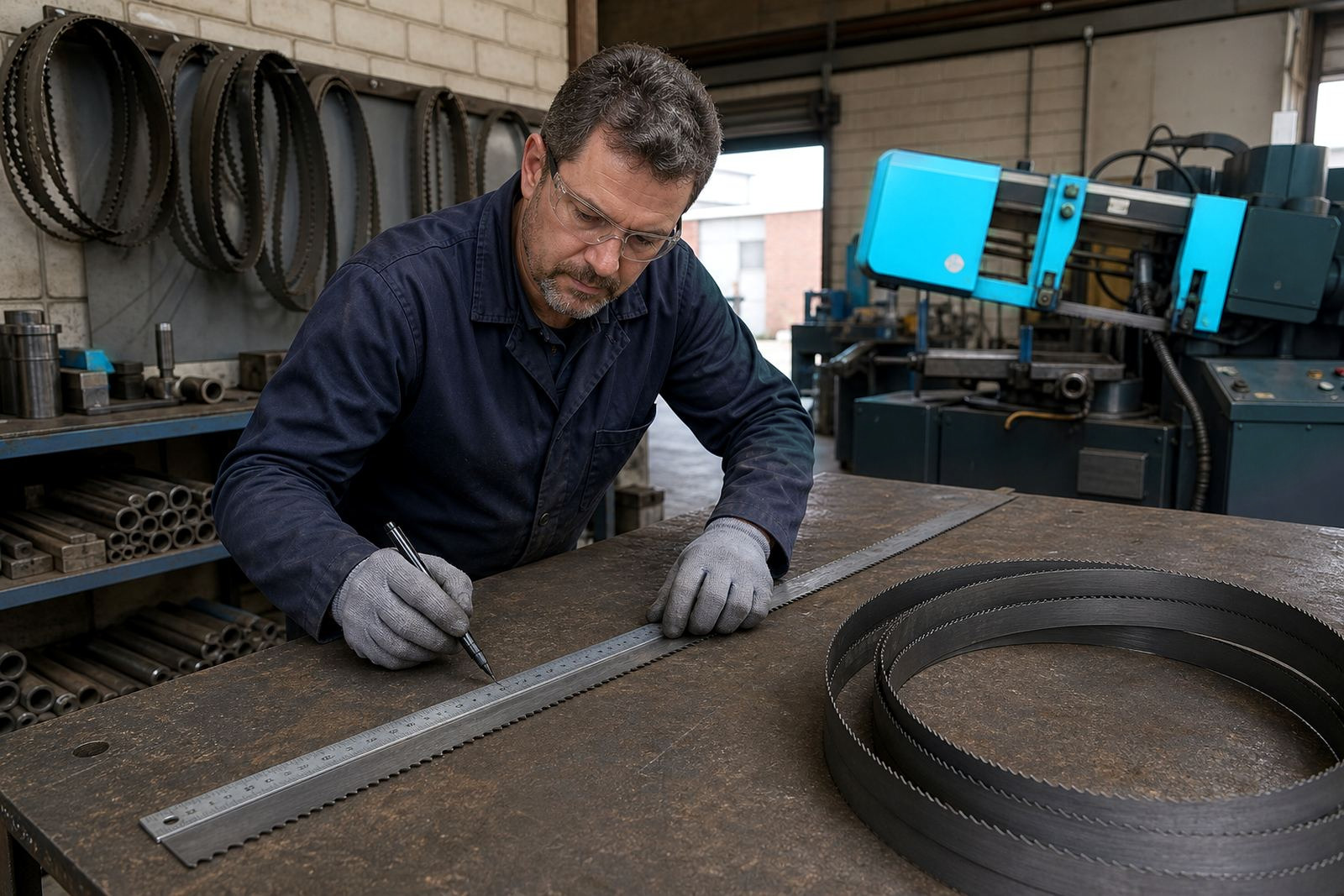
A cut-to-length blade is supplied to the exact loop size needed by the saw, then welded and finished for use on the machine. Frame, wheel size and blade guide set-up all need the blade to sit properly under load, so it does not wander or rub where it should not.
We work with bi-metal blades, including M42 grade options, and carbon steel blades for lighter duty work. For many metalwork jobs the right call comes down to material section, wall thickness, and whether the cut is solid bar, tube, angle, box or mixed scrap. A blade that suits mild steel bar may not suit stainless or hard section in the same way.
- Prepared to machine length for the saw in use
- Available in bi-metal and carbon steel construction
- Matched to section size, wall thickness and material type
- Welded, finished and checked for fit before supply
Width, pitch and set for the way metal cuts
Tooth pitch on a bandsaw blade changes how the blade loads through the cut. Fine pitch suits smaller solid sections and thin wall tube, while coarser pitch clears chips better on larger sections. Variable pitch can calm vibration on tricky cuts and reduce that harsh rhythmic chatter that shows up on long runs.
We also confirm blade width. Narrower blades suit tighter work and lighter frames, while wider blades bring more stability on straighter cuts and heavier sections. Tooth set and thickness need to match the saw too, because a blade that is too aggressive can track badly, heat up and fatigue early.
- Tooth pitch options from fine to coarse, including variable pitch
- Blade widths selected for the saw frame and the cut profile
- Blade thickness matched to guide support and wheel capacity
- Tooth set chosen to clear chips without overloading the cut
Where cut-to-length blades earn their keep
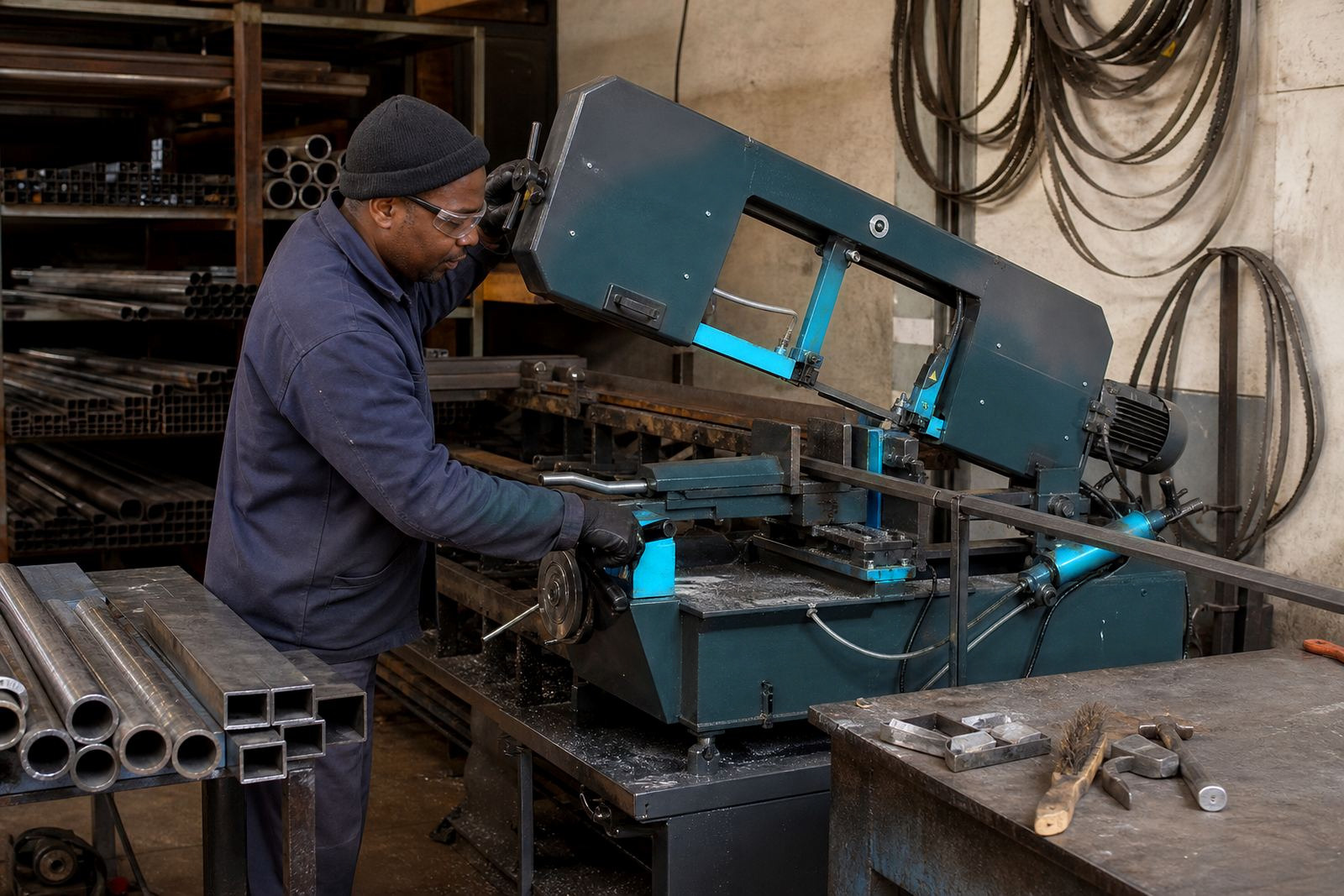
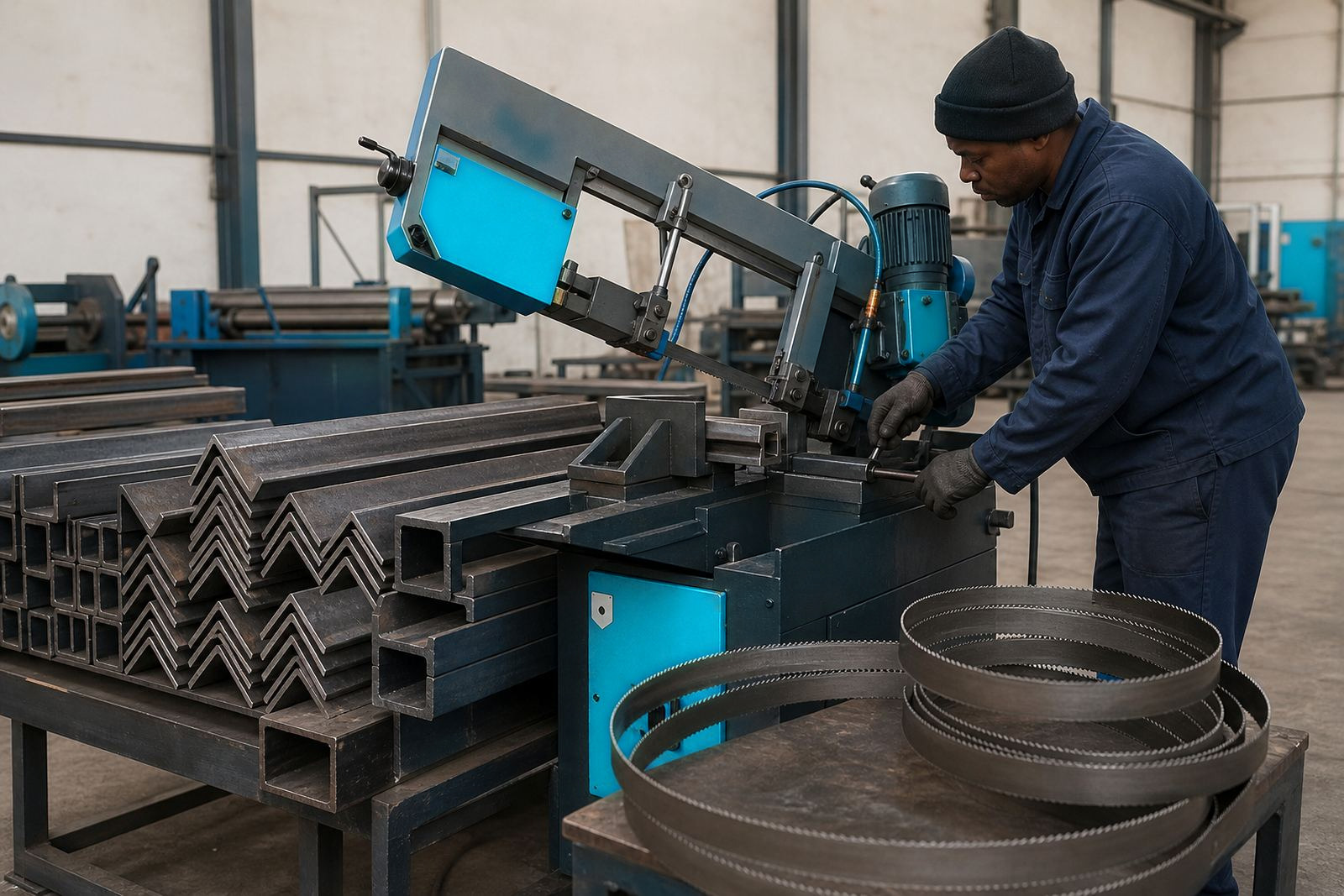
Workshops that cut steel daily or weekly can use these blades when they need one that fits the machine without rework. Fabrication shops, steel stock users, maintenance teams, general engineering benches and manual saw stations all use cut-to-length blades in different ways. The same blade length can behave very differently on a light horizontal saw and a heavier industrial machine, so fit has to be checked properly.
Used for mild steel, stainless, tool steel, pipe, structural section and mixed metal cutting, they give the operator cleaner control than a worn or poorly matched blade can give. On machines that use cutting fluid, coolant helps keep heat down and flush chips from the gullets, especially on thicker material and longer cuts.
- Suitable for fabrication, maintenance and engineering workshops
- Used on manual and powered bandsaw machines
- Works across solid, hollow and structural sections
- Coolant use improves cut life on harder or thicker stock
Fitting, welds and the first run on the machine
A cut-to-length blade needs proper installation. The weld must be sound, clean and dressed so it travels over the wheels and guides without a hard spot. After fitting, the blade tension, tracking and guide clearance should be checked, then the first cuts made with a sensible feed and speed for the job.
Run-in is important on new metal cutting blades. The initial cuts should be lighter, with reduced feed, so the tooth tips settle before full loading. A blade that is run in too hard can lose life early, especially on abrasive section or interrupted cuts. We also look at machine fit and tooth pitch selection when a saw has been cutting badly or burning through blades too fast.
- Welded and dressed for smooth travel on the saw
- Tracking, tension and guide clearance should be checked at fitting
- Run-in cuts are best kept light at first
- Feed and speed need to match the section being cut
Care that keeps the blade working properly
Blade care starts with keeping chips under control and not forcing the cut. If the feed is too heavy, the teeth round off faster and the blade can drift. If the speed is too high for the material, heat builds up and the tooth edges lose their bite. Coolant, where the machine uses it, should be clean enough to do its job and not thick with sludge or swarf.
After use, the blade should be inspected for missing teeth, cracked welds, uneven wear and signs of side rubbing. A blade failure review often shows a mix of the wrong pitch, poor set-up or feed pressure that was too hard for the job. Regular checks save time and reduce scrap, especially where the same machine is used for a wide mix of cuts.
- Maintain an even feed and do not push the blade
- Select a cutting speed that suits the material and section size
- Check coolant condition on machines that run with fluid
- Inspect for wear, tooth loss and tracking marks after use
What to confirm when ordering cut-to-length blades
Provide the machine length, blade width, tooth pitch and the material to be cut. If the saw is already in the workshop, the old blade can be measured and checked against the machine plate, but it is still worth confirming wheel diameter and guide style. For mixed cutting, starter kit planning can help standardise blade sizes across similar machines and reduce the confusion that comes from too many random lengths in stock.
For metalwork jobs across Johannesburg, Pretoria, Vereeniging, Durban and Cape Town, we also support stock standardisation where a workshop wants fewer blade types on hand. That approach makes it easier to keep the right width and pitch ready for common sections, while keeping the cut quality more even across the floor.
- Machine length and blade loop size
- Blade width, thickness and tooth pitch
- Material type and the most common section sizes
- Guide style, wheel size and whether coolant is used
- Need for starter kits, standardisation or machine fit checking