Blades built for steady workshop output
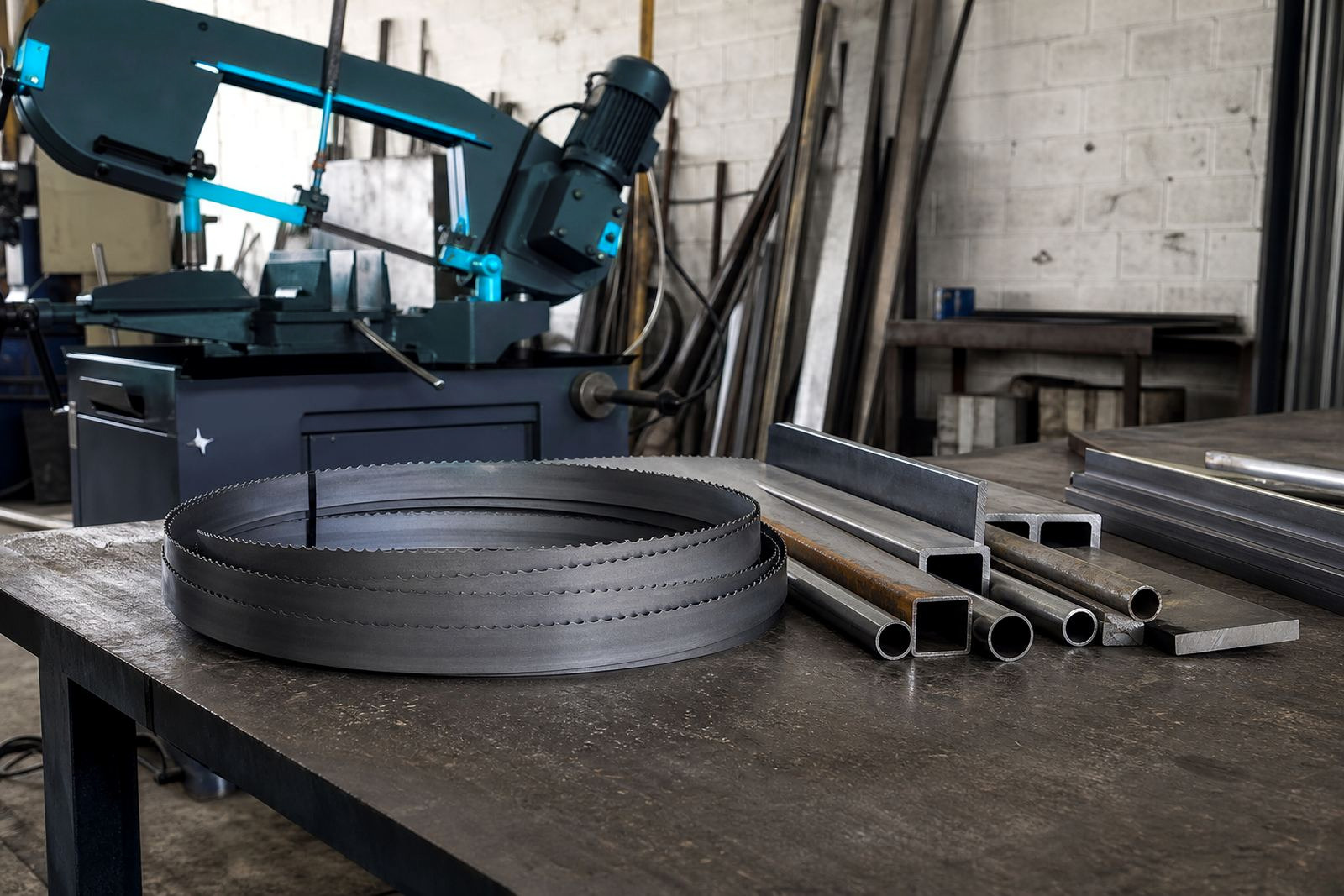
Production cutting blades are used where the same job runs many times and the cut has to stay straight from the first piece to the last. In metalwork, that usually means bandsaw blades for bar, tube, solid sections, structural shapes and mixed packs that move through a workshop day after day. The right blade keeps the feed steady, holds a cleaner line through the cut and reduces wasted material from wandering or premature breakage.
MoreCut Saws supplies production bandsaw blades in bi-metal and carbon steel options, with tooth forms suited to general workshop cutting, heavier sections and finer finish work. We also support manual saw users who want a blade that suits the machine, the material and the way the operator feeds the cut. For teams working with carbon steel, mild steel, alloy steel and similar materials, the tooth form and blade body have to be matched to the job rather than guessed at.
Widths, thicknesses and tooth pitches that match the cut
Blade selection starts with the section you are cutting and the smallest cross-section in the bundle or profile. Larger machines and bigger sections get stronger tracking with a wider blade, while lighter machines and tighter radius requirements suit a narrower blade. A heavier blade body can hold up better on production runs, while a lighter build may suit smaller machines or thinner wheels.
- Bi-metal blades for longer life on regular workshop cutting
- Carbon steel blades for lighter duty and basic machine use
- Variable pitch options for mixed section sizes and reduced vibration
- Fixed tooth pitch selections for regular material and repeat cuts
- Blade widths chosen to suit wheel size, guides and section depth
- Blade thickness matched to the machine and cut load
Tooth pitch is measured in TPI, and the right choice depends on material wall thickness, section size and how much tooth engagement the blade carries through the cut. Fine pitch blades are useful on smaller solids and lighter walls, while coarser pitches clear chips better on thicker stock. On mixed bundles, variable pitch can help reduce chatter and keep the tooth load more even.
Where production blades earn their keep
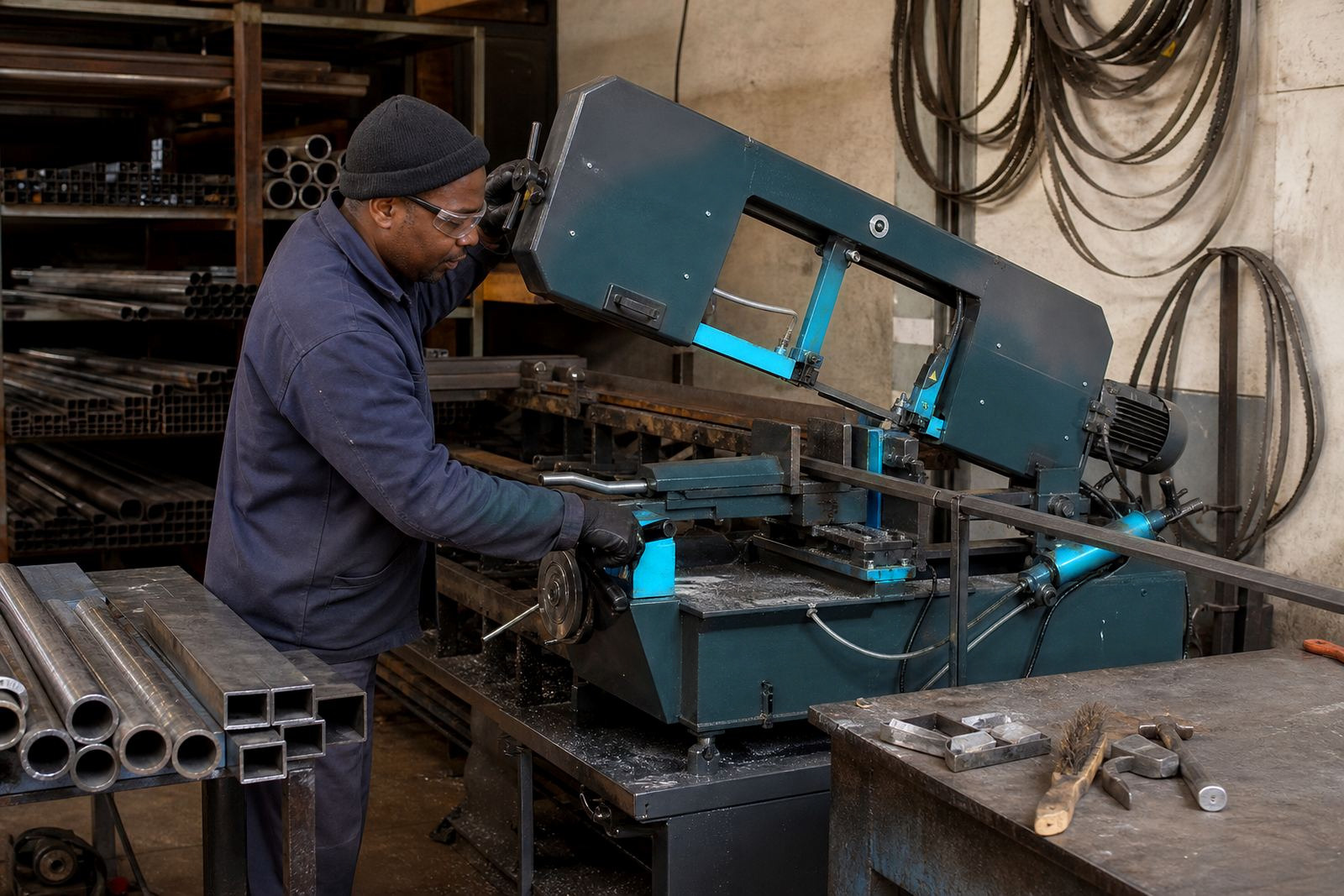
Fabrication shops, maintenance teams, steel stockholding yards, machine shops and manual saw stations use these blades for the same materials across a working week. They also suit environments that need repeatable cuts rather than one-off versatility, such as batch cutting for handrails, frames, brackets, shafts and cut-to-length sections. On coastal jobs in Durban, corrosion control and coolant condition need more attention because damp air can affect storage and cutting performance.
For production work, feed speed and blade speed need to match the tooth pitch and the stock being cut. If the feed is too heavy, the blade can pull off line or strip teeth. If the speed is too high for the material, heat rises and the set on the teeth wears faster than it should. A proper run-in on a fresh blade helps the tooth edges settle before full production cutting starts.
- Regular bar and tube cutting in workshop bays
- Repeat batch work where cut size must stay uniform
- General metal fabrication and repair sections
- Manual saw applications with controlled feed pressure
- Mixed steel packs where blade choice affects output
Fitting, welding and machine checks before the first cut
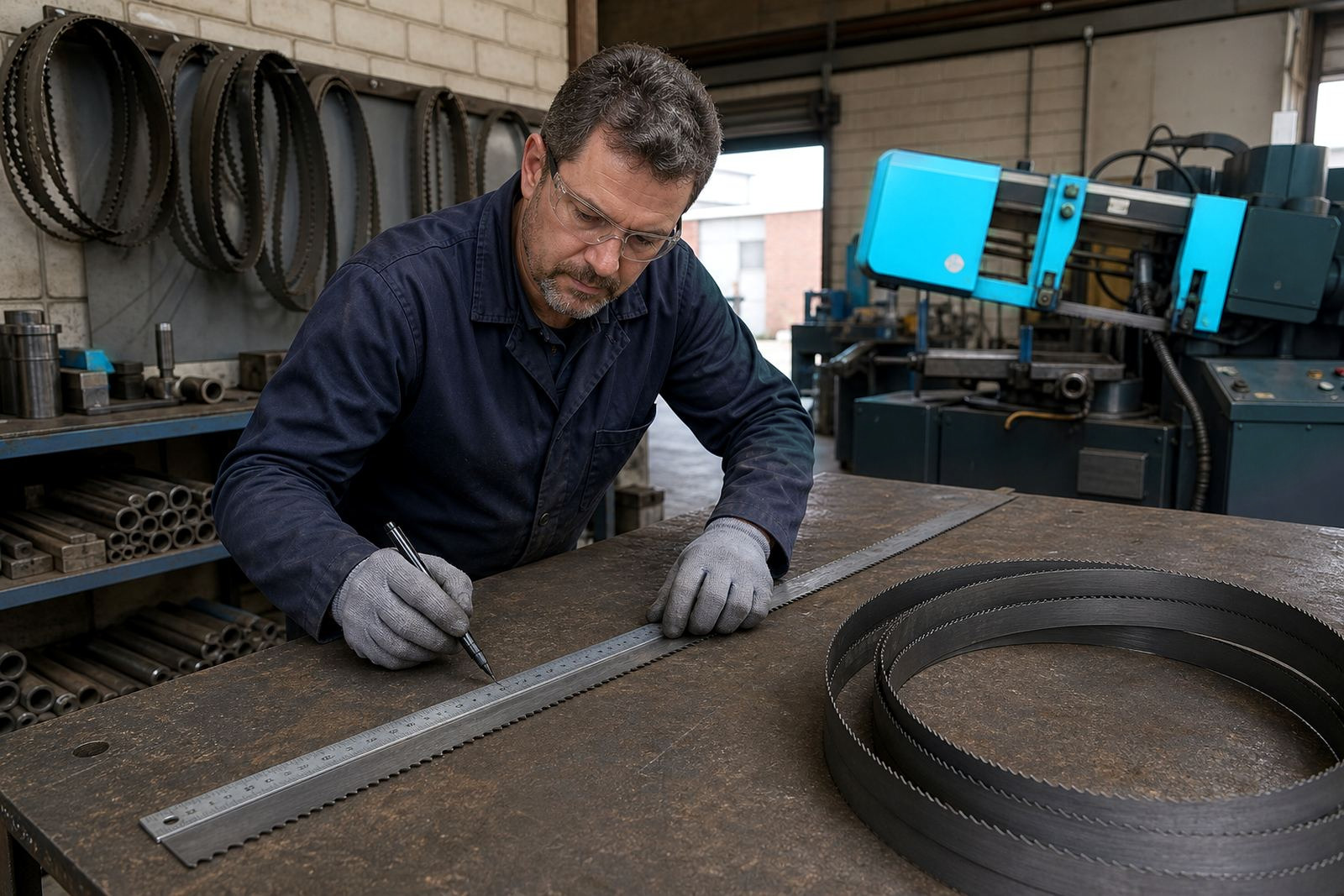
Production cutting blades often need to be welded to length so they fit the saw correctly and run true on the wheels. A proper weld should be dressed cleanly, aligned through the blade body and checked so the blade tracks without a bump at the joint. Length verification is part of that process, especially on older machines where wheel condition and tension range can shift the working length.
We look at machine fit, guide condition and the blade path before supplying a length for weld-to-length service. Wheel diameter, guide spacing and tension settings all affect the width and thickness that will work properly. If the machine has worn guides or poor alignment, even the best blade will show early wear at the weld or on one edge of the teeth.
- Welded to length for workshop saws
- Length verification for correct fit on the machine
- Machine fit checks where guides, wheels and tension are assessed
- Starter kit planning for new or changing workshop cutting needs
- Manual saw support for operators who run smaller equipment
Run-in, coolant and tooth care on the floor
Before full output begins, let the tooth edges settle during a short run-in period on a new blade. Use lighter feed for the first cuts, keep a steady speed and watch chip shape closely. A dull, powdered chip can point to poor speed or feed, while long blue chips can point to heat and a tooth pitch that is too fine for the section.
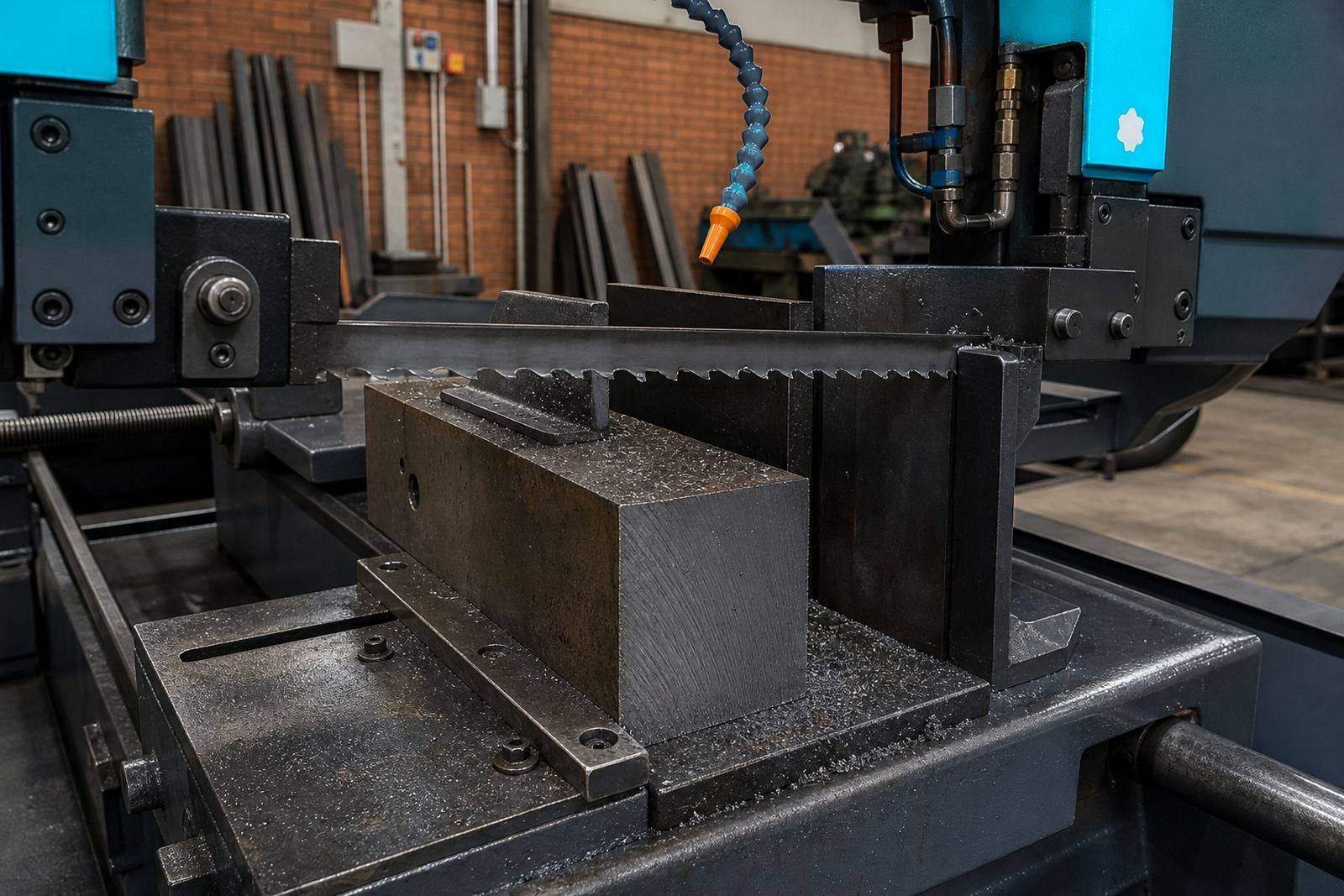
Check coolant on production blades, especially where the saw runs all day or where material packs heat into the cut. Coolant should carry heat away, help the teeth clear chips and keep swarf from loading up between the gullets. On dry cutting setups, the operator needs to watch temperature more closely and keep the blade path clean so chips do not weld onto the set.
Good care also means checking the blade after long runs for cracked welds, missing set, chipped teeth or signs that the cut is drifting. If a blade starts hunting in the cut, the tooth form, tension, feed speed or guide setup may need attention before the next batch goes through.
Details to confirm when placing a blade order
When a workshop orders production cutting blades, the useful details are practical and specific. Material type, section shape, wall thickness, solid size, machine model and the intended cut rate all help narrow the blade choice. When work shifts between light wall tube and heavier solids, tooth pitch and blade body may need to change too.
It helps to confirm the blade width, thickness, tooth pitch, variable or fixed pitch preference and whether the blade must be welded to length. Manual saws need a different operator method, because steady hand feed and guided feed behave differently on the same machine. Stock standardisation can be useful where a workshop wants fewer blade types on the shelf and less confusion at changeover.
- Material grade and whether the cut is mild steel, alloy steel or mixed stock
- Section size, wall thickness and largest or smallest profile in the batch
- Machine type, wheel size and whether the blade needs welding to length
- Preferred finish, cut rate and whether coolant is used on the saw
- Blade width, thickness and tooth pitch or variable pitch preference
- Any history of blade breakage, drift, chatter or poor tooth life
Key facts
| Product type | Bandsaw blades for production cutting in metalwork |
|---|---|
| Blade options | Bi-metal, carbon steel and variable pitch |
| Tooth pitch | Selected in TPI to suit section size and material |
| Blade widths | Matched to machine guides, wheels and cut depth |
| Services | Weld-to-length, length verification and machine fit check |
| Support areas | Alberton, Johannesburg, Pretoria, Vereeniging, Durban and Cape Town |