

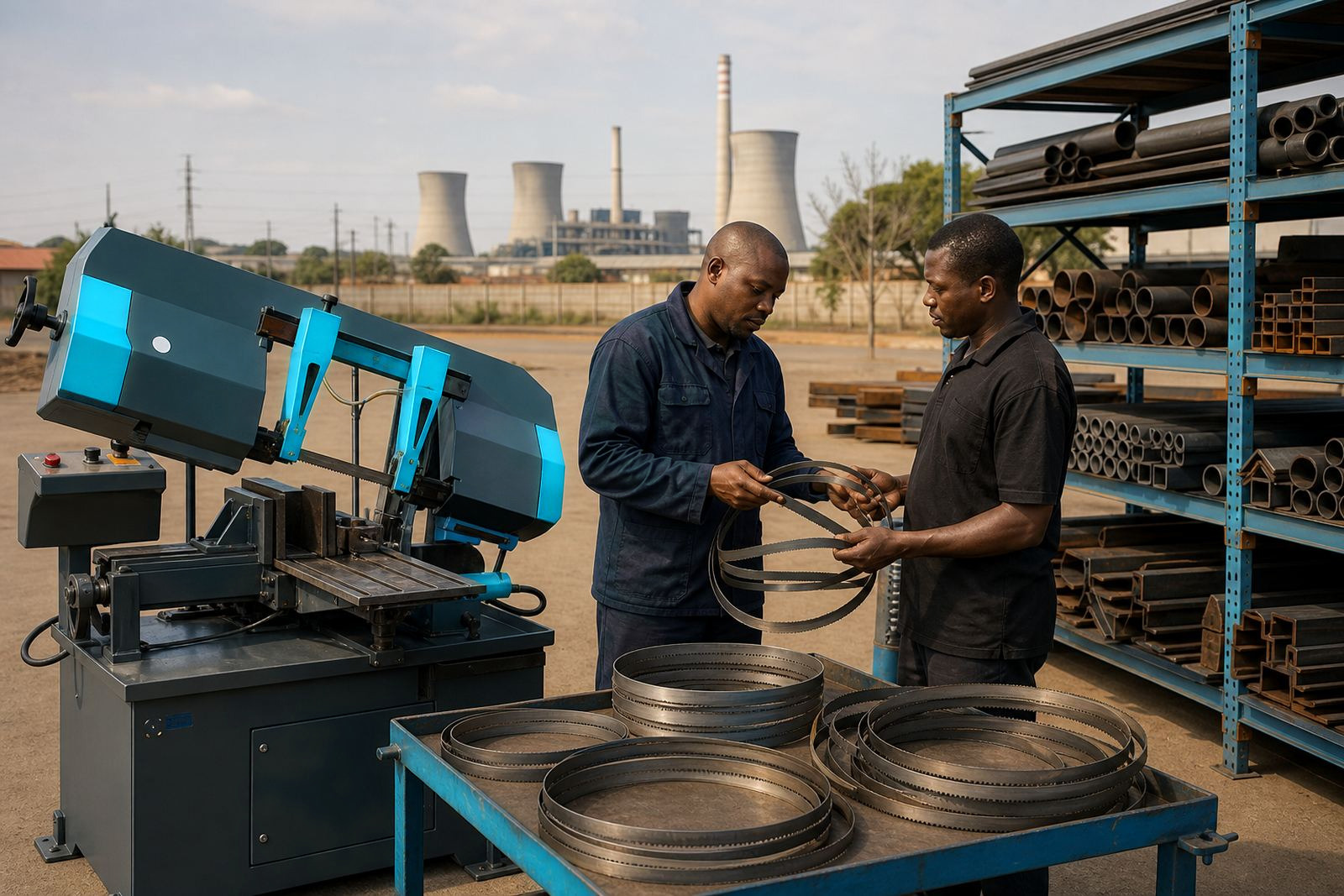
Alrode to Alberton, where blade work starts
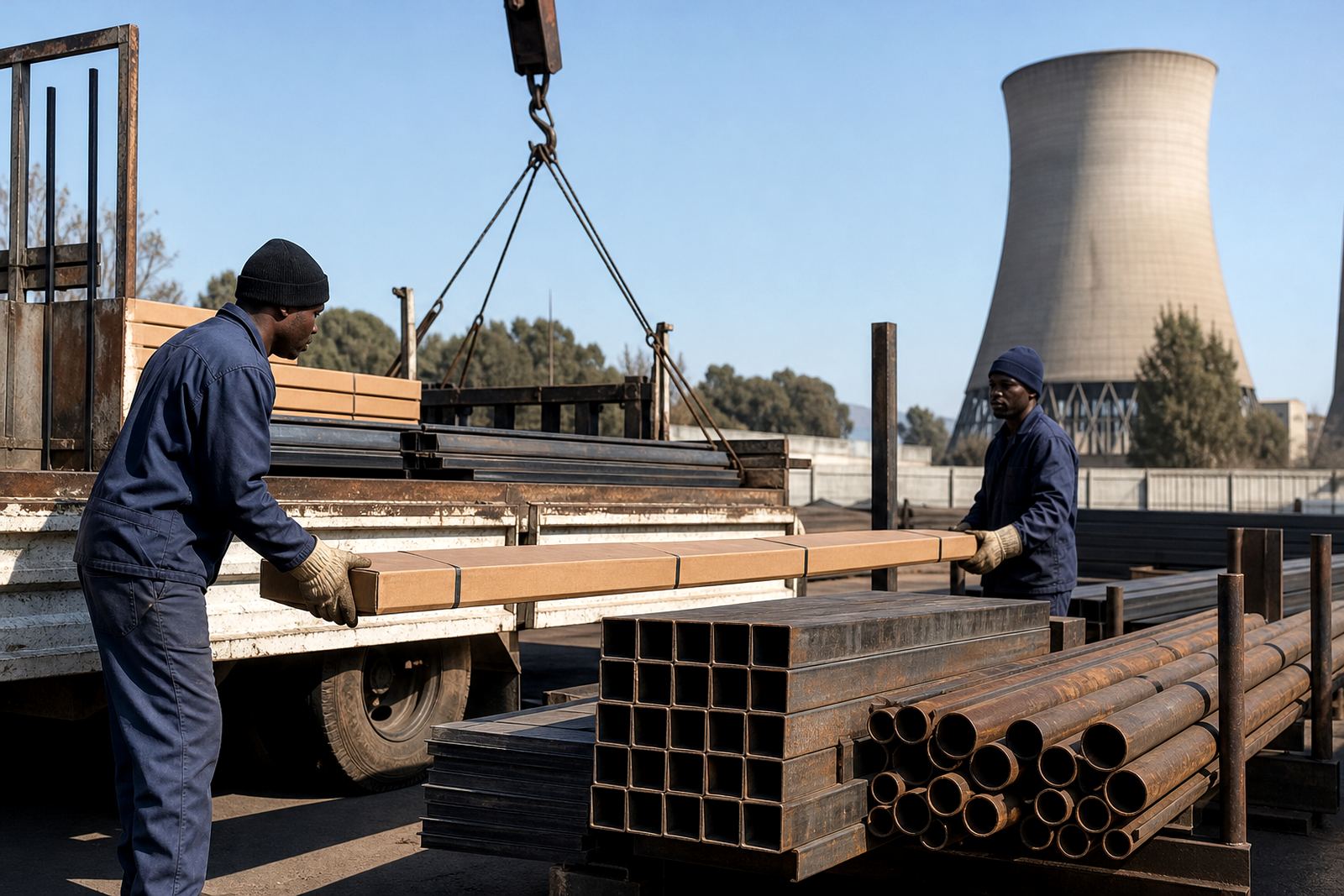
Our base in Alrode sits close to a busy industrial belt, so the jobs that come through often involve mixed steel sections, cut-off work and repeat blade supply for workshops that cannot afford guesswork. In Alberton and nearby yards, blade choice tends to hinge on tooth pitch, blade width, thickness and whether the saw is running through solid bar, tube or bundled stock.
- Weld-to-length for bandsaw blades used on site or in the workshop.
- Length verification before fitting a replacement blade.
- Starter kit planning for a new saw line or a changed material mix.
Johannesburg and Germiston, where mixed material cutting is common
Johannesburg and Germiston usually bring a wider spread of cutting jobs, from mild steel to harder sections and awkward offcuts. Pick the tooth pitch with care, and check the blade set once the teeth are on the cut. A blade that is too coarse can chatter, while a fine pitch on thick material can pack chips and shorten blade life.
For these areas we often look at variable pitch bandsaw blades, bi-metal M42 blades and carbon steel blades for lighter work or simpler saws. Feed speed, run-in and coolant checks come into it too, especially where the same machine cuts several shapes in one shift.
Pretoria and the northern industrial belt
Pretoria workshops often need blades that can keep a steady cut across structural steel, tube and general fabrication stock. The right blade width helps the saw track properly on larger workpieces, while the thickness needs to suit the machine and the type of feed being used. A manual saw can behave very differently from a powered band saw, so the blade has to match the machine and the operator's habits.
- Tooth pitch selection for single sections and mixed bundles.
- Machine fit checks for bandsaws and manual saws.
- Feed speed advice where the cut starts to wander or burn.
Vereeniging and the Vaal industrial side
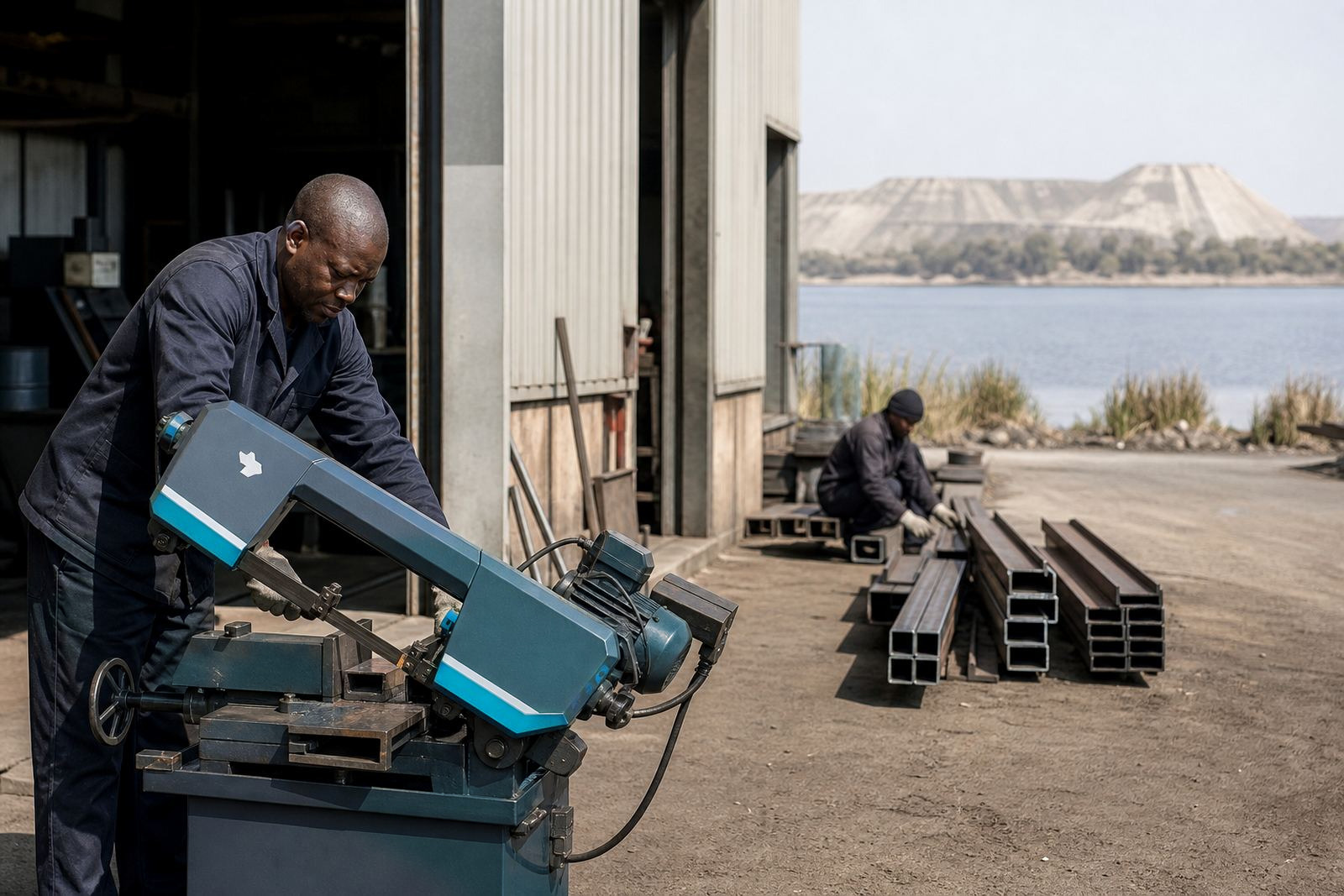
Vereeniging jobs often come with long production runs, heavy sections and shops that need blade stock kept in step with regular usage. Here, standardising blade sizes can save confusion on the floor and help different operators use the same set-up. Blade failure review is useful when a blade snaps early, cuts crooked or shows tooth wear in one area only.
We also look at coolant use, chip evacuation and whether the blade needs a different set or tooth form for the material. In hot conditions and dusty sheds, these details can shorten blade life faster than people expect.
Durban and the coastal work environment
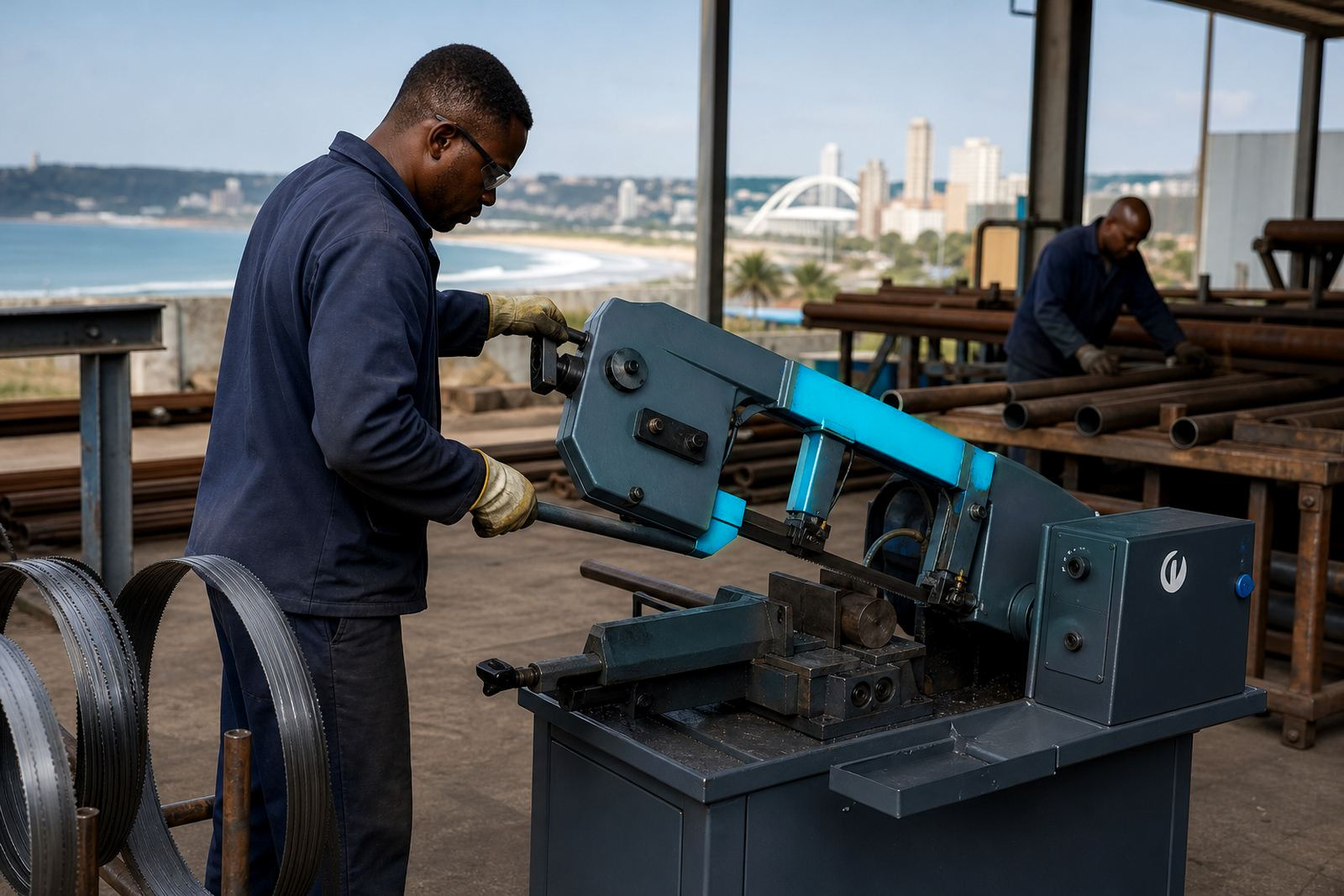
Durban brings humidity, salt air and workshop conditions that can affect stored blade stock and the cut finish if the set-up is off. Bi-metal blades are often used where the material mix is varied and the saw must hold up under regular use. Carbon blades still have a place on lighter duties, but the choice depends on the machine, the stock and the finish expected.
- Blade width selection for stable tracking in long runs.
- Run-in guidance for new blades before full production feed.
- Coolant checks where heat and chip build-up affect the cut.
Cape Town and the far south supply route
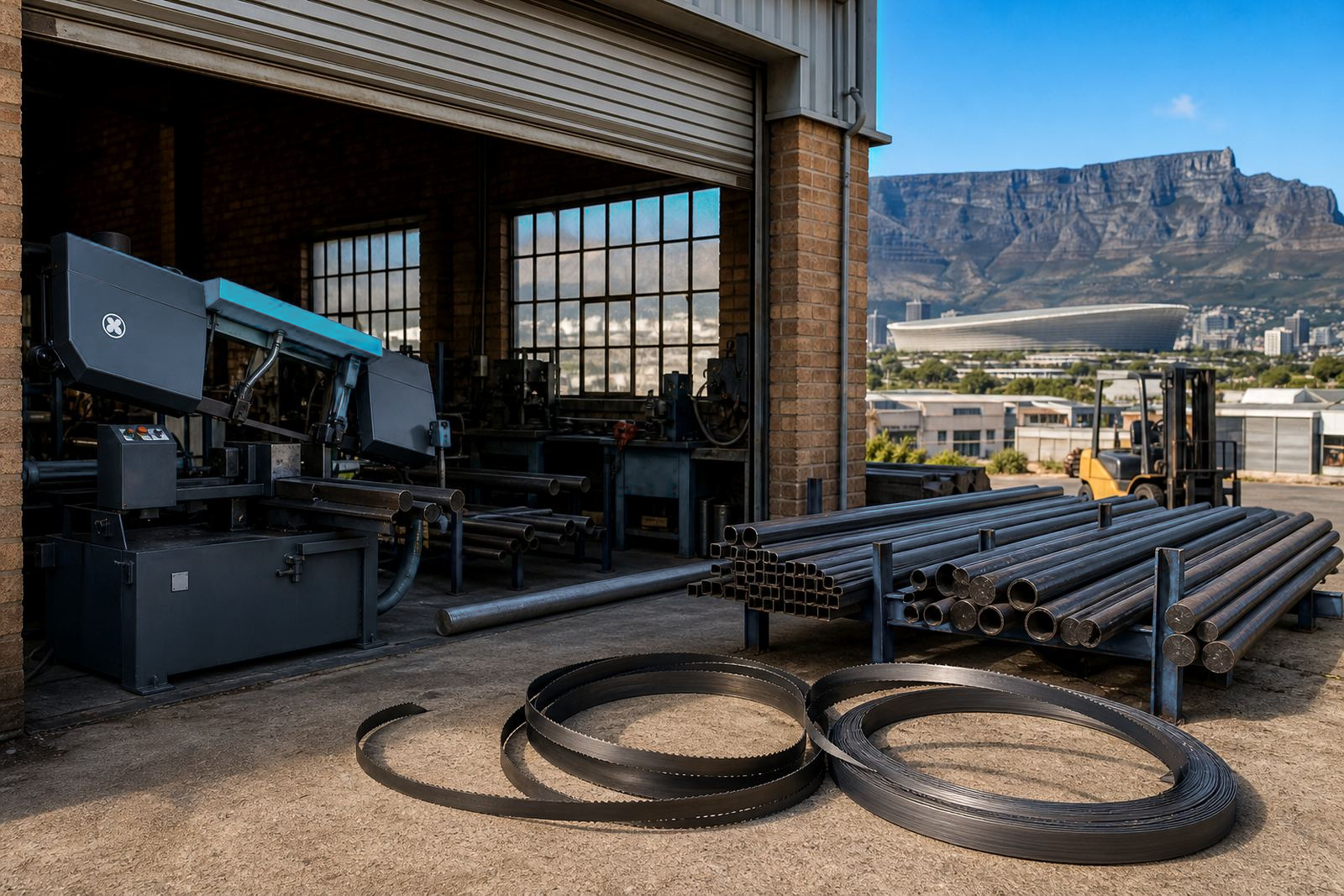
Cape Town workshops often need reliable blade planning because stock can be spread across different bays, branches or separate job cards. A starter kit can help a team begin with the right bandsaw and hacksaw blade mix, especially when the work changes between light fabrication and heavier section cutting. The blade size, tooth pitch and thickness need to fit the material and the machine, and match the old sample on the shelf.
Length verification and weld-to-length service are useful where the saw room keeps a tight stock room or uses uncommon lengths. For repeat work, we also help standardise blade ranges so the same jobs do not call for a new guess every week.
How the delivery map is usually matched to the job
In every area the same three questions come first: what the workshop cuts, how the saw is set up and which blade support makes the job easier to manage. Some teams need help with a single replacement blade, others need a small stock plan for several machines, and some need manual saw support where the cutting load is shared across shifts.
- Tooth pitch selection for the material and section size.
- Blade width selection for the saw and the cut path.
- Stock standardisation for teams using several blade types.
We supply through Johannesburg Supply, Pretoria Supply, Vereeniging Supply, Durban Supply, Cape Town Supply, Germiston Supply and Boksburg Supply.