Send the job details
Use our contact form and include the cutting job, the machine type, and the material profile you are working with. Mild steel tube, solid bar, stainless sections and aluminium all call for different tooth pitch, blade width and cutting settings, so the more detail you add the better the guidance can be.
- Saw make and model, or a nameplate photo
- Blade length if you need a weld-to-length service
- Material type, section size and wall thickness
- Current blade width, thickness and tooth pitch if known
- What is going wrong, such as poor finish, wandering cut or tooth stripping
Blade help for workshop cutting
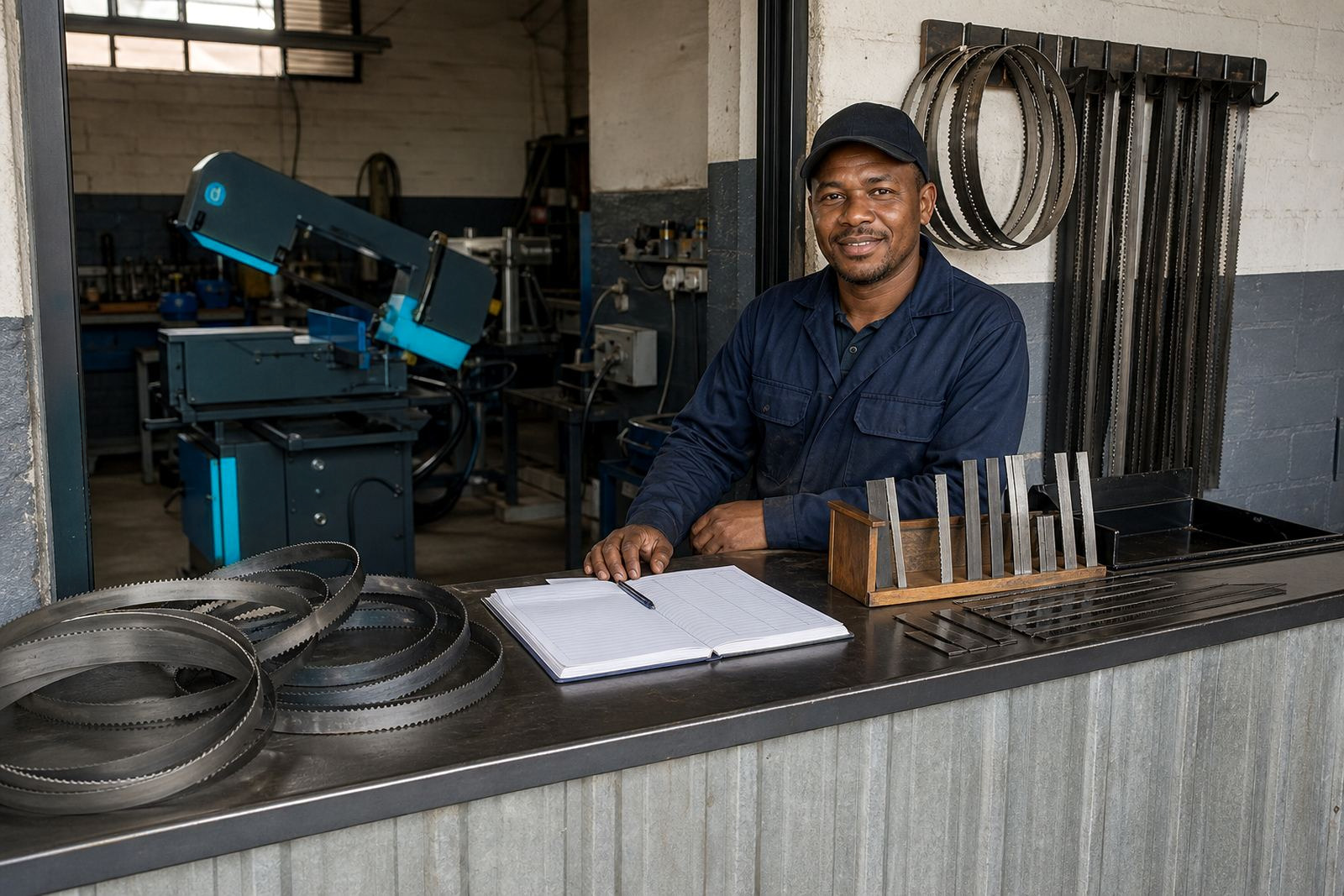
We handle bandsaw blades and hacksaw blades for metalwork, including bi-metal M42, carbon steel, variable pitch blades and starter kits. If you are unsure about set, run-in, feed and speed, coolant use or tooth count, give us the job details and we can guide the choice step by step.
That includes blade width for stability, thickness for the cut load, and tooth pitch matched to the section size. A fine pitch suits smaller sections and thin wall material, while a coarser pitch works better on heavier stock where chip clearance is important.
What to include for weld-to-length work
If you need us to join one to size, tell us the precise measurement and whether you need a finished loop for a bandsaw or a straight piece for manual saw support. A quick check on the machine guide, wheel size and tensioning method helps reduce errors at fitting time.
- Exact blade length in millimetres, if known
- Whether the blade is for a horizontal or vertical machine
- Any preferred tooth pitch or blade width already in use
- Signs of breakage, cracked welds, or repeated tooth loss
Areas we serve from Alrode
Our base in Alrode, Alberton supports workshops and plant rooms across Johannesburg, Vereeniging, Pretoria, Durban and Cape Town, as well as Germiston and Boksburg. Orders and enquiries from these areas often involve repeat blade sizes, stock standardisation or a machine fit check for more than one saw on site.
If you work across multiple branches, tell us which site needs the blades and whether each saw uses the same length and tooth pattern. That helps with length verification and starter kit planning when the machines are not identical.
Useful notes from the shop floor
Blade failure review is easier when you mention what the blade looked like after the cut. Bluing, cracked teeth, chatter marks and crooked tracking point to different causes, and on longer runs or tougher material the coolant condition can add to the fault.
- Cut speed and feed setting used on the job
- Whether coolant was running and how it was applied
- Any change in noise, vibration or finish before failure
- Whether the machine is manual or powered feed
Who handles the blade side here
Sibusiso Dawood leads the team at MoreCut Saws, with support from Anika Nortje, Pieter Moonsamy, Lerato Zungu, Themba Chetty and Chanel Jacobs. The enquiry form reaches the right people for sales, welding, technical support and operations, so the right notes land with the right person.
If you are sorting a single blade, a starter kit or a full workshop list, add the details in the form and let us work from the machine and the material.