Bi-metal M42 for mixed steel work
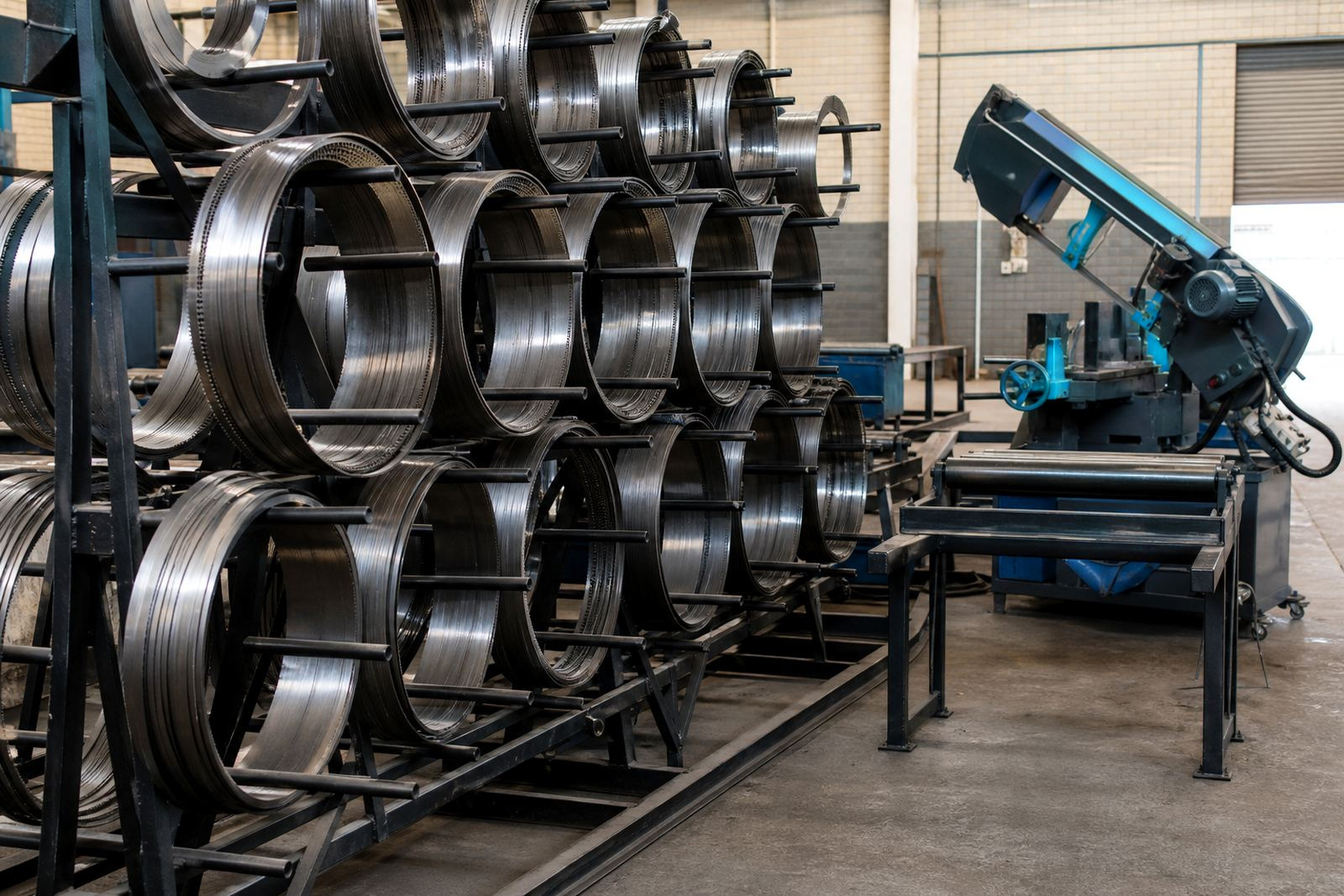
M42 General Purpose is a bi-metal bandsaw blade built for routine workshop cutting across mild steel, alloy steel and general fabrication stock. The tooth edge carries high-speed steel performance, while the backing strip gives the blade the flexibility needed for steady running through repeated cuts.
In practice it suits workshops that cut a spread of material sizes in the same shift. Solid round, square bar, tube, angle and channel all need different tooth counts and blade widths, and the blade must match the job so the machine can do the work properly.
- Bi-metal construction with M42 tooth edge
- Used on horizontal and vertical bandsaws
- Suitable for mixed stock and changing section sizes
- Works with weld-to-length blade supply for shop use
Size choices that affect cut quality
Blade choice starts with the machine length, then moves to width, thickness and tooth pitch. On larger sections and heavier stock, a wider blade tracks better and cuts straighter, while smaller machines and tighter work suit a narrower blade. Blade thickness changes how it rides on the wheels and how well it carries through the kerf.
Tooth pitch is where many cutting problems begin. Coarse pitch clears thick sections well, while finer pitch gives cleaner engagement on lighter wall tube and smaller bars. Variable pitch helps reduce chatter on mixed work, especially when a batch includes both solid and hollow sections.
- Typical widths include 13 mm, 19 mm, 27 mm and 34 mm
- Common thickness options include 0.65 mm and 0.90 mm
- Pitch selection can be fixed or variable
- Blade length is supplied to the machine requirement
Where this blade fits in the workshop
This blade suits general fabrication bays, maintenance teams, steel stock cut-off points and manual sawing stations that handle a mix of profiles. For Johannesburg, Alberton, Germiston, Boksburg, Pretoria, Vereeniging, Durban and Cape Town workshops, it suits daily cut lists that shift from one material to the next.
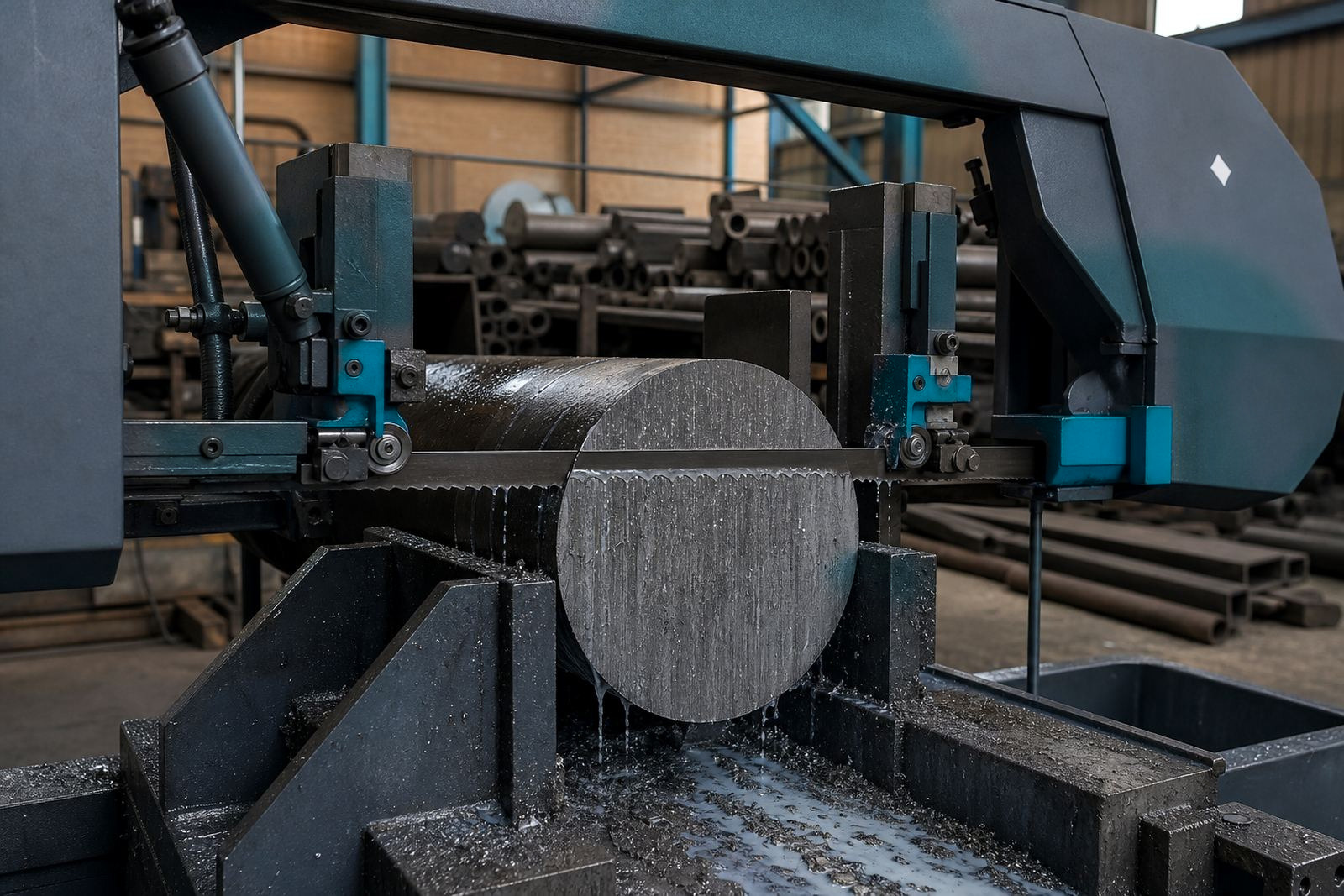
It handles solids, tubes and structural sections well when the feed is controlled and the blade is allowed to work at the right speed. On heavier sections, a slower feed and steady chip formation help the teeth stay sharp. On thin wall tube, the blade needs a finer pitch and a lighter hand to keep the cut clean.
- Good for repair shops and fabrication counters
- Useful for batch cutting and mixed one-off work
- Suitable for steel stock handling and maintenance crews
- Can be matched to manual saw support where needed
Fitting, run-in and machine settings
Correct fitting, proper tension and a careful run-in period are needed for a new blade. The teeth should be set to track properly, with guides adjusted so the blade runs square and does not wander under load. If the blade is too loose or too tight, or the guides are not set correctly, tooth damage starts early.
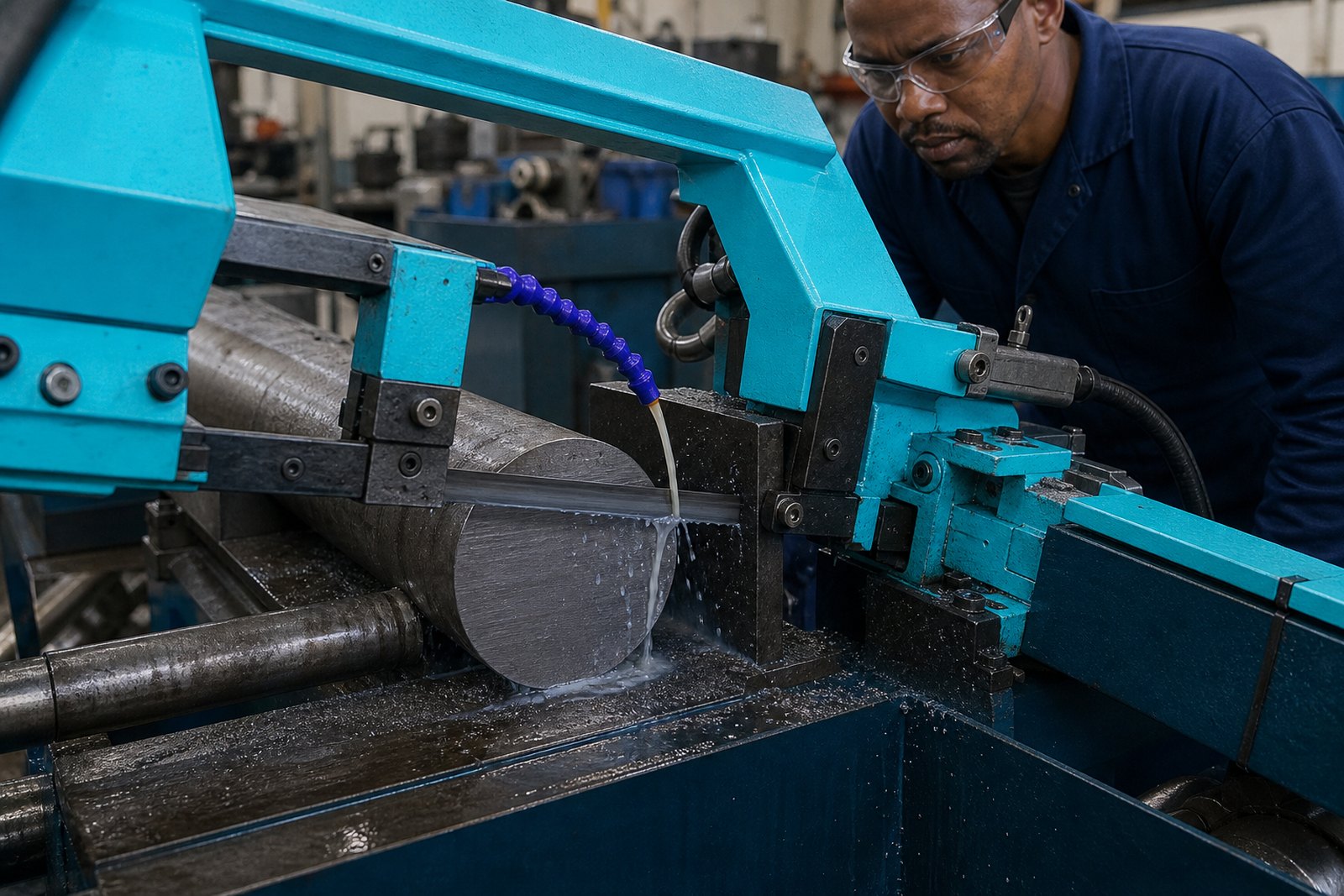
Run-in means starting with a lighter feed on the first cuts so the tooth edges settle in before full production work begins. Feed and speed must suit the material and the section size, and coolant should be checked where the machine uses it. Dry cutting can work on some manual saws, but coolant remains important on longer runs and heavier stock.
- Check blade tension before first use
- Set the guides close enough to support the blade
- Use lighter feed on the first few cuts
- Confirm coolant flow on machines fitted for wet cutting
Ordering details that save back-and-forth
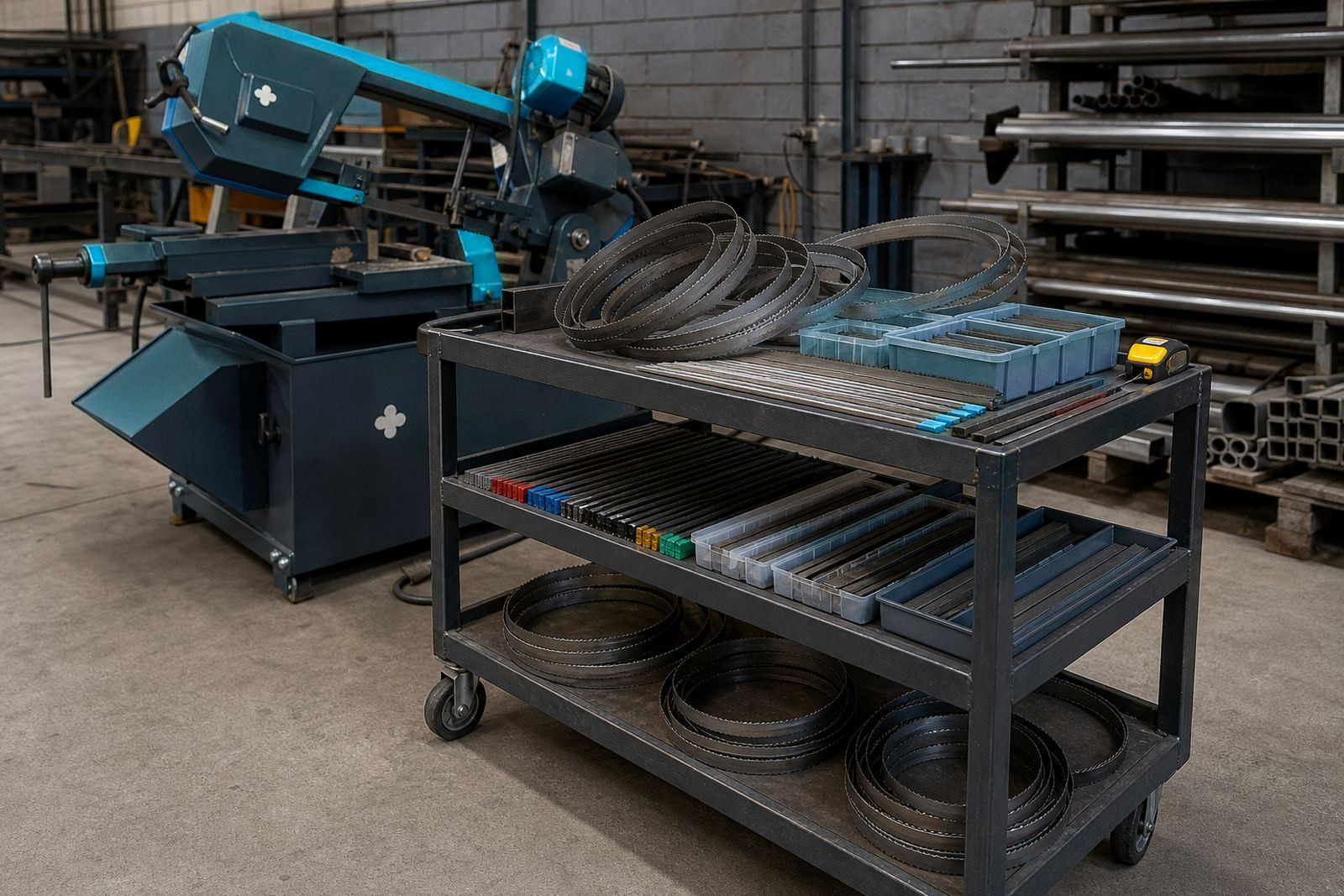
When ordering, the most useful details are the machine model or blade length, the material being cut, the thickest and thinnest section, and whether the work is mostly solid or hollow. Tooth pitch, blade width and thickness should follow from that. If the workshop uses several machines, stock standardisation can reduce confusion and keep the same blade family across the floor.
We also check blade failure history, because chipped teeth, cracking at the weld or premature wear often point to the wrong pitch, poor feed, wrong speed or guide alignment. For shops that cut the same profiles every week, a starter kit or standard stock line can make blade handling far less messy.
- Machine length or old blade length
- Material type and section sizes
- Desired tooth pitch or pitch range
- Blade width, thickness and quantity needed
Weld-to-length supply and technical back-up
MoreCut Saws supplies weld-to-length blades for workshops that need a blade matched to the saw rather than a random stock size. Length verification helps prevent a blade being too tight for the wheels or too slack to track properly, and that saves time at fitting stage. For mixed work, a machine fit check can also help settle the right tooth pitch and width before the blade goes into regular use.
Our team in Alrode, Alberton supports customers with blade selection help, starter kit planning, run-in guidance and coolant checks for metal cutting work. That support covers bandsaw blades and hacksaw blades for shops that want a clearer pattern across their cutting bench.
- Weld-to-length blade service
- Length verification and machine fit check
- Tooth pitch and blade width selection
- Blade failure review for repeated cutting issues
Key facts
| Blade type | Bi-metal M42 bandsaw blade for general purpose metal cutting |
|---|---|
| Tooth form | Standard or variable pitch, selected for mixed stock |
| Common widths | 13 mm, 19 mm, 27 mm, 34 mm |
| Common thickness | 0.65 mm or 0.90 mm |
| Best suited to | Solids, tubes, angle, channel and structural sections |
| Service options | Weld-to-length, length verification and fitting support |