Blade types that suit vertical cutting jobs
Vertical saws work across trimming, slotting, profile shaping and general workshop preparation, so the blade has to match the material and the cut line. For softer steel, tube, flat bar and mixed section work, a bi-metal blade with an M42 edge is a steady option. Carbon steel blades still have a place on lighter-duty manual saws and on routine cutting where the material is not too hard or abrasive.
We help match blade style to the job, then set the tooth pitch and blade width so the cut stays controlled through turns and straight runs. On vertical machines, the operator guides the work by hand, so a blade that is too coarse or too wide can fight the cut.
- Bi-metal M42 for general metalwork and longer blade life
- Carbon steel for lighter use and simpler workshop work
- Variable pitch for reducing vibration on mixed sections
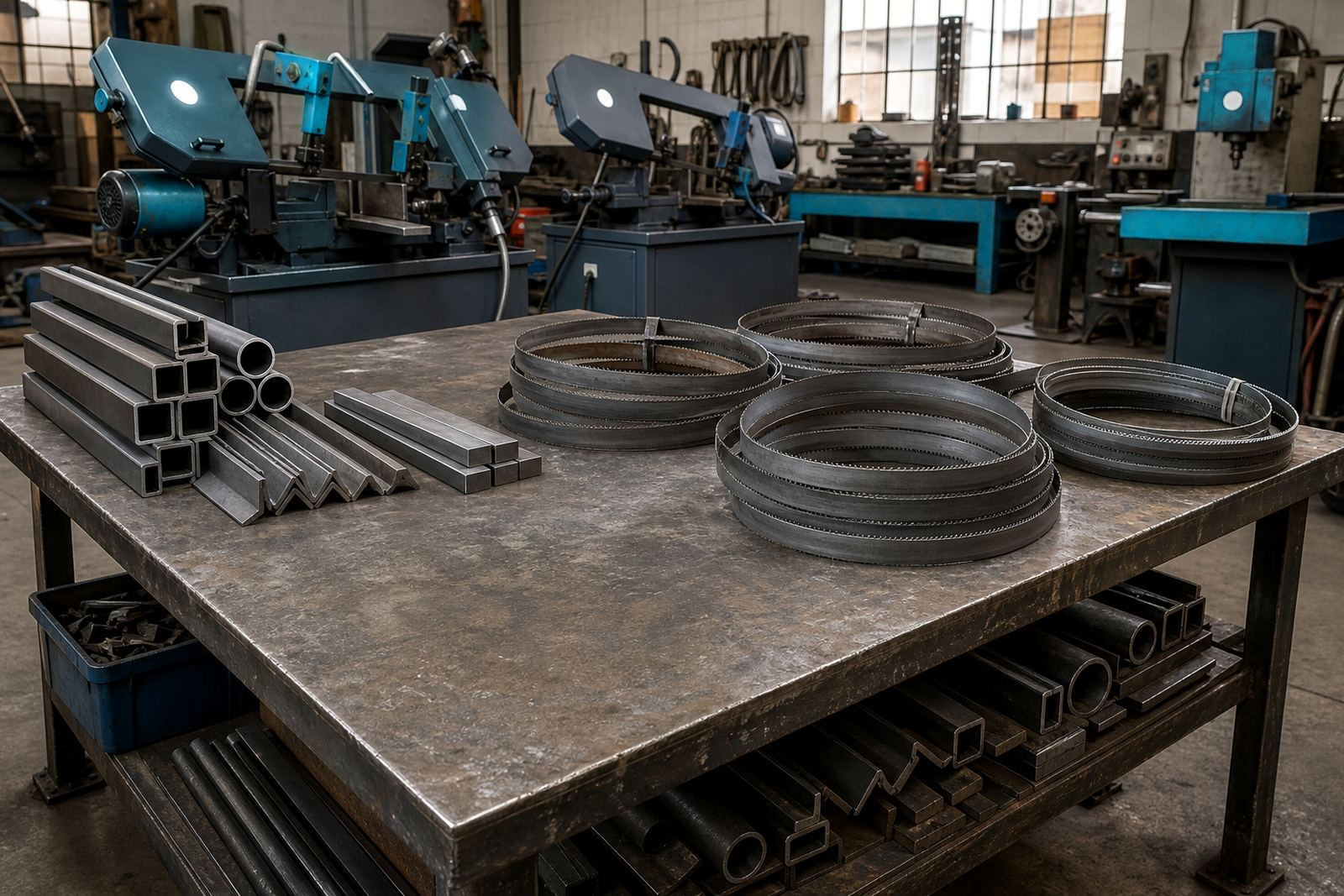
- Welded lengths supplied to fit the machine throat and wheel set
Sizes, widths and thicknesses that fit the machine
Vertical saw blades need to suit the wheel diameter, guide setup and table opening on the saw. Width affects straight tracking and curve ability, while thickness affects blade stiffness and how the blade sits in the guides. Narrower blades work better on tighter radius work, while wider blades help on straight trimming and repeatable preparation cuts.
Tooth pitch is just as important. A finer pitch gives more teeth in the cut, which can help on thin wall tube and small section. A coarser pitch clears swarf better on heavier sections. Variable pitch is useful where the saw sees a mix of sizes in one shift, because it helps reduce chatter and gives a cleaner finish across changing loads.
- Common widths selected for curve work, general trimming and straight cuts
- Thickness chosen to match guide capacity and blade stiffness
- Fixed pitch or variable pitch according to section size
- Length verified before welding so the blade seats correctly
Where vertical saw blades earn their keep
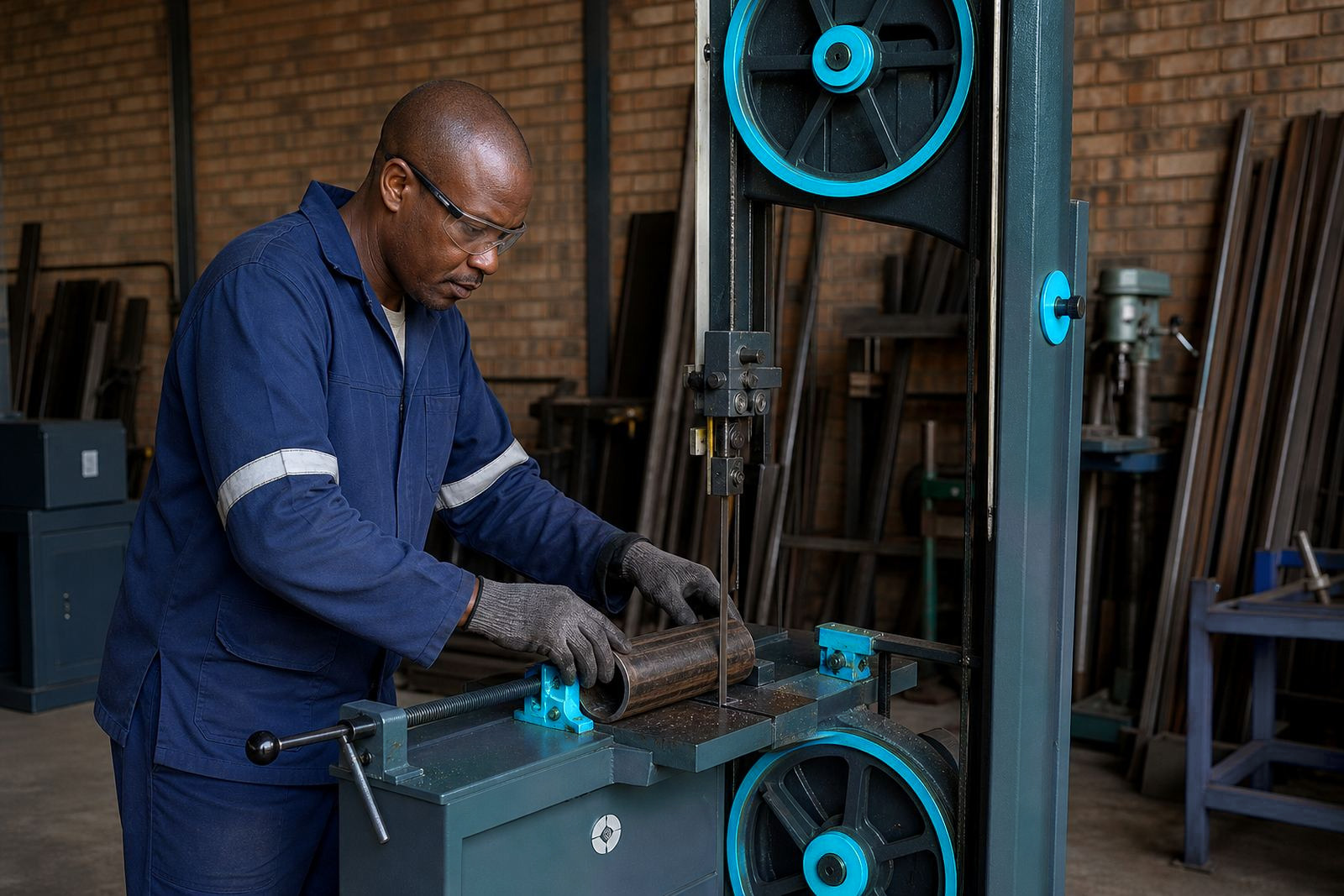
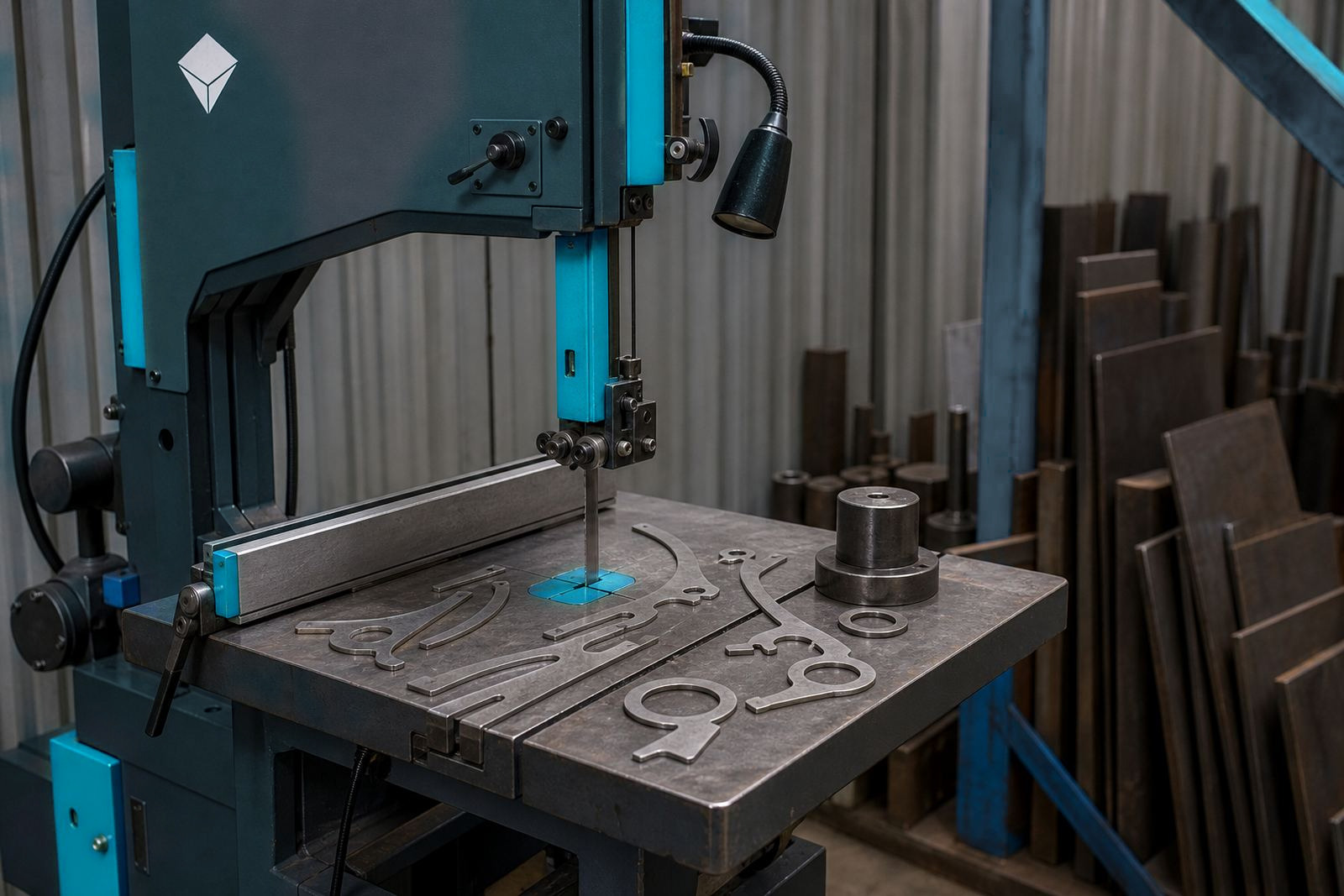
Fabrication shops, maintenance bays, steel prep areas and workshops that cut material by hand on a vertical machine can use these blades. They handle trimming on plate, shaping on profiles, and preparation cuts before drilling, welding or final assembly. A vertical saw also helps where the operator needs to follow a marked line and take material off in controlled passes.
In Alrode, Alberton and across Johannesburg, Vereeniging, Pretoria, Durban and Cape Town, we see vertical saws used on mild steel, hollow section, angle iron and assorted workshop stock. If the job shifts from thin material to heavier wall section, the blade choice should shift too so the saw is not forced to work outside its range.
- Workshop trimming and fit-up work
- Profile cuts on angle, channel and tube
- Preparation cuts before welding or drilling
- Manual sawing with line control
Fitting, run-in and the small settings
A vertical saw blade performs better when the fit is correct from the first run. The blade must track on the wheels, sit properly in the guides and run at a feed that lets the teeth cut instead of rubbing. On metalwork, the wrong feed or speed can mark the work, bend the set at the tooth line or shorten blade life.
Run-in comes next. A fresh blade should start with a lighter feed on the first cuts so the tooth tips settle before the blade is pushed harder. Coolant or cutting fluid helps on many metal jobs, especially where heat builds up on thicker sections or on long cuts. A dry blade can be used on some lighter work, but the cutting conditions still need watching.
- Check guide spacing and wheel tracking before use
- Set feed so the blade cuts cleanly without forcing
- Use run-in cuts on a new blade to settle the tooth edge
- Use coolant where the material and cut length call for it
Blade care between jobs and what wears first
Blade wear often starts with poor feed, wrong pitch or a machine that is out of alignment. On vertical saws the operator can feel a change in cut pressure, a rougher finish or a wandering line. That is usually the point to check the set, the guide condition, wheel alignment and whether the blade is still matched to the material.
Keep the blade clean, clear swarf from the guides and avoid leaving the blade under tension when the machine is stored for long periods. If the saw is used on oily stock or humid coastal jobs, wipe down the exposed areas so rust does not build on the teeth or backing strip. For mixed workshops, stock standardisation can help keep the common sizes and pitches on hand instead of carrying odd blades that never get used.
- Watch for heat discolouration and rough finish on the cut
- Clear packed swarf from the guide area
- Store spare blades flat and dry
- Review blade wear after changes in material or section size
What to confirm when placing a blade order
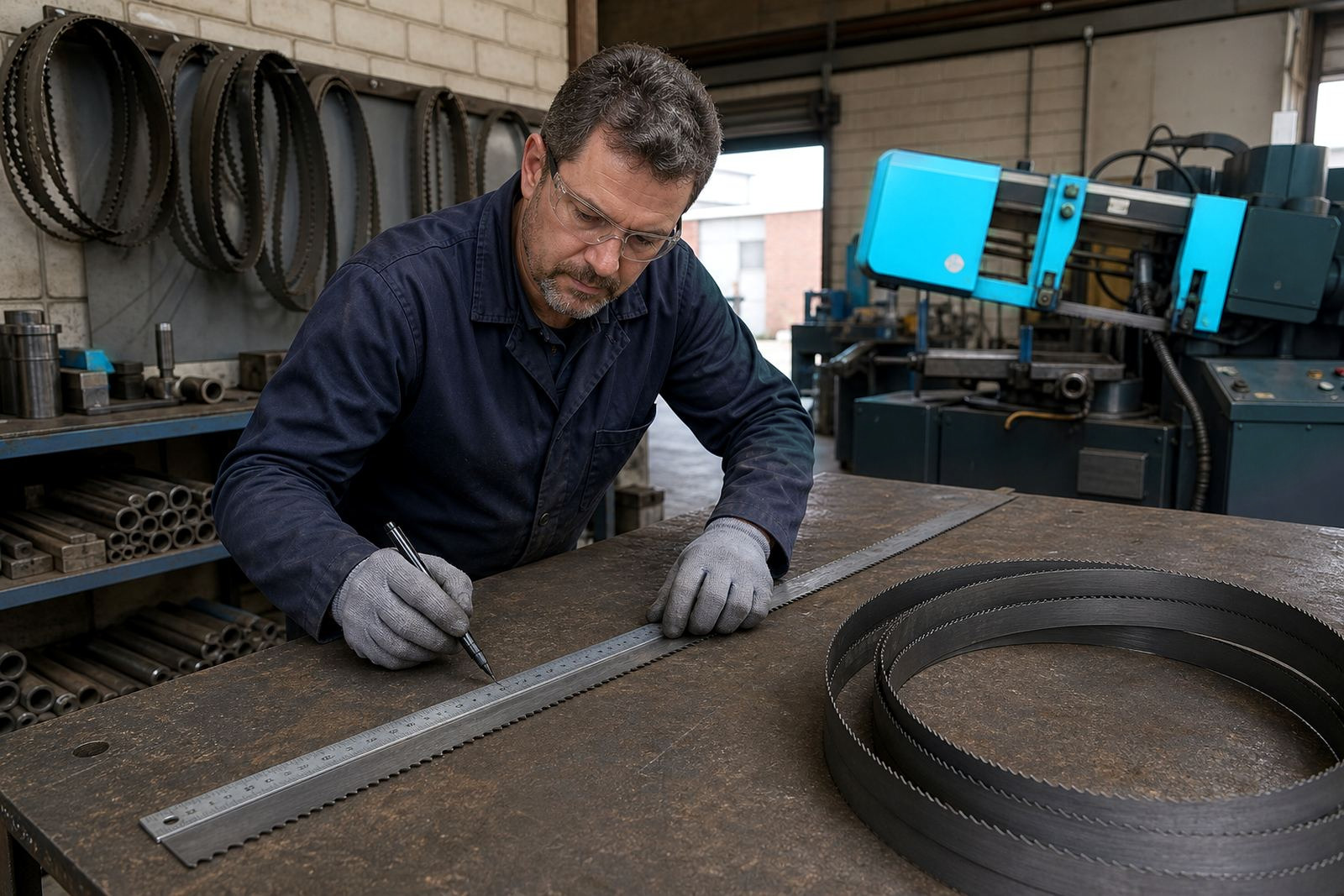
For vertical saw blades, check the machine size, blade length, wheel diameter, guide style and what you are cutting. Knowing whether the work is mostly thin wall tube, solid bar, plate, or mixed section helps with blade choice. That lets us narrow the tooth pitch, blade width and blade thickness so the blade suits the actual job.
We also check whether you need a weld-to-length blade, a starter kit or a spare set for standard workshop stock. Our team handles blade length verification, tooth pitch selection and machine fit checks for manual saw support.
- Machine make, throat size and wheel or blade length
- Material type and wall thickness or section size
- Preferred cut type, straight trimming or curved profile work
- Need for welded lengths, starter kits or standard stock sizes
Blade support from Alrode to workshops nationwide
Based in Alrode, Alberton, MoreCut Saws supplies vertical saw blades for metalwork shops, maintenance teams and prep bays across South Africa. The team includes Sibusiso Dawood, Anika Nortje, Pieter Moonsamy, Lerato Zungu, Themba Chetty and Chanel Jacobs, each handling different parts of the blade and order process. That mix helps when a workshop needs a simple replacement blade or a more specific match for an awkward machine and material blend.
Branches and area coverage include Alberton Supply, Johannesburg Supply, Pretoria Supply, Vereeniging Supply, Durban Supply, Cape Town Supply, Germiston Supply and Boksburg Supply.
- Weld-to-length service for matched machine lengths
- Starter kit planning for new or changing workshops
- Length verification and machine fit checks
- Support for standardisation across multiple saws
Key facts
| Product | Vertical saw blades for metal cutting |
|---|---|
| Blade types | Bi-metal M42 and carbon steel |
| Tooth options | Fixed pitch and variable pitch |
| Typical widths | Narrow to wide, selected by cut type and machine guides |
| Common use | Trimming, profile work and workshop preparation cuts |
| Services | Weld-to-length, fit check, pitch selection and run-in guidance |