Blades that match the tool in your hand
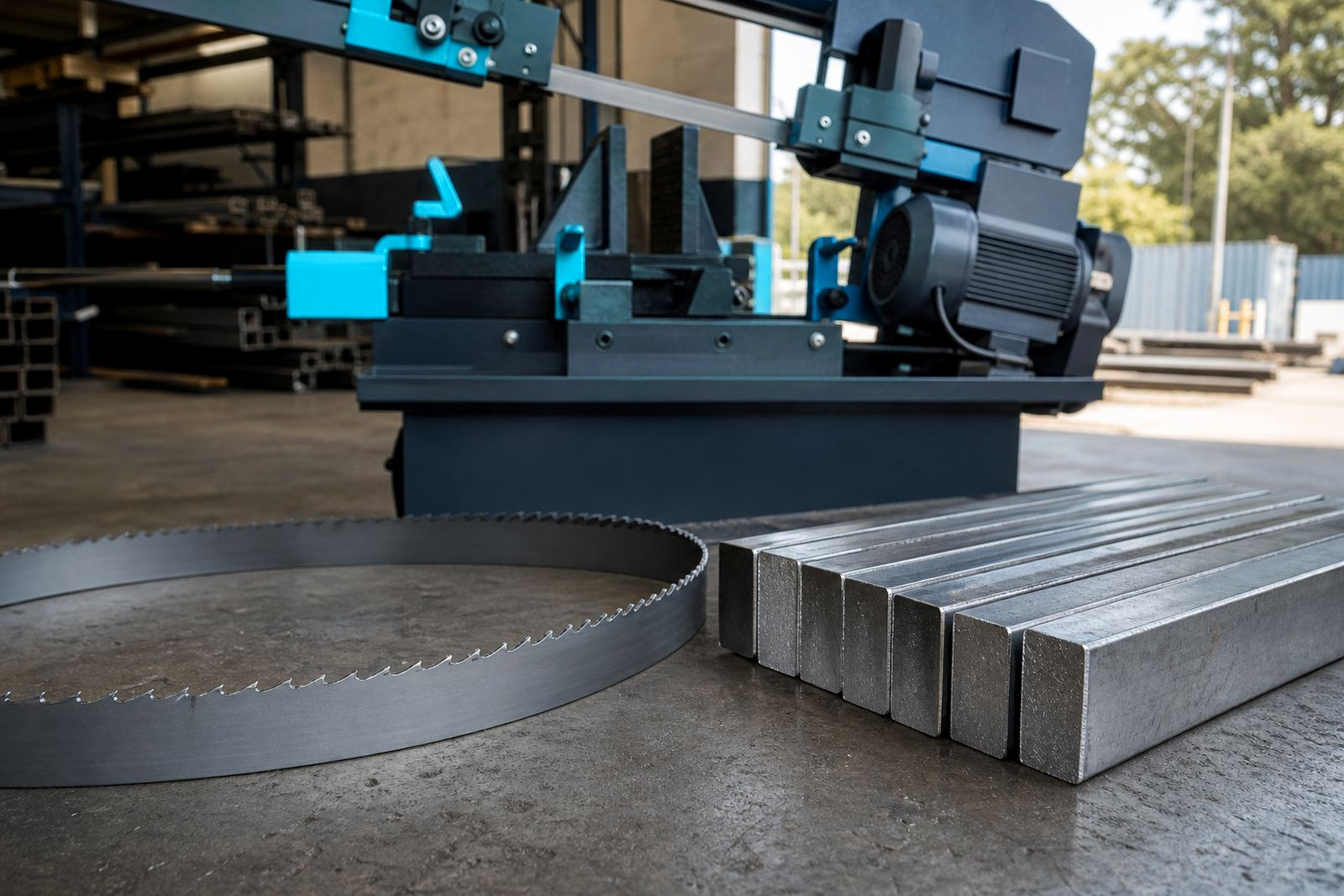
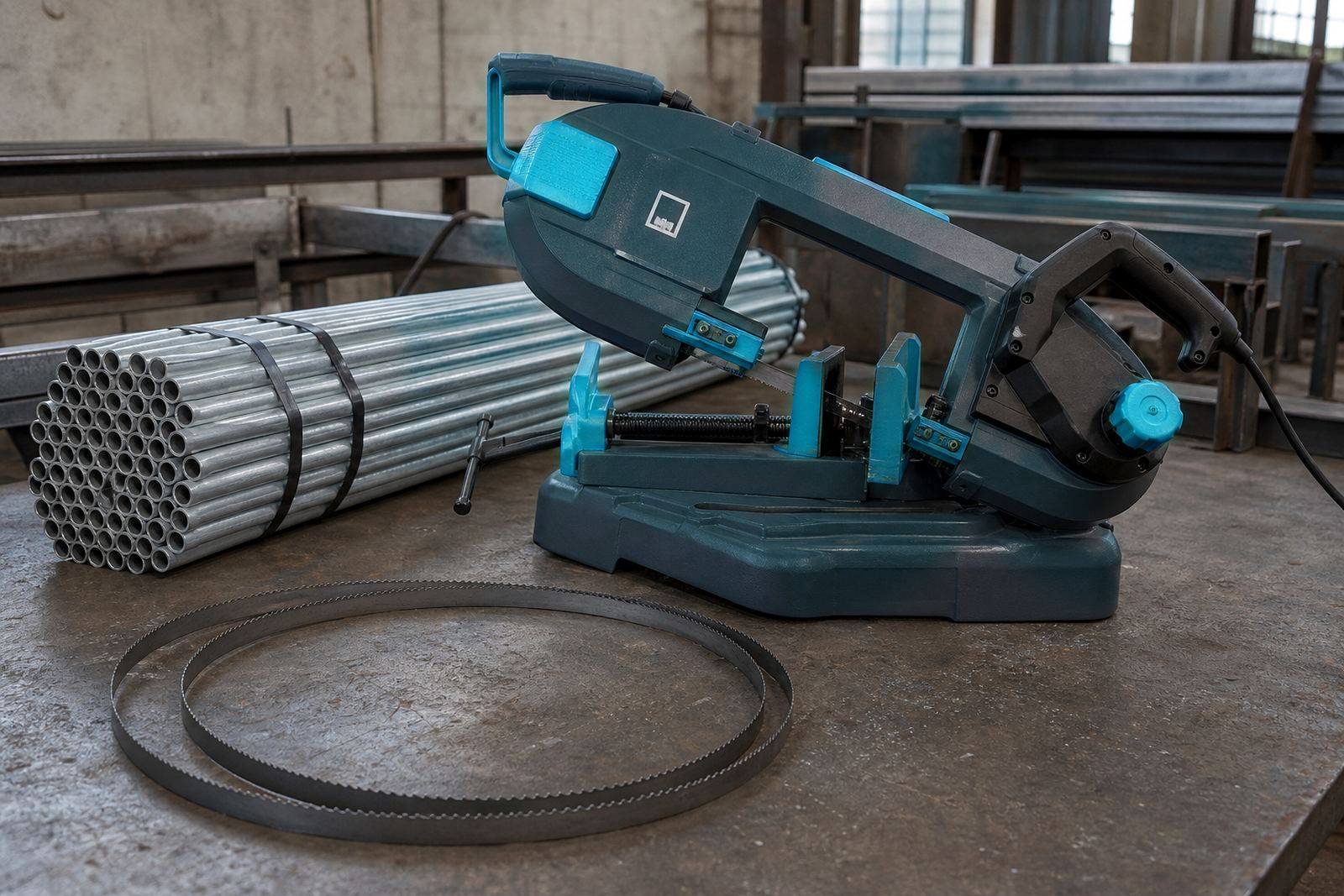
Portable bandsaw blades need to suit the machine, the material and the cut you are trying to make. On a small contractor saw, a fabrication bay or a maintenance cart, the blade has to track cleanly around the wheels and keep its set through repeated starts, short cuts and heavier section work. We supply replacement blades for portable metal-cutting bandsaws in lengths made to fit the machine, with options for different tooth pitches, widths and thicknesses.
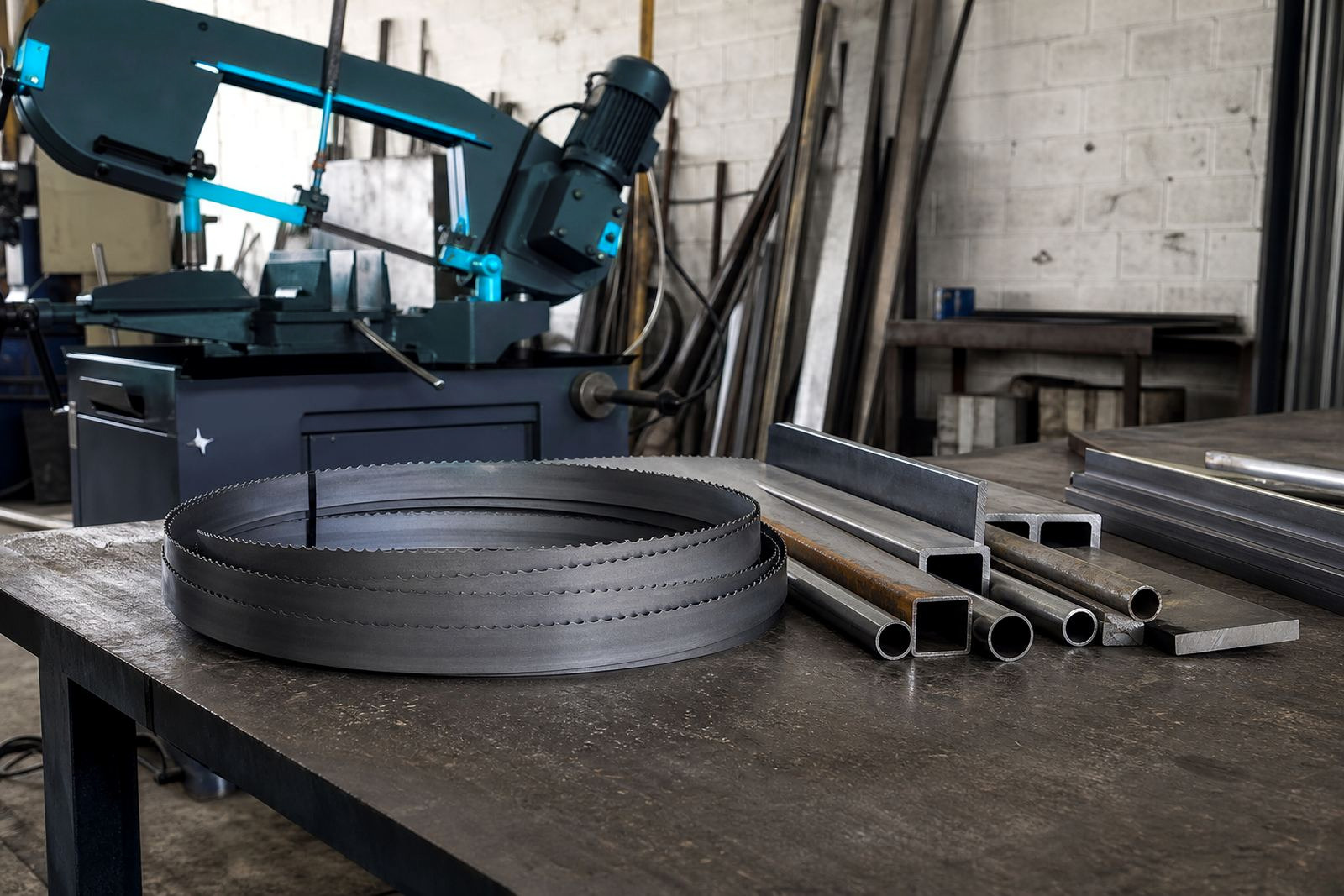
Bi-metal blades are the usual choice where mixed metal work is common, especially when you cut mild steel, pipe, angle iron, tube and small solid sections through the week. Carbon steel blades still have a place on lighter work and lower-cost setups, provided the feed is kept sensible and the blade is not forced through hard stock. Choose the blade that matches the job, not only the saw frame.
- Replacement blades for portable metal-cutting bandsaws
- Bi-metal options for mixed workshop and site use
- Carbon steel options for lighter cutting duty
- Length matched to the saw and wheel size
Tooth pitch, width and thickness do the real work
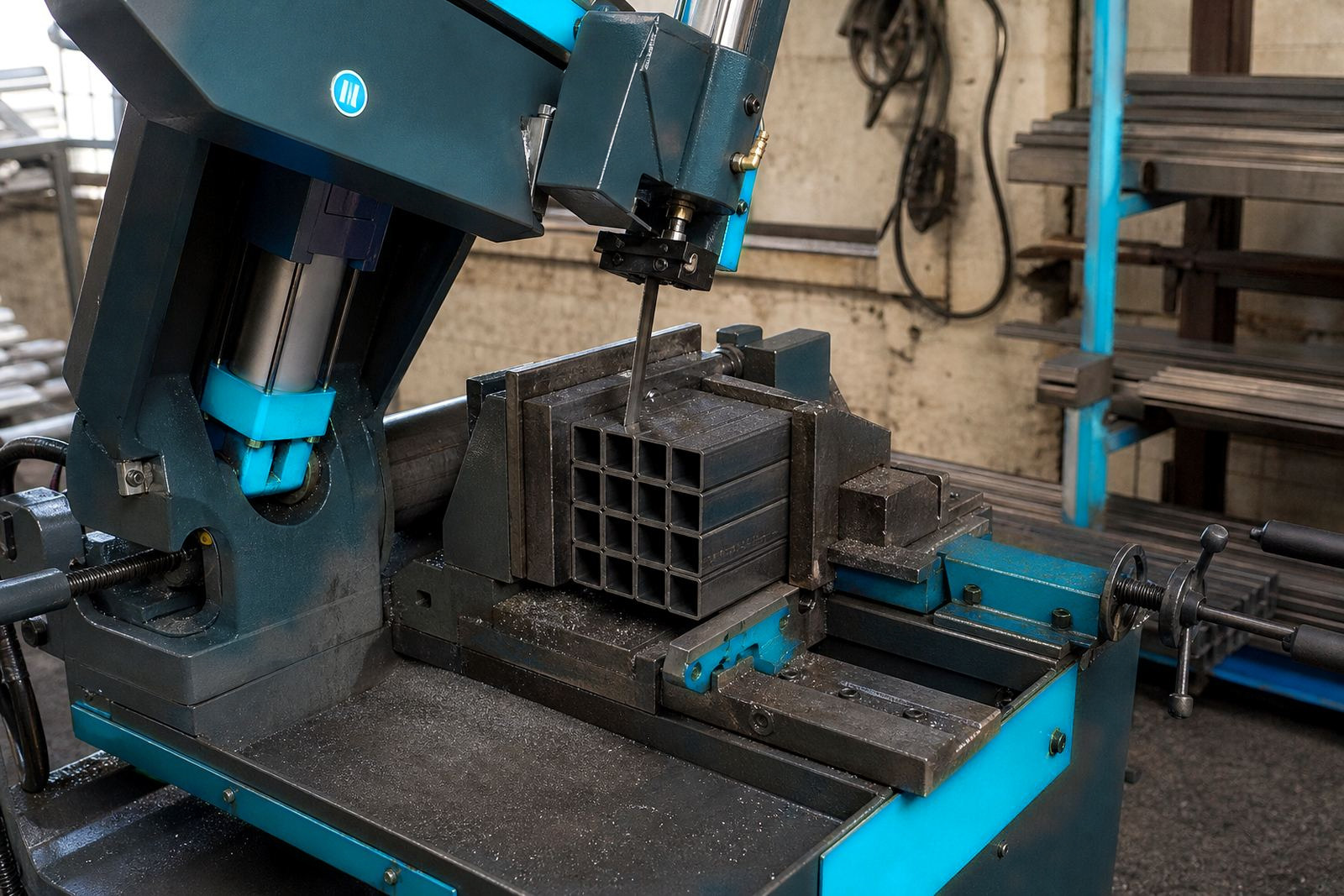
Tooth pitch decides how the blade enters the material. Fine pitch works better on thin wall tube, small solids and lighter sections where too few teeth would grab. Coarser pitch clears chips better on thicker stock and fuller sections. Variable pitch blades help reduce chatter on jobs where the section changes often or the cut starts on a thin edge and finishes in heavier wall. Portable saws need steady hand pressure and stock support, which can change from job to job.
We also check blade width and thickness. Narrower blades turn more easily on tighter work and fit portable saws built around compact wheels. Wider blades hold straighter in heavier sections and resist wandering when the cut line is long. Thickness affects flexibility and durability, so the choice must suit the saw drive, wheel diameter and the kind of cutting you do most. A blade with the wrong geometry may cut, but it will not stay happy for long.
- Fine pitch for thin wall tube and smaller solids
- Coarse pitch for thicker sections and fast chip clearance
- Variable pitch for mixed material and reduced vibration
- Width and thickness matched to wheel size and cut depth
Where portable blades earn their keep
Our blades suit on-site metal cutting, general fabrication, maintenance shutdown work and workshop jobs where material has to be cut in place. They are used on structural steel, conduit, pipe, bar, angle and similar ferrous stock. Across Alberton, Germiston, Johannesburg, Vereeniging, Pretoria, Durban and Cape Town, work moves between workshop benches and mobile jobs, so the blade must handle that movement and keep its edge for longer.
A portable bandsaw blade is about speed and a clean finish. It also needs a clean finish that does not leave the fit-up fighting the saw cut. If the blade is too coarse for a thin wall tube, the teeth bite unevenly and the cut can rattle. If it is too fine for heavier stock, swarf builds up and the cut drifts. Matching blade choice to the actual material saves time on dressing and rework.
- Site work on steel frames, pipe and bar
- Workshop cutting where parts are moved by hand
- Maintenance and shutdown cutting in steel plant areas
- Fabrication jobs that need a tidy cut line
Setting the blade up before the first cut
Portable blades work best when the saw is fitted properly and the running conditions are sensible. The blade must sit straight on the wheels, with correct tension and tracking. If the machine allows it, the guide bearings and side supports should be checked so the blade does not twist under load. A clean install keeps a blade true, so one that rubs or runs off line loses life long before the teeth are worn out.
Run-in helps on a fresh blade. A short period with a lighter feed helps the tooth tips settle in and reduces early tooth chipping. Feed and speed should suit the material rather than the operator’s mood on the day. Too much feed makes the teeth dig in, while too little feed can glaze the cutting edge and overheat the strip. Coolant, where the saw and setup allow it, helps with chip removal and heat control on heavier work.
- Check tension, tracking and guide alignment before use
- Run in a fresh blade with a lighter feed
- Match feed and speed to the stock being cut
- Use coolant where the job and machine allow it
What to check before ordering
Portable bandsaw blades are usually ordered by blade length, tooth pitch and intended material. If the blade length is off by even a little, fitment becomes a problem. Width and thickness also need to suit the saw frame and wheel layout. For mixed cutting, the tooth form may need to change from one job to the next, especially where thin tube and heavier stock are both on the list.
When you send through blade details, include the machine type, the old blade size if you still have it and the material you cut most often in your work. If the blade has failed early, the cut marks and break point help us read what happened. Blade failure review, machine fit check and tooth pitch selection are useful where the saw is used by more than one operator and the feed style changes from shift to shift.
- Blade length and machine model
- Material type and wall thickness
- Tooth pitch or pitch range needed
- Blade width, thickness and cut direction
Weld-to-length service for workshop and mobile use
Some portable saws use endless blades supplied to exact length, and that is where weld-to-length service becomes important. A welded blade has to be finished cleanly so the joint passes through the guides and wheels without a hard spot. Good welding, correct grind finish and a sound joint keep the blade running, because a weak weld will fail early and a poor finish can mark the cut or create vibration.
Teams using several portable saws can count on MoreCut Saws for starter kit planning and stock standardisation. That helps when the same workshop services different materials and the blade list starts to get messy. Our team in Alrode, Alberton works with metal cutting users across South Africa, including Johannesburg, Pretoria, Vereeniging, Durban and Cape Town, and the branches in those areas help keep blade selection practical for local work patterns.
- Exact length welding for portable saw blades
- Joint finishing that suits guide wheels and bearings
- Starter kits for new machines or new crews
- Stock standardisation for busy metalwork teams
Key facts
| Blade type | Portable bandsaw blades for metal cutting |
|---|---|
| Materials | Bi-metal and carbon steel options |
| Tooth pitch | Fine, coarse and variable pitch choices |
| Blade width | Selected to suit machine and cut depth |
| Blade thickness | Matched to wheel setup and cutting duty |
| Service options | Weld-to-length, length verification and blade selection support |