A shop built around the cut, not the packaging
Blunt cuts and wasted time kept turning up in the workshop. The issue was often the wrong tooth pitch, width or thickness, which pushed up costs and left poor cut quality behind. MoreCut Saws took shape in Alrode, Alberton, with a practical approach to matching saw blade choice to the real conditions customers face. From mild steel and heavy sections to thin wall tube and mixed metalwork, the aim has been to help each job cut cleanly and perform properly.
That practical base still defines the team in Alrode, Alberton. The business handles bandsaw blades and hacksaw blades for metal cutting work, with help on blade selection, weld-to-length supply and starter kit planning. It is ordinary workshop thinking, but it has to be done carefully because a blade that suits one machine may run badly on another with a different wheel size, feed pressure or cutting style.
The early years were shaped by conversations at the counter and in the workshop, where customers came with worn blades, broken welds and cuts that wandered off line. Those calls for help were about supply, understanding the machine setup, the material, and the way a blade is being used.
What the customer base taught the team
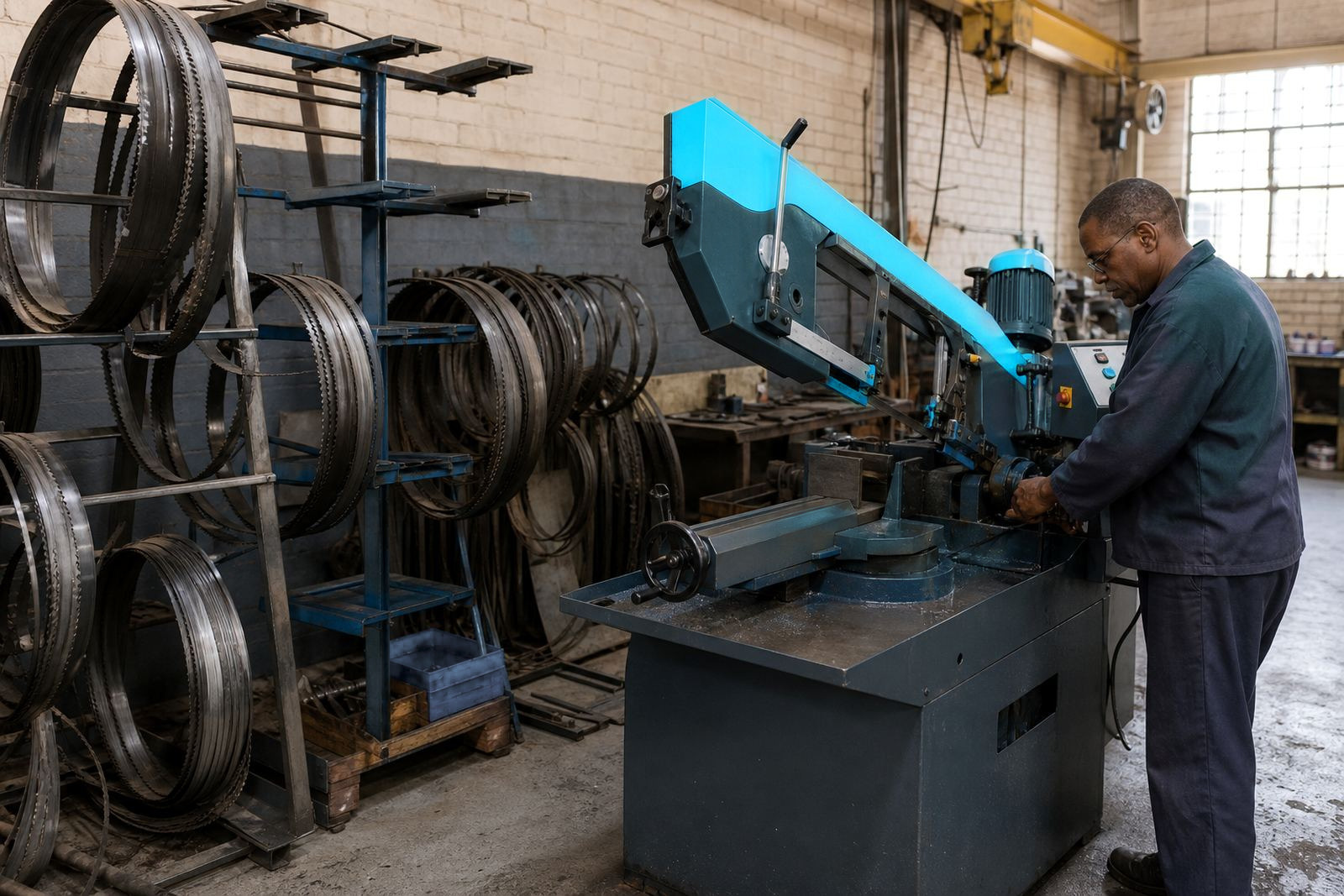
The people who use these blades do not all work in the same way. Some run production saws on a busy fabrication floor, others use manual saws for repair work, and some need regular lengths cut for maintenance jobs that cannot wait on a full production order. Across Johannesburg, Vereeniging, Pretoria, Durban and Cape Town, the mix changes, but the need for the right blade stays the same.
Over time the customer base grew to include steel fabricators, maintenance workshops, fitters, machinists and general metalworkers. Their jobs called for different blade styles, from bi-metal blades for longer life on tougher materials to carbon steel blades for lighter work and manual sawing. The team learned to ask about material section, machine type, cutting volume and finish requirements before suggesting a path forward.
- Fabrication shops often need stable cutting on mixed profiles and repeated lengths
- Maintenance teams may need starter kits and practical blade stock for urgent repairs
- Manual saw users usually need guidance on tooth pitch and blade set for easier cutting
- Workshop managers often want standardised blade choices that reduce guesswork at the bench
Those patterns did not make the work routine, they made it more exact. A blade can look similar on the outside yet behave very differently once it is running through steel with the wrong feed or speed.
How blade knowledge grew into day-to-day service
As the company expanded, the technical work became more involved. Blade width, thickness, tooth pitch, variable pitch and set all became part of the normal discussion. The team also learned how run-in affects blade life, why coolant helps on many cutting jobs, and how poor machine fit can put strain on a perfectly good blade.
That technical knowledge is now part of the service. Customers can ask about blade failure review, machine fit check, length verification and feed speed advice, and the conversation stays grounded in the job in front of them. We focus on practical results with sound theory. It is about helping the blade cut cleanly, hold its track and last as long as the work allows.
When a workshop needs a weld-to-length blade, the work has to stay accurate. A poor weld can create vibration, early breakage or an uneven cut, so blade welding is handled with care and checked against the length required. The same applies when tooth pitch selection needs to change for a different material or a different machine speed.
- Bi-metal M42 blades suit many demanding metal cutting tasks
- Carbon steel blades still have a place in lighter or manual work
- Variable pitch options help reduce chatter on certain section sizes
- Coolant checks where heat and swarf build up quickly
The team now working the counters and the workshop
Today the business is shaped by a small team with clear roles. Sibusiso Dawood leads as Managing Director, while Anika Nortje handles sales, Pieter Moonsamy handles blade welding, Lerato Zungu supports the technical side, Themba Chetty coordinates operations and Chanel Jacobs looks after customer service. The split keeps the work organised while preserving the feel of a hands-on workshop.
Because the team sits close to the actual blade work, the advice given is tied to what can be made, welded, checked and supplied. A customer asking for a starter kit is helped to think through the machine, the material mix and the kind of cutting they expect to do, along with the blade items they need. A customer standardising stock across multiple branches gets a practical view of which blade sizes and tooth pitches can simplify ordering without forcing every site into the same cut.
In a business like this, the value is often in the follow through between front counter, technical support and workshop action. One person may identify the job, another may check machine fit, and another may weld and finish the blade to length. We keep the process straightforward while it keeps moving
The branches and supply areas that shaped the work
MoreCut Saws serves workshops through several supply areas, including Alberton Supply, Johannesburg Supply, Pretoria Supply, Vereeniging Supply, Durban Supply, Cape Town Supply, Germiston Supply and Boksburg Supply. Those names reflect where the work reaches, not separate identities. The same standards apply whether the order is for a local repair shop or a larger fabrication floor serving a wider region.
Different towns bring different use patterns. Coastal humidity can affect stored blades if they are left unprotected, while inland workshops often deal with dense production schedules and mixed steel sections. The team has seen enough variation to know that blade storage, handling and matching decide blade life as often as the cut itself. Length verification, stock standardisation and blade failure review remain on the service list.
When a blade issue needs attention, the discussion can cover material type, machine model, cut size, coolant use and the way the blade is expected to run on the job.
What remains steady in the work today
Even as the business has grown, the daily shape of the work has stayed practical. The team still talks about tooth pitch selection, blade width selection, run-in guidance and feed speed advice because those choices affect the result. A blade that is well matched to the material and the machine gives a steadier cut, less strain on the saw and fewer avoidable stoppages.
MoreCut Saws has grown by staying close to what the job needs. That means listening to how a workshop uses its saws, checking what the material does to the cut, and treating blade supply as part of the whole cutting process. For many customers, the value lies in having a team that understands both the blade itself and the way a South African workshop actually runs.
Today the business still works from that same grounded approach: careful selection, correct welding, sensible advice and a practical understanding of metal cutting. It is plain, but not small. A blade only earns its place when it cuts the way the job calls for.