When a fine pitch blade earns its keep
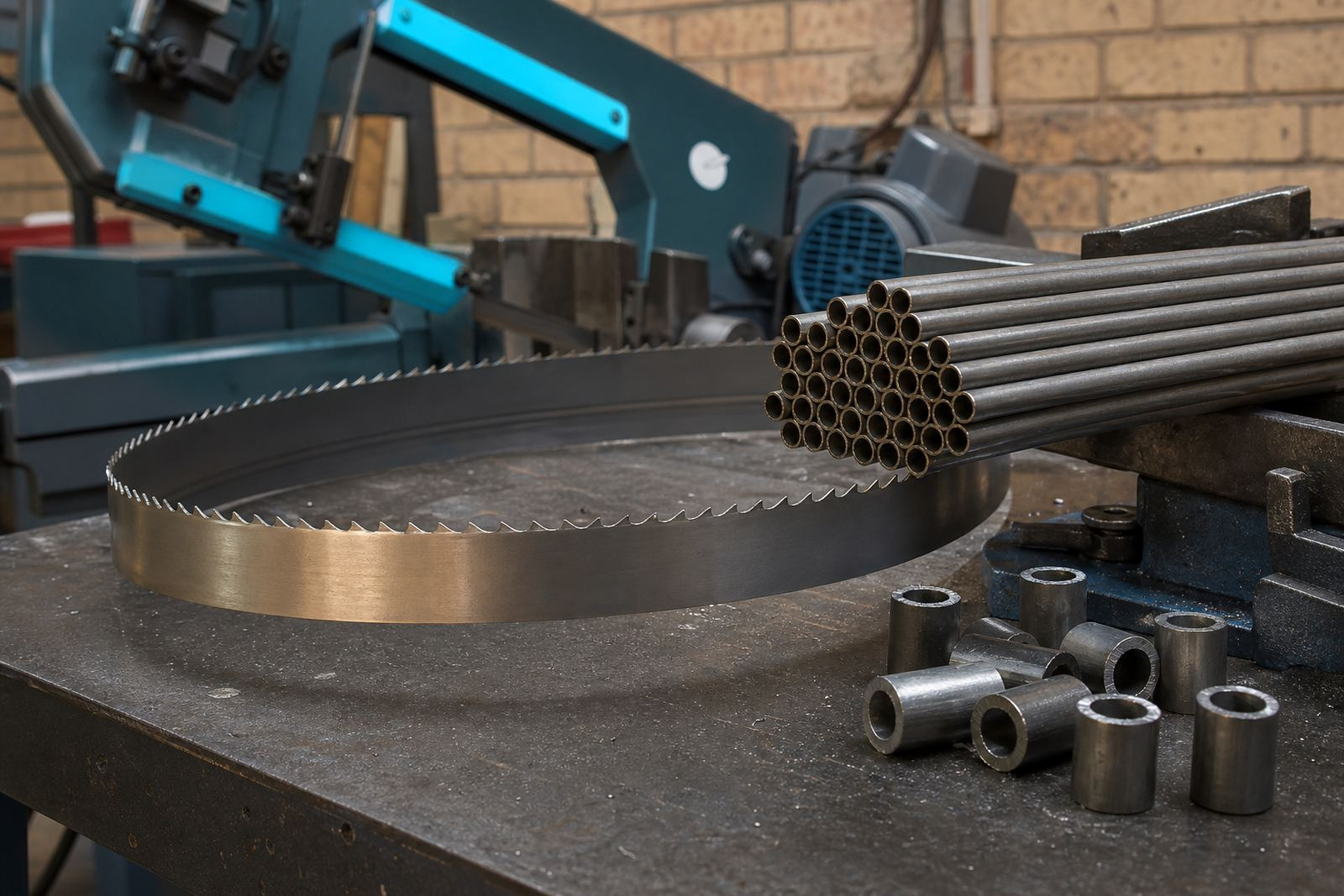
Fine TPI blades are the right call when the material is light, the wall section is thin and the cut face must stay tidy for the next operation. They are used on mild steel, stainless sections, thin wall tube, angles, small solids and mixed workshop bundles where a coarse pitch would snag, grab or leave a rougher finish.
On bandsaws, fine pitch means more teeth in contact with the work at once. That spreads the load and keeps the cut steadier on small profiles. On hacksaws, the same idea applies to thin material where a finer tooth pattern gives better control through the stroke. A well matched blade keeps the machine working as it should, which is important when you are cutting short stock or repeat parts all day.
- Best for small cross sections and thin wall material
- Helps reduce tooth snagging on light sections
- Useful for a clean edge before drilling or welding
Fine TPI ranges, widths and blade build
For this kind of work, the tooth pitch usually sits in the fine range, often around 18 to 24 TPI for very light sections and 14 to 18 TPI where the material is a touch heavier. Variable pitch can help on mixed bundles or shape sections because it breaks up vibration and reduces chatter. A narrow blade bends easier through small radii, while a wider blade tracks straighter on longer cuts.
We supply blades in carbon steel and bi-metal forms, including bi-metal blades with a high speed tooth edge for longer service on tougher metals. Thickness also has to match the saw and the cut. A thicker blade can stay straighter, while a lighter blade can suit smaller manual saws or finer work. The tooth set, gullet space and backing strip all affect how the blade clears chips and holds its line.
- Fine TPI: commonly 14 to 24 TPI depending on section size
- Widths selected to suit machine guides and cut shape
- Carbon steel for lighter duty work, bi-metal for longer blade life
- Variable pitch available where chatter control is needed
Where fine pitch blades suit the job
For fabrication bays, maintenance shops, steel stock handling and manual sawing benches, these blades cut small parts down to size before fitting. They are handy for conduit sizes, light structural offcuts, thin plate, tube, bar and tidy trim work on parts that must line up cleanly after cutting. In Alberton, Johannesburg, Vereeniging, Pretoria, Durban and Cape Town, many workshops use fine pitch blades for stainless and mild steel sections that are too small for a coarse tooth pattern.
Your machine and the smallest section in the batch determine which blade to use. If the work shifts from one profile to another, a mid-fine variable pitch blade may be a better fit than a fixed pitch pattern. A steadier cut follows changes in wall thickness, and it helps when a bundle includes more than one size.
- Small section bar and tube
- Thin wall hollow sections
- Light plate trimming and clean cut offs
- Mixed bundle cutting where chatter needs control
Run-in, feed and speed for a cleaner cut
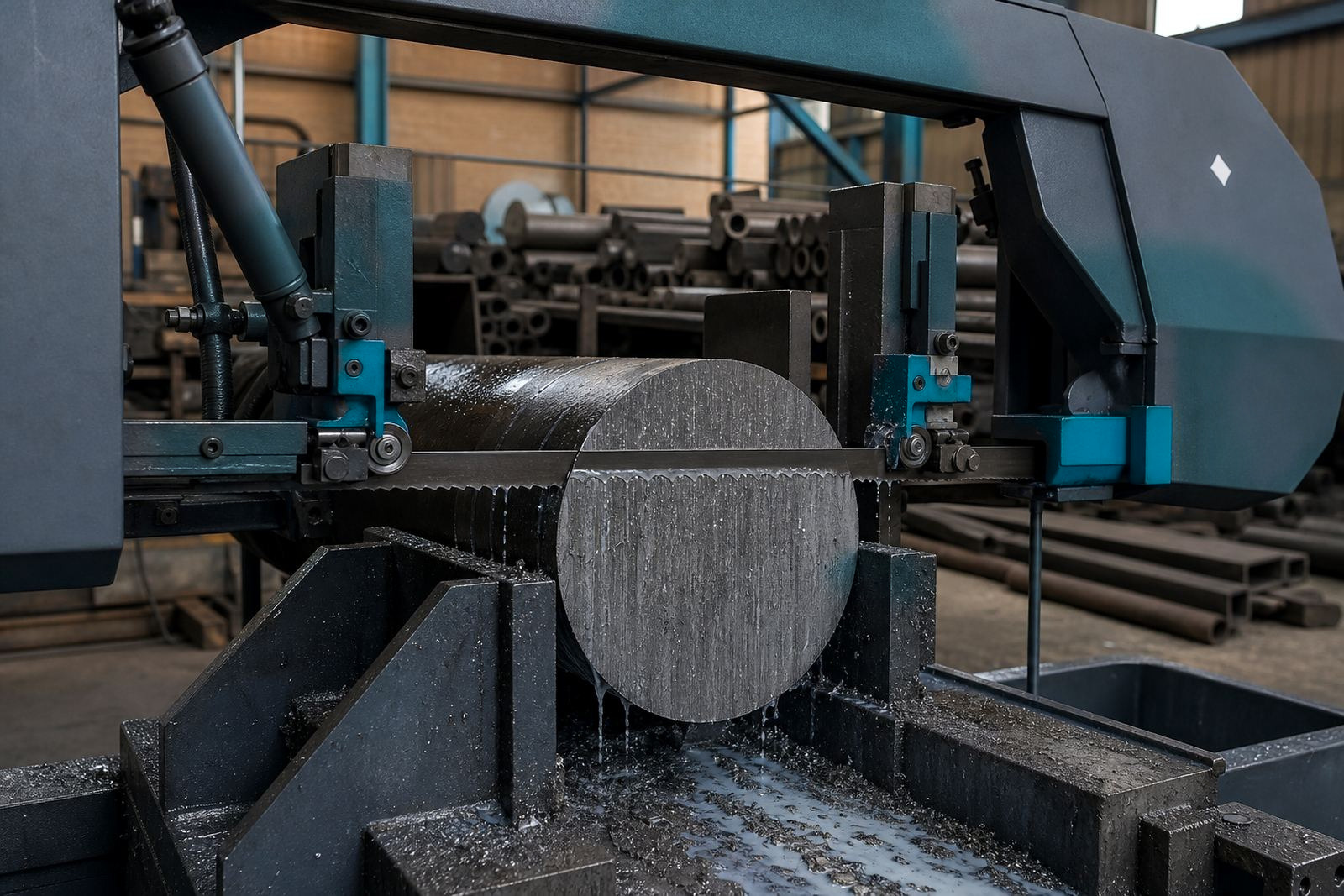
Fine pitch blades last longer when they are run in properly. Use a lighter first cut, keep a steady feed, and avoid pushing hard into the work. This lets the tooth edges settle and reduces early micro-chipping on the cutting edge. On a bandsaw, feed pressure must match the tooth size and the material wall thickness. Too much feed can pack the gullets and round the teeth early, while too little feed can rub the edge instead of cutting it cleanly.
Cutting speed and coolant also count. Cooler cutting helps in stainless and in longer runs where heat builds at the tooth line. A suitable coolant can improve chip flow and keep the blade from glazing over. If the saw is manual or the feed varies by operator, a fine pitch blade needs disciplined feeding. The blade should cut, not chatter through the job.
- Run in with light cuts at first
- Match feed to wall thickness and tooth pitch
- Use coolant where the machine and material call for it
- Avoid forcing the blade through the section
Fitting a fine TPI blade without guesswork
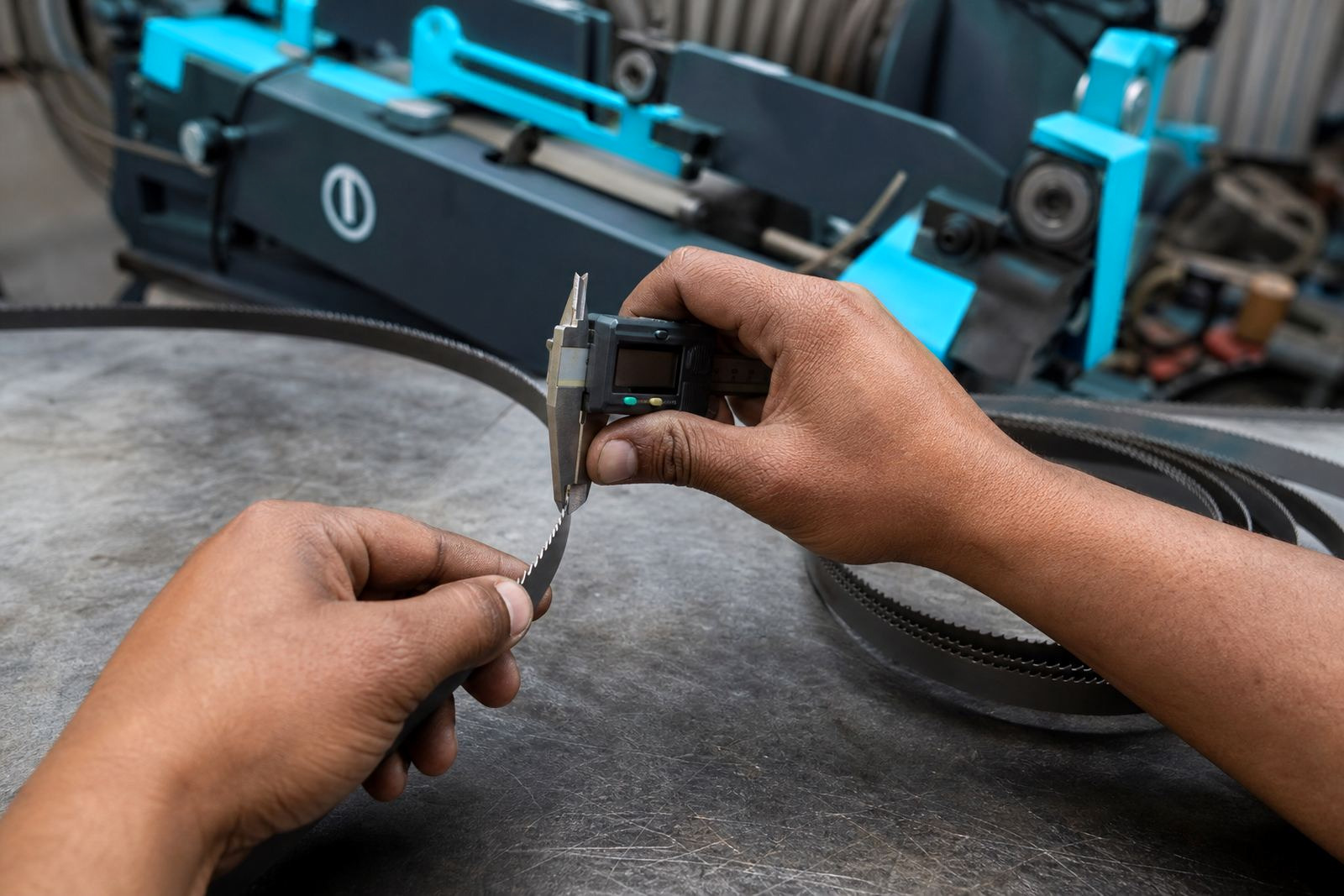
Blade fitting starts with the machine details. We check length, width, thickness and the guide arrangement so the blade sits properly in the saw. Weld-to-length service suits a blade made up for a specific machine, and length verification avoids the mismatch that causes tracking trouble or poor weld life. Tooth direction and weld finish also need care, because a rough joint can mark the wheel or create a hard spot in the cut.
When a workshop is moving between manual saws and powered bandsaws, the fit details become even more important. Guide blocks, wheel diameter and the smallest stock size all shape the final choice. Our blade selection help covers tooth pitch, blade width and machine fit so the blade matches the job.
- Confirm saw type, blade length and wheel size
- Check guide compatibility and tension range
- Ask for welded lengths where the machine needs a made-up blade
- State the smallest section in the batch
Ordering details that save a return trip to the saw
Before ordering, it helps to note the material type, the lightest and heaviest section in the run, the saw model or manual frame details and whether the work is mostly straight cut or mixed profile. If the blade is for a starter kit, tell us what the shop cuts most often so the kit can be set up around the real workload. For stock standardisation, one fine pitch may suit several light cutting jobs, but only if the section sizes and machine setup line up well.
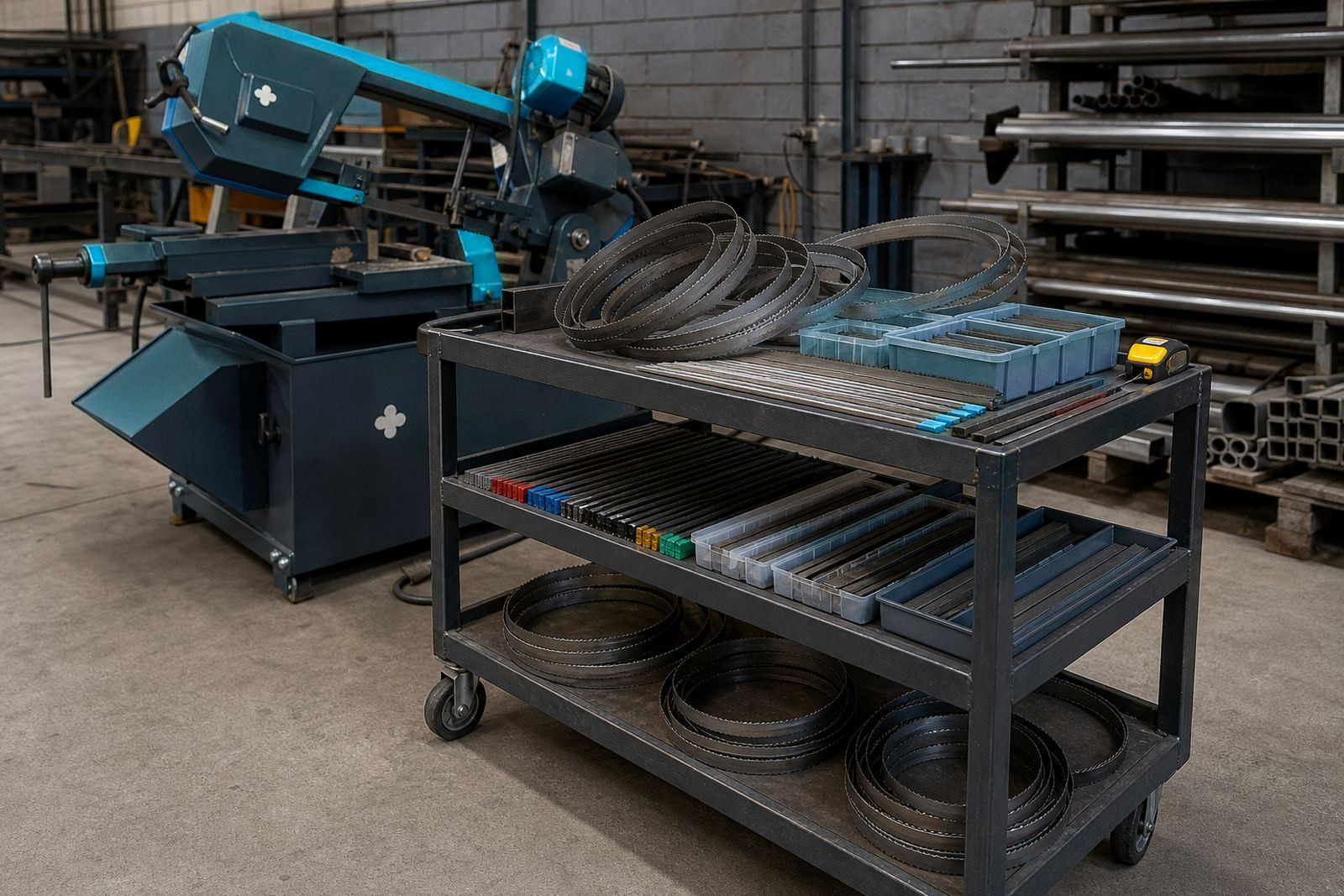
Care is straightforward. Keep blades clean and dry, check for chipped teeth after a bad cut, verify tension before long runs and store spare blades so they do not kink or rust in damp corners of the shop. In coastal air, especially around Durban and Cape Town, that extra storage care helps. If a blade starts drifting or leaves a rougher edge than usual, a blade failure review can show whether the issue is pitch, feed, speed, tension or machine alignment.
- Material grade and section size range
- Required blade length and width
- Tooth pitch preference, fixed or variable
- Manual or powered saw type
- Need for weld-to-length or starter kit planning
Key facts
| Product type | Fine TPI bandsaw and hacksaw blades for metalwork |
|---|---|
| Tooth pitch | Fine range, commonly 14 to 24 TPI depending on section size |
| Blade materials | Carbon steel and bi-metal options |
| Blade formats | Fixed pitch and variable pitch |
| Typical widths | Selected to suit machine guides and cut shape, from narrow manual saw sizes to wider bandsaw blades |
| Services | Weld-to-length, length verification, tooth pitch selection, blade width selection, run-in guidance, coolant checks, machine fit check |