

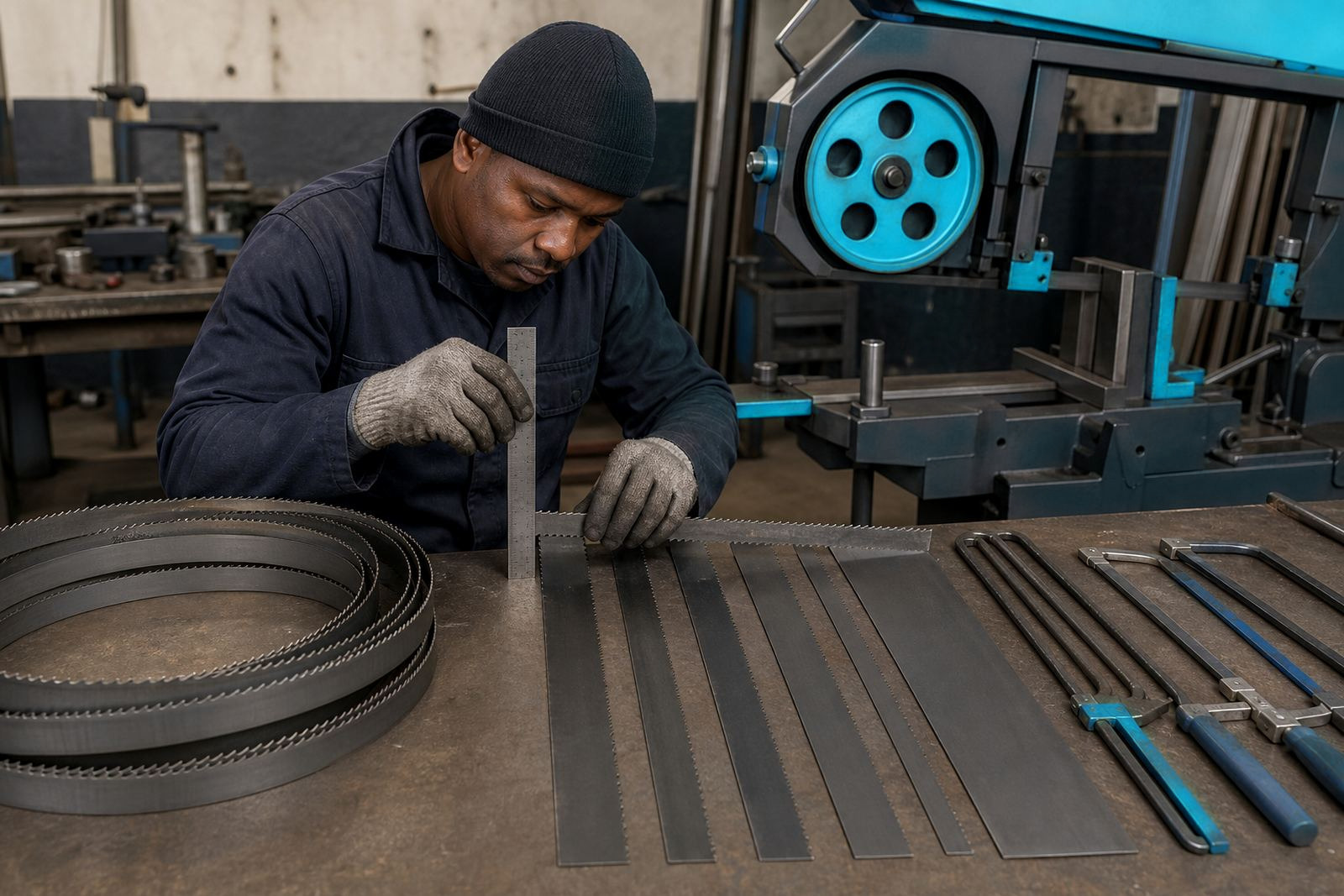
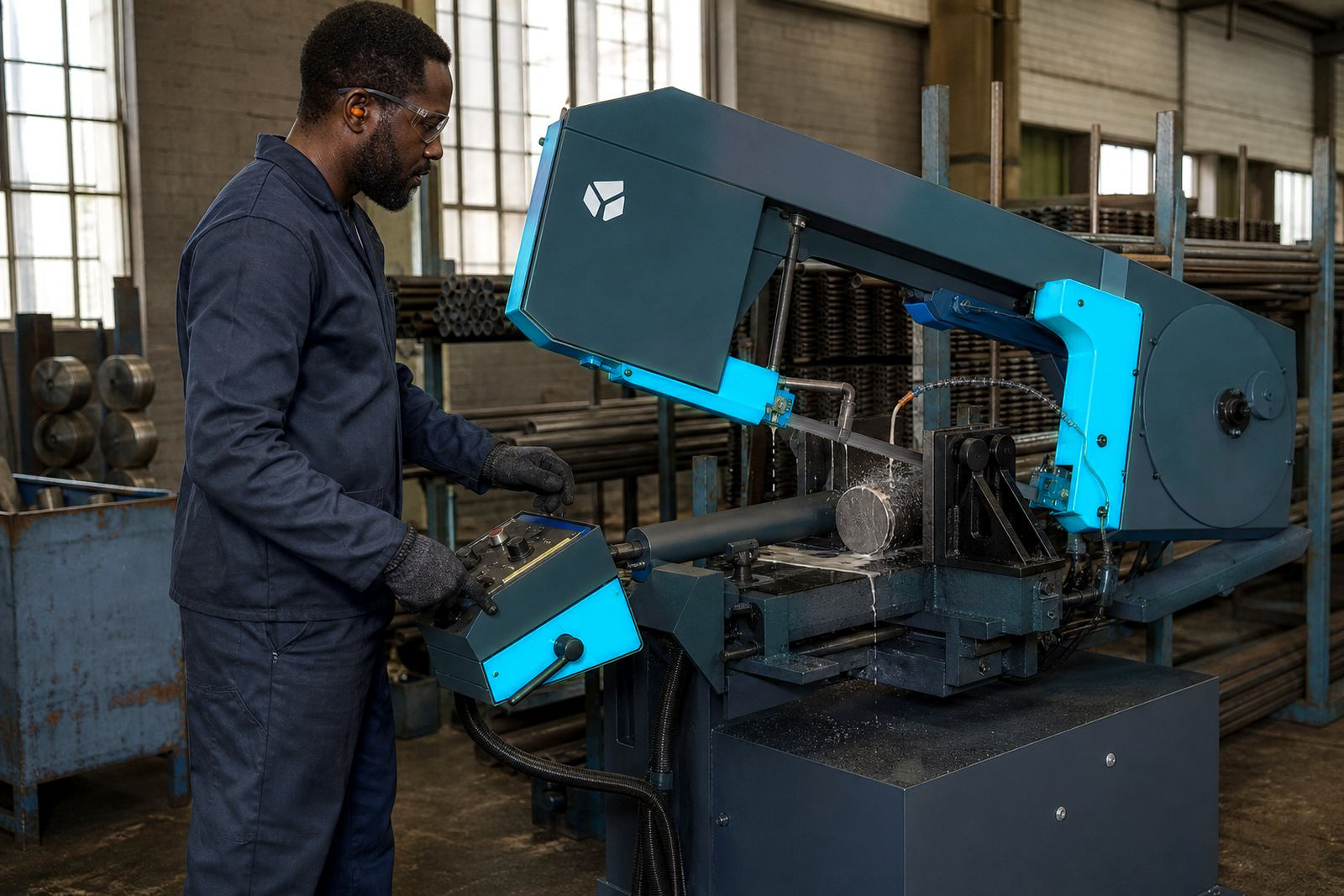
Picking the blade for the metal on the bench
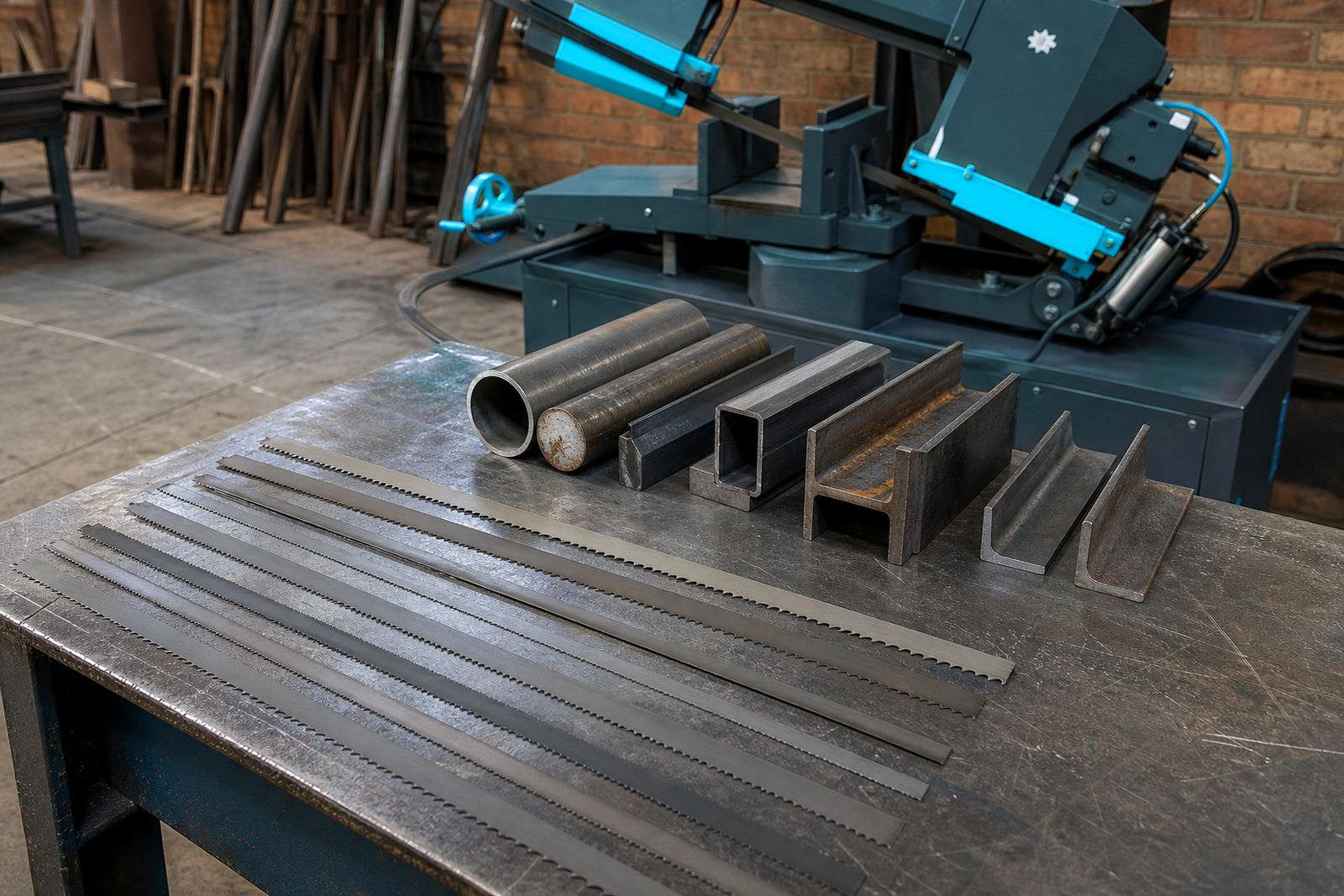
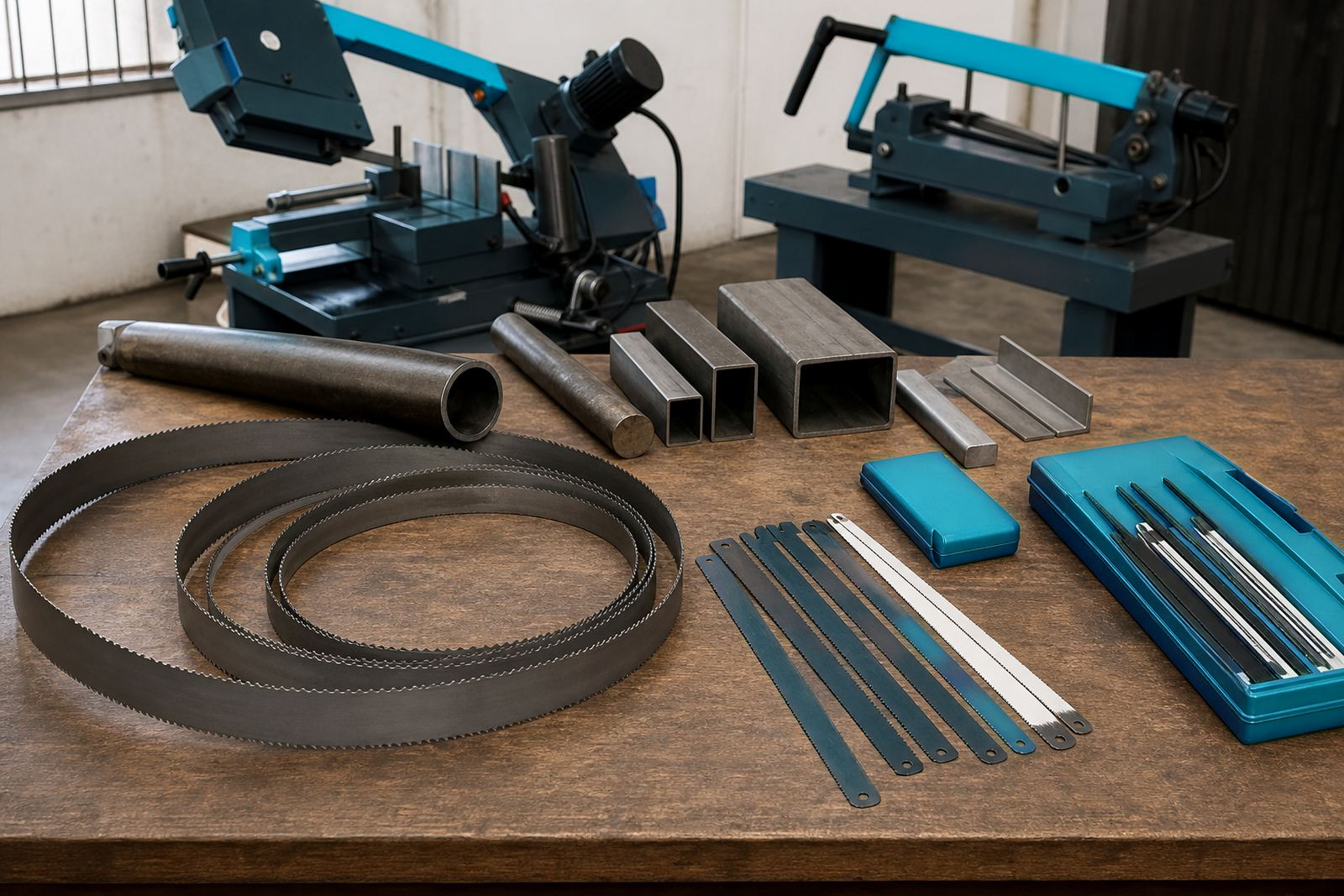
Different metals ask for different tooth forms and cutting habits. Mild steel tube, solid bar, thin wall section and tougher alloys do not behave the same, so the blade has to suit the material, section size and machine. A wider blade gives more stability on straight work, while a narrower blade can suit tighter saw frames and smaller machines. Tooth pitch is chosen with it, because the wrong pitch can load the blade too hard or leave the gullets packing with chips.
We help compare bi-metal and carbon steel blades for the work at hand. In many shops, bi-metal options with a hard cutting edge and flexible back section hold up well on repeat jobs, while carbon grades can suit lighter duty manual saws and straightforward cuts. The right call depends on the material, the saw, and how the workshop actually runs.
Service work that starts before the first cut
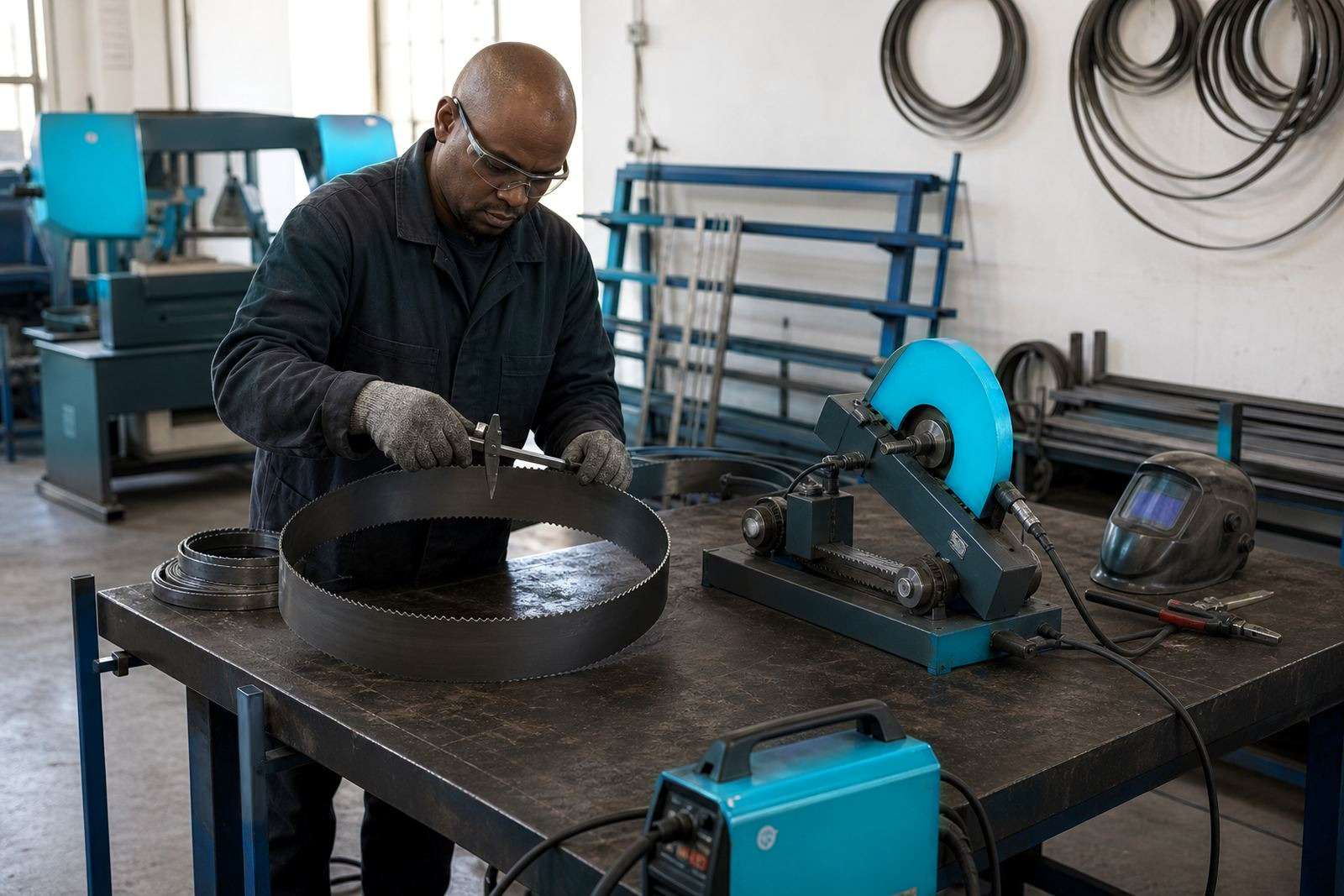
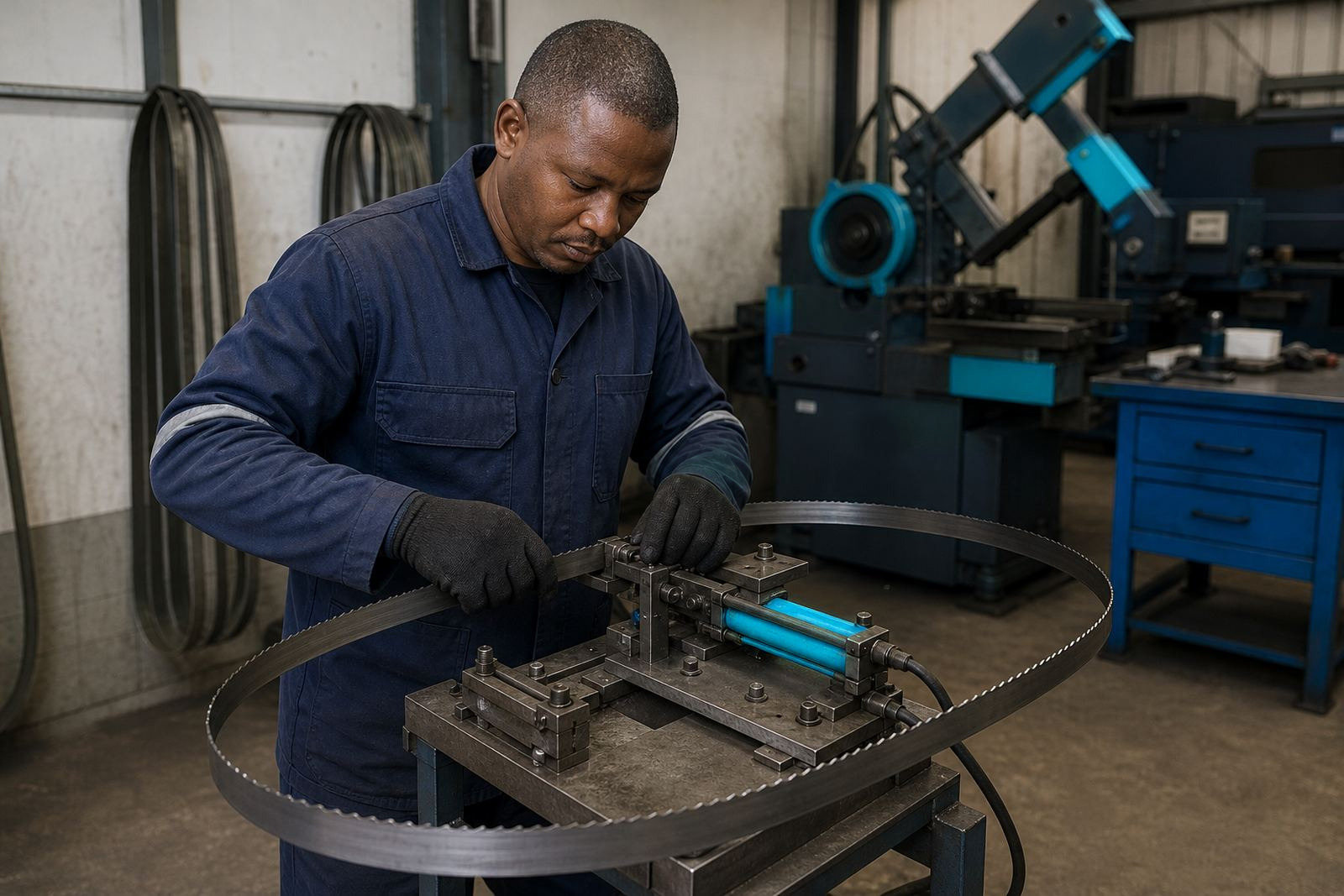
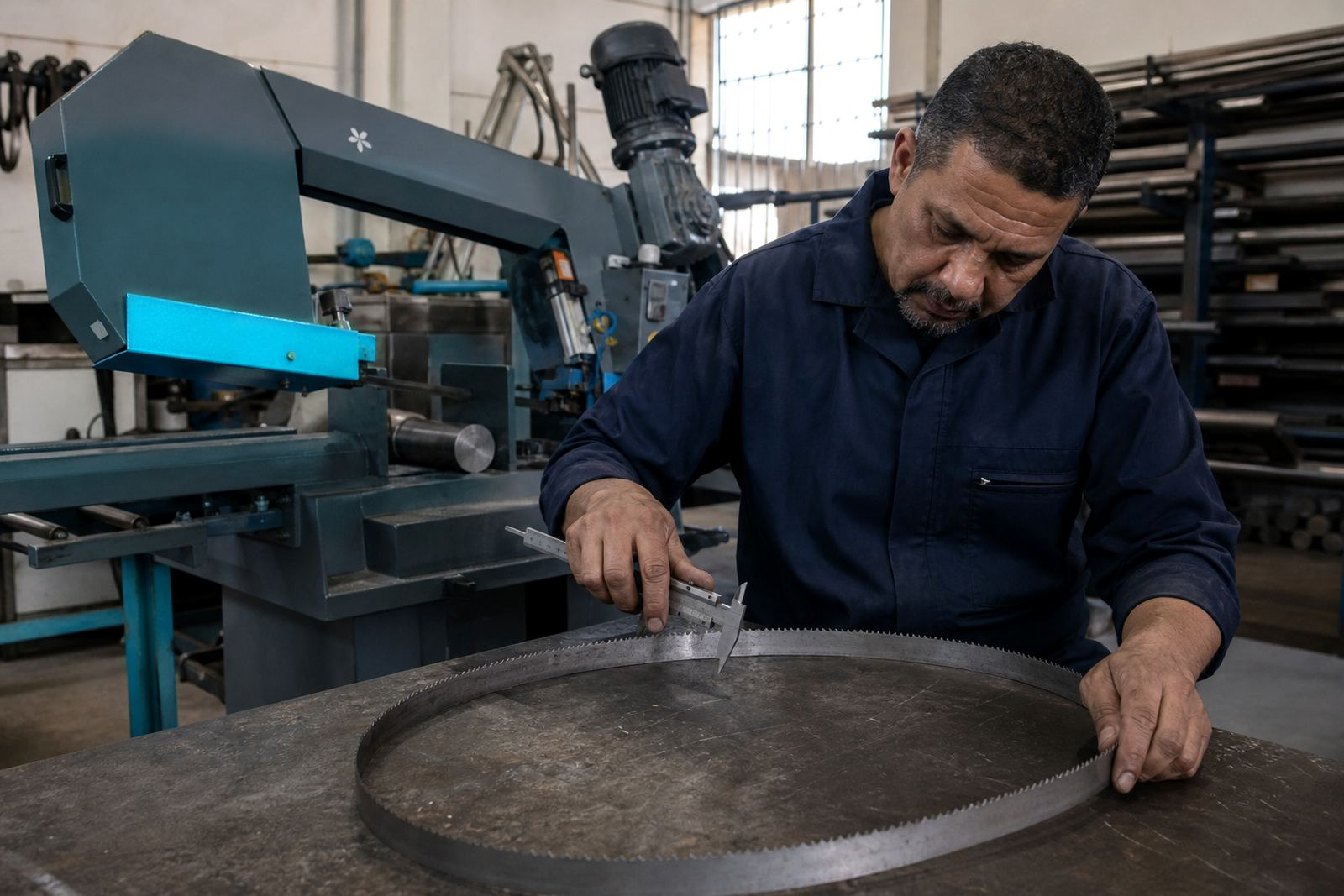
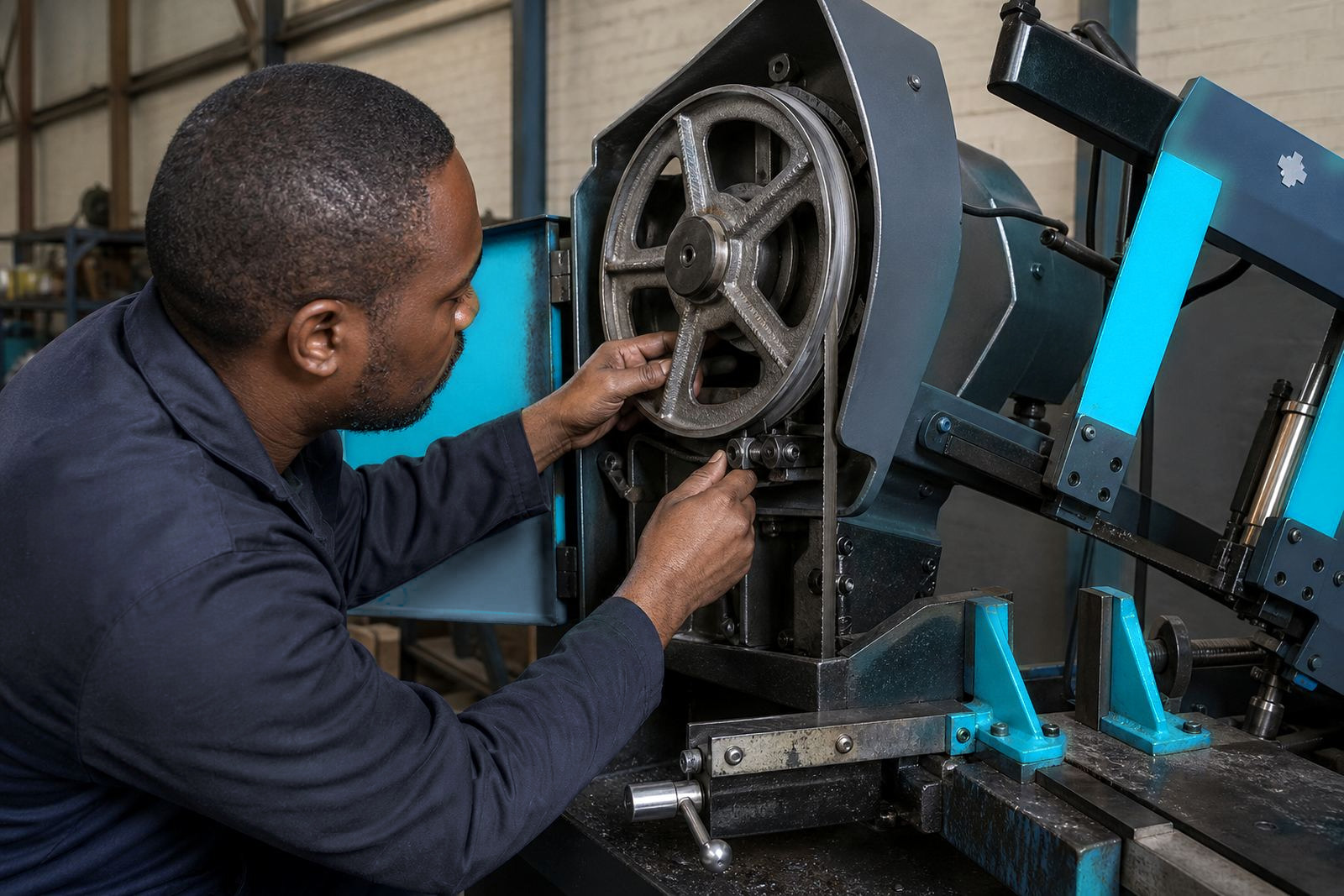
Blade service covers the sale and the small checks that keep a saw set up correctly before the blade goes in. A blade that is welded to length accurately, fitted the right way and checked against the machine is less likely to wander, overheat or break early. On production saws and on manual machines, where the operator changes stock sizes through the day, that stays important.
- Weld-to-length for continuous blade use on supported machines
- Length verification before fitting
- Machine fit check for guide and wheel compatibility
- Starter kit planning for workshops setting up new cutting routines
Tooth pitch, width and thickness working together
Tooth pitch is usually measured in TPI and it needs to suit the smallest section being cut. Fine pitch blades suit thinner material and a higher tooth count in the cut, while coarser pitch suits heavier stock where chip clearance is important. Variable pitch blades can help reduce chatter on mixed profiles and are often worth considering where the workshop cuts more than one section size in a shift.
Blade width and thickness also shape the cut. Wider blades track straighter on long cuts, but the machine must allow for that width and its guides need to support it properly. Thickness affects stiffness and flexibility, so the right balance depends on the saw frame, the material and the way the blade is fed into the work.
Run-in, feed and speed are part of the blade life
Many blade failures begin with setup rather than the blade itself. A proper run-in helps the teeth settle before full feed is used, particularly on fresh bi-metal blades. Feed pressure should match the section size and metal hardness, while cutting speed has to stay realistic for the machine and blade type. Too much feed or speed can glaze the teeth, overheat the blade body and shorten life fast.
- Start with a controlled run-in on new blades
- Match feed to chip formation and motor power
- Keep speed in line with the material being cut
- Watch for squeal, vibration and chip colour changes
Coolant and chip control on busy shop floors
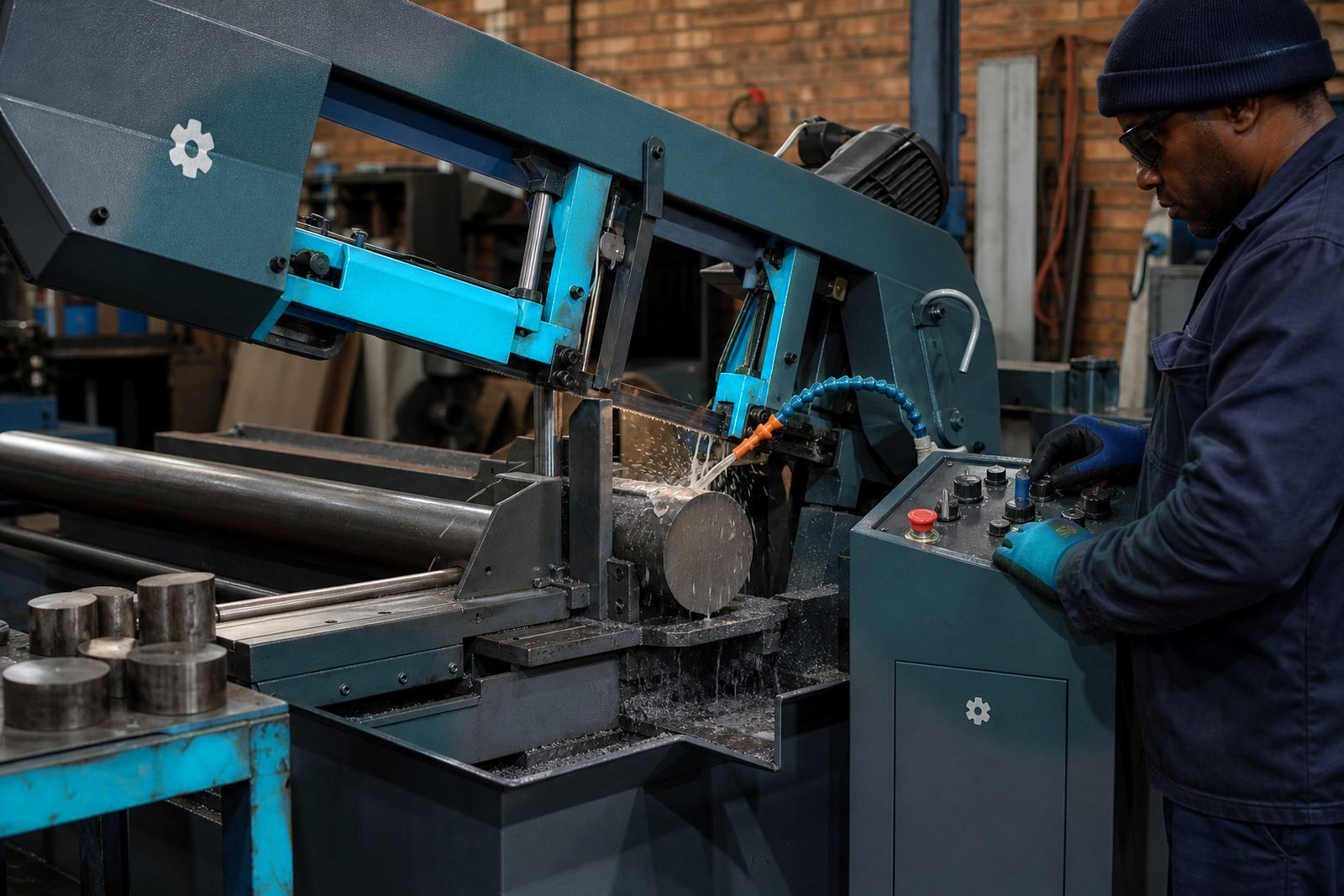
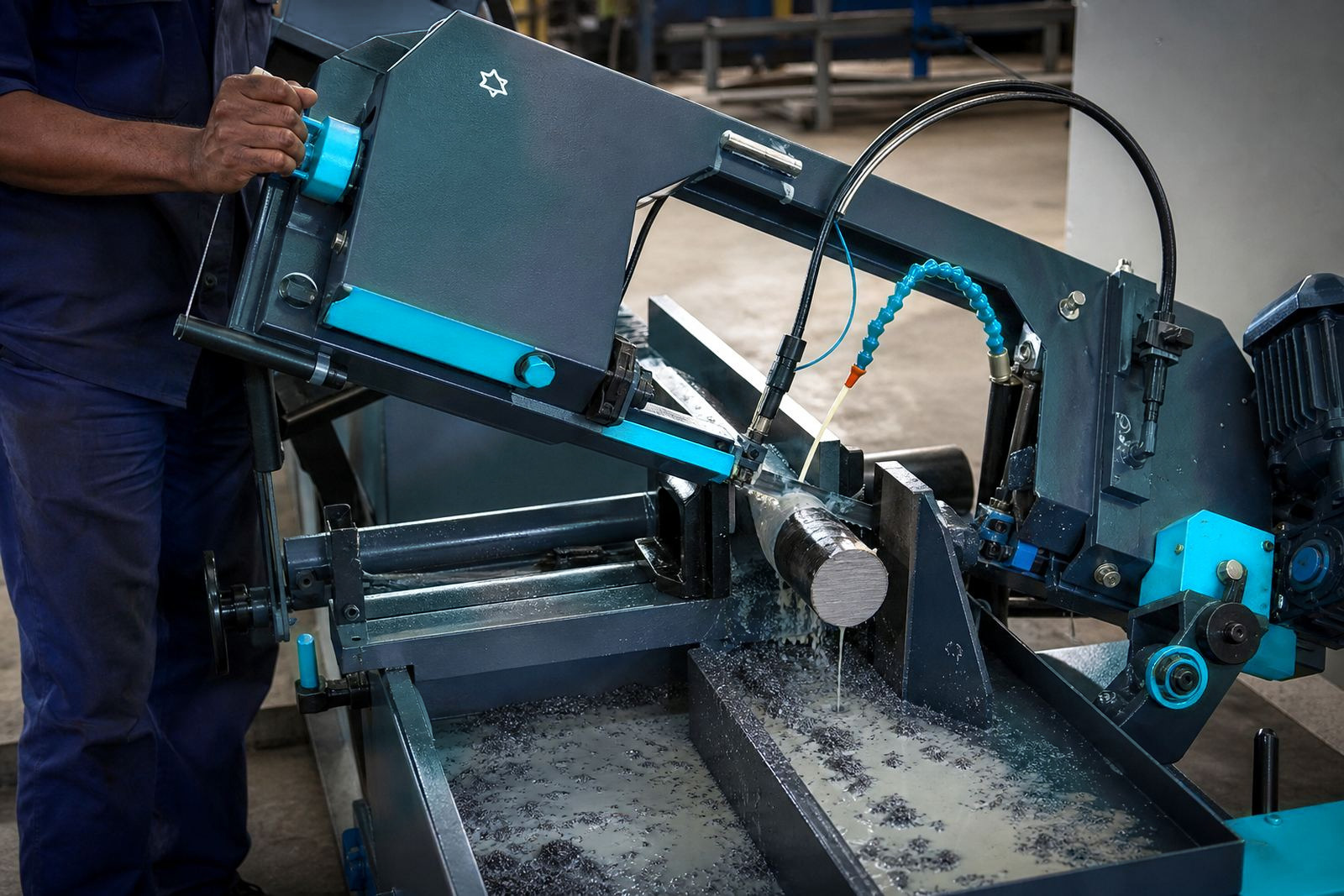
Coolant helps control heat and flush chips away from the cut, especially on bi-metal blades used for long runs. If coolant flow is poor or the mix is wrong, the teeth can wear unevenly and the cut may drift. In South African workshops, dust and swarf build up daily, so coolant checks belong in the normal blade routine.
We also look at chip build-up and blade loading. A packed gulley can make a good blade behave badly, even on material it should handle with ease. For manual saws, the same principle applies in simpler form: keep the cut clear and let the blade do the work rather than forcing it through.
When a blade fails, the clues are usually there
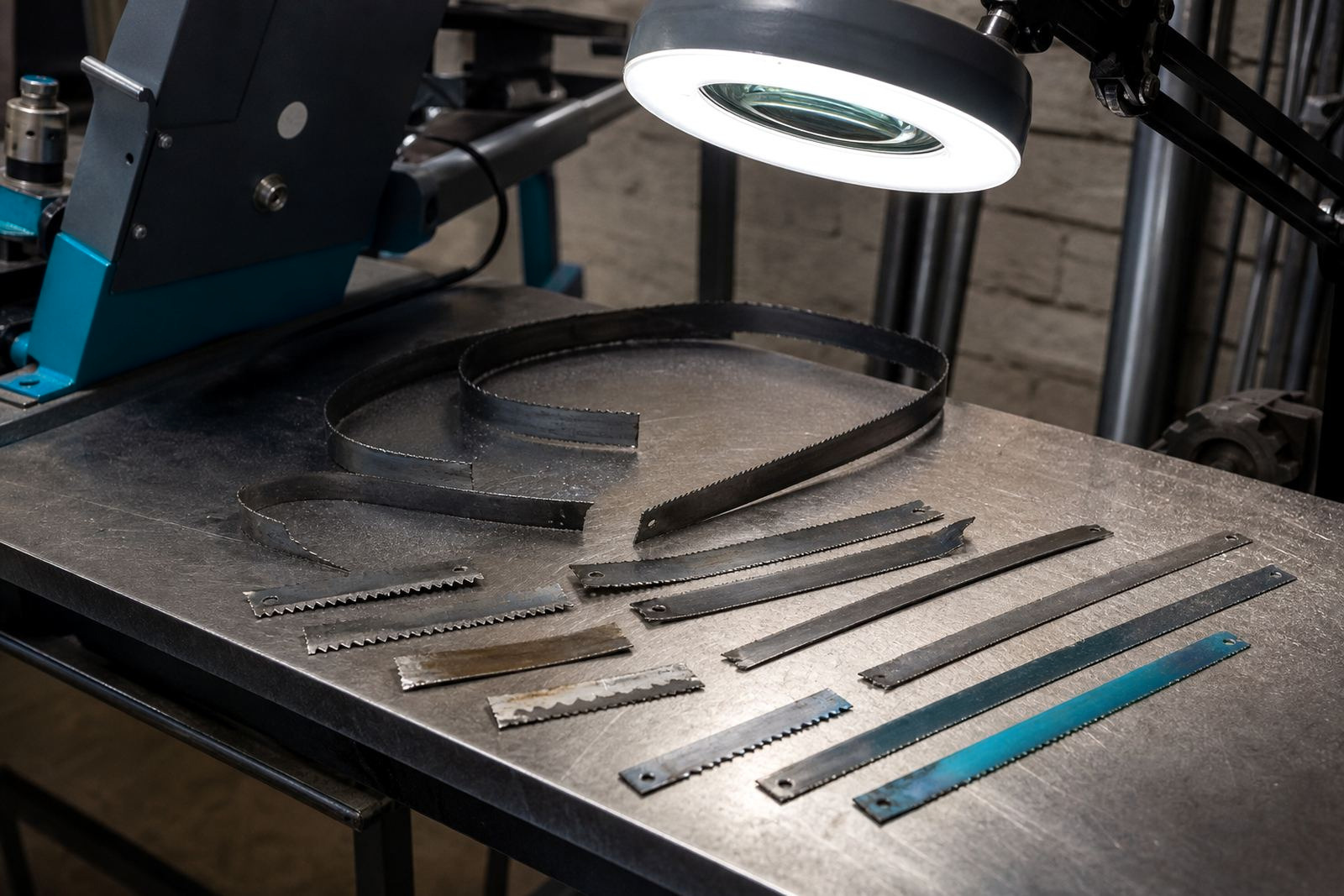
A broken blade, crooked cut or repeated tooth stripping usually points to a setup issue. The problem may be pitch, feed, wheel alignment, guide wear, coolant, or a machine fit that never matched the blade width properly. Blade failure review looks at the pattern of damage and the cut conditions, so the next blade does not meet the same trouble.
- Broken weld or weak joint area
- Tooth stripping from incorrect feed or pitch
- Heat damage from poor coolant or speed choice
- Blade wandering caused by poor guide support
That kind of review is useful for workshops standardising stock across several machines in Alberton, Johannesburg, Pretoria, Vereeniging, Durban and Cape Town. It keeps the blade stock practical and makes ordering easier for the team on the floor.
Keeping stock sensible across several machines
Many workshops do better with a smaller, well chosen blade range than with a mixed pile of odds and ends. Starter kits, stock standardisation and manual saw support all help when different operators use the same equipment through the week. A tidy blade plan reduces confusion, cuts down on wrong fitment and keeps the workshop from holding awkward sizes that never get used.
MoreCut Saws works with teams that want practical guidance on the blade side of the job.