Blade paths that ask for a slimmer cut line
Narrow width blades are chosen when the job needs a smaller turning radius, or when the material section is light enough that a wide blade would feel too stiff in the cut. In bandsaw work that usually means closer contour cutting, short straight cuts on small stock, and general workshop jobs where the blade must stay accurate without forcing the saw.
For metalwork, blade width is one factor in the decision. Tooth pitch, blade thickness, set and the condition of the machine all affect how the blade feeds through steel, stainless, aluminium or mixed scrap. A narrow blade can be the right answer on a manual saw, vertical bandsaw or frame saw, provided the tooth form and cutting pressure suit the material.
We help with narrow width selection for jobs that need control more than speed. That includes lighter box section, small bar, tube, angle iron and shape cutting where the operator wants the blade to track cleanly without wandering.
Width, thickness and tooth pitch in practical terms
Blade width is usually measured in millimetres or inches, and the narrow end of the range is used for tighter radii and finer control. Blade thickness affects the cut, because a thinner blade bends more easily around curves while a thicker blade tends to track straighter in heavier work. Machine guides, wheel condition and the material being cut all shape the right balance.
We set tooth pitch in TPI, and it must match the wall thickness or section size. Fine pitch is suited to thin wall tube and lighter sections. Coarser pitch works better on solid bar and thicker profiles where more tooth gullet is needed for chip clearance. Variable pitch blades can help reduce chatter on mixed sections, especially where the cut goes from a tube wall into a thicker web.
- Narrow widths for tighter radii and lighter stock
- Fine TPI for thin wall tube and lighter sections
- Coarser TPI for thicker wall and solid metal
- Variable pitch for mixed cross sections and reduced vibration
- Blade thickness selected to suit guide support and cut stability
When narrow blades are the better workshop fit
Narrow width blades suit small fabrication benches, maintenance teams, manual saw stations and machine shops that cut a mix of shapes through the day. Operators use them where they need to turn the work, follow a marked line or work through compact profiles without overloading the blade. In Cape Town coastal air or in humid Durban stores, store blades dry, because moisture can mark the teeth and affect the blade finish.
Uneven stock also suits these blades. A job may start on light angle iron, move to small round bar and then shift to tube or flat bar. A narrow blade gives more feel in those changes, though feed speed still needs to stay steady. Push too hard and the teeth can set up vibration. Feed too soft and the blade rubs, generating heat and shortening blade life.
For workshops that cut by hand on manual saws, the blade has to suit the operator as well as the machine. A narrow blade with the right set can help on short runs and odd shapes, but it still needs proper tracking, guide alignment and a clean wheel face.
Fitting, welding and machine checks before the cut starts
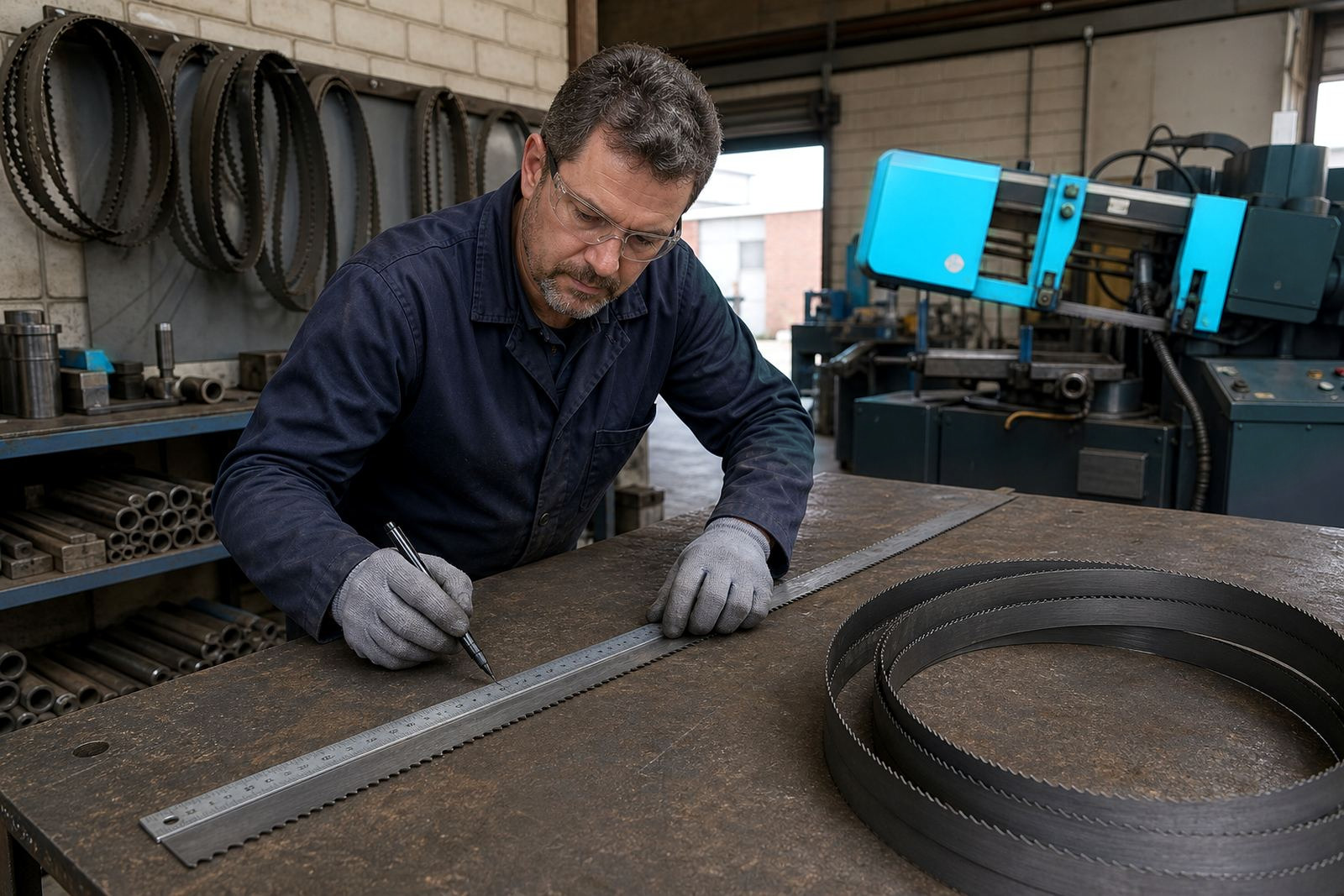
We supply narrow width blades as ready-to-fit lengths or through a weld-to-length service for workshops that need a specific loop size. The blade has to match the saw frame, wheel diameter and guide arrangement, and the tooth direction must be correct for the machine. A blade that is right on paper can still perform badly if the length is off by even a few millimetres.
Before fitting, it helps to check the machine’s tracking, guide blocks or bearings, wheel condition and tension range. A narrow blade has less sideways stiffness, so poor guide support shows in the cut early. We also look at machine fit, especially where older manual saws have had guide wear or frame movement that changes the cut line.
- Blade length and weld position for the saw frame
- Wheel diameter and guide clearance
- Tracking direction and tooth orientation
- Machine condition, especially worn guides or wheels
- Material type and section size for pitch choice
Run-in, feed pressure and coolant on narrow blades
Narrow width blades need a run-in because a fresh tooth edge is more fragile in the first cut or two. A light feed, steady pressure and a slower start on the first material help the teeth seat properly before full production cutting begins. That is especially important on bi-metal blades with fine pitch, where the tooth tips have to settle without chipping.
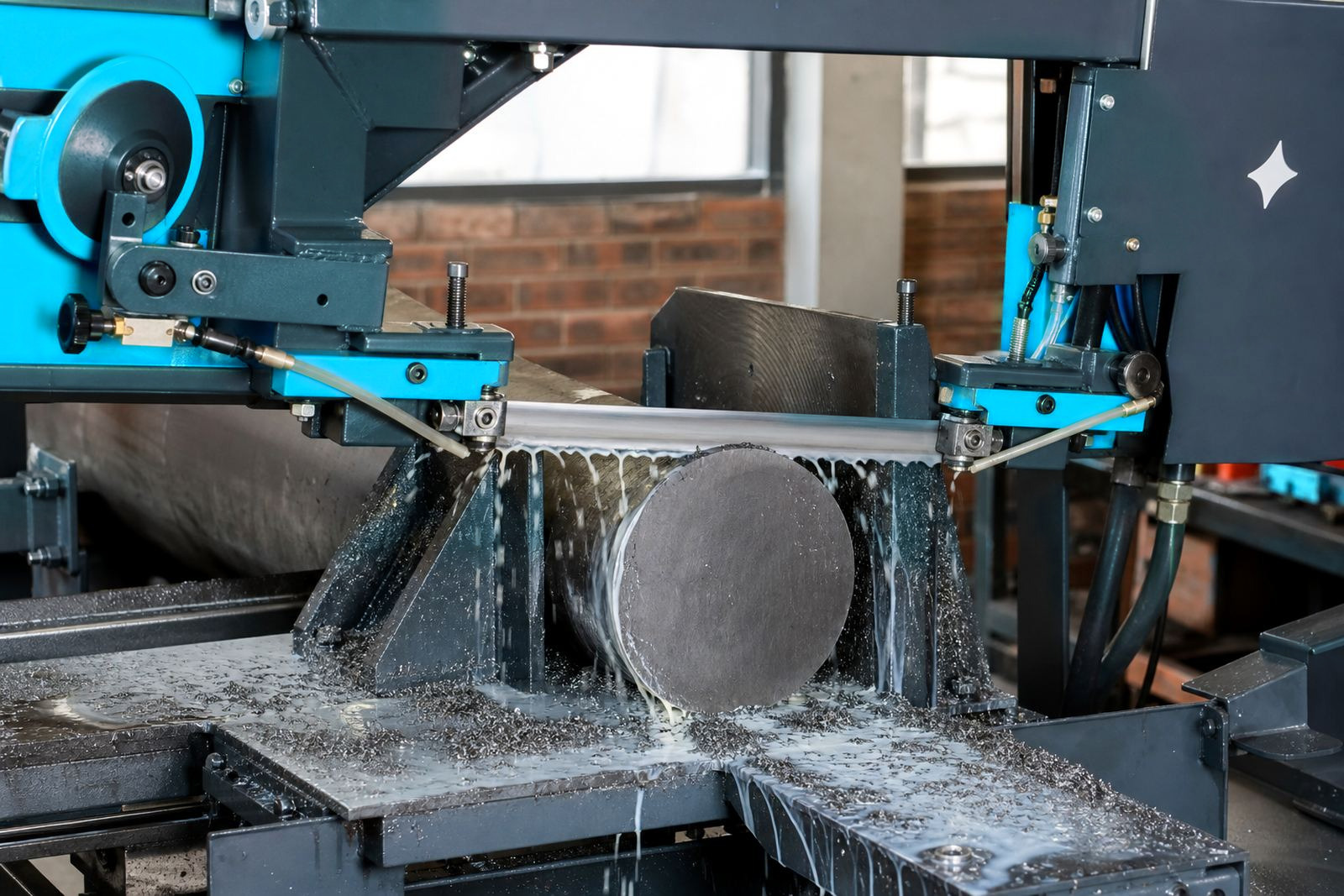
Feed speed should match the blade and the material. On small section work, many blade problems begin with too much pressure and not enough chip clearance. Coolant or cutting fluid helps carry heat away, flush the gullets and keep tooth life more even, particularly on stainless and heavier mild steel sections. A dry blade can still cut, but the blade will usually run hotter and the finish can suffer.
Good care is basic but worth doing. Keep blades flat before fitting, store them dry, and check for tooth damage after a blade stalls or twists in the cut. If a blade starts to cut crookedly, it may be a pitch issue, a worn guide, or a feed problem all at once.
What to send for a narrow width blade
When you order a narrow width blade, the useful details are the saw type, blade length, material and the profile you cut most often. If the job changes through the week, tell us the thickest and thinnest sections too. Tooth pitch, blade width and thickness all count, as well as whether a variable pitch blade will behave better than a fixed pitch blade.
Know whether the machine is a bandsaw or hacksaw, manual or powered, and whether the blade is for straight cutting or shaped work. If the blade has to weld to a non standard length, include the existing loop size or the machine model details. For mixed work, note whether the cut includes solid bar, tube, angle or small structural section.
- Saw type and blade length
- Material being cut and wall thickness
- Preferred radius or shape of cut
- Current tooth pitch or blade width if known
- Need for weld-to-length supply or starter kit planning
We also assist workshops that want stock standardisation across their saws, so the narrow blade choice stays consistent from one machine to the next.
Key facts
| Product | Narrow Width Bandsaw Blades |
|---|---|
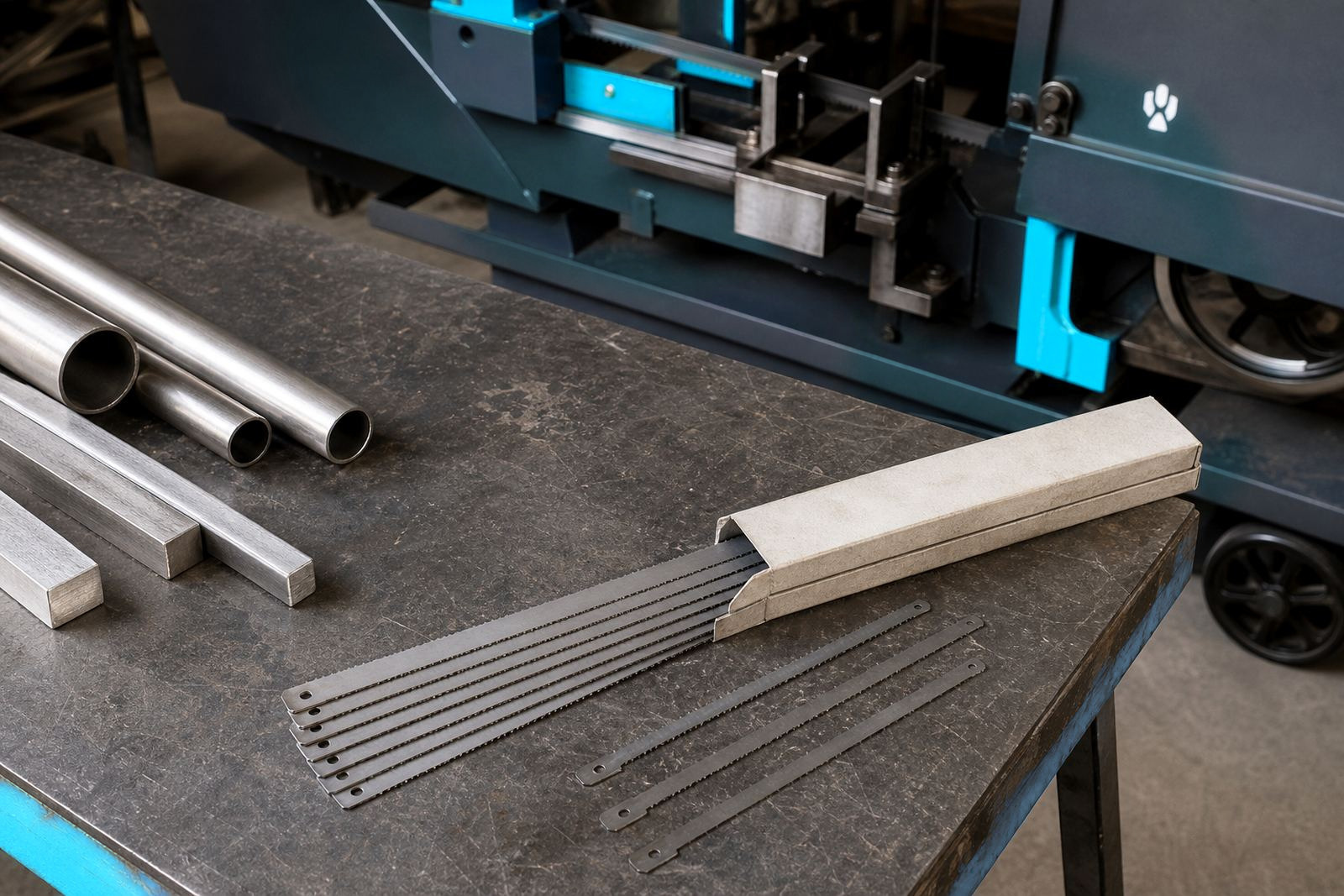
| Blade types | Bi-metal M42, carbon steel, hacksaw blades |
| Typical widths | Narrow widths for tighter radii and lighter sections |
| Tooth options | Fine pitch, coarse pitch and variable pitch TPI |
| Services | Weld-to-length, length verification, run-in guidance, machine fit check |
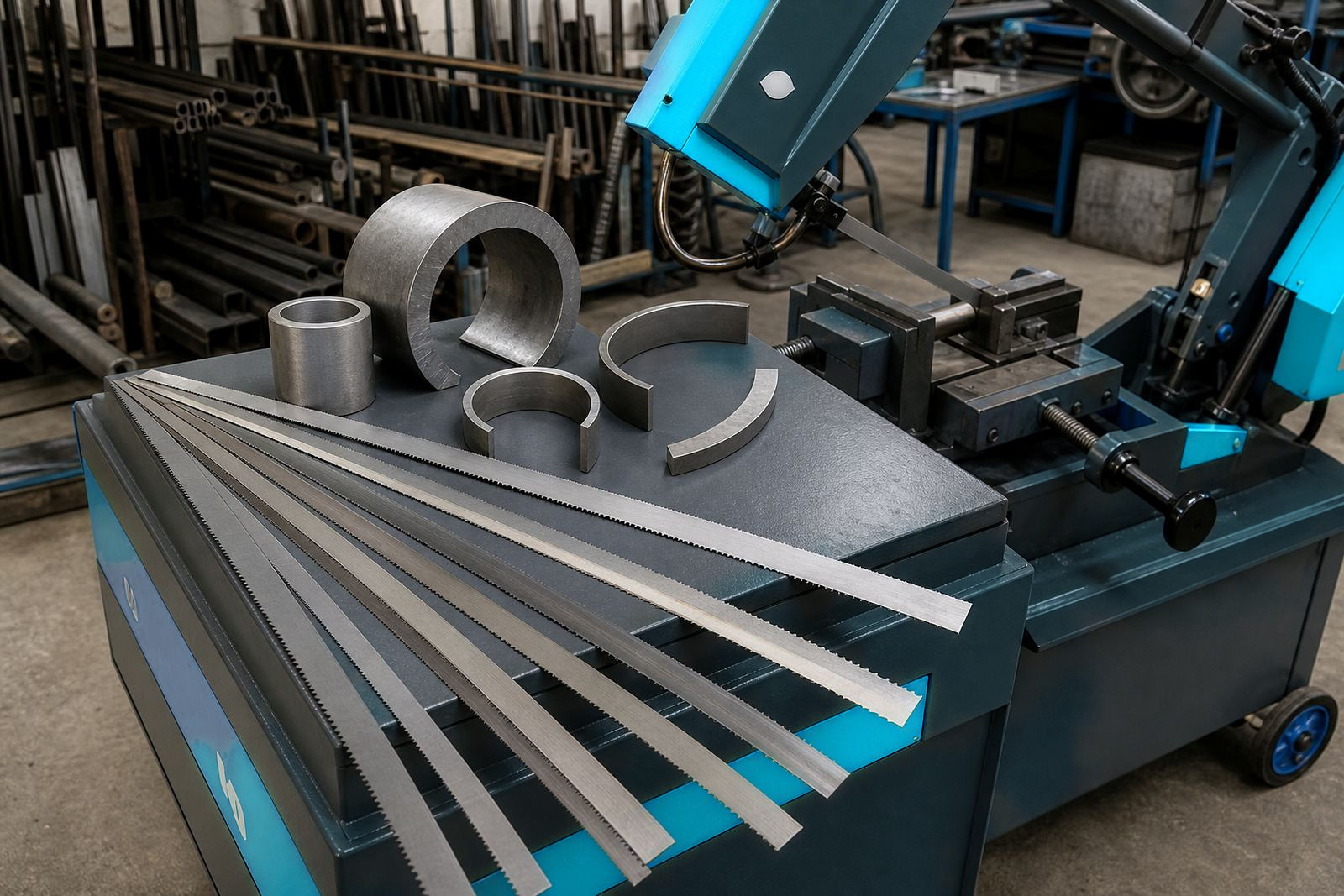
| Use cases | Small bar, tube, angle iron, lighter structural sections and contour cutting |