
Carbon blades for the hand saw bench
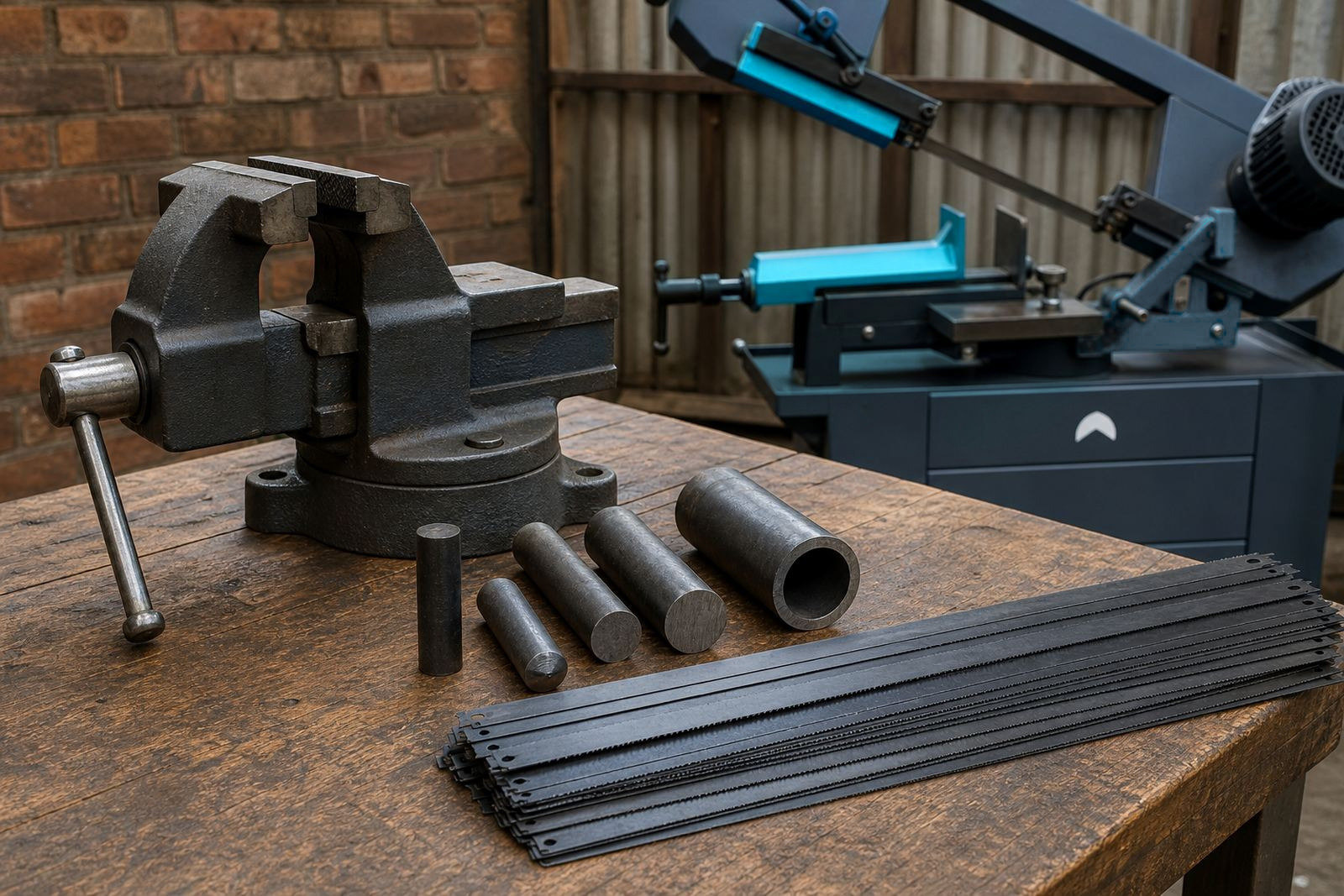
Carbon hacksaw blades are the familiar workshop choice for manual sawing on light steel, thin wall tube, conduit, angle offcuts and small section material. The blade body is carbon steel, heat treated for usable edge life and set for a straight cut in a hand hacksaw frame. For day-to-day bench work, they give a practical balance between cut speed and cost, especially when the job is short and the material is not too hard.
We supply blades for standard 300 mm hacksaw frames, with common hole spacing and widths that suit manual frames used in repair shops, fabrication bays and service departments. Tooth counts are chosen for the material thickness, finer teeth for thin sections and coarser teeth for heavier wall stock. A blade matched to the job cuts cleaner and stays more controllable in the hand, useful when a fitter is trimming to mark or cleaning up a small repair piece.
Carbon blades are best treated as a working consumable. They suit lighter workshop use and occasional cutting, where the frame is set properly and the operator keeps pressure steady. On harder or thicker sections, tooth selection becomes more important because the wrong pitch can clog, chatter or wear down early.
Sizes, tooth counts and blade feel
Most carbon hacksaw blades are supplied in the standard 300 mm length, although some frame types and special fitting jobs call for a different cut length. Blade width and thickness affect the feel in the cut. A narrower blade turns a little easier in tighter spaces, while a wider blade holds its line better on straighter work. Blade thickness affects tracking too, since a stiffer blade tends to follow a steadier line through consistent strokes.
Tooth pitch is normally expressed as TPI, teeth per inch. For thinner wall material and sheet edges, a finer pitch gives more teeth in contact and a smoother finish. For heavier sections, a coarser pitch clears swarf more freely. Variable pitch blades are also useful in mixed workshop work because they reduce the chance of a regular vibration pattern building up through the cut.
- Standard length: 300 mm for common manual hacksaw frames
- Common widths: narrow, medium and wider rigid blades for different frame types
- Typical pitches: fine TPI for thin material, medium TPI for general workshop use, coarser TPI for heavier section
- Finish: bright or coated carbon blade stock, depending on the batch and spec
When the stock mix changes from week to week, it helps to keep one or two tooth counts on hand instead of trying to use one blade for every job. Stable cuts reduce rework and save time.
Where carbon hacksaws earn their place
Maintenance teams, small fabrication benches, machine shops and fitting work suit these blades when cuts are done manually and volumes stay modest. They are handy for trimming mild steel bar, cleaning up bolts, cutting small tube sections and doing site repairs where a powered saw is not the right tool for the task. In workshops around Alberton, Johannesburg, Vereeniging, Pretoria, Durban and Cape Town, they are often kept for quick adjustments and offcut work.
They are also useful for stock rooms and support bays where a fitter needs a reliable blade for a frame kept near the bench. For thinner metal and everyday soft stock, carbon blades give a practical result when you keep the stroke steady and let the teeth do the cutting. If the job moves into thicker wall sections or tougher material, it is worth stepping up the tooth count plan before the cut starts.
- Light repair work on mild steel and small section profiles
- General maintenance and fitting tasks around a busy workshop
- Occasional cutting on a budget
- Bench work, stock preparation and site adjustment jobs
Manual cutting still rewards a sensible blade choice. A well matched carbon blade keeps the frame under control and helps the operator finish the cut without forcing the stroke or twisting the blade in the kerf.
Fitting the blade into a manual frame
Blade fitting starts with the frame, the tension and the direction of the teeth. The blade must sit square in the frame pins and be tensioned enough to stay straight through the stroke. Too little tension makes the blade wander, while too much can shorten blade life and increase the risk of breakage at the mounting points. The tooth direction must point away from the handle on the forward cutting stroke, which is a basic fit check but still missed on hurried jobs.
On metalwork benches, the saw frame should hold the blade tight and the workpiece should be secured before the first stroke. For narrow stock, a finer pitch blade usually settles in easier. For heavier bar, a stronger frame and a coarser tooth count help the blade clear swarf. A light touch on start-up helps the teeth seat into the material without skidding, especially on round section or polished surfaces.
We also help with machine fit checks where a manual blade is used in a workshop setting with repeat jobs and mixed operators. If the frame is worn, the pins loose or the saw bow out of line, the blade can be the first part to show the problem, even when the blade itself is correct.
Keeping carbon blades cutting cleanly
Carbon hacksaw blades last longer when the cut is started straight, the pressure stays even and the blade is not forced through hard spots. Let the first few strokes form a shallow track, then keep a regular feed. On mixed material, stop and clear swarf if the cut starts to bind. A blade that is packed with chips runs hotter and loses its clean bite sooner.
For longer service, store blades flat and dry, away from damp corners and oily grit. In places like Durban and Cape Town, seal carbon stock in storage so coastal humidity does not mark it while unpacked for too long. A thin wipe of protective oil on stored blades can help, but the cutting edge should be clean before use. If the blade shows set loss, chipped teeth or a bent back, do not keep pushing it through work that should be straightforward.
- Use steady feed rather than heavy pressure
- Keep the frame aligned and the work clamped firmly
- Clear swarf when the cut starts to drag
- Store dry, flat and protected from moisture
Where a shop uses blades across several benches, stock standardisation helps. Keeping one or two agreed tooth counts in use makes the handling more consistent and reduces confusion during busy shifts.
What to confirm when placing a blade order
For carbon hacksaw blades, the main details are the frame type, blade length, tooth count and what you are cutting. We also need to know whether the job is mostly light wall tube, bar, angle, threaded rod or mixed offcut work. That tells us whether a finer, medium or coarser pitch will suit the cutting pattern. If the blade is for a regular workshop user, it helps to note the level of experience too, because some frames and tooth counts are more forgiving than others.
Blade width and thickness are worth confirming when the frame or holder is unusual. Some frames benefit from a narrower blade for tighter access, while others work better with a wider strip for line control. If the order is for a batch of benches or a fleet of maintenance kits, starter kit planning can cover the frame, the first blade count and the tooth mix to keep on hand.
- Frame length and blade pin style
- Material being cut and the thickest section in regular use
- Preferred TPI or the range of TPI needed
- Blade width and any frame clearance limits
- Whether the blades are for single use, stock holding or a starter kit
We also handle weld-to-length requests for other blade types, length verification and advice where the cutting pattern needs a closer look.
Key facts
| Product | Carbon steel hacksaw blades |
|---|---|
| Use | Lighter-duty manual cutting for workshop metalwork |
| Standard length | 300 mm common frame size |
| Tooth options | Fine, medium and coarser TPI |
| Blade form | Flat strip with set teeth for manual frames |
| Service area | Alberton, Johannesburg, Vereeniging, Pretoria, Durban and Cape Town |