

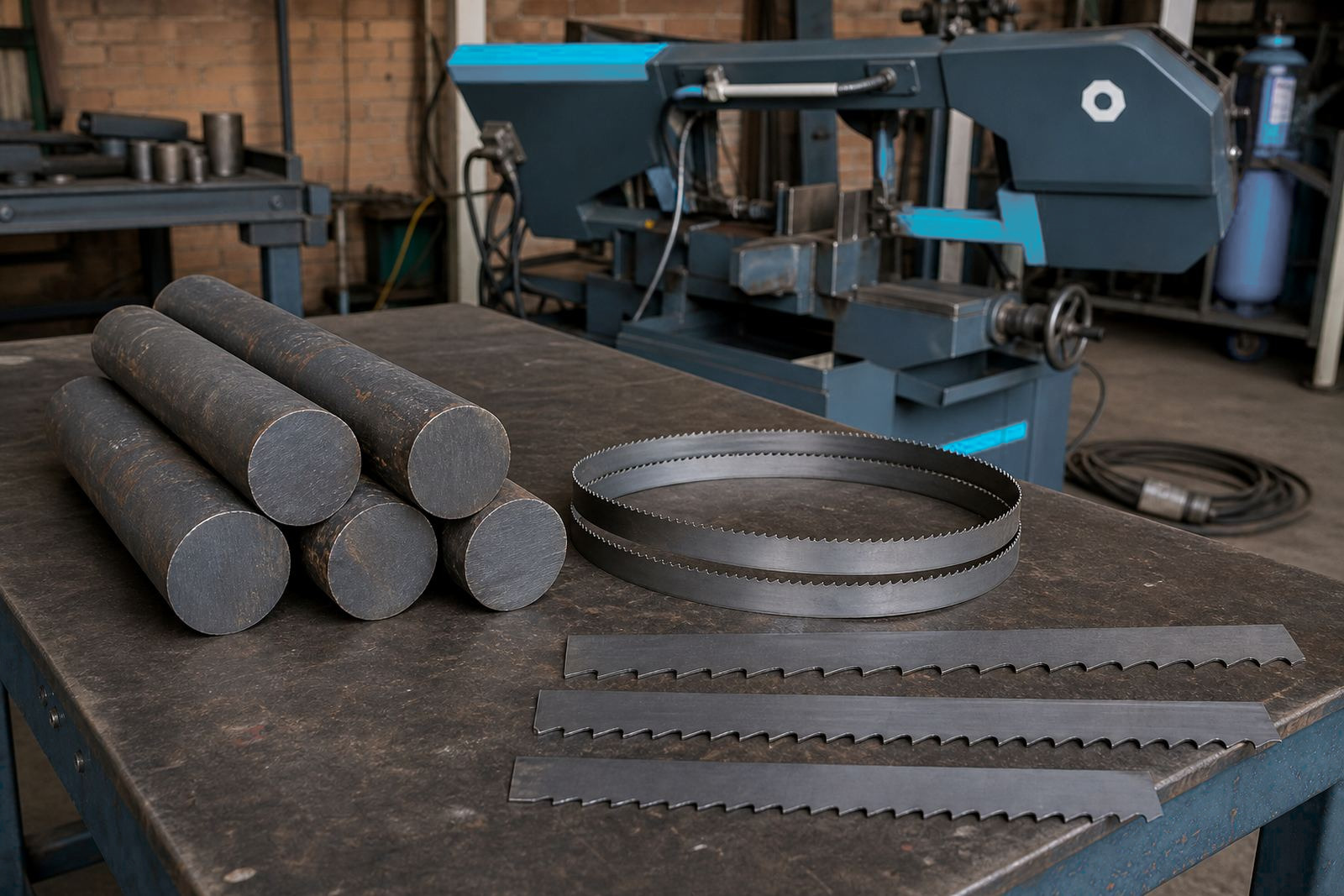
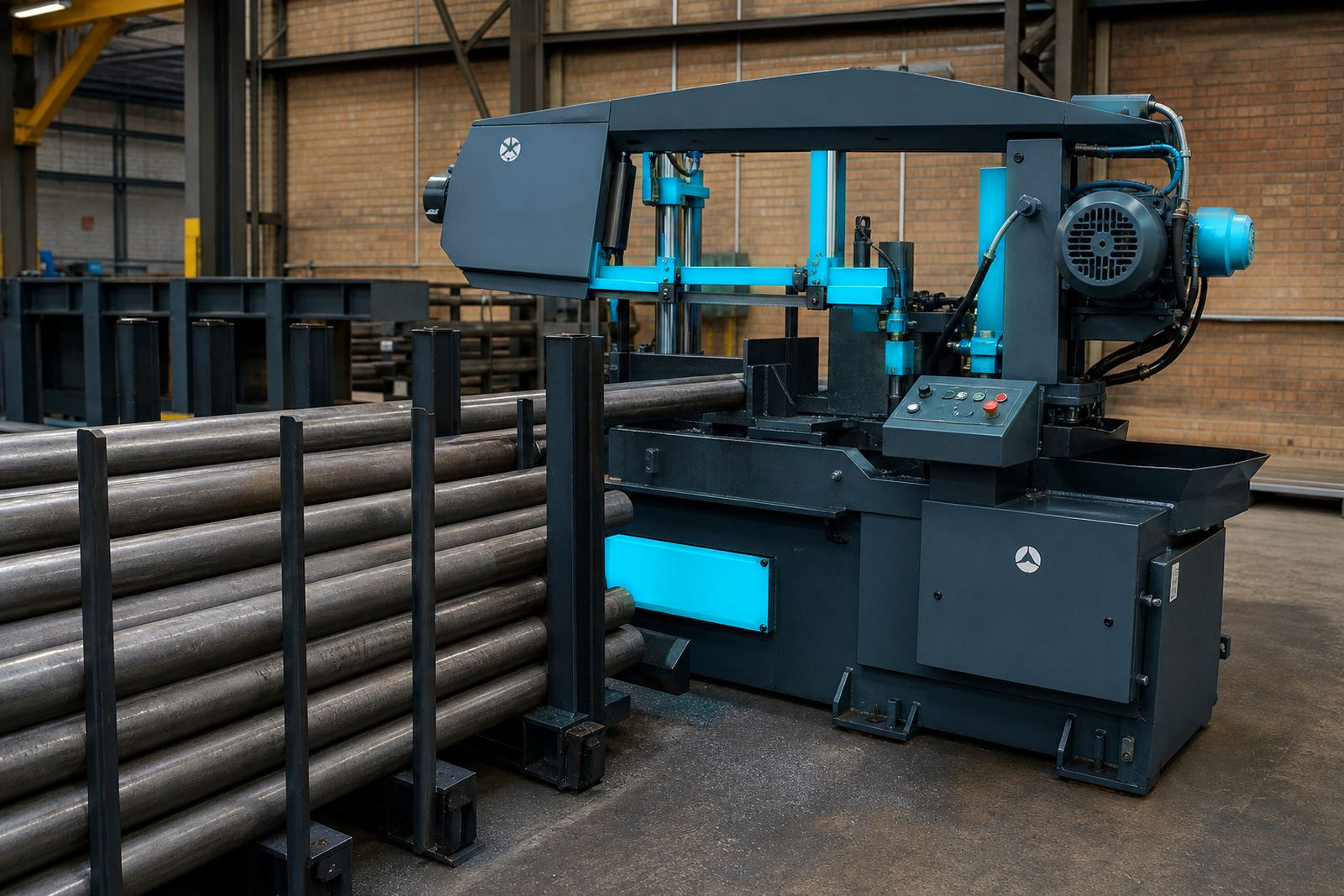
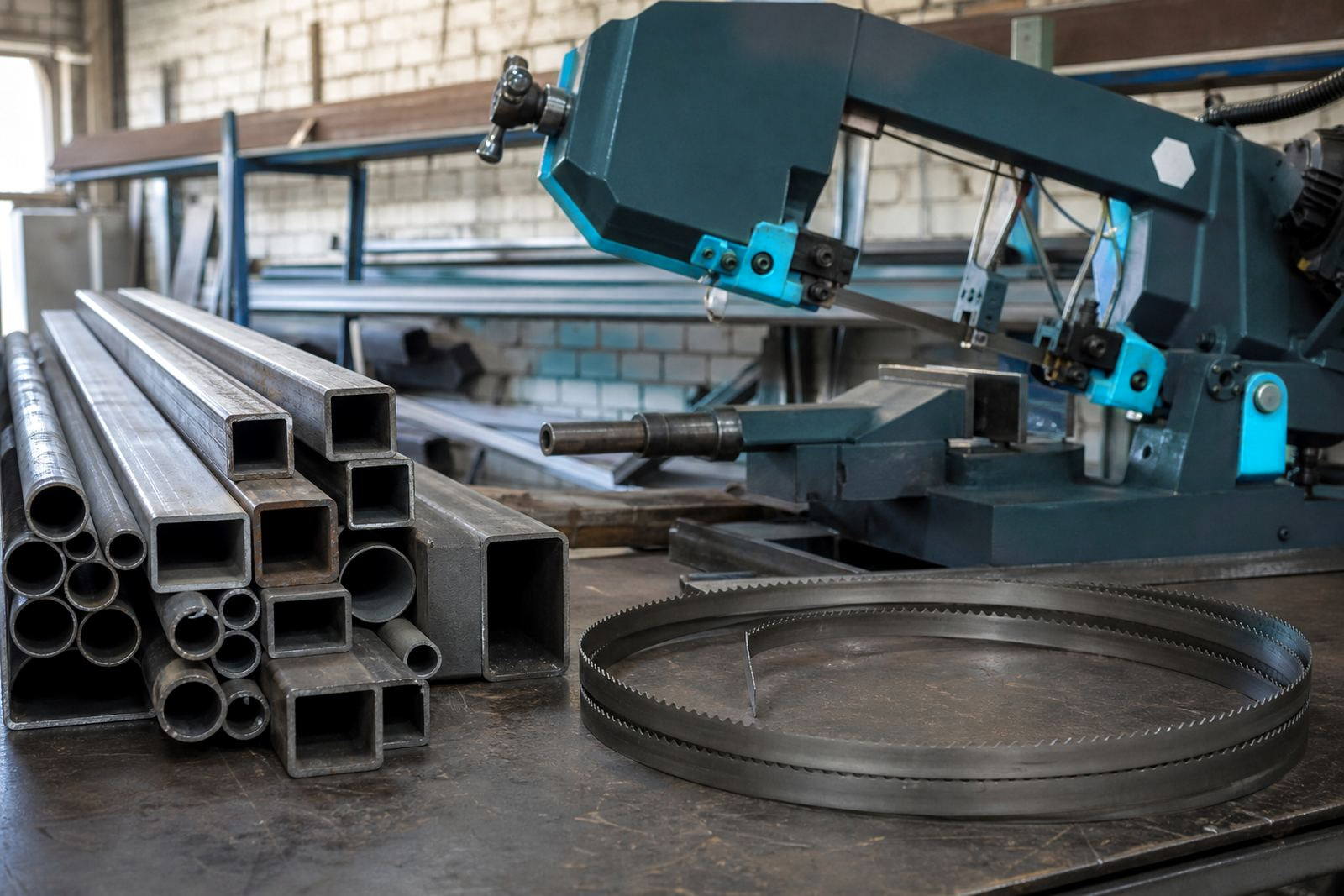
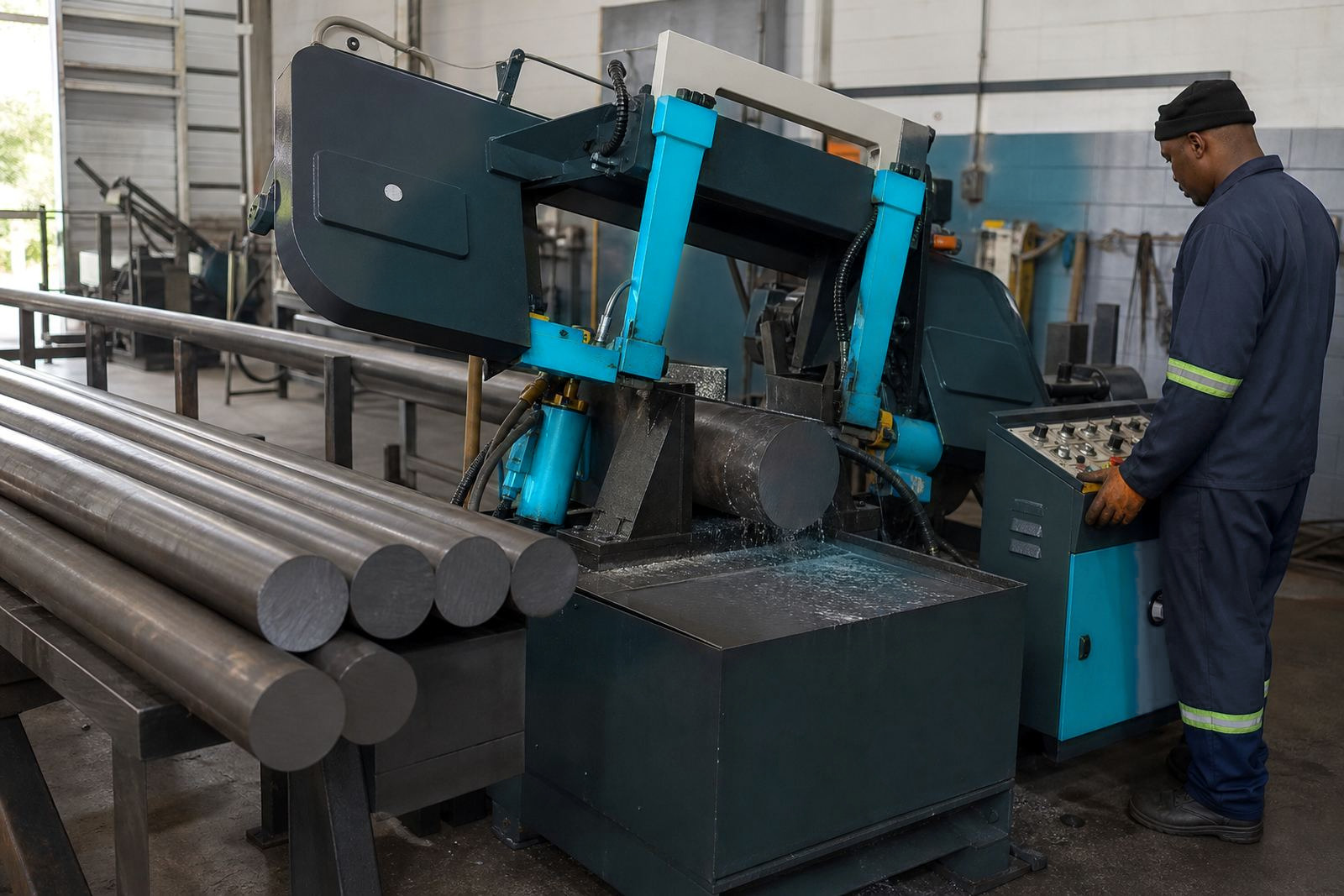
Steel sections need the tooth form to match the cut
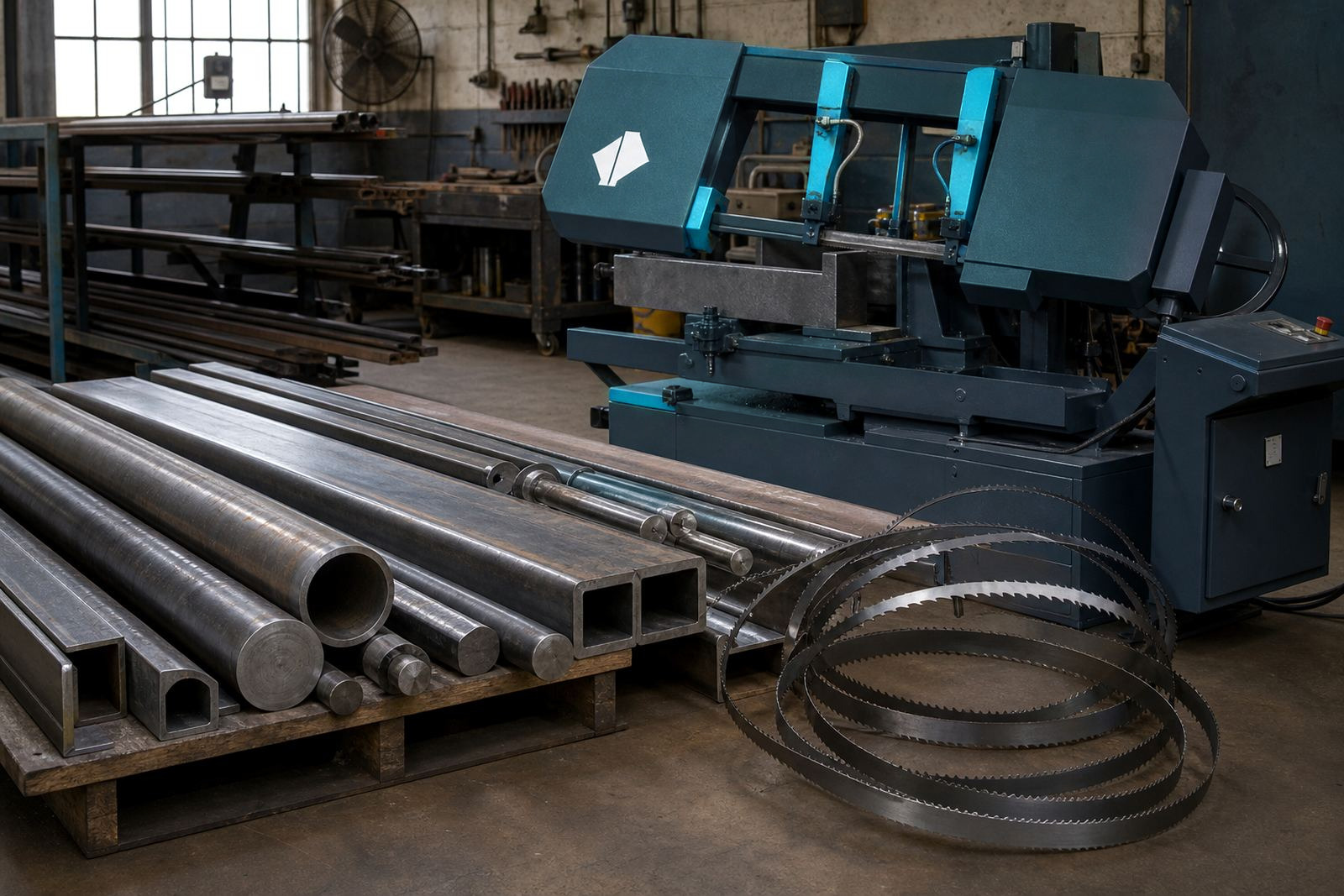
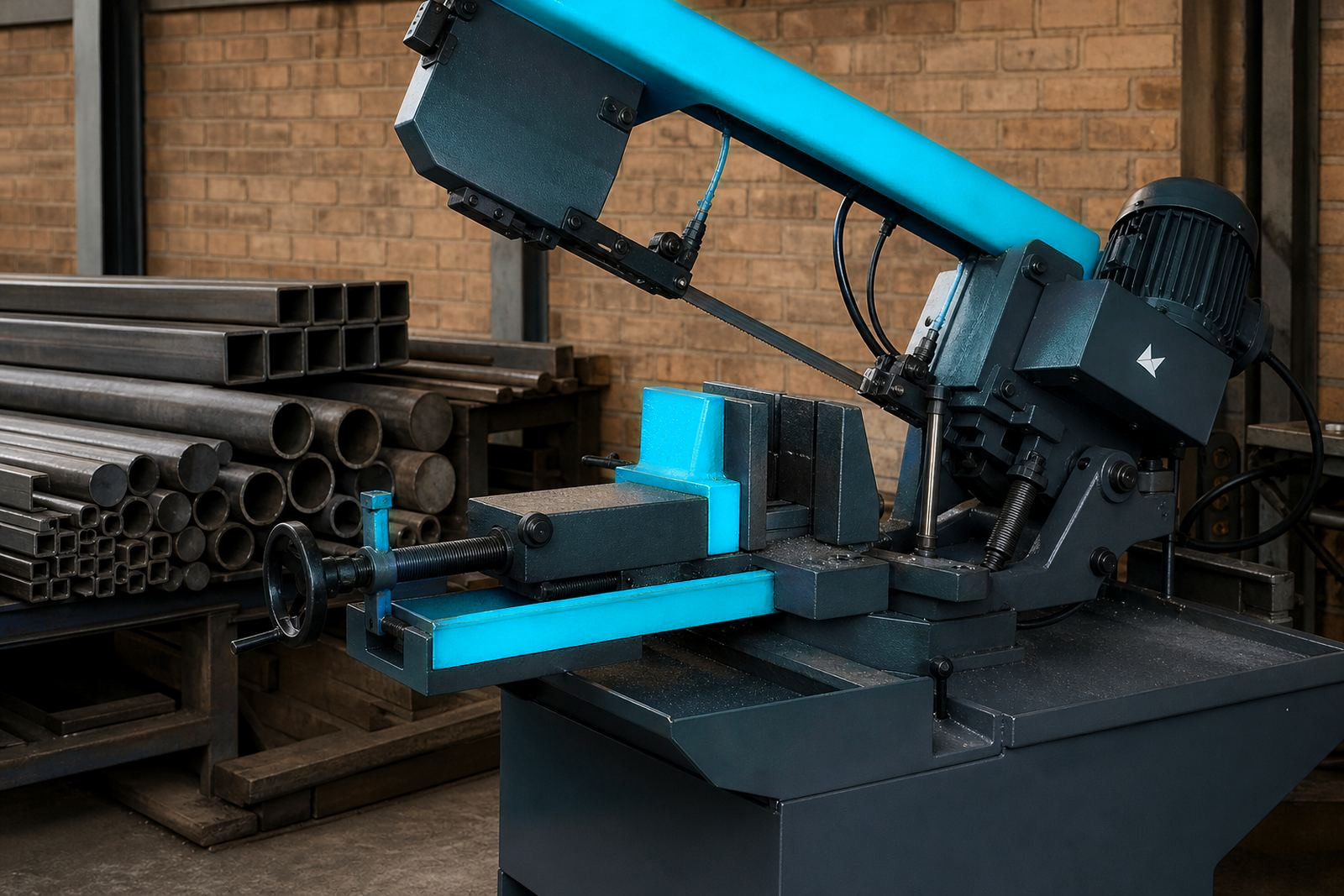
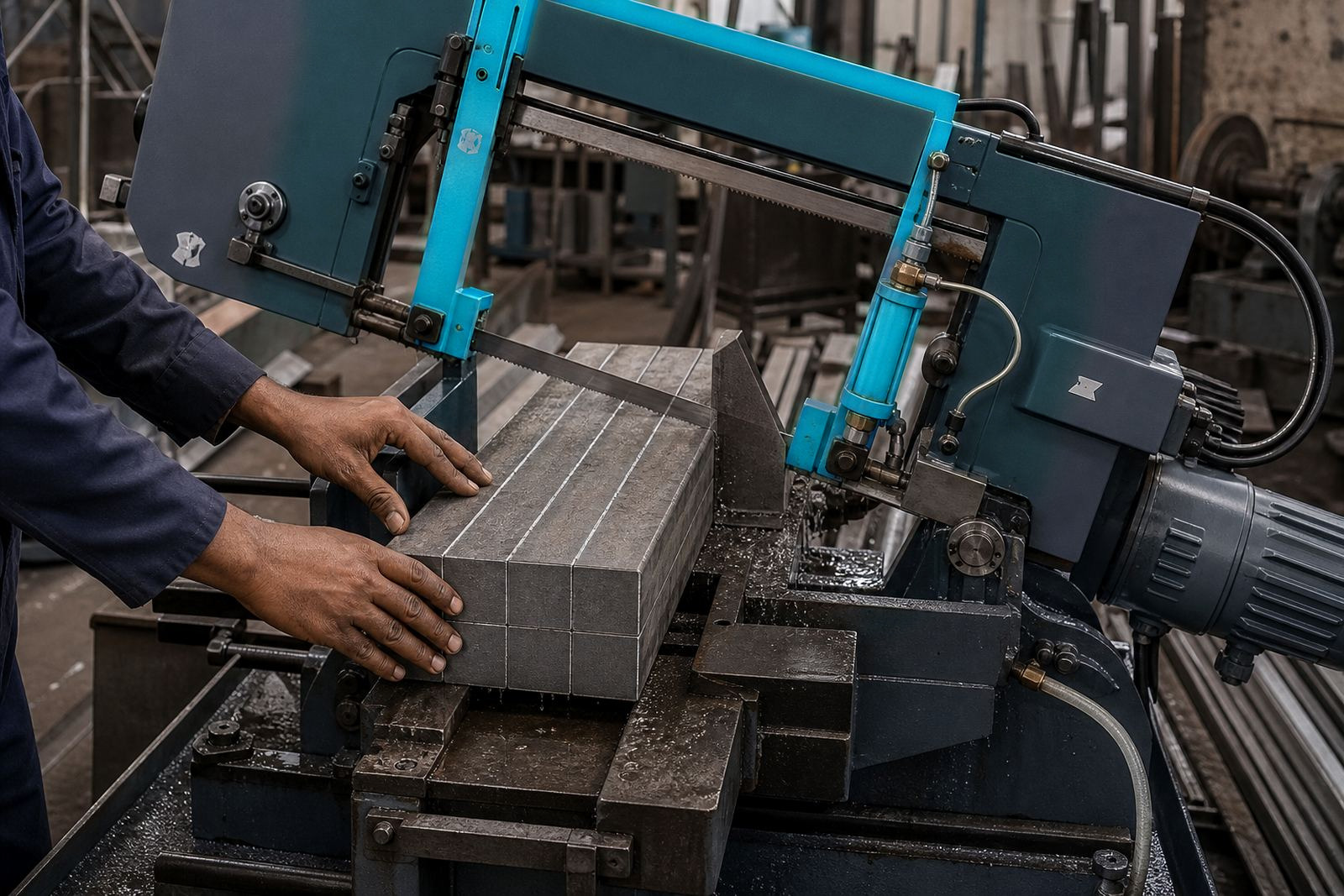
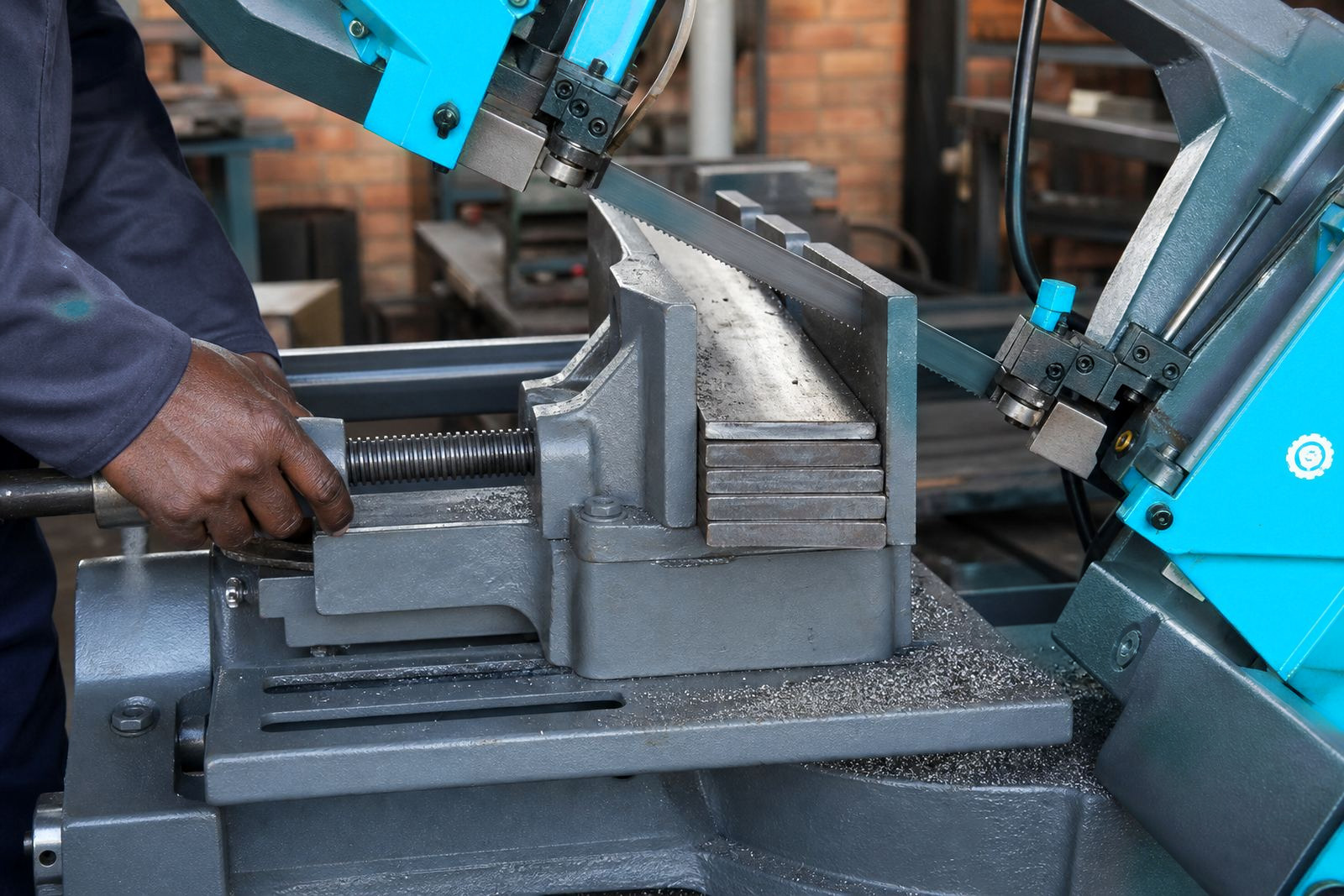
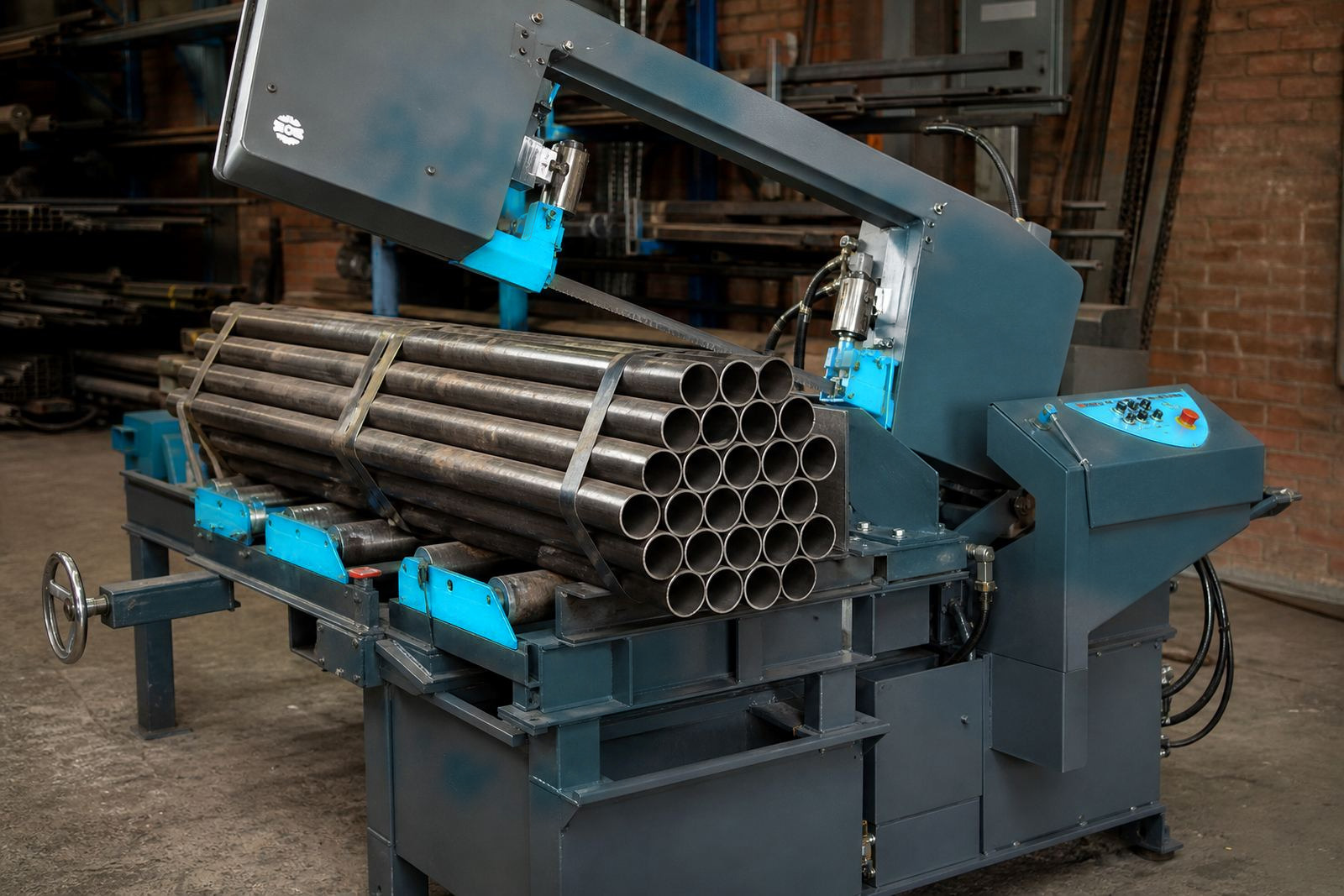
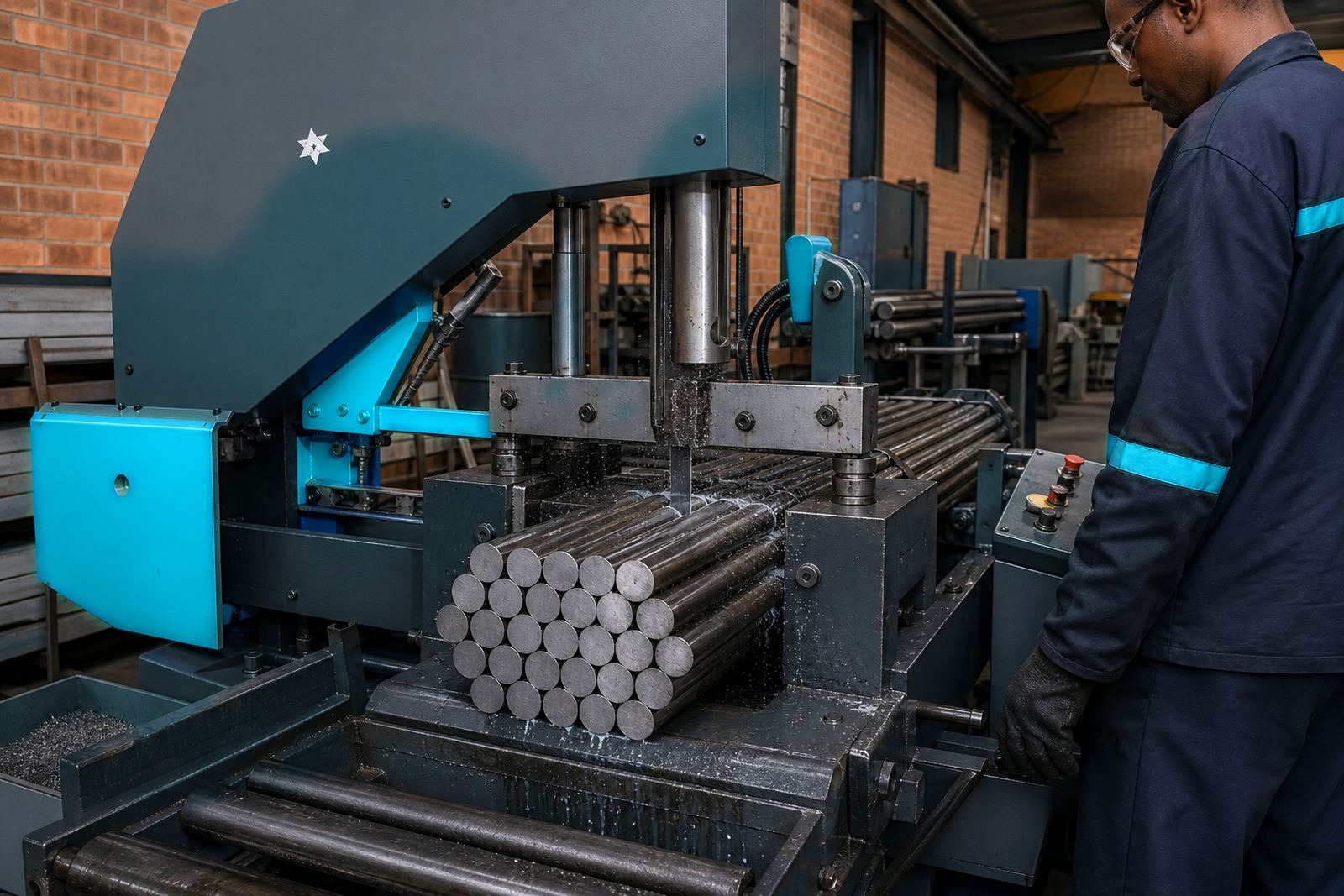
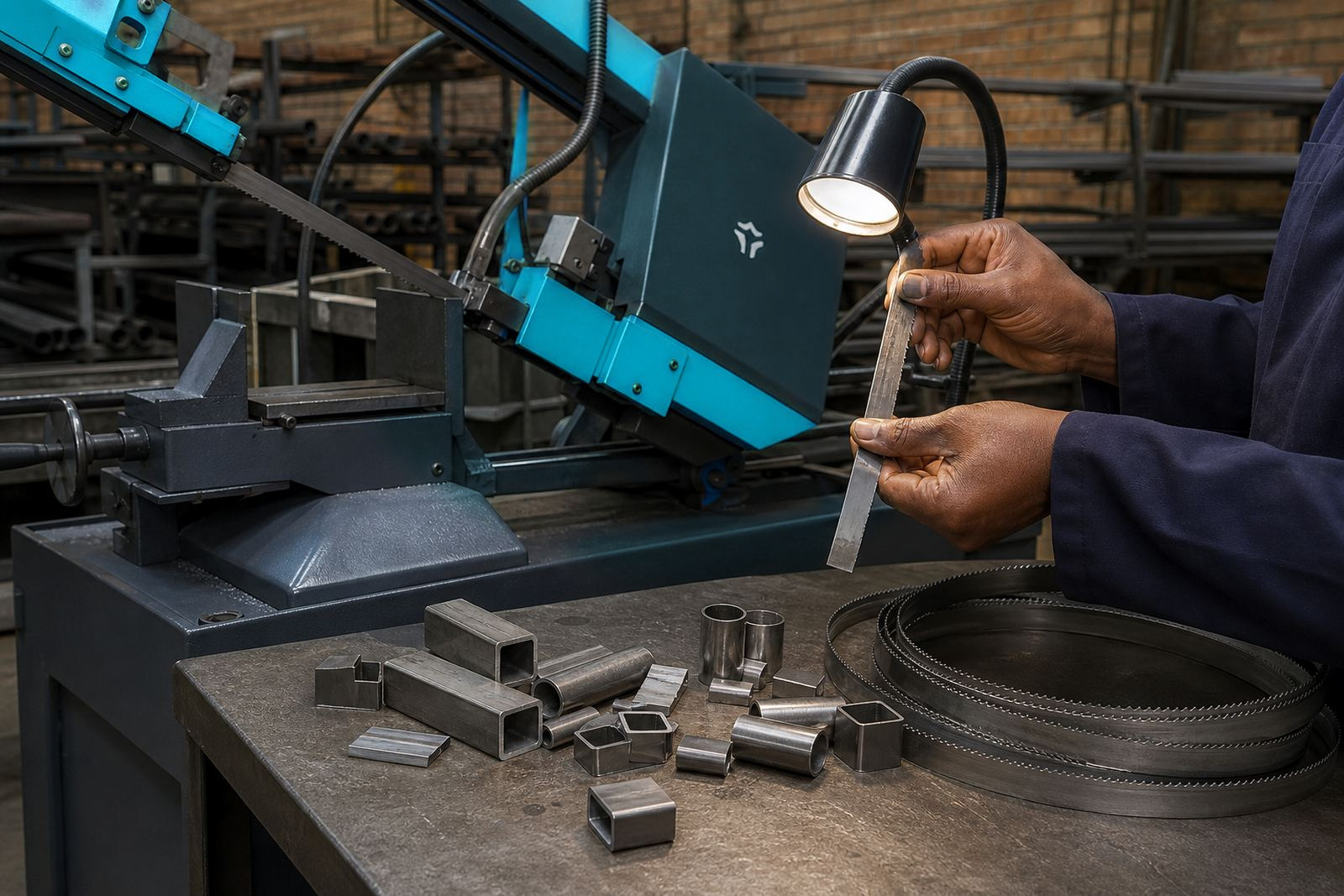
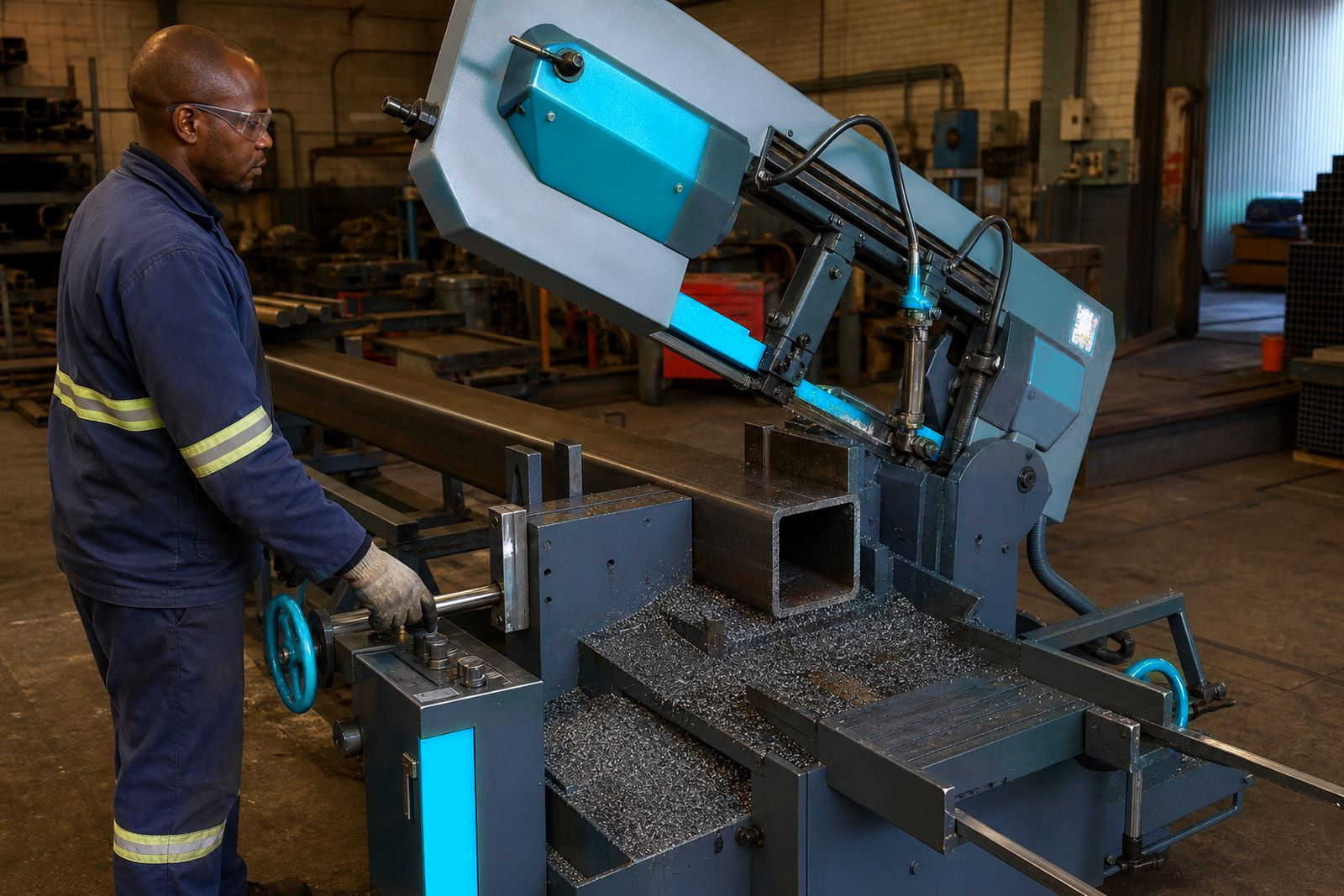
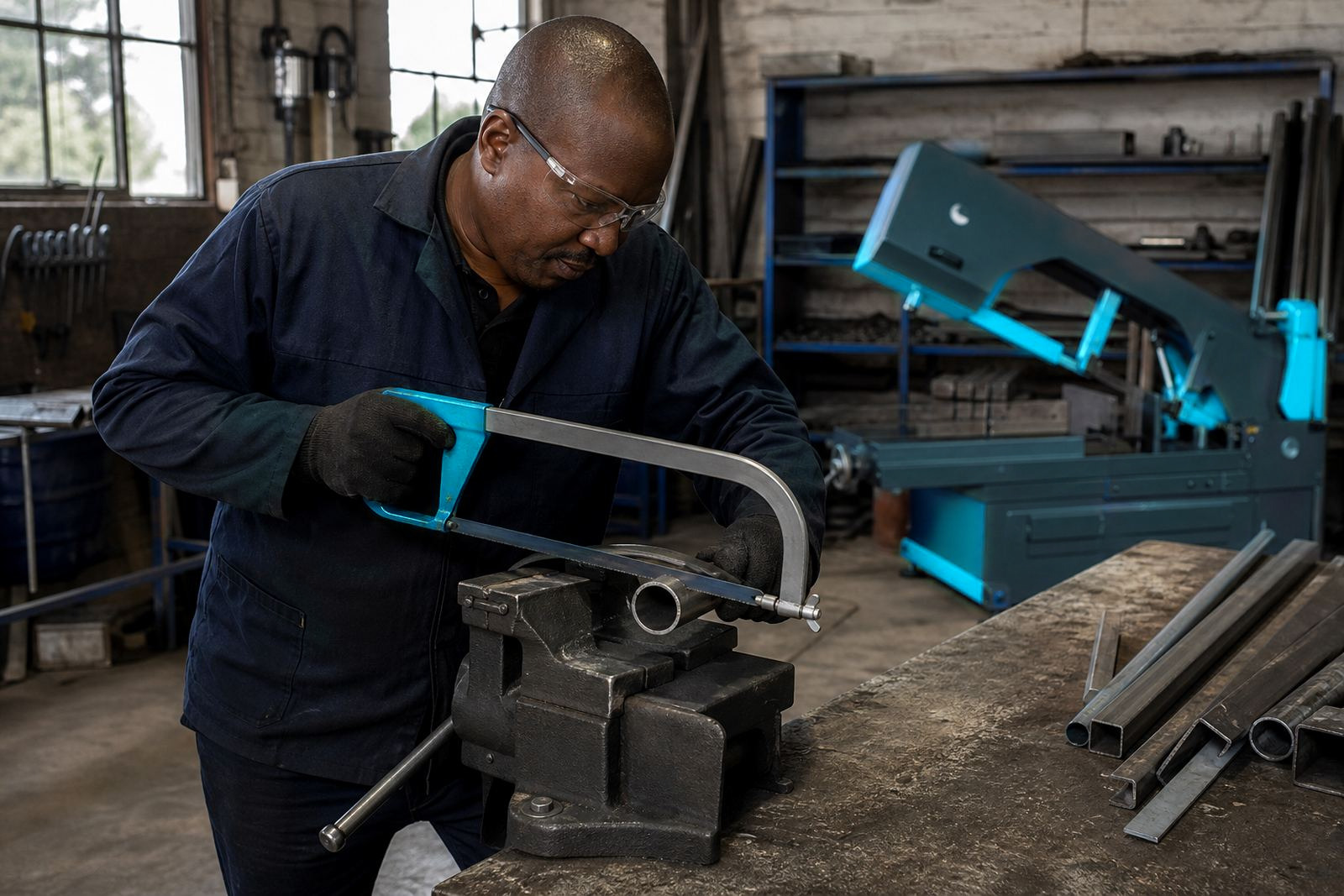
Mild steel, structural sections and thicker plate often cut well with a blade that can clear chips without rubbing. A coarser pitch suits heavier sections, while finer teeth help on thinner wall tube and small solids where too few teeth can catch. The aim is steady contact, not forcing the cut and hoping the set carries the job.
- Thicker sections usually need lower TPI and a stronger tooth form.
- Thin wall work needs more teeth in the cut to stop snagging.
- On long stock, blade width affects how well the machine holds a straight line.
Stainless asks for control, not aggression
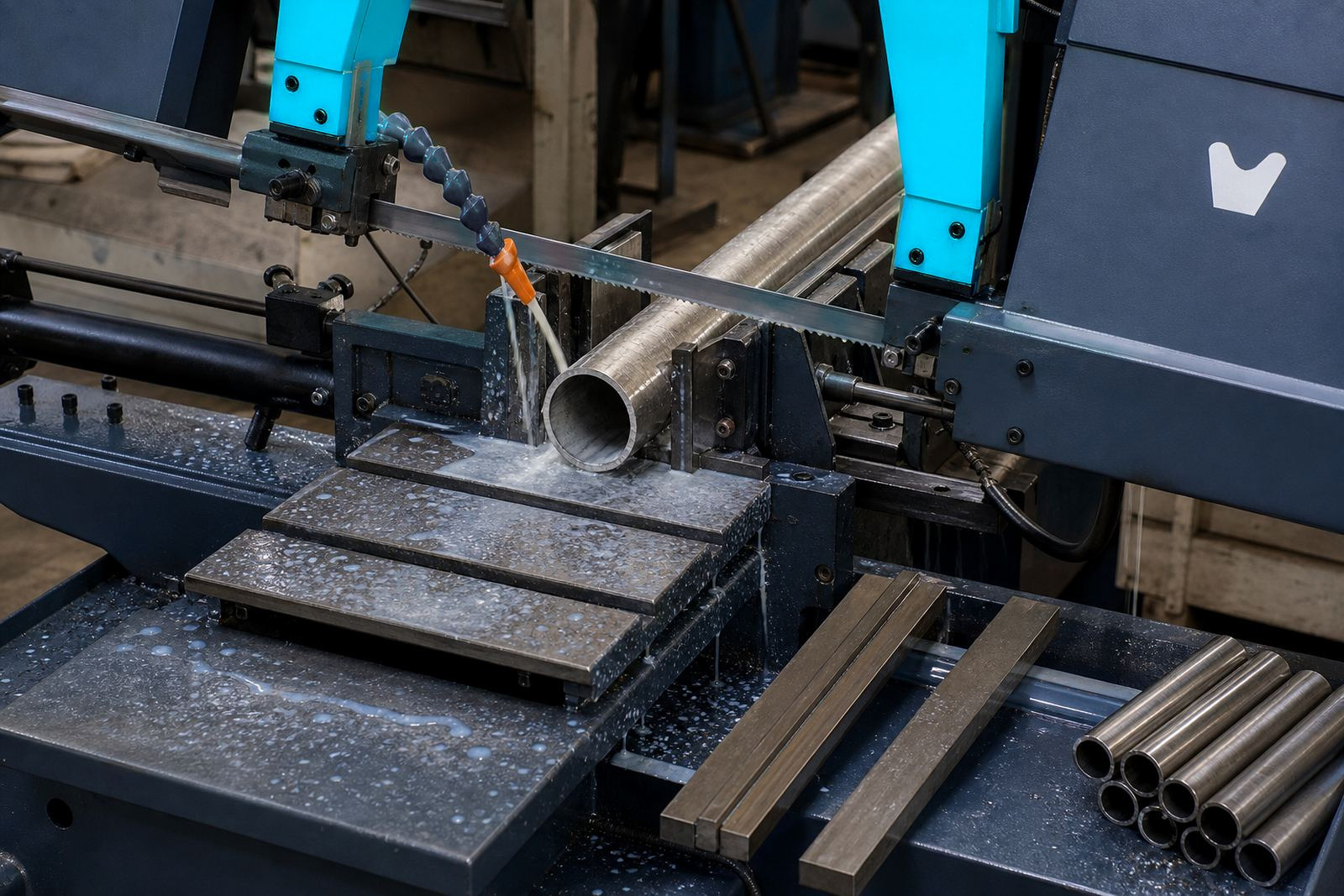
Stainless steel can harden if the blade rubs or the feed is too light, so the cut needs consistent pressure and a proper run-in. A bi-metal blade is often preferred for this work, with tooth geometry chosen for heat control and chip flow. Coolant, where the machine uses it, helps keep the edge cleaner and can reduce the chance of work hardening on longer cuts.
For mixed stainless shapes, go by the section size and wall thickness rather than the label on the stock. Tube, bar and angle iron do not all behave the same, even when they sit in the same rack.
Aluminium cuts cleaner with the right chip space
Aluminium and other softer non-ferrous metals need enough tooth gullets to move chips away before the blade loads up. A variable pitch blade can help on mixed wall thickness, while the set and tooth style need to suit the machine speed and feed. Too fine a pitch on a soft metal can pack the gullets and spoil the cut edge.
- Check whether the stock is solid, extruded or thin wall.
- Use a pitch that matches chip size, not just the outside diameter.
- Keep an eye on blade speed if the cut starts to smear.
Cast material needs a careful first pass
Cast iron and other brittle materials can chip at the tooth tips if the blade bites too hard. The safer path is usually a controlled feed, a stable machine set-up and a blade that is not pushed into the work. In many cases, a rushed run-in costs as much blade life as a wrong pitch, because the fresh edge can wear before the job is under control.
Some cast sections hold scale, sand or skin from earlier processing. That extra surface load changes how the first few millimetres behave and it is worth treating the start of the cut with care.
Tool steel and hard sections want a steadier rhythm
Harder metals and awkward sections put more stress on the blade body, weld and tooth form. A bi-metal M42 style blade is commonly used where heat and wear are part of the job, while carbon steel still has a place on lighter manual work and smaller batches. The right answer depends on the machine, the cut length and how often the same material returns to the saw.
- Use blade width that suits the machine guides and the section depth.
- Match feed speed to the cut sound and the motor rating.
- Watch for tooth stripping, edge rounding or a wandering cut line.
Mixed material shops need one blade plan that actually holds
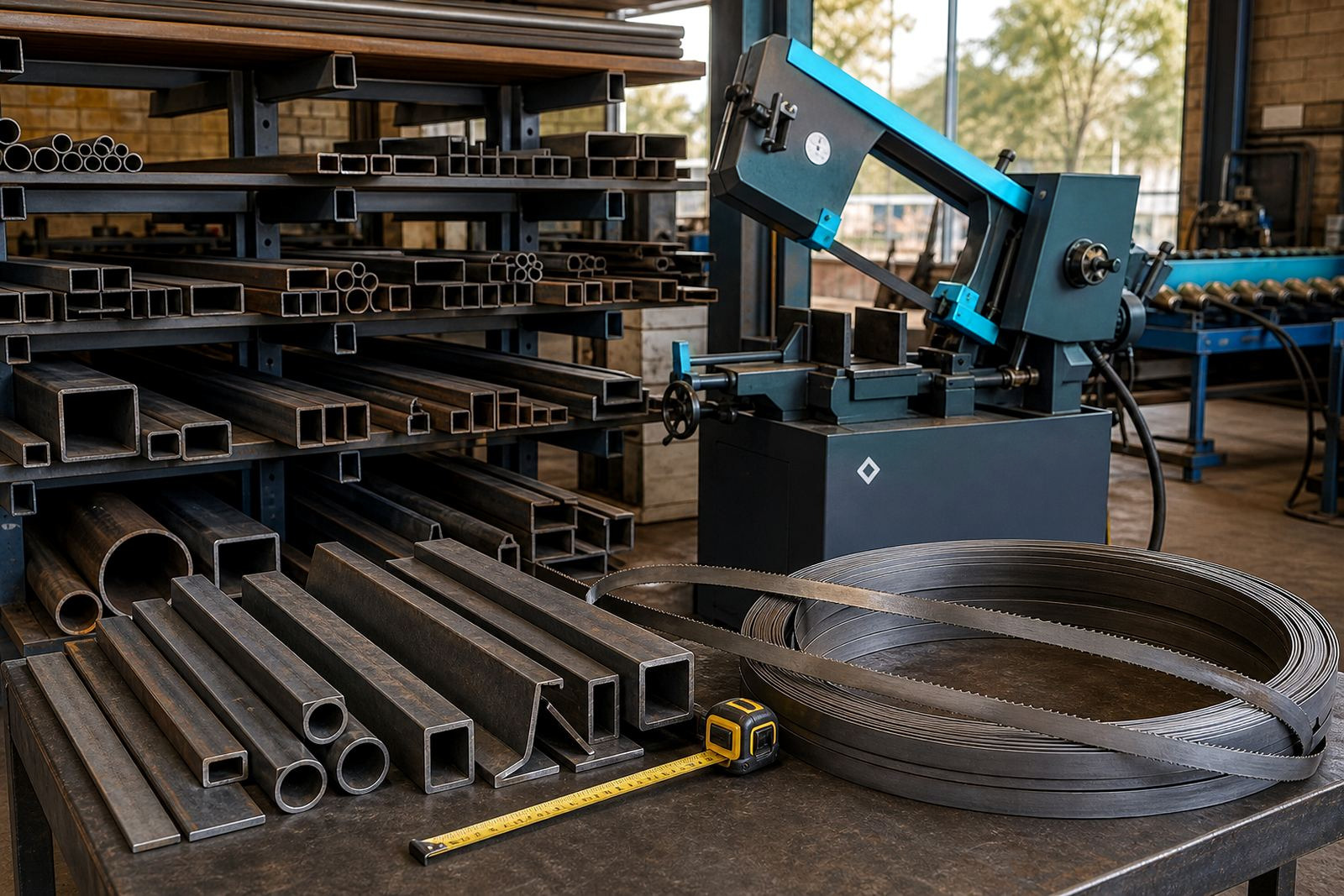
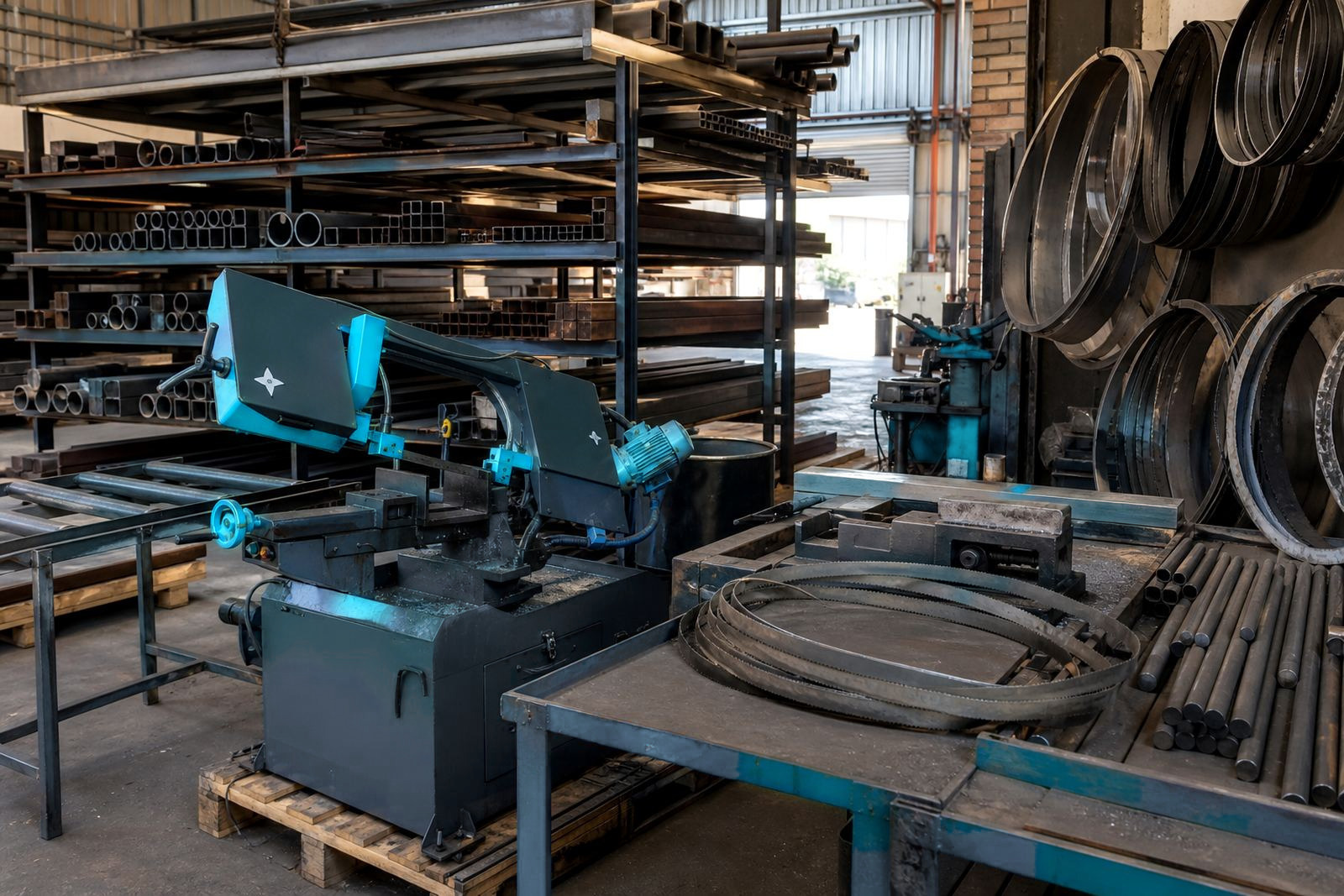
Many workshops in Alberton, Johannesburg, Pretoria and further afield cut more than one material in a week. Starter kits, stock standardisation and blade selection help save time at the saw bench. A welder-length blade service is needed when the job needs a specific loop size or a replacement that matches the machine properly.
Our team can help with choosing the right tooth pitch, checking blade length and reviewing blade failure. If your shop cuts mild steel one day and stainless the next, the safest choice is usually a blade plan built around the heaviest job, then adjusted for the lighter work where needed.
Start with the material on the floor
You can move from material type to blade choice with more confidence. We look at section size, wall thickness, pitch, width, run-in and feed, along with the features that tend to count most in each group.
For help with a specific job, the branch team can work from the material, section size and machine details you send through.