Bundle cuts that stay under control
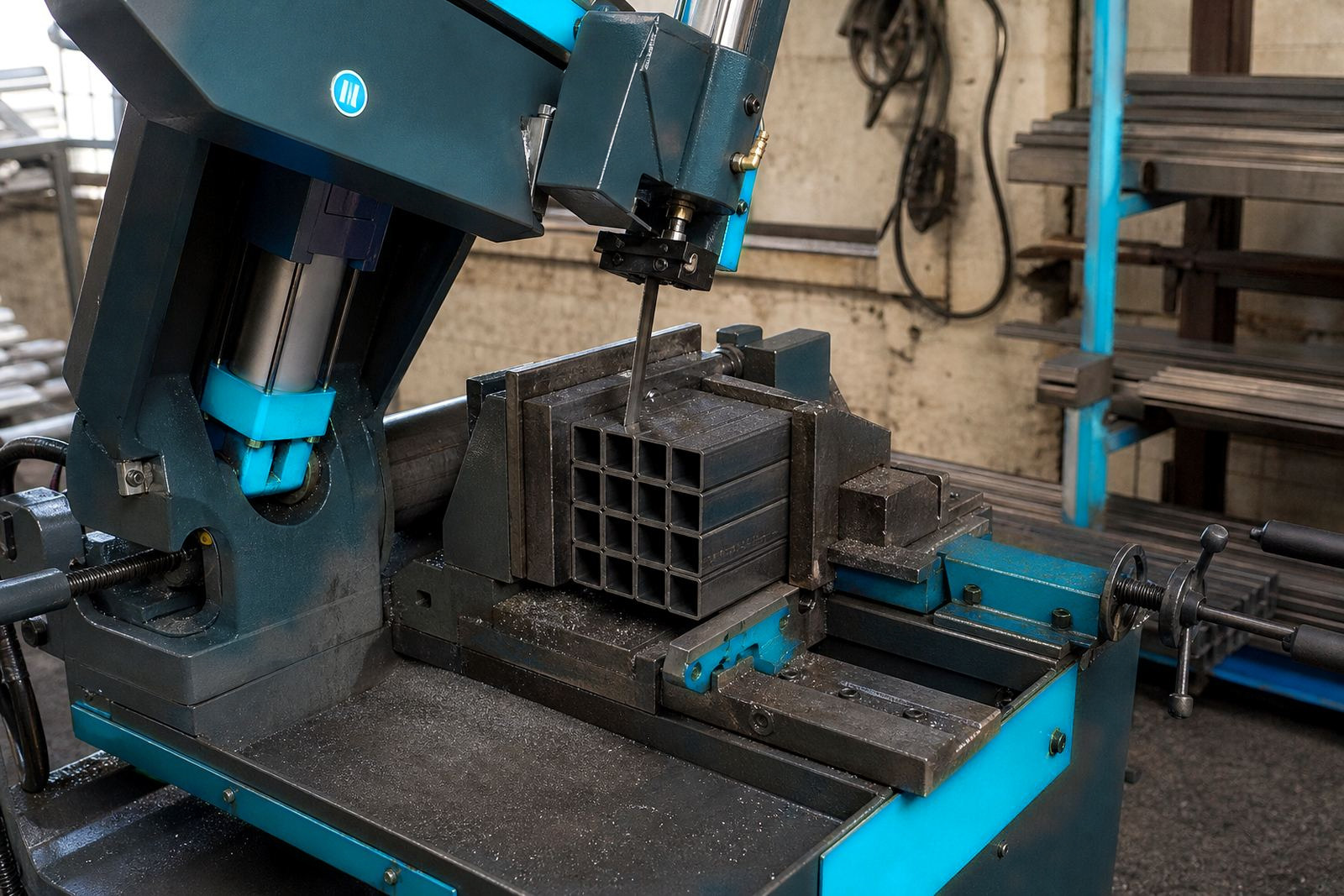
When a workshop is cutting a bundle of small bar, tube or structural offcuts, the blade has to bite evenly across several contact points. A bundle blade is chosen to suit the smallest section in the pack, the wall thickness, and how firmly the material is clamped. If the set is too aggressive the teeth grab on the first face and tear the rest of the bundle, leaving hooked teeth and a crooked finish.
For this kind of work, bi-metal blades with a hard tooth edge and flexible backing are often the first choice. Carbon steel blades still have a place on lighter duty manual saws, particularly on softer mild steel sections and short runs. The key is to match the tooth pitch to the material size so there are enough teeth in the cut at any point, but not so many that the gullets pack with chips.
Bundle cutting also asks for a steady clamp and a clean machine feed. A blade that is too narrow can wander in a broad pack, while one that is too wide may not track well on lighter machines. We help with those trade-offs every day, because the right blade suits the steel grade and the actual bundle on the saw bed.
Sizes, tooth pitches and blade build
Bundle cutting blades are supplied in bandsaw and hacksaw formats, with the dimensions set to suit the machine and the job. Bandsaw blades are commonly specified by length, width and thickness, while hacksaw blades are set by length and tooth count. For bundle work, pick the tooth pitch with the steel grade, because the blade must keep cutting across changing section thickness inside the pack.
Typical options include fine pitches for small diameter tube and light wall sections, then coarser settings for larger solids or heavier wall material. Variable pitch blades help reduce chatter on mixed loads, especially where the bundle includes round, square and flat profiles together. On the bandsaw side, width influences tracking and straightness, while thickness influences flexibility and the blade’s ability to stay true under side pressure.
- Bi-metal M42 style blades for stronger tooth wear and mixed steel packs
- Carbon steel blades for lighter duty, manual or lower output cutting
- Fine, medium and variable pitch options for different bundle sizes
- Widths chosen for stability, usually narrower for lighter saws and broader for firmer tracking
- Thicker blades where the machine and wheel set support the extra stiffness
Tooth set comes next. A blade that is too heavily set can leave a rougher kerf and more burr on small sections, while a weak set can close up in the cut and heat quickly. For bundle work, the set must clear chips but still let the blade hold its line through repeated contact with multiple pieces.
Where bundle blades earn their keep
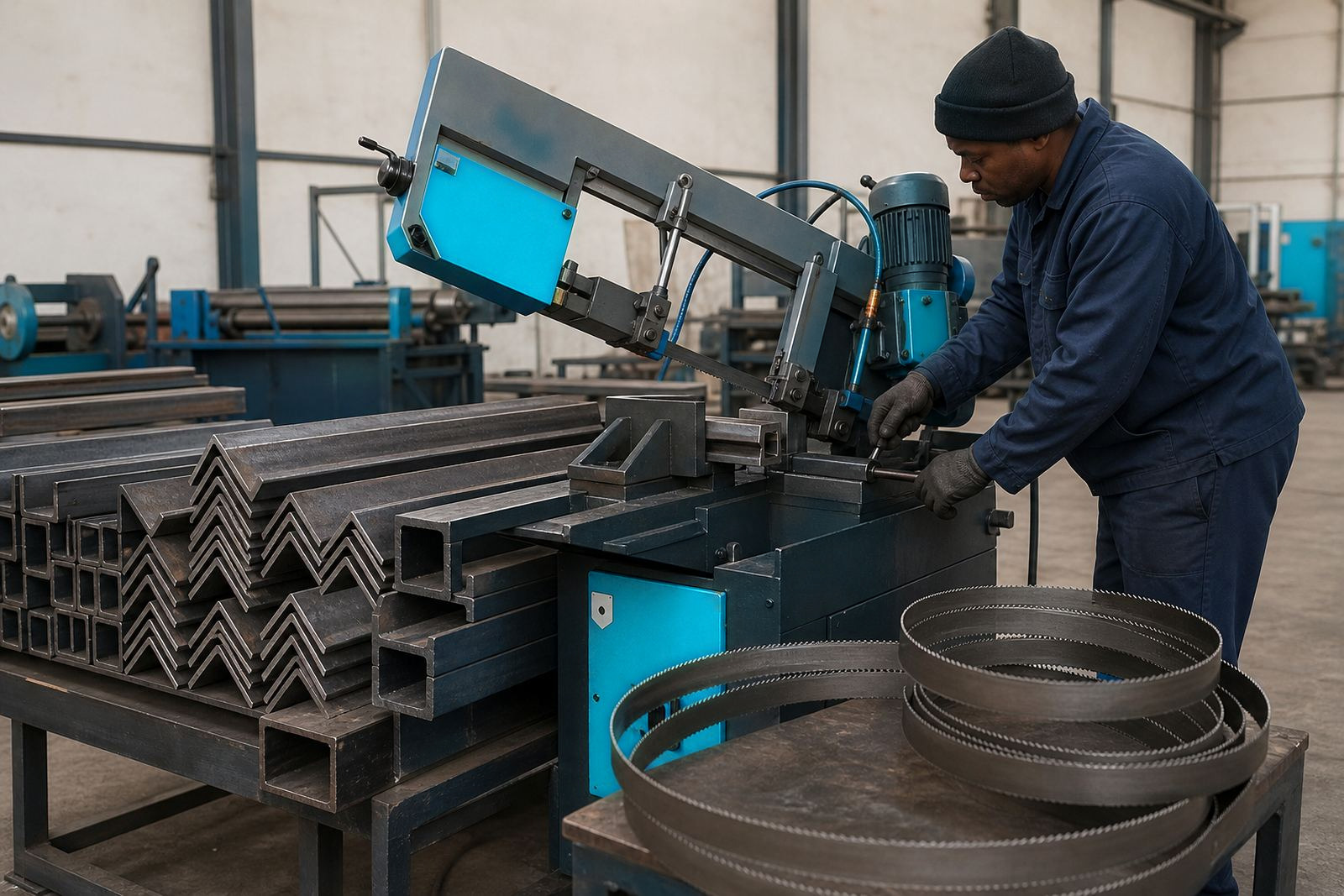
These blades suit fabrication shops, steel merchants with cutting tables, maintenance teams, and machine rooms that process small section stock in packs. They are often used on mild steel tube, square hollow section, flat bar, angle iron and mixed offcut bundles. In busy cutting bays, bundle work saves handling time, but only when the blade and clamp are both set up properly.
Jobs in Johannesburg, Pretoria, Vereeniging, Durban, Cape Town, Germiston and Boksburg often call for the same basic idea with different stock patterns. Inland workshops may process heavier mild steel packs, while coastal shops often watch for surface oxidation and damp storage that affects blade life. The blade does not care about the town, but the material condition and storage habits change how the teeth behave.
- Securely clamped bundles of small bar and section
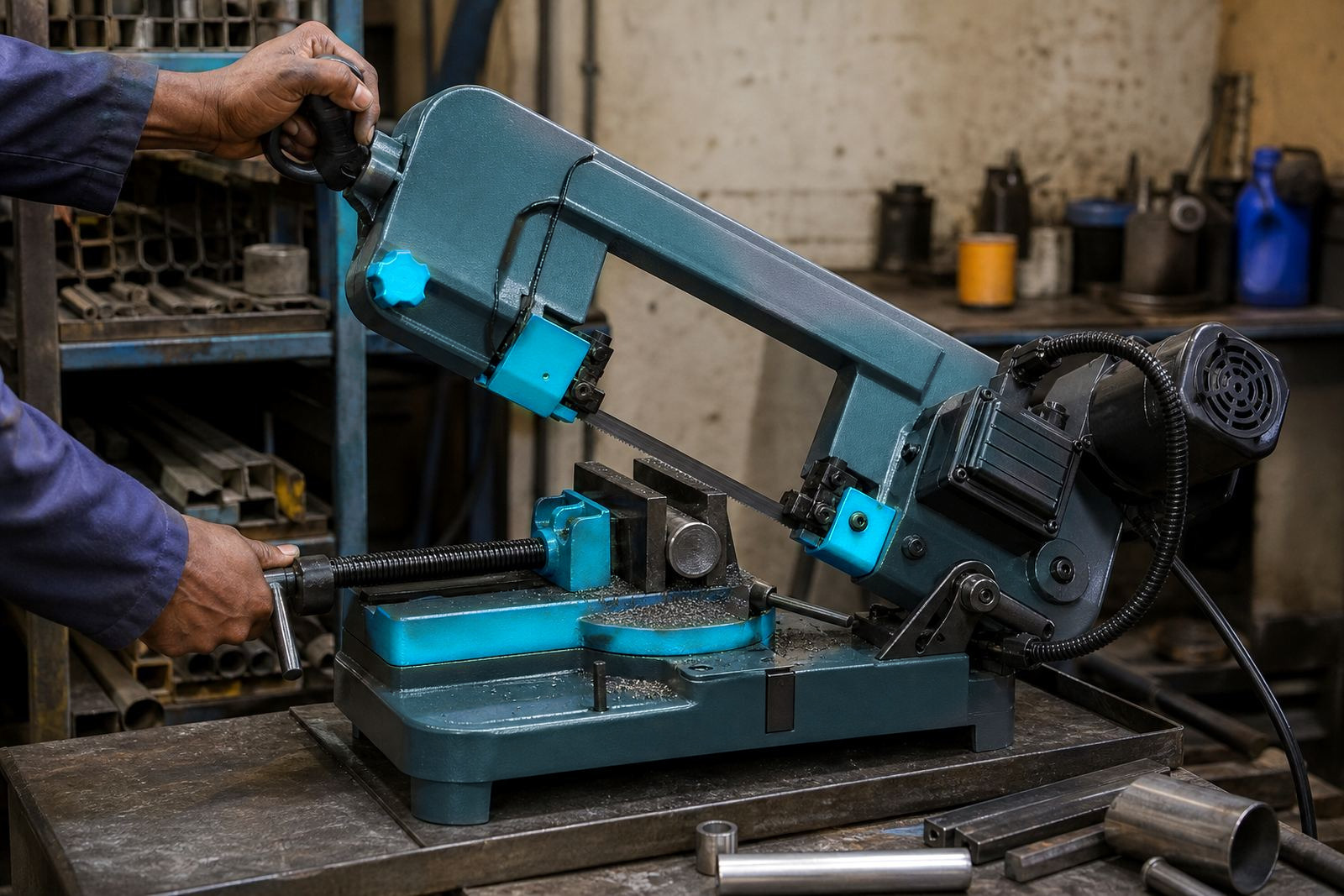
- Manual and powered bandsaws used for repetitive cutting
- Hacksaw frames where the operator wants controlled hand feed
- Mixed packs where run-in discipline is needed from the first cut
Fitting, run-in and cutting behaviour
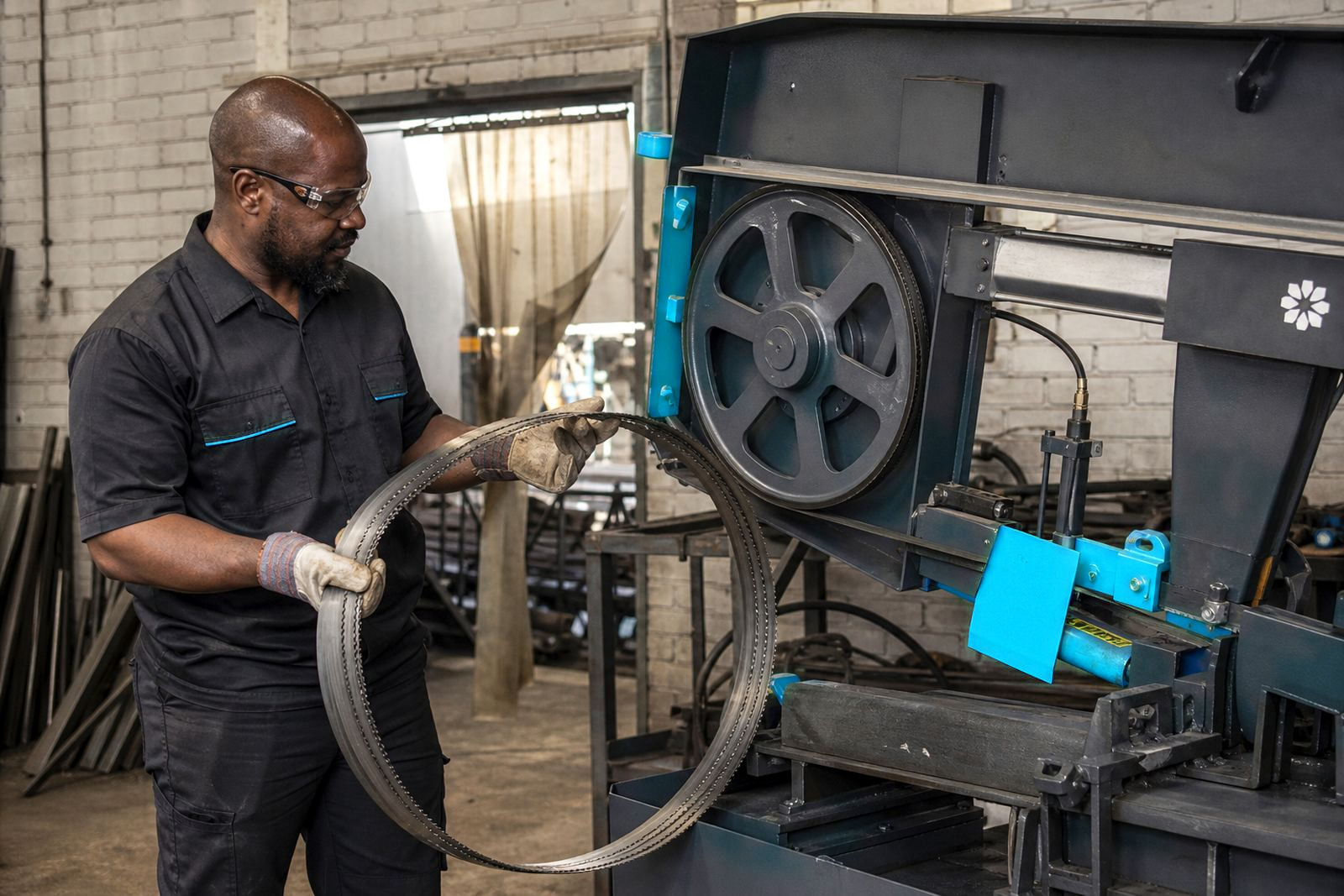
Blade fitting starts with the machine itself. Set guides, wheels and tension for the blade width and thickness, and check that the blade tracks true before loading a bundle. If the blade is welded to length for a bandsaw, the weld should be dressed properly so it passes the guides without a bump. A poor weld or uneven join will show up very quickly in bundle work, especially on thin wall tube.
Run-in is worth taking seriously. A fresh blade should start with lighter feed for the first cuts so the tooth tips bed in evenly. On bundle material, that means avoiding a hard push on the first pack, even when the saw sounds hungry. Once the blade has settled, feed can be raised to a practical pace for the material and the saw. Coolant helps with chip carry, heat control and tooth life, particularly on stainless or long bundle runs.
Feed speed advice is never the same for every machine. A stiff industrial bandsaw can carry a different pace from a smaller workshop saw, and a hand-fed hacksaw needs a lighter touch than a powered frame. If the cut is squealing, rubbing or leaving heavy burrs, the feed, pitch or coolant flow is usually part of the problem.
What to confirm before ordering
Before a bundle blade is cut to length or supplied as a kit, the machine details and the stock profile need to be clear. That avoids sending a blade that is too narrow for the guides, too short for the wheels, or too coarse for the smallest section in the bundle. A clean order starts with the facts from the saw and the material you cut most often.
- Machine type, bandsaw or hacksaw, and whether the saw is manual or powered
- Blade length, width and thickness required by the machine
- Smallest section in the bundle, plus wall thickness or bar size
- Material type, such as mild steel, stainless or mixed section stock
- Preferred pitch range, including variable pitch if chatter is a concern
- Whether you need weld-to-length, starter kits, or a standard stock pack
Length verification is useful where the old blade is worn or the machine has had guide work done. Tooth pitch selection and blade width selection often go together, because a narrow blade on the wrong pitch can wander while a wide blade with the wrong pitch clogs and heats. For that reason, we often check the whole cutting setup rather than only the blade size.
Care that keeps teeth alive
Bundle blades last longer when they are stored flat, kept dry and protected from knocks. Teeth that get damaged in handling will fail early even if the steel grade is right. In coastal areas, moisture can creep into stored stock and leave surface rust on the teeth, so first-in, first-out handling is worth keeping in place. A light oil film on stored carbon steel blades can help, provided it does not contaminate the cut path.
During use, chips should be cleared out before the next pack goes on the saw. If a blade begins to wander, it may need a machine fit check and a replacement. Blade failure review is useful where the teeth chip on one side, the blade twists in the kerf, or the weld starts to show wear before the rest of the blade is done. Those patterns usually point to feed pressure, clamping, guide wear or the wrong pitch for the bundle size.
For workshops that process the same packs each week, stock standardisation can save time and reduce mix-ups at the saw. A small set of proven pitches and widths is usually better than holding too many blades that look similar but behave differently in the cut.
Key facts
| Product type | Bundle cutting bandsaw and hacksaw blades |
|---|---|
| Blade materials | Bi-metal M42 style and carbon steel |
| Pitch options | Fine, medium and variable pitch |
| Bandsaw sizes | Width and thickness matched to machine and cut |
| Service options | Weld-to-length, length verification and starter kits |
| Typical use | Securely clamped bundles of bar, tube and profiles |