Built for bar stock that stays true under the blade
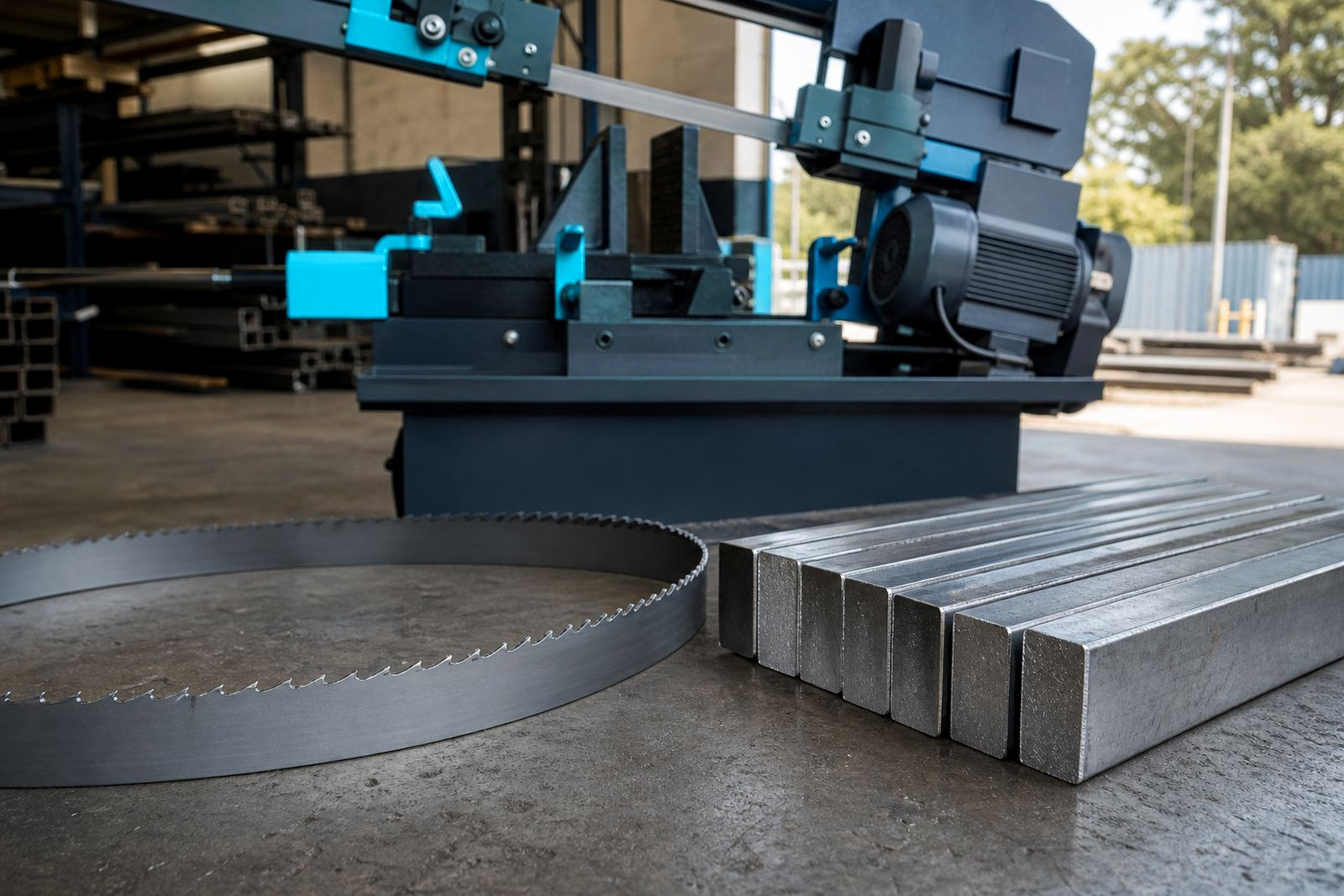
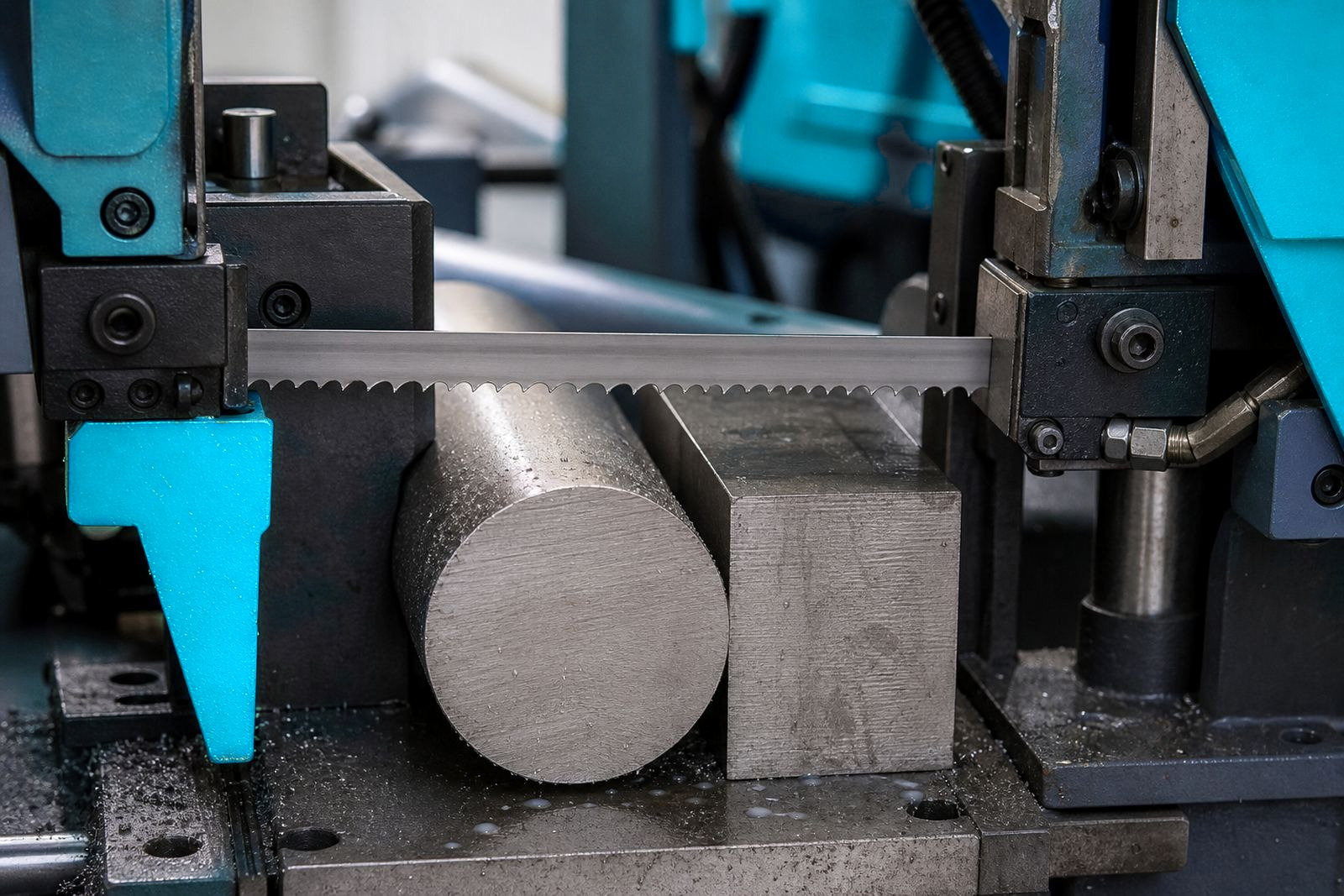
M42 solid bar blades are made for controlled cutting on plain carbon steel, mild steel bar and many general purpose structural jobs where the material is solid through the full section. The cutting edge uses a high speed steel tooth form on a flexible back, which helps the blade hold up when the cut stays engaged for longer than a tube or thin wall section. In practice that means cleaner progress through round bar, square bar and hex bar, with less wandering when the saw is set up properly.
For solid sections, the tooth pattern is chosen with the steel. A finer pitch suits smaller diameters and tighter cross-sections, while a coarser pitch clears chips better on larger solid bar. When the job moves between sizes, variable pitch can reduce chatter and help the blade bite more evenly. The team at our Alrode base helps match the tooth pitch to the material grade, the bar size and the saw frame, because a solid bar cut behaves differently from a bundle or a hollow section.
Sizes, tooth patterns and blade body choices
This product is usually specified by width, thickness, pitch and length. Width affects straightness and tracking, thickness affects the blade's feel in the cut, and pitch controls how many teeth meet the work at one time. For solid bar, a wider blade can track better on heavier machines, while a narrower blade may suit lighter horizontal saws or manual machines with tighter wheel set-ups. The set clears swarf and keeps heat from building up along one side of the cut.
- Blade width options are matched to the saw wheels and guides, commonly from narrow manual saw fitments up to wider workshop blades.
- Tooth pitch is selected for bar diameter and material, with variable pitch often preferred on mixed-size jobs.
- Bi-metal M42 teeth suit repetitive cutting when edge life and cut consistency are both important.
- Carbon steel blades remain a useful option for lighter duty manual work and short runs.
- Weld-to-length supply is available when a machine needs an exact endless blade length.
When a customer sends the saw model and the bar size range, we check whether the blade needs a standard pitch or a more specialised tooth pattern. That saves time on the floor and avoids ordering a blade that is too fine for chip clearance or too coarse for a smaller solid section.
Where M42 solid bar blades earn their keep
This blade suits fabrication shops, steel stockholders, maintenance teams and general metalwork spaces cutting round and square bar for brackets, shafts, frames and repair work. Choose it when the cut must stay controlled across repeated lengths and the material stays the same. On bigger bars, coolant can improve blade life and help keep the cut cool, especially when the saw is working for longer periods or the feed pressure stays steady.
Solid bar cutting is also sensitive to machine condition. If the saw guides are loose, if the vice grips unevenly or if the feed is too aggressive, the tooth line can mark, wander or strip early. For that reason we look at the machine fit as part of the blade selection, not after the fact. Run-in follows the same rule, since a fresh bi-metal blade needs a gentler first period so the tooth edges settle before full feed can be used.
- Good for straight production cuts on bar stock with consistent diameters.
- Useful where workshop teams want fewer blade changes during longer runs.
- Suitable for horizontal bandsaws and many manual saw frames with the right length and pitch.
- Often paired with coolant checks where the cut cycle is long or the bar section is heavy.
Fitting notes for horizontal saws and manual saws
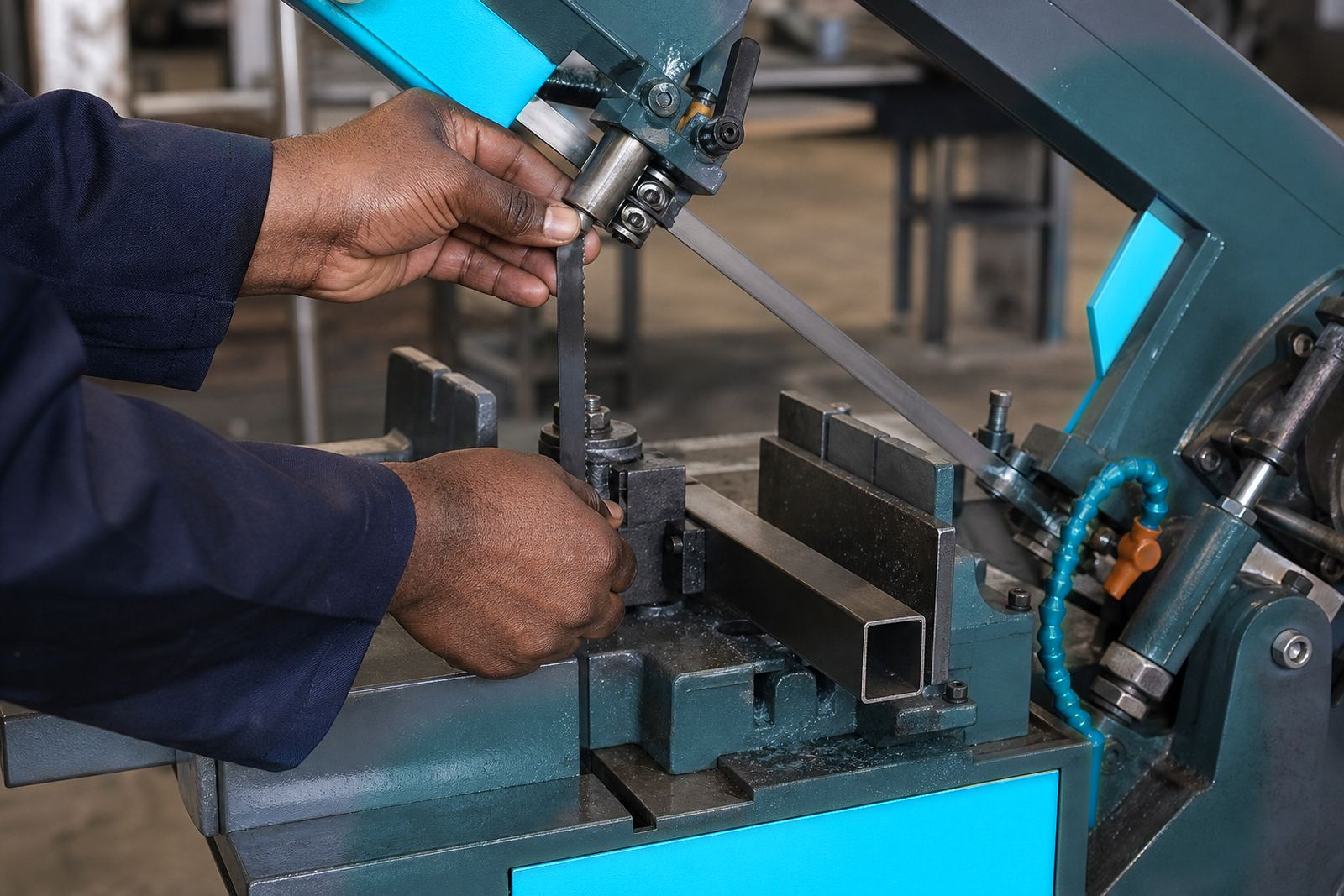
Blade installation starts with length verification, then the correct tension, then guide alignment and tracking. An endless blade that is even a little out on length can sit badly on the wheels and punish the weld area. Our blade welding technician checks weld finish and tooth orientation so the joint does not become the weak point in the cut. On manual saw support work, the focus is often on simple things like vice alignment, blade direction and whether the feed rate matches the machine's own weight and leverage.
On solid bar, follow the feed speed advice, because the blade must take chips cleanly, not rub. Too little feed can polish the teeth and overheat the cut. Too much feed can twist the blade and leave tooth damage near the entry point. The right balance depends on the saw, the material hardness and whether coolant is reaching the blade path evenly. A fresh blade also needs run-in guidance, usually with a lighter feed at the start so the tooth tips wear in instead of breaking down early.
Care habits that keep the cut steady
Bi-metal blades last longer when the cut stays consistent and the saw is kept clear of swarf buildup. A clogged gulley or dry cutting on a hot piece can make the blade work harder than it should. If a cut starts to drift, it is worth checking the vice clamp, guide wear, tooth pitch and feed setting before assuming the blade itself is wrong. In many cases the issue sits in the machine setup rather than the steel.
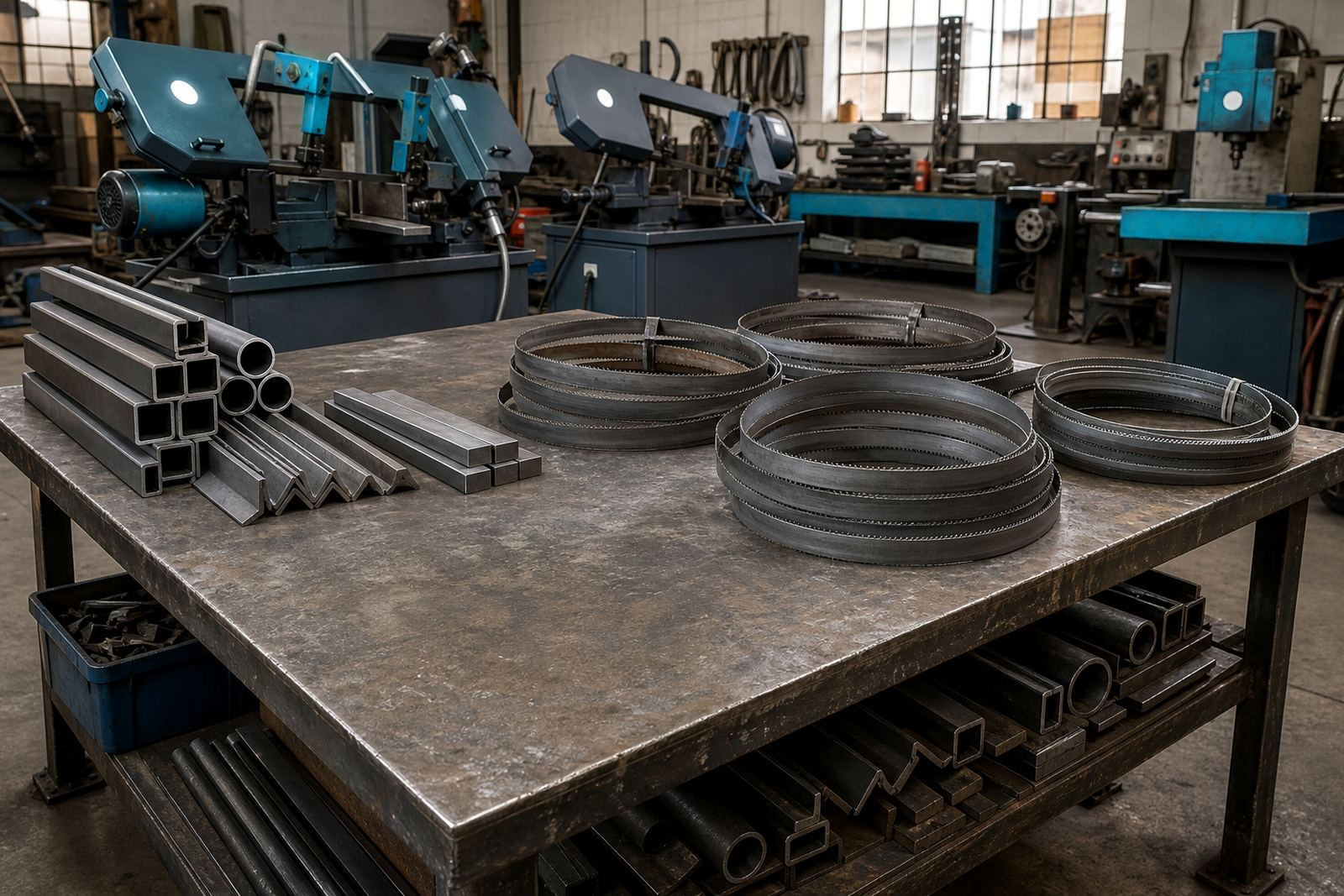
For shops handling different bar sizes, stock standardisation can make life easier. Using a short list of pitches and widths for the common jobs keeps the paperwork simpler and reduces the chance of fitting the wrong blade on a busy morning. We also look at blade failure review when a tooth line chips, cracks or pulls sideways, because the failure pattern often shows whether the problem came from feed, coolant, a bad weld or a mismatch between blade and bar size.
- Keep the guides clean and check for play before putting in a fresh blade.
- Use coolant where the machine is set up for it, especially on longer cuts.
- Let the blade run in gently on the first few cuts.
- Do not force the feed when the swarf stops clearing properly.
- Replace blades before the cut starts burning or drifting regularly.
What to send when asking for the right blade
To match M42 solid bar properly, it helps to know the saw type, blade length, bar shape, the size range, and whether the job is round, square or mixed. If the machine already has a preferred pitch, that is useful too. We also need the width and thickness limits the saw can take, because some frames are stable with a wider blade while others need a slimmer body to track cleanly.
Please include whether the work is dry cutting or coolant-fed, if the bar is mild steel or something harder, and whether the cut is a one-off or part of a regular batch. Send those details with the machine model and the bar sizes. That gives us enough to cover tooth pitch selection, blade width selection, run-in guidance and any weld-to-length requirement without guessing.
Starter kits and standardised bar cutting sets
Some workshops need more than one blade. A starter kit can include a practical mix of blade types for solid bar, smaller section work and backup stock, so the team is not stopped by a single failure or an awkward size change. That also helps where different operators use the same saw and need a clear starting point for tooth pitch, feed speed and blade body choice. We can plan the kit around manual saw support needs or a more active production bay with repeated bar cutting.
For customers in Alrode, Alberton and the surrounding industrial areas, a blade sized and pitched correctly stays on the machine doing its job instead of sitting in a drawer. M42 solid bar is a sensible bi-metal option when the job calls for repeatable cutting on round and square bar, with the right blend of tooth life, chip clearance and tracking stability.
Key facts
| Product type | Bi-metal bandsaw blade for solid round and square bar |
|---|---|
| Tooth material | M42 high speed steel tooth edge on flexible back |
| Typical pitch options | Fine, medium, coarse and variable pitch |
| Blade widths | Selected to suit the saw frame and guide capacity |
| Blade thickness | Matched to machine wheel size and cut stability |
| Service options | Weld-to-length, length verification, run-in guidance and machine fit check |