Blade width built for straighter running on bigger frames
Wide width bandsaw blades sit higher on the wheel and resist wandering better than narrow blades when the saw, guides and material are all asking for a steady cut. In metalwork that usually means larger horizontal or vertical bandsaws, heavier wall section, solid bar, plate pack work and repeat cutting that needs line control more than tight radius work.
Straight cuts where tight curves are unnecessary suit these blades. Wider bodies give more beam strength, so the blade tracks truer through thicker sections and keeps a cleaner path across long cuts in structural steel, tool steel, non-ferrous sections and mixed workshop loads. The right choice still depends on the saw’s wheel size, guide setup and blade length, because a wide blade that is too aggressive for the machine can create drift, vibration or premature tooth wear.
Sizes, tooth forms and stock options we set up
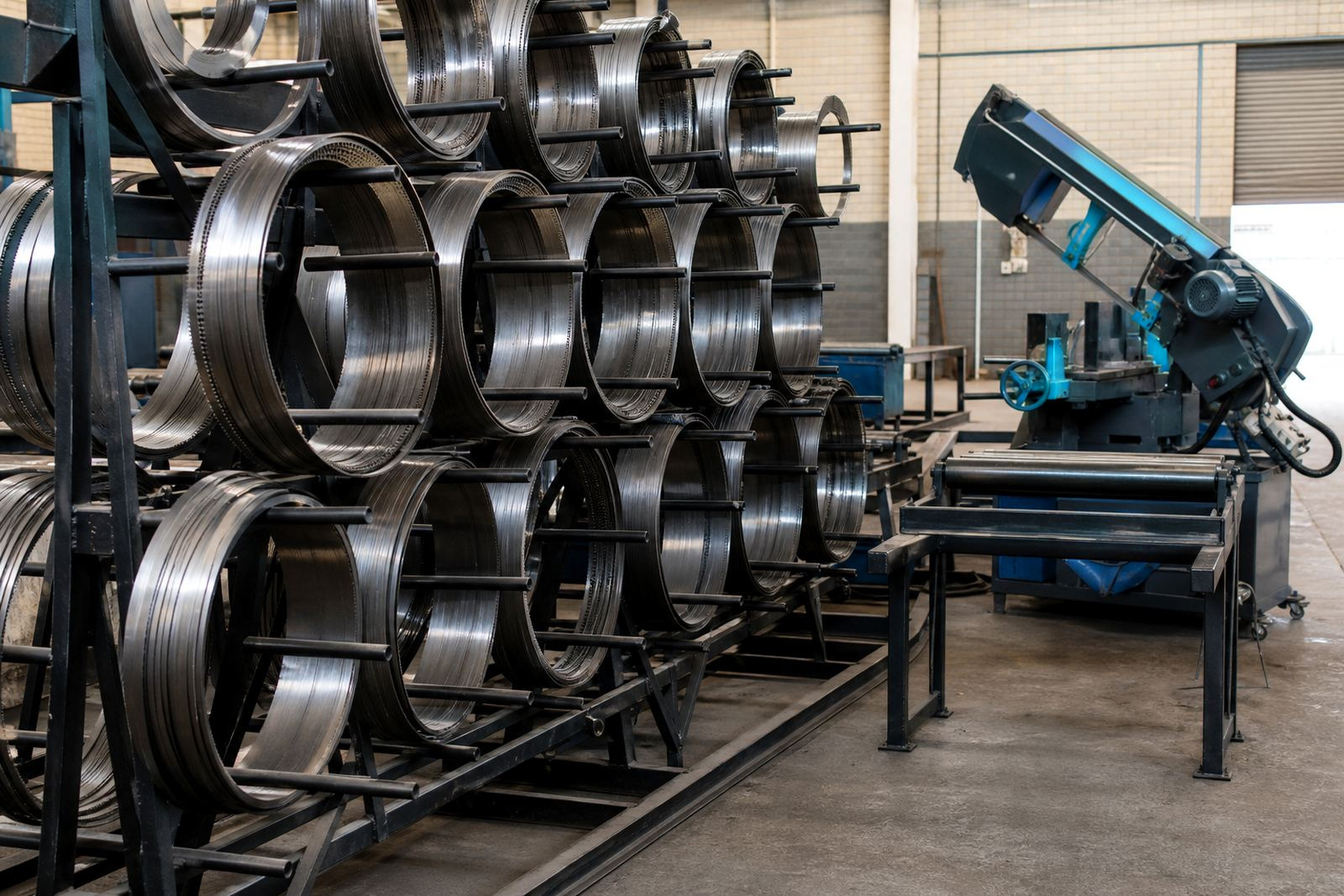
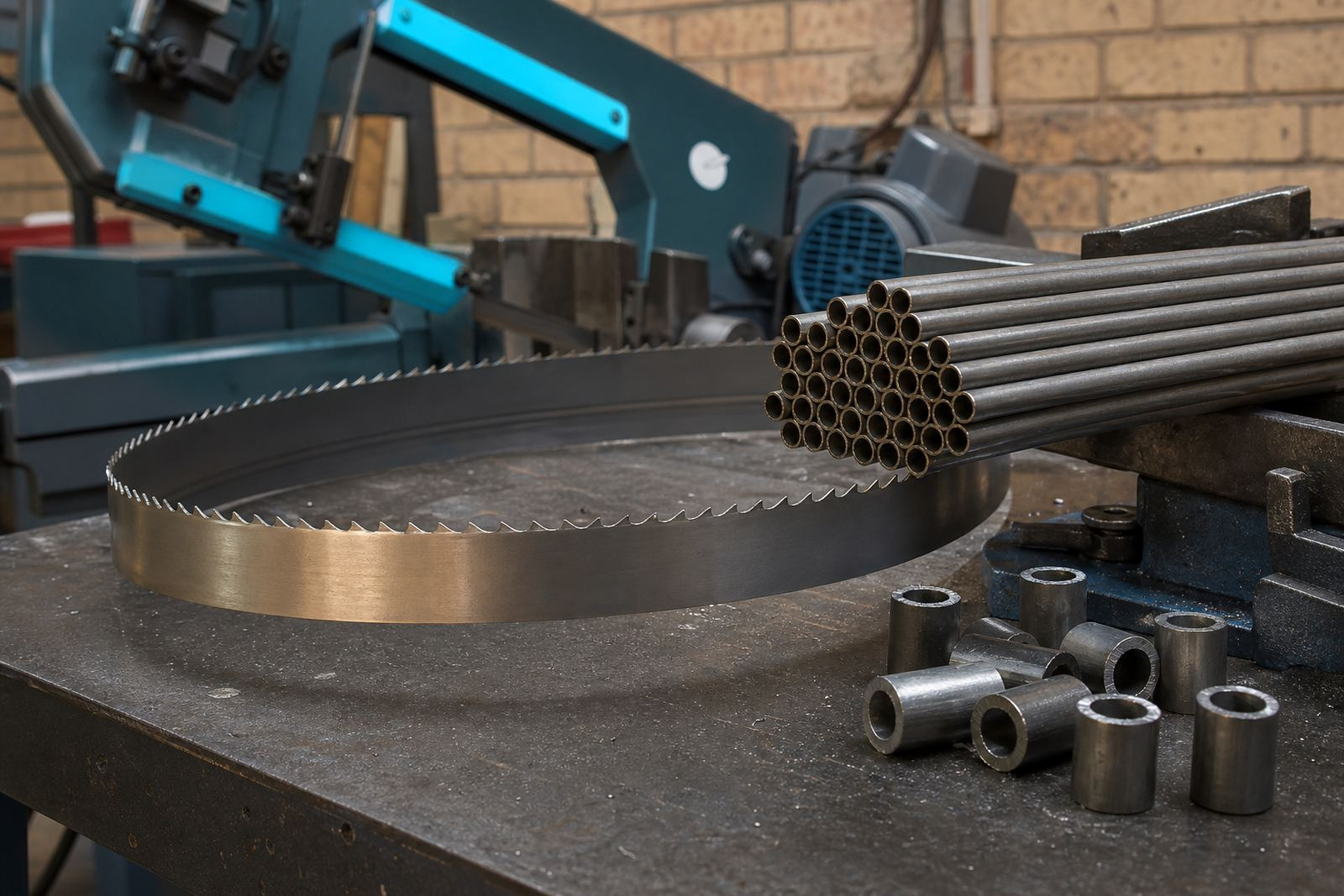
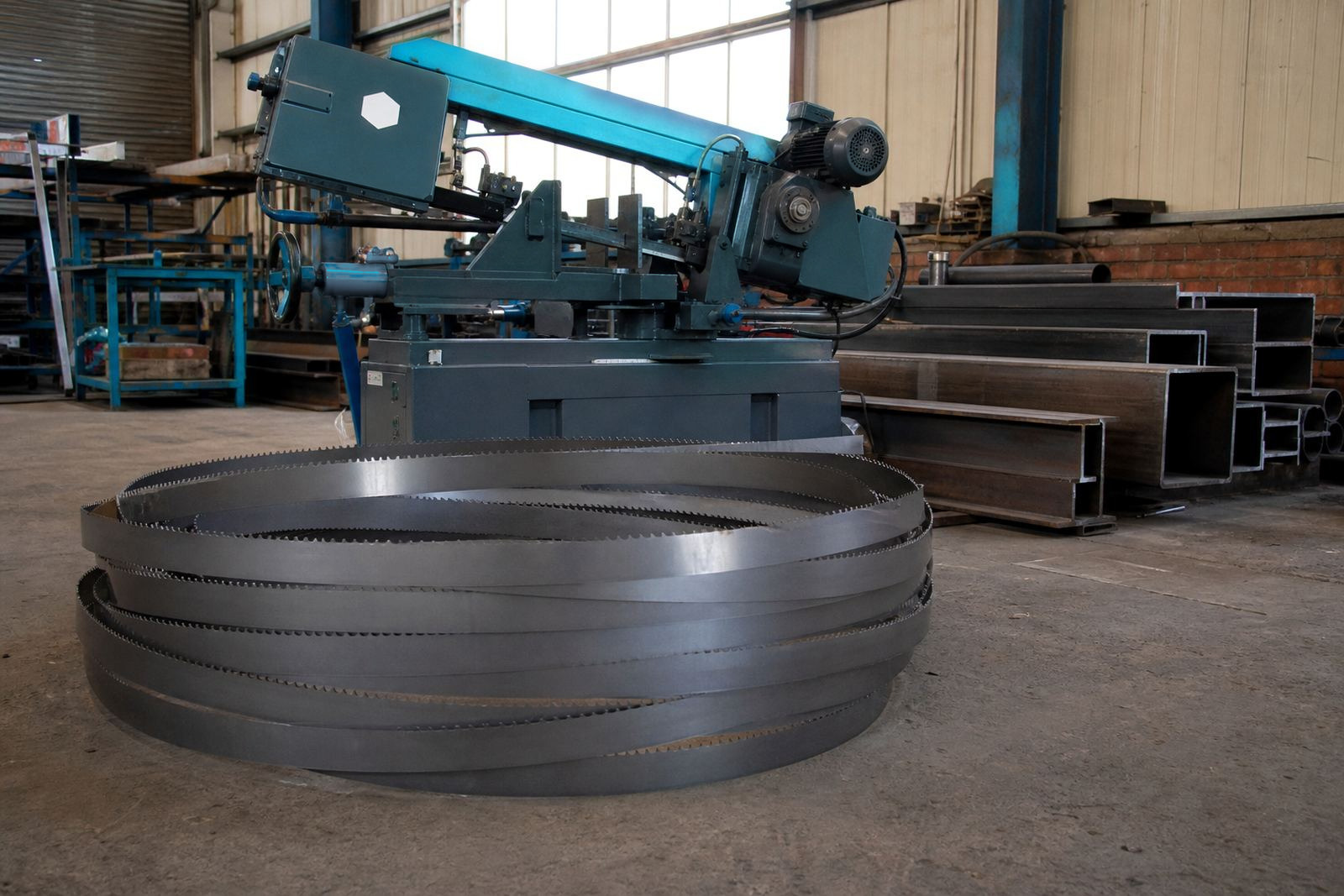
Wide width blades are supplied in lengths to suit the machine, then welded to length for the saw in use. Common workshop options include bi-metal M42 for tougher cutting and better edge life, carbon steel blades for lighter duty or manual sawing, and variable pitch patterns where the tooth spacing helps reduce chatter on mixed profiles. The final choice comes down to the material section, cut stability and how the saw is loaded through the day.
- Blade widths for straighter tracking on larger saws, usually from about 27 mm upward on suitable machines
- Thickness matched to the frame and wheel load, so the blade seats properly in the guides
- Tooth pitch from coarse to fine, set by section size and wall thickness
- Variable pitch blades for reduced vibration on mixed or awkward stock
- Starter kits for workshops setting up a fresh saw or standardising consumables
We also check whether the saw wants a standard tooth set or a more restrained cut for thin wall material, because the wrong set can leave burrs, heat build-up and a tired edge before the shift is done.
Where wide blades earn their keep in a real workshop
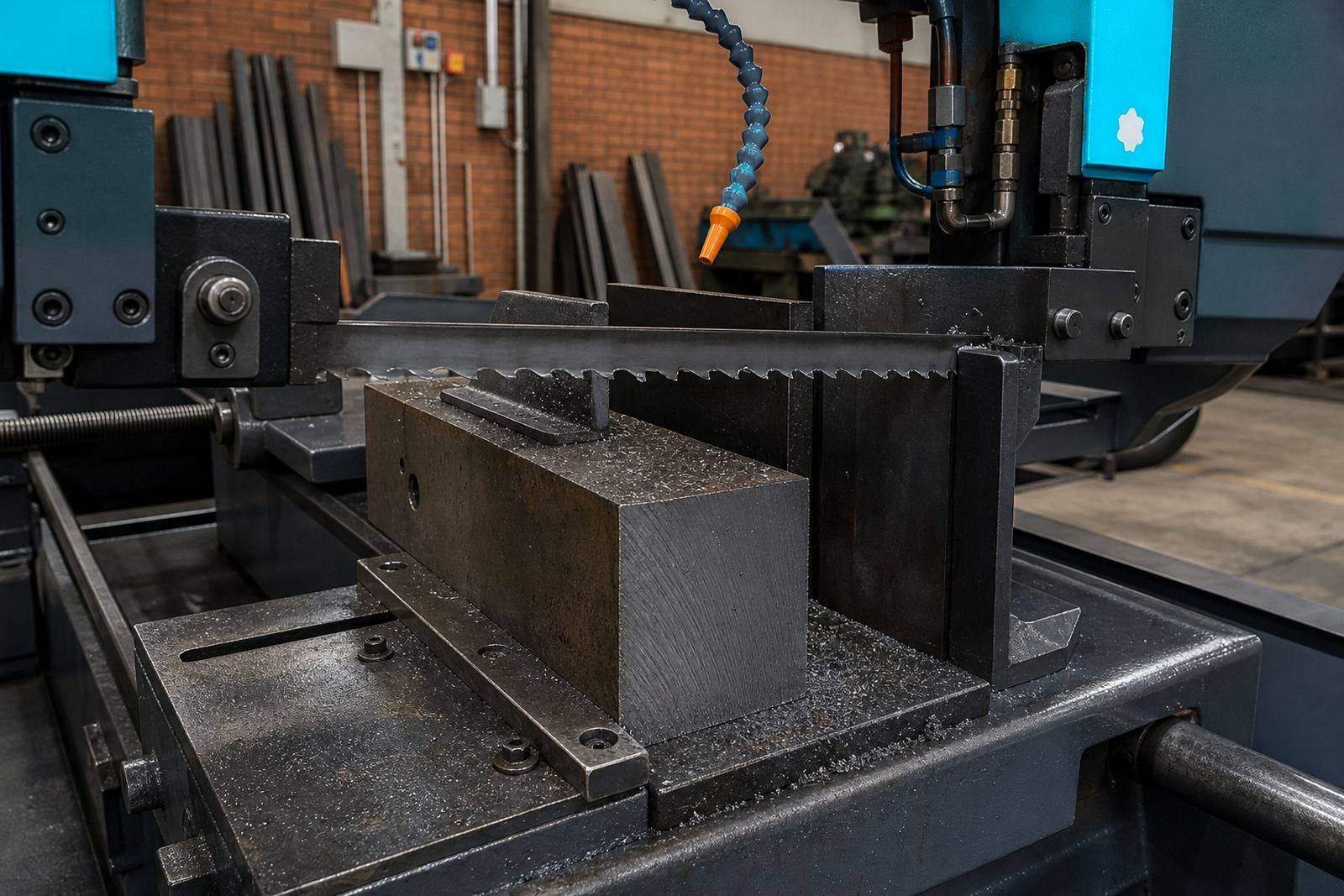
Production cutting bays, fabrication shops, maintenance teams, and steel merchants handling long bar and section can use these blades. They are especially useful where the cut has to stay straight over a long pass, such as round bar, square section, channel, beam and bundled material. On larger saws, the wider blade helps the machine hold its line without the blade twisting under feed pressure.
For Durban and other coastal workshops, blade care takes more effort because moisture in the air can show up quickly on stored stock and machine parts. A blade left with coolant residue or damp swarf can pit, stain or lose cutting consistency. Inland sites still need the same discipline, especially where swarf piles up around the guides and the saw is used across several materials in one week.
- Large horizontal bandsaws cutting heavier mild steel sections
- Vertical saws handling straight stock with long, controlled passes
- Workshop lines that need the same cut quality across repeat jobs
- Manual saw benches where the operator wants steadier tracking
Fit, weld and machine checks before the blade goes in
A wide blade works properly only when the machine is set up for it. Wheel condition, guide position, blade tension, band tracking and the weld state all need attention. If the saw is set too tight or the guides are worn, the blade may heat up at the back edge, mark the cut or lose the straight line that a wider body should provide. Our blade welding technician can weld to length and we can verify that the finished blade suits the saw’s dimensions.
We also look at machine fit checks for workshops using more than one saw, because a blade that works on one frame may not seat correctly on another with a different wheel diameter or guide arrangement. When the job is being set up for the first time, blade width selection and tooth pitch selection need to be done together, not one at a time.
- Confirm blade length, wheel diameter and guide capacity
- Check that the machine can accept the chosen blade width
- Inspect tracking, tension and guide wear before fitting
- Match pitch and set to the wall thickness or solid section being cut
- Check weld finish for a smooth run over the wheels
Cutting behaviour, run-in and feed settings that protect the edge
Wide width blades still need the right feed speed, wheel speed and run-in period. A fresh blade should not be thrown straight into full pressure, because the teeth need a short bedding-in phase to settle the edge and reduce early chipping. On harder material, a steady feed with the correct coolant delivery is better than forcing the blade through the cut. Too little feed can rub the teeth and harden the work face, while too much feed pushes heat into the body and shortens life.
Coolant checks are part of the job where the saw runs often. Clean coolant helps clear chips, cool the tooth line and reduce staining on the work. On carbon blades in particular, heat and poor lubrication can make the edge wear unevenly. Bi-metal blades tolerate a wider range of work, but they still need sensible set-up and clean chip evacuation if the cut is to stay straight and predictable.
What to confirm when ordering a wide width blade
When a workshop orders a wide width blade, the most useful details are practical ones: machine make and model if known, blade length, blade width limit, material type, section size and whether the saw is cutting solids, bundles or thin wall profiles. When the job changes through the week, the same blade pitch will not suit a heavy beam cut and a bundle of smaller sections alike.
For shops standardising stock across Johannesburg, Pretoria, Vereeniging, Germiston, Boksburg, Durban and Cape Town, we can help tighten the blade list so the right widths and pitches are kept on hand without filling the stores cage with odd sizes.
- Material to be cut, including solid, tube, beam or plate pack
- Machine type and blade length required
- Maximum blade width the saw can take
- Preferred tooth pitch or pitch range, if already known
- Whether coolant is used on the machine
Key facts
| Blade type | Wide width bandsaw blade for straighter tracking |
|---|---|
| Material options | Bi-metal M42 or carbon steel |
| Width range | Typically from 27 mm upward, subject to machine capacity |
| Tooth patterns | Constant pitch or variable pitch |
| Application | Heavy section, solid stock, long straight cuts |
| Service options | Weld-to-length, length verification, machine fit check |