A hand blade with a light waviness in the set
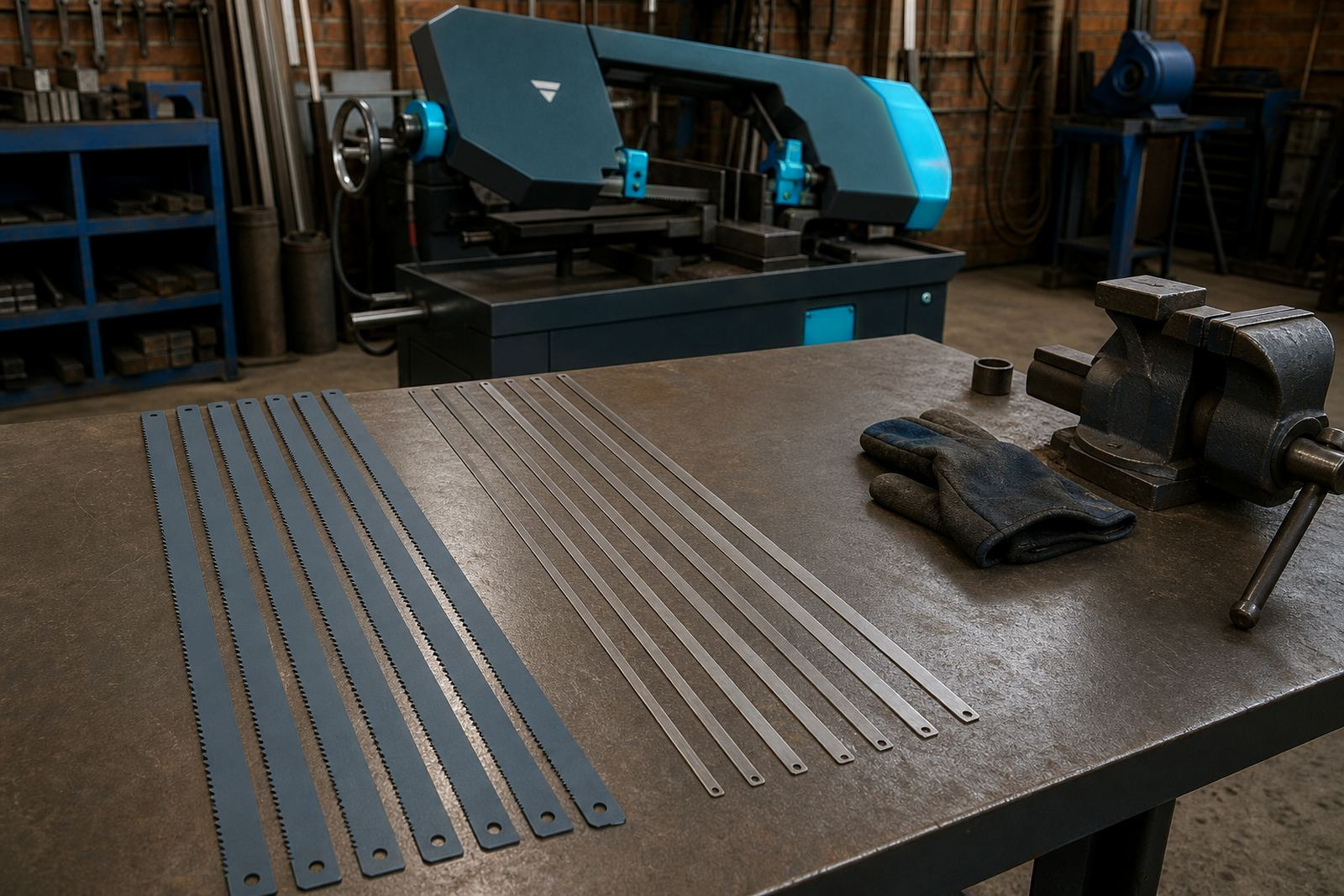
A wavy set hacksaw blade has teeth that are offset in a patterned wave, not in the strong side set used for heavier cutting. That shape helps the blade track through thin material with less grabbing, so the cut feels calmer in hand work and on bench frames. It suits mild steel, thin wall tube, small sections and trim jobs where a coarse blade would chatter or pull.
For metalwork teams the value is in control. The blade clears swarf in a modest chip space, keeps a fine kerf and gives a neater finish on light gauge stock. It still needs the right frame tension, a square start and a steady stroke, because even a forgiving blade will wander if the feed is rushed.
Sizes for the bench and the vice
Blade specifications usually include length, width, thickness and tooth pitch. Common hacksaw lengths are 250 mm and 300 mm, with widths near 12 mm to 13 mm and thickness around 0.6 mm to 0.65 mm, depending on the frame and stock. Tooth count is usually given in TPI, and finer pitches are the safer call for thin wall material and smaller solids.
- 250 mm and 300 mm lengths for standard frames
- Fine TPI for thin sheet, light tube and small bar
- Medium TPI for mixed general bench work
- Carbon steel blades for light duty cutting
- Bi-metal blades for longer life on tougher work
Blade choice also depends on the frame clamping depth and the space around the workpiece. A short blade in a rigid frame cuts differently from a longer blade in a lighter frame, so the fit should be checked before a bulk order lands on the bench.
Where the wavy set earns its keep
This pattern is useful where the metal is thin enough to flex and where the operator wants a clean line without forcing the stroke. It works well for small fabrication jobs, site repairs, maintenance benches and manual saw stations handling offcuts. On stainless tube, thin angle, light conduit and similar sections, a finer tooth count helps avoid tooth stripping and rough edges.
When the material gets thicker, the blade needs a more open tooth pattern and a firmer stroke. The wavy set gives controlled cutting on hand tools and works well when the finish is worth slowing the pace a little. Treat it as a control blade, not for brute force cutting through big bar all day or as a roughing blade.
- Light fabrication benches
- Maintenance and repair crews
- Manual cutting of thin section stock
- Small diameter bar and tube
- Trim work with edge control
Fitting, tension and the first few strokes
Fit the blade with the teeth facing forward on the cutting stroke and clamp it straight in the frame. Proper tension is essential because a loose blade twists, while over-tension can snap a thin blade or pull it out of line. The cut should begin with a shallow notch, then move into a full stroke only after the blade has seated itself.
For cleaner service life, keep the work clamped and let the blade do the cutting. Heavy downward pressure bends the blade, heats the teeth and can strip the set on softer stock. A light oil film or suitable cutting fluid helps on sticky metals, while dry cutting is usually enough on lighter mild steel if the stroke is controlled.
- Check frame length before ordering replacements
- Keep the blade square in the vice
- Use a steady feed, without force
- Apply light cutting fluid on sticky sections
- Replace blades that show cracked teeth or twist
Material choice and tooth pitch for each job
Carbon steel blades suit occasional hand cutting, softer metals and short runs. Bi-metal blades give better wear resistance on harder materials and mixed workshop use, especially where the blade is kept in service across many jobs. Choose TPI for the wall thickness and section size, because a coarse pitch can snag and a fine pitch can clog with swarf.
For lighter material, a finer pitch gives a smoother path and less tooth breakage. For slightly heavier stock, a mid range pitch gives better chip clearance. Variable pitch can help reduce chatter on mixed profiles, although the blade still needs a steady hand and a firm frame. Match the tooth count to the wall, the shape and the pressure applied by the operator.
Ordering details that save a second trip to the rack
When you are ordering wavy set hacksaw blades, it helps to confirm the frame length, the preferred tooth count, the material type and whether the work is mostly light section or mixed stock. If the workshop uses several manual saw stations, stock standardisation can cut down on mix ups and make blade issuing easier. Starter kits suit new benches where the team needs a few pitches on hand before the pattern of work settles.
For weld-to-length blade service, the blade size and mounting arrangement need to be checked against the machine or hand saw, because the fit affects cut quality and blade life. MoreCut Saws in Alrode, Alberton supports workshops across Johannesburg, Pretoria, Vereeniging, Durban and Cape Town, with blade selection help for manual saw work, replacement lengths and fit checks for the jobs that keep moving.
- Frame length and clamp style
- Preferred TPI or tooth pitch
- Material type and wall thickness
- Blade width and thickness needed
- Whether the job is light trim or mixed stock
Key facts
| Product | Wavy set hacksaw blades |
|---|---|
| Blade material | Carbon steel or bi-metal options |
| Lengths | 250 mm and 300 mm common |
| Tooth pitch | Fine to medium TPI |
| Blade form | Wavy set for controlled hand cutting |
| Service | Weld-to-length and fit checks |