What the M42 variable pitch blade is built to do
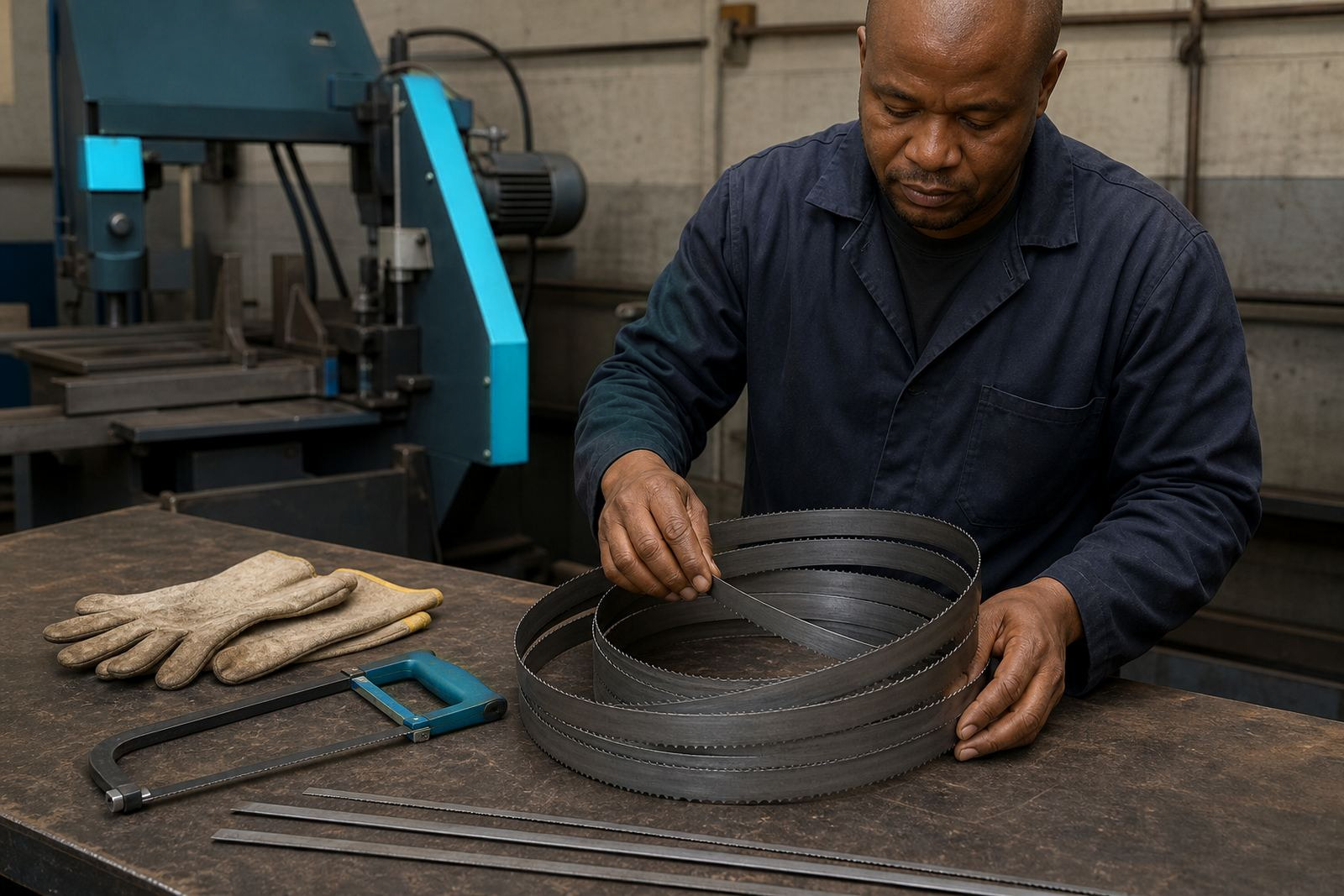
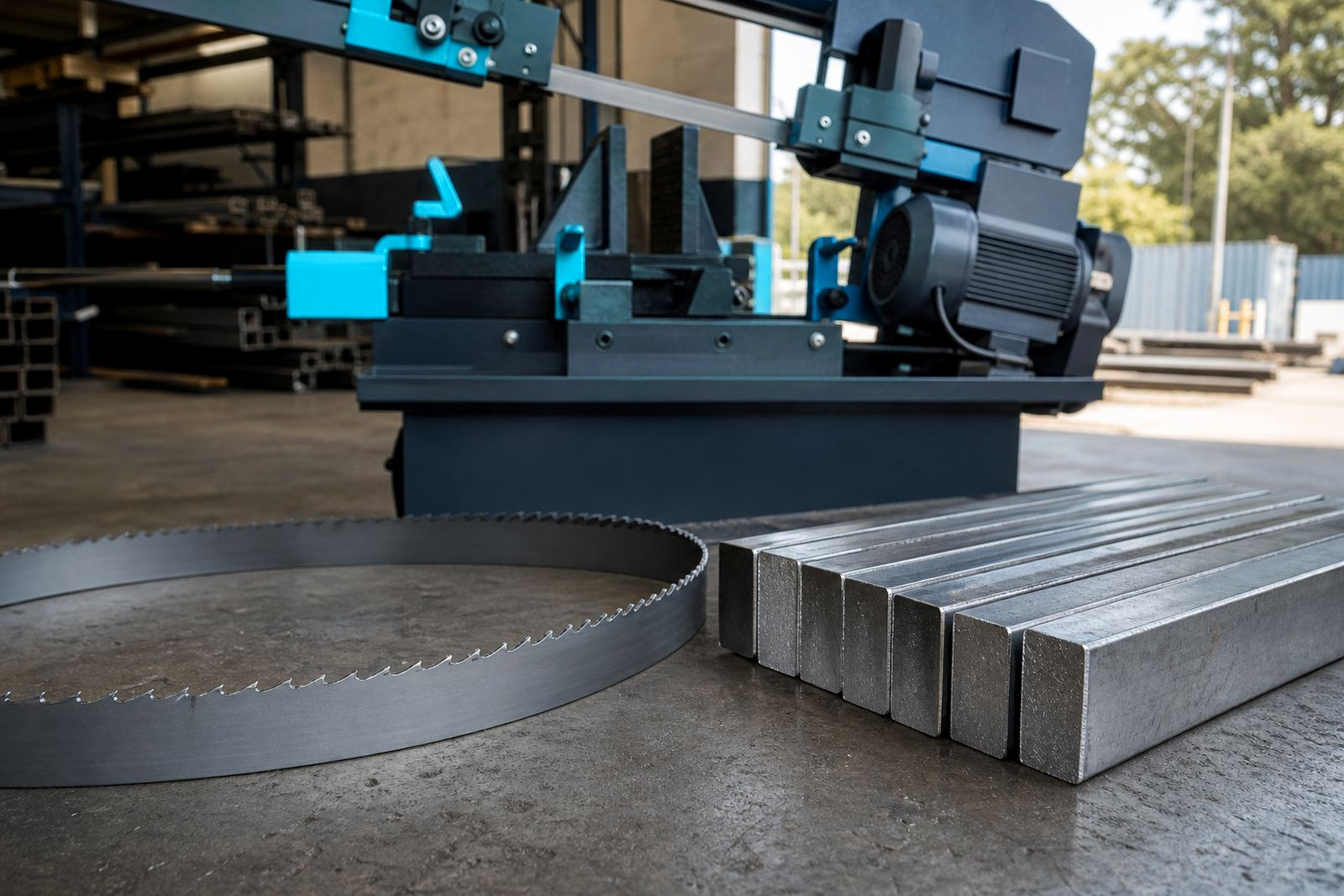
An M42 variable pitch bandsaw blade uses a bi-metal construction with a high-speed steel cutting edge and a spring steel backer. The tooth spacing changes along the blade, which helps break up the resonance that can build when a cut moves through different wall thicknesses or section sizes. Steel stockyards, fabrication shops and maintenance rooms need blades that handle work shifting from thin tube to heavier sections in the same shift.
The M42 tooth edge suits general metal cutting that needs wear resistance and an edge that holds under steady production use. Variable pitch helps reduce the long, even tooth rhythm that can set up vibration on hollow section, bundle cuts and awkward profiles. Used with the right feed, speed and coolant, it gives a cleaner cut and steadier machine feel.
Sizes, tooth pitch and blade bodies we supply
We supply M42 variable pitch blades in common workshop widths, thicknesses and loop lengths, with weld-to-length supply for many machine frames. Choose the right blade for the machine wheel size, band speed, clamp style and the material you are cutting. Width affects straightness and curve cutting, while thickness affects tracking and blade life on larger saws.
- Widths commonly used for metalwork include narrow blades for lighter machines and wider blades for straighter cuts on heavier frames
- Thickness is matched to wheel diameter and the machine guide setup, so the blade tracks cleanly under load
- Variable pitch patterns are selected to suit solid bar, tube, angle iron and mixed bundles
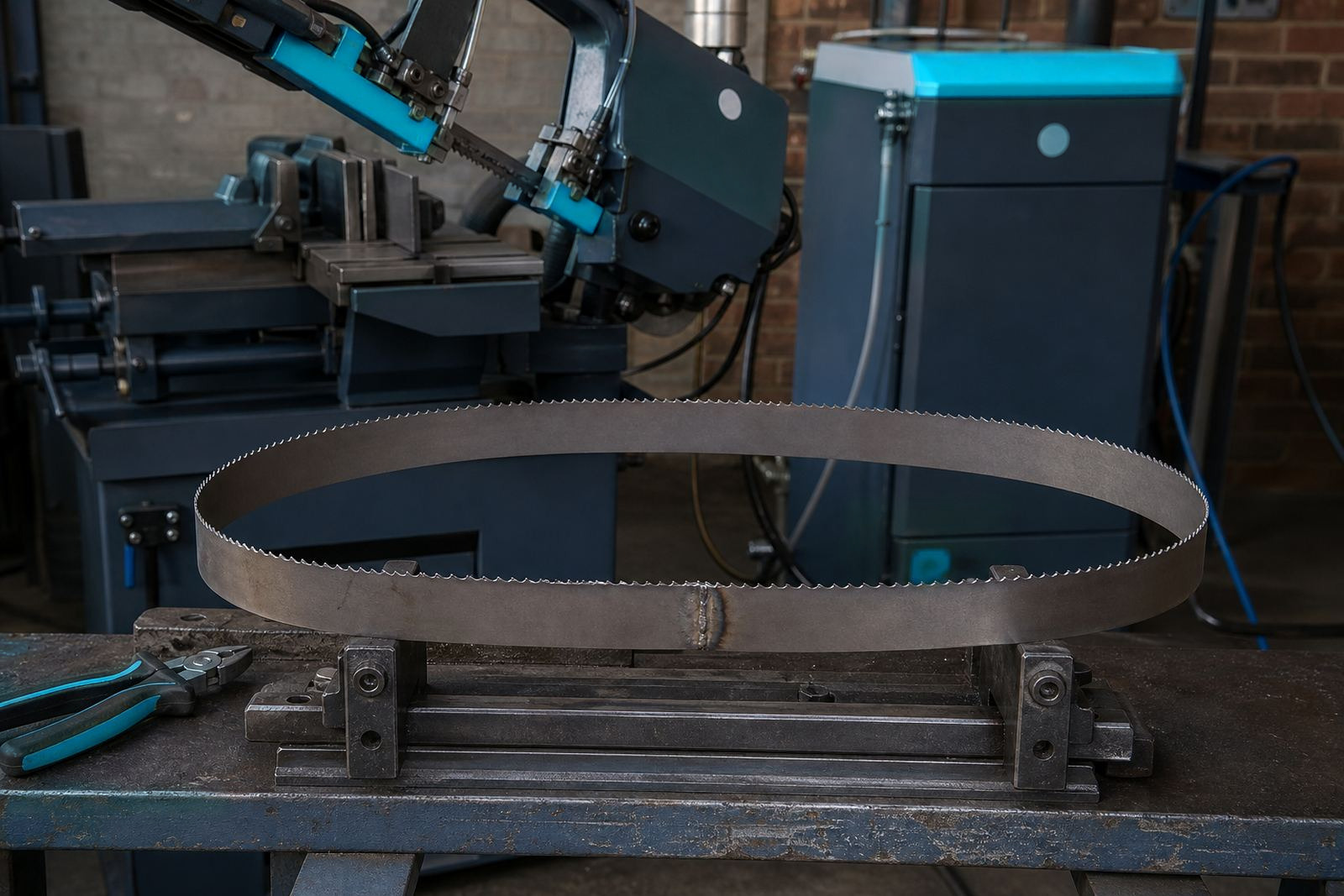
- Lengths can be welded to suit the saw frame, with length verification before welding
- Set and tooth form are checked so the blade clears the cut without rubbing or binding
For fine work on small sections, a tighter pitch may be the better fit. For mixed structural work, a broader variable pitch often settles the cut and lowers chatter. Tooth pitch is always tied to the smallest section in the bundle, even when the largest section is bigger.
Jobs and materials where this blade settles in well
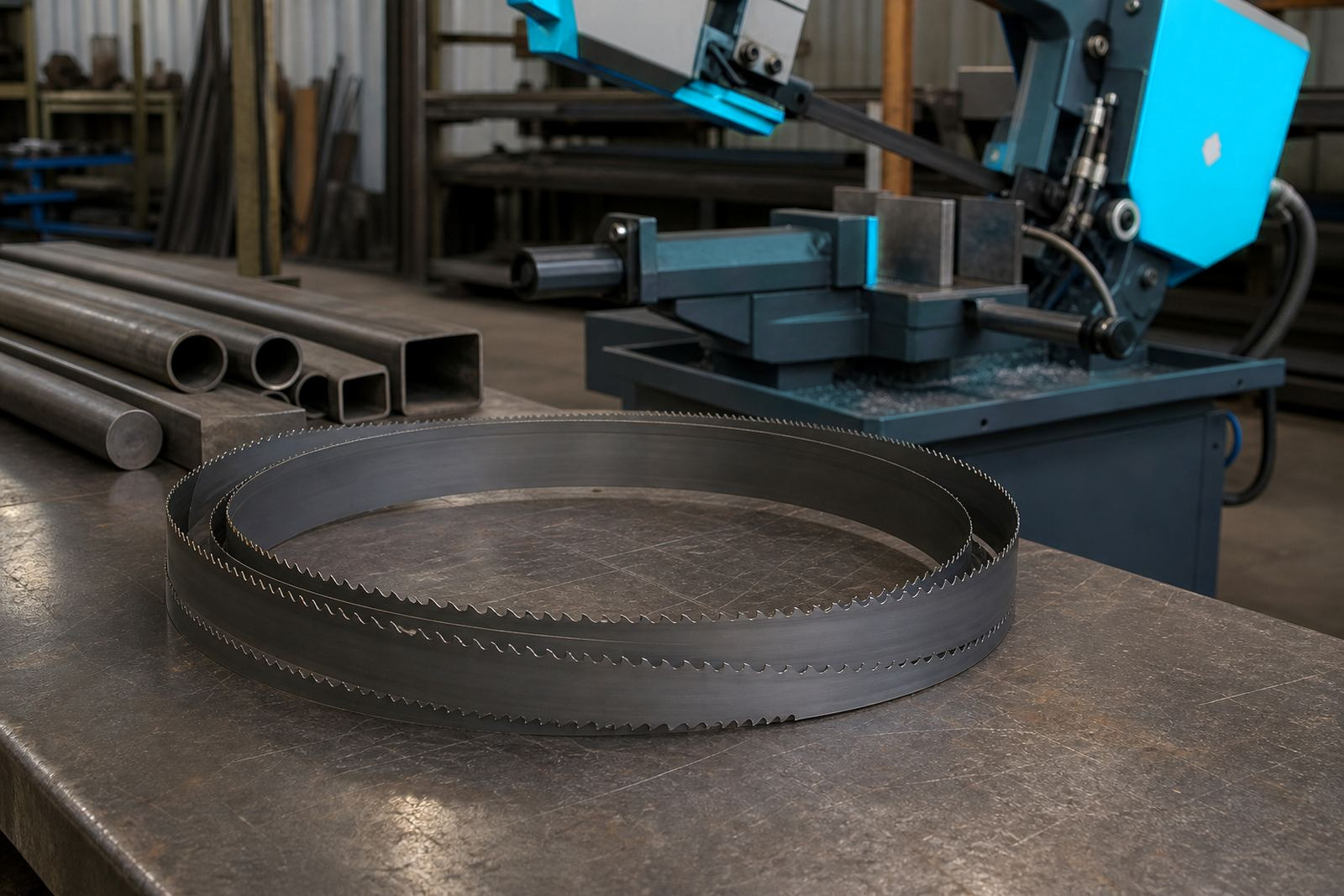
M42 variable pitch blades are used across general fabrication, repair work and production cutting where the section size changes from one job to the next. They suit mild steel, profile sections, tube, pipe, flat bar and solid material when the machine setup is sound. On long jobs with repeated clamping, the variable pitch helps keep the cut from sounding harsh as the blade moves through varying cross sections.
In practice, this blade suits workshops that need one pattern to cover a range of cutting tasks instead of changing blades for every batch. It can also help where bundles are cut in stages and the saw must deal with both air and full material during the same pass.
- Mixed section sizes in one batch
- Tube and hollow section with changing wall thickness
- Solid bar and heavier profiles
- General workshop cutting where chatter has been a problem
- Maintenance work with varied material on the same saw
Fitting the blade and setting the saw correctly
Good fitting starts with a correct loop length, sound blade welding and proper tracking on the wheels. The guides must support the blade without pinching it, and the tension needs to suit the blade width and the machine's cutting load. If the blade is too tight it will work hard at the weld and tooth line, while too little tension can make the cut wander.
A new M42 blade needs a run-in. The teeth should be eased into service with lighter feed at first so the cutting edge can settle before full cutting pressure is used. Feed and speed need to match the material, and coolant should be checked for delivery and condition, especially on long cuts or warmer inland workshop conditions where the blade can pick up heat quickly.
- Confirm wheel diameter and guide spacing before ordering
- Check the saw's band speed range against the material mix
- Set coolant flow to reach the tooth line, not only the back of the blade
- Keep the first cuts gentle so the tooth tips wear in evenly
- Watch for squeal, chipped tips or a wandering line, then adjust feed and speed
Care that helps the blade stay usable for longer
A variable pitch blade lasts better when the cut is kept steady and the blade is not forced through scale, weld bead or twisted stock at the wrong feed. Chips should clear freely. If they pack in the gullets, the blade starts to rub and heat builds across the tooth line. On stainless and harder steels, coolant becomes even more important because heat can punish the set and shorten edge life.
Store blades flat or hung properly, away from knocks that damage the set. A bent tooth line or a kink near the weld can put strain through the whole loop. When a blade starts to wander, leaves a rough finish or sounds uneven under load, it is worth checking the machine fit, the guides and the material before blaming the blade alone.
What to confirm before ordering a weld-to-length blade
We use the machine details and the job details together, because the wrong loop length or pitch pattern can waste time on the floor. If you are ordering for an existing saw, send the blade length, wheel size and the type of cutting you do most often. If the machine has been used for both manual and production cutting, the settings may differ from what the old blade label suggests.
- Saw make and model, or the measured blade length if the label is missing
- Wheel diameter and blade width range the machine accepts
- Material type, wall thickness and whether bundles are cut
- Preferred finish, straight cut or general cutting
- Any recurring issue such as vibration, tooth stripping or crooked cuts
- Whether coolant is used and if the machine has steady flow to the cut
For workshops in Alrode, Johannesburg, Pretoria, Vereeniging, Durban, Cape Town and nearby industrial areas, the same checks help keep the blade matched to the saw instead of guessing from an old loop.
Key facts
| Blade type | Bi-metal M42 variable pitch bandsaw blade |
|---|---|
| Tooth form | Variable pitch for mixed-section cutting and reduced vibration |
| Typical applications | Mild steel, tube, pipe, flat bar, structural profiles and solid sections |
| Key selections | Blade width, thickness, tooth pitch, length and set |
| Fitting notes | Welded to length, then run in with controlled feed and speed |
| Care notes | Use coolant where fitted, keep guides true and avoid forcing the cut |