Tooth pattern that keeps the cut moving
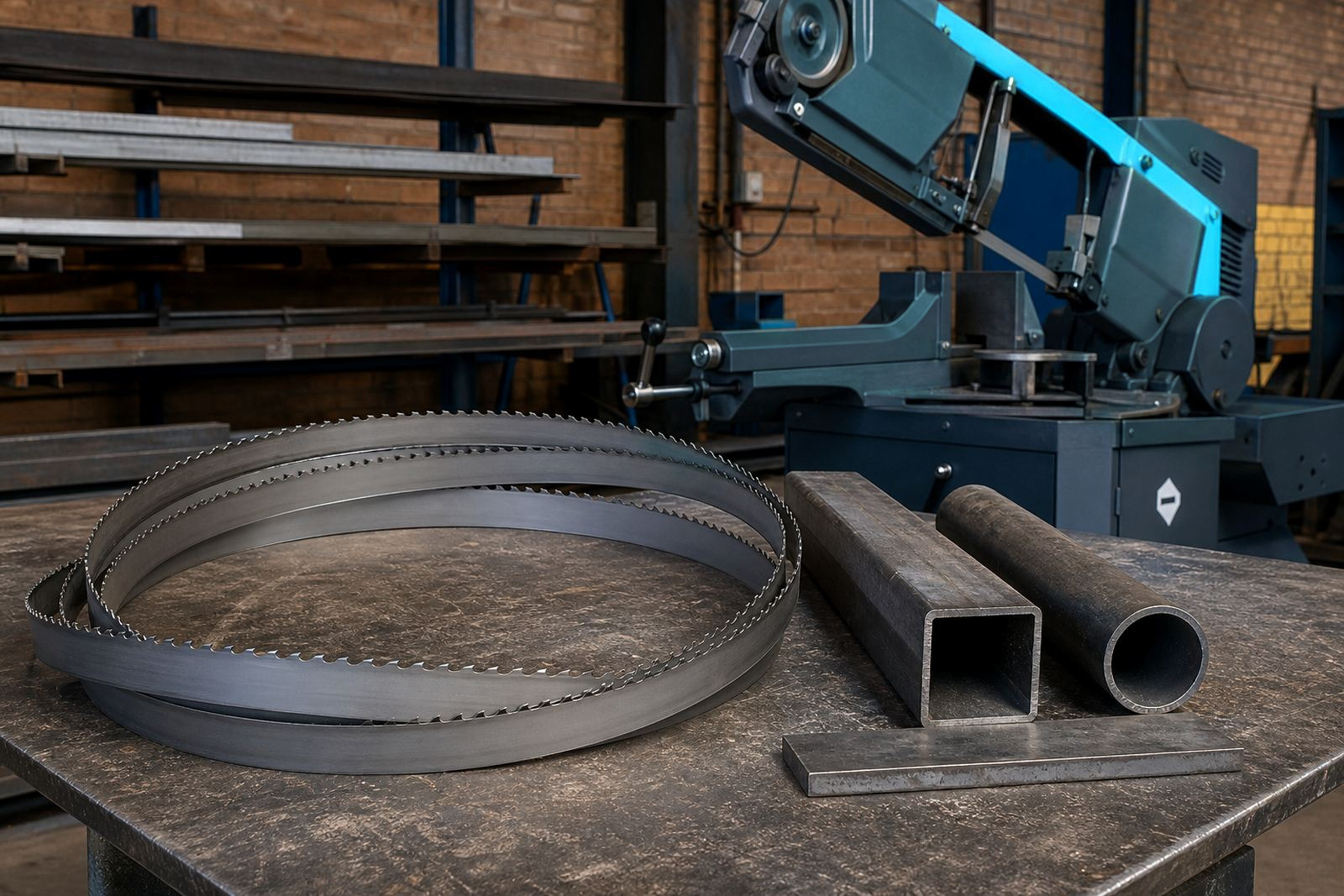
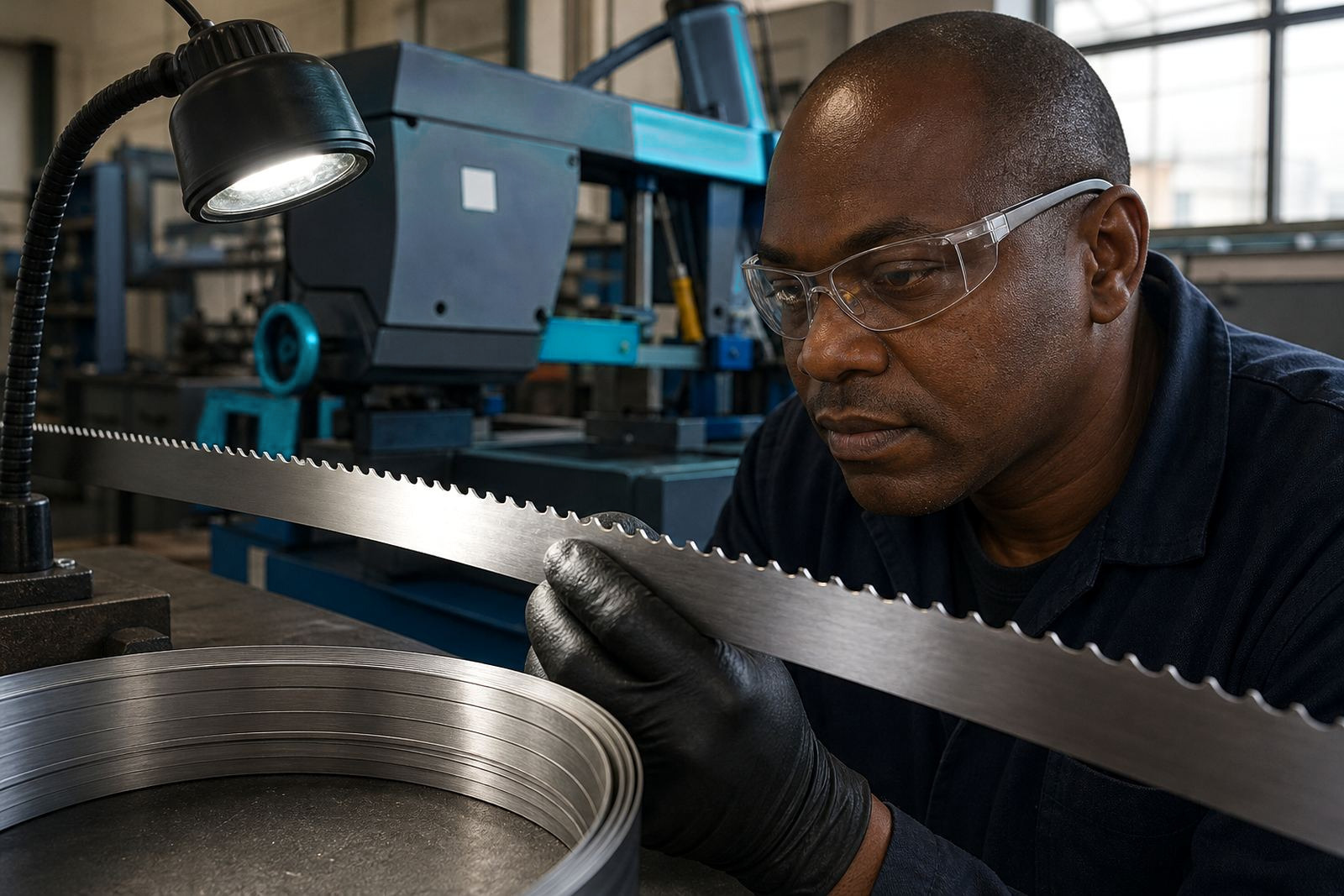
A raker set bandsaw blade uses a repeating tooth arrangement where the teeth clear swarf in a controlled way instead of packing the gullets too tightly. In practice that gives a cleaner path through mild steel, hollow section, solid bar and light plate when the feed is kept steady and the blade is matched to the material. The set on the teeth helps the blade track through the work with less wandering, useful when a shop is cutting a mix of profiles in one shift.
Bi-metal grades give longer wear, while carbon steel suits lighter duty manual saw work. A raker pattern is often chosen where the cut must stay predictable across different sizes, with tooth pitch, blade width and thickness set to suit the machine and the job. For workshop use, that means fewer surprises at the vice and less time spent forcing a blade through stock that is not suited to its tooth form.
Sizes, widths and pitches that match the machine
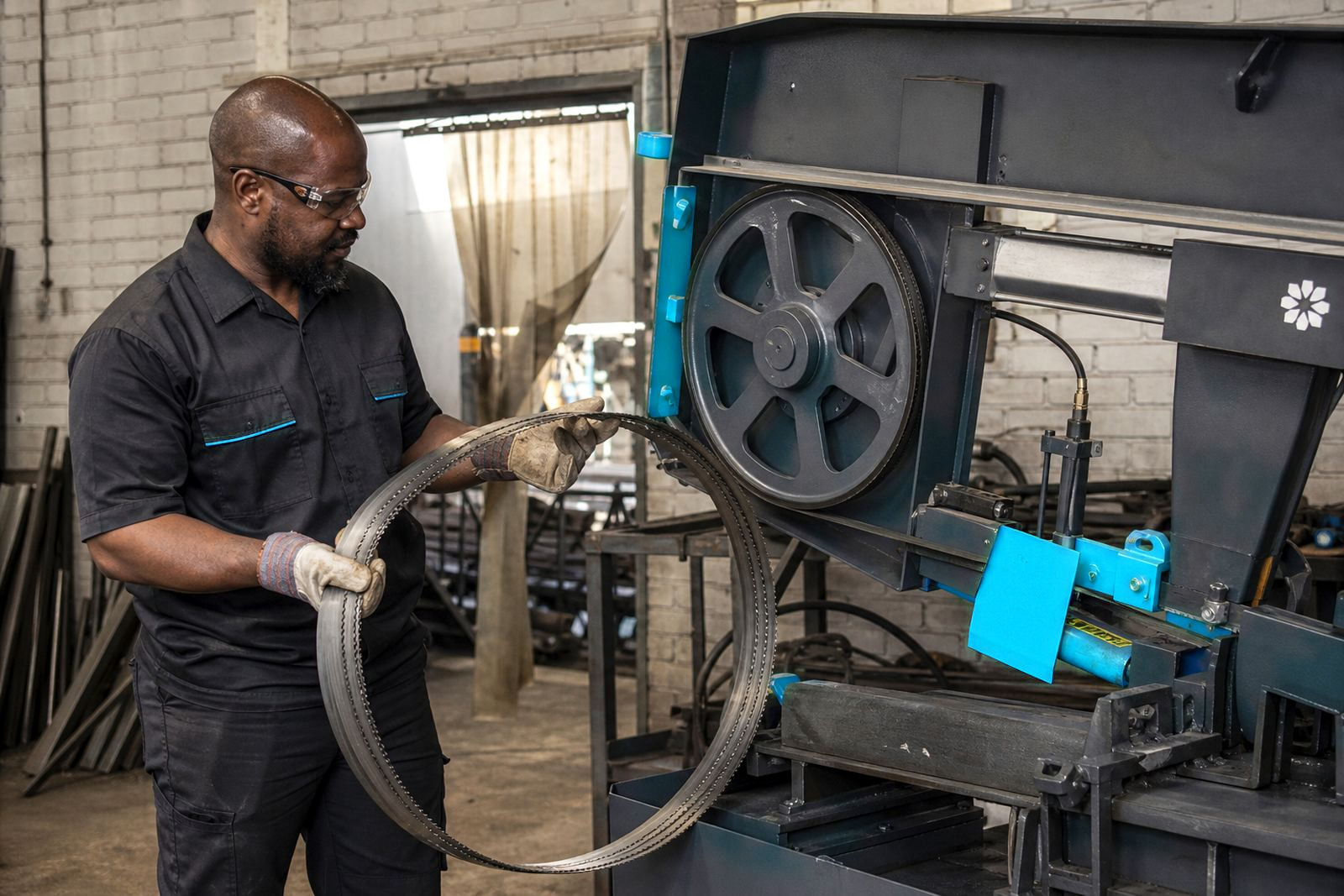
Raker set blades are supplied in a range of lengths for bandsaws and hacksaws, with weld-to-length service used where a specific machine size or frame needs a closed loop blade. Width affects steering and chip clearance, while thickness affects body strength and the way the blade runs through harder sections. A narrower blade can suit tighter guides and lighter machines, while a wider blade is better where the cut line needs more stability.
- Bi-metal M42 for harder general metal cutting and longer blade life
- Carbon steel for lighter duty manual sawing and starter use
- Common tooth pitches from coarse to fine, selected by section size
- Variable pitch options for vibration control on mixed stock
- Blade widths to suit small manual saws through to larger floor machines
- Thickness matched to the guide system and blade tension range
Where raker set blades earn their keep
This blade style suits general fabrication shops, maintenance teams, structural steel work and machine rooms that cut a broad spread of material sizes. Practical for round bar, square bar, tube, angle iron and light channel, it suits work where the operator wants a blade that stays steady as the section changes. In Johannesburg, Pretoria, Vereeniging, Durban and Cape Town, the same blade can be used differently depending on whether the shop is working dry inland steel, coastal stock with surface moisture, or heavier offcuts from a fabrication bay.
Raker set blades are also useful for manual saw support where the operator needs guidance on feed and speed without the need for a highly specialised tooth form. If the blade is too coarse, it can grab and leave rougher faces. If it is too fine, gullets fill up and the cut slows down. Match the pitch to the smallest section in the batch, and keep the machine within its working range so the blade lasts longer.
Fitting, run-in and the first cuts
Proper fitting starts with the machine fit check, correct blade length and guide alignment. A raker set blade needs the weld inspected, tension set correctly and the guide blocks or bearings positioned so the blade is supported without pinching. On mechanical saws, the frame and vice should hold the stock square, because twist in the work can shorten blade life quickly. For many workshops, the first issue is an uneven guide or poor tension setting that lets the tooth line drift.
- Run the blade in lightly on the first cuts to settle the tooth edges
- Use feed and speed advice that suits the material thickness
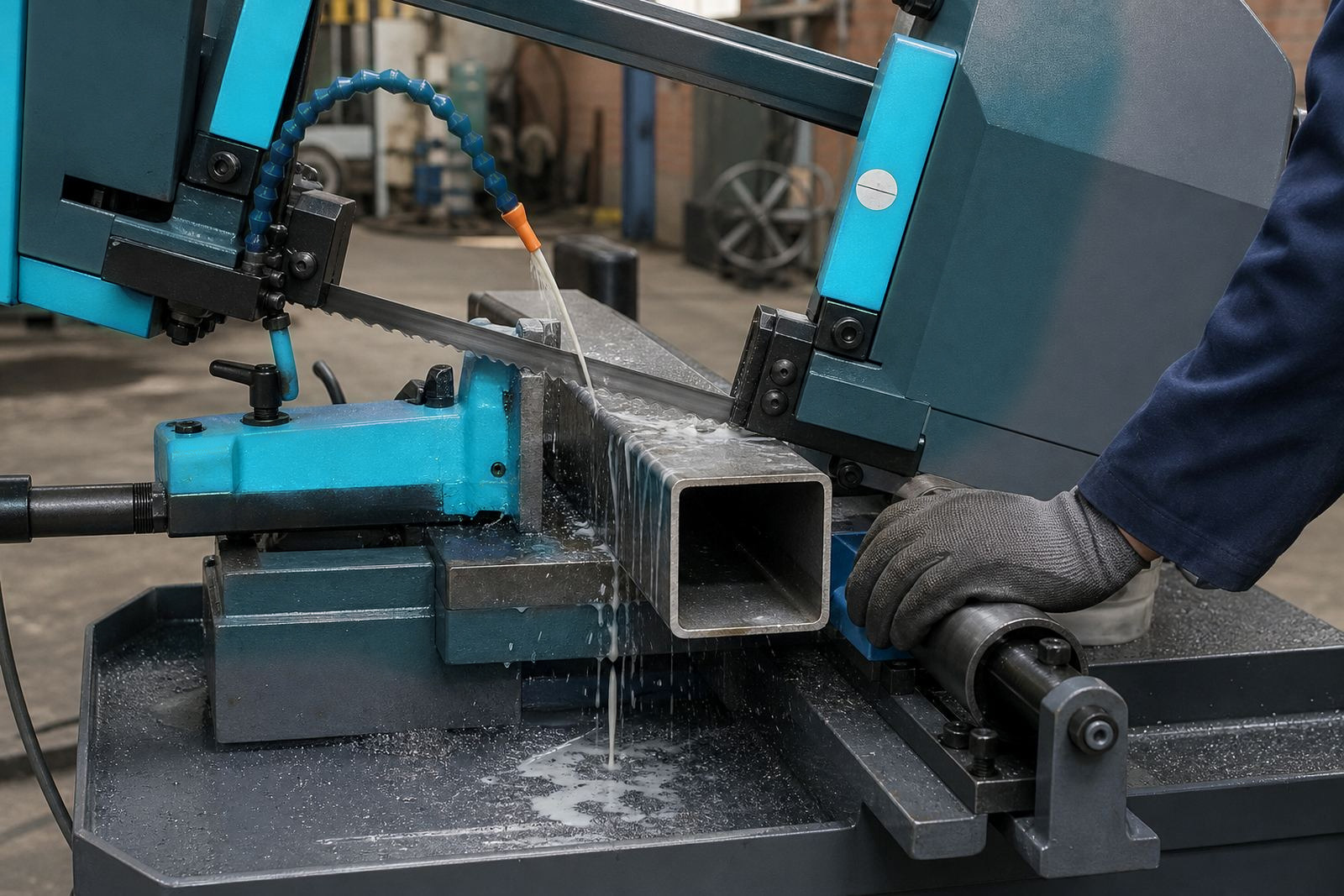
- Keep coolant checks in place where the saw is set up for wet cutting
- Let the blade clear swarf without forcing a heavy feed
- Check that the blade width suits the wheel diameter and guide spacing
On tougher jobs, the cutting edge benefits from a careful run-in period before full production work. Tooth tips settle and early chipping is reduced, especially on bi-metal blades used for mixed stock.
Caring for blades in daily workshop use
Blade care is mostly about discipline at the machine. Coolant should be kept clean and directed properly so the cut stays cool and the teeth do not glaze. In wet cutting, check coolant often because dirty fluid carries fines back into the gullets and can turn a sharp blade noisy. On dry manual work, chips need clearing often, especially on mild steel sections that throw long swarf.
Store spare blades flat or hung neatly so they do not kink, and keep them away from damp floors and open grinding areas. Coastal humidity in Durban or Cape Town can leave light surface rust on carbon blades if they are left unpacked for too long. If a blade starts to wander, burnish or leave a polished trail on the side of the cut, it is worth checking the set, the guides and the feed before assuming the stock is the problem.
What to confirm when ordering a raker set blade
With the machine details clear from the start, ordering the right blade becomes easier. Length, width, thickness and tooth pitch all need to line up with the saw and the type of material being cut. If the blade is for a starter kit, the stock mix should be known as well, because a general purpose pitch for thin wall tube is not the same as a pitch for solid round bar. At our Alrode, Alberton workshop, we handle weld-to-length service, tooth pitch selection, blade width selection and blade failure review for workshops nationwide in South Africa.
- Machine make or frame size and whether it is a bandsaw or hacksaw
- Blade length, width and thickness required by the guides
- Material type, section size and the smallest piece in the batch
- Preferred tooth pitch or whether variable pitch is needed
- Wet or dry cutting setup and coolant use
- Any fitting issues, breakage pattern or track problem already seen
When those details are on the table, stock standardisation becomes easier too. A workshop can settle on a small blade range instead of keeping too many sizes on the shelf, which helps when multiple branches such as Alberton, Germiston or Boksburg need the same cutting pattern for shared work.
Key facts
| Blade type | Raker set bandsaw blade for general metal sawing |
|---|---|
| Materials | Bi-metal M42 and carbon steel options |
| Tooth pitch | Coarse to fine pitch options, including variable pitch |
| Blade sizes | Supplied by required length, width and thickness |
| Service options | Weld-to-length, length verification and starter kit planning |
| Support | Tooth pitch selection, feed speed advice and machine fit check |