
Blades made for manual frames and precise work
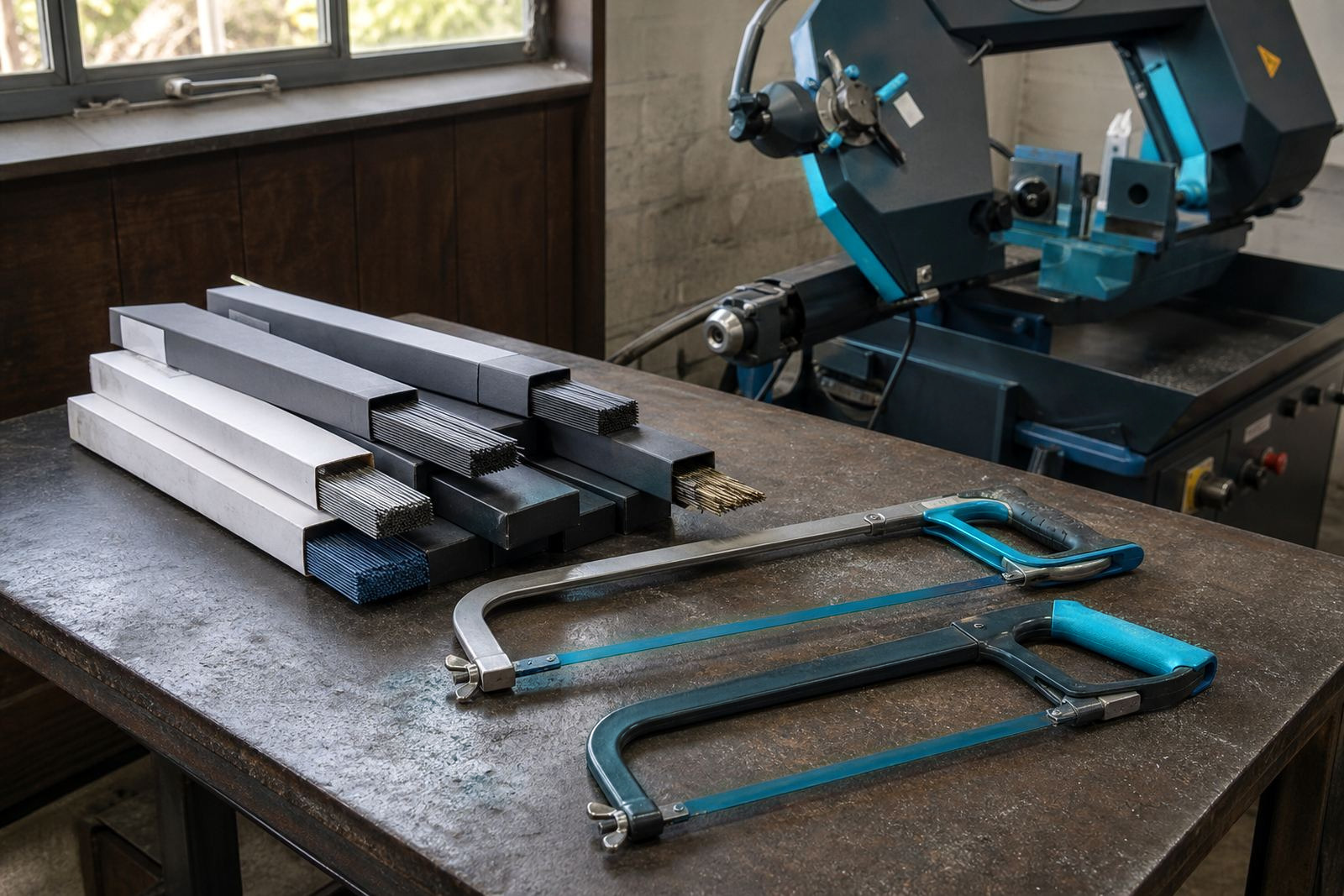
A hand hacksaw blade is a thin strip of hardened steel with teeth along one edge, clamped into a manual frame for controlled cutting by hand. In metalwork it is still a useful fit when a bench saw is not the right answer, or when a tidy cut is needed on a ladder, at a fitting bench, or inside a tight plant room.
We supply replacement blades for common manual frames in workshop and site use, with options that suit general steel, stainless work, thin wall tubing and mixed maintenance jobs. Tooth count, blade width and blade thickness all affect how the cut feels, and the wrong choice can make the frame chatter or leave a ragged line.
Sizes and tooth patterns for the bench
Hand hacksaw blades are usually selected by length first, then by teeth per inch. Common lengths include 250 mm and 300 mm, with the holes and end shape matched to the frame. Tooth pitch is the next decision. Finer pitches suit thinner material and harder alloys, while coarser teeth clear swarf better on heavier stock.
For mixed workshop use, the better option is often a blade that sits between extremes, so one frame can handle several repeat tasks. Variable pitch blades are useful on some jobs because they reduce vibration and help the cut stay calmer through changing wall thickness.
- Lengths commonly used in manual frames: 250 mm and 300 mm
- Tooth counts typically chosen for metalwork: 14, 18, 24 and 32 TPI
- Coarser teeth suit thicker mild steel and general bar work
- Finer teeth suit thinner wall tube, conduit and harder material
Carbon steel or bi-metal for the job in hand
Carbon steel blades are a steady choice for lighter duty cutting and short runs on softer metals. They are cost-conscious and can be suitable where the frame is used for occasional work or where the material is not especially hard. Bi-metal blades combine a flexible back with a harder cutting edge, which gives better resistance to tooth wear on tougher metals and on longer work runs.
For stainless steel, work-hardened sections or jobs where the frame will see repeated pressure, bi-metal is usually the safer place to start. The blade body needs enough flexibility to sit straight in the frame, while the teeth need enough hardness to keep cutting without folding over. A poor fit on either side shows up quickly in the cut and in the feel at the handle.
- Carbon steel for light to moderate manual cutting
- Bi-metal for harder metals and repeated use
- Fine teeth for thin material, coarse teeth for heavier section
- Blade choice should match the frame tension and the material thickness
Fitting the blade so it stays straight
A hacksaw blade must be fitted the correct way round and tightened properly in the frame. The teeth normally face forward on the cutting stroke, and the blade should sit under steady tension without twisting. If the blade is loose, it wanders. If it is overtightened in a worn frame, it can snap near the fixing points.
For site use, keep a spare blade or two in the toolbox, especially when copper, mild steel and stainless all show up over the same week. Check the frame pins, the clamp faces and the bow of the frame before fitting a new blade. A bent frame will fight the blade no matter how good the teeth are.
- Fit teeth to cut on the forward stroke
- Keep the blade aligned in the frame slots
- Use firm tension, not brute force
- Replace worn frame pins and clamps when blade grip becomes poor
Cutting practice that protects the teeth
A hand blade works best with steady strokes and even pressure. Let the teeth do the cutting, and do not force the frame through the work. A short run-in on a new blade helps settle the cutting edge and reduces early tooth damage. On harder stock, a little cutting oil or a suitable coolant helps with heat and swarf control, especially where the cut is slow or the material tends to grab.
Keep the blade clean, brush off packed swarf and avoid side pressure at the end of a cut. That last few millimetres is where many blades get kinked. If the cut starts to wander, check the tooth pitch, blade tension and the way the work is clamped before blaming the blade itself.
- Use light pressure at the start of the cut
- Keep strokes long and even where the frame allows it
- Apply coolant or cutting oil where the material warrants it
- Clear swarf before it packs into the gullets
What to check before placing the order
To get the right replacement blade, confirm the frame length, the material you cut most often, and whether the job calls for a coarse or fine tooth pattern. Tell us if the work is mostly thin wall tube, solid bar, stainless, or mixed maintenance stock. If several users share the same frame, standardising blade length and tooth count can save confusion in the store room.
MoreCut Saws also supports workshops that want a starter kit for manual sawing, with blades chosen to suit the common jobs on the floor.
- Frame length and blade fixing style
- Material type and wall thickness
- Preferred tooth count or the job the blade must handle
- Whether the workshop wants carbon steel or bi-metal stock
Key facts
| Product type | Replacement hand hacksaw blades for manual frames |
|---|---|
| Common lengths | 250 mm and 300 mm |
| Tooth options | 14 TPI, 18 TPI, 24 TPI, 32 TPI |
| Blade types | Carbon steel and bi-metal |
| Typical use | Workshop and site cutting of metal tube, bar and strip |
| Fitment support | Blade selection, starter kit planning and manual saw support |