Built for everyday fabrication work
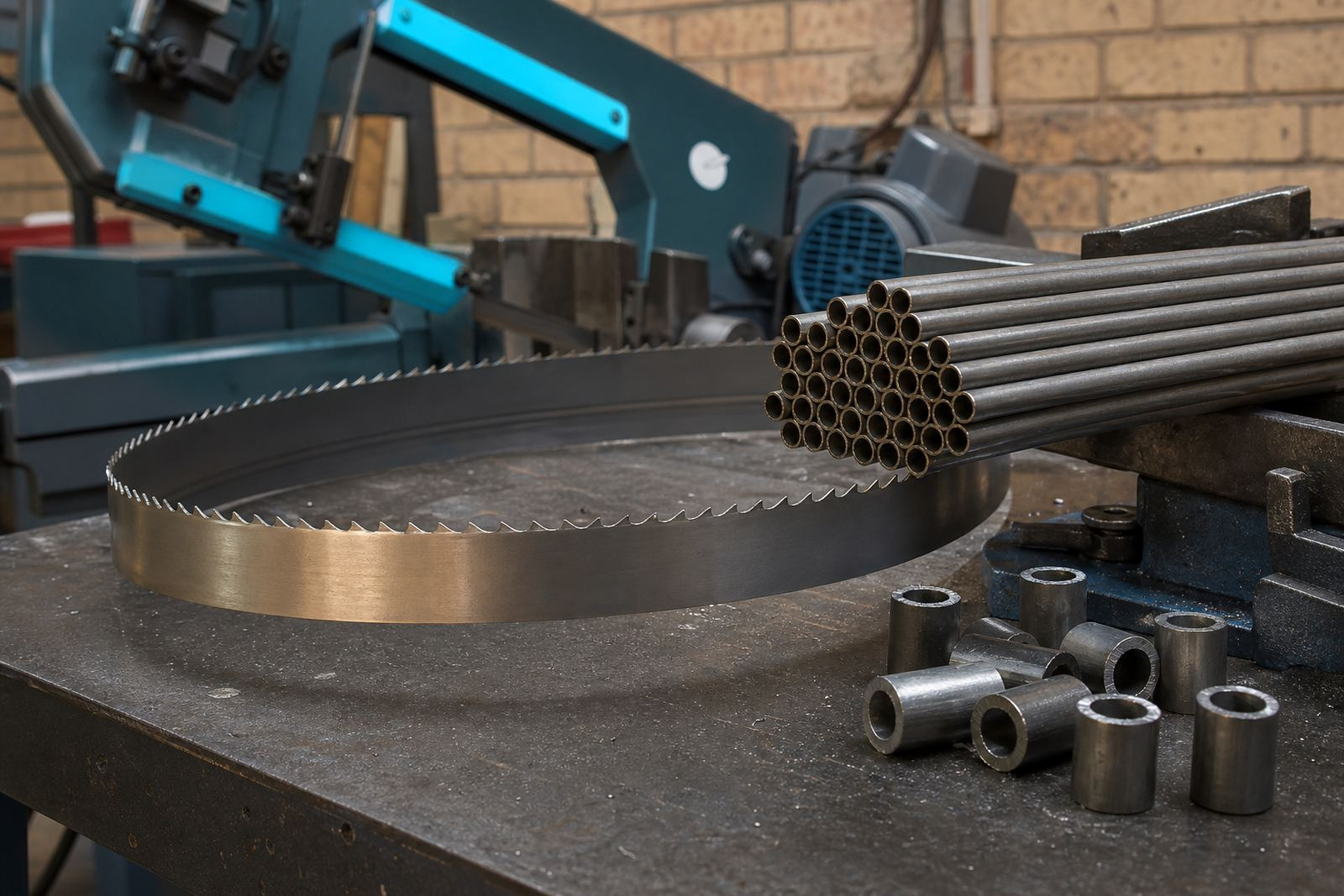
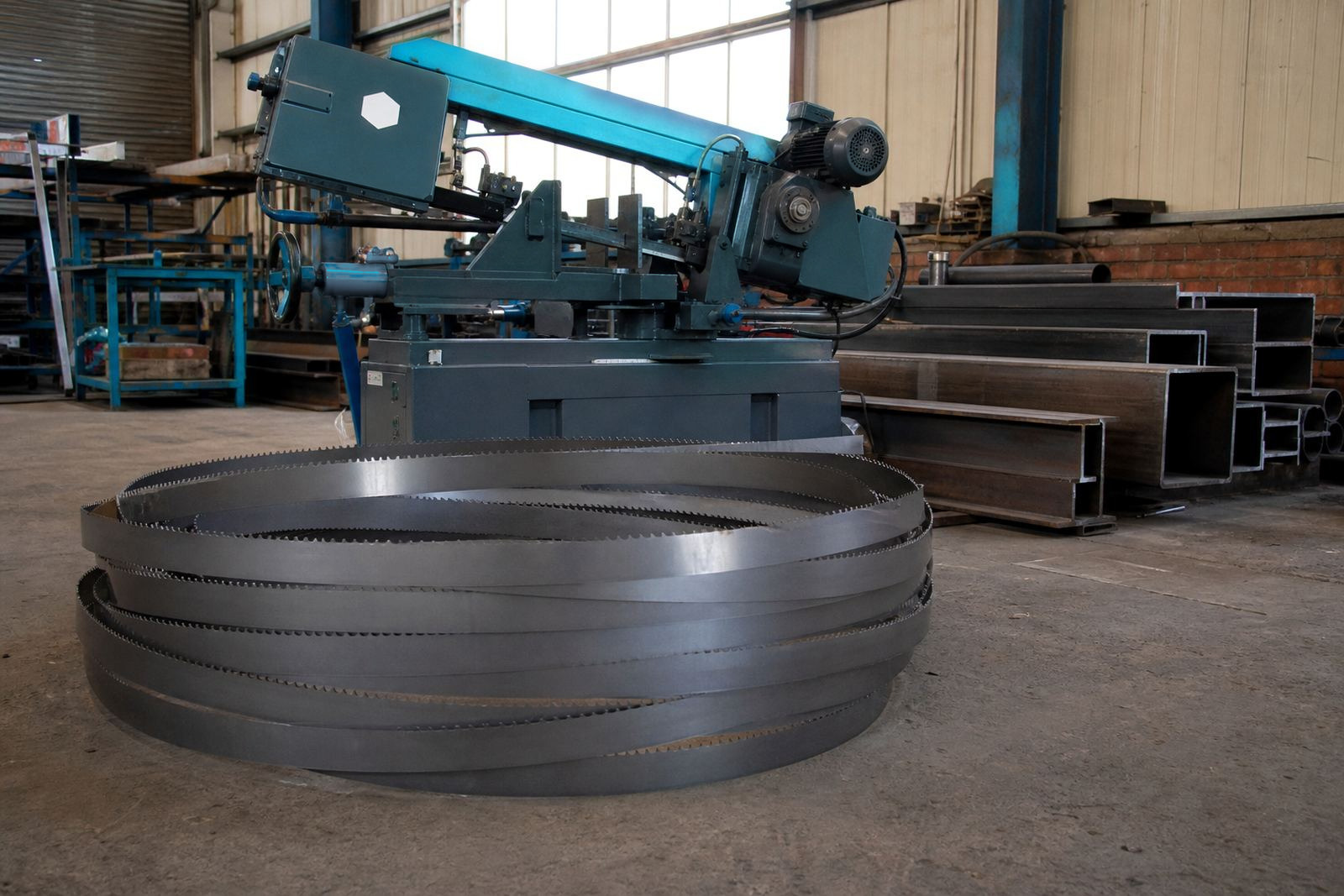
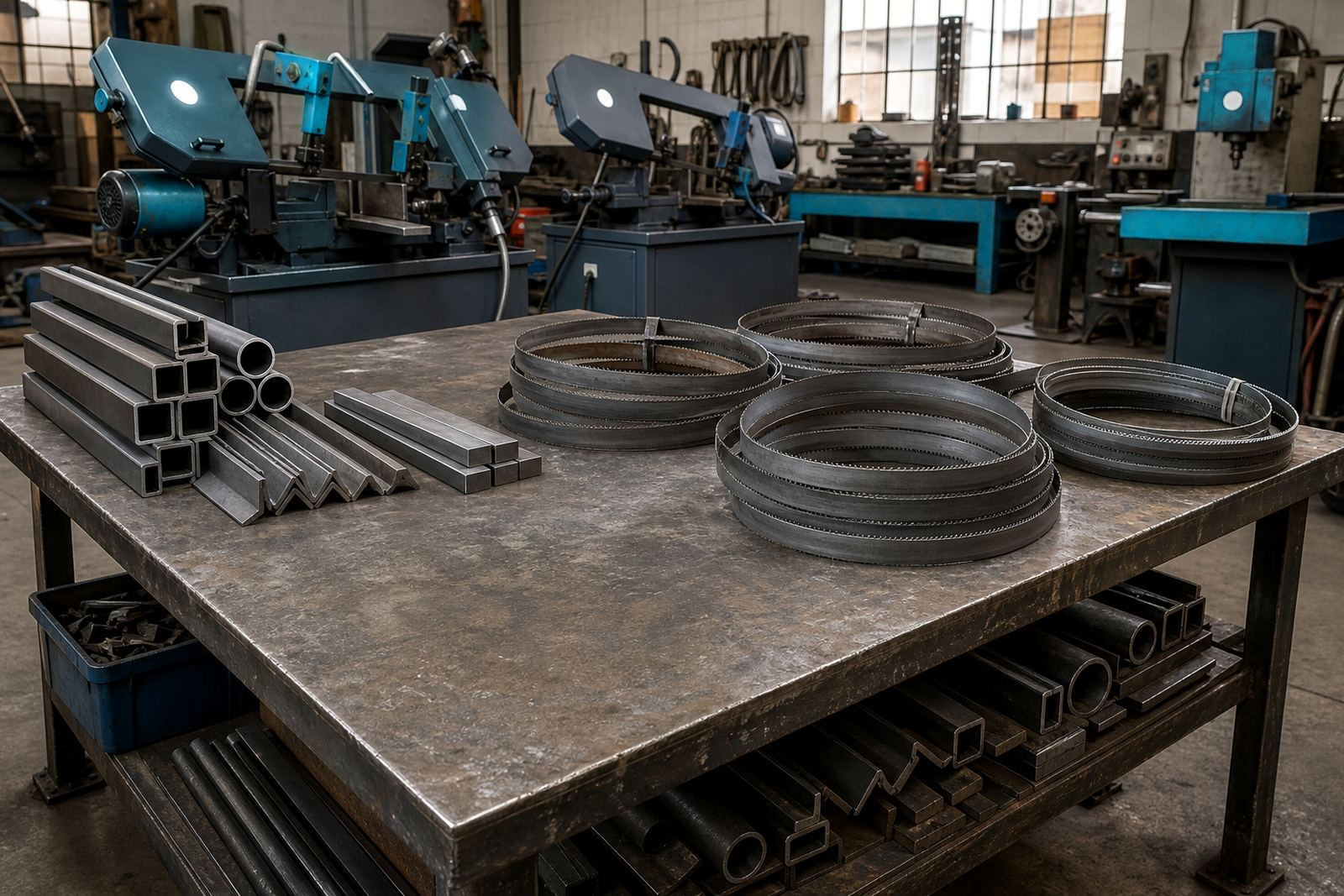
This starter kit brings together bandsaw blades and hacksaw blades for shops that cut mild steel tube, angle iron, flat bar and plate through the week. The mix is set up for routine fabrication, jobbing repair work and smaller maintenance jobs where one blade type seldom covers everything.
In practice, the right blade depends on section size, wall thickness and how hard the material cuts. A coarser tooth pitch works better on heavy section, while finer teeth suit thin wall tube and lighter stock. Blade width, thickness and the set of the teeth affect tracking, cutting stability and the finish on the cut face.
What sits inside a starter mix
The starter mix can be put together with bi-metal M42 blades, carbon steel blades or a blend of both, depending on the machine and the work mix. Bi-metal blades are usually the first pick for mixed fabrication because they hold an edge well in regular workshop use. Carbon steel suits lighter duty work and manual sawing, especially where the cut load is modest.
- Bi-metal bandsaw blades for general fabrication cutting
- Carbon steel blades for manual or light machine use
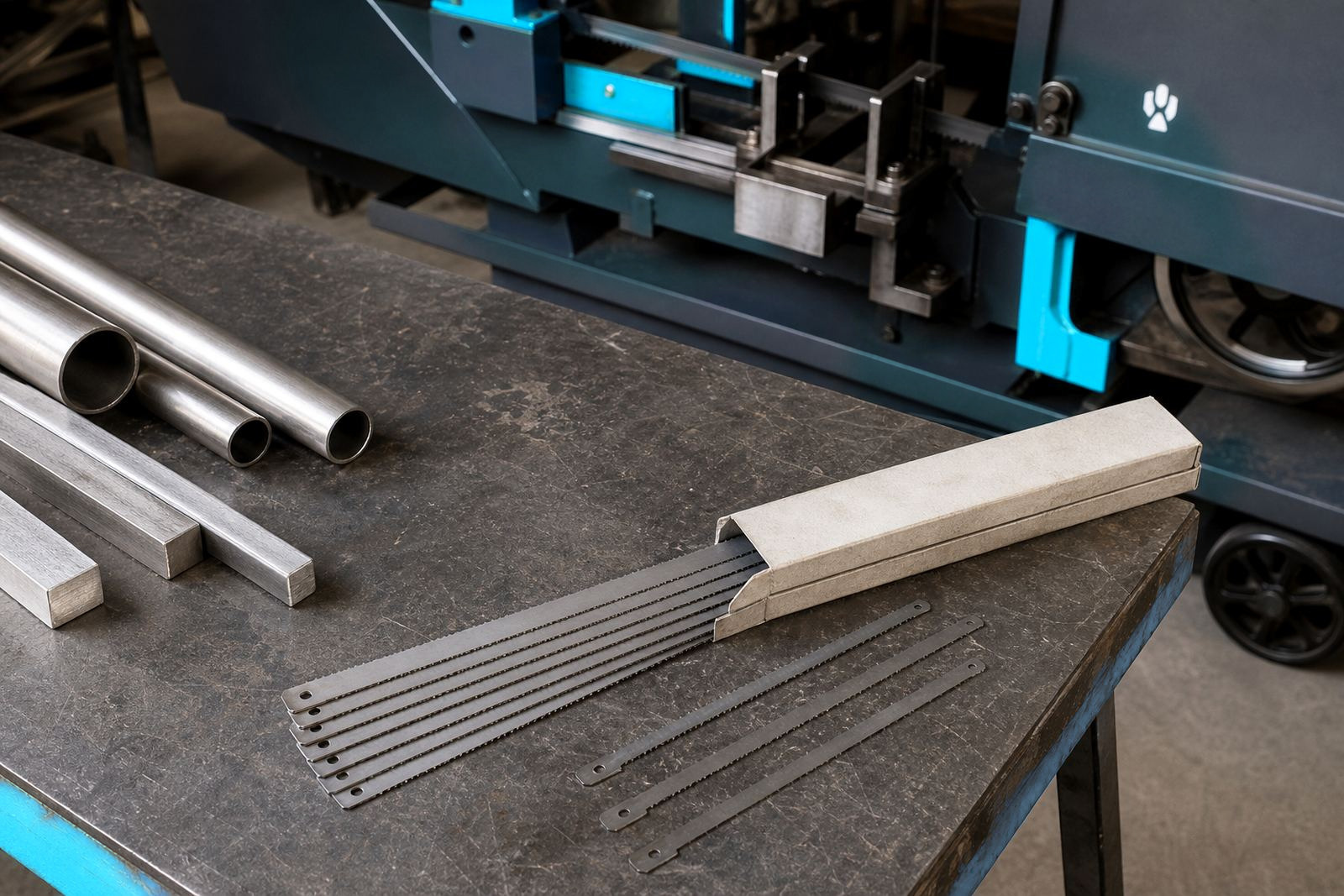
- Hacksaw blades for hand cutting and site repairs
- Starter lengths matched to the saw frame or blade welder
- Options for straight pitch or variable pitch patterns
Variable pitch helps reduce chatter on mixed profiles, while a standard pitch can be better on repeat cuts through one section size. If the material changes from job to job, a mixed pack is often more practical than buying one grade only.
Blade sizes and options suited to the work
Blade size depends on the saw and the way the workshop works. Bandsaw blades are normally selected by length, width and thickness, then matched to tooth pitch in TPI. Hacksaw blades are chosen by length and tooth count for the frame in use, with the set and tooth pattern matched to the material.
- Blade width options for tighter curves or straighter cutting
- Thickness options chosen for blade life and tracking stability
- Tooth pitch from fine TPI for thin wall to coarse TPI for section
- Variable pitch for noisy or vibration-prone cuts
- Wider blades for straighter runs on heavier material
A wider blade is generally better for straight cutting on larger machines, while a narrower blade can help where the saw setup calls for more flexibility. For light fabrication work, the cut quality usually depends as much on correct pitch as on the blade material itself.
Fitting notes for bandsaws and manual saws
A starter kit works best when the blade is fitted to the machine properly and run in with care. On bandsaws, the blade should track true, sit square on the wheels and match the machine guide settings. On manual hacksaws, the frame must take the correct blade length and hold tension without flexing the blade body.
Run-in is important on fresh bi-metal blades. Use a lighter feed and controlled speed for the first cuts so the tooth tips settle in before full cutting pressure is applied. If the blade is pushed too hard from the start, tooth wear can show early and the cut may wander. Where the machine uses coolant, it should reach the cut cleanly and keep heat under control on longer runs.
Where this kit fits on the shop floor
This mix suits fabrication bays that cut tubing for frames, angle for brackets, plate for gussets and solid bar for repair work. General maintenance teams, small steel shops and manual saw stations get a practical set for mixed material thicknesses. A starter pack is useful when the same saw sees different jobs across the week.
- Tube and pipe in light to medium wall sizes
- Angle iron and channel for frames and supports
- Flat bar, plate and bar ends for repair work
- Mixed jobbing where stock changes from one cut to the next
- Manual saw support for site fixes and hand cut tasks
For heavier section, a coarser pitch and firmer feed control are usually more forgiving. For thin wall tube, a finer pitch helps stop snagging and tooth strip-out, especially where the operator is cutting shorter batches.
Care, wear and blade life between jobs
Blade life improves when the saw is kept aligned, the feed is steady and the blade is not forced through scale or hard spots. Chips should clear the gullets, and coolant should stay clean enough to reach the cut. If a blade begins to squeal, wander or leave a rough finish, the pitch, feed or speed may need a check before the next batch goes through.
Store spare blades flat and dry, away from damp corners and grinding dust. On coastal jobs and in humid stores, surface rust can shorten service life on carbon blades and dull the teeth before the blade even goes onto the saw. When a blade fails early, it helps to check tooth pitch, machine fit, guide wear and the material being cut, because the cause is often a mix of small faults rather than one fault alone.
Details to confirm before you order
Before ordering, it helps to confirm the saw type, blade length, the metal grades being cut and the most common section sizes. Set tooth pitch, blade width and blade thickness to match the work on hand more easily. If the shop uses one blade for several jobs, the hardest material usually sets the tone for the pack.
- Saw type: bandsaw or manual hacksaw
- Blade length required for the frame or machine
- Material mix: tube, angle, plate, bar or solid section
- Preferred pitch range in TPI and whether variable pitch is needed
- Any coolant use, feed limits or cut speed concerns on the machine
We also check whether the blades need welding to length, whether the machine needs a fit check, and whether starter kit planning should cover both new and existing stock.
Key facts
| Product type | Fabrication starter kit for bandsaw and hacksaw cutting |
|---|---|
| Blade materials | Bi-metal M42 and carbon steel options |
| Tooth patterns | Standard pitch and variable pitch |
| Sizing factors | Length, width, thickness and TPI |
| Typical use | Tube, angle, plate, flat bar and solid section |
| Service options | Weld-to-length, length verification and machine fit check |