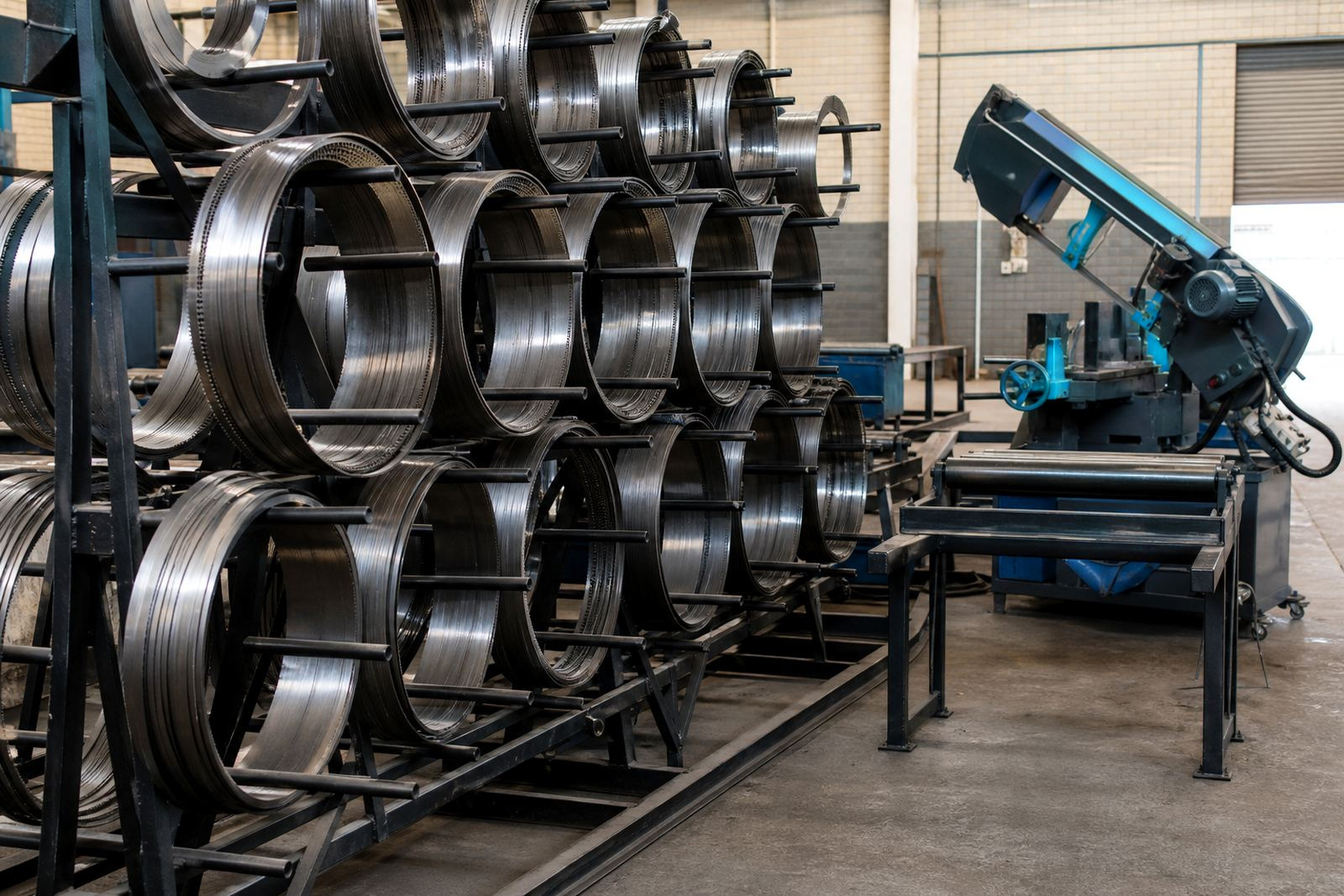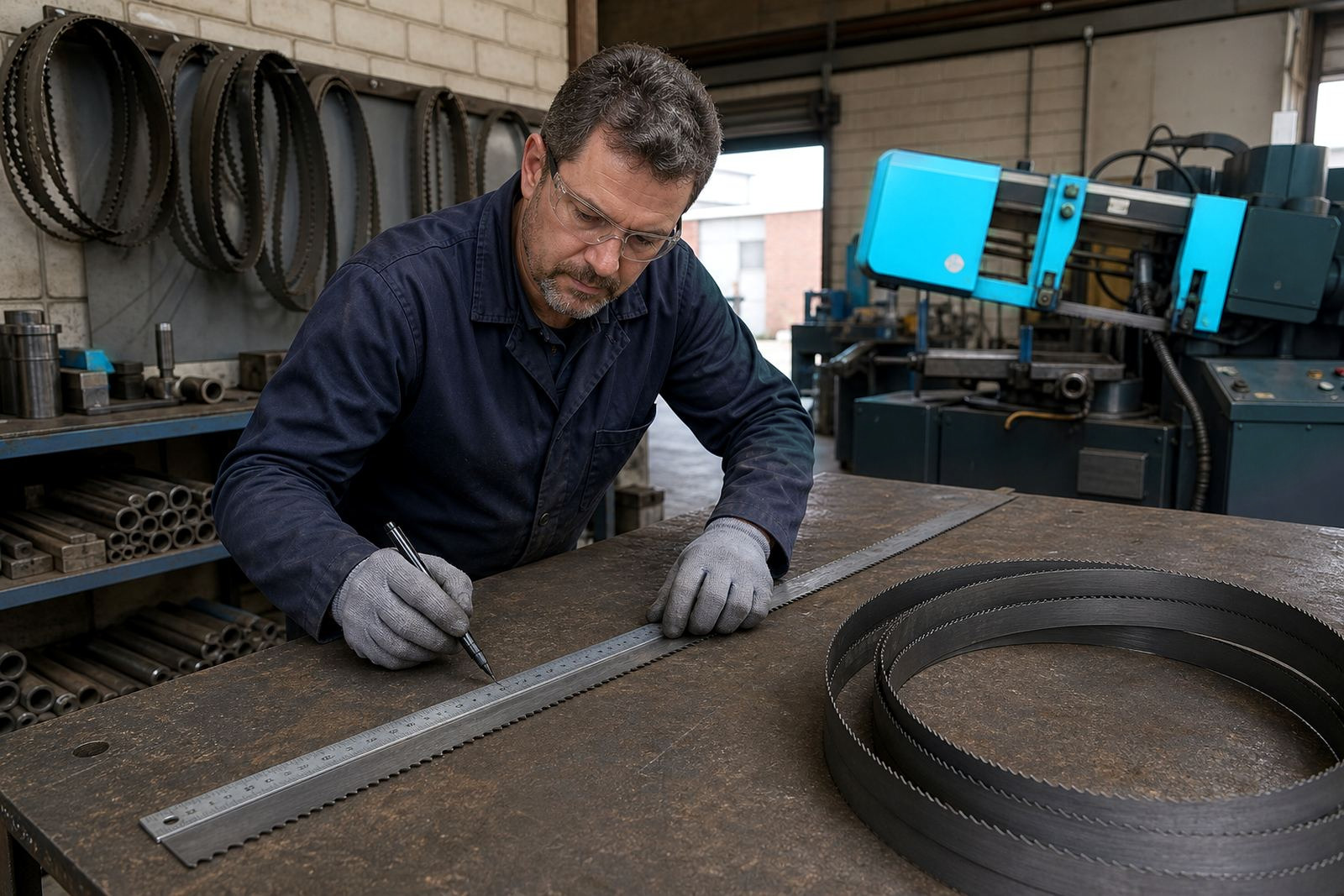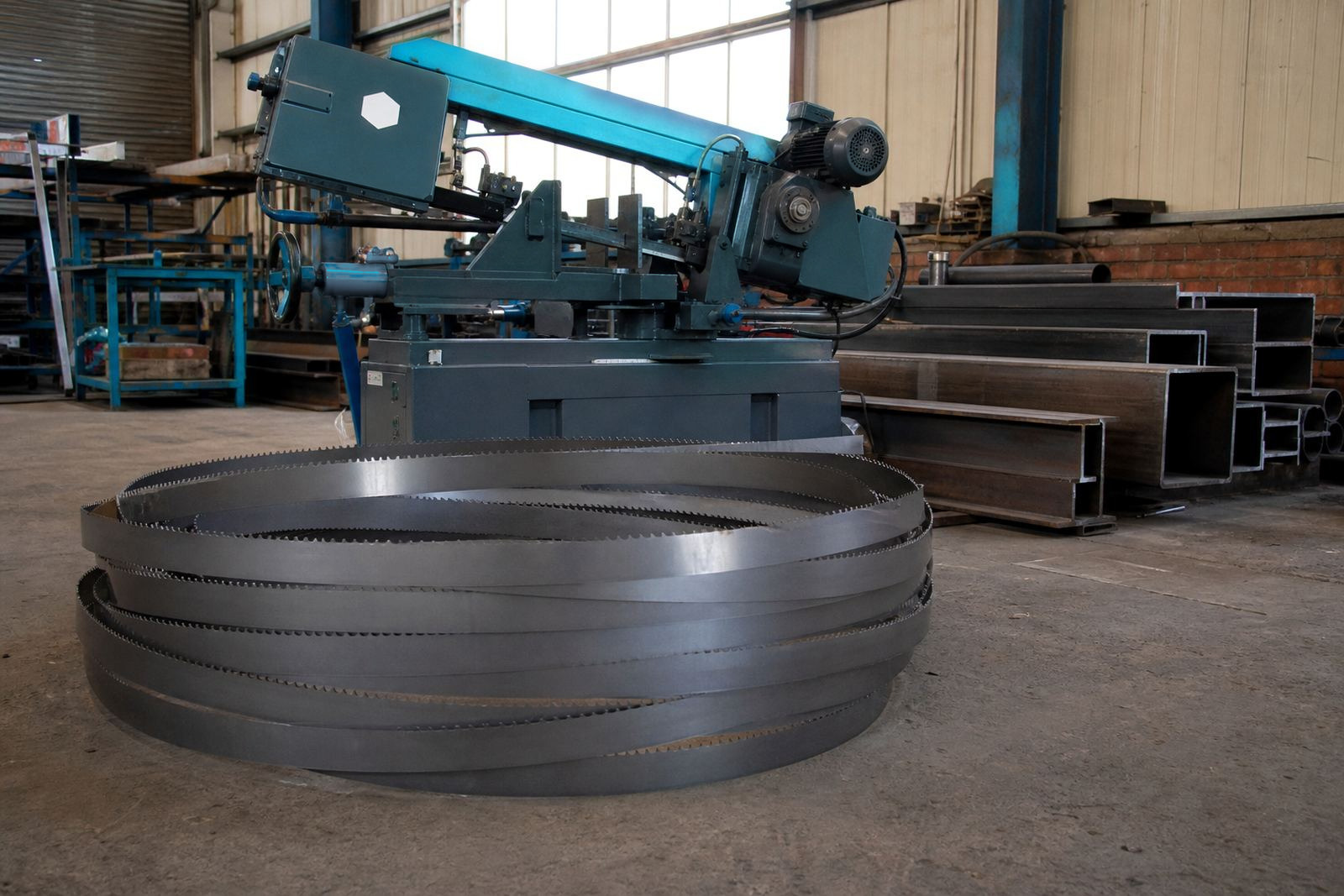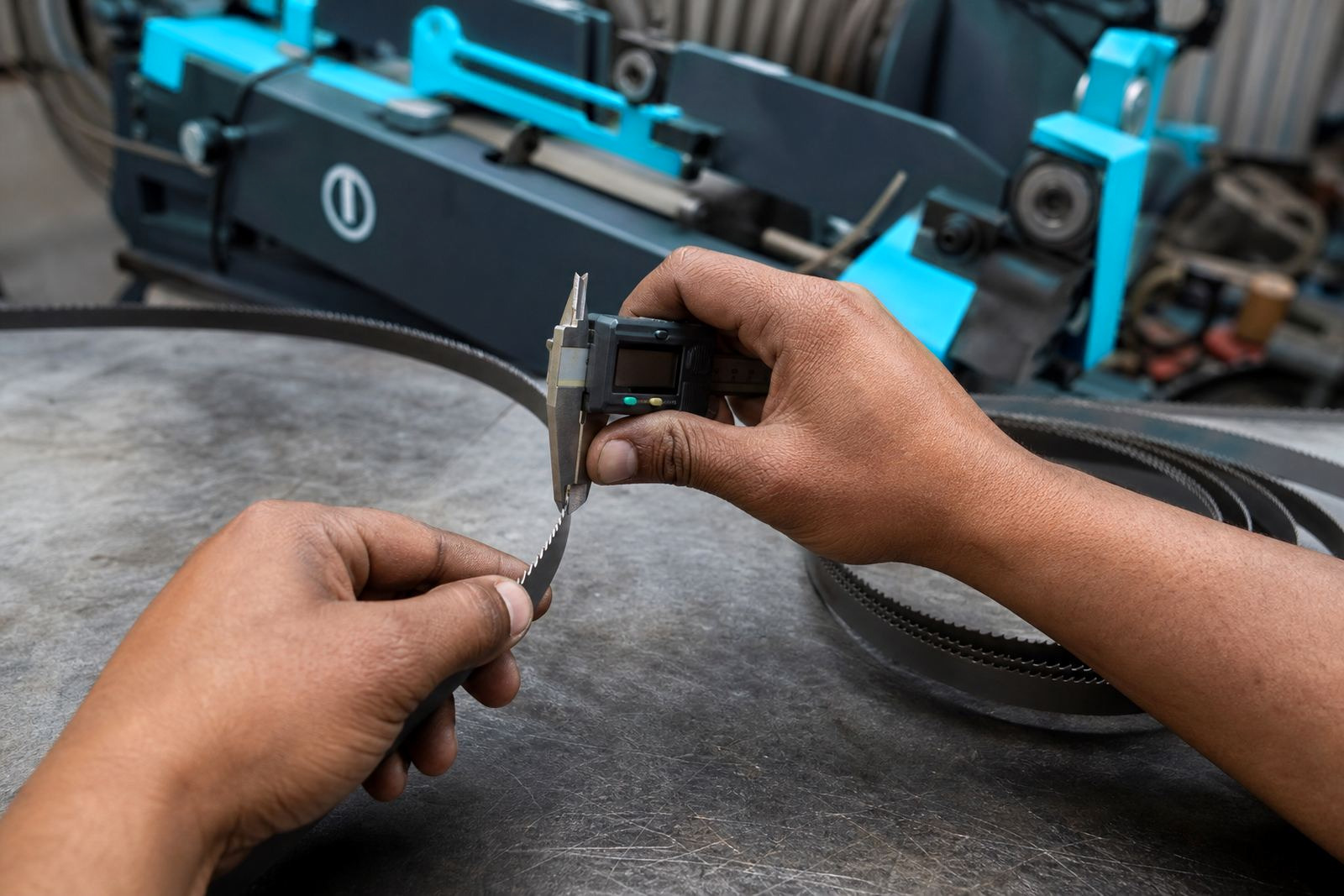
What thin gauge blades are used for in metalwork
Thin gauge bandsaw blades are made with a slimmer body thickness than general purpose blades. In practice that gives the blade less mass in the cut, which can help on lighter saws, manual machines and smaller frames where the blade needs to track cleanly without forcing the drive system. They are commonly used on lighter sections, tube, conduit, angle, thin wall material and mixed workshop jobs where the cut is more about control than heavy stock removal.
For thin gauge work, choose the tooth form along with the body thickness. A finer tooth pitch can give better tooth engagement on small sections, while a variable pitch can reduce chatter on shapes that do not present a full, even face. Blade set, tooth spacing and overall stiffness must work together so the blade cuts straight and clean, or it can wander, burnish and leave a ragged finish.
- Lower cutting load on suitable machines
- Useful for lighter sections and thinner wall material
- Can improve tracking on manual or compact saws
- Often paired with finer tooth pitches
Sizes, gauges and tooth patterns worth matching
Thin gauge blades are selected by length, width, thickness and tooth pitch. The right combination depends on the saw frame, the vise, the material thickness and how the operator feeds the work. A narrow blade can cope better with smaller radii and tighter guides, while a wider blade holds a straighter line on longer cuts. Blade thickness needs to suit the guides, or it may twist, and too much weight for the machine can make feeding awkward.
We supply blades for common workshop and production saws, including weld-to-length options where the blade needs to be joined to the exact loop length. Carbon steel blades suit simpler, lighter duty jobs and short runs. Bi-metal blades, including M42 tooth options, are preferred where the blade has to deal with more abrasive work, better wear life and mixed materials. The choice is about hardness and how the blade behaves in the cut.
- Blade lengths matched to the machine frame
- Widths chosen for straight cutting or tighter guidance
- Thickness selected for the saw guides and feed pressure
- Tooth pitch measured in TPI for the section size
Where thin gauge blades suit the cut
These blades are a practical fit for workshops handling small to medium jobs where the machine is not built for heavy stock. That includes light fabrication, maintenance bays, metal stock rooms, farm repair work, and production lines cutting smaller bar, tube or profile. If the material is thin wall, the blade pitch and feed need to be conservative, because an aggressive set can snag and shake the cut. A softer run-in and sensible speed help here.
On lighter manual saws, thin gauge blades can also help reduce operator fatigue. The cut feels less aggressive, and the blade is often easier to keep on line when the material is clamped properly. In humid coastal conditions, store and handle blades with care, since surface rust on the blade back or teeth can shorten useful life. Dry storage and clean guides make a real difference, even if the blade itself is correctly chosen.
- Light fabrication and maintenance work
- Smaller sections, tube and profile
- Manual and semi-automatic saws
- Sites that need careful feed control
Fitting, run-in and machine set-up points
Thin gauge blades need accurate fitting and guide setup. The weld must be true, ground smooth and checked for straightness before the blade goes into service. A proud weld or wrong blade length makes the loop pulse through the guides and marks the cut. We handle weld-to-length service, length verification and machine fit checks so the blade arrives ready for the saw frame and guide blocks.
Run-in is important. A new blade should not be forced through the first cuts, especially on thin gauge work where tooth tips can chip if the feed is too heavy. Keep the feed steady, match the speed to the material and use coolant where the machine is set up for it. Coolant helps with tooth life, chip flow and finish quality, particularly on tougher steels or longer jobs. If the cut starts to squeal or polish instead of bite, the set-up needs a look.
- Check weld quality and blade length before fitting
- Set guides close enough to support the blade body
- Use a light run-in on the first cuts
- Match feed speed to material and tooth pitch
Care between jobs and what shortens blade life
Blade care starts with storage and handling. Keep spare loops flat, dry and away from grit. On the saw, clear chips from the gullets, check the guide blocks and watch for build-up on the teeth. A blade that runs hot, with poor chip clearance or the wrong pitch for the section, will lose its edge long before it should. That is true for both carbon steel and bi-metal blades, though the failure pattern may look different.
Thin gauge blades are less forgiving of poor machine alignment. Vise movement, worn guides, bad tracking and inconsistent feed all show up quickly. If the blade fractures at the weld, the issue may be tension or the weld itself. If teeth strip early, the likely cause is a feed mismatch, a wrong TPI for the section or a speed that is too high. Small faults add up fast on thin blades, so a quick check before a long run is worth it.
- Store spare blades clean and dry
- Clear swarf and chip build-up often
- Inspect guides, tension and tracking
- Review fractures, stripped teeth and heat marks
What to confirm before ordering a thin gauge blade
When you place an order, the useful details are the machine make and model, blade length, blade width, thickness, tooth pitch and the material you are cutting. Manual, semi-automatic or production duty saws each need a different feed and run-in approach, so note the saw type first. Unsure?
For mixed workshop stock, starter kit planning and stock standardisation can save confusion on the floor. A smaller set of thin gauge blades with the right pitch range is often better than holding random loops that do not suit the saws. From Alrode, Alberton, MoreCut Saws supports workshops in Johannesburg, Vereeniging, Pretoria, Durban and Cape Town with blade selection help, weld-to-length service and manual saw support where needed.
- Machine type and blade length
- Blade width, thickness and tooth pitch
- Material type, wall thickness and section size
- Need for coolant, run-in guidance or fit checks
Key facts
| Product | Thin Gauge Blades |
|---|---|
| Blade types | Carbon steel and bi-metal options, including M42 tooth choices |
| Thickness range | Thin gauge body selections for lighter saws |
| Width range | Narrow to medium widths for light and general section cutting |
| Tooth pitch | Fine and variable pitch options, measured in TPI |
| Services | Weld-to-length, length verification, machine fit check, run-in guidance, coolant checks |