

Reading the blade before it touches the job
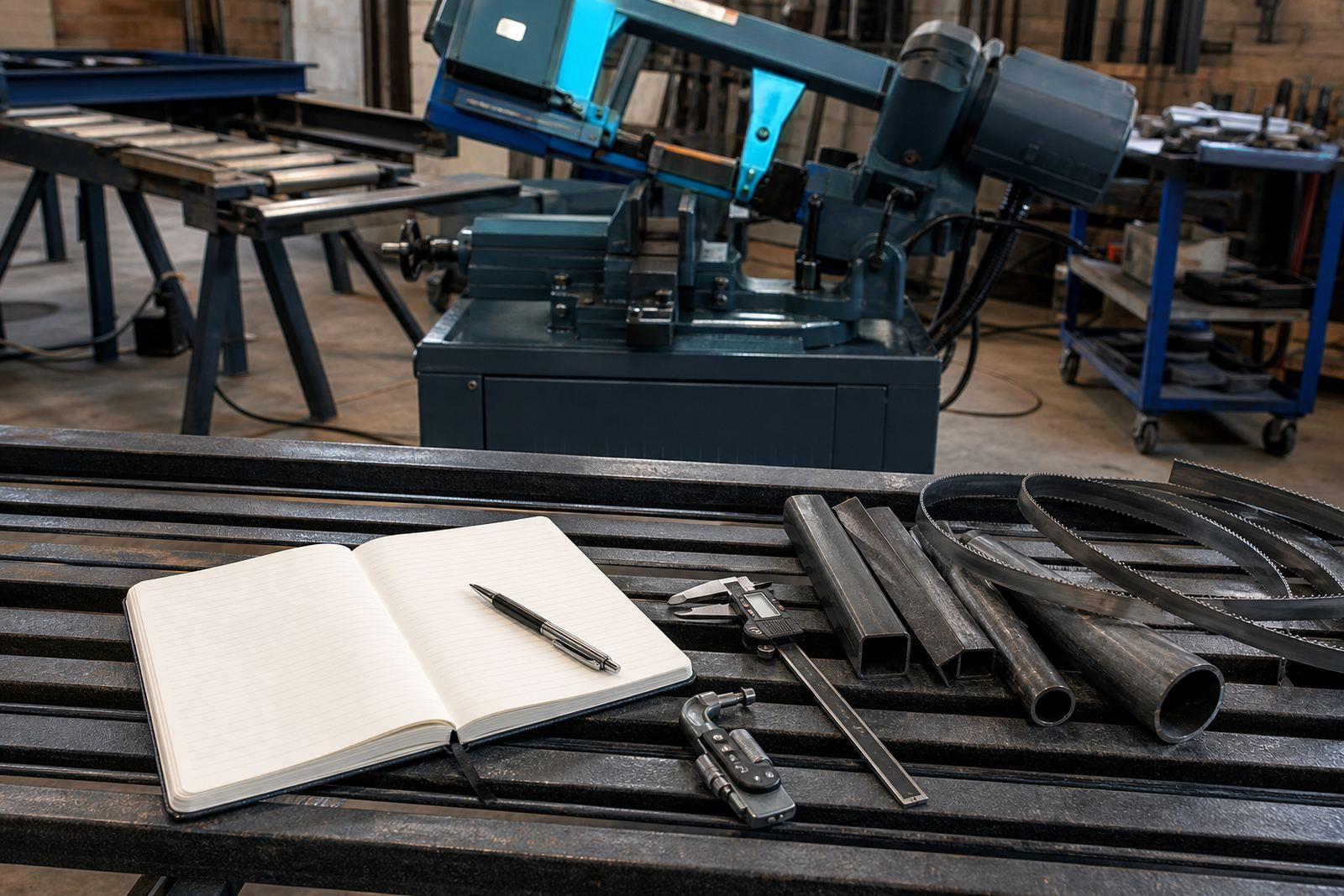
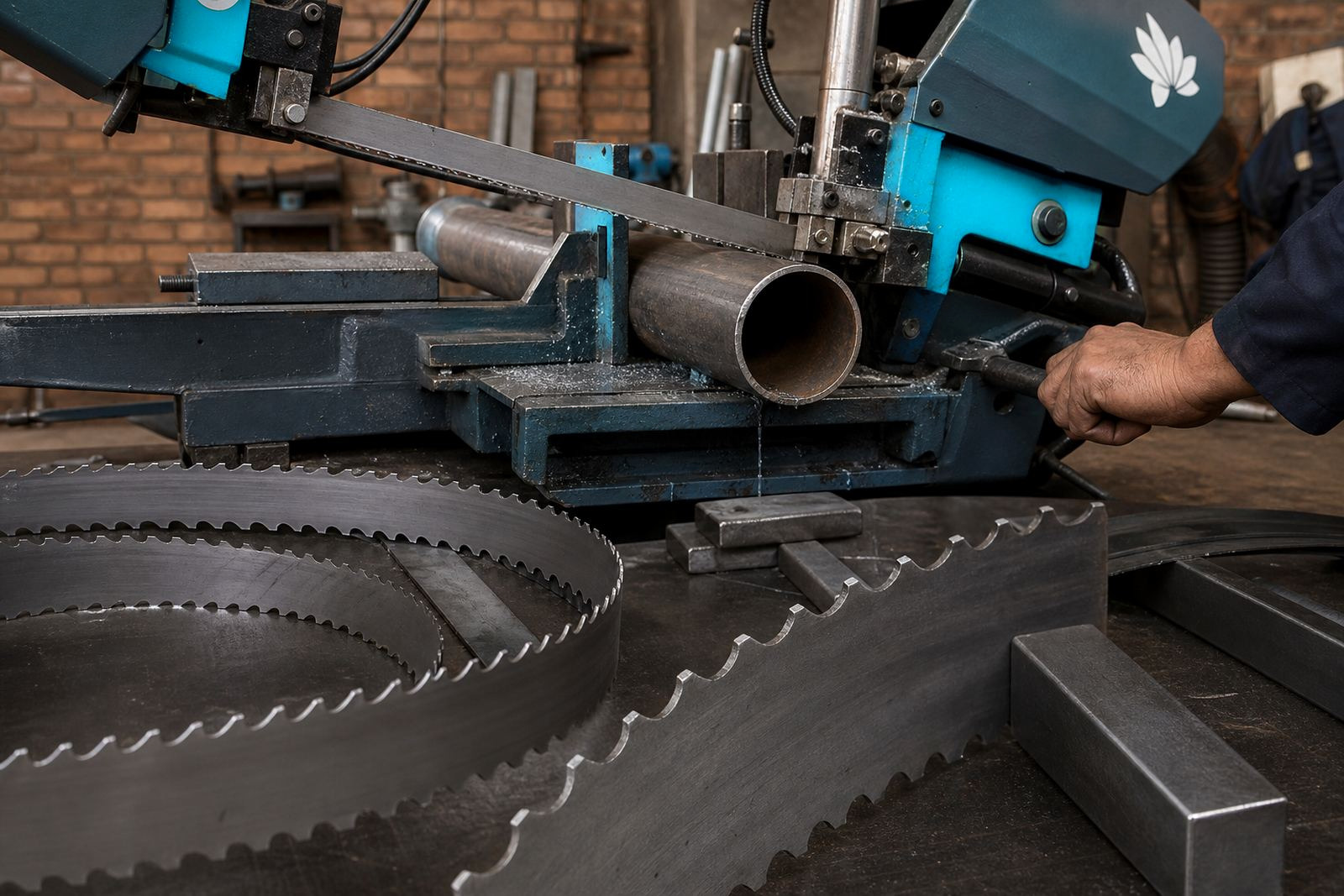
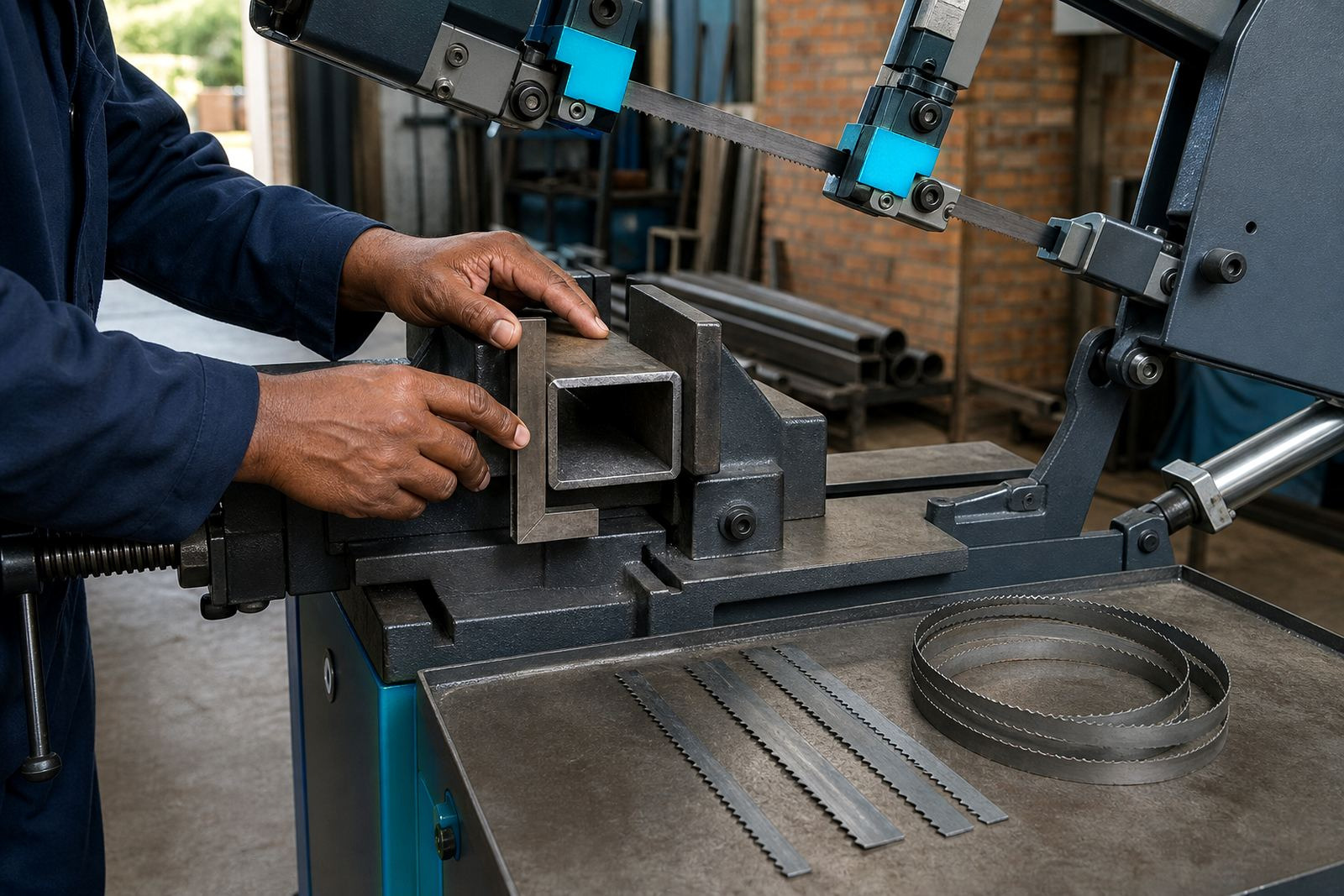
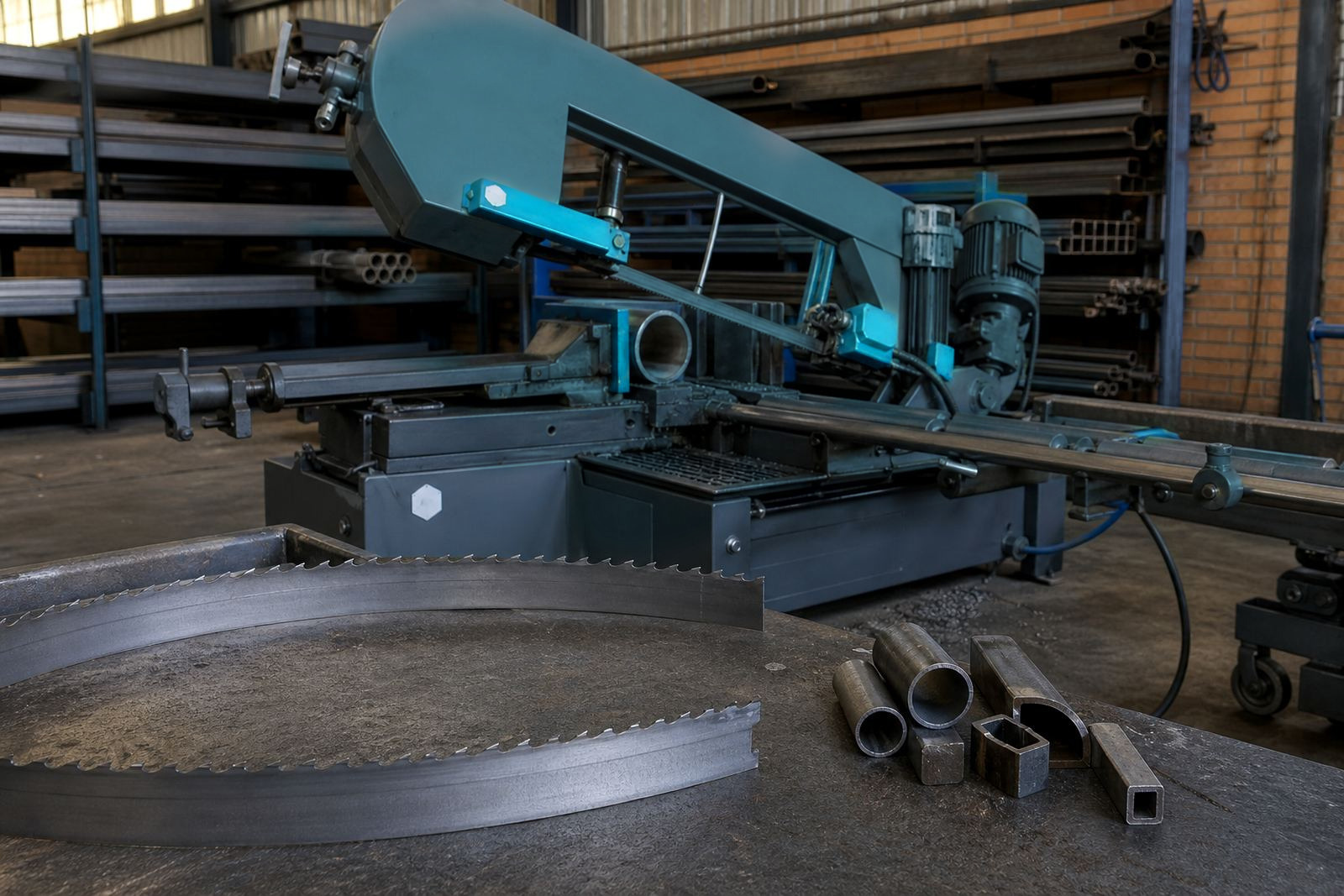
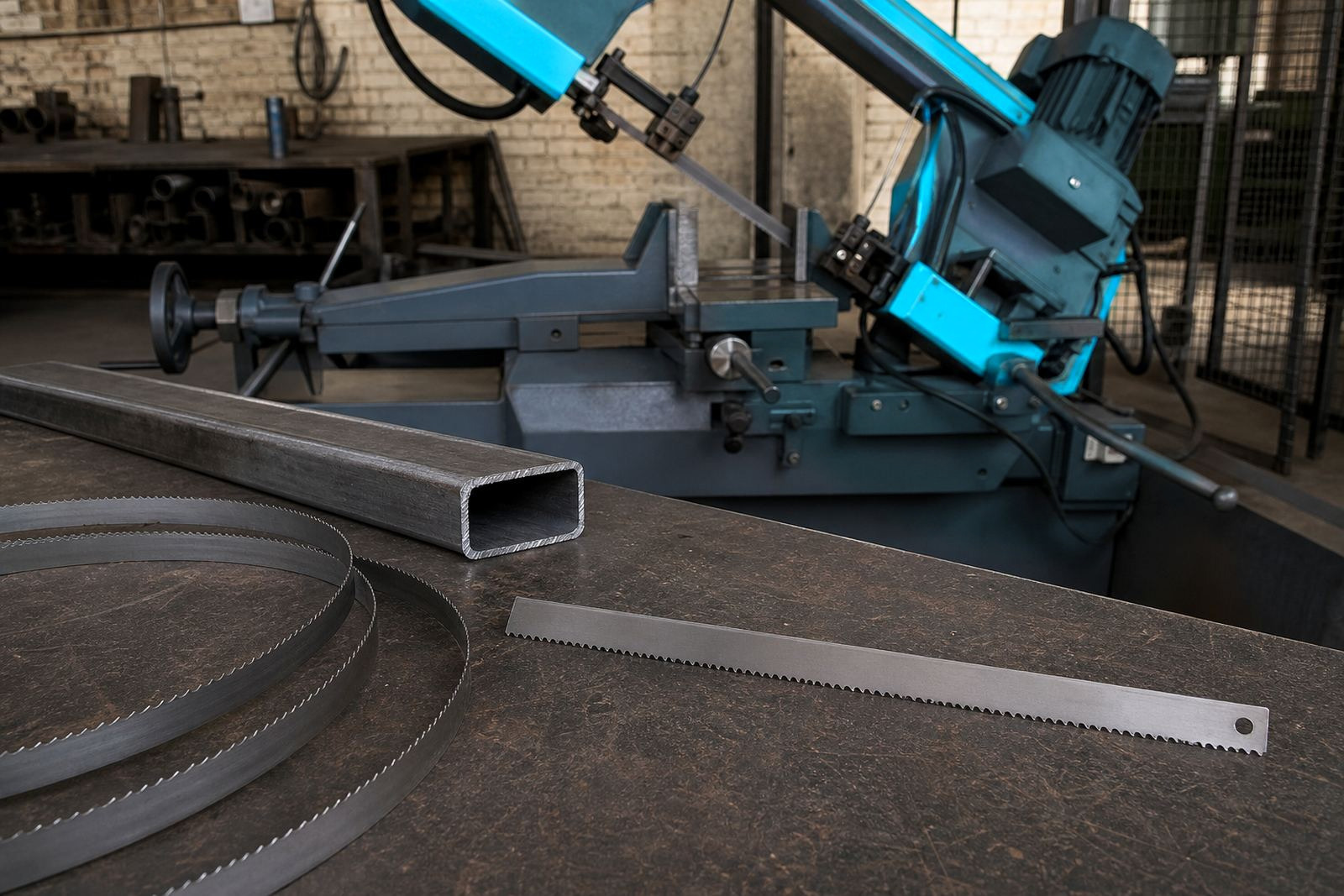
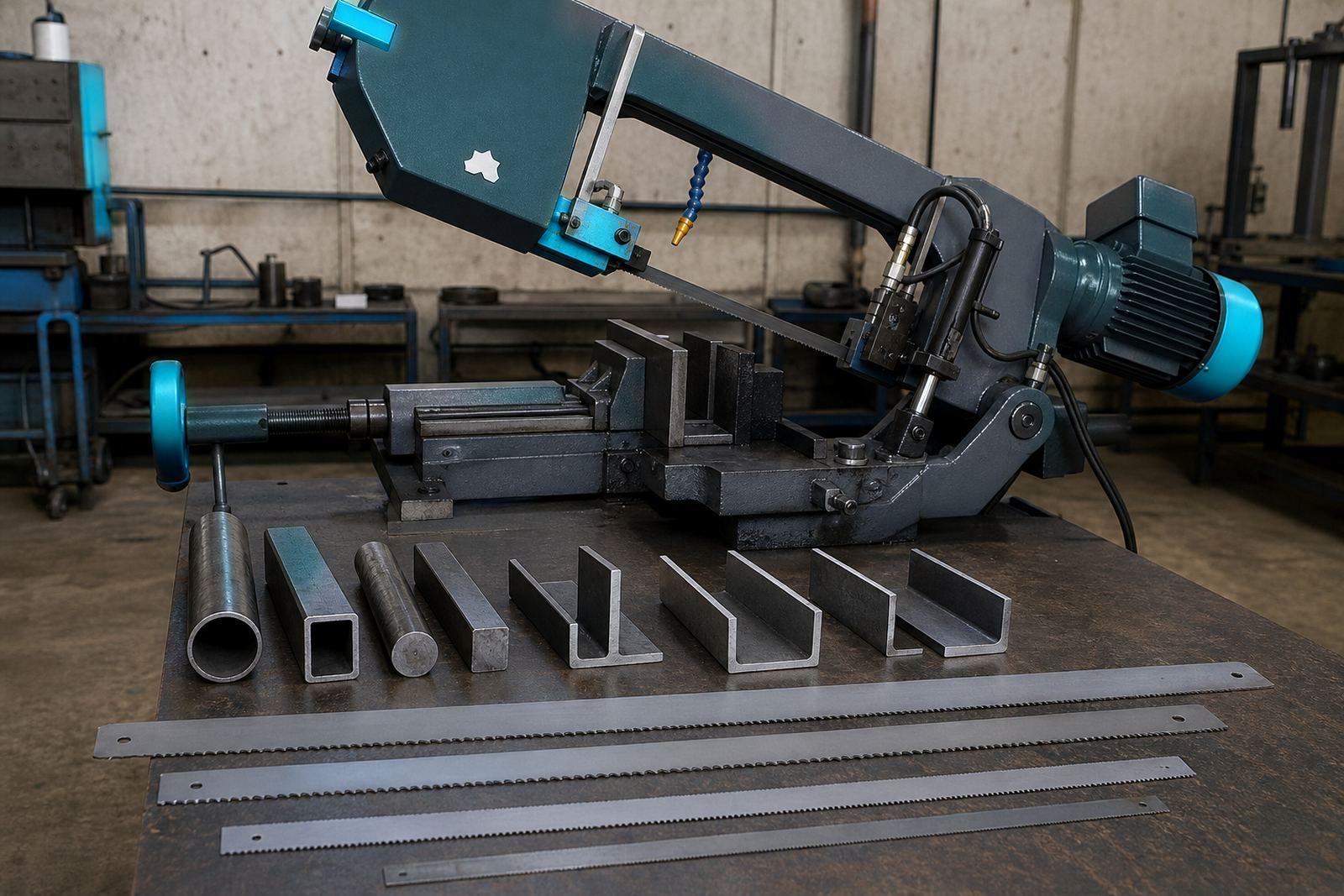
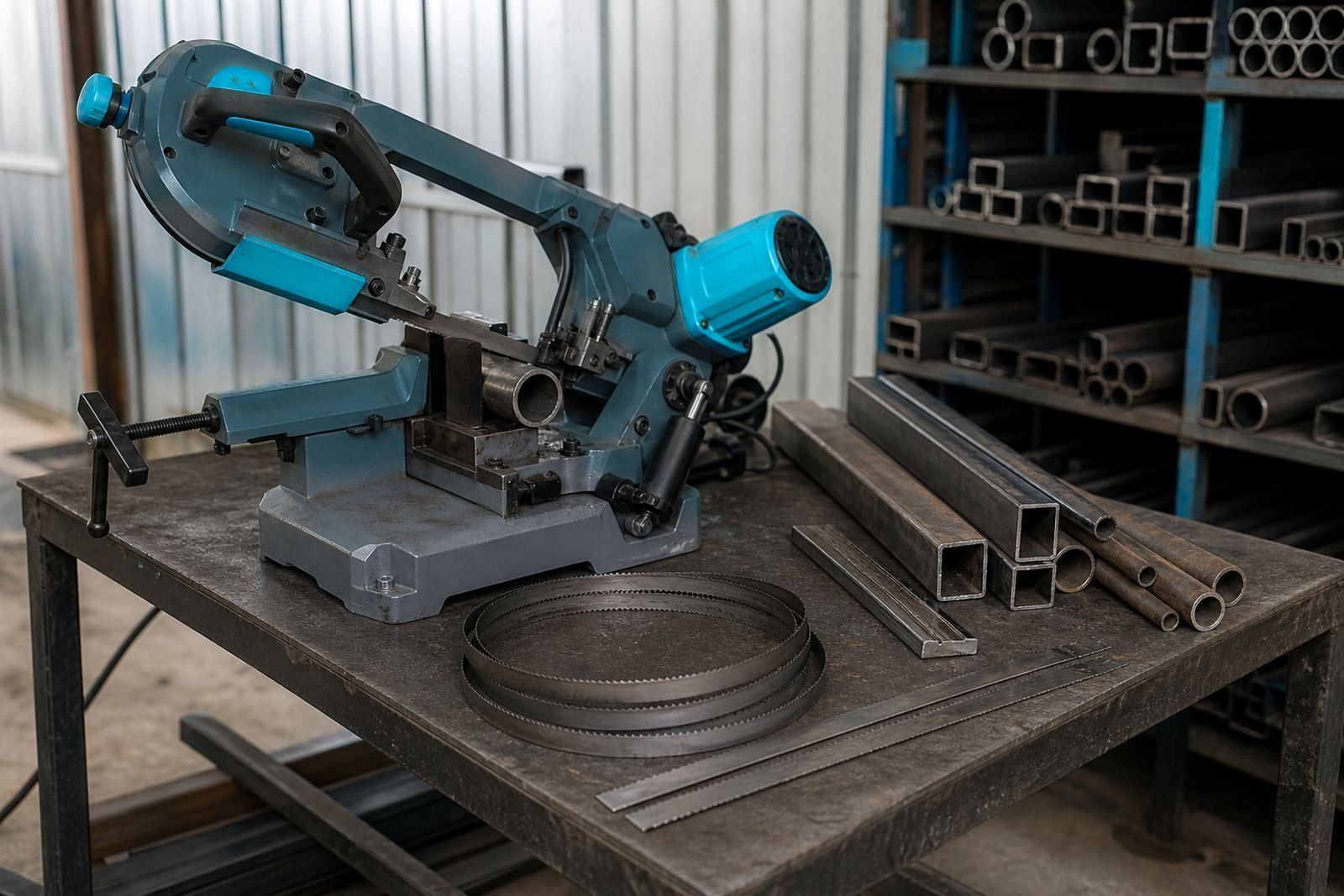
Blade choice starts with the stock on the saw table. Mild steel, solid bar, structural section and thin-wall tube all ask for different tooth spacing, blade width and feed.
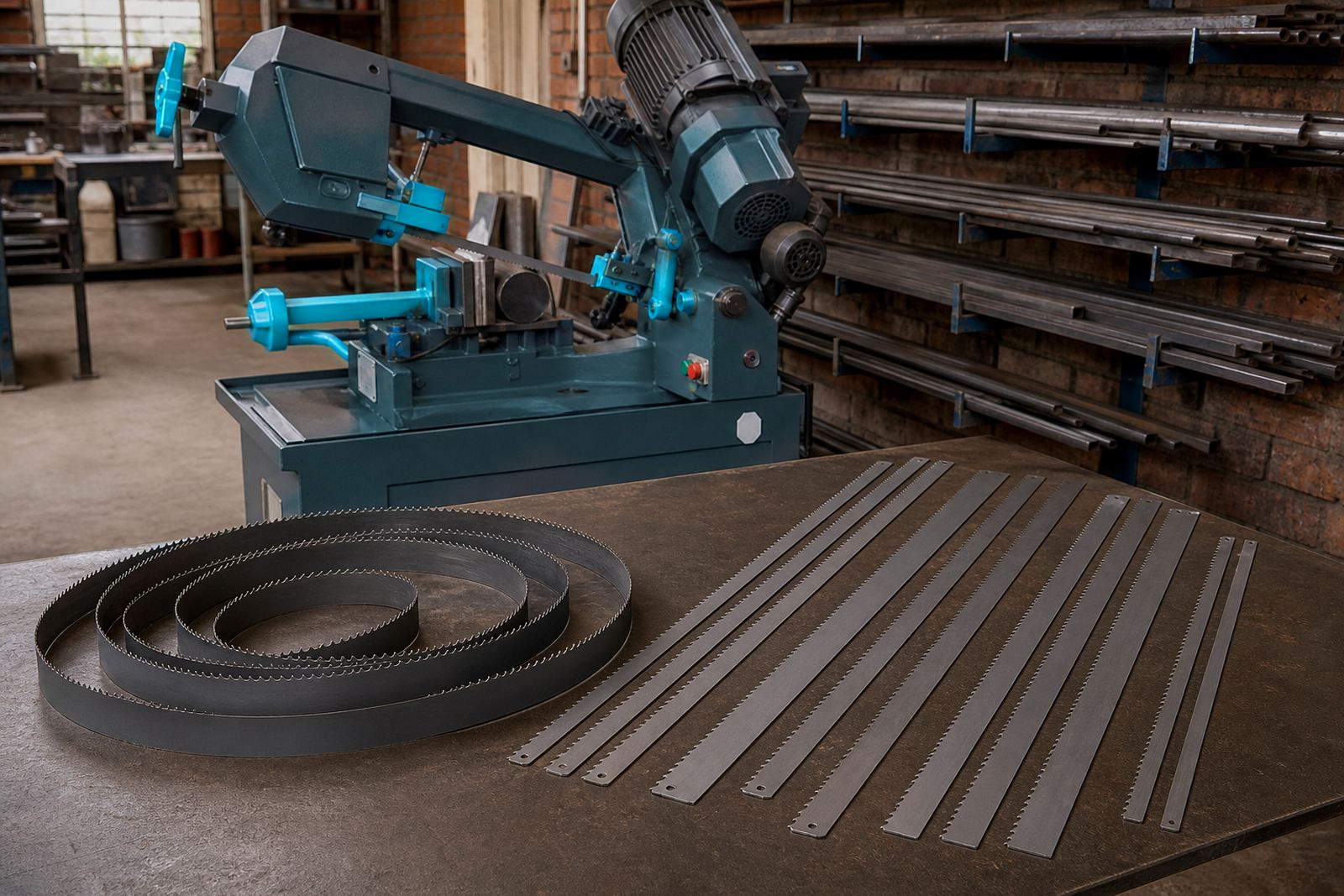
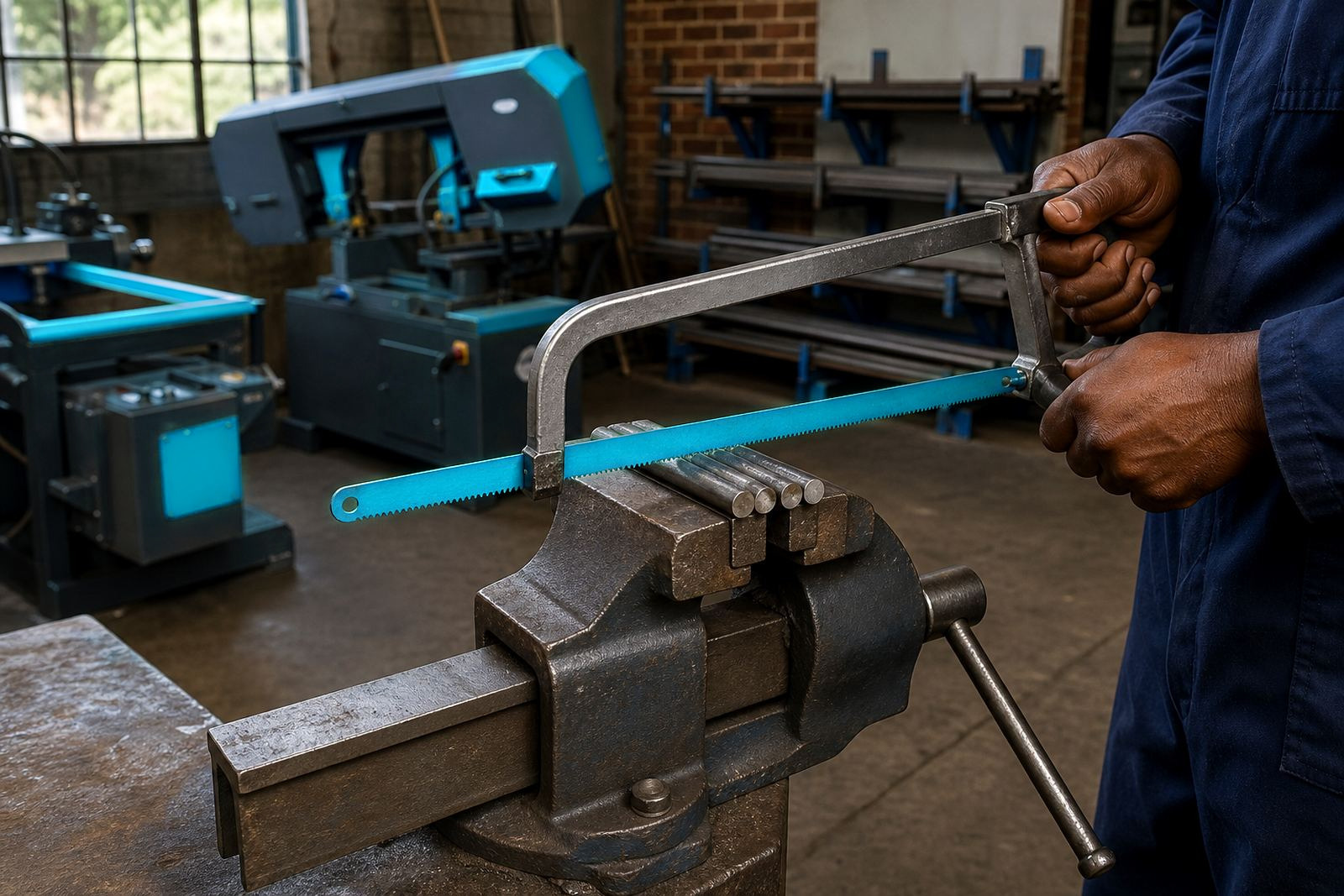
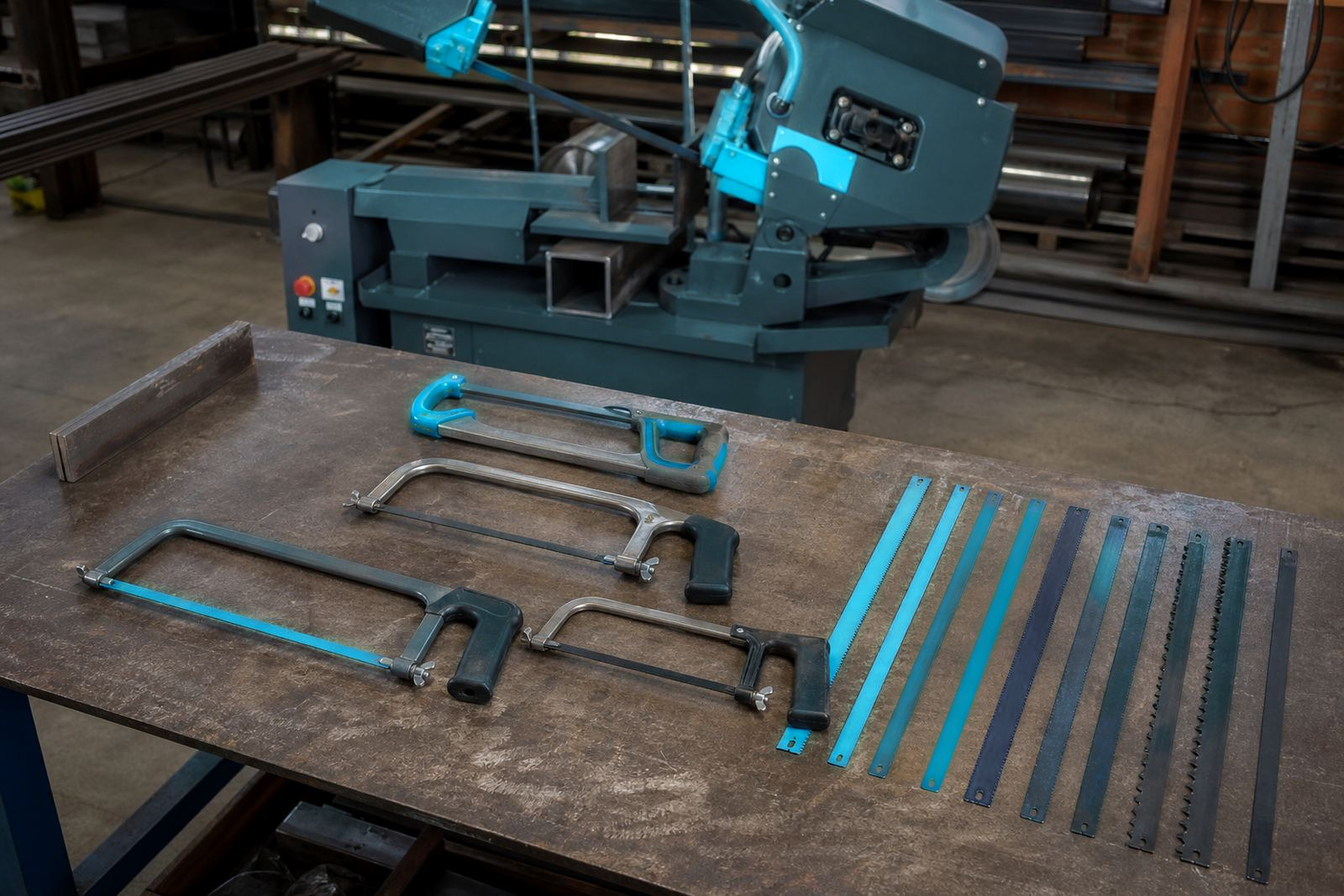
Bi-metal blades with an M42 edge suit mixed workshop use where one blade has to cope with a range of steels. Carbon steel blades still make sense on lighter machines and manual saws, especially where cutting speed is modest and the job list is steady.
- Fine pitch for small solid sections and thin wall material
- Coarser pitch for larger solids and heavier wall thickness
- Variable pitch for jobs that alternate between section sizes
Tooth pitch and TPI
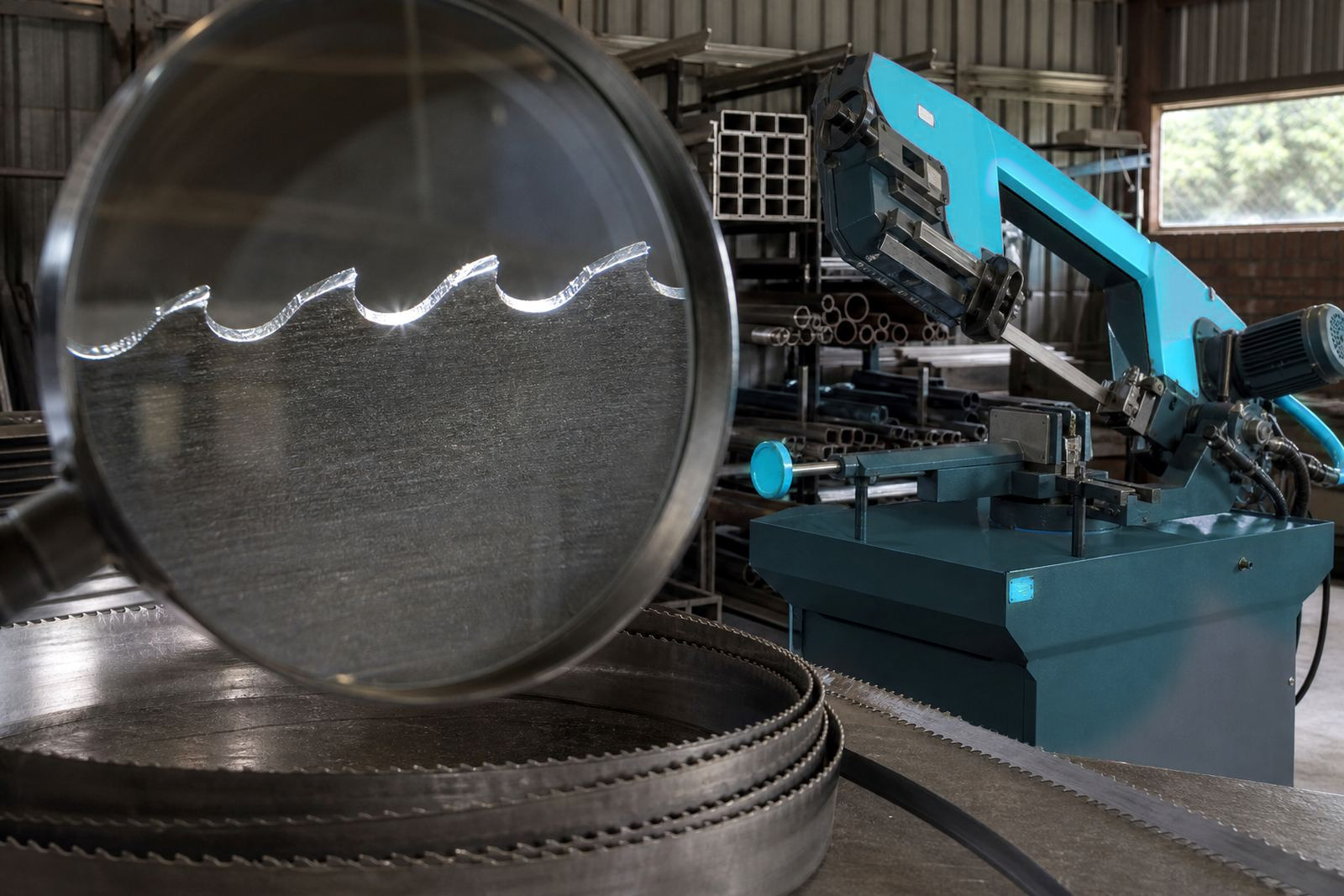
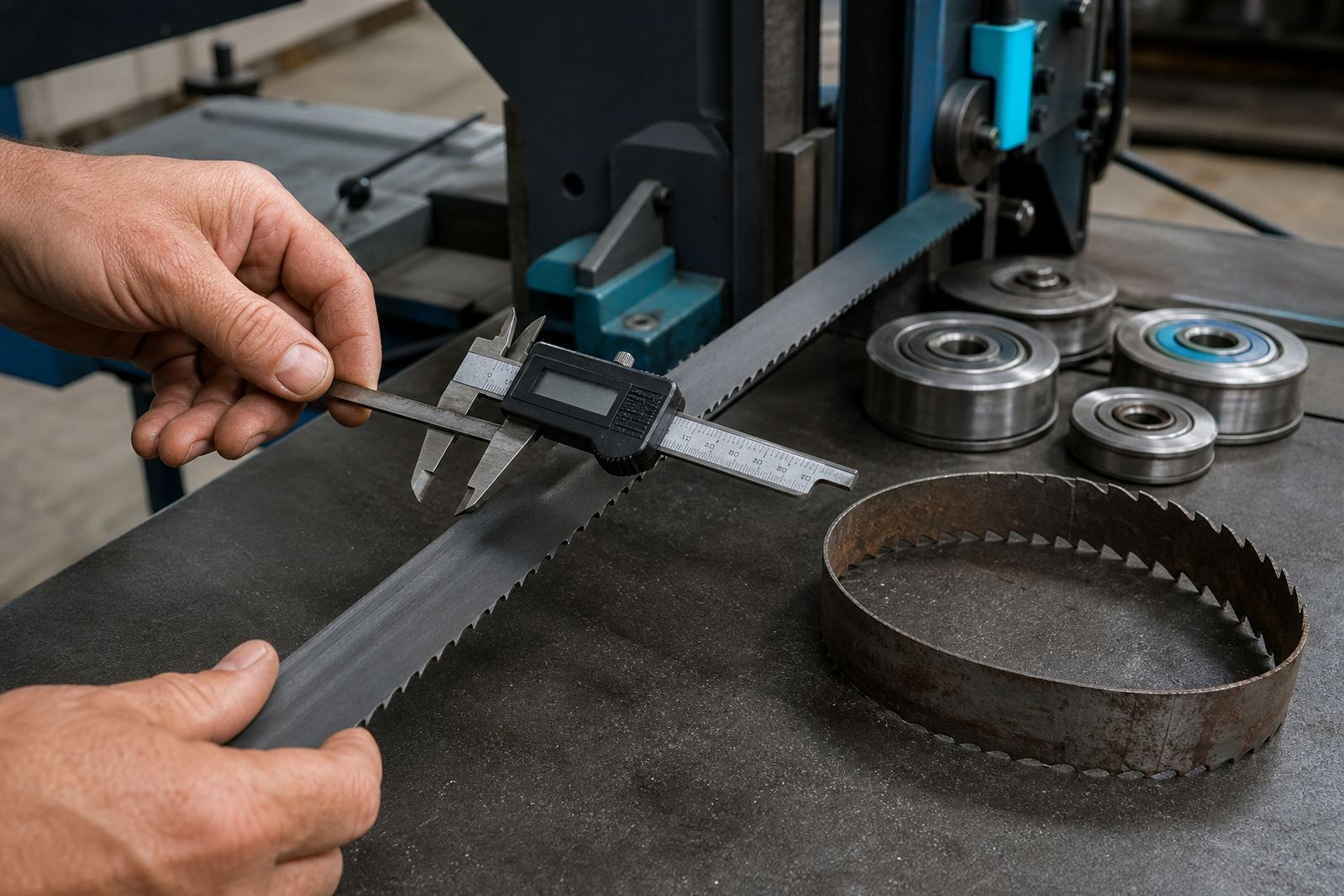
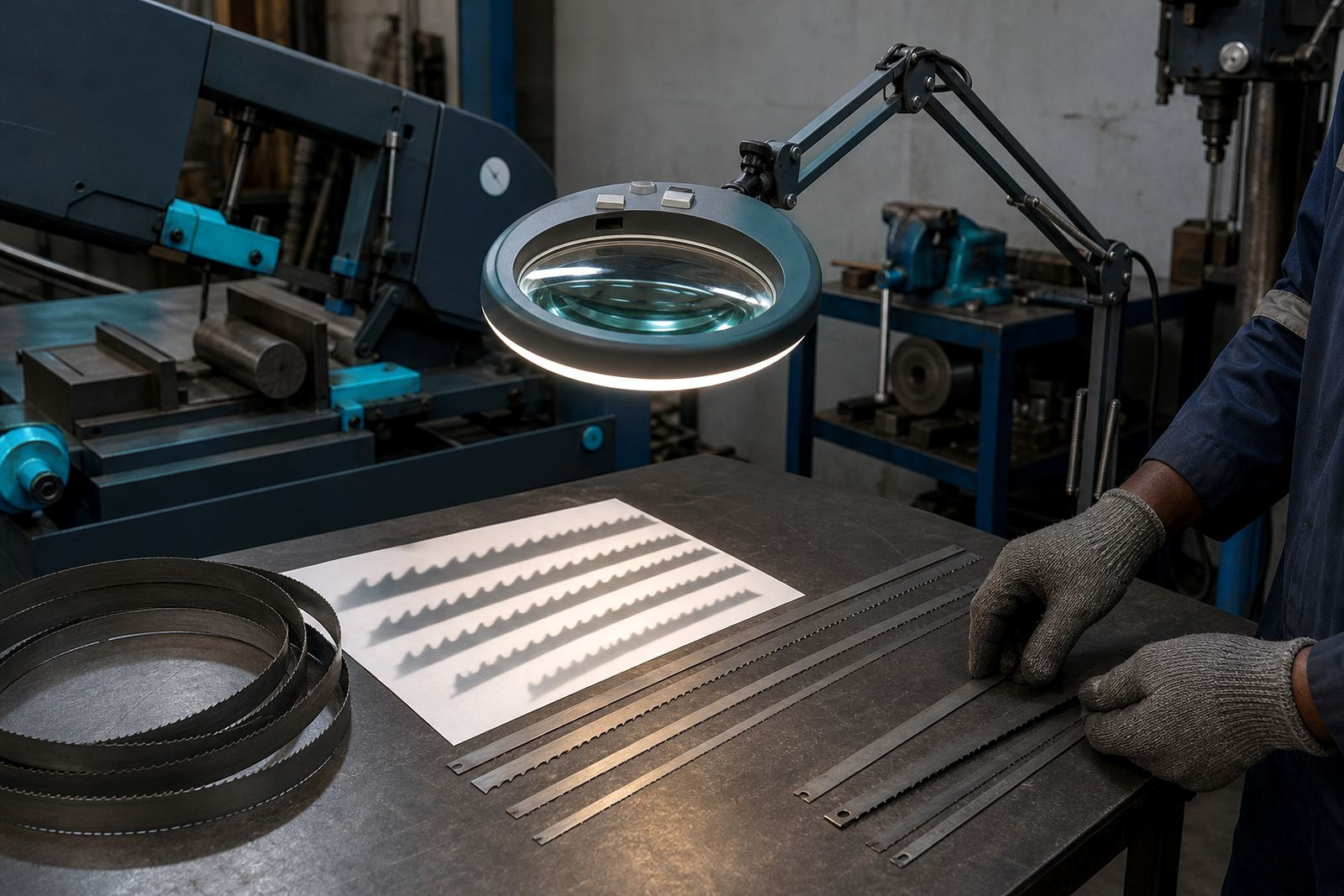
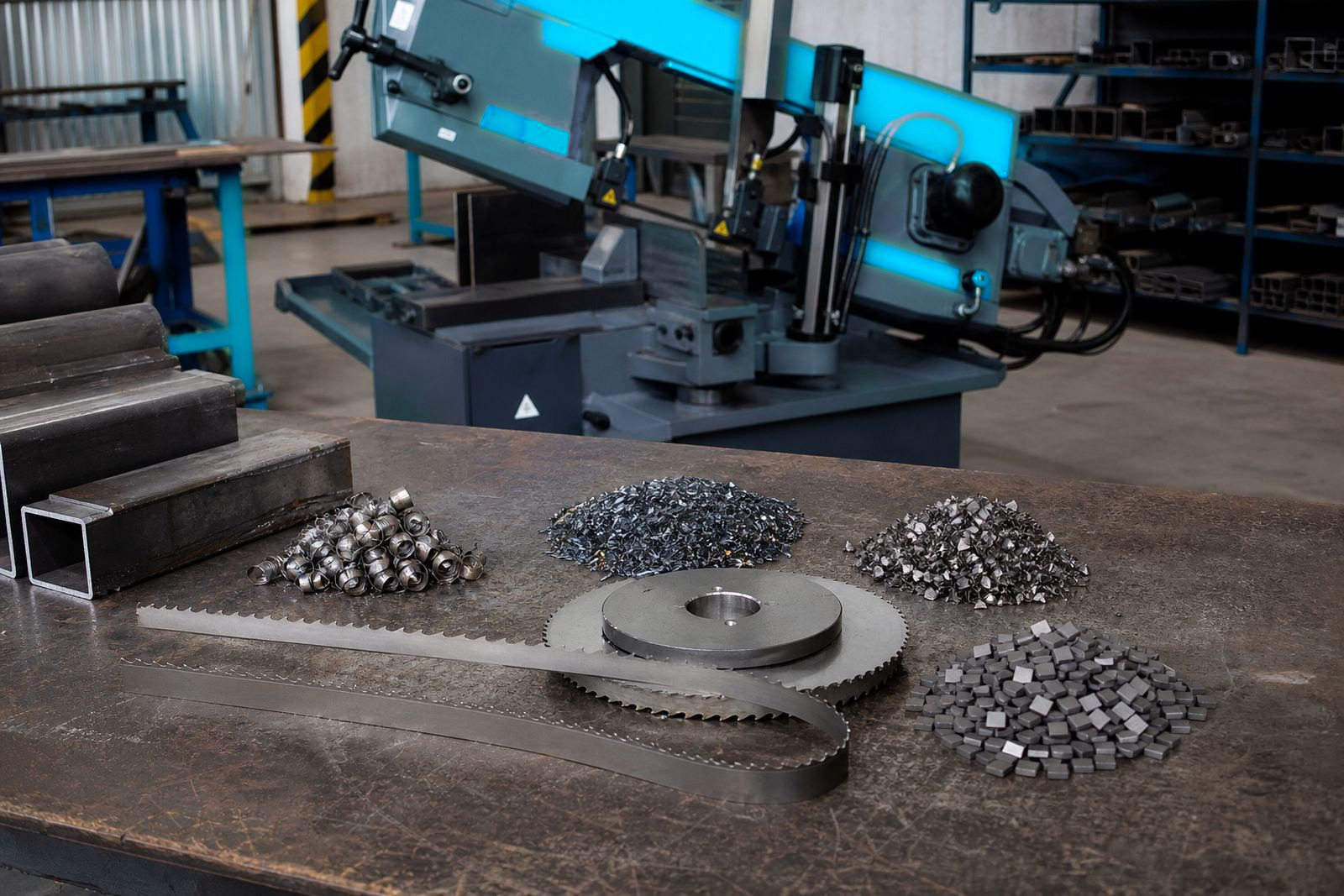
Tooth pitch is counted in teeth per inch, or TPI. A high TPI blade gives more teeth in contact with the work and suits small cross-sections, while a lower TPI blade clears swarf better on thicker material.
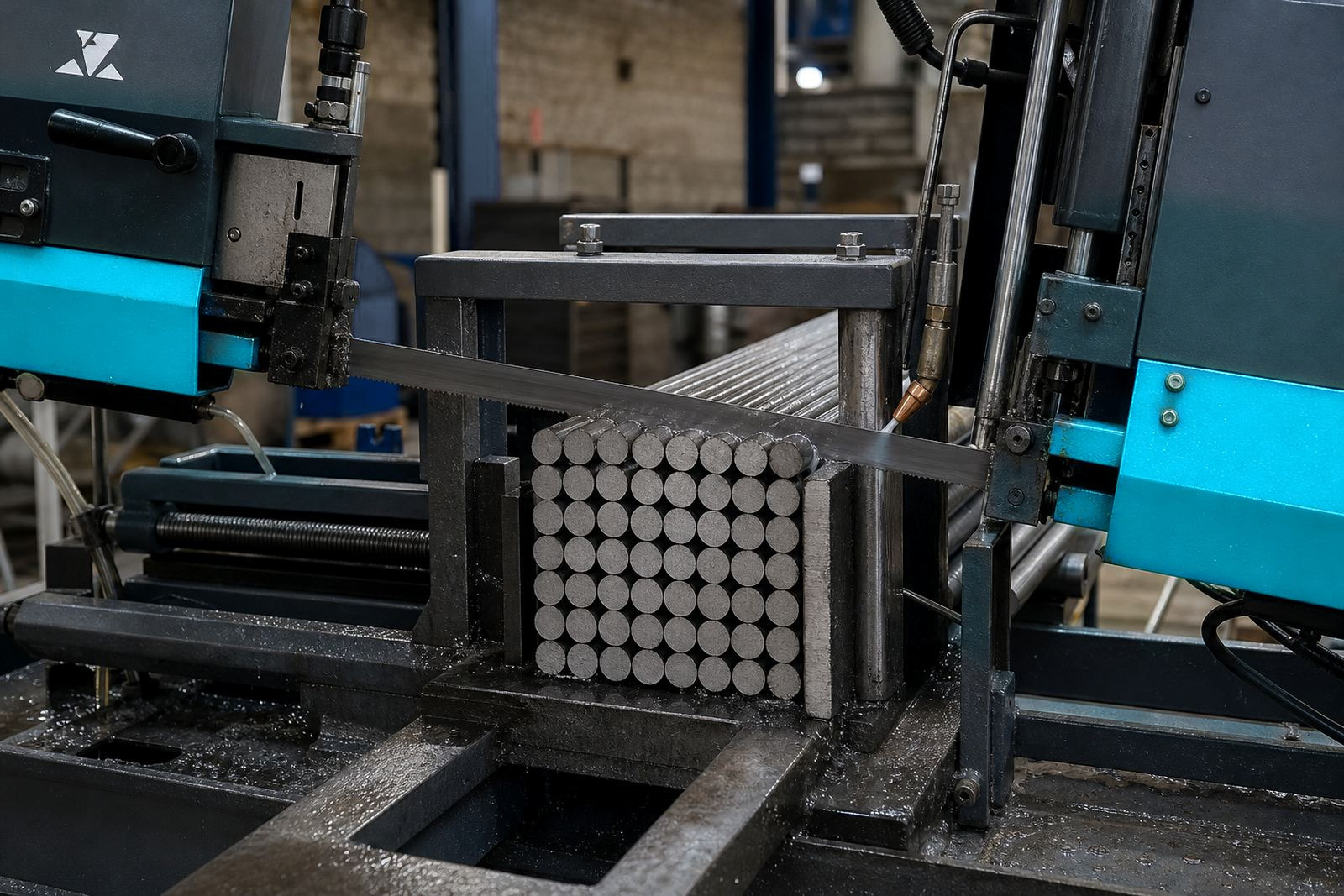
When the pitch is wrong the cut starts to chatter, teeth strip or the blade wanders. A variable pitch blade can calm the cut on mixed bundles and reduce harmonic vibration on some machines.
- Small solids usually need tighter pitch
- Bundle cutting often benefits from variable pitch
- Tube work needs enough gullets to clear chips cleanly
Cut width, thickness and cut shape
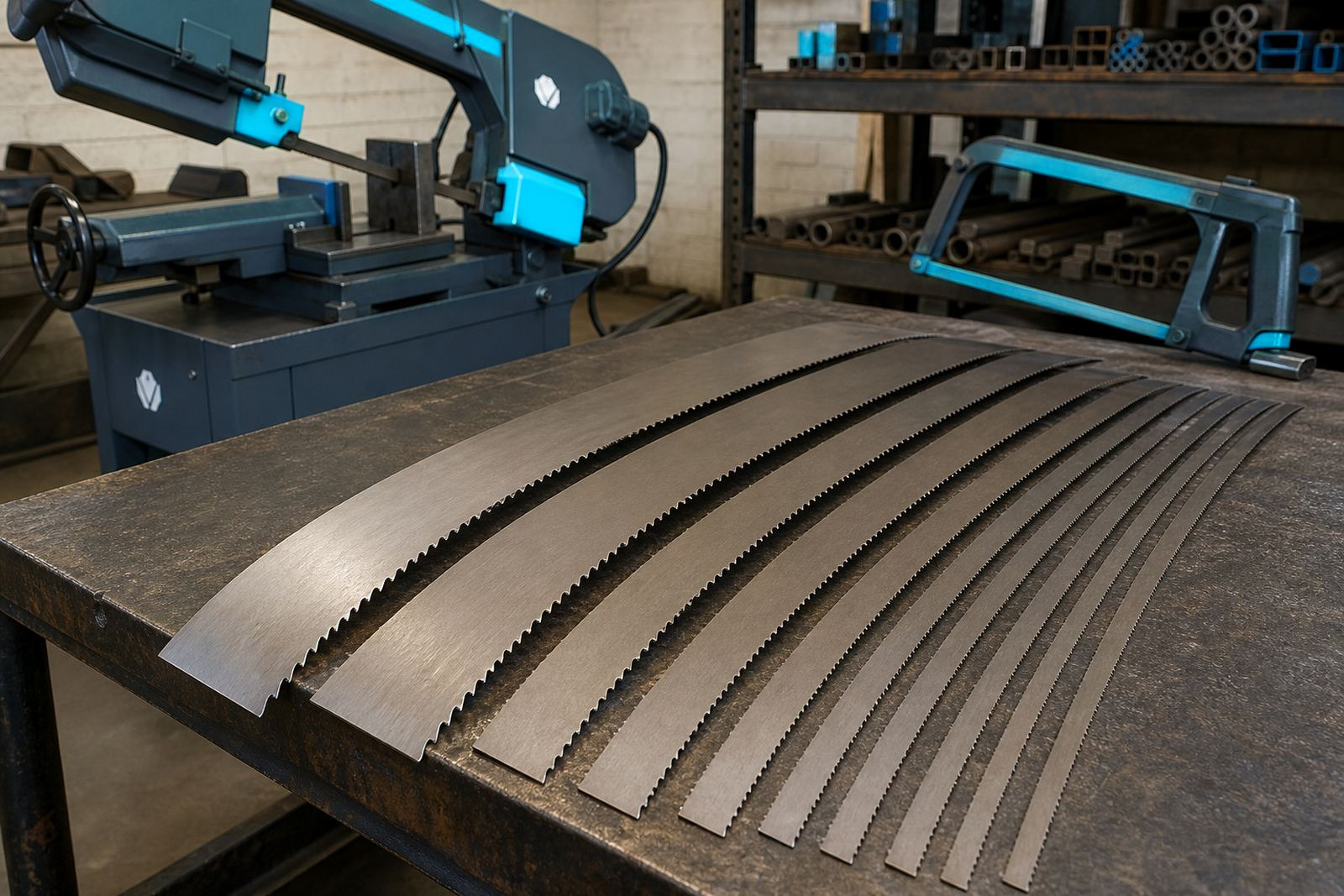
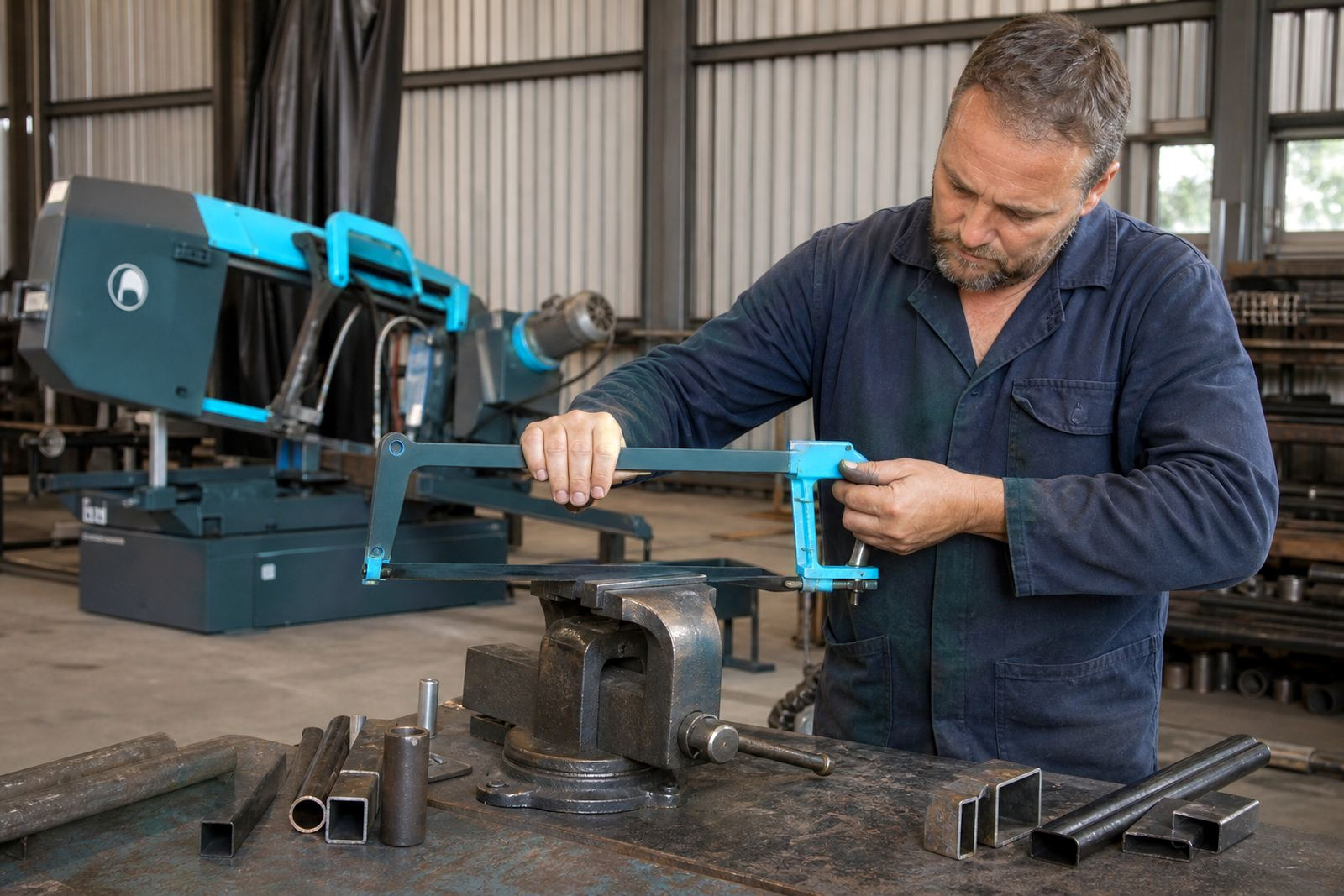
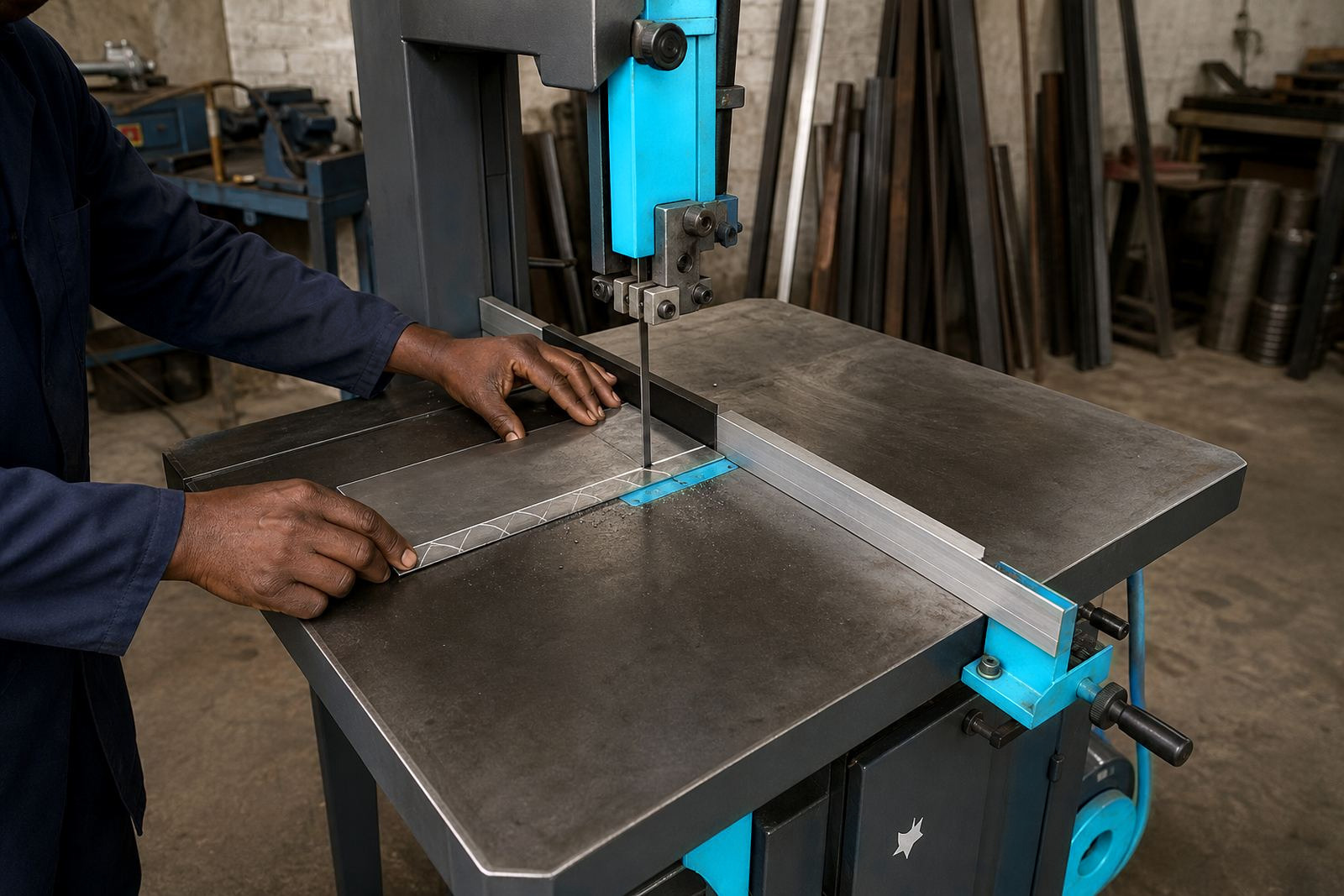
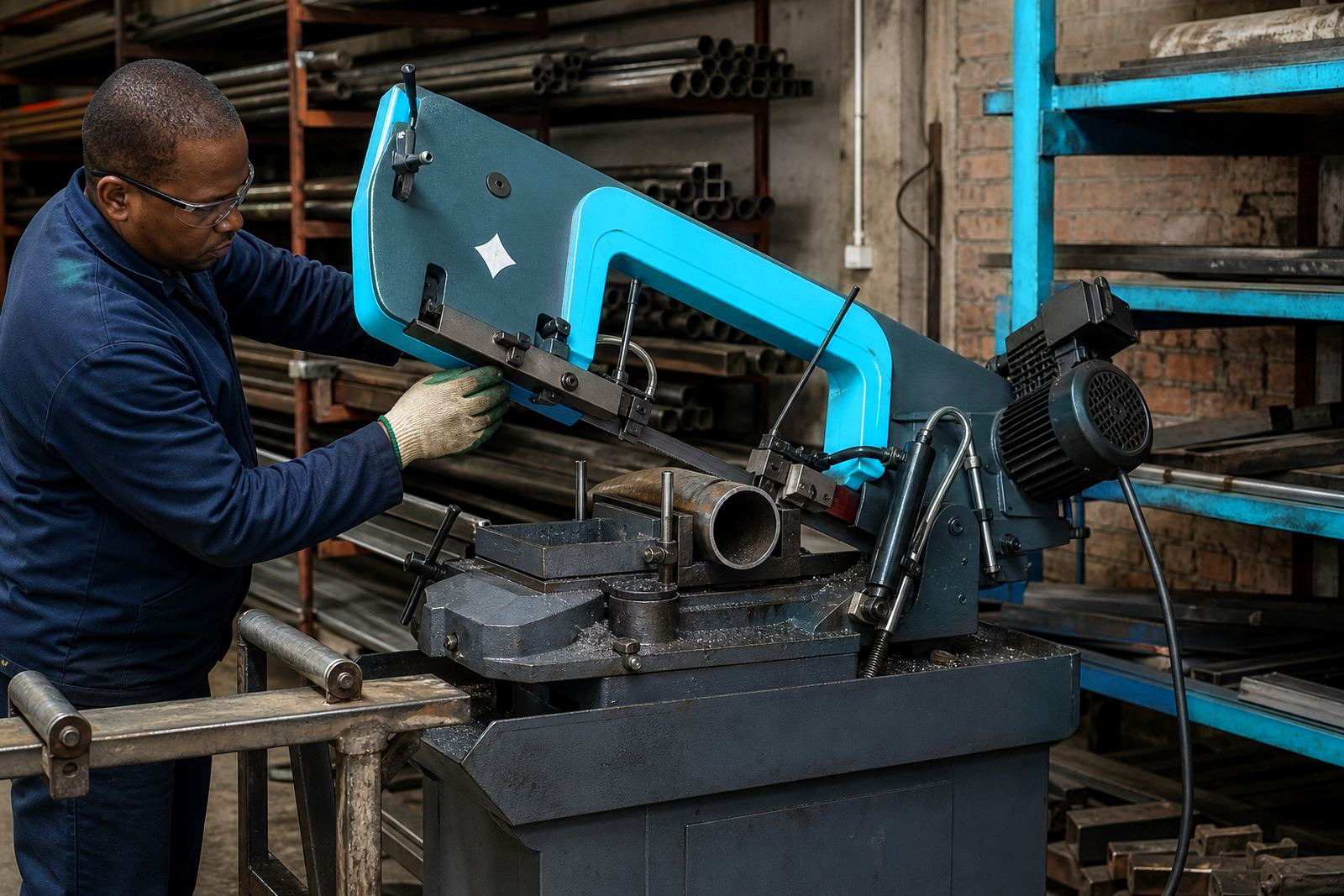
Blade width controls how well the blade tracks through a straight cut and how easily it turns on a manual machine. Wider blades stay truer on big sections, while narrower blades handle tighter radii and lighter saws with less strain.
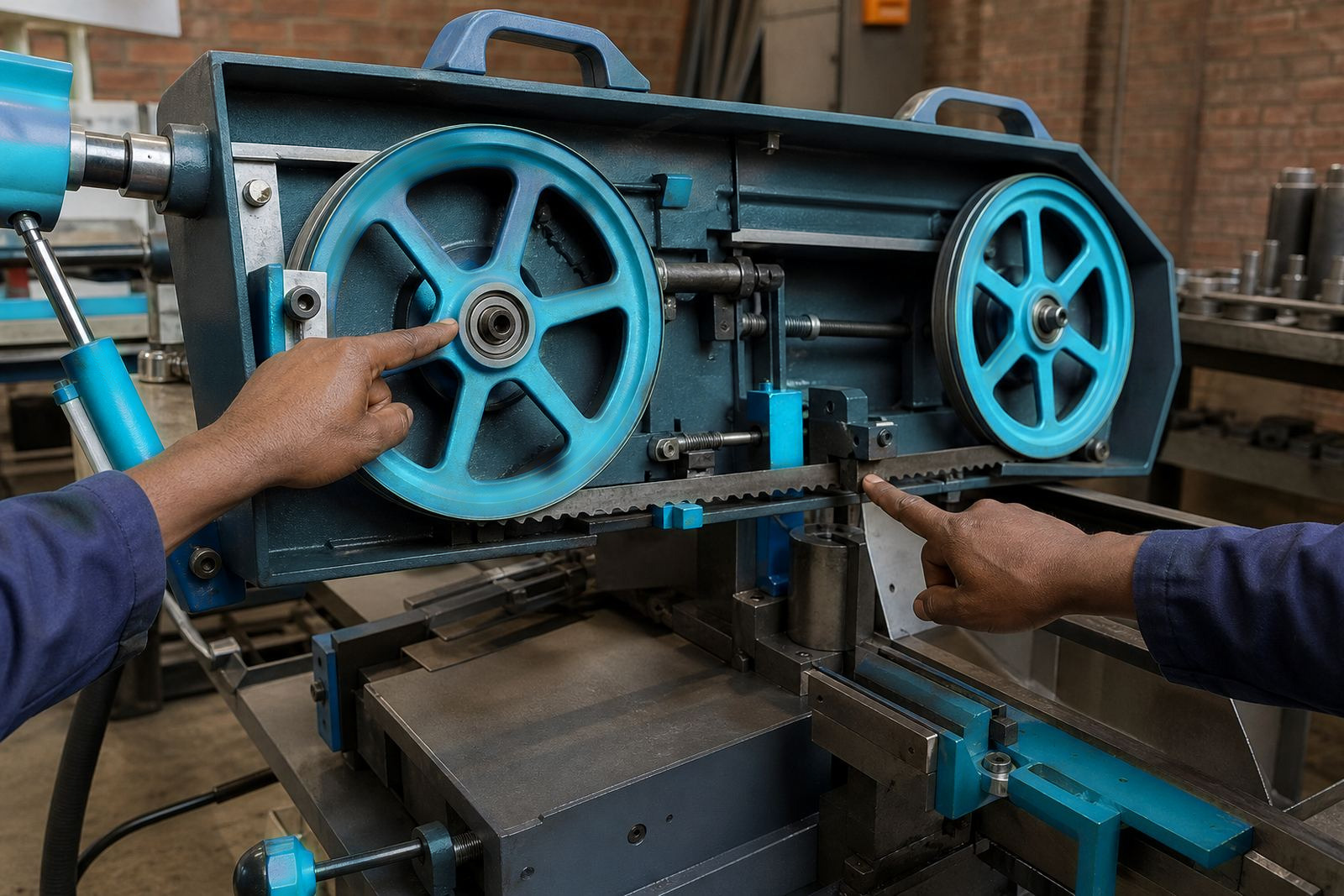
A thicker blade can handle heavier feed on the right machine, while correct wheel alignment and tension are still needed. If the guides are out, even a good blade will leave a poor finish and drift from the mark.
- Wider blades suit straight production cuts
- Narrower blades suit lighter frames and curve work
- Thickness must match wheel size and guide setup
Run-in, feed and speed on a real bench
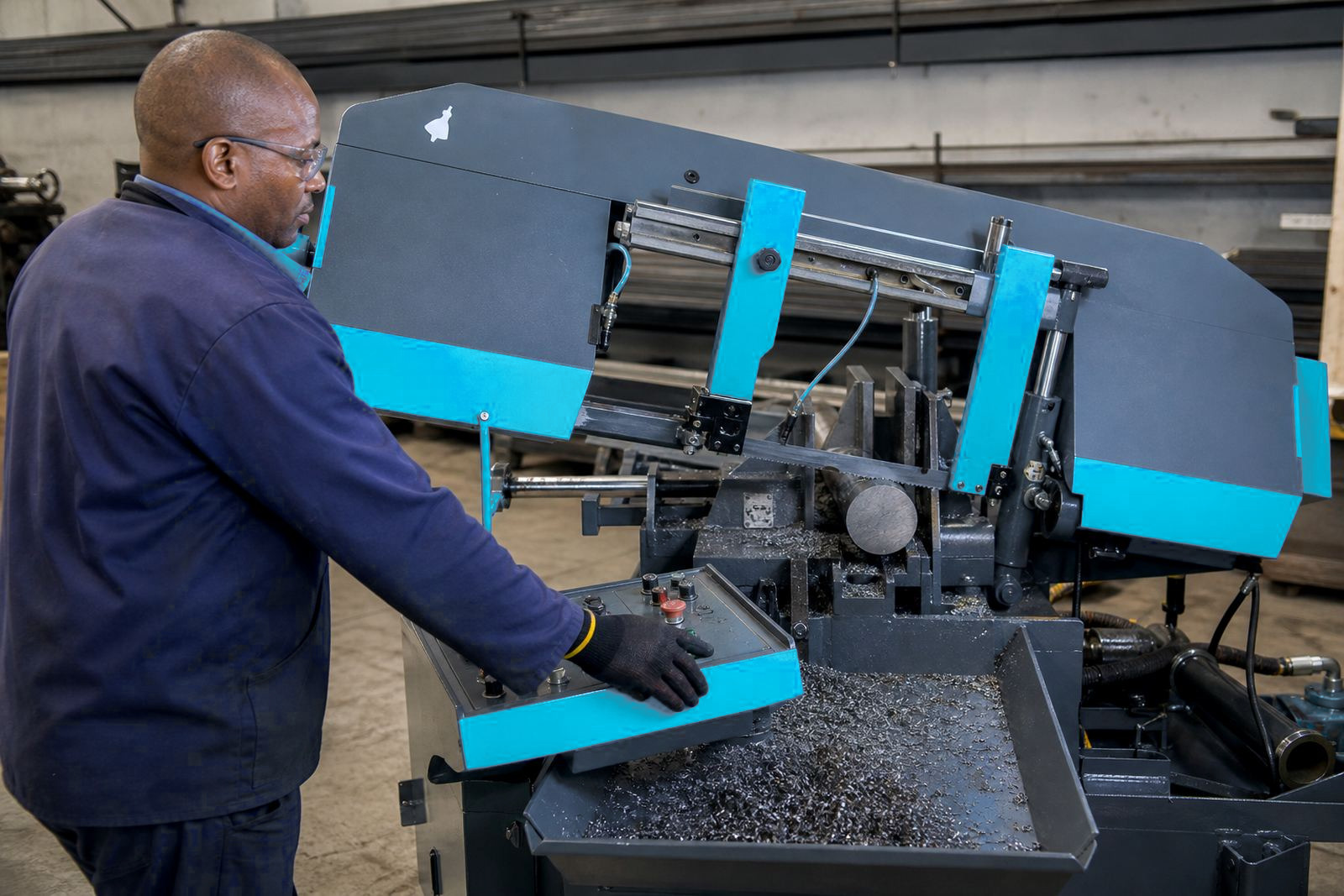
A fresh blade needs a gentle run-in. That means a lighter feed at the start so the tooth tips wear in evenly before full production pressure is applied.
Feed and blade speed work together. Overloading the cut at low running rate strips teeth, while pushing the machine too hard on the wrong metal overheats the kerf and shortens saw life. A steady chip and a clean curl are better signs than a hot sparkly edge.
- Use lighter feed for the first cuts on a new blade
- Keep the cut steady instead of forcing the frame
- Match speed to section size and material grade
Coolant, swarf and finish at the cut line
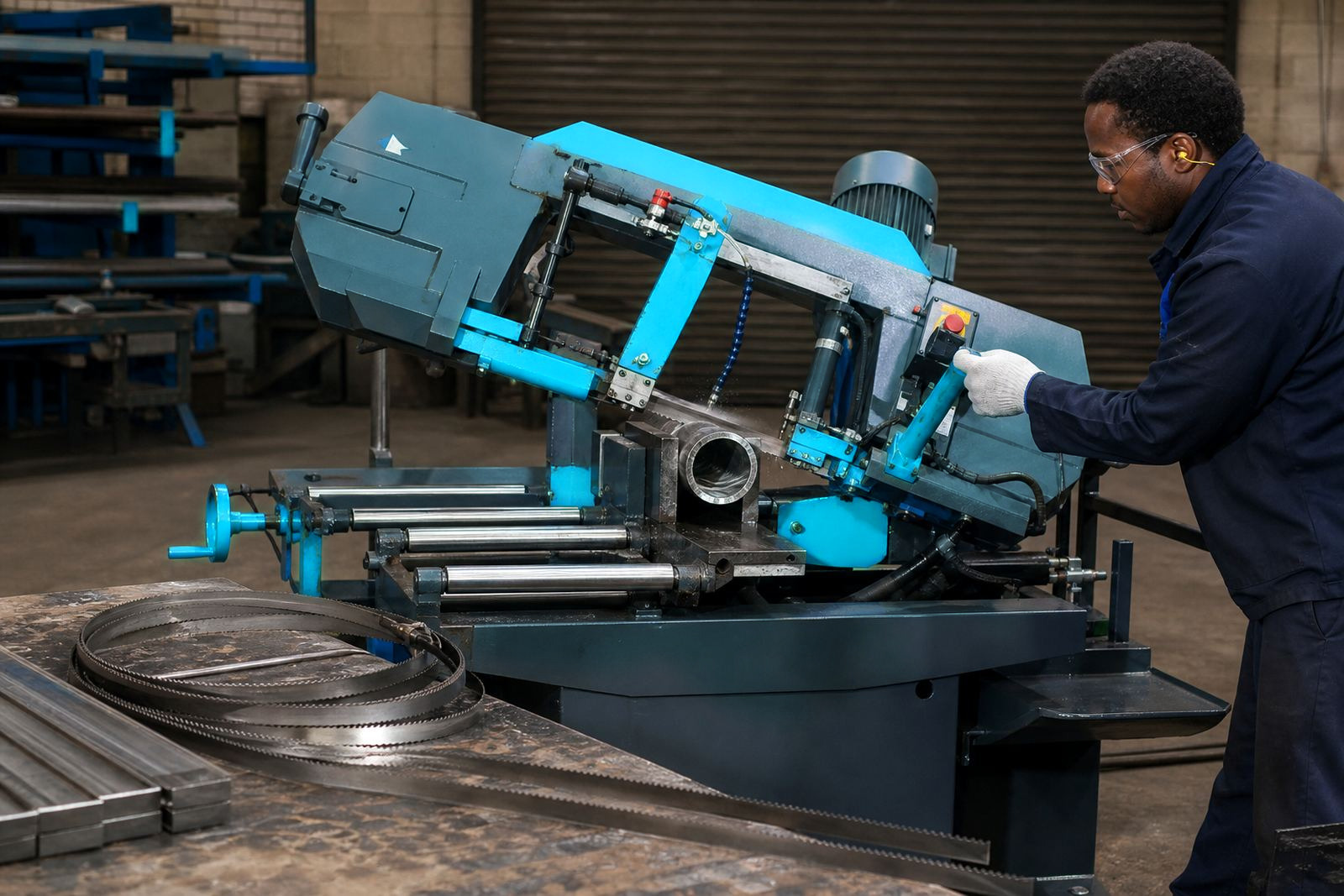
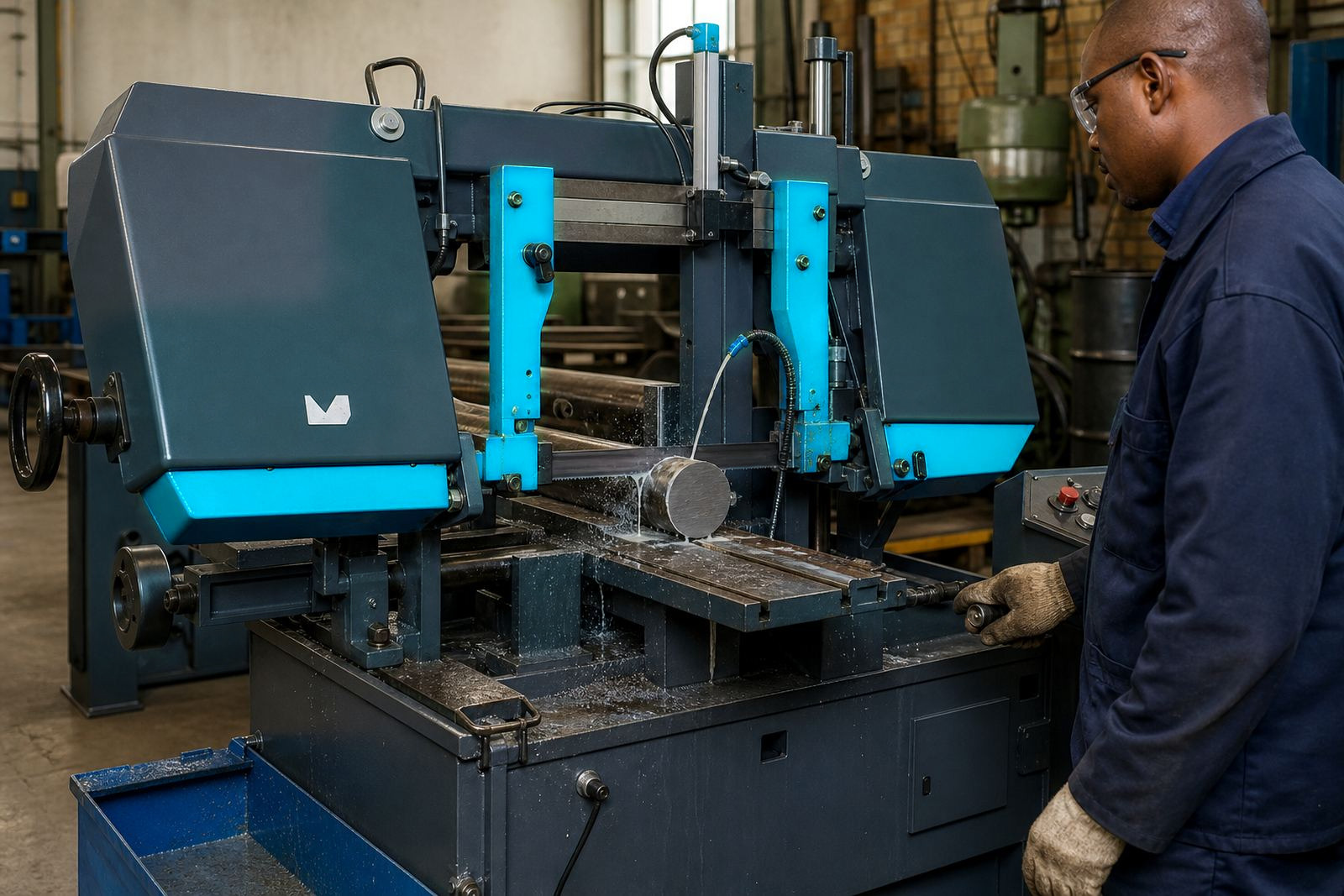
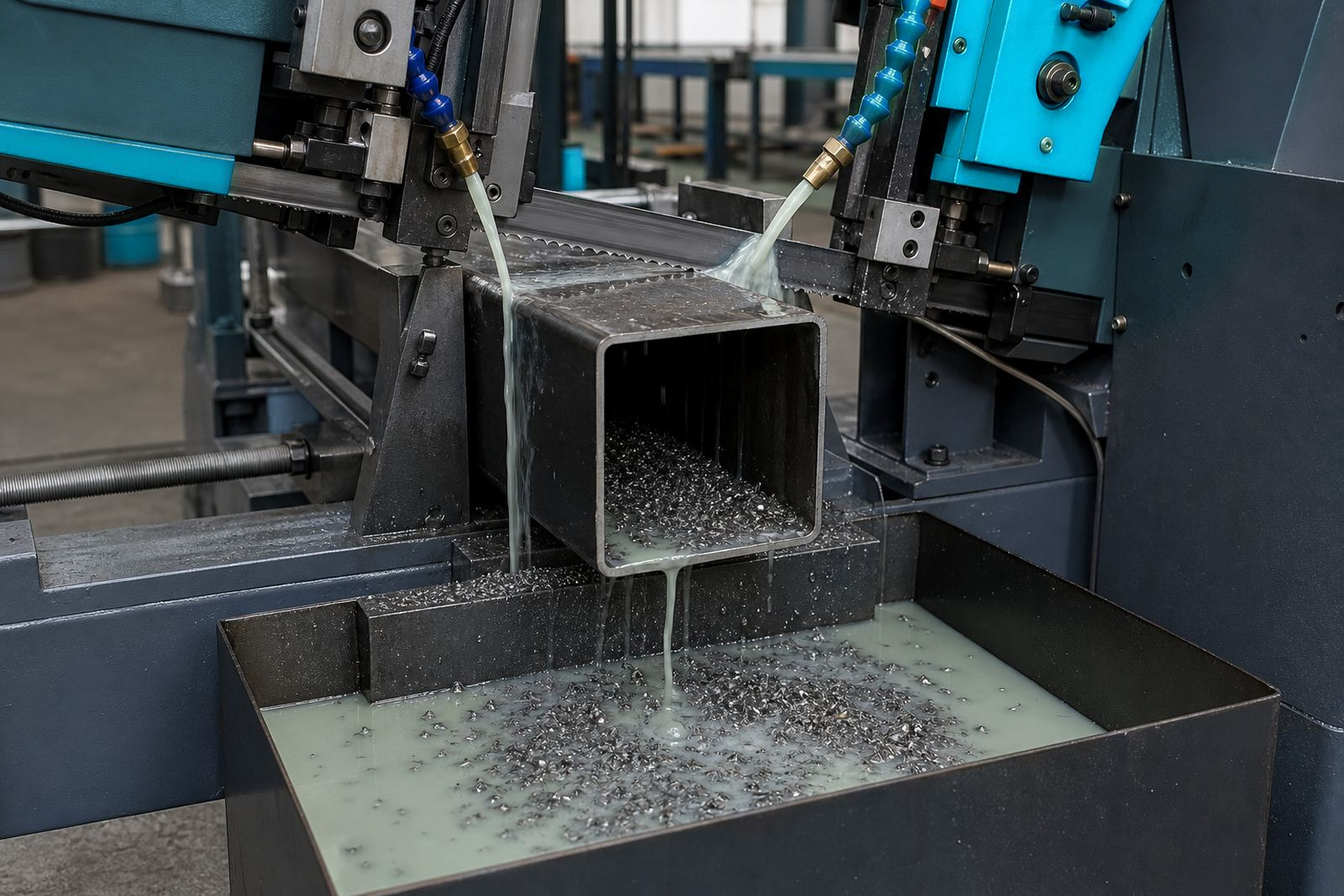
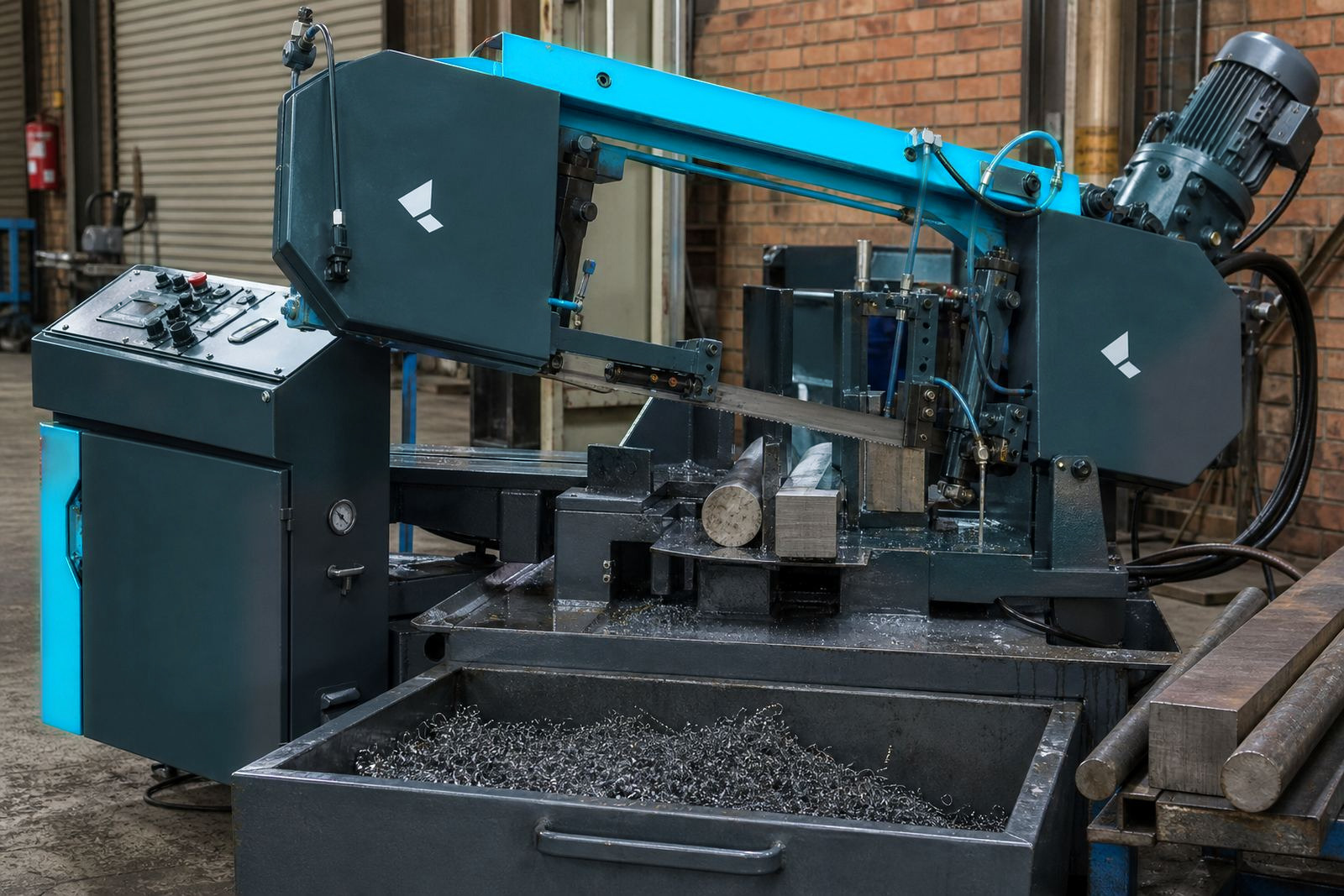
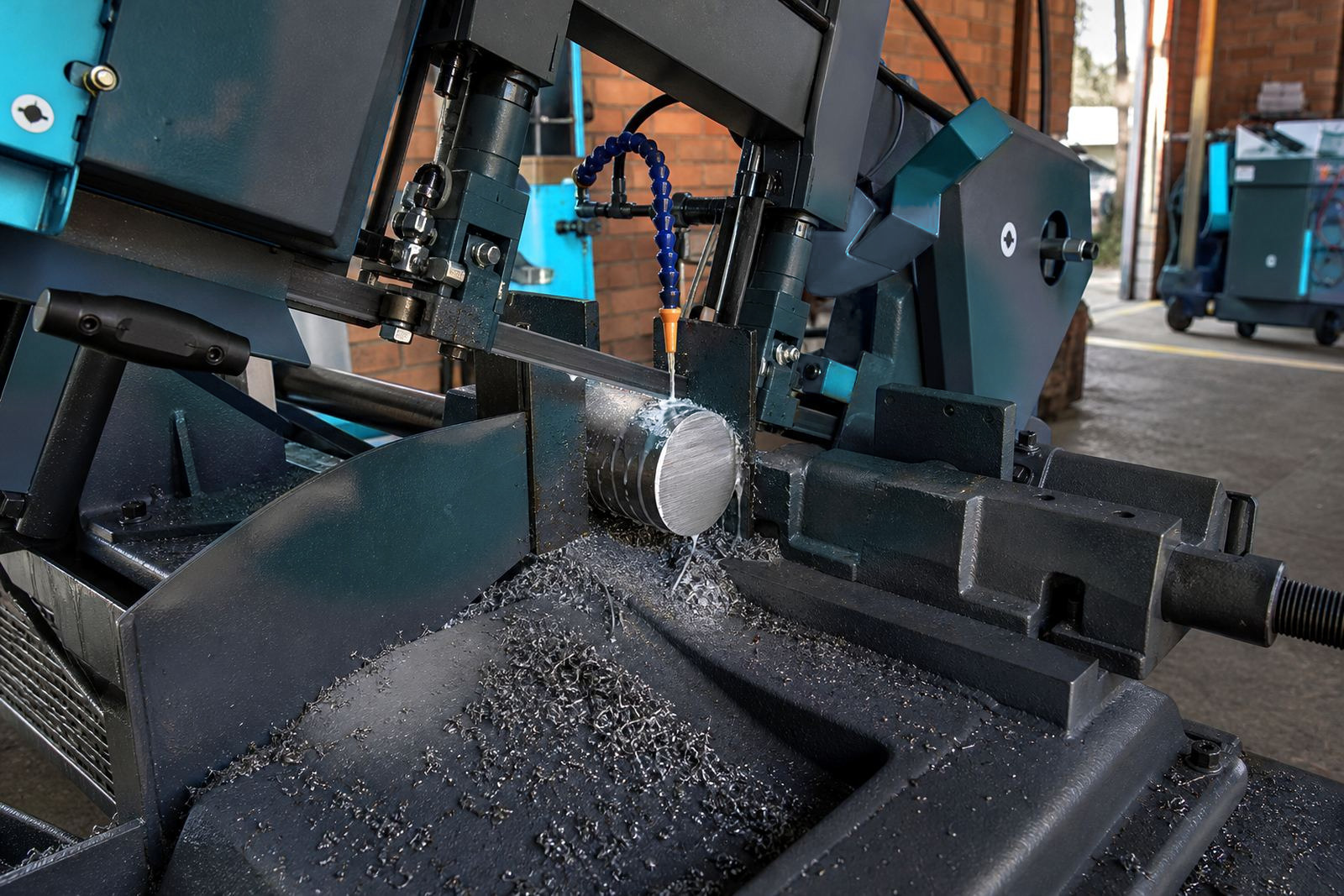
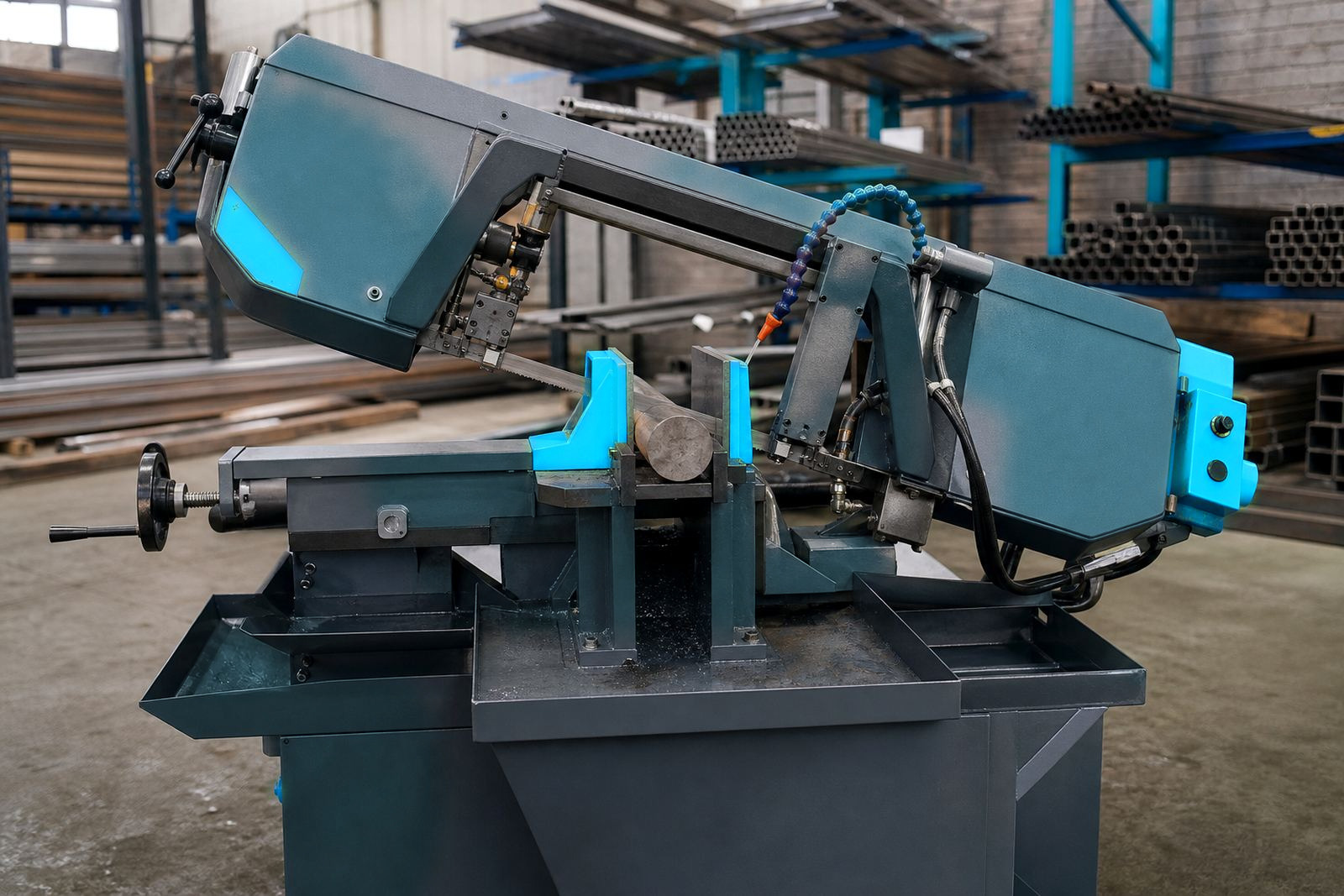
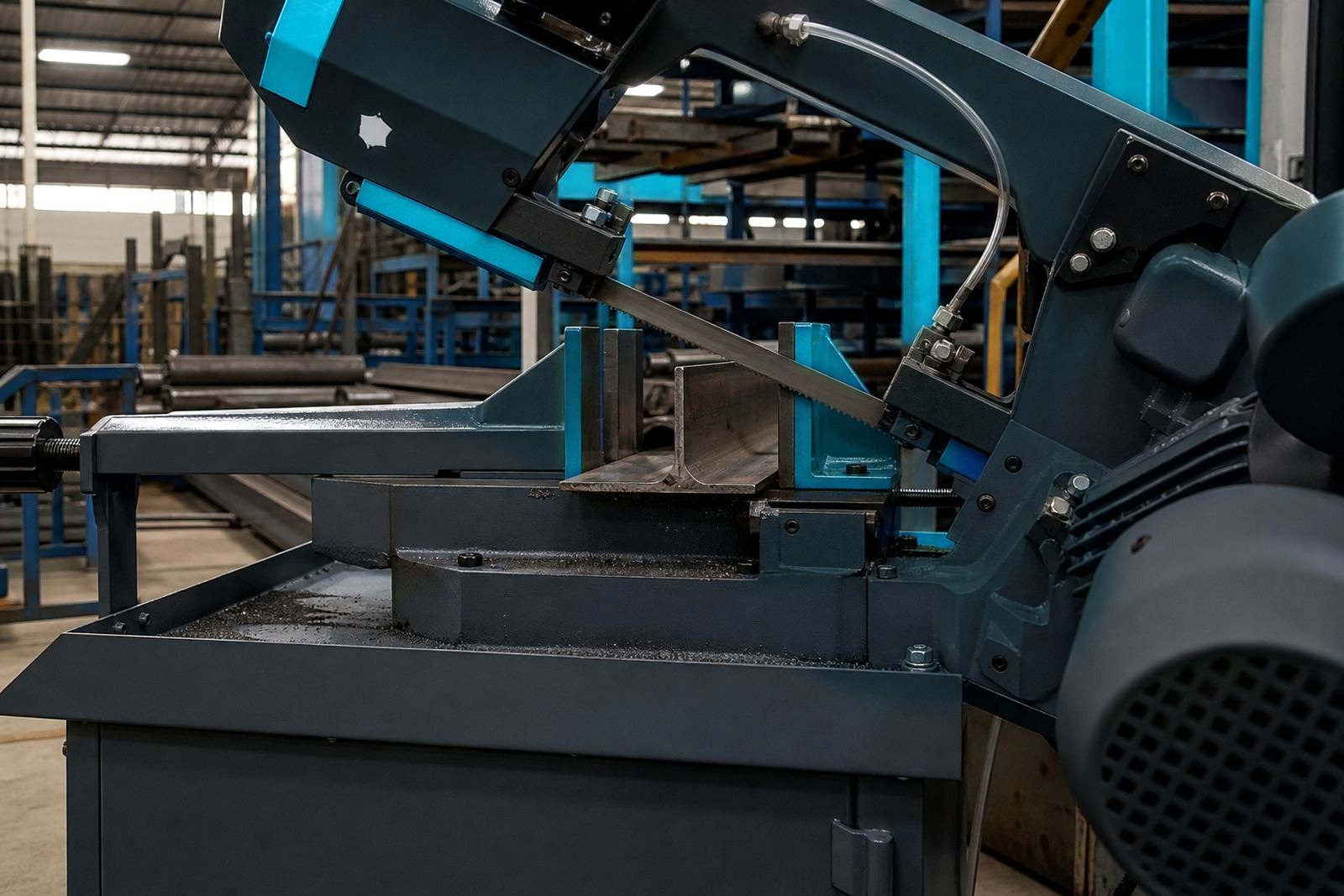
Coolant helps carry heat away and moves swarf out of the kerf. On long runs it also protects the teeth and keeps the work edge cleaner, especially where the material is hard or the wall is thick.
If coolant is weak, dirty or not reaching the cut, the blade starts to polish rather than cut. That usually shows up as noise, heat and a rougher finish on the cut face.
- Check coolant flow at the blade entry point
- Clear swarf from the gullets before the next cut
- Watch for smoke, heat and glazed teeth
Blade service for workshops that need a tidy line
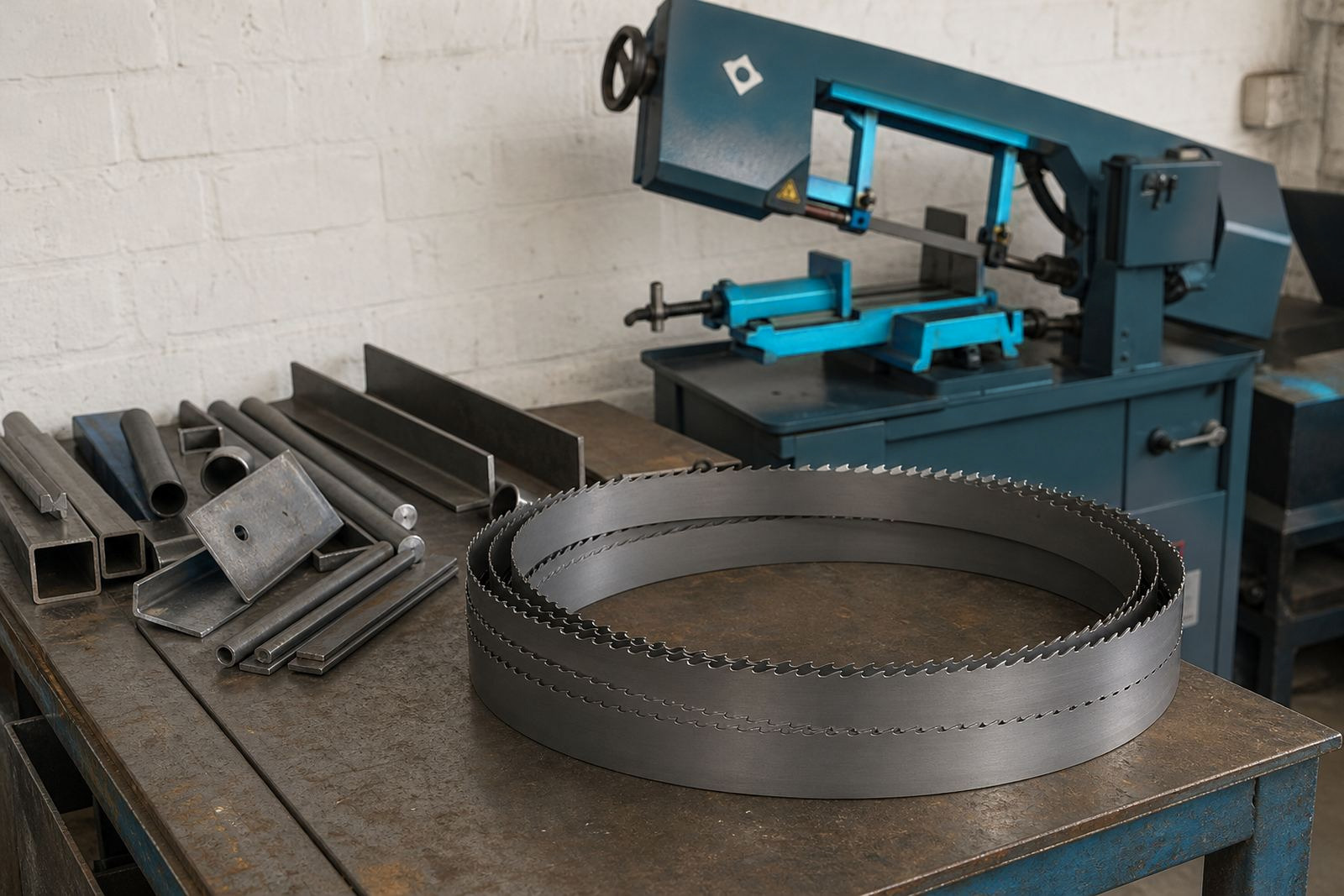
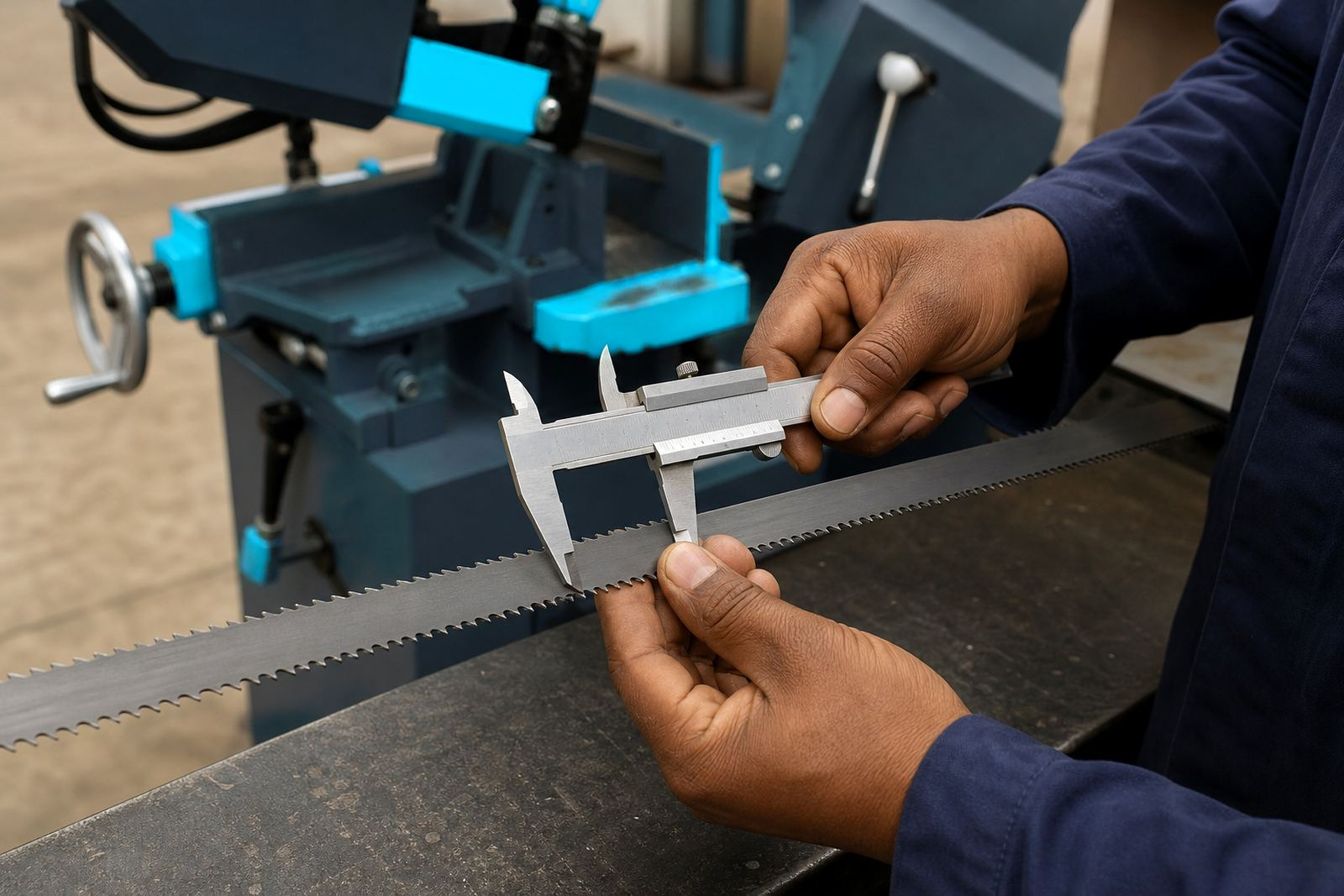
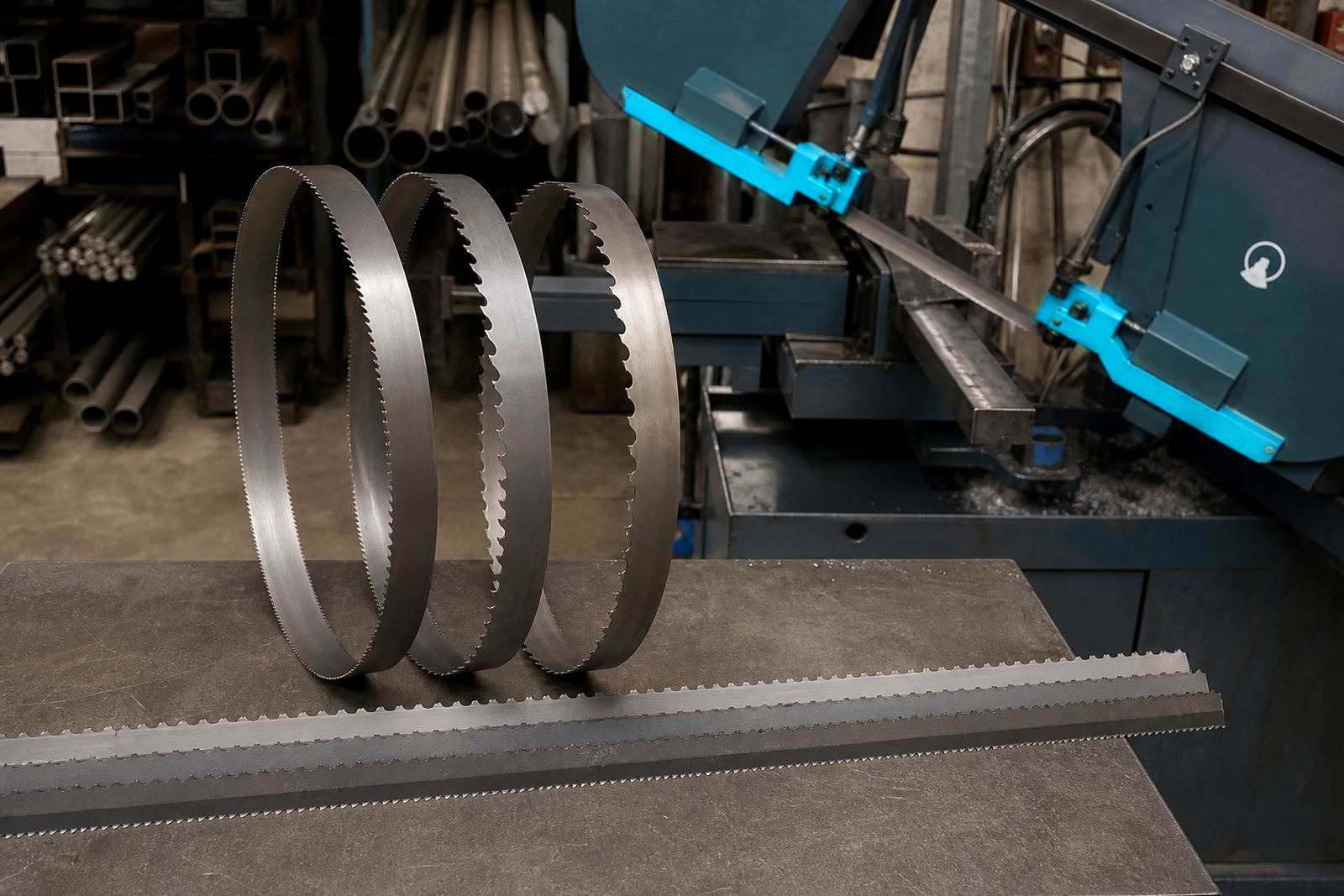
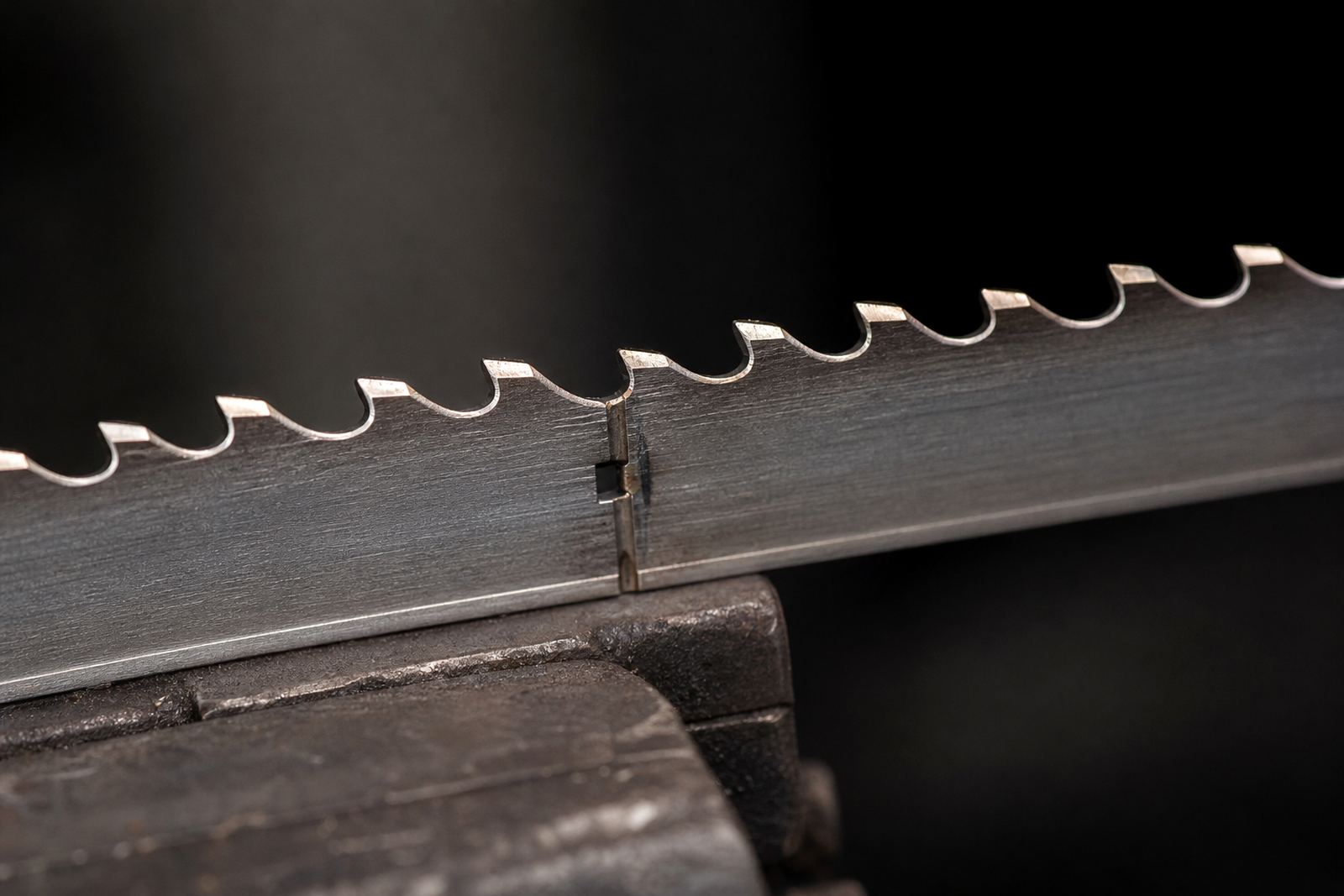
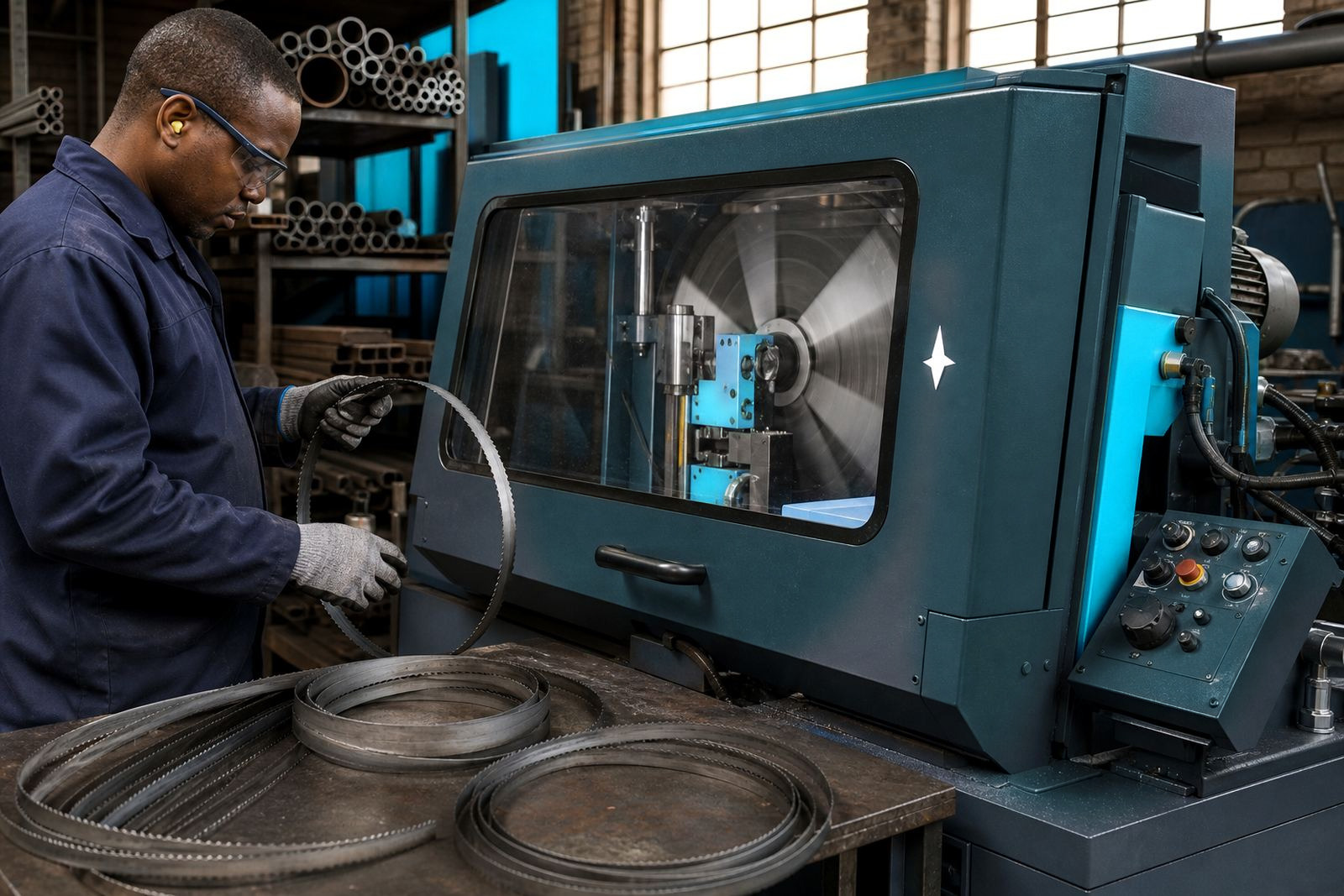
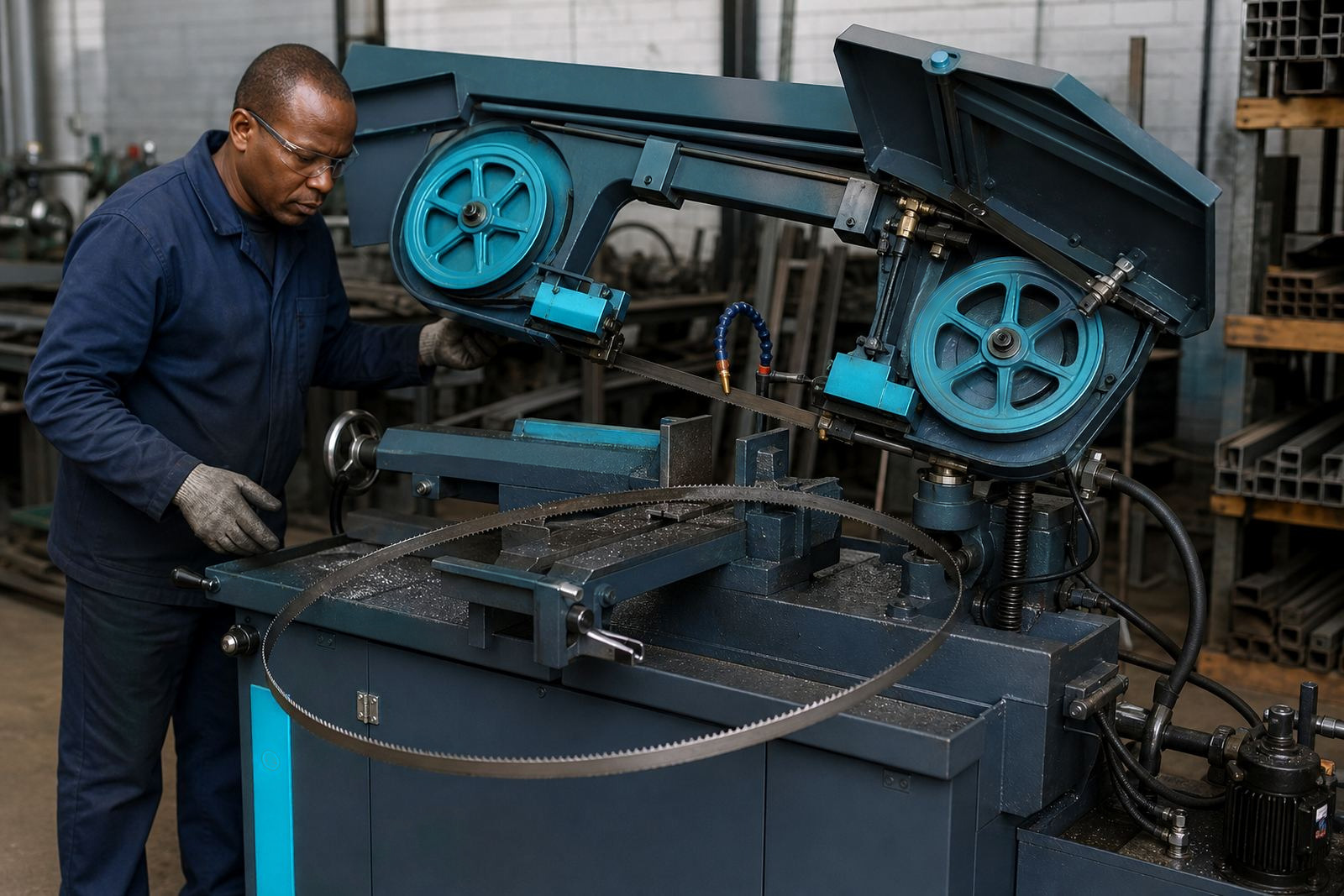
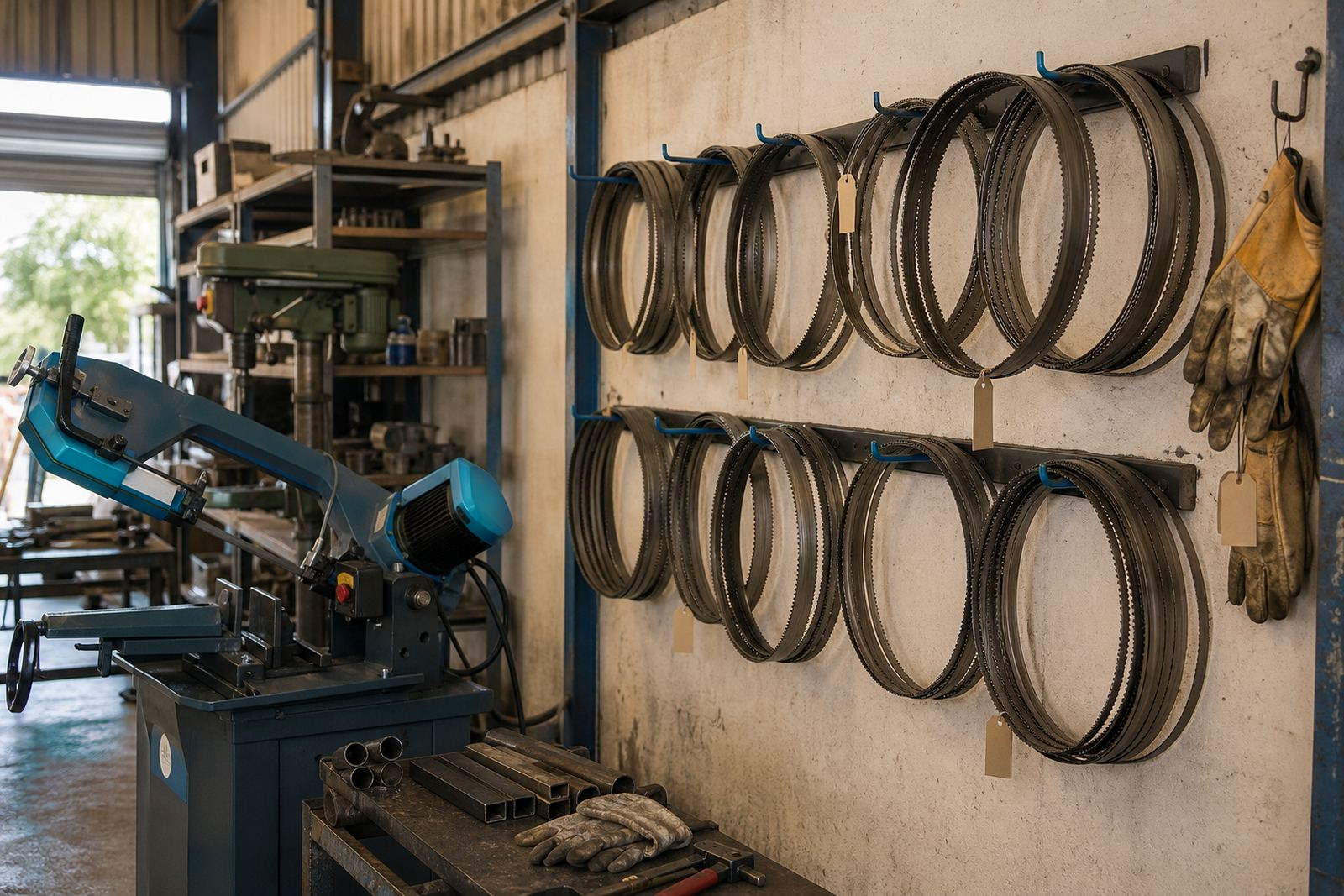
Our weld-to-length service helps workshops order blade loops to the size their machines actually run. We verify length because a blade that is even slightly off can over-tension or sit loose on the wheels.
We also help with starter kit planning, stock standardisation and machine fit checks for shops that run more than one saw. We keep the blade list sensible across manual saws and powered benches, whether the work is in Alberton, Germiston, Boksburg, Johannesburg, Pretoria, Vereeniging, Durban or Cape Town.
- Weld-to-length for the machine on the floor
- Length verification before the blade goes out
- Manual saw support for lighter workshop use