Where M42 teeth work best in structural steel
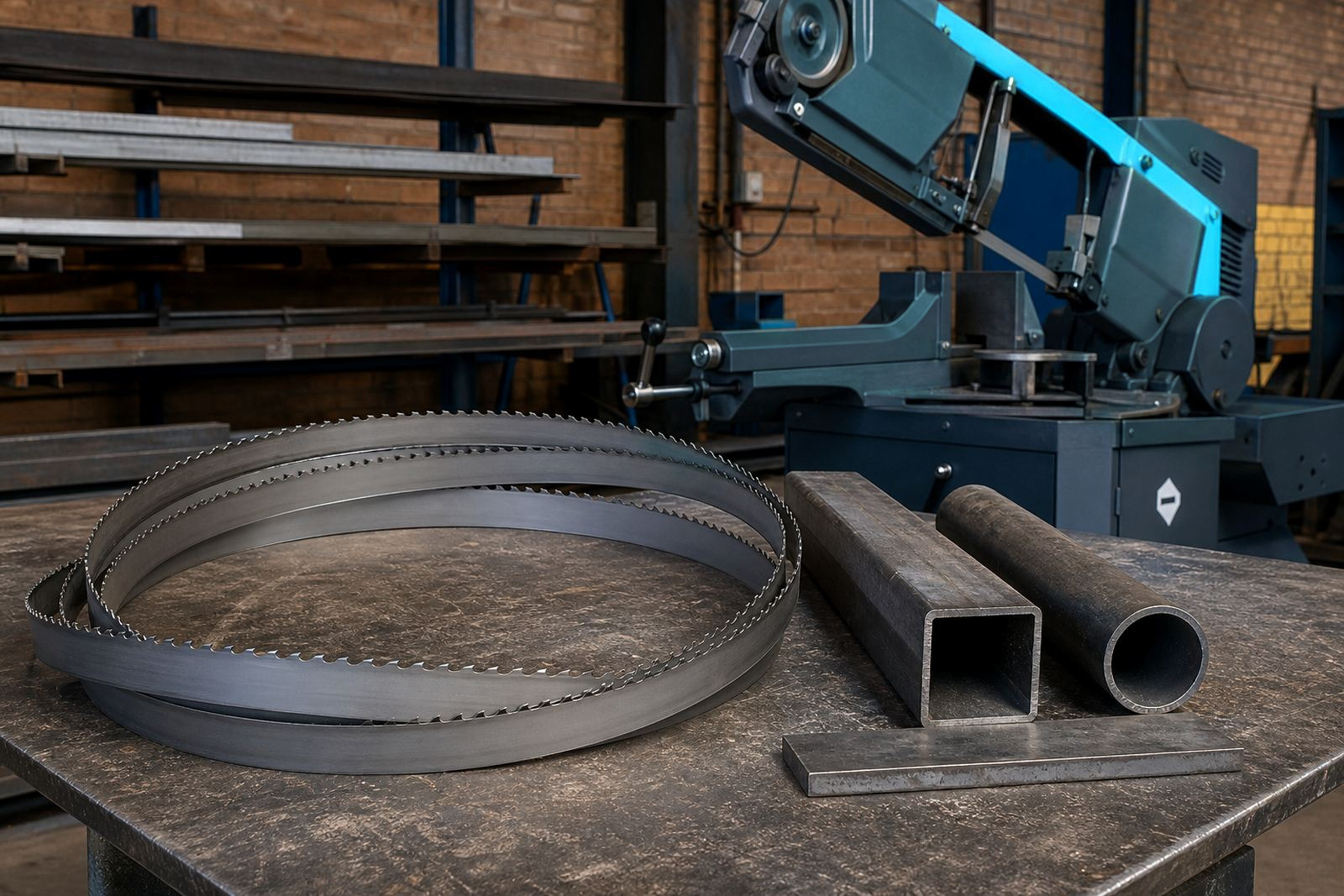
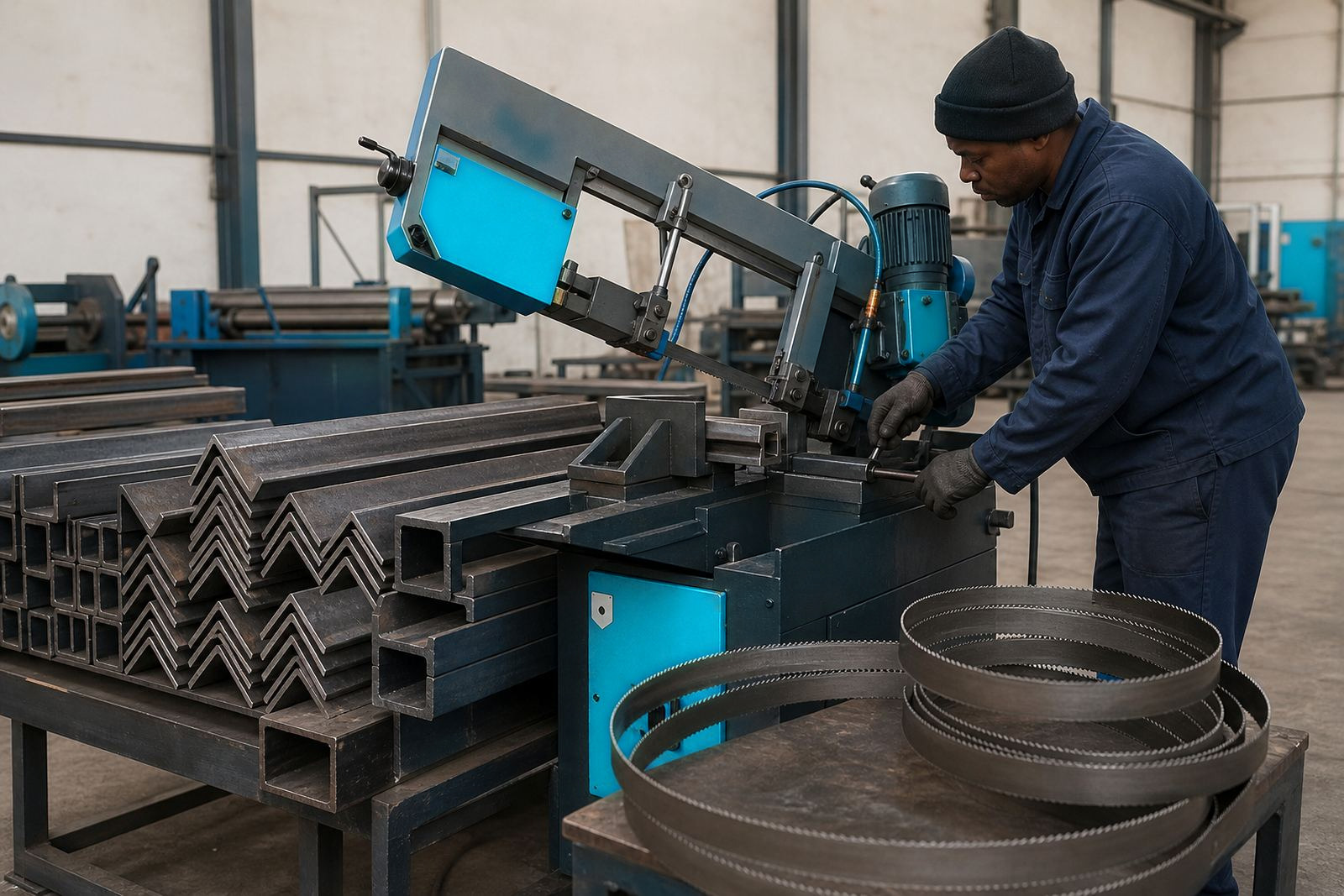
M42 bi-metal blades suit workshop cutting on mild steel structural shapes, especially angle, channel, I-beam, box section and thick flat bar. The high-speed steel tooth edge holds up well where a blade moves from solid sections into lighter corners and back into heavier walls, so the cut stays more even through the profile.
These blades are commonly used on horizontal bandsaws and manual saw setups that see mixed batches during the week. They are a practical choice for fabrication, steel stock handling and maintenance work where the stock size changes often and the operator needs a blade that can handle both bundles and single lengths.
- Angle iron and unequal angle
- Channel and I-beam sections
- Box and rectangular tube
- Mixed bundles with wall thickness changes
Tooth pitch and blade width for the job at hand
On structural profiles, the tooth pitch has to keep enough teeth in contact without packing swarf into the gullets. Coarser pitch suits heavier sections, while a finer or variable pitch helps when the bundle contains thinner walls or awkward shapes that interrupt the cut.
Blade width and thickness also need attention. On long cuts and heavier section work, wider blades track straighter, while narrower blades suit tighter machines or lighter manual saws. Thickness affects stability and kerf control, so the machine guides and wheels need to match the blade size properly.
- Pitch in TPI to match wall thickness and bundle mix
- Variable pitch for reduced vibration on uneven profiles
- Width chosen for wheel size and cut straightness
- Thickness matched to the saw and guide setup
Cutting behaviour on angle, channel and beam
Structural sections cut differently from solid bar. A blade can enter a corner, lose contact, then bite into a thicker web or flange, so feed pressure must stay steady and not jump around. If the feed is too heavy, the teeth dull early and the cut wanders. If it is too light, the teeth rub and work harden the edge on tougher material.
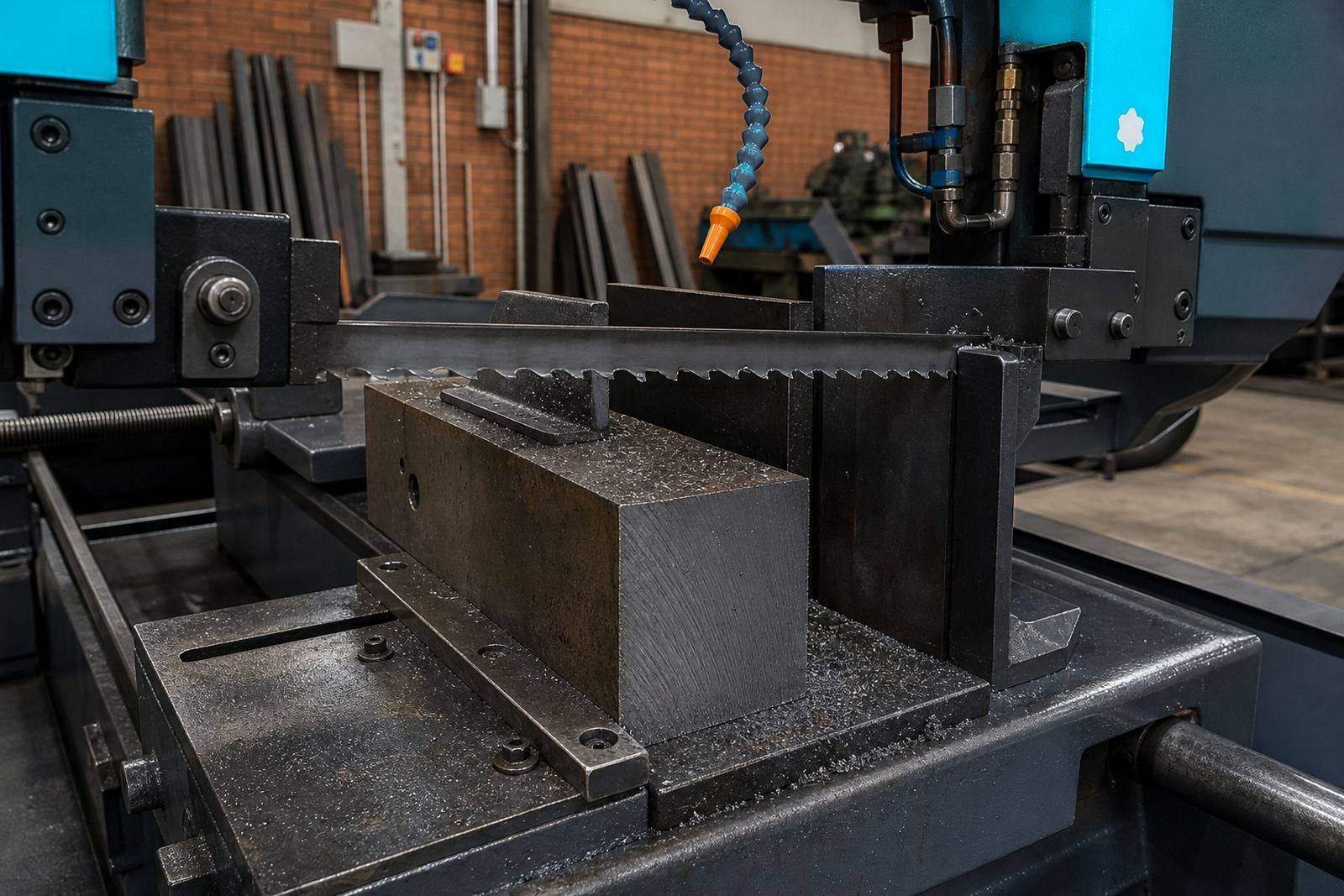
Run-in helps on a fresh blade. A lighter first cut helps the teeth seat properly and reduces early chipping. Coolant also helps the tooth edge stay cooler and carries chips away from the gullets, which helps on bundles, dry surfaces and longer cutting runs.
- Steady feed keeps the cut line cleaner
- Run-in protects a new tooth edge
- Coolant supports tooth life and chip clearance
- Correct set helps the blade clear the kerf
Sizing and fitting details we check before welding to length
Weld-to-length service needs the right measurements from the machine and the job. We check the saw wheel diameter, blade length, blade width allowance, guide spacing and the required tooth pitch before welding the band. If the saw is used for mixed sections, the current blade performance and the usual cut sizes help narrow the best option.
Check length carefully when a machine has been fitted with an old band that has stretched or been altered during repair work. The wrong length puts strain on the wheels and can affect tracking, tension and cutting accuracy. A proper fit gives the blade a fair working life and helps the saw behave predictably on structural stock.
- Machine blade length and wheel size
- Guide pack spacing and tension range
- Wheel condition and tracking line
- Usual profile sizes and wall thickness
Care on a busy workshop floor
Structural section blades last longer when chips are cleared, coolant is kept in order and the saw is not forced through a hot, overloaded cut. Swarf trapped in the gullets can score the cut face and push the blade off line. A quick check on guide blocks, wheel alignment and clamp pressure also helps the blade work without side loading.
When a blade starts to wander or leaves a rough finish, the cause can also be feed speed, blade speed, set or coolant concentration. If the same saw handles both small angle and heavy beam, the settings may need a change between batches instead of running one setting all day.
- Keep swarf out of the gullets and guides
- Check coolant flow and concentration
- Watch for worn guide faces and bad tracking
- Adjust feed and speed for each section type
What to confirm when placing the order
When a workshop orders M42 structural sections blades, the useful details are the machine model or blade size, the material grade, the thickest and thinnest profiles in the batch, and whether the cut is single lengths or bundled stock. If the machine handles manual saw support, that also helps when matching the blade style and tooth pitch.
For workshop standardisation, it helps to list the common sizes on the floor and the sections that cause the most blade wear. That lets us suggest a starter kit, a repeat blade list or a cleaner pitch mix for the machines already in use. The branch team works from the Alberton base and supports Johannesburg, Pretoria, Vereeniging, Durban and Cape Town.
- Machine make, model and blade length
- Section type, wall thickness and bundle size
- Preferred pitch range and blade width
- Whether coolant is used on the saw
Key facts
| Blade type | M42 bi-metal bandsaw blade for structural steel |
|---|---|
| Typical pitch range | Varies by section, commonly 3 to 10 TPI and variable pitch options |
| Blade widths | Selected to suit the saw and cut stability needs |
| Material range | Angle, channel, I-beam, box section and similar profiles |
| Services | Weld-to-length, length verification, pitch selection and fit checks |
| Use case | Workshop cutting for structural profiles and mixed steel batches |