Built for harder sections and steadier sawing
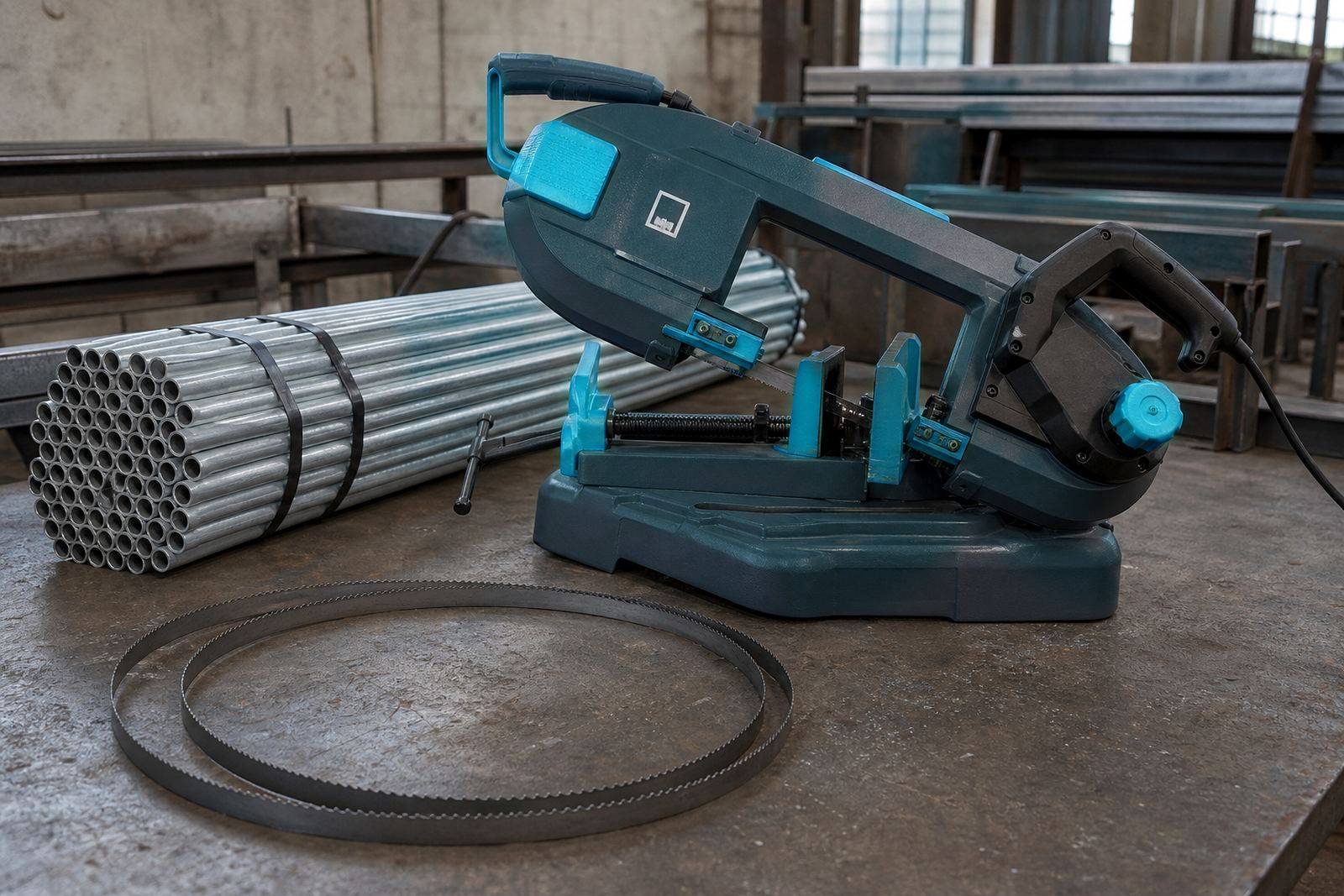
Heavy gauge bandsaw blades are chosen when the cut is demanding and the machine holds its line properly. They suit structural steel, thick wall sections, solid bar and other work that needs blade body strength more than a light flexible feel.
In practice, the blade gauge, width and pitch need to work together. A heavier body can stay true through a long cut, but it still needs the right feed, blade speed and coolant flow to avoid tooth damage, wandering or premature cracking at the weld.
Widths, thicknesses and tooth forms that make sense
We supply heavy gauge blades in common workshop sizes, with options matched to your machine and material. The right choice usually depends on blade width, thickness, tooth pitch and whether the job is a solid section or a bundle of tube.
- Bi-metal blades with a high-speed edge for harder steels and mixed workshop use.
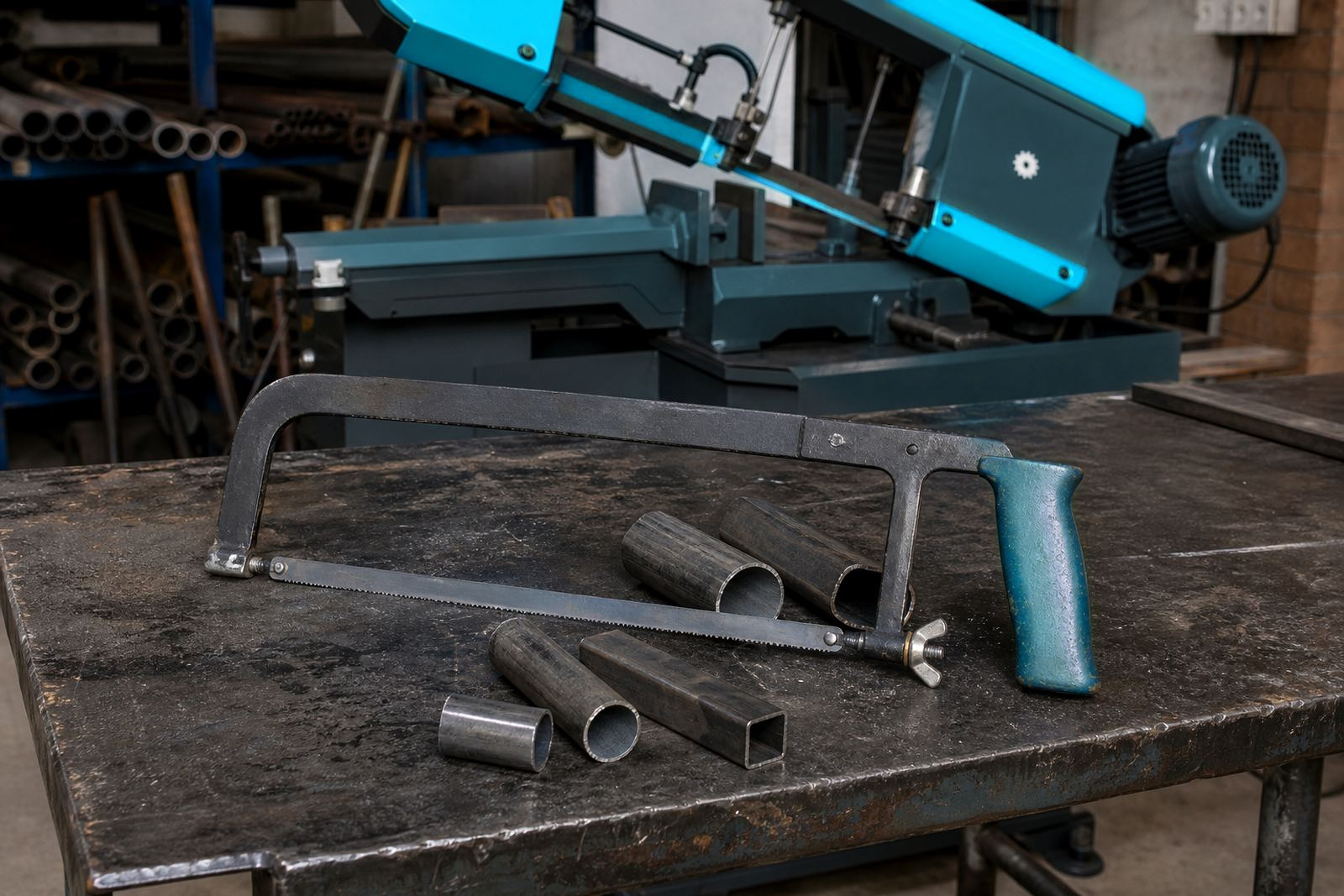
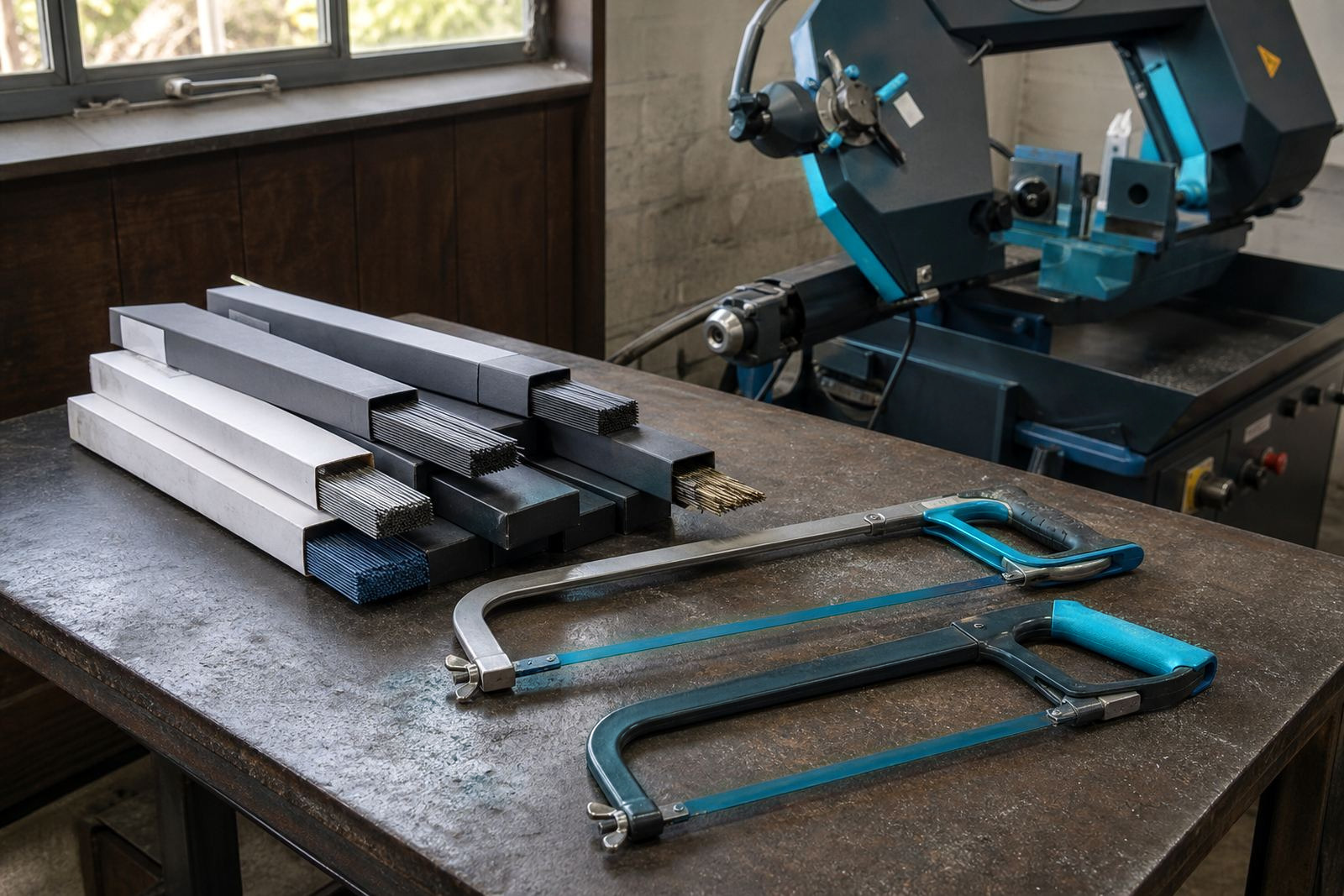
- Carbon steel blades for lighter-duty cutting and manual saw work.
- Variable pitch options to reduce chatter on mixed section work.
- Tooth pitches selected for the wall thickness and cross-section being cut.
- Widths and gauges matched to wheel size, guide clearance and cut stability.
A heavier gauge suits some saws and tasks better than others. A small machine with narrow guides may need a different body thickness to keep tracking clean, while a rigid frame can usually handle a broader blade with stronger tooth support.
Where heavy gauge blades earn their place
Fabrication floors, maintenance shops and metal suppliers use these blades for repeated cutting through thick sections. They suit jobs where the cut face needs to stay straight enough for welding, machining or a tight fit-up later in the process.
For South African workshops, that often means steel stock in Johannesburg, structural work in Pretoria, repair benches in Vereeniging, and jobbing cut lists that move between Durban and Cape Town. The blade has to cope with mixed material, frequent starts and stops, and a feed rate that stays sensible rather than aggressive.
- Stable horizontal bandsaws with proper blade support and guides.
- Manual saws used for repetitive metal cutting in smaller shops.
- Thick-walled tube, solid bar, angle, channel and box section.
- Jobs that need burr control and blade life together.
Fitting needs, welds and run-in discipline
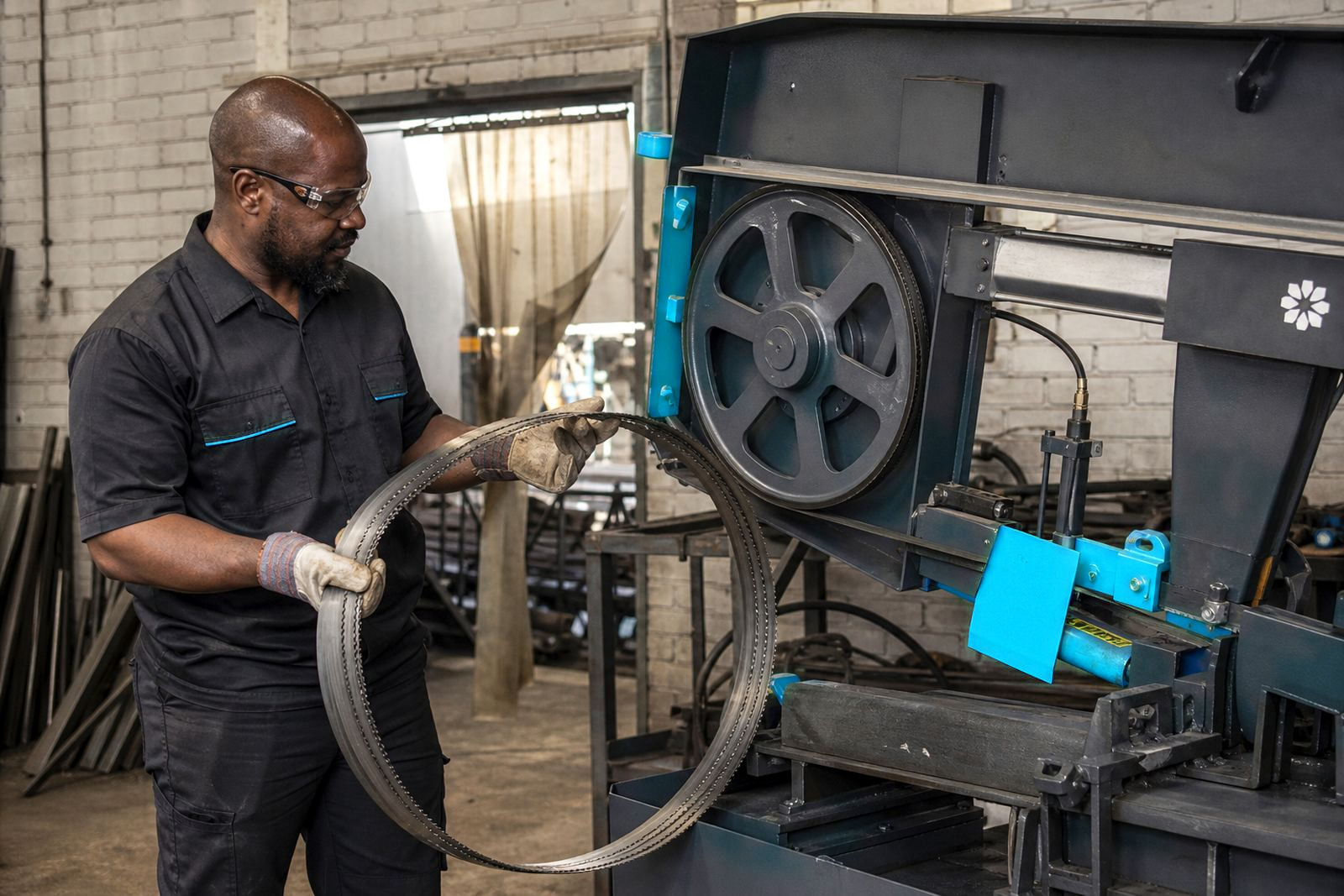
Heavy gauge blades still need careful fitting. The weld must be clean, the length correct, and the blade must track without twisting in the guides. If the saw is set too aggressively, the blade can glaze, chip teeth or lose set before the first proper batch is finished.
We cut and weld to length for workshop use, then check the joint so the blade runs evenly through the wheels. On first use, a slower run-in helps the teeth seat properly. Hard stock needs care, because a fresh edge pushed too hard can fail long before its working life is properly used.
- Check wheel condition, guide wear and tracking before fitting.
- Match the weld finish to the saw's guide clearance.
- Start with lighter feed on the first few cuts.
- Keep coolant reaching the tooth line on demanding cuts.
Feed, speed and coolant on real metalwork
Heavy gauge blades last longer when the saw is set for the material rather than forced through it. Feed speed, blade speed and coolant all affect the cut, especially on carbon steel, mild steel and harder alloys that throw heat into the tooth line.
Too much feed loads the teeth and can break the set. Too little feed lets the blade rub, which also shortens life. Coolant clears chips from the gullets and carries heat away, especially when the cut is deep or the section is thick enough to hold heat for longer than expected.
What to check before placing the order
The useful details are usually the ones that tell us how the blade will sit in the saw and what it will be cutting. If a workshop sends those points clearly, blade selection becomes much more direct and the blade can be matched to the job instead of guessed.
- Saw type, wheel size and the blade length required.
- Blade width, thickness and whether the machine accepts a heavier gauge.
- Material type, section shape and wall thickness or solid size.
- Preferred tooth pitch, or the cut range if that still needs setting.
- Whether the work needs variable pitch or a constant pitch blade.
- Any issues with vibration, tooth stripping, poor tracking or repeated weld breaks.
We also help with starter kit planning, stock standardisation and blade failure review, which is useful where more than one machine is running the same cut list. Blade choice stays practical across branches and workshops, from Alberton and Germiston through to Boksburg and the coastal shops that face humidity on stored stock.
Key facts
| Product type | Heavy gauge bandsaw blades for metal cutting |
|---|---|
| Blade materials | Bi-metal M42 and carbon steel options |
| Tooth pitch | Constant and variable pitch selections |
| Blade widths | Matched to machine guides and cut stability |
| Blade thickness | Heavier gauges available for rigid saws |
| Service options | Weld-to-length, length verification and fit checks |