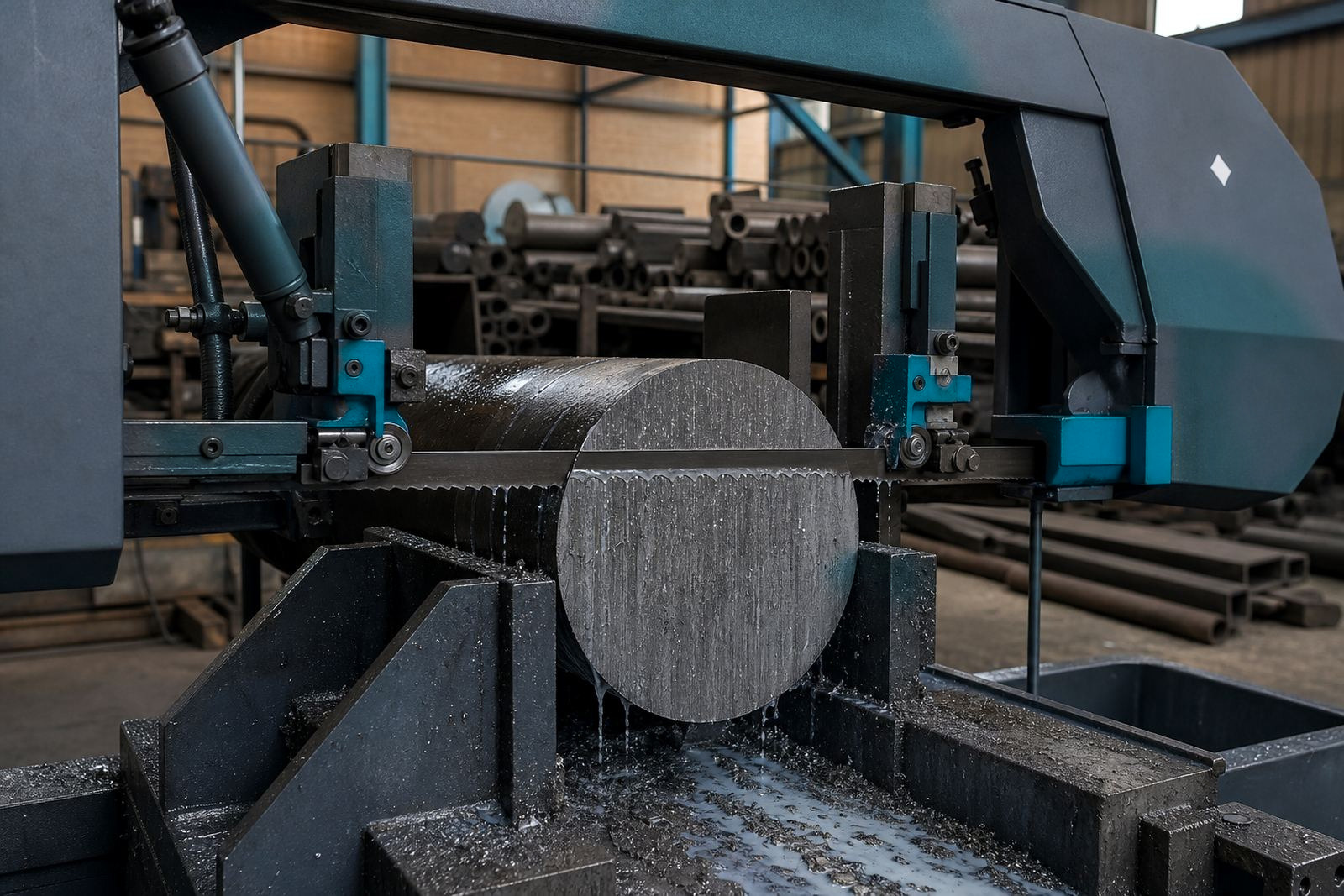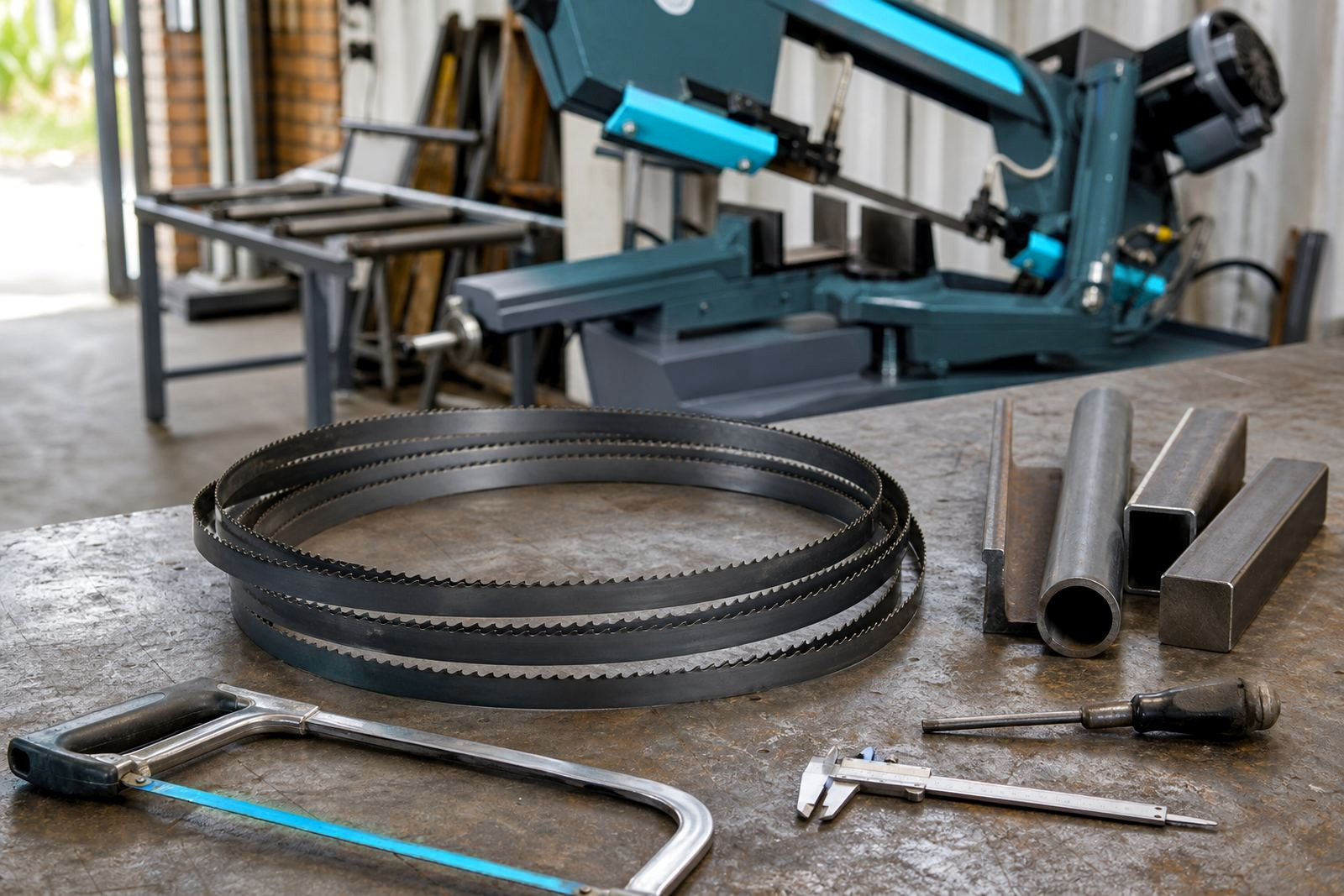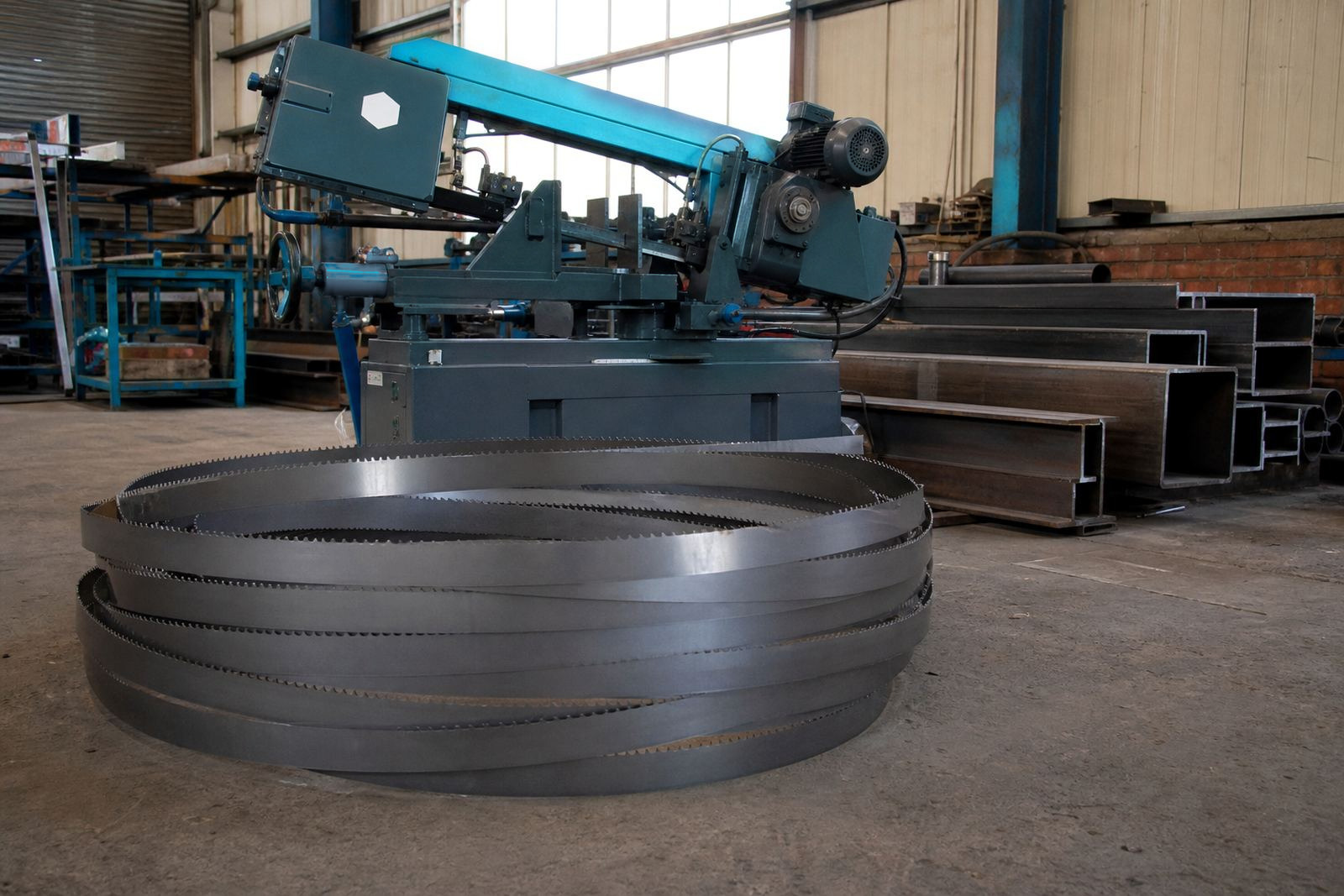

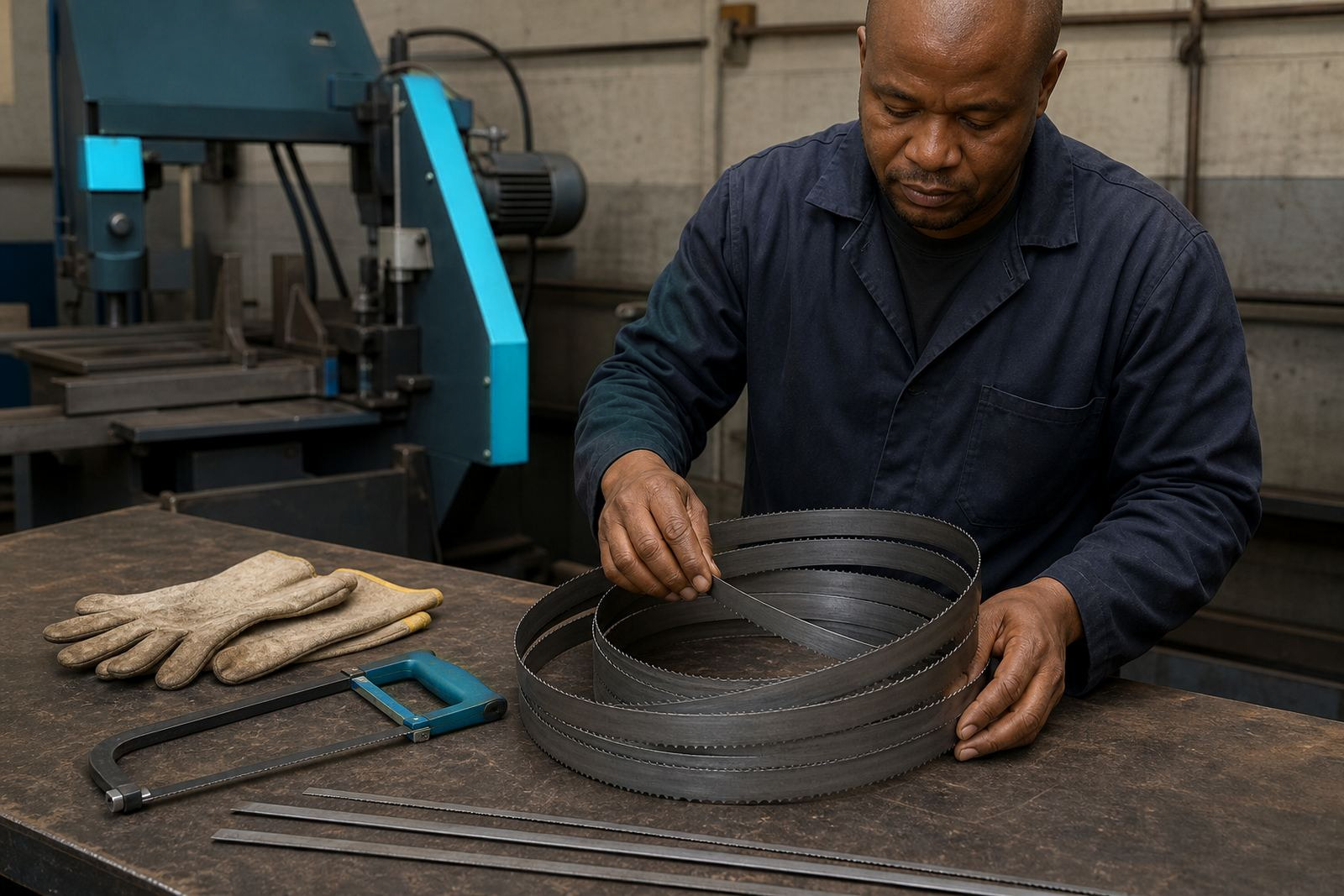
A starter set for mixed metal cutting days
The Small Shop Starter Kit is built for workshops that cut more than one type of section in a week. One job may be mild steel flats and angles, the next may be tube, bar or light structural material, so the kit brings together common blade patterns that suit varied saw work without overloading the shelf with odd sizes.
It is suited to manual saw bays, horizontal band saws and hand-held hacksaw work where a small team wants sensible cover for day-to-day cutting. Keep the most useful blade widths and tooth pitches close at hand, then pick the right blade for the material and avoid making one blade do every cut.
For steel stock in South African workshops, this becomes important when the cut list changes and the offcut pile grows faster than the blade rack. A starter kit gives the shop a clean starting point for repeat work, test pieces and jobbing jobs that arrive without warning.
What sits inside the starter selection
The kit can be put together with bi-metal blades for harder, more varied cutting and carbon steel blades for lighter duty work on suitable materials. Common tooth pitches are included so the shop can move between thin section work and heavier section cutting without guessing which tooth form to use.
- Bi-metal blade options for mixed metal cutting and longer service life on workshop steel
- Carbon steel blade options for lighter cutting duties and simple manual saw work
- Common tooth pitches, including finer and coarser TPI selections
- Variable pitch choices where vibration control and smoother cutting are useful
- Blade width options for tighter tracking or wider support on larger saws
- Blade thickness options matched to the saw and the material load
On many jobs the right pitch changes the cut more than people expect. Too fine and the blade can clog in thicker section. Too coarse and the tooth engagement can feel grabby on thin material. A starter kit keeps both ends of that range in reach so the shop can stay practical.
How to match the blade to the job
Blade choice starts with material, wall thickness and the machine’s cutting behaviour. A narrow blade can help on smaller machines or tighter guides, while a wider blade gives better direction on heavier cuts where the saw has the structure to carry it. Tooth pitch needs to suit the section size, and variable pitch is often useful where chatter and vibration show up on mixed packs or awkward profiles.
We check the set too. The blade needs enough side clearance to clear swarf and keep the cut moving, but not so much that the tooth line wanders through the stock. For tougher metals, a bi-metal blade with the right pitch and proper run-in will usually behave better than a hard blade pushed too aggressively from the first cut.
Feed speed and coolant both affect blade life. A steady feed helps the tooth bite properly, while the coolant choice and flow can reduce heat build-up on long cuts. If the saw runs too dry or too fast, the teeth show it quickly, especially on stainless and thicker sections with a hard skin.
When a small shop gets the most from it
This kit suits fabrication bays, maintenance teams, gate and frame makers, machine shops and general metalwork counters that cut a fair mix of shapes. It is useful where the same saw handles round bar in the morning and angle iron or tube later in the day.
Businesses building a blade shelf from scratch can also use it. Instead of buying one size at a time, the team can start with a useful spread of lengths and pitches, then add more exact sizes as the job mix becomes clearer. That helps when a workshop in Alberton, Johannesburg or Pretoria is seeing both batch cutting and one-off work.
- Mixed section cutting on mild steel and similar materials
- Manual saw support where the operator changes jobs often
- Small workshops that want fewer blade change interruptions
- Sites using a single saw for several product types
- Teams standardising blade stock across a few machines
Fitting, welding and first-use checks
Many blades in this type of kit are supplied to a weld-to-length spec, so the finished loop needs to match the saw frame and wheel path properly. Before fitting, the length should be verified against the machine, and the weld joint should be checked for straightness and finish so it tracks without hopping over the guides.
On first use, run the blade in. A fresh blade should not be thrown straight into heavy feed on thick stock. A lighter first cut helps the tooth edge settle, and the operator can then build to the normal feed and speed for the material. That habit is especially useful when a workshop is mixing bi-metal and carbon steel blades in the same bay.
Guide condition, tracking and coolant flow all influence the result too. If the guides are worn or the wheel alignment is off, even a good blade will show noisy cutting and poor finish. Our blade welding service, length verification and machine fit check are there for that practical side of the job.
Ordering the right mix for your bench
When placing an order, it helps to confirm the machine type, blade length, blade width and thickness, plus the materials being cut most often. Tooth pitch is easier to get right when the thickest and thinnest sections are both listed, because the best TPI range often depends on where the shop sits between those two extremes.
If the blade rack is being standardised across more than one branch or workshop, it also helps to note which saws share the same lengths and which ones need special fitment. A small shop kit can be built around the common sizes first, then topped up with extra lengths for specific machines or manual saw work.
- Machine model or saw type
- Blade length in millimetres or inches
- Blade width and thickness required
- Material list, including solid bar, tube or section
- Preferred tooth pitch or cutting range
- Whether weld-to-length supply is needed
Those details allow a proper blade match, whether the job is for a single bench saw or a small stock room serving several cutting points across South Africa.
Key facts
| Product type | Starter blade selection for small metalworking shops |
|---|---|
| Blade material options | Bi-metal and carbon steel |
| Tooth options | Common TPI choices and variable pitch |
| Width range | Matched narrow and wider blade options |
| Thickness range | Selected to suit saw frame and material load |
| Service options | Weld-to-length, length verification, fit checks |