What guide bearings do at the blade line
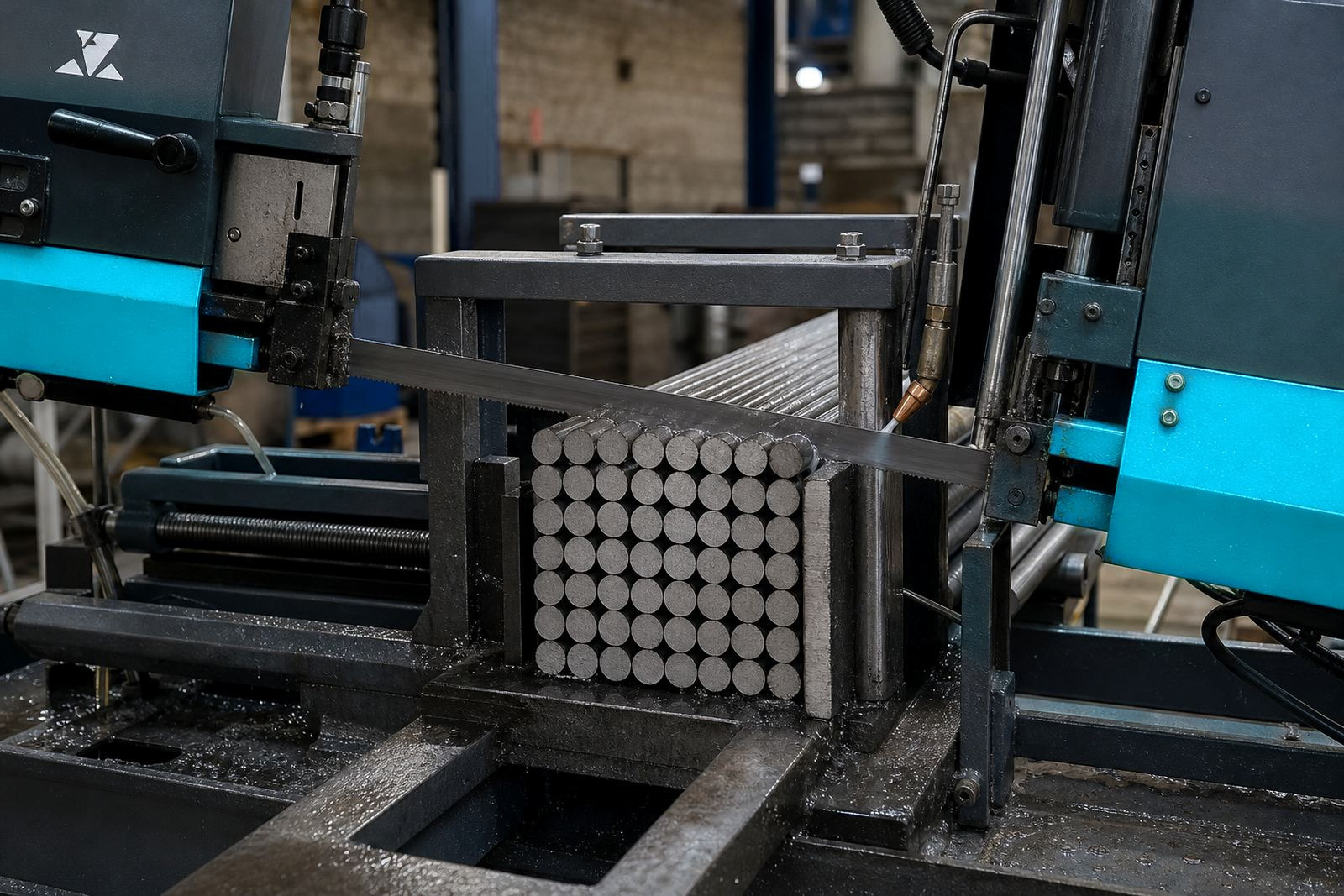
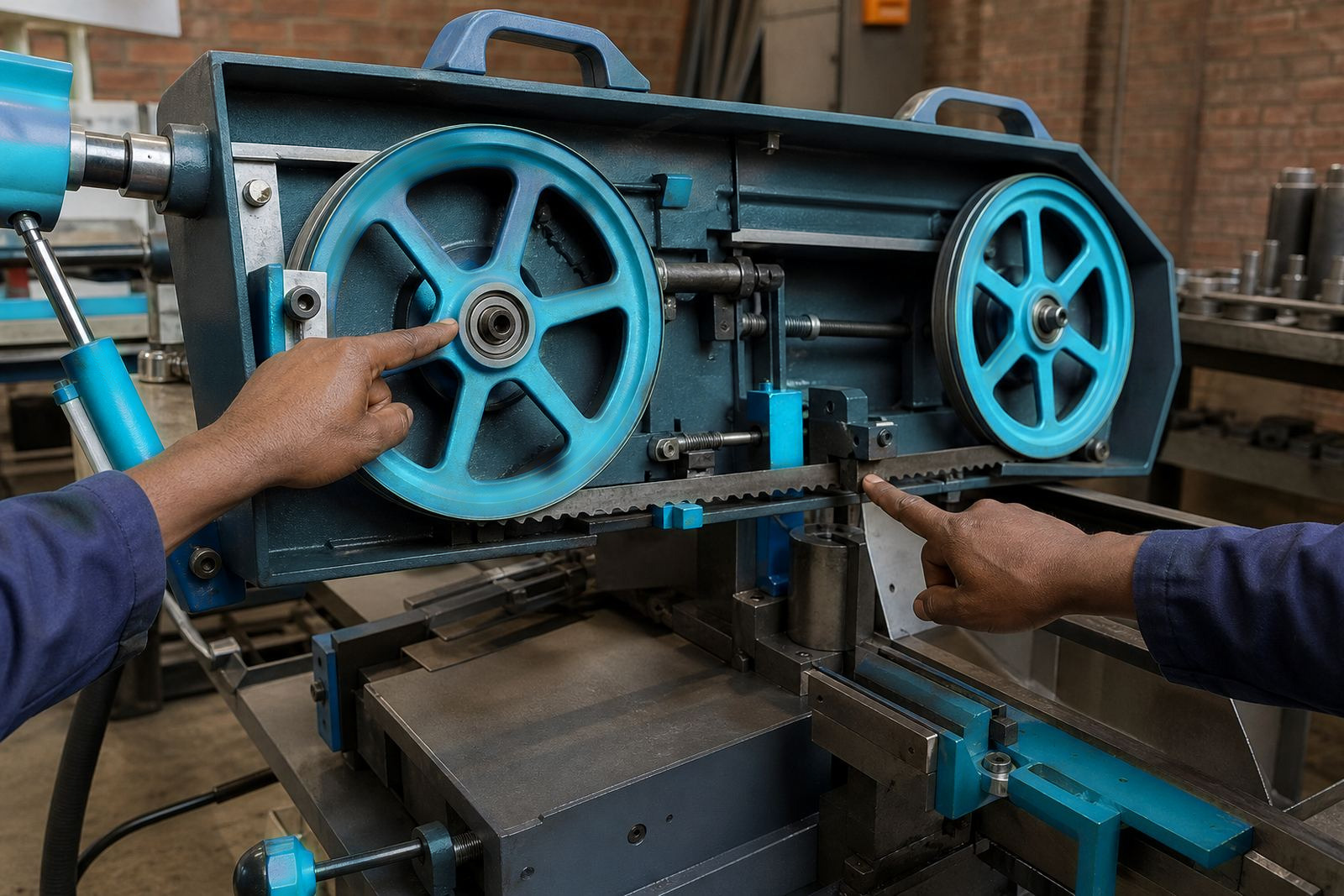
Guide bearings sit close to the blade and help keep it running where the cut wants it to go. On a bandsaw, they work with the side guides and back support to steady the blade under feed. On a manual hacksaw machine, the same basic idea applies: the blade must stay controlled through the full stroke.
When the bearing surface is rough or the set-up is loose, the blade can twist slightly and leave a cut that looks acceptable at first but moves off line deeper into the job. That is often blamed on the blade alone, yet the bearing condition is part of the picture.
Small signs that point to bearing trouble
Most bearing problems show up in the cut before they show up in the machine room. A blade that rubs on one side, a cut that wanders on thicker section, or a finish that looks polished on one edge and torn on the other all deserve a closer look. Heat around the guides is another clue, especially on long runs through mild steel flat bar or heavy section tube.
- Blade tracks to one side after a fresh fit
- Unusual noise near the guide arm or head
- Visible scoring on the blade back or sides
- Guide bearings that feel notchy when turned by hand
- Metal dust building up around one guide more than the other
If the same machine keeps needing blade changes sooner than expected, the bearings may be forcing the blade to work harder than the material requires.
How bearing wear changes cutting behaviour
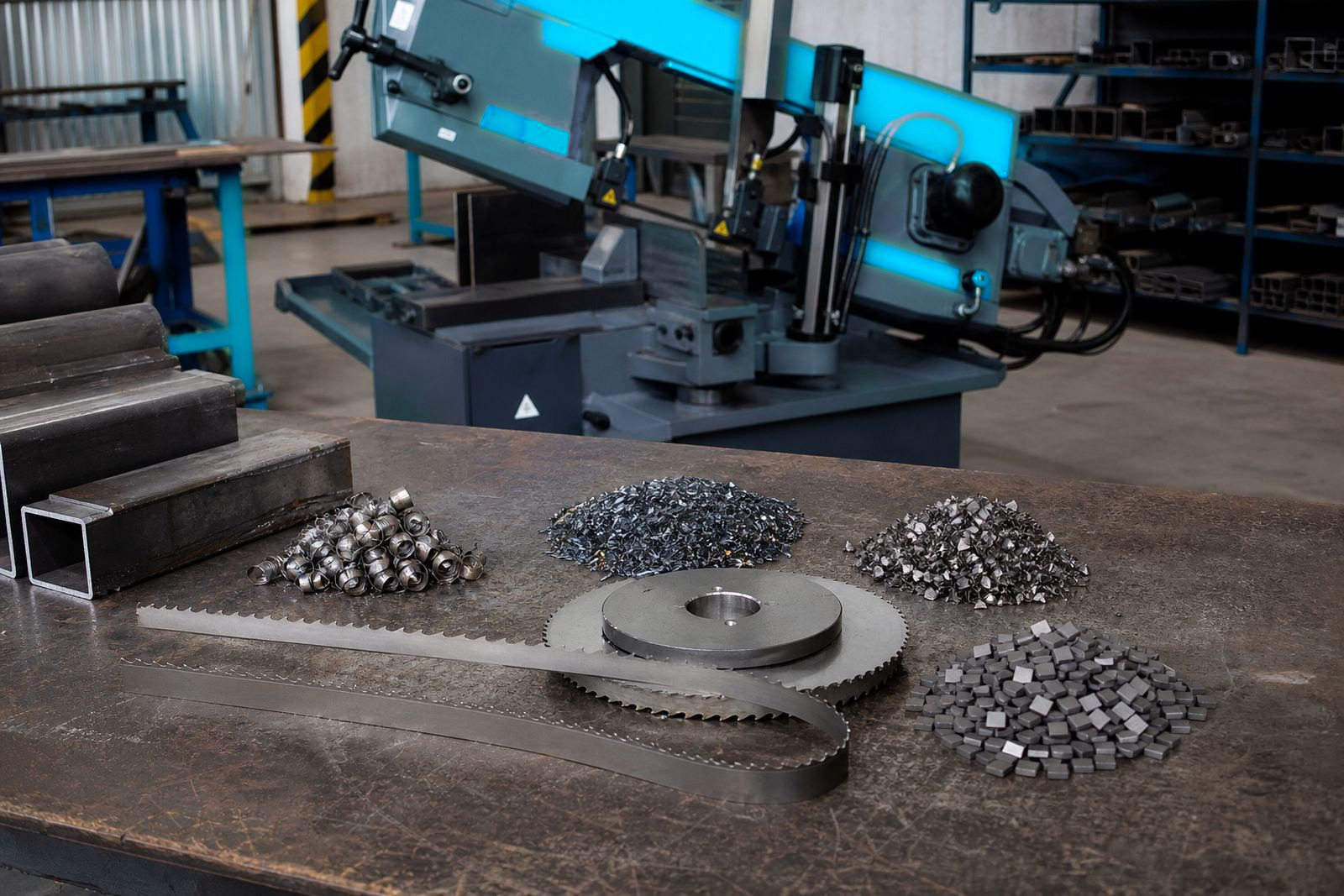
A bearing that has flattened spots or side play changes the way tooth pitch behaves in the cut. A coarse pitch blade can cope with some movement in light work, but a fine pitch blade on thin wall material will complain fast if the guide line is poor. The effect is stronger on variable pitch blades, where each tooth enters the cut under slightly different load.
On stainless, tool steel, or hard carbon section, poor guide support often shows up as tooth breakage near the front of the blade. On softer mild steel, the machine may continue cutting while quietly drifting off square. Problems can stay hidden for a while, then turn into a bigger maintenance bill.
A workshop check that takes the guesswork out
A proper check needs a steady method. Clean the guide area, inspect both sides of the blade path, and feel for roughness in the bearings. Check that the blade sits central through the guide pack and that the bearings are not clamped so tightly that they leave burn marks on the blade body.
- Confirm the blade width matches the machine and job
- Check blade thickness against the guide gap
- Inspect bearing rotation with the machine isolated
- Look for coolant residue mixed with fine swarf
- Set the guide position before chasing feed pressure
Once the guide line is sound, then it makes sense to revisit feed and speed. Too much feed on a narrow blade can look like a guide problem, but the real issue may be that the blade was being pushed harder than the tooth form could carry.
Blade settings that work better with healthy bearings
Guide bearings and blade settings belong together. A bi-metal blade with M42 tooth material needs steady support if you want good life on mixed section work. Carbon steel blades are less forgiving when the machine is under strain, so the guide setup must be clean and true before the cut starts.
Run-in comes next. A fresh blade should not be forced straight into heavy feed on the first cut. The first jobs should let the teeth settle, especially where the material skin is hard or scale is present. If coolant is part of the machine set-up, check that it reaches the cut line and wets the outside of the frame too.
In practice, good guide bearings help the blade do what the pitch, width and thickness were meant to do in the first place. Without that support even a well matched blade can look wrong.
Alrode to Durban: one job, different workshop habits
A fabrication shop in Alrode may run short, repeated cuts through tube and bar, while a Durban yard might see more humid storage conditions and longer periods between changeovers. That changes how bearings are inspected. In coastal air, light surface rust on guide parts can appear sooner, and fine swarf mixed with coolant can form a sticky film that hides wear.
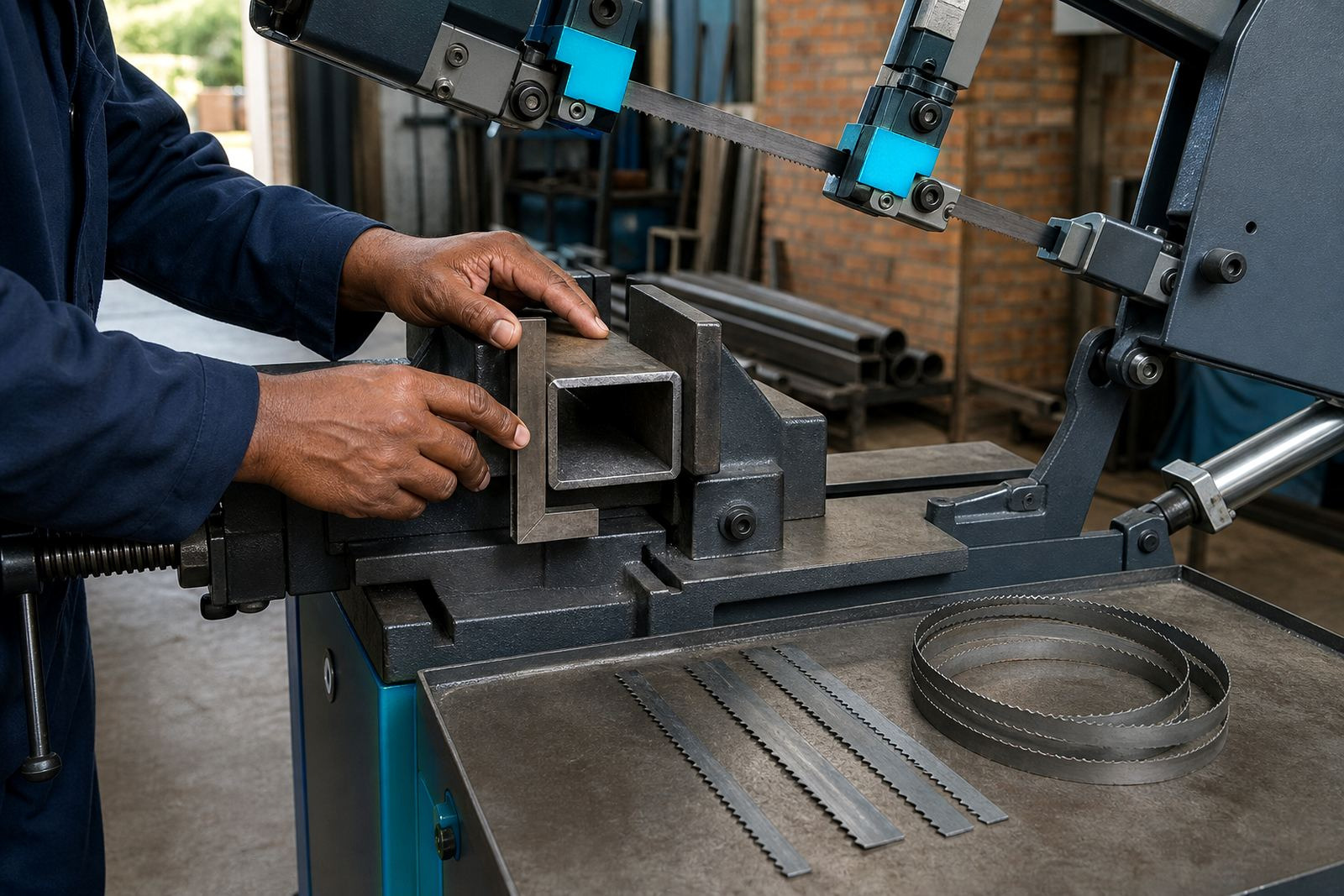
A simple local example is a Vereeniging workshop cutting angle iron for a maintenance batch. The blade looked blunt, but the real issue was one guide bearing that had seized partly and was pushing the blade off centre. Once that bearing was replaced and the guide pack reset, the cut line settled and the blade stopped showing uneven wear on one edge.
Across Johannesburg, Pretoria, Germiston and Cape Town, the same habit pays off: check the guides before blaming the blade, then check the blade before adjusting the machine again.
When guide checks should lead to a fuller review
If the same fault keeps returning, the bearing check should move into a broader blade review. That includes checking the machine fit, reviewing blade failure, verifying the length and selecting the tooth pitch for the material on hand. A workshop cutting mixed profiles may also need stock standardisation so the same blade width and pitch are not being forced across jobs they were never meant for.
Guide bearings are small parts, but they sit right at the point where blade, machine and material meet. Keep them clean, aligned and correctly loaded, and the saw has a better chance of cutting straight without extra strain.