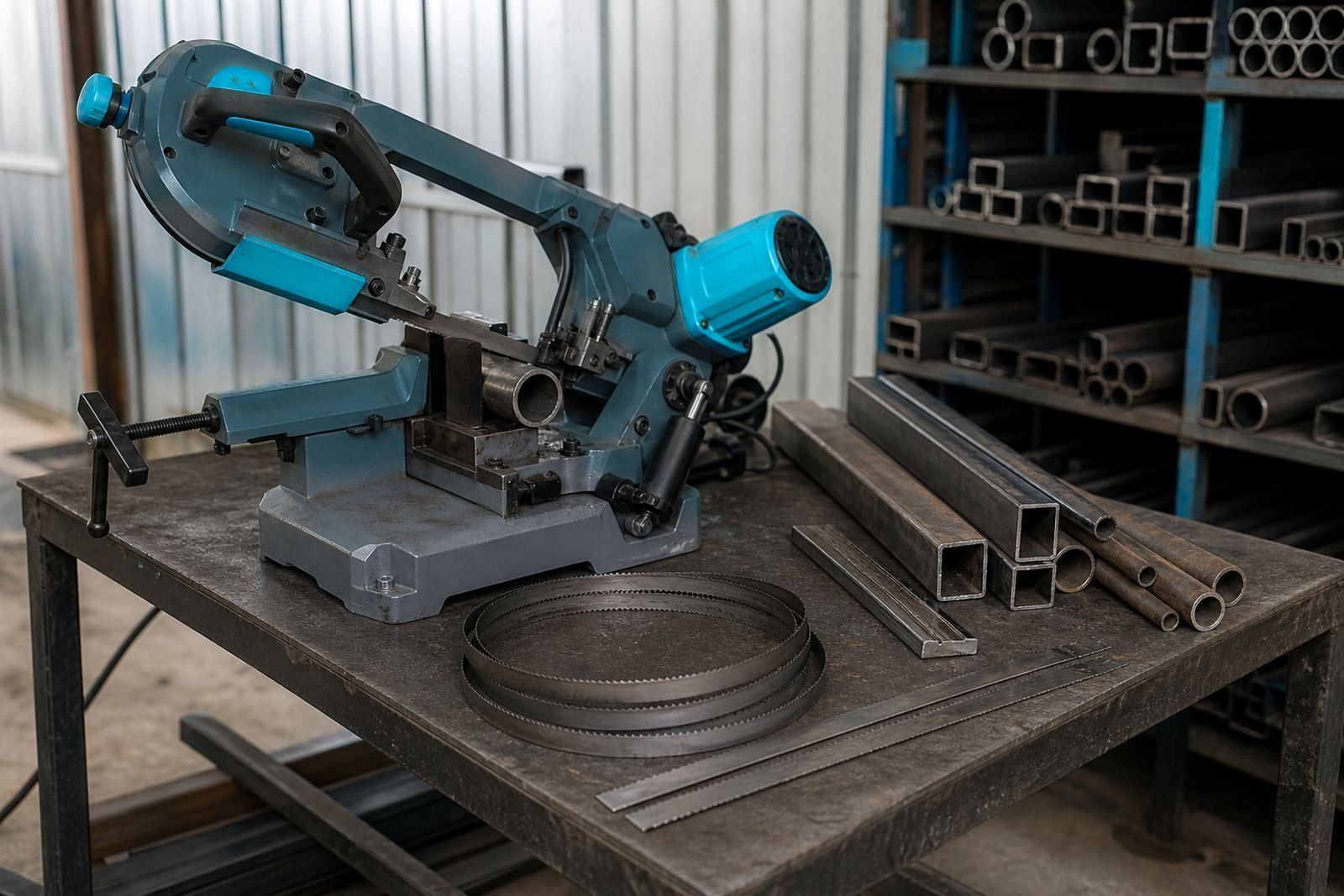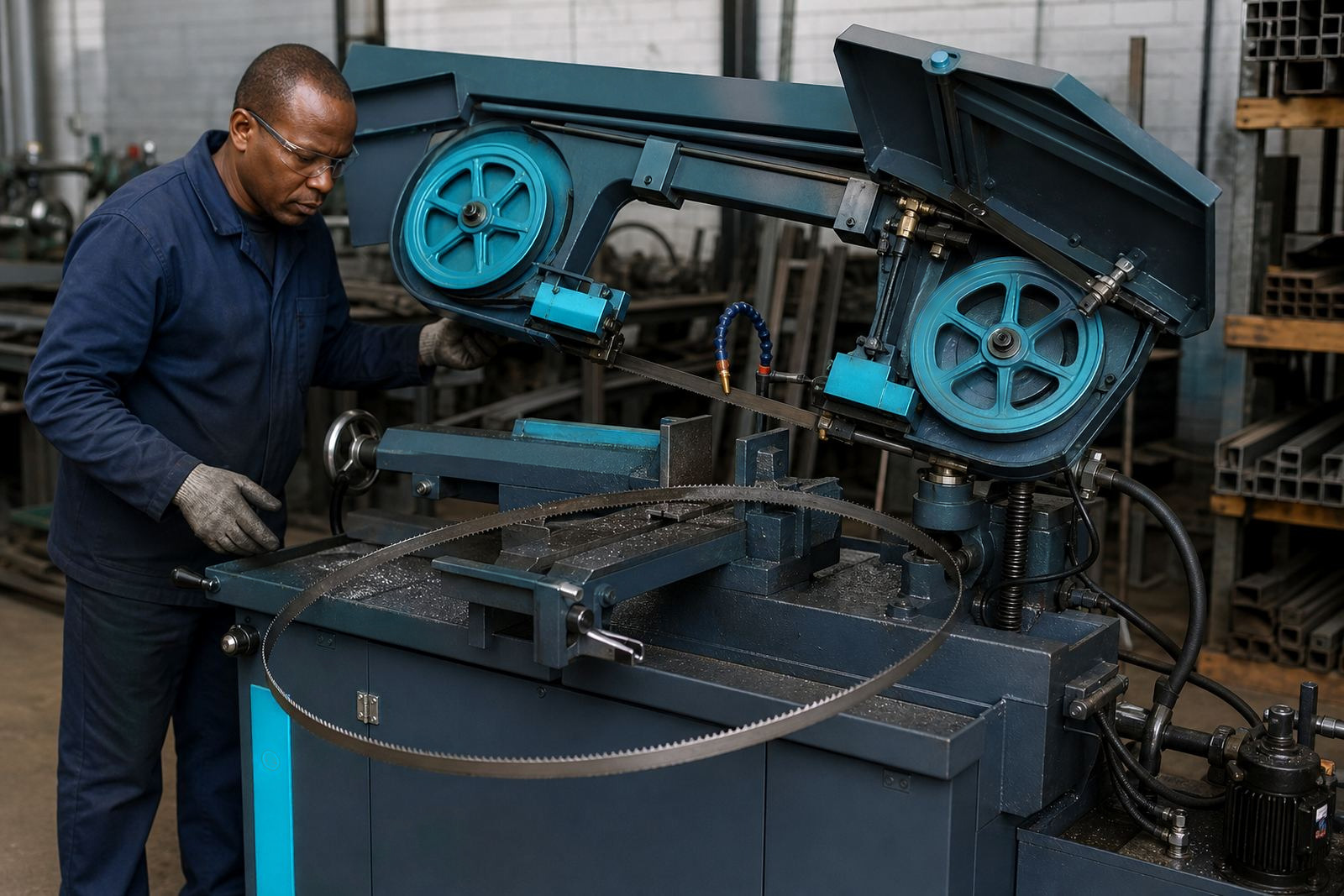
A firm clamp keeps the bar still
When a tube, flat bar or solid section moves even a little in the vice, the blade has to fight that movement on every tooth. That is when cuts start to drift, the kerf opens unevenly, and the last part of the cut leaves a rough face that takes longer to clean up. On metalwork jobs, the clamp is part of the cutting system and a holding point.
Secure clamping also helps the operator set feed and speed with confidence. If the material is held flat and square, the blade can work at a steady rate with a proper run-in. This applies to bi-metal M42 blades, carbon steel blades and manual hacksaw blades too. A clean setup gives the teeth a fair chance to cut instead of rub and chip.
Where poor clamping shows up in the cut
Weak grip often reveals itself before the blade fails. A tube may close up behind the cut. Flat bar can lift at the free end. A long length of stock may chatter as the saw enters the work. Once that happens, the tooth set gets punished and the blade starts leaving a curved cut face or a heavy burr. On harder sections the damage builds fast.
- Blade teeth chip near the start of the cut
- Cut faces show a visible lean or bow
- The saw makes a harsher sound than usual
- Thin wall tube crushes at the clamping point
- Long stock vibrates and marks the vice jaws
These signs are worth checking before people blame the blade. A blade with the wrong tooth pitch can struggle, but a loose clamp will make a good blade look poor.
Match the vice pressure to the material shape
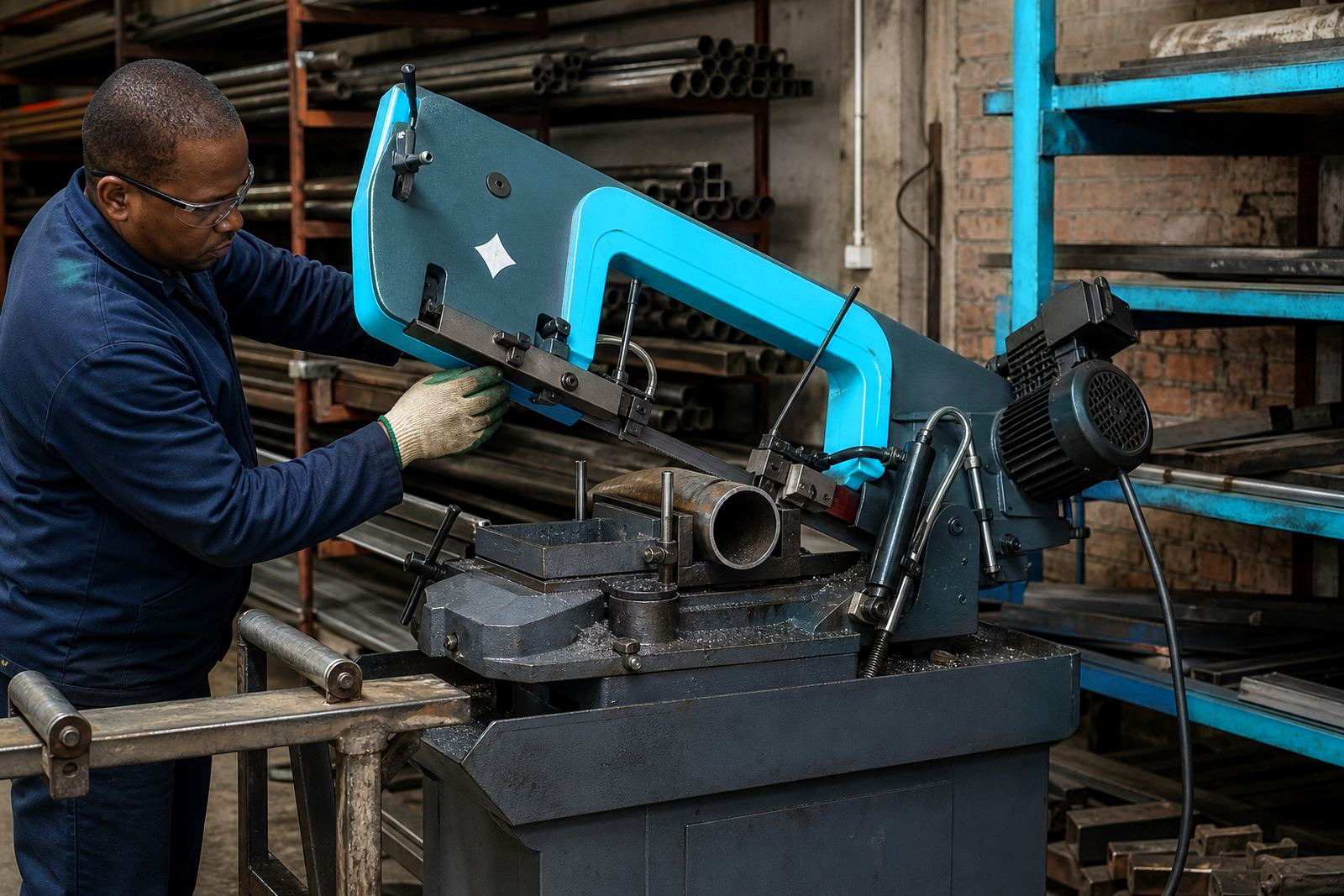
Different sections need different grip. Round bar usually needs jaw contact that spreads the load evenly, while square and rectangular sections need full support on the flat faces. Thin wall material needs enough pressure to stop movement, but not so much that the section pinches closed. If the workpiece distorts before the cut begins, the blade will not stay true.
For longer lengths, support on both sides of the cut helps. That reduces sag and keeps the workpiece from dropping as the final teeth pass through. In a workshop in Alberton or Vereeniging, where mixed offcuts and bundle work are common, this small step often saves blades, time and material. On manual saw jobs, where the operator feeds by hand, every movement shows up in the finish.
- Use full jaw contact on flat stock
- Support long sections close to the cut
- Keep tube clamping even to avoid collapse
- Check that offcuts cannot twist as the blade exits
Blade choice and clamping work together
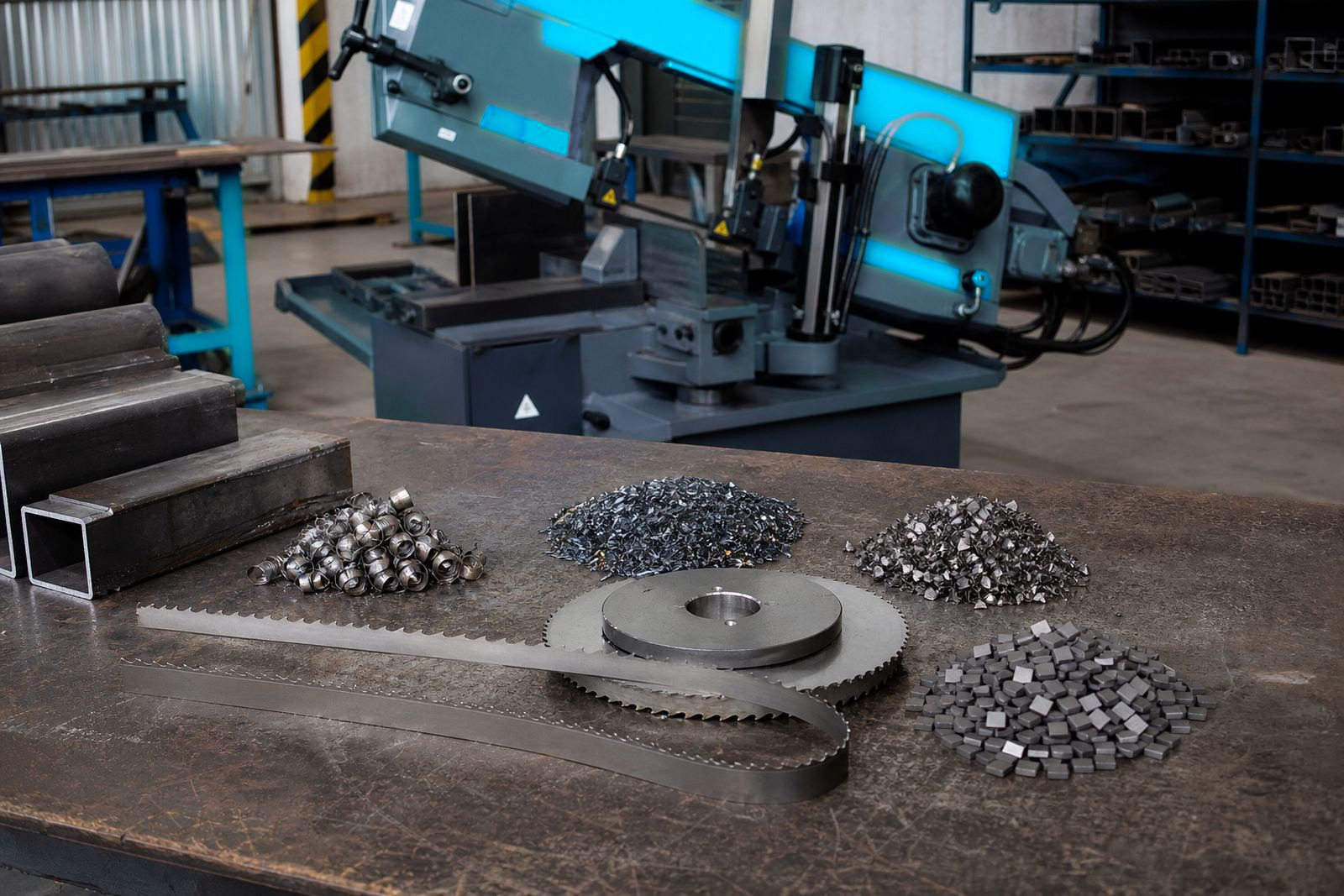
Clamping cannot fix the wrong blade choice, but it can stop a suitable blade from being overworked. A bi-metal M42 blade with the correct tooth pitch handles steel sections well when the cut is steady. Carbon steel blades suit lighter manual work, with the material held securely and the feed kept under control. Variable pitch blades can help reduce chatter on mixed section work, but only if the stock stays planted in the vice.
We also confirm blade width. Heavier section work gets better straight-line control with a wider blade, while a narrower blade suits tighter radii or lighter manual saw use. Thickness affects stability and kerf behaviour too. If the vice lets the stock move, thickness and straight line control count for less than they should, because the cut has to correct the setup.
Feed, speed and coolant need a steady workpiece
Once the clamp is right, feed speed and coolant checks become easier to judge. A steady workpiece lets the teeth bite properly instead of skidding across the surface. That reduces heat and helps the blade carry swarf out of the cut. With coolant, keep the cut cool and clear debris before it packs into the gullets.
Too much feed on a loose job makes the blade hunt. Too little feed on a hard, secure clamp can polish the tooth tips and reduce blade life. In both cases the vice is part of the answer, because it gives the operator a fixed reference point. When the clamp holds the bar properly, the saw can do its job at the right pace without dragging the whole setup with it.
- Keep the feed steady and avoid pushing in pulses
- Watch for signs of rubbing at the start of cut
- Use coolant where the machine and material call for it
- Recheck grip after the first few cuts in a bundle
A local workshop example from Alberton
A fabrication team in the Alrode area brought through a mix of box section and solid bar for repeated cutting. The main issue was the blade size. The trouble came from uneven vice pressure and short, loose offcuts sliding when the cut broke through. Once the operator added better support on the exit side and squared the stock properly in the jaws, the cuts settled down and the teeth stopped suffering at the end of each stroke.
Johannesburg, Pretoria and Durban all see plenty of this work. Shops are often running several materials on the same machine, and the clamping method changes with each section. The best results usually come from treating the vice as part of the cut plan, not a separate step that gets rushed before the blade starts.
Small checks before the saw starts turning
A short pre-cut check helps more than most people expect. It needs a clear look at how the section sits and how the jaws are loaded. If the stock can shift by hand, the saw will push it further once the teeth enter. If the jaws mark only one corner, the workpiece may lean under pressure. Straight cuts begin to fail there.
- Confirm the workpiece sits square in the vice
- Check that jaws contact the right faces evenly
- Support the free end of long material
- Make sure the cut line clears the jaws
- Watch for movement as the blade exits
Our MoreCut Saws team works with bandsaw blades and hacksaw blades for metalwork, including weld-to-length blade service, tooth pitch selection and blade failure review.