Why do those early cuts carry more weight than the first run?
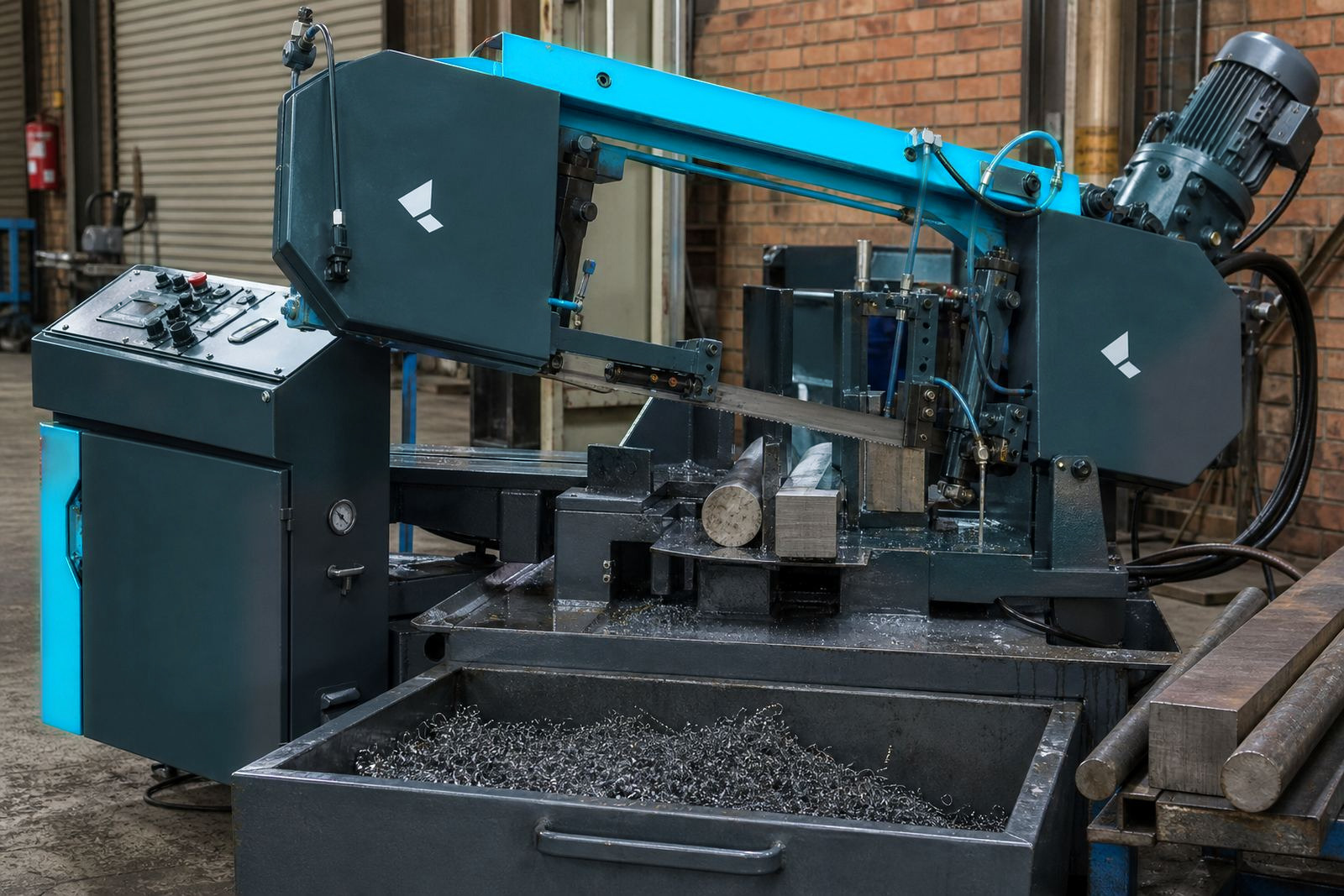
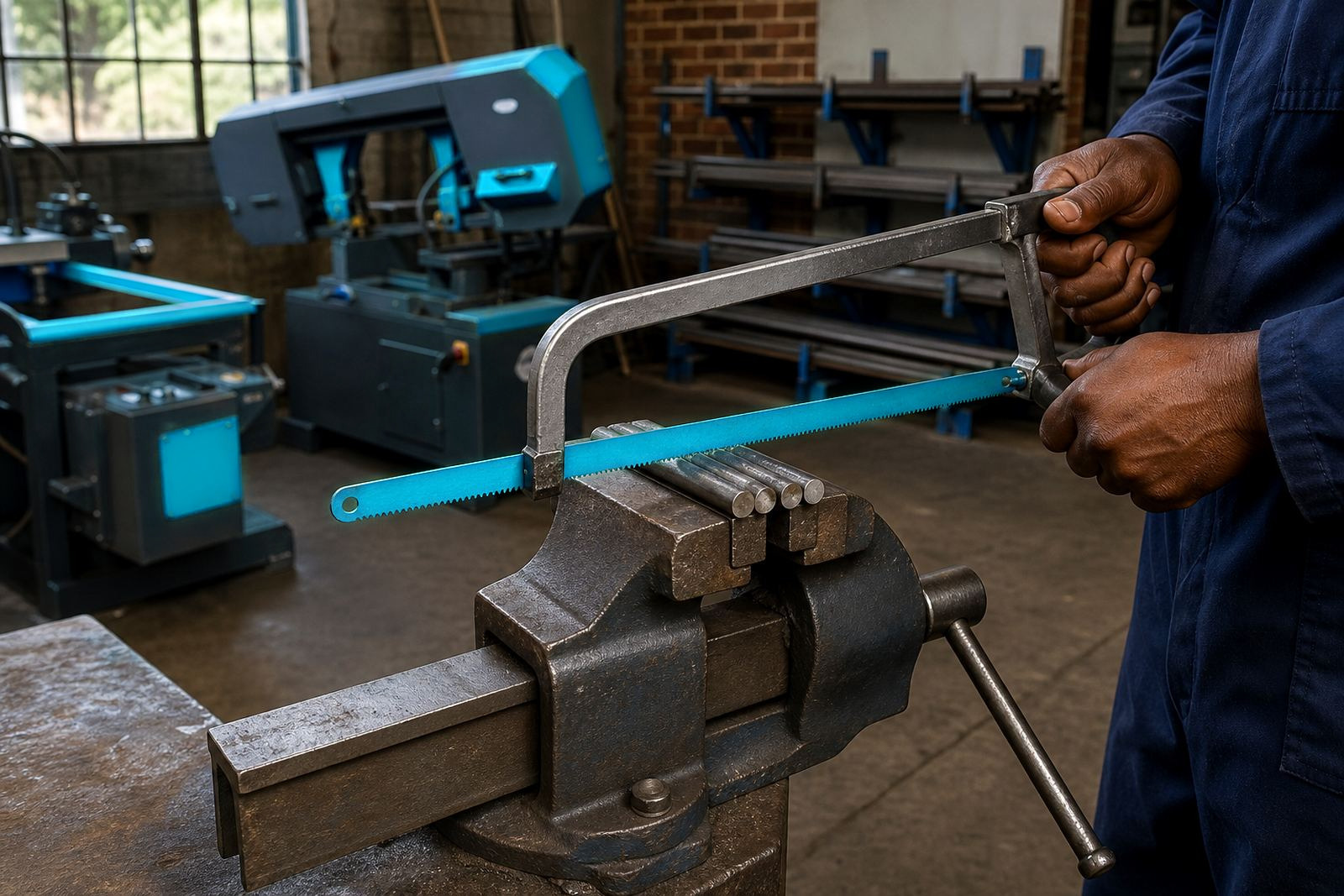
A fresh bandsaw or hacksaw blade leaves the weld or pack with sharp tooth points and full set at the edge. If it is pushed hard straight away, the teeth can chip, the gullets load up too fast and the cut starts to wander. Run-in gives the edge a chance to smooth off under controlled load on mild steel, stainless sections, solid bars and mixed offcuts that turn up in Alrode workshops every week.
Let the cutting edge settle before heavy feed, long duty cycles and full bundle work begin. That is especially important where blade width, thickness and tooth pitch were matched for a specific job, because the wrong start can spoil a good match in just a few cuts.
Set the blade gently, then let it earn speed
Run-in works best when the machine is steady and the operator is paying attention to the first few lengths. Start with a lighter feed and a moderate surface speed, then increase both only after the edge has opened up evenly. A blade that is forcing chips too hard will sound rough, leave a bright scored face and sometimes show small tooth damage near the weld.
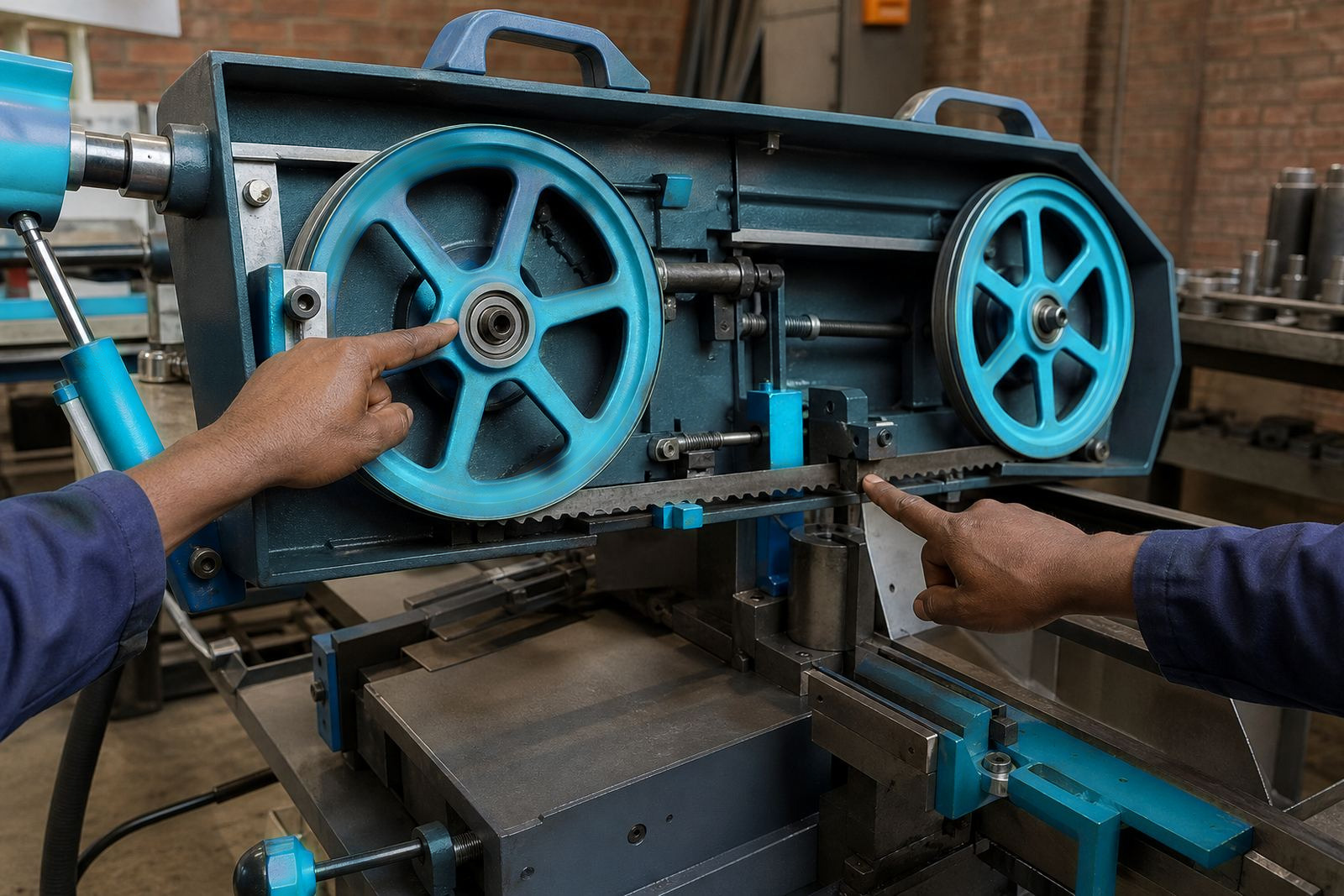
On most metalwork jobs, the first stage is about control rather than output. Keep the work clamped properly, check that the blade tracks correctly and listen for changes in tone. If the saw starts to chatter or the cut face looks torn, ease the feed and check the setup before carrying on.
- Begin with lighter feed pressure on the first cuts
- Use a moderate cutting speed, then increase in stages
- Watch chip shape and colour at the gullet
- Stop if chatter, squeal or wandering starts early
Tooth pitch, blade width and thickness need the same discipline
Run-in is not only about speed. A blade with the wrong tooth pitch for the section size will struggle from the start, no matter how careful the operator is. Thin-wall material and smaller sections suit fine TPI, while heavier profiles and solid bar work better with coarser pitch. Variable pitch helps reduce vibration on mixed work, but it still needs a sensible first pass.
Blade width and thickness also change the feel of the run-in. Wider blades hold straighter on larger saws, while narrower blades handle tighter curves and lighter manual machines more easily. The blade and machine must suit the work being done. A blade that is over-stiff for the saw can become noisy, and a blade that is too fine for the material can load the teeth before they have settled.
- Match TPI to wall thickness and section size
- Use variable pitch where vibration is a concern
- Confirm width and thickness suit the machine guides
- Check that the set is even along the blade length
Bi-metal and carbon steel blades behave differently in the first cuts
Bi-metal blades with a hard tooth edge need careful run-in because the teeth are designed to keep cutting after the body flexes. They handle tougher metalwork well, but if the feed is too aggressive early on the tooth tips can chip before the edge has settled. Carbon steel blades are more forgiving on light manual work and softer materials, yet they still need a clean start so the teeth do not glaze or fold.
In workshop terms, protect the tooth line. A clean run-in helps both blade types hold their set, stay on line and avoid premature failure near the weld. When a blade is used on a machine that sees mixed jobs, the first cuts often tell you whether the pitch choice was right for the material stack.
Coolant, chips and the cut face tell you plenty
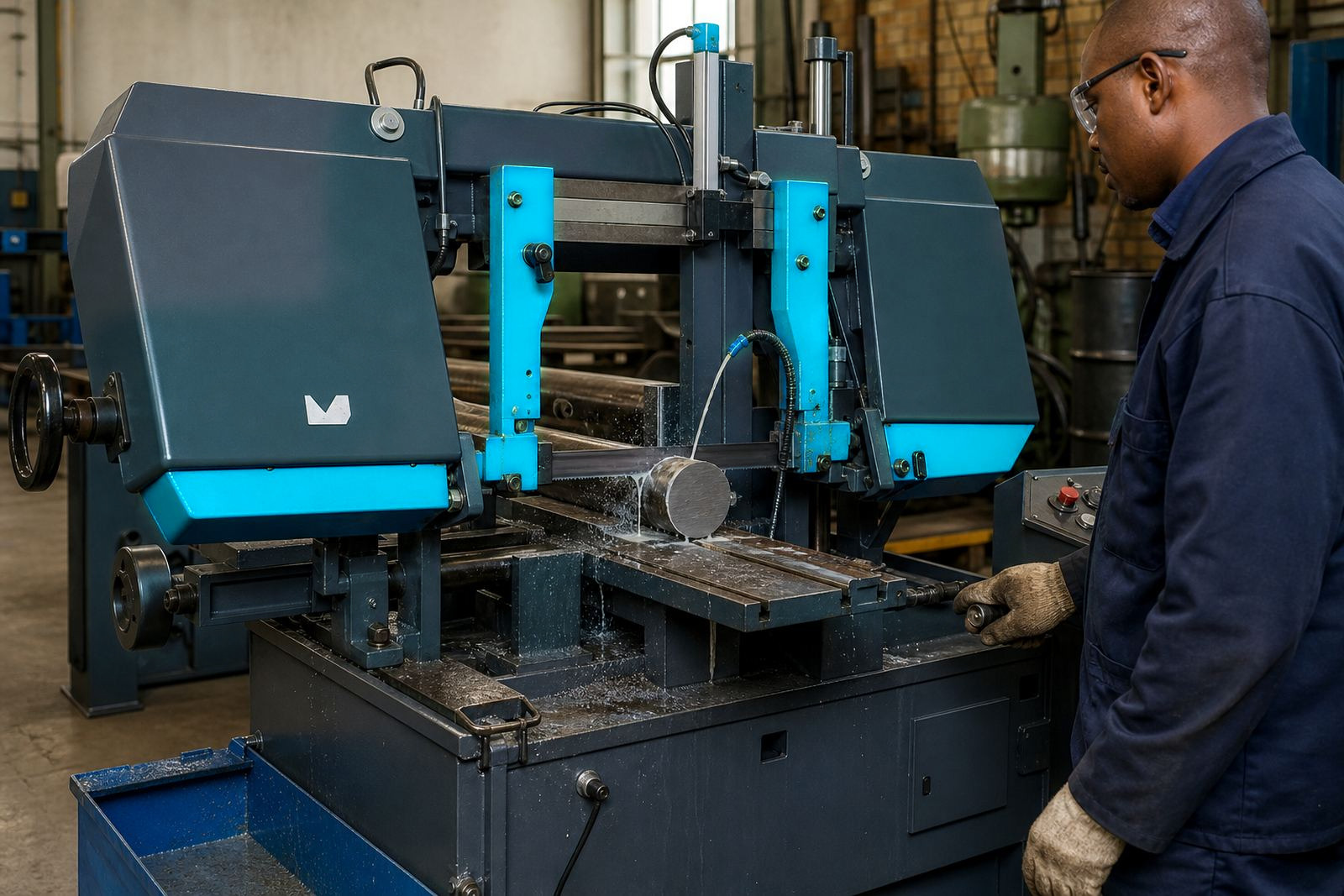
Coolant is worth checking before the first serious run. The right flow keeps heat under control, clears chips and helps the blade leave a cleaner face. Coolant needs to be strong, clear and reaching the cutting zone so the teeth stay cooler and wear evenly. Long cuts, square sections and thick wall material need it, where heat stays in the gullets for longer.
Do not ignore chip shape. Fine powder points to rubbing and not cutting. Blue chips point to heat. Long curled chips can be fine on some materials, but they should not bunch up around the blade. A good run-in leaves a steady chip stream and a smooth face with no hard ridge at the exit side.
- Check coolant flow before production cutting starts
- Clear packed chips from the guides and gullets
- Look for heat marks on the tooth line
- Inspect the first cut face for tearing or drift
A Johannesburg workshop case that shows the difference
A fabrication team in Johannesburg working on mixed angle iron and heavy flat bar needed a new blade to hold line through a batch of repeat cuts. The first blade was pushed too hard from the start and the teeth dulled quickly near the top of the section. After that, the team changed the first few cuts to a lighter feed with a slower start, then stepped up the speed once the blade had settled.
The difference was visible in the cut face and in the machine noise. The blade ran quieter, the chips moved more evenly and the operator fed the saw through the work with less force. Running in gives the practical benefit. It protects the blade on day one, and it keeps the saw easier to work with when the job gets busy.
What our team checks when a new blade is going in
Blade setup is easier when the machine, material and operator note are all aligned. Our team helps with blade selection, length verification, machine fit checks and starter kit planning so the first cuts are not a guessing game. We also look at feed speed settings, tooth pitch selection and coolant checks where the job needs it.
In workshops across Alberton, Germiston, Boksburg, Pretoria, Vereeniging, Durban and Cape Town, the run-in question usually comes down to the same few points: is the pitch right, is the set even, is the coolant reaching the cut and is the feed still gentle enough for the first lengths. Once those basics are in place, the blade has a fair chance to settle properly.
- Confirm the blade length and machine fit
- Check tooth pitch against the material section
- Set a lighter first-pass feed and speed
- Review the first cuts before full production starts
The run-in plan stays tied to the actual job, using the packing table as a guide.