What tooth set changes in the cut
Tooth set is the sideways offset given to blade teeth so the kerf is wider than the blade body. That extra width keeps the blade from binding, helps chips leave the cut and reduces heat when the feed is set correctly. On metal, the set has to work with tooth pitch, blade width and thickness, material hardness and the condition of the machine guides.
In a workshop cutting mild steel tube in Alberton, a blade with the wrong set may still cut, but the finish can look ragged and the blade can wander in the cut. A better matched set gives a cleaner track, less rubbing and more even wear across the tooth line.
- Set that is too little can pinch in thicker stock.
- Set that is too heavy can leave a coarse edge and shorten blade life.
- Stable guide bearings are checked along with the set pattern.
- Cooling and chip clearance become more important as section size increases.
The main set patterns used on metal blades
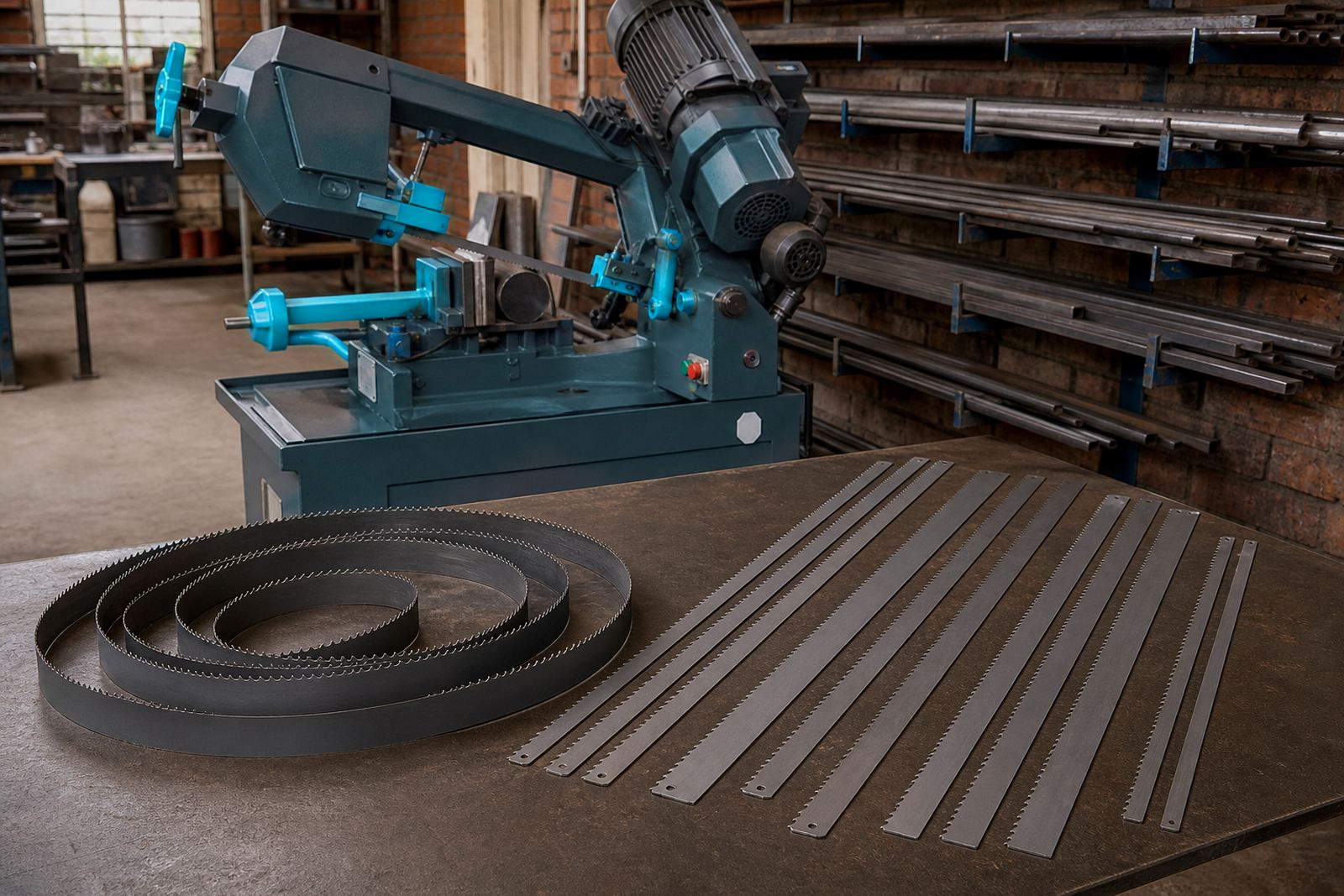
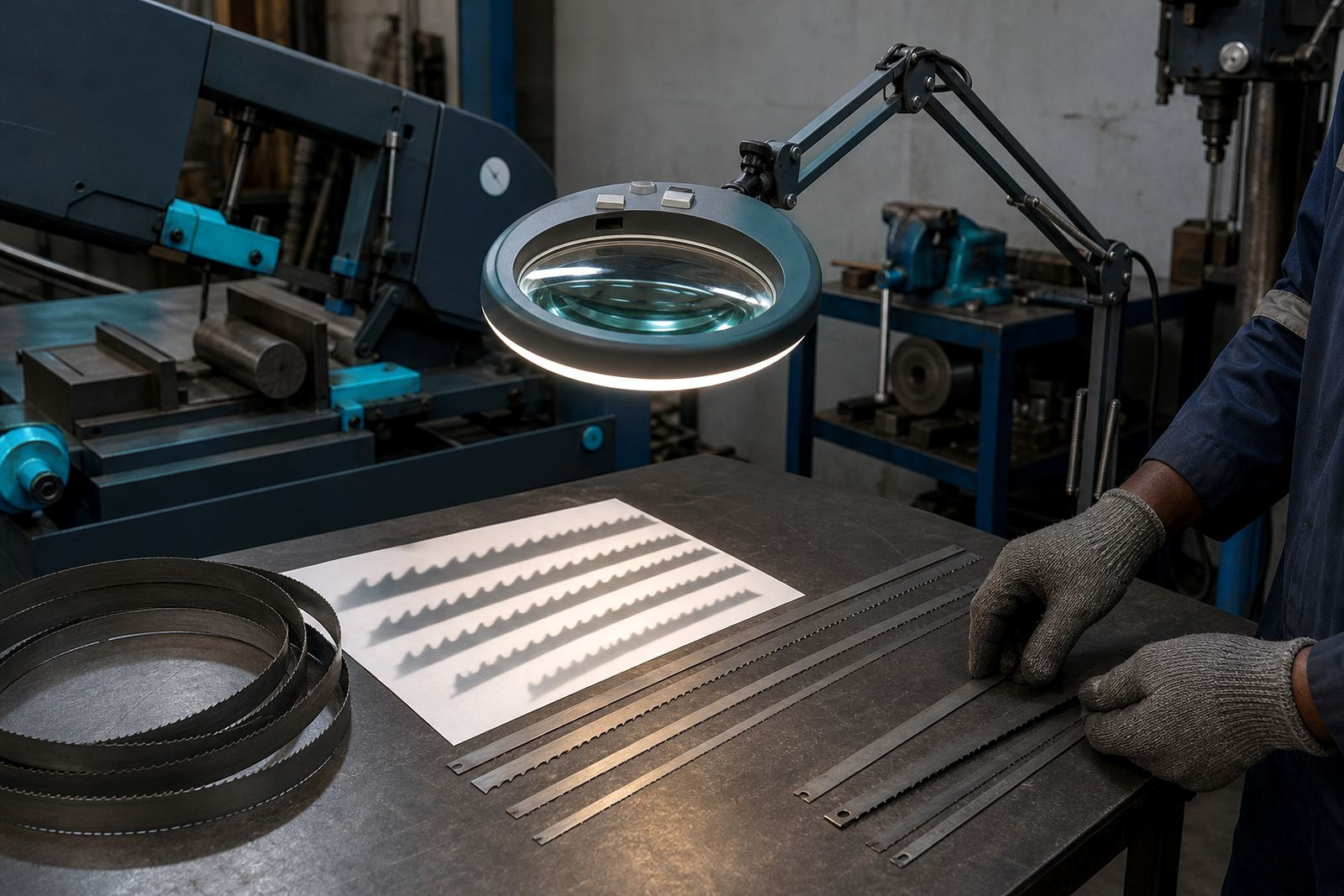
Metal cutting blades usually use one of a few common patterns. A regular set alternates teeth left and right in a steady sequence. A wavy set places small groups of teeth with a gentler offset, which helps on thinner sections and lighter machines. A variable set mixes the spacing of the set, which can reduce chatter and soften vibration on mixed work.
Bi-metal blades often use a carefully controlled set because the tooth tips are hard and the back material needs to flex. Carbon steel blades can also use these patterns, though they are more sensitive to heat and heavy feed. The choice takes the blade type and the job in front of the operator into account.
- Regular set suits general sawing and steady feed.
- Wavy set helps with light tube, thin wall section and bundle cutting.
- Variable set can calm vibration on older machines.
- Uniform set patterns can support more predictable chip formation.
Matching set to material thickness and section shape
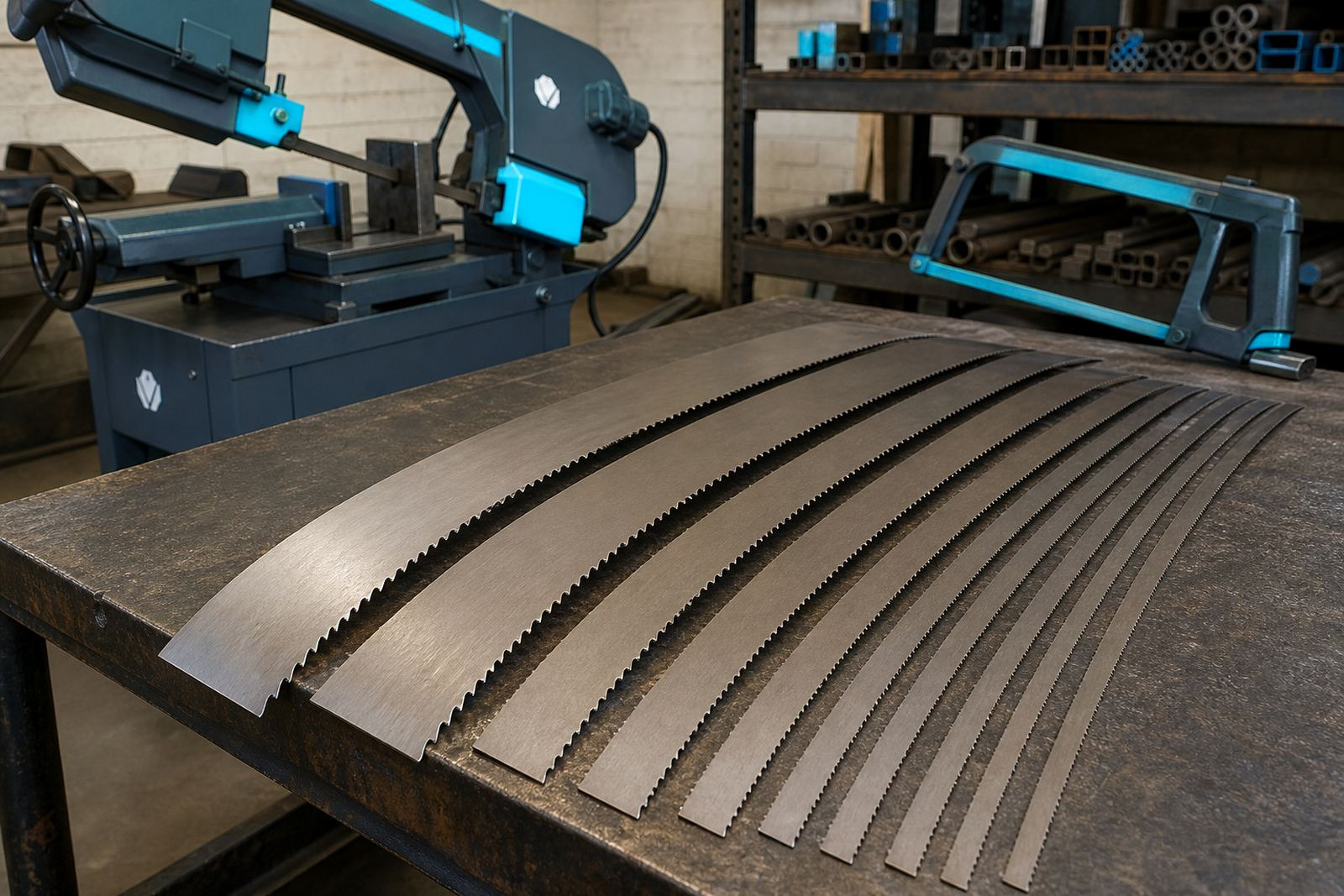
Round bar, square tube, flat bar and structural section all present different cutting demands. A narrow blade with a fine pitch is often used on thinner material, where a lighter set and smaller chips keep the cut controlled. Thicker section usually needs a stronger tooth pattern and enough set to keep the blade free of the cut face.
For mixed bundles or stacked material, the set must cope with changing entry points as each tooth meets a different wall thickness. On those jobs, the feed and speed you run carry as much weight as the tooth geometry. Too much pressure can flatten the benefit of a good set, while too little feed can make the blade rub and polish instead of cutting.
- Thin wall tube needs a finer pitch and lighter cutting pressure.
- Solid bar benefits from stronger chip clearance and steady feed.
- Wide sections can need more blade stability than a narrow frame provides.
- Variable pitch can help when one job includes different wall thicknesses.
How set works with pitch, width and thickness
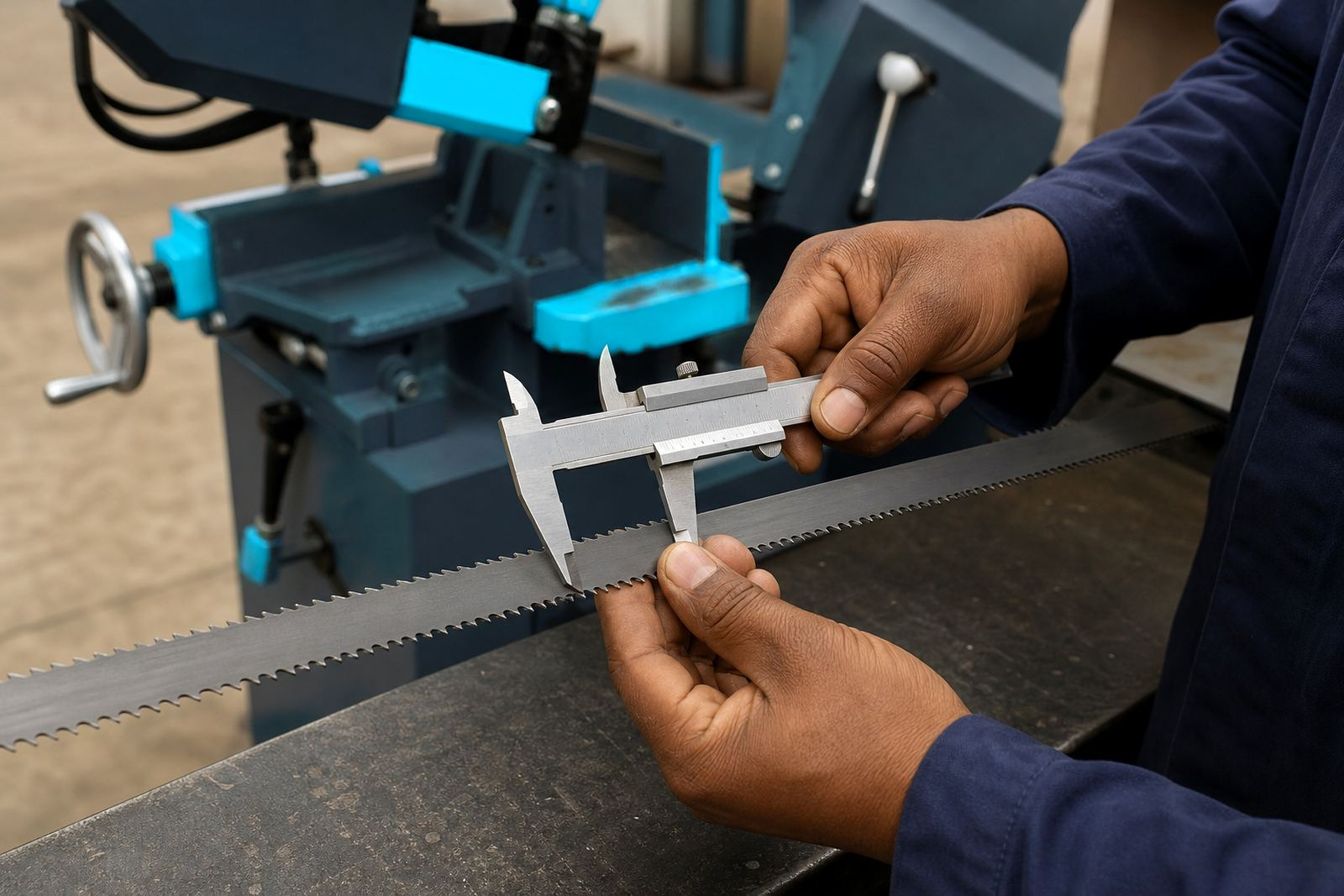
Tooth set never works alone. Tooth pitch, usually described in TPI, controls how many teeth are in contact with the work. Blade width affects tracking and the blade’s ability to stay straight through the cut. Blade thickness influences flexibility and how much resistance the blade body can handle before it starts to twist.
A narrow blade with aggressive set may turn well on small machines, but it can wander on heavy section if the guides are loose. A wider blade with a modest set often gives better tracking on larger saws, provided the machine is aligned and the feed is set for the stock. The right balance is different for a manual hacksaw blade and for an industrial bandsaw blade, even when both are cutting the same steel.
- Fine TPI works better on thin material and small cut faces.
- Coarser TPI clears larger chips from heavy section.
- Wider blades track straighter on long cuts.
- Blade thickness should suit the machine and the cut pressure.
What to watch during run-in and first cuts
New blades need a careful run-in so the tooth edges wear in evenly. Use lighter feed and a sensible surface speed for the first cuts, especially on harder material or on a machine that has not been checked for a while. If the set is right but the run-in is rushed, the teeth can chip before the blade has settled into the cut.
Coolant also has a place here. It lowers heat, flushes fine chips and helps protect the tooth tips, particularly on long production runs. On a Cape Town workshop cutting stainless or carbon steel in humid conditions, coolant and clean chip removal need more care than people expect because damp air and warm stock can push temperatures up during repeat work.
- Keep the feed light while a new blade beds in.
- Check that coolant reaches the cutting zone.
- Listen for squeal, which often points to rubbing.
- Look at the chip shape after the first few cuts.
A practical Alberton example from the floor
A fabrication shop in Alrode may run a manual saw for small pipe, then switch to a bandsaw for plate, box section and solid bar. If the same set pattern is used for every job, the operator ends up changing speed and pressure too often. A better approach is to separate the work by material and section size, then match the blade set, pitch and width to each group.
Length verification, machine fit checks and blade failure review support reliable cutting. If teeth are stripping on one machine but not another, the issue may be guide alignment, feed pressure, coolant delivery or a set pattern that is too aggressive for the saw frame. In Johannesburg, Vereeniging, Pretoria, Durban and Cape Town workshops, the right set saves time on rework and keeps the cut face usable for the next process.
- Keep one blade plan for thin wall stock and another for solid section.
- Check guide condition before blaming the blade alone.
- Use starter kits when a workshop is standardising blade stock.
- Record the cut that produced a clean finish and repeat that setup.