Where bundled stock starts to go wrong
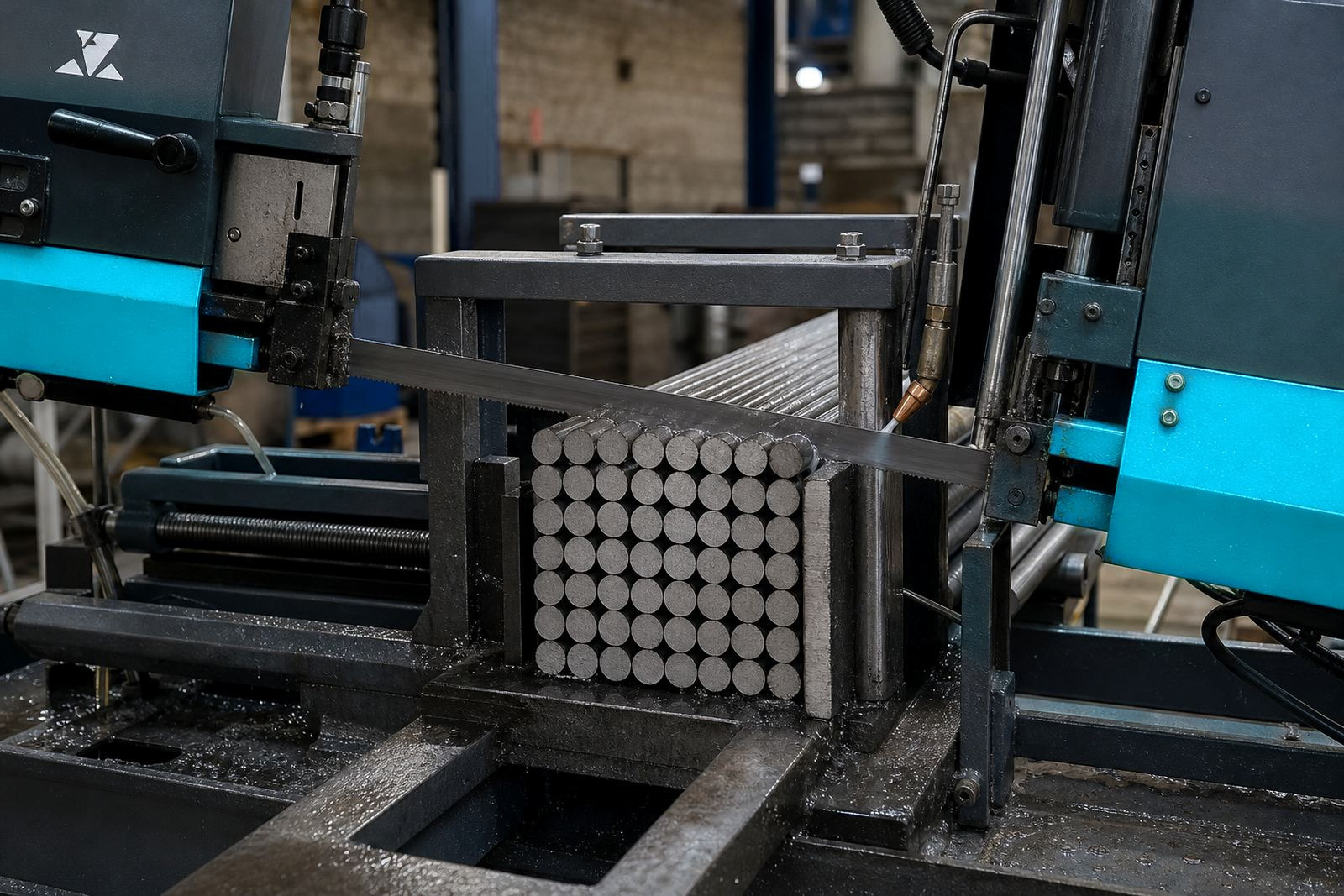
A bundle is separate pieces of metal, even if it looks tidy on the rack. Each section can shift as the cut opens, and that movement is what pulls teeth sideways, marks the cut face and shortens blade life. Thin-wall tube behaves differently from solid bar, and mixed pack heights make the top layers cut before the bottom layers have settled.
The first mistake is loose clamping. The second is assuming a fine pitch will cure every problem. If the blade is too fine for the section size, gullets fill with swarf and the cut starts to rub. If the pitch is too coarse, fewer teeth share the load and the blade can grab, especially where the bundle is made up of several sizes clamped together.
- Keep bundle height even where possible.
- Remove loose strapping, scale and trapped chips before clamping.
- Match the pitch to the thickest section in the pack.
Clamping that holds the pack without crushing it
Good clamping supports the full width of the bundle and leaves little room for the stock to open as the cut starts. For tube, a hard clamp can distort the wall and let the blade wander after the first few millimetres. For flat bar and solid sections, the issue is usually side slip, so the jaws must hold the pack square to the blade path.
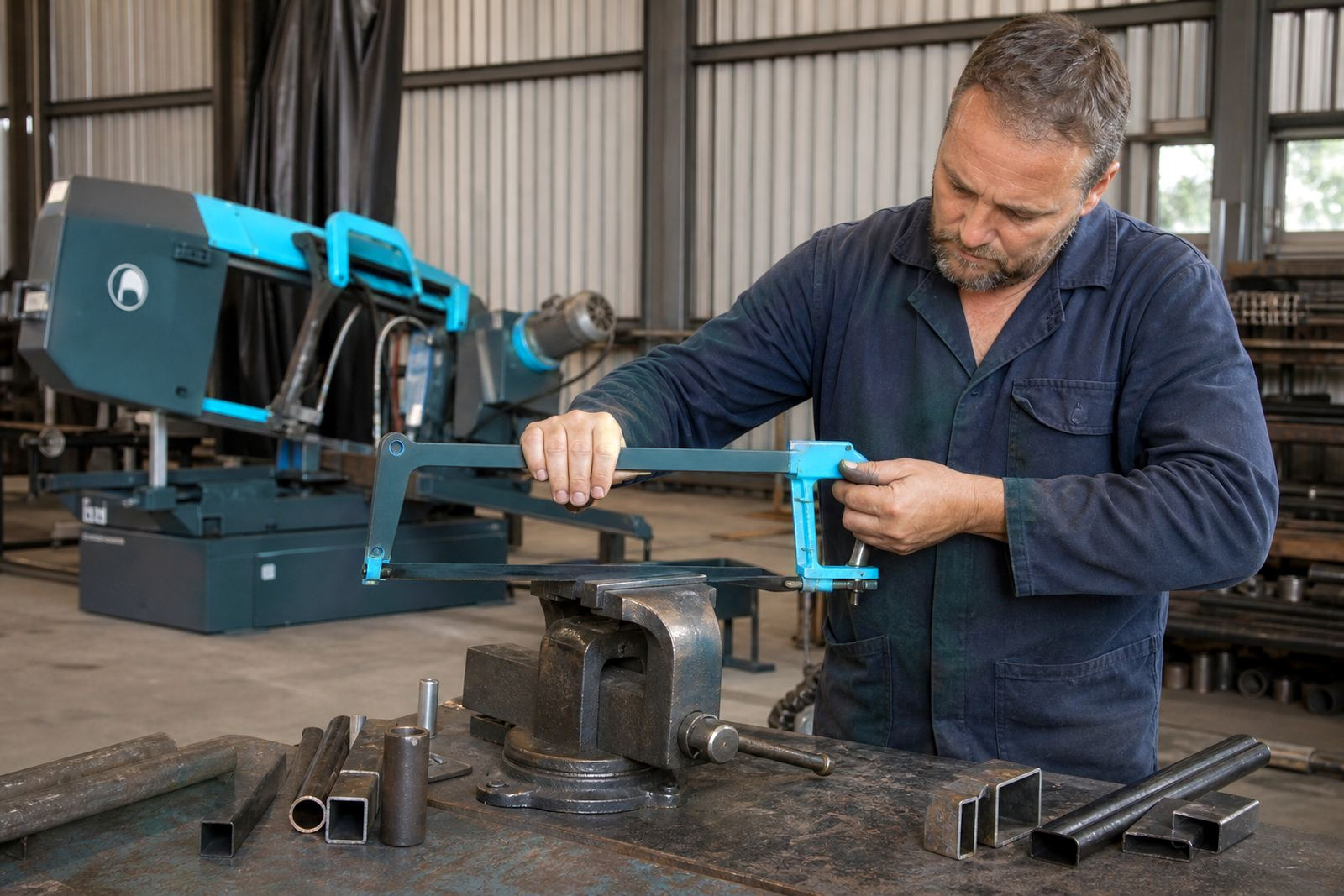
On a manual saw, the operator has to watch for the first sign of lift at the free end. On an automatic machine, the stop face and vice pressure need checking before the first cut in the batch. A short test cut can show whether the pack is moving, whether the blade is rubbing on one side, or whether the set is too narrow for the material mix.
- Clamp as close to the cut as practical.
- Support the free length so the bundle does not sag.
- Make sure each pack face sits level in the vice.
- Use extra restraint where round tube can roll inside the bundle.
Pitch, set and blade width for mixed sections
Tooth pitch affects bundled work more than many shops expect. A variable pitch blade can calm vibration on uneven packs, but it still needs the right pitch range for the section being cut. For heavy solids, a coarser tooth count gives space for chips to clear. For thin material or mixed wall thickness, a finer pitch can improve tooth contact, though it must not be so fine that the gullets pack solid.
Blade width is checked next. A wider bandsaw blade tracks straighter through heavier sections and resists side deflection better than a narrow blade, while a narrower blade can suit tighter radius work or lighter manual machines. Thickness affects the blade’s body strength and cutting feel, and the set must suit the material so the blade clears the cut without rubbing.
- Use variable pitch when the bundle includes uneven sizes.
- Choose a wider blade for straighter cuts in heavier stock.
- Keep the set suitable for the section and the machine guide condition.
- Do not let a very fine pitch run against packed swarf.
Run-in on a fresh bundle
Begin a new blade gently before pushing it into full production. Run-in lets the teeth settle and the cutting edge form properly. If the feed is heavy from the first cut, the teeth can chip at the corners or glaze over on tougher sections. That is even more obvious when the blade meets a bundle with different wall sizes in the same pack.
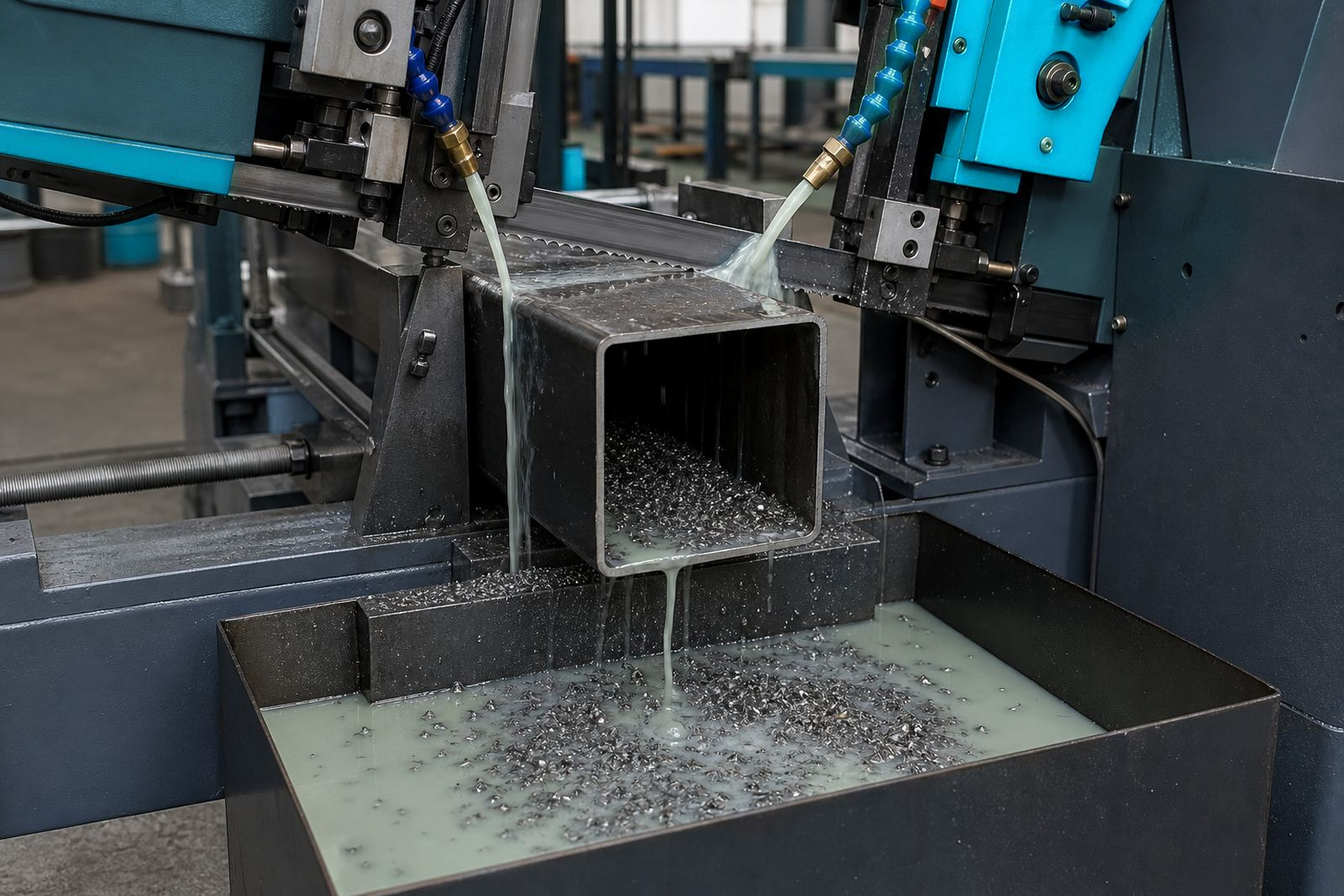
Feed and speed should stay controlled through the first several cuts, with coolant reaching the teeth evenly where the machine uses it. Coolant helps carry heat away, flushes fines from the gullets and slows the kind of edge wear that shows up first on bundled stock. On dry manual work, chip clearing and a steady stroke need more care because the cut face can load up faster.
- Ease the feed on a fresh blade until the teeth settle.
- Keep the blade moving steadily, not in bursts.
- Check coolant delivery where the machine uses liquid feed.
- Watch for shiny tooth tips, chatter marks and wandering cuts.
A fabrication floor example in Johannesburg
A fabrication team in Johannesburg cutting bundled mild steel tube found the top layer was neat but the lower layers were drifting. The vice pressure looked fine at first glance, yet the free end was sagging and the pitch was too fine for the thicker sections in the bundle. Once the clamp position moved closer to the cut and a different tooth pitch was selected, the blade stopped hunting through the pack.
The same workshop also had to separate stock by size before loading the saw. That saved time later in the week because the operator could keep one pitch for one family of sections instead of fighting a mixed pile. Bundle cutting often improves when the store room and the saw bay speak to each other, not when the saw operator is forced to make up for poor sorting at the rack.
Blade failures usually leave a pattern
When a blade breaks early, the mark it leaves can point to the cause. Teeth stripped on one side usually suggest poor clamping or side loading. A cracked back often points to tired guides, incorrect tension or a blade width that does not suit the machine. Blue teeth and a dry cut line usually mean heat, feed pressure or coolant delivery need attention.
Our blade failure review looks at the cut face, the tooth wear and the machine fit, then ties that back to the bundle size and the material mix. That helps with stock standardisation too, because once a workshop settles on the right blade width, pitch and length, the bay stops carrying too many odd parts that never quite suit the job.
- Check guide condition before blaming the blade alone.
- Look for heat marks, tooth pull-out and uneven wear.
- Keep a record of which bundles need which pitch.
- Match replacement stock to the machines in use.
Starter kits for shops that cut several sections a day
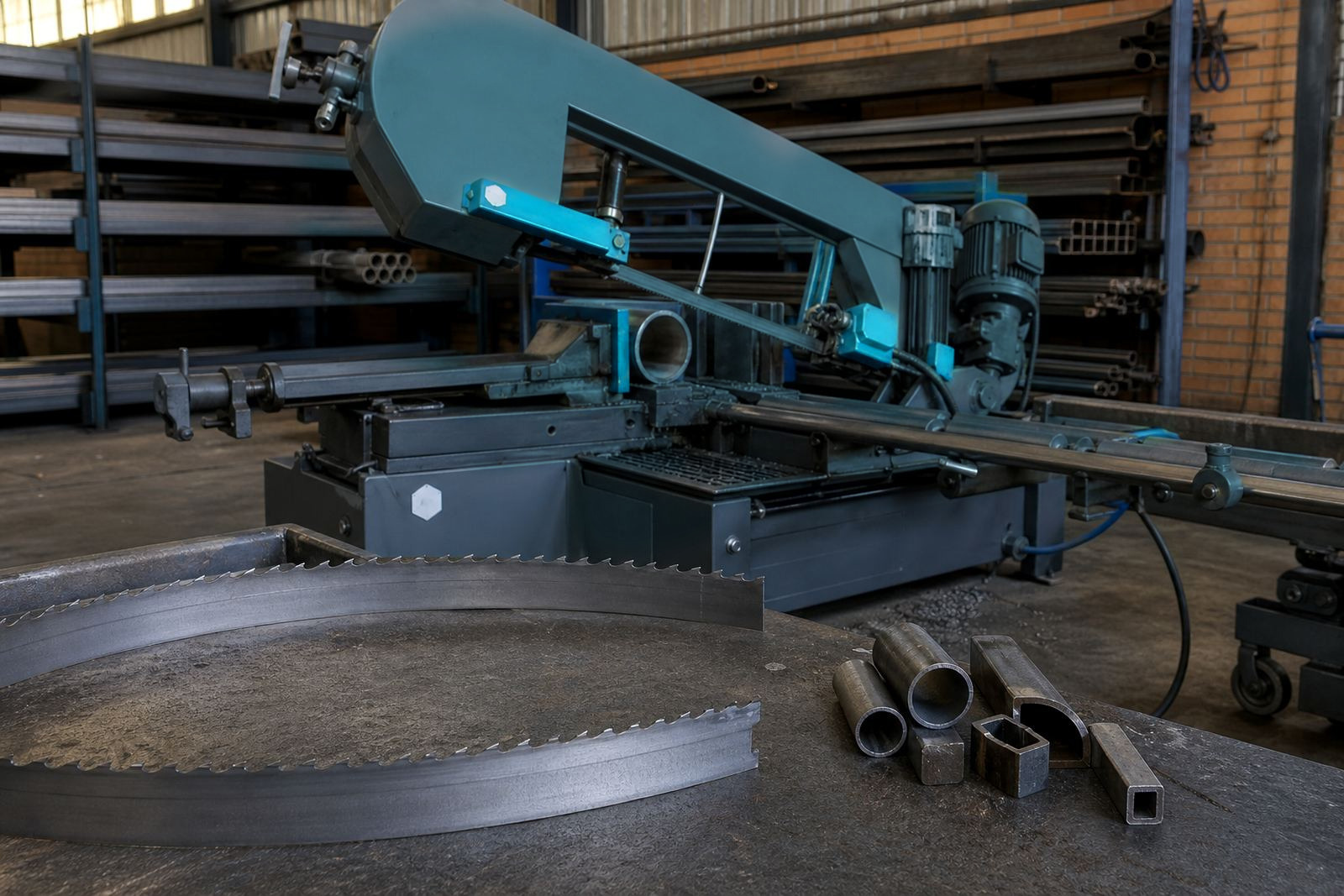
A starter kit works best when it reflects the real mix on the floor. For some workshops that means a bi-metal blade for general bundle work, a carbon blade for lighter manual cutting, and a second pitch for heavy solids or mixed tube. A weld-to-length service suits a blade that must fit a specific machine, and length verification confirms the fit before the blade goes into service.
For Alrode, Alberton and the wider Gauteng, KwaZulu-Natal and Western Cape routes we serve, the job is usually the same: keep the saw bay stocked with the right lengths, the right widths and the right tooth pitch for the stock that actually arrives. The clamp, the feed and the blade all need to stay aligned on the cut.