Thin wall sections change the bite at the cut
When a wall is thin, each tooth has less material to work with on every pass. That changes chip formation, tooth load and the way the blade tracks through the section. A blade that feels calm on solid bar can start to hop, squeal or leave a ragged edge on light-wall tube or angle.
On metalwork jobs, the aim is steady tooth engagement, not aggressive cutting. The blade should form a chip, clear it, then repeat without filling the gullets too fast. If the pitch is too coarse, only a few teeth carry the work and those teeth wear fast. If the pitch is too fine, the teeth may rub and fail to cut properly, especially on thin sections with a large face width.
Pitch choice starts with the thinnest section in the bundle
Tooth pitch should match the thinnest wall in the job instead of the heaviest piece on the floor. A mixed bundle of tube, flat bar and light channel often needs a compromise that favours the smaller wall thickness. Variable pitch blades help because they break up harmonic vibration and reduce chatter on open sections.
- Fine pitch suits thin wall tube, light sheet pack and small section work where many teeth must stay engaged.
- Medium pitch covers mixed workshop cutting where wall thickness changes through the day.
- Coarse pitch suits thick solids and heavier sections, but it can be too aggressive on light wall material.
- Variable pitch helps when a job mixes section sizes and the cut line needs calmer running.
For a stainless support frame with thin wall members in Alberton, the right pitch can be the difference between a clean mitre and a cut edge that needs extra dressing.
Blade width and thickness affect more than many teams expect
Width and thickness influence both tracking and chip load. A narrow blade follows tighter work and smaller machines more easily, but it can flex if the feed is heavy or the guide setup is poor. A wider blade gives better straight-line stability, yet it needs enough machine capacity and proper alignment to stay true on thin wall stock.
Blade thickness is the next check. A thicker blade can feel more stable on long cuts, though it may demand a cleaner guide setup and more careful feed control. On thin wall material, the cut face is often small enough that overfeeding pushes the teeth through before they can clear the chip. A light, even feed gives a better finish than forcing the saw to hurry.
Run-in protects the edge before the job gets busy
New bi-metal and carbon blades both benefit from a proper run-in. The first cuts should be lighter, with reduced feed so the tooth tips can seat properly. On thin wall sections, this is especially useful because the blade spends less time buried in material and more time changing from air to metal to air again.
Once the edge has settled, the operator can set feed and speed to the normal setting for the material. A rushed start can chip the tips early and shorten the useful life of the blade. In workshop terms, that means a blade that should have handled a full shift starts leaving burrs after only a handful of frames.
- Start gently on the first few cuts.
- Watch for clean chips and avoid dust or long smeared swarf.
- Listen for squeal, knock or hunting at entry and exit.
- Keep the guides set close enough to support the blade without pinching it.
Feed rate, cutting speed and coolant must all be in step
Thin wall material punishes guesswork. A fast blade speed with too little feed can polish the teeth, while too much feed can twist the blade on exit. The best setting depends on the material group, the wall thickness and the blade type. Bi-metal blades tolerate a wider range than carbon steel blades, but neither likes dry heat build-up for long periods on hard or abrasive stock.
Coolant helps carry heat away, wash chips from the gullets and keep the blade from loading. On tube and light section, a clean fluid flow at the cut line can improve finish and cut stability. If the coolant is weak, dirty or badly aimed, the blade may run hotter than expected even when the machine settings look fine on paper.
Local workshop example from Alberton to Cape Town
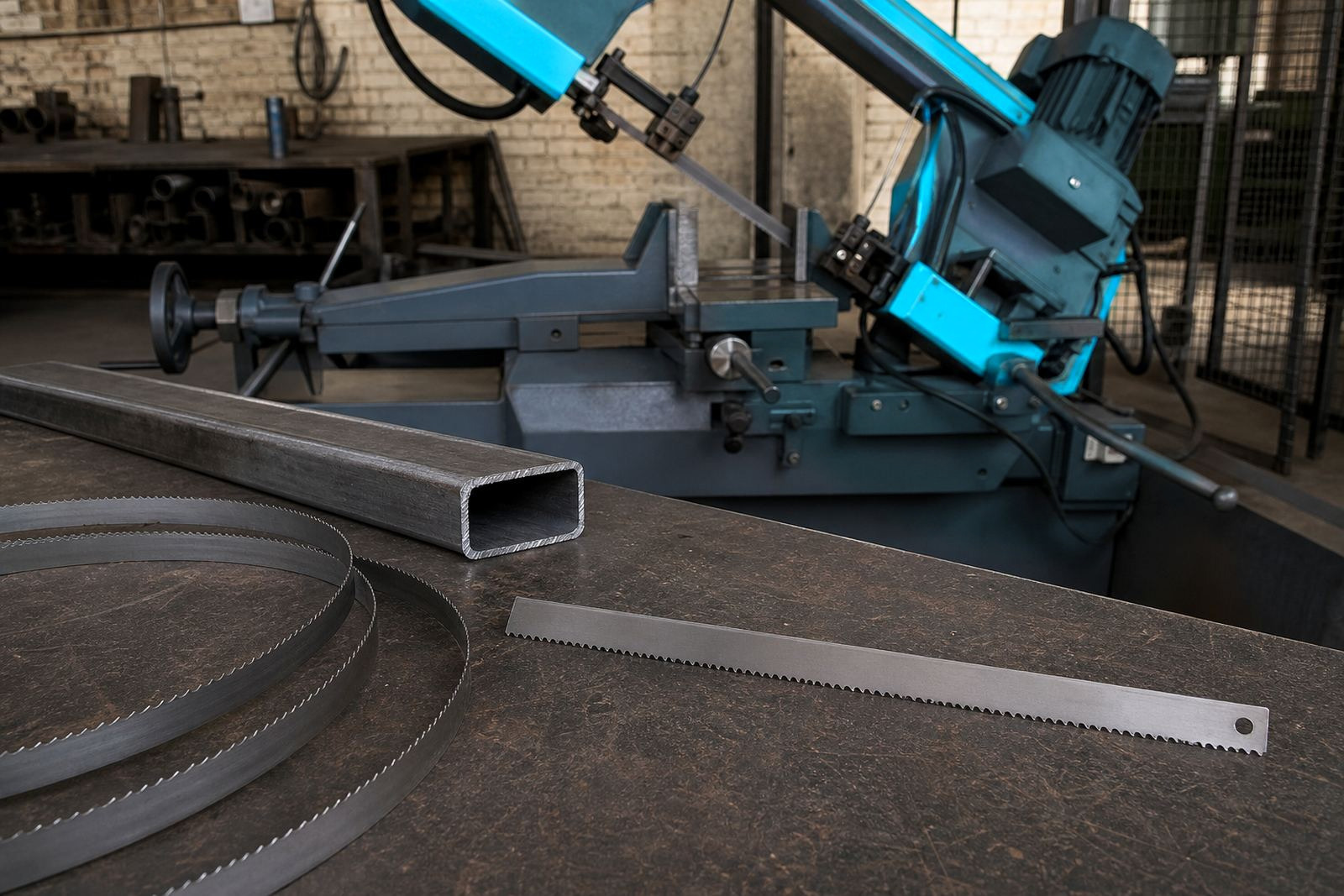
A fabrication shop in Alrode cutting light rectangular tube for handrails may start the day with straight lengths, then shift to mitres and short offcuts as the job moves on. The same blade has to deal with repeated entry points and a thinner wall than the day before. In that setting, a variable pitch bi-metal blade with the correct width can settle the cut far better than a general coarse pitch option.
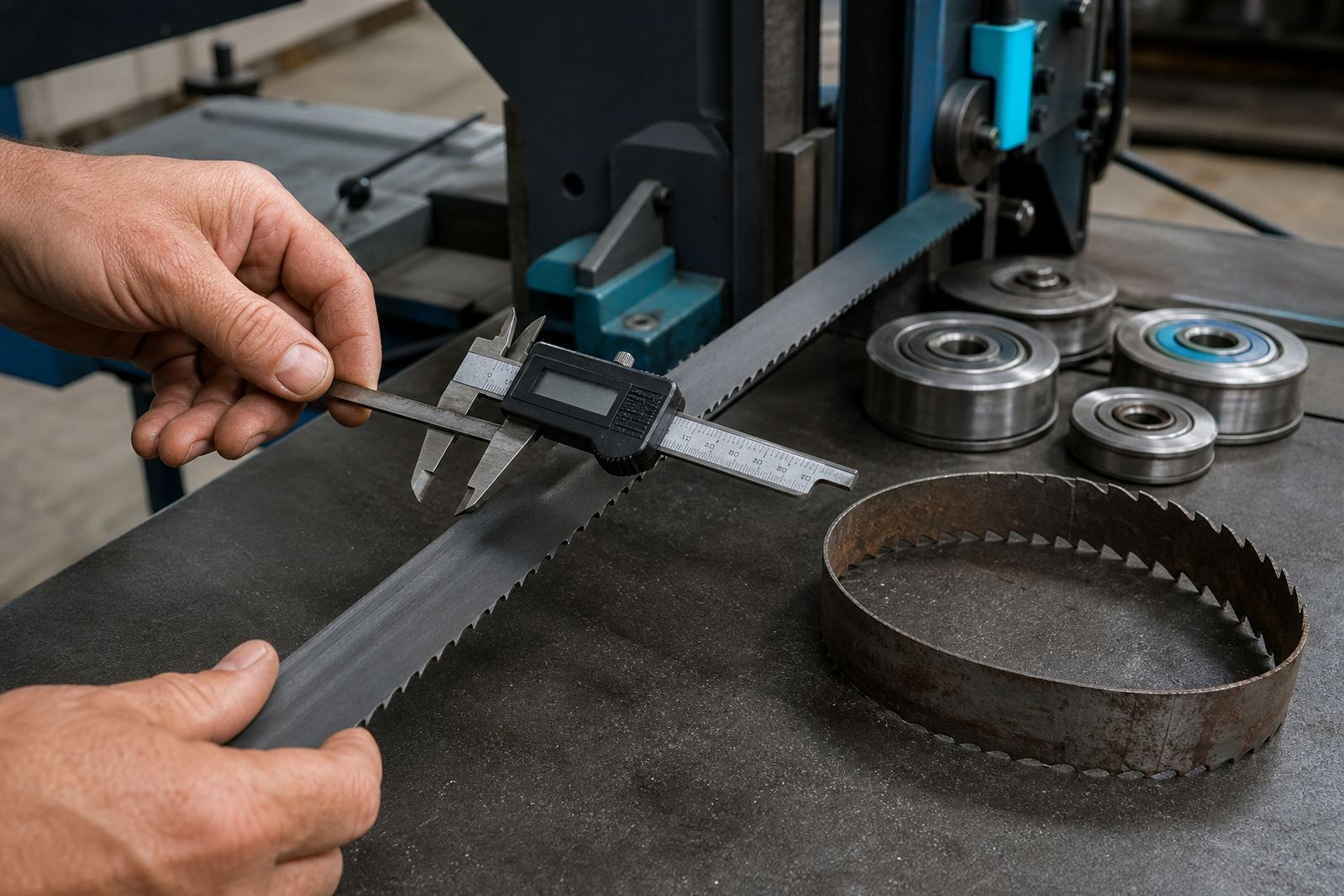
When the shop also sends smaller work to Johannesburg, Pretoria or Durban, consistency stays important. A weld-to-length blade service helps match the blade to each machine and section type, while length verification keeps the blade suitable for the actual wheel set-up. That avoids the common mistake of fitting a blade that is too long, too short or too broad for the guides.
What blade failure often says on thin wall jobs
Failure patterns tell a story. Tooth stripping can point to too coarse a pitch or heavy feed. Cracking near the weld may point to poor tension, poor guide support or repeated shock loading at start-up. A blade that wanders on thin wall tube often needs a better width choice, cleaner machine fit or a calmer run-in.
Our team looks at the cut edge, the swarf, the machine setup and the section profile together. The sensible way is to separate a blade issue from a feed issue or a guide issue. On thin wall material, the cut itself is often the clearest clue available, because the blade gives up evidence in the chips and on the edge long before it stops altogether.
- Short, bright chips usually point to a healthier cut.
- Blueing or smear marks suggest heat and friction.
- Heavy burr on one side can show tracking or guide trouble.
- Repeated tooth loss often means the pitch or feed is out of step with the material.