Stainless wants a calmer cut than mild steel
Stainless work-hardens if the blade rubs instead of cutting. A fast push, a dull tooth line or a mismatched pitch can turn a neat cut into heat, noise and premature tooth wear.
For round bar, solid section and thick-wall tube, a bi-metal blade with a suitable tooth pitch is usually the better starting point. Thin sheet bundle cuts and light section work need a different pitch to keep enough teeth in contact. If too few teeth are engaged the blade snatches, if too many are buried the gullets pack up and the cut drifts.
- Keep the feed steady, not heavy.
- Match tooth pitch to wall thickness and section size.
- Use proper coolant where the machine allows it.
- Check blade width against the saw and the curve radius needed.
Picking pitch and width without guessing
Tooth pitch is the first choice that changes the outcome. Fine pitch suits thinner stainless and smaller profiles, while variable pitch helps reduce chatter on mixed section work. A coarse pitch can clear chips better on larger solids, but only when the material is thick enough to support the tooth line.
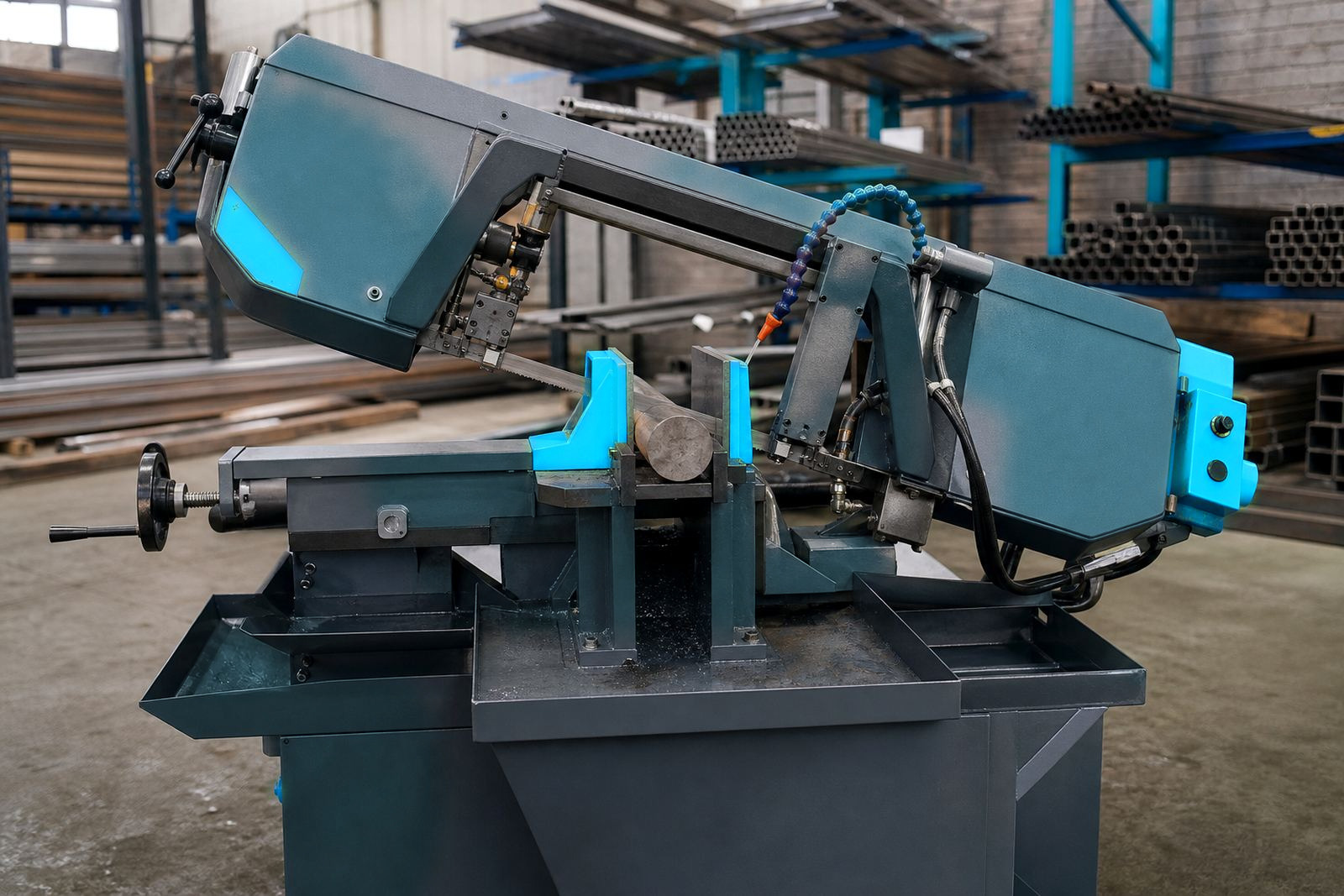
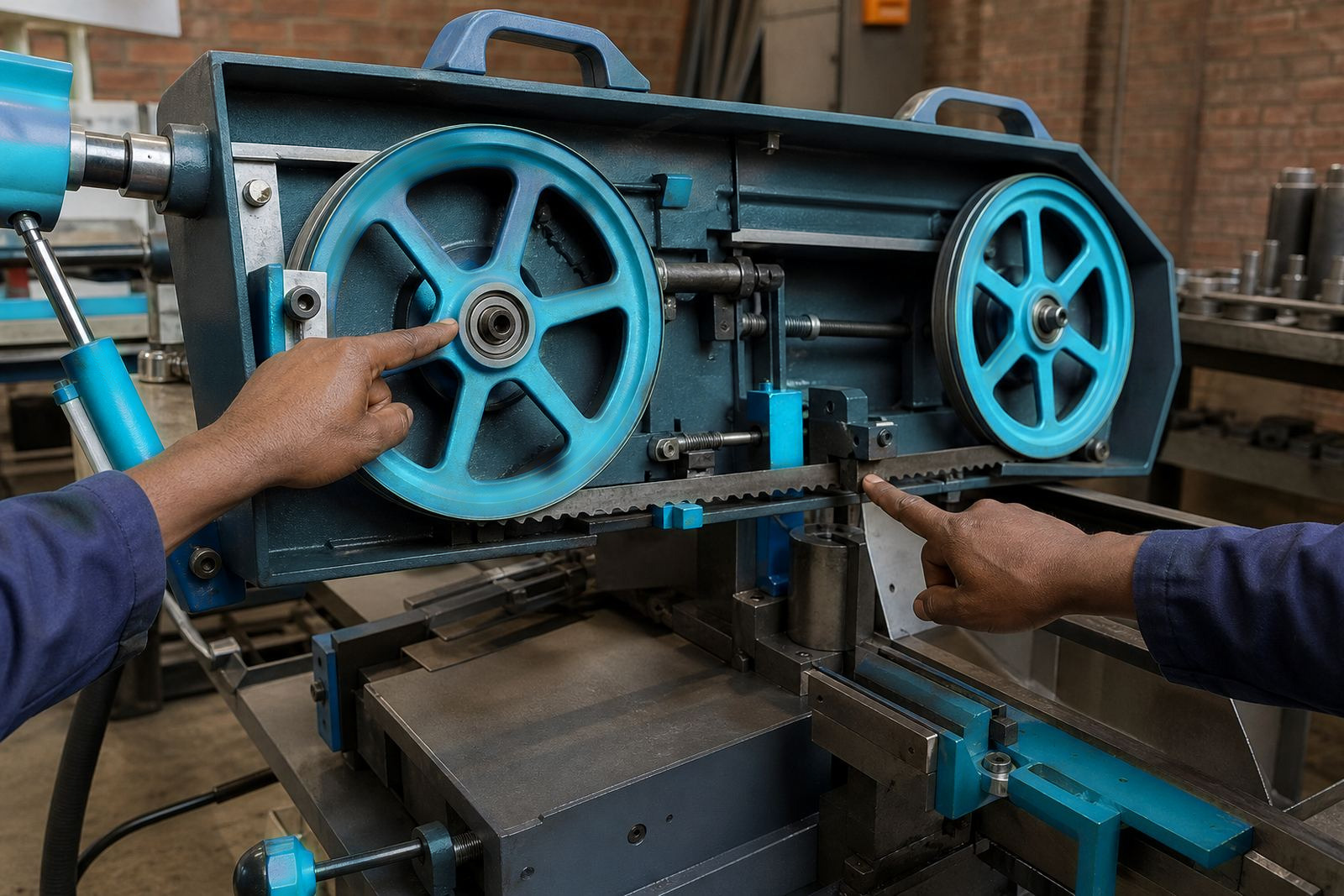
Blade width and thickness come into it too. A narrower blade can handle tighter guides and smaller machines, while a wider blade tracks better on straight production cuts. Thickness sets the blade's stiffness and how it sits in the guides. A workshop in Alrode cutting stainless tube for Durban railings may use a different set-up from a Pretoria shop cutting heavy round bar for machine parts.
- Fine pitch for thin wall tube and light section.
- Variable pitch where chatter and vibration show up.
- Wider blades for straight, repeated cuts.
- Narrower blades where the saw or guides need it.
Run-in, feed and speed do most of the protecting
Gentle run-in for a fresh blade lets the tooth edges seat properly. Stainless needs extra care, because a new edge that is forced hard from the start can chip early or glaze over from heat. A controlled first few cuts help the blade settle before normal production work begins.
Feed and speed should work together. If the blade is turning too fast for the material the teeth heat up and lose bite. If the feed is too light, the teeth rub and harden the cut line. The right balance gives a clean chip and a steady sound from the machine. On manual saws, that steady pressure is often what separates a clean job from a rough one.
- Use a gentle start on new blades.
- Do not let the blade skate across the surface.
- Keep the chip colour and sound under watch.
- Ease the cut if you hear squealing or the blade starts to run hot.
Coolant, chips and guide checks in real workshops
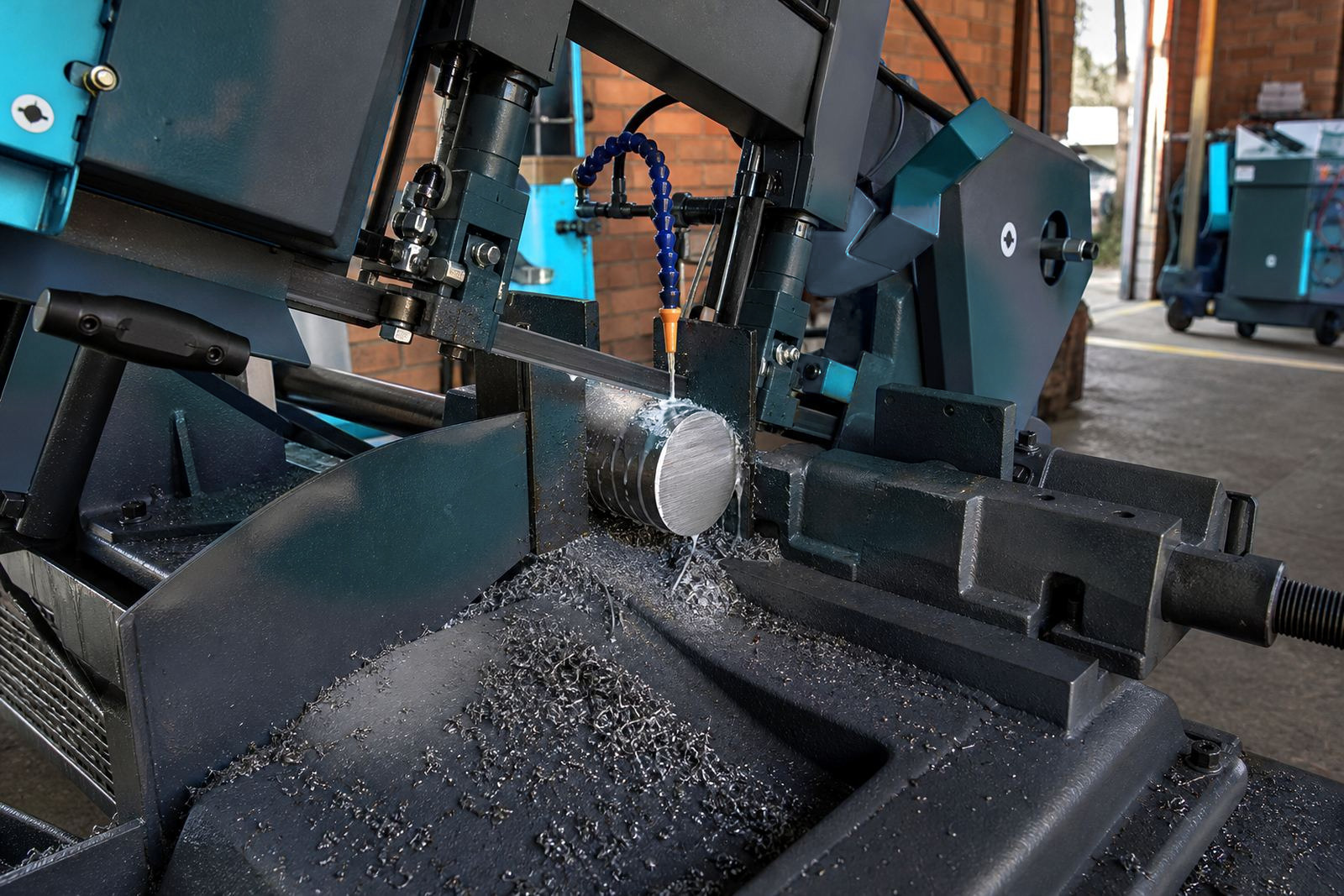
Coolant keeps the cut zone cooler and helps with long cuts or bundle work. Stainless runs hot and the cut zone can build heat fast, especially on long cuts or bundle work. The right coolant flow helps carry heat away, flush chips and reduce tooth wear. In coastal yards from Durban to Cape Town, it also helps limit surface staining on cut edges when the machine and handling are not perfectly dry.
Chip control is part of the job along with the liquid itself. Packed chips force the blade to rub, which is hard on teeth and guides. Clean gullets and correct guide pressure keep the blade running true. If the guides are set too tight they add friction, and if they are loose the blade wanders under load.
- Check coolant delivery, not only coolant level.
- Clear packed chips before the next cut run.
- Look for guide wear and side pressure issues.
- Watch for brown heat marks on stainless edges.
When a blade fails, the cut shows why
A broken tooth line, a cracked weld or a blade that wanders off square usually points to a setup problem or bad luck. Stainless can expose weak machine fit, poor length verification or the wrong pitch faster than softer metals. A blade failure review should look at the cut face, the chip shape, the guide marks and the machine fit before the next blade goes on.
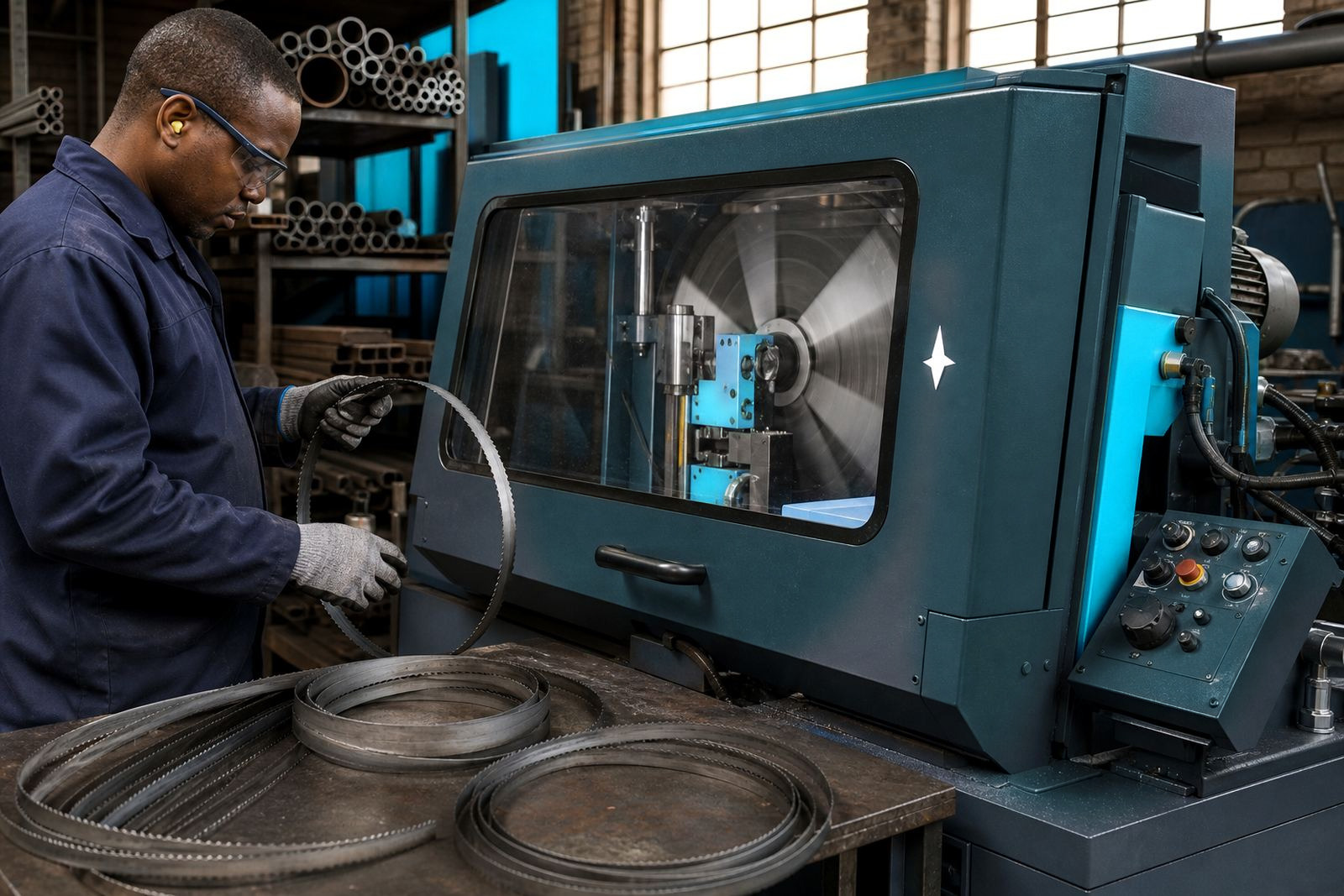
For workshops running manual saws and mixed material jobs, starter kits and stock standardisation help remove guesswork. If the same saw cuts different stainless sizes through the week, keeping a few proven blade widths and pitches on hand is better than forcing one blade to do everything. A weld-to-length service helps here too, because a correctly welded blade saves time on the floor and keeps the blade suited to the saw.
- Review the break point and tooth damage.
- Check if the blade was too fine or too coarse.
- Confirm the saw’s guide and clamp condition.
- Match replacement blades to the material mix.
Alrode workshop realities across South Africa
From our Alrode base, stainless cutting support often means practical details. A shop in Johannesburg may need a blade for repeated small runs on tube and bar, while a Vereeniging plant might want heavier widths for solid section. Pretoria work often leans on repeatability, and coastal jobs in Durban or Cape Town can need a bit more attention to coolant and edge staining.
Choose the right blade with our help for cleaner cutting. Tooth pitch selection, blade width selection, length verification and manual saw support all come together when the material is unforgiving. If the job changes often, a small starter kit with the right mix of blade types can save a lot of rework on the floor.