Blade choice starts with the cut, not the catalogue
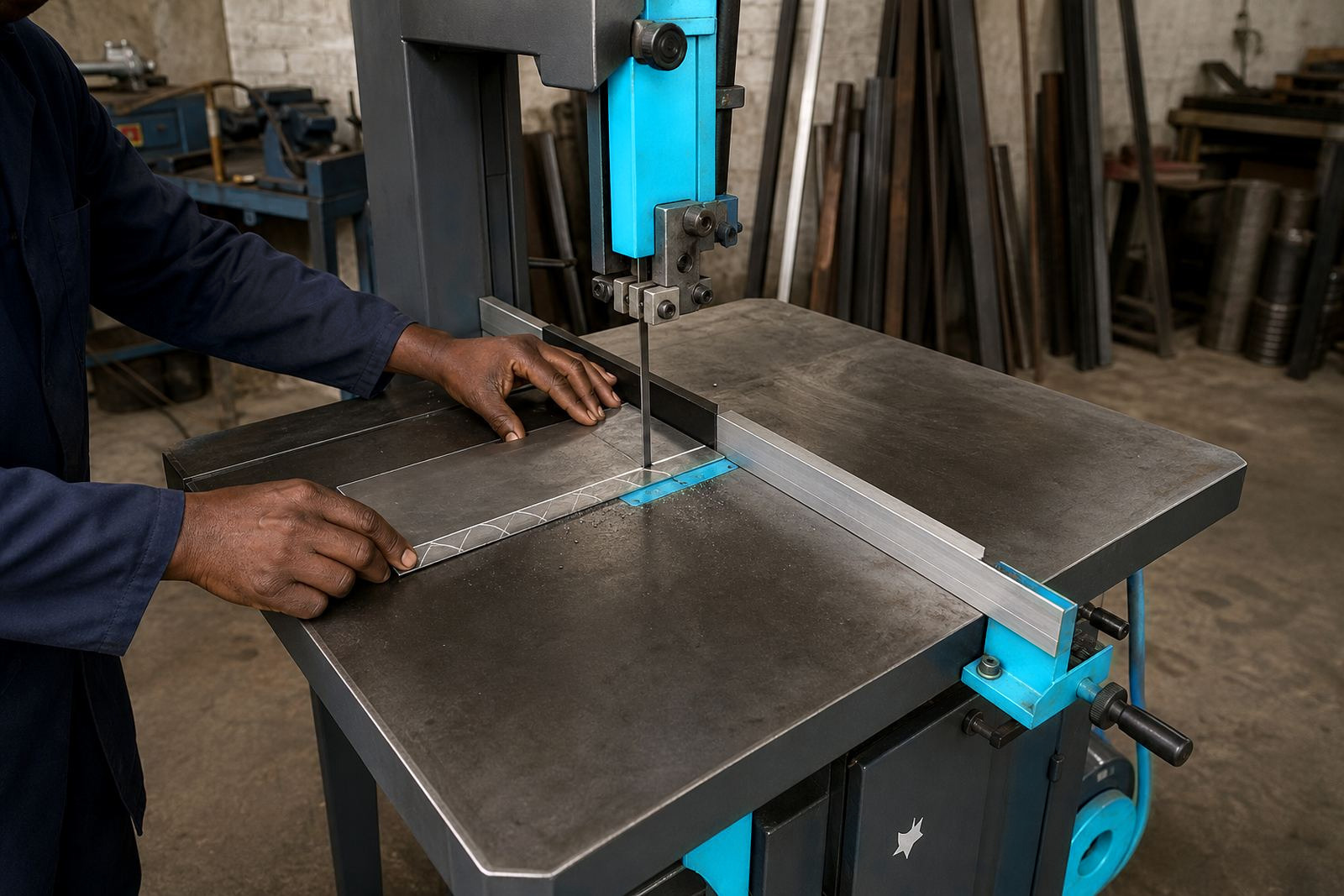
A vertical saw used on mild steel, stainless or tubing can use one blade across jobs. A bi-metal blade is common for mixed workshop work because the tooth edge holds up better on harder material, while carbon steel suits lighter duty cutting on softer sections and short runs.
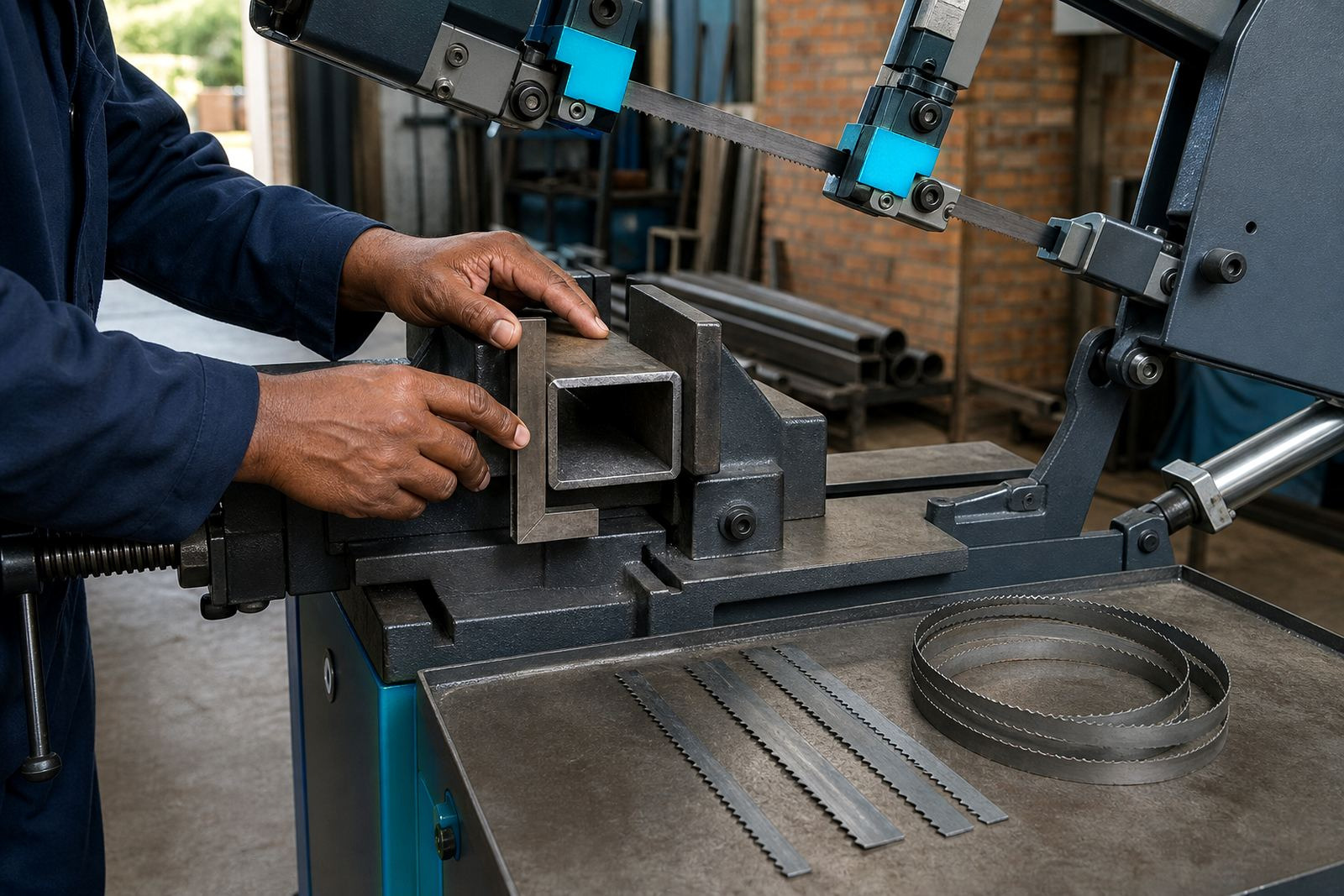
For a fabrication floor in Alrode, the first question is usually the material. Solid bar, structural section, box tube and thin wall tube all ask for a different tooth pitch, and the blade width is chosen with the material. Larger work runs straighter with wider blades, while narrower blades suit tighter curves and smaller machines more easily.
Vertical saw operators often look only at speed, but the blade choice does a lot of the work before the motor even starts. A blade that is too fine for thick section loads the teeth, while a coarse pitch on thin wall tube snatches and leaves a rough edge.
TPI, variable pitch and the shape of the tooth line
TPI means teeth per inch, and tooth pitch is usually written that way. Fine pitch blades suit thin stock and smaller sections, while coarse pitch blades clear chips better in heavier material. Variable pitch blades change the spacing along the length of the blade, which helps reduce chatter on mixed sections and long cuts.
- Fine pitch for thin wall tube, small angles and light section
- Medium pitch for general steelwork and mixed stock
- Coarse pitch for solid bar, thick wall tube and heavy section
- Variable pitch for shops that cut different profiles through the same day
We also check the tooth form. A set that is too aggressive can leave a wavy edge, while a more controlled set helps the blade stay in the kerf. Packed chips raise heat, so the blade should clear chips cleanly and keep them out of the gullets, which extends blade life.
Width, thickness and tracking on the machine
Blade width affects how the blade behaves on the wheels and through the cut. Wider blades are better when the job needs straight lines through plate or section, while narrower blades are easier on smaller vertical saws and shaped cuts. A thicker blade twists less on a vertical saw.
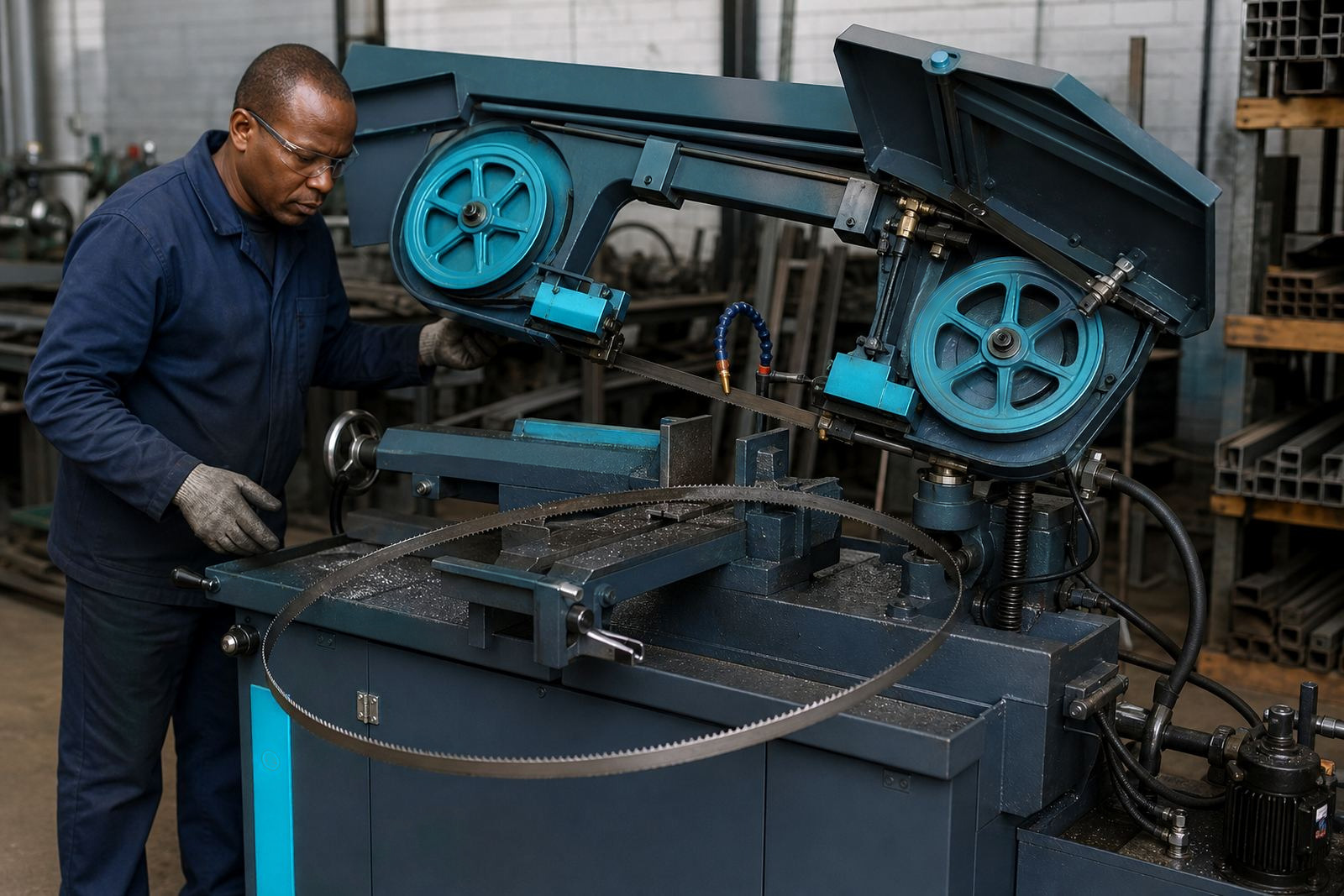
Length verification is worth doing before fitting a new blade. A blade that is too short strains the machine and makes tension setting awkward, while one that is too long will not track cleanly. On a busy workshop floor, that sort of mismatch wastes time and usually shows up as wandering cuts or lifted teeth.
Machine fit check makes the difference between a blade that sits properly on the wheels and one that chatters under load. The guides, tension setting and wheel condition all need to work together, otherwise the blade wears unevenly and starts to drift.
Run-in, feed speed and the first few cuts
New blades need a sensible run-in. Use lighter feed and steady speed for the first cuts, so the tooth edges settle before the blade is asked to work hard. If the operator drives the blade too hard at the start, the tips can chip early and the cut face will show it.
Feed speed advice applies to manual saws and powered machines alike. Too much feed overheats the teeth, while too little feed lets the blade rub instead of cut. The right balance gives a clean chip, a manageable sound and a cut that does not burn the stock.
- Start with lighter pressure on a new blade
- Keep the feed steady, not jerky
- Watch the chip shape and colour
- Reduce pressure if the blade starts to squeal
In many shops the operator can hear when the blade is unhappy. A rough sound, blue chips or a wandering line usually means the feed and speed do not match the stock.
Coolant, heat and the marks left on the blade
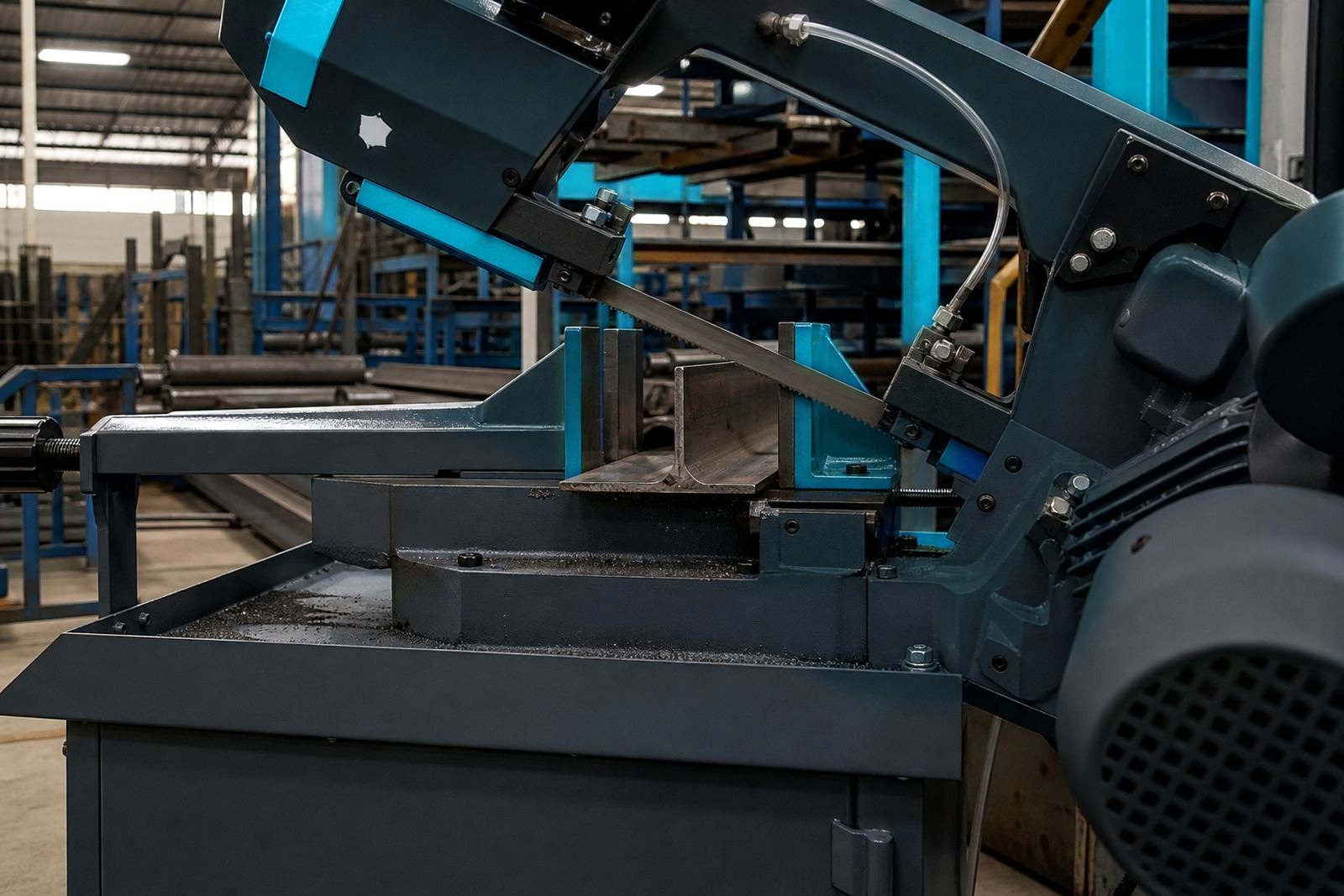
Coolant checks are worth doing on vertical saws that cut steel through the day. Good coolant helps carry heat away from the teeth, flushes chips and reduces friction in the cut. On stainless and thicker sections, heat build-up can make the blade work harder than it should.
Coolant concentration, flow and nozzle direction are all important. If the fluid is weak or the stream misses the tooth line, the blade runs hot and the cut face can show burning or smeared edges. In humid coastal towns like Durban, poor coolant care also lets residue build up on the machine and guides faster than most teams expect.
Blade failure review often points back to heat, feed, pitch or a poor fit on the machine. A snapped back, stripped teeth or a blade that wears on one side usually tells a story. It is better to read that story early than keep replacing blades for the same reason.
A local workshop example from Alberton to Cape Town
A small fabrication shop in Alberton that cuts flat bar, angle iron and medium wall tube for repair work may need two blade types. A finer pitch blade can stay on the machine for lighter section, while a coarser or variable pitch blade is kept for the heavier material that turns up with steel deliveries from time to time.
That sort of stock planning is where starter kits help. Every new workshop needs a sensible mix, proper length verification, and a record of which pitch works on which machine. That makes manual saw support easier too, especially where operators share the same vertical saw across shifts.
- Standardise blade widths across similar machines
- Keep the common pitches used on the floor
- Label blades for the material they suit best
- Record the feed setting that gave a clean cut
From Johannesburg and Pretoria to Vereeniging, Durban and Cape Town, the same rules keep showing up. Match the blade to the job, set the feed with care and keep the machine fit in good order. The cut line may look simple, but the blade behind it carries most of the load.