Why solid stock behaves differently at the saw
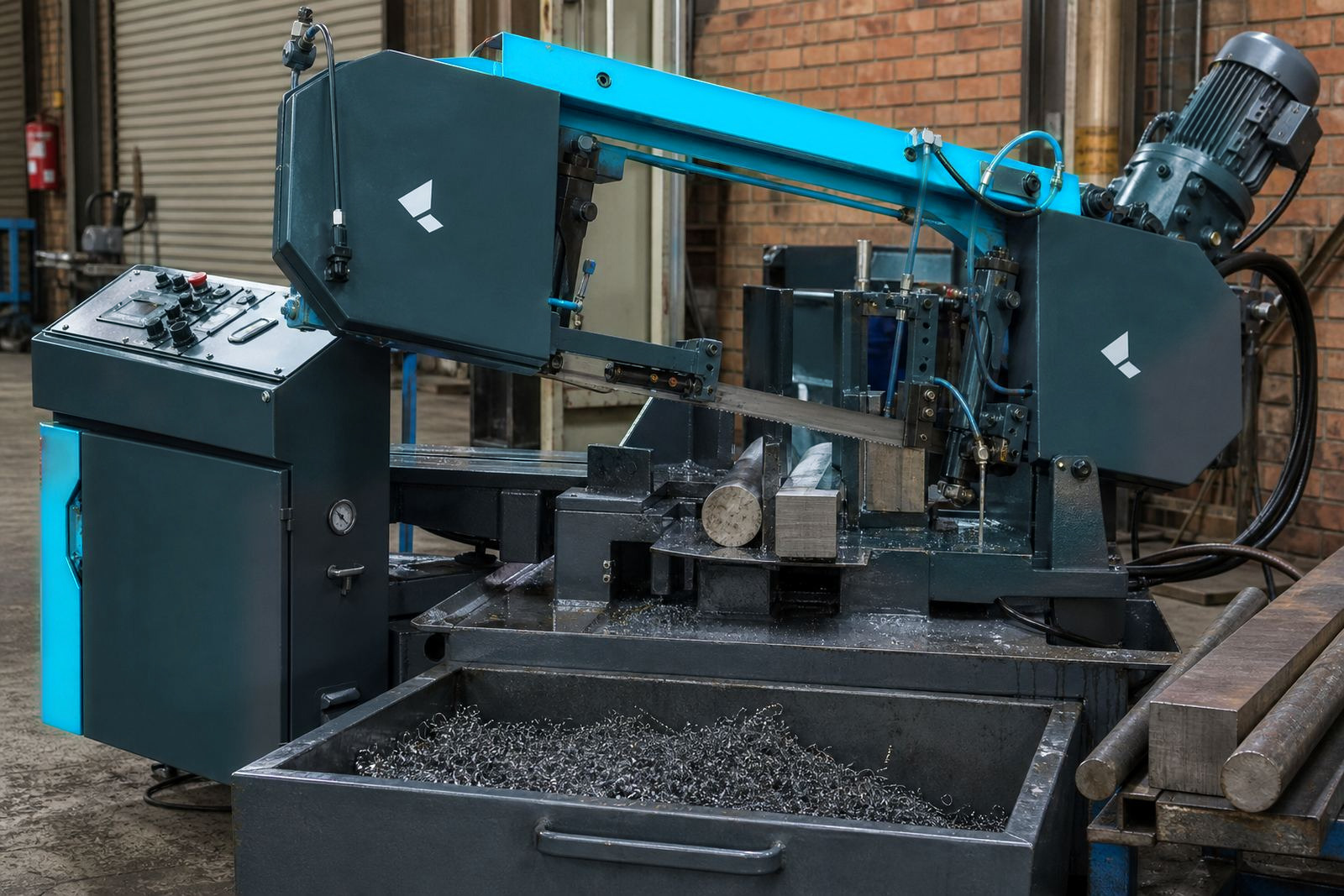
A round or square bar gives the teeth a full bite for most of the cut, so chip load stays high and heat builds faster than it does on open section. A bi-metal blade usually earns its place on tougher bar, mixed bundles or jobs that run all week in a workshop.
Solid material leaves little room for guesswork. Too fine a pitch fills the gullets and starts rubbing, too coarse a pitch leaves a rougher face and can snag on thin walls if the bundle changes. Diameter, hardness, machine power and whether the job is a clean one-off or repeat production guide the right choice.
Tooth pitch and chip clearance on bar
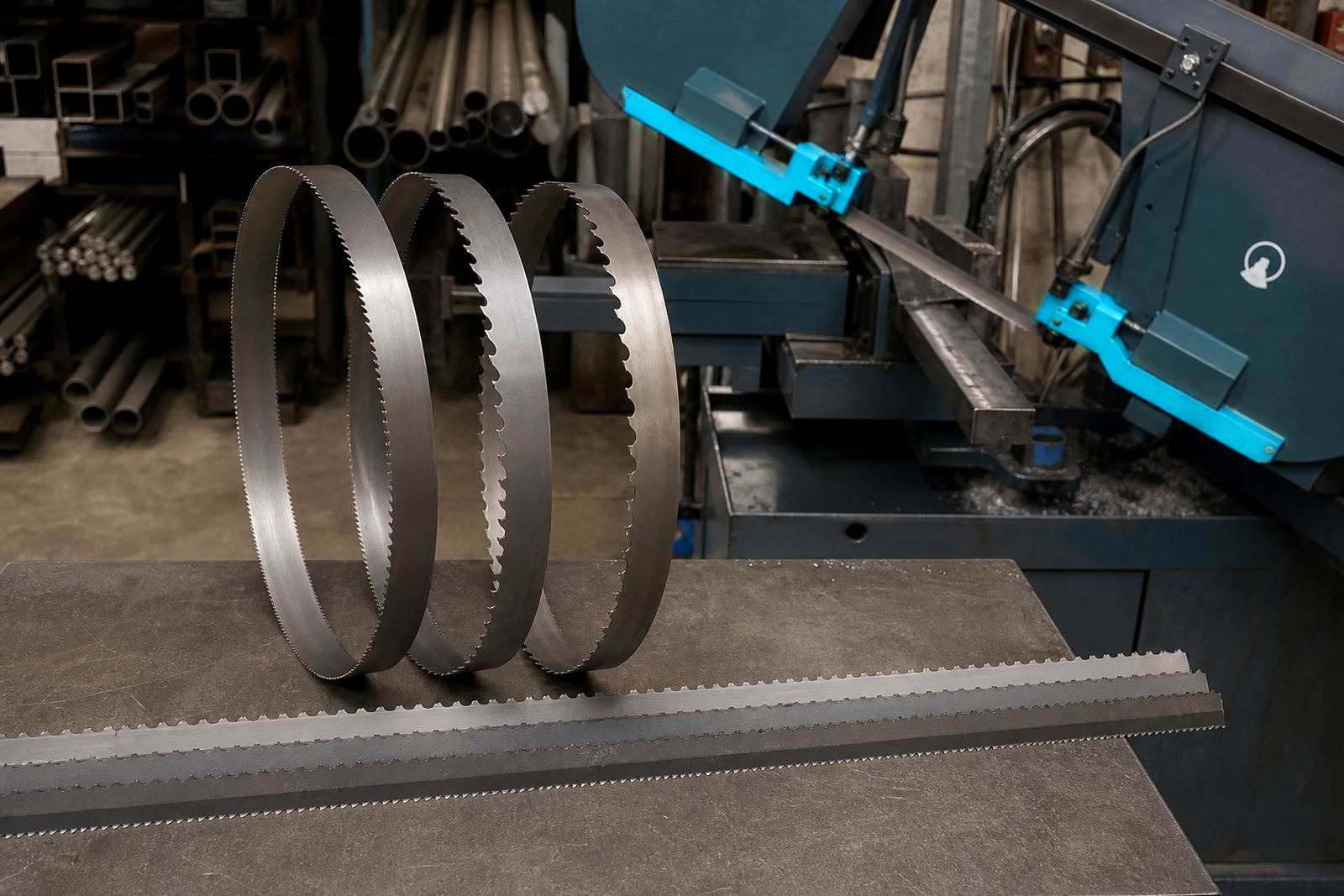
Every tooth needs space to lift a chip clear of the cut, so the pitch is set to the stock. On solid stock, a variable pitch blade can help break up chatter on longer cuts while keeping the finish steadier on mixed diameters. For smaller bars, a finer pitch is often safer, but once the section grows the blade needs more room to breathe.
- Fine pitch suits smaller diameters and thinner wall sections.
- Medium pitch works for general-purpose bar cutting across mixed sizes.
- Coarser pitch helps on larger solid stock where chip volume rises fast.
- Variable pitch reduces vibration on machines that show chatter marks.
Chip packing is often the first warning sign. If the gullets come out packed with warm swarf, the blade is being forced harder than it should be and the set is losing its clean cutting action.
Blade width, thickness and set on straight cuts
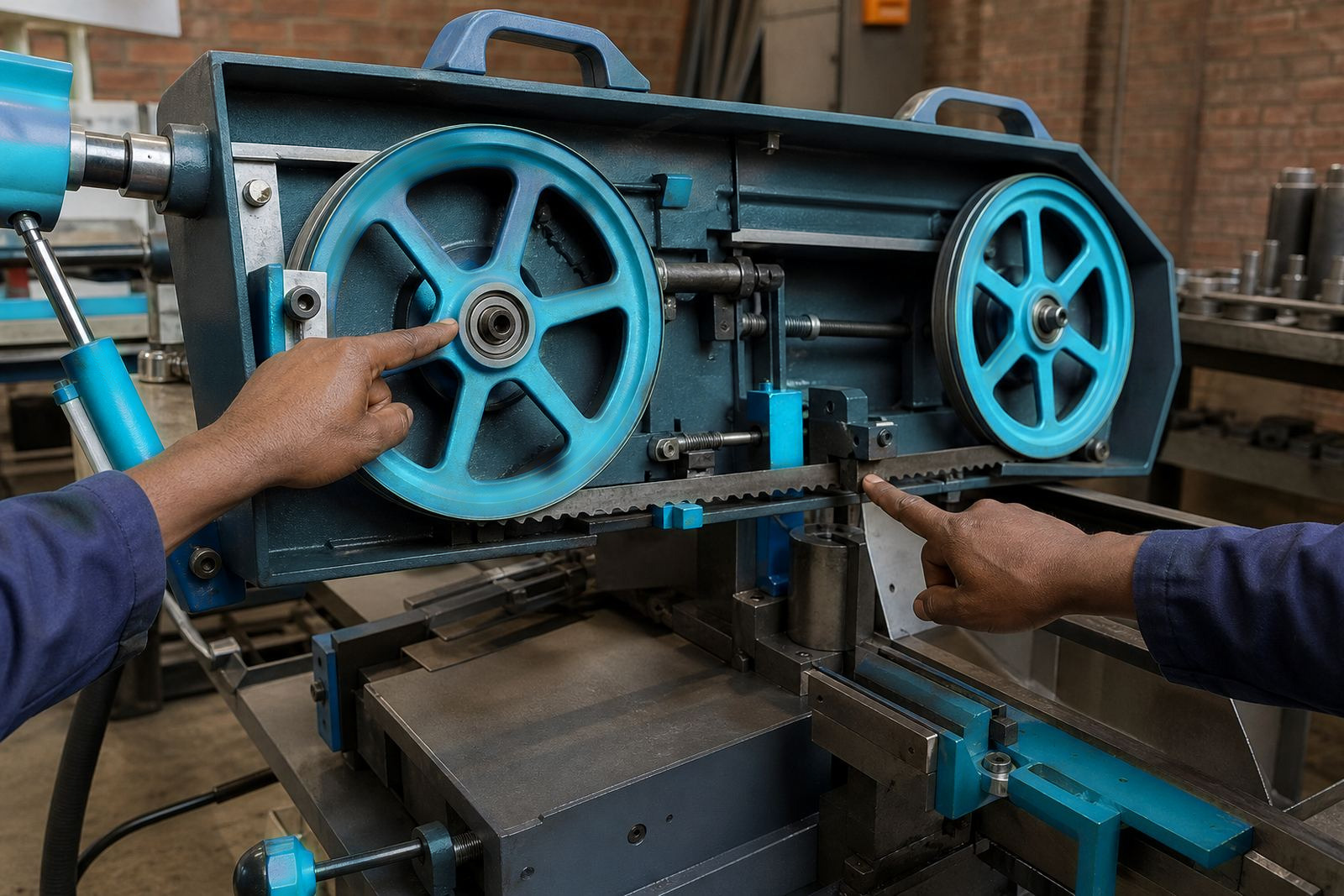
Blade width controls tracking and straightness, while thickness affects flexibility and wheel load. A wider blade holds a straighter line on heavier saws, but it still has to match the machine guides and the wheel size. If the blade is too heavy for the saw, the cut can wander and the weld area sees extra strain.
Set is worth watching on solid bar work because the teeth need enough side clearance to keep the cut open. When the set is tired, the blade starts to pinch, the motor labours and the finish gets hotter than it should. That is when length verification and machine fit checks become part of the job.
- Wider blades suit straighter cutting on larger frames.
- Narrower blades help on smaller saws and tighter guide systems.
- Correct set keeps the cut open and reduces rubbing.
- Wheel and guide fit must suit the blade thickness.
Run-in, feed and speed for cleaner faces
Before full feed, run a new blade in gently. That early period lets the tooth edges settle and helps the blade stay sharp for longer. Push too hard at the start and the edge rounds off before the job has really begun.
Feed and speed have to work together. If the feed is too light, the teeth skim and glaze. If it is too heavy, the blade digs in, heat rises and the cut starts to drift. On a bar saw, a steady feed with a constant chip shape is usually better than trying to rush through the material.
Coolant helps wash chips clear and keeps the blade cooler, especially on thicker bar or harder grades of steel. In humid coastal stores and Cape Town workshops alike, coolant condition stays important because dirty fluid carries fine swarf back into the cut.
Reading a bad cut before it ruins the batch
Blade failure rarely arrives without warning. A workshop can usually spot the signs early if the cut face, sound and chip colour are checked together. Blue chips, a rough face and a blade that begins to pull to one side all point to trouble.
Common causes include the wrong pitch, worn guides, tired coolant, poor clamping or a blade that is too narrow for the frame. On solid bar, the machine also needs to hold the stock firmly enough so the tooth line does not get pushed off centre mid-cut.
- Check for glowing chips or a hot cut face.
- Look for shiny teeth that have lost their bite.
- Listen for a squeal that replaces a steady cut tone.
- Inspect clamps, guides and wheel alignment before blaming the blade alone.
A Durban job and the practical side of selection
A Durban workshop cutting mixed lengths of solid round bar for maintenance work may run a different setup from a Pretoria steel processor cutting repeat lengths every day. The first team may need a starter kit with a few tooth pitches, while the second may need stock standardisation and welded-to-length blades that match one machine and one material mix.
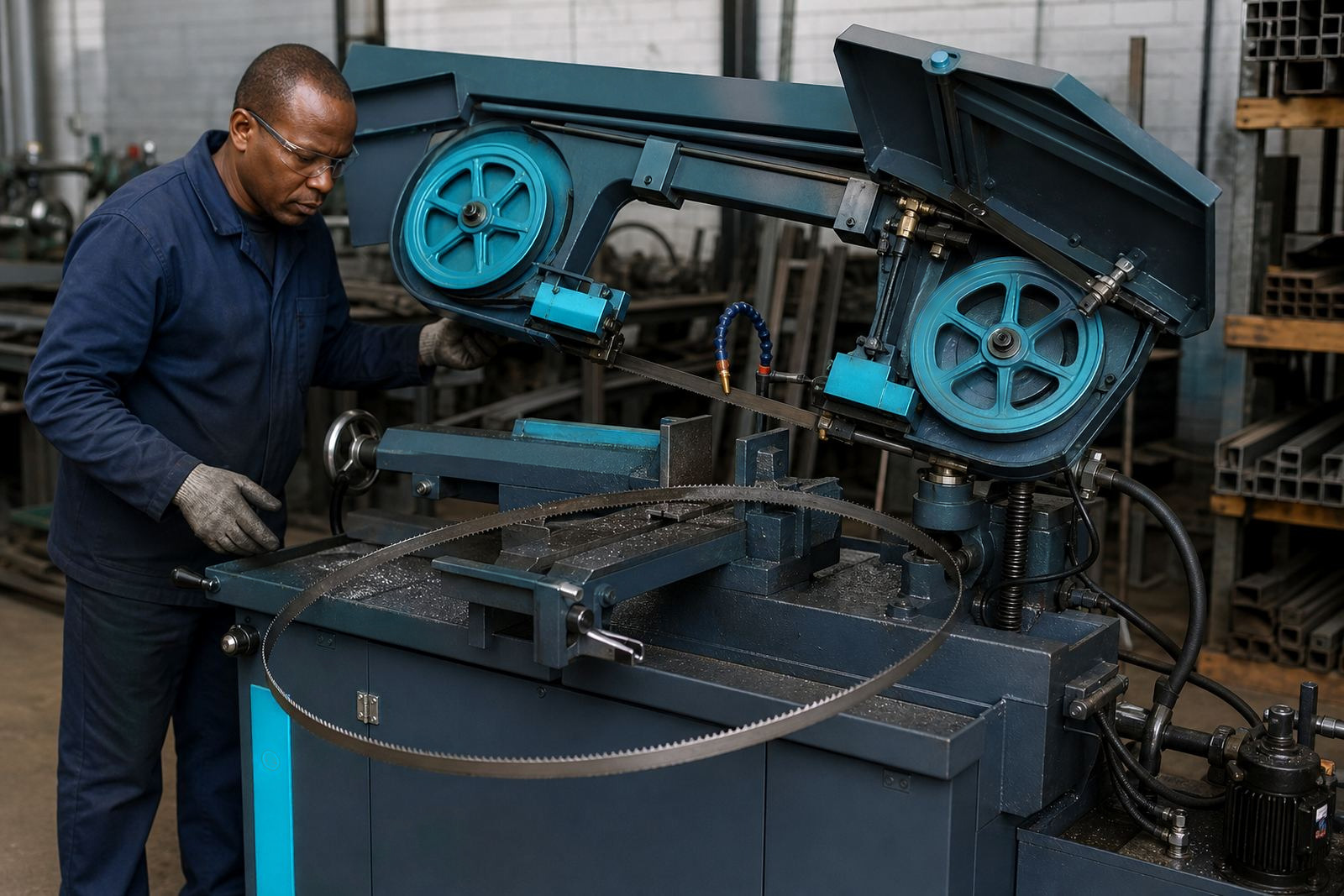
Choosing the right blade starts with blade selection help. A clean length verification, a check on machine fit and a review of the feed speed can save time on the floor and keep the blade life predictable. We suit stock that changes from mild steel to tougher grades, or a job that moves from a single bar to a bundle with small size changes.
Our branch network in Alberton, Johannesburg, Pretoria, Vereeniging, Durban, Cape Town, Germiston and Boksburg supports workshops that need blade planning across sites. For solid bar cutting, the useful questions are simple: what is being cut, what machine is doing the work, and what finish is needed on the end of the bar.