Blade speed is a number on the machine
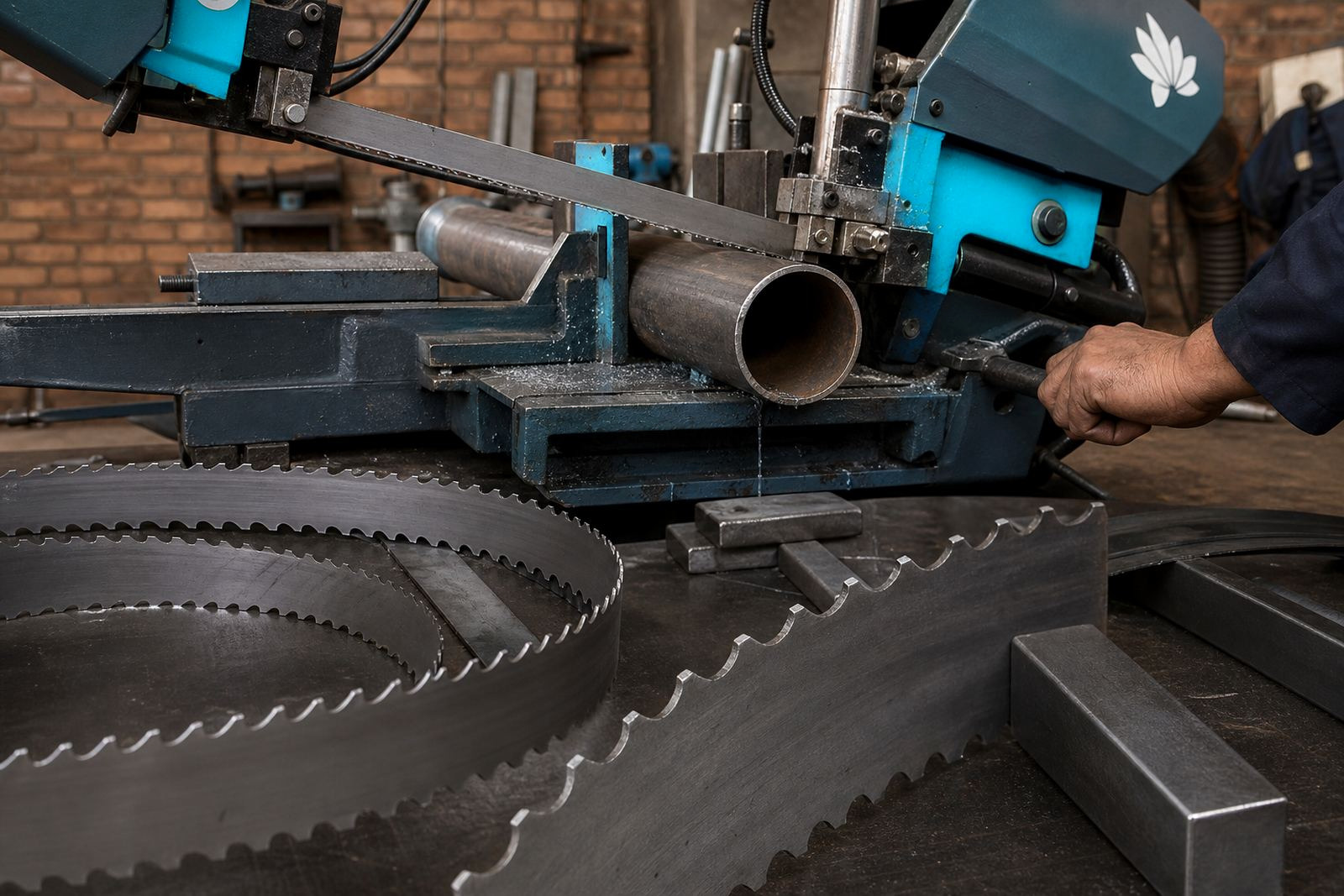
On a bandsaw or hacksaw, blade speed works with tooth pitch, feed pressure and blade width. The wrong mix pushes heat into the teeth, polishes the cut and shortens blade life. Blade speed changes with the material and section size. For mild steel, solid bar and thin-wall sections, set the blade speed so swarf clears and the blade runs cleanly.
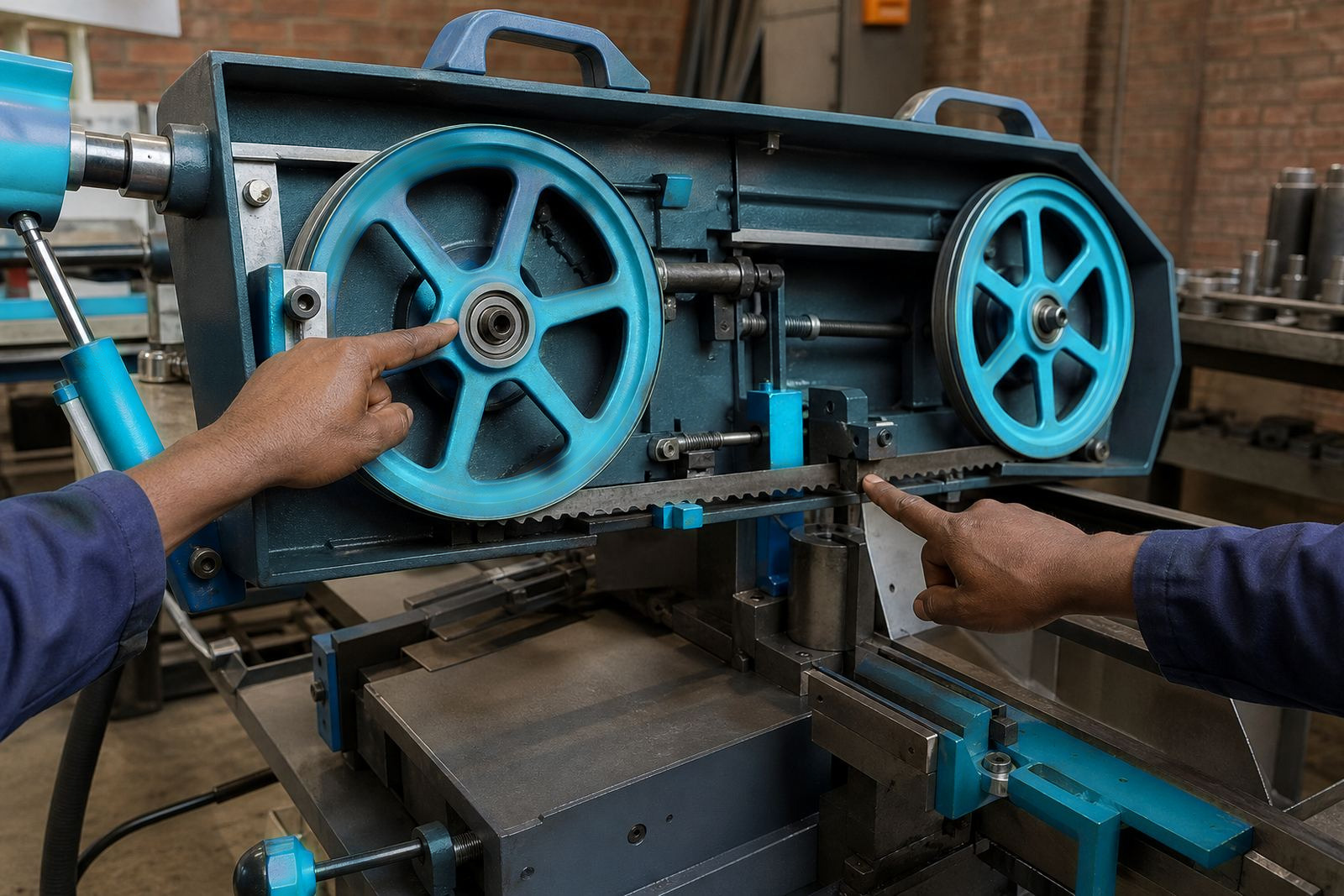
On thin-wall tube, use a finer pitch so at least three teeth sit in the wall. On stainless steel, tool steel and hard sections, the blade often needs a calmer pace, steadier feed and better coolant control. A clear machine fit check helps, because the saw frame, blade width and blade thickness all shape what the blade can handle.
Heat starts at the tooth line, not the motor
When a blade runs too fast for the job, the tips carry the heat first. The set on the teeth can soften, the gullet fills with fine chips, and the cut starts to sing in a rough way. If the operator then eases off too much, the teeth rub instead of cutting, which builds even more heat and leaves a shiny, glazed slot.
- Blued teeth usually point to excess heat or poor coolant coverage
- Fine powder in the gullet can mean the feed is too light
- Heavy, curled chips usually show a healthier bite
- Scorch marks on the workpiece often mean speed and feed are out of balance
Coolant checks are important because a wet cut is about more than temperature. The fluid also helps wash chips clear, which protects the next tooth and keeps the blade moving through the section with less drag.
Tooth pitch and speed must work together
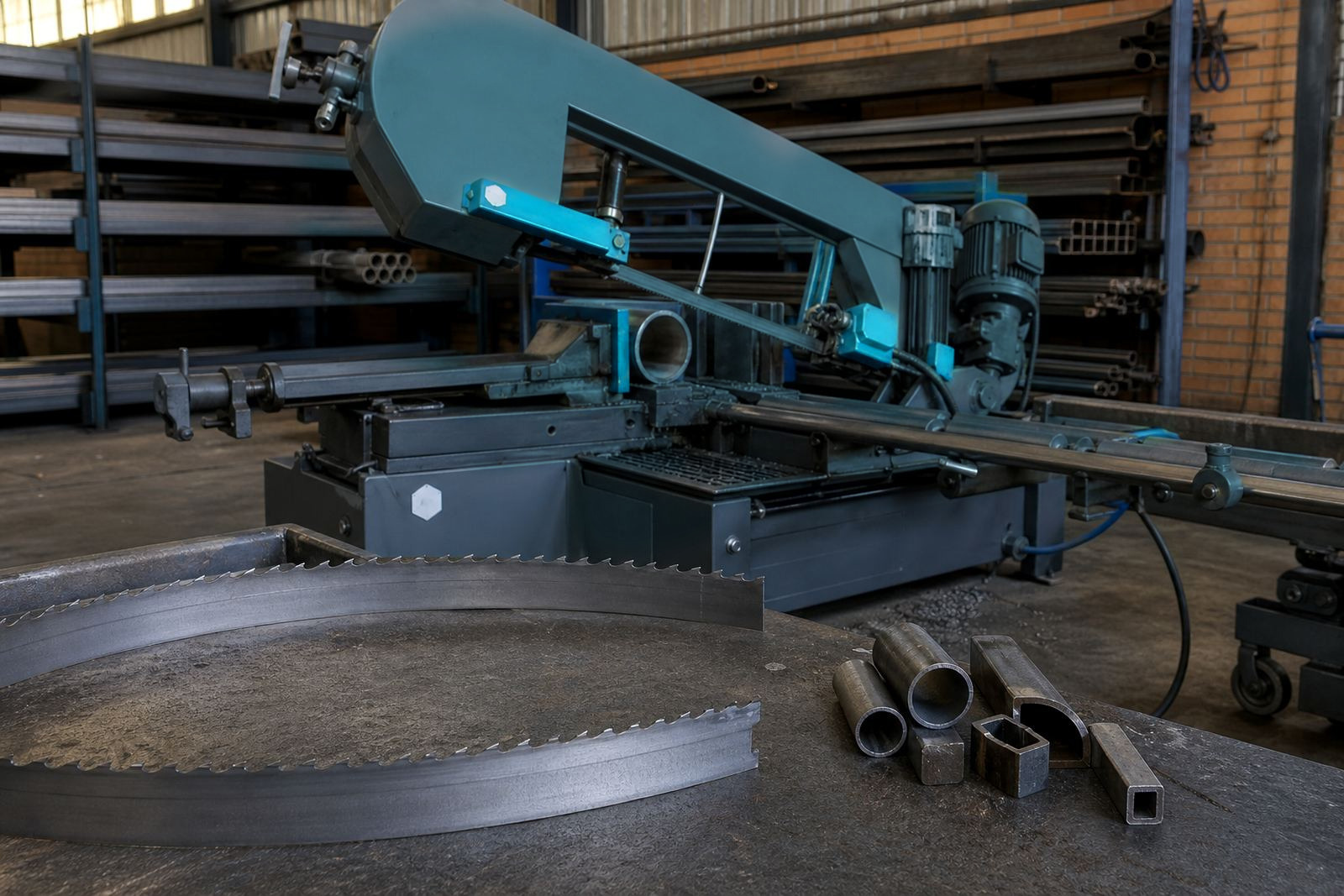
A coarse tooth pitch suits heavier sections, while a finer pitch gives more teeth in contact on thin wall or smaller sizes. Variable pitch blades help reduce vibration, but they still need the right speed band for the job. If the pitch is too fine for a large section, the gullets pack with chips. If it is too coarse for light stock, the teeth grab and leave a rough cut.
- Fine pitch for tube, angle and lighter wall stock
- Medium pitch for mixed workshop work and general steel bar
- Coarse pitch for bigger solid sections and bundles
- Variable pitch for reducing chatter on awkward cuts
Blade speed should support the pitch choice, not fight it. In practice, that means matching the blade width, thickness and tooth form to the section size, then setting feed so the teeth keep cutting without bouncing through the cut line.
Run-in is where a new blade earns its edge
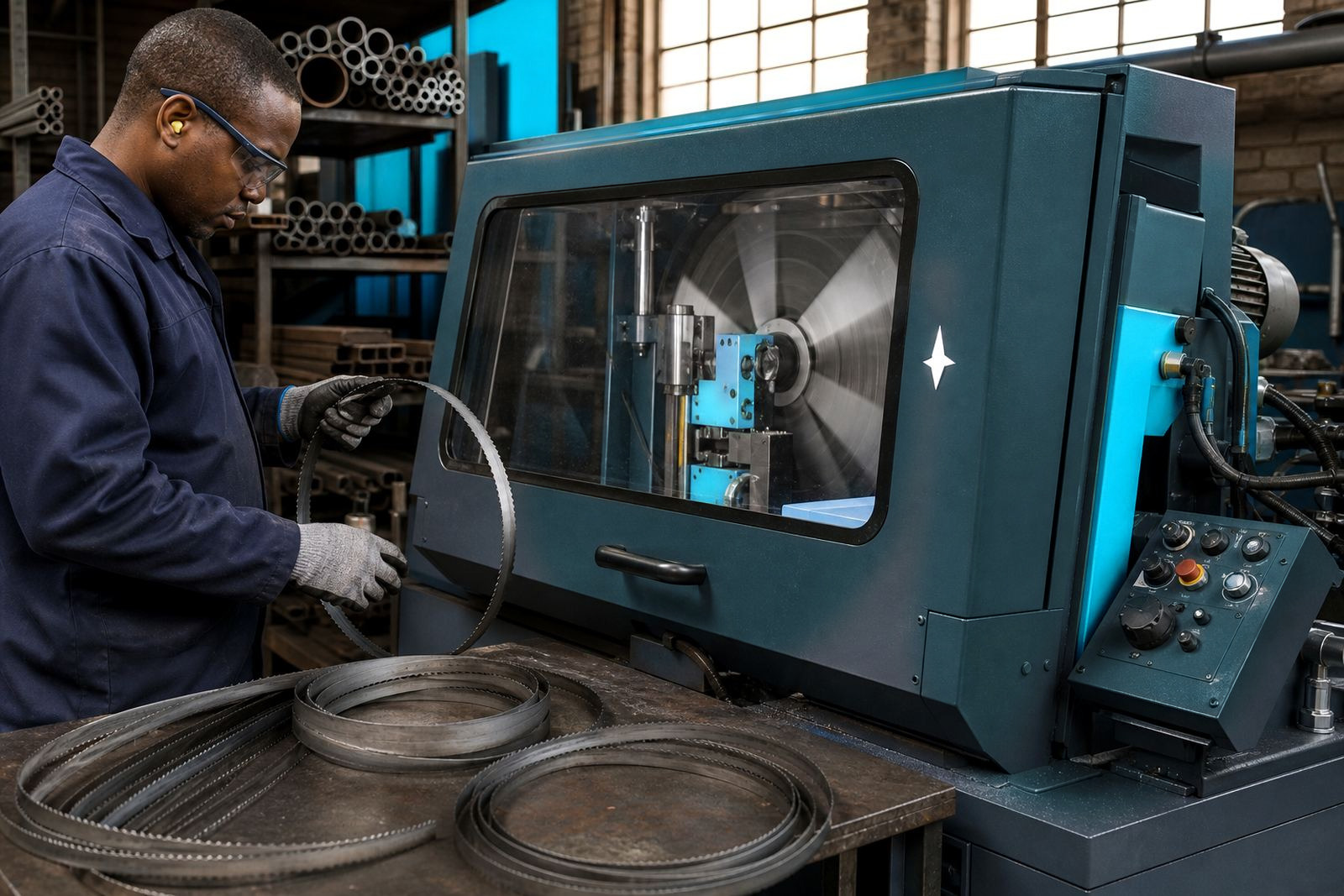
New bi-metal M42 blades and carbon steel blades both benefit from a proper run-in. Fresh teeth have sharp points that can chip if they are pushed hard too early. A lighter feed for the first few cuts lets the tooth edges settle, and it gives the operator a chance to hear how the blade sounds in the machine.
A sensible run-in also shows whether the speed setting suits the job. If the blade cuts cleanly at a modest feed, the next step is to keep the same speed and increase feed in small stages until the chips look right. On manual saws, the steady hand counts for more because the operator controls the pressure, the entry angle and the cut finish.
A Durban workshop example on stainless tube
A workshop in Durban handling stainless tube for gate frames had one recurring problem: the blade looked fine for a short run, then the teeth dulled early and the cut face went brown. The saw was running fast for the section, and the feed was too light for the tooth pitch. The blade was rubbing instead of cutting, so heat built quickly in a humid coastal shop where the swarf did not clear cleanly.
The solution was straightforward in theory and carried out with care on site. The team moved to a better pitch choice for the tube size, lowered speed, checked coolant delivery and made sure the blade sat true in the guides. The cut improved, the tooth wear slowed, and the blade no longer left the same burnt edge. Speed settings follow the rest of the setup, and the pattern stays linked to everything else.
- Check whether the material is solid, tube or mixed stock
- Match speed to tooth pitch and section thickness
- Watch the chip form during the first cuts
- Keep coolant reaching the tooth line and the gullet
Blade failure often starts with small speed mistakes
When a blade snaps early, the cause is often the speed setting, blade tension or feed rate. Incorrect speed can create heat, vibration and tooth overload until the blade starts to track badly or crack at the weld. On bandsaw blades, the weld quality, the guide setup and the way the machine is driven through the cut all affect the result. On hacksaw blades, repeated rubbing and harsh feed can bend teeth and shorten service life just as quickly.
Our blade failure review looks at the marks left on the blade, the cut face and the chip pattern. That helps separate speed issues from blade width selection, machine fit or a bad run-in. For workshops across Johannesburg, Pretoria, Vereeniging, Alberton, Germiston, Boksburg, Durban and Cape Town, that kind of check can make stock standardisation easier too, because the same blade setup works better across repeat jobs.
Speed advice should leave room for the real job
Each metal saw job calls for its own speed setting. The better habit is to read the material, the section size and the blade itself. Tooth pitch choice, feed speed advice and coolant checks all sit in the same chain. If one link is off, the blade speed will show it very quickly.
MoreCut Saws supplies bandsaw blades and hacksaw blades for metalwork from our Alrode, Alberton base, with weld-to-length service, starter kit planning and manual saw support for workshops across South Africa. The right speed does not ask for guesswork. It asks for the blade, the material and the machine to be treated as one set of working parts.