M42 in plain workshop terms
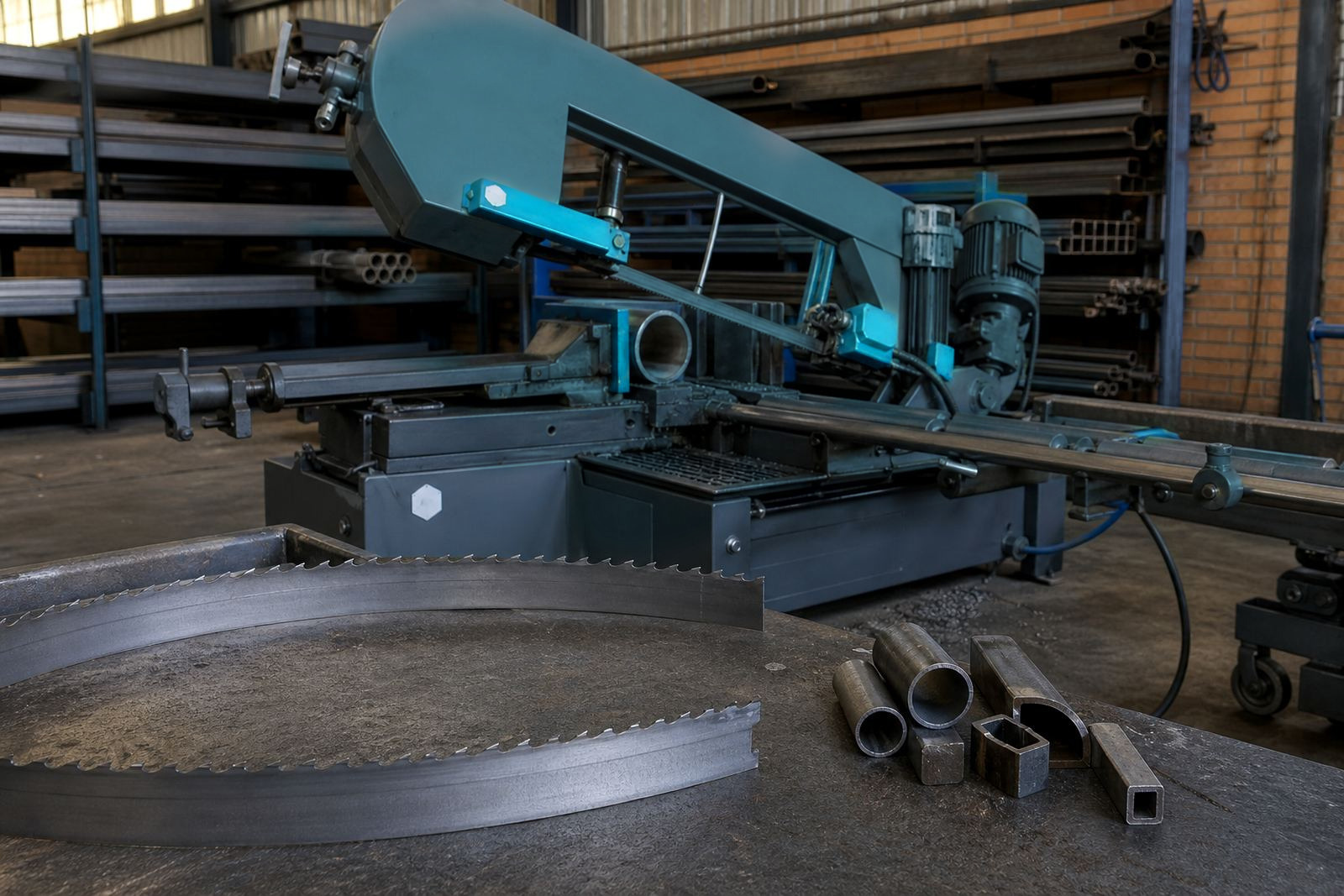
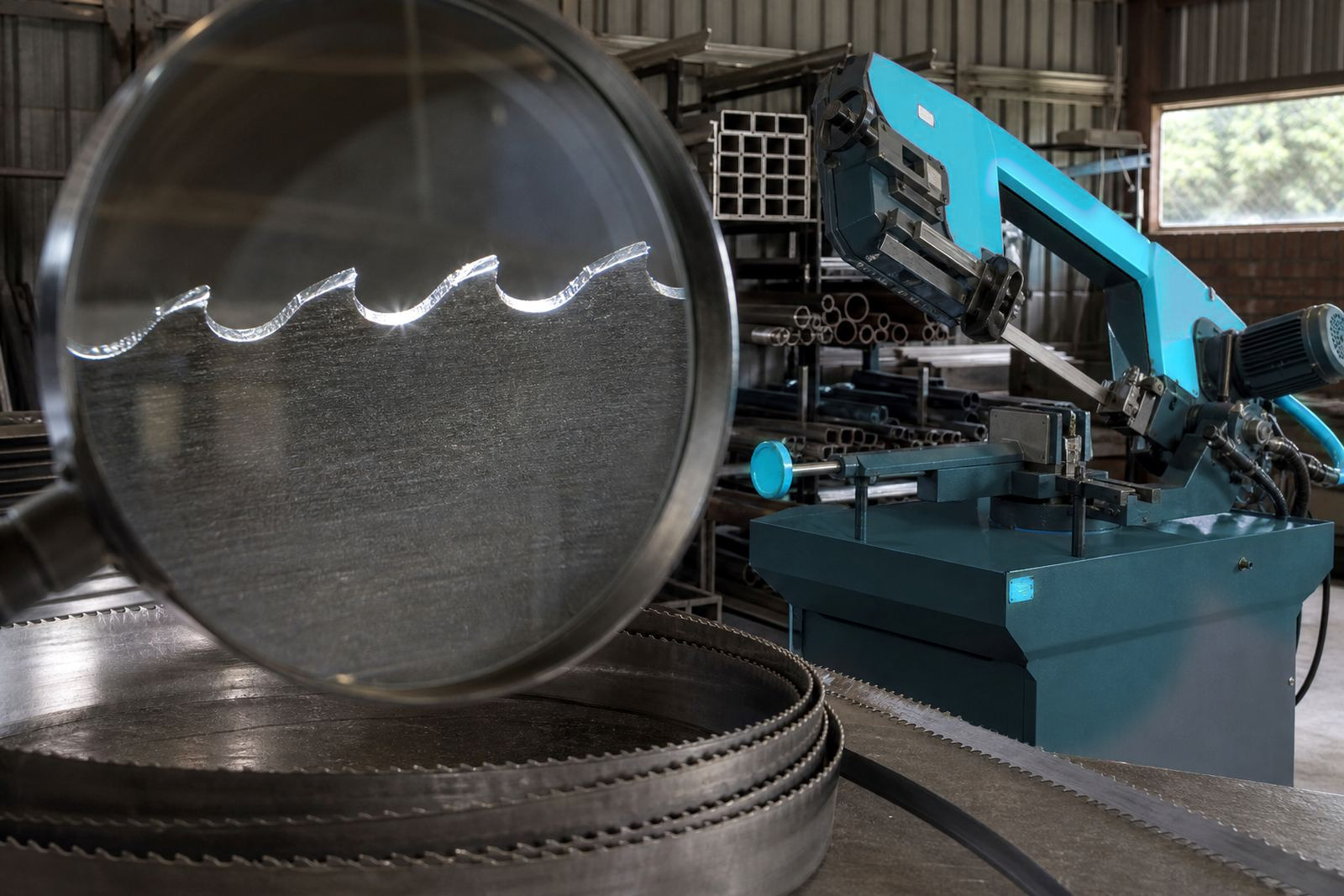
M42 is the cutting edge material on a bi-metal blade, fused to a spring steel backing so the teeth stay hard while the body can flex through the cut. The mix suits production saws, manual saws and smaller workshop machines where blades handle repeated starts, stop cuts and varying section sizes.
In day-to-day use, M42 is chosen when the job sits above mild steel and gets into harder material, mixed scrap, tube bundles, solid bar and awkward profiles. It copes well when the cut is steady and the machine is set up properly, but it still needs the right pitch, width, feed and coolant. A good blade material cannot fix a badly matched tooth form.
Where M42 earns its keep
M42 blades are used where a carbon steel blade would wear too fast. Workshops in Alrode, Germiston and Boksburg often see this on structural steel offcuts, stainless sections, tool steel, heavy wall pipe and batches where one cut is never quite the same as the next. The harder edge keeps cutting longer, which helps when blade changes interrupt a busy saw bay.
- Solid bar with a hard skin or scale
- Mixed bundles of tube and section
- Stainless steel and tougher alloy work
- Short-run production with longer blade life
- General metalwork that needs steadier tooth wear
It is still worth matching the blade to the actual machine. A blade that is too wide for the guides, or too narrow for the cut path, will drift or crack at the weld. Material grade is only one factor in the setup.
Tooth pitch is where many cuts go wrong
M42 is often spoken about on its own, but tooth pitch is usually the first thing to check. TPI, or teeth per inch, needs to suit the section size and wall thickness. Fine pitch works on thin wall tube and small sections. Coarser pitch clears chips better on thick solids. Variable pitch helps reduce vibration on general purpose work and can improve finish on awkward shapes.
For taller sections or bundles, the blade should keep enough teeth in the cut to stay engaged, but not so many that the gullets pack with swarf. Packed gullets cause heat, wandering cuts and stripped teeth. Run-in also applies here. A new M42 blade should not be pushed hard straight away. Begin gently so the tooth tips settle before full feed comes in.
- Thin wall tube: finer TPI and controlled feed
- Heavy solids: coarser pitch and steady chip clearance
- Mixed profiles: variable pitch can calm chatter
- Harder stock: slower surface speed and measured pressure
Width, thickness and set need to suit the machine
Blade width affects tracking and cut stability. Larger saws cut straighter with a wider blade, while smaller wheels and tighter guides suit a narrower blade. We also check blade thickness and tooth set. Too much set can leave a rougher finish and add drag. Too little set can pinch in the cut, especially on stainless or warped material.
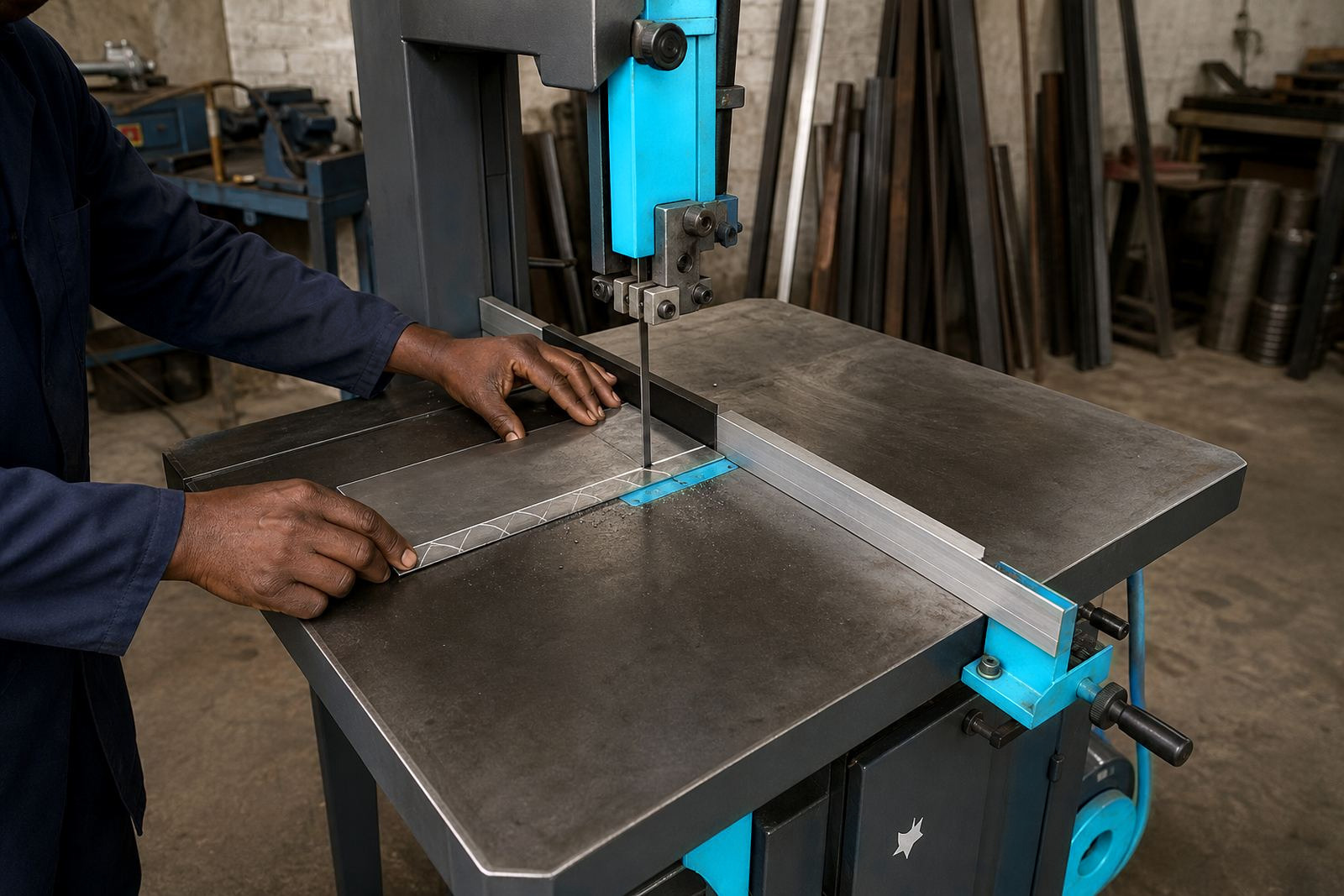
On a workshop saw, the machine condition must be part of the conversation. Guides should hold the blade evenly, wheels must run true, and the vice needs to grip without twisting the job. Poor tracking or a break near the weld can point to alignment, guide wear, or a setting that is too aggressive for the cut section.
That is why blade width selection and machine fit checks sit alongside the material grade. M42 may be the right edge material, but the wrong width or set will still shorten blade life.
Feed, speed and coolant are key
M42 performs best when the cut is stable and the chip is controlled. Feed speed should suit the section and hardness, not the operator’s patience on the day. If the feed is too high the tooth tips chip. If it is too light, the teeth rub and glaze. Both problems create heat, and heat is hard on any blade.
Coolant helps carry heat away and improves swarf clearing on many metal cutting jobs. Protects the weld and reduces the dry, harsh finish that comes from an overworked blade. For coastal work, including jobs sent through Durban or Cape Town supply points, moisture and machine care are important too. A blade stored badly can corrode before it even reaches the saw.
Run-in guidance is worth following closely. A new M42 blade should make a few measured cuts before it is asked to work at full pace. That small habit often gives a cleaner start and steadier life on the blade.
A local mixed steel shop example
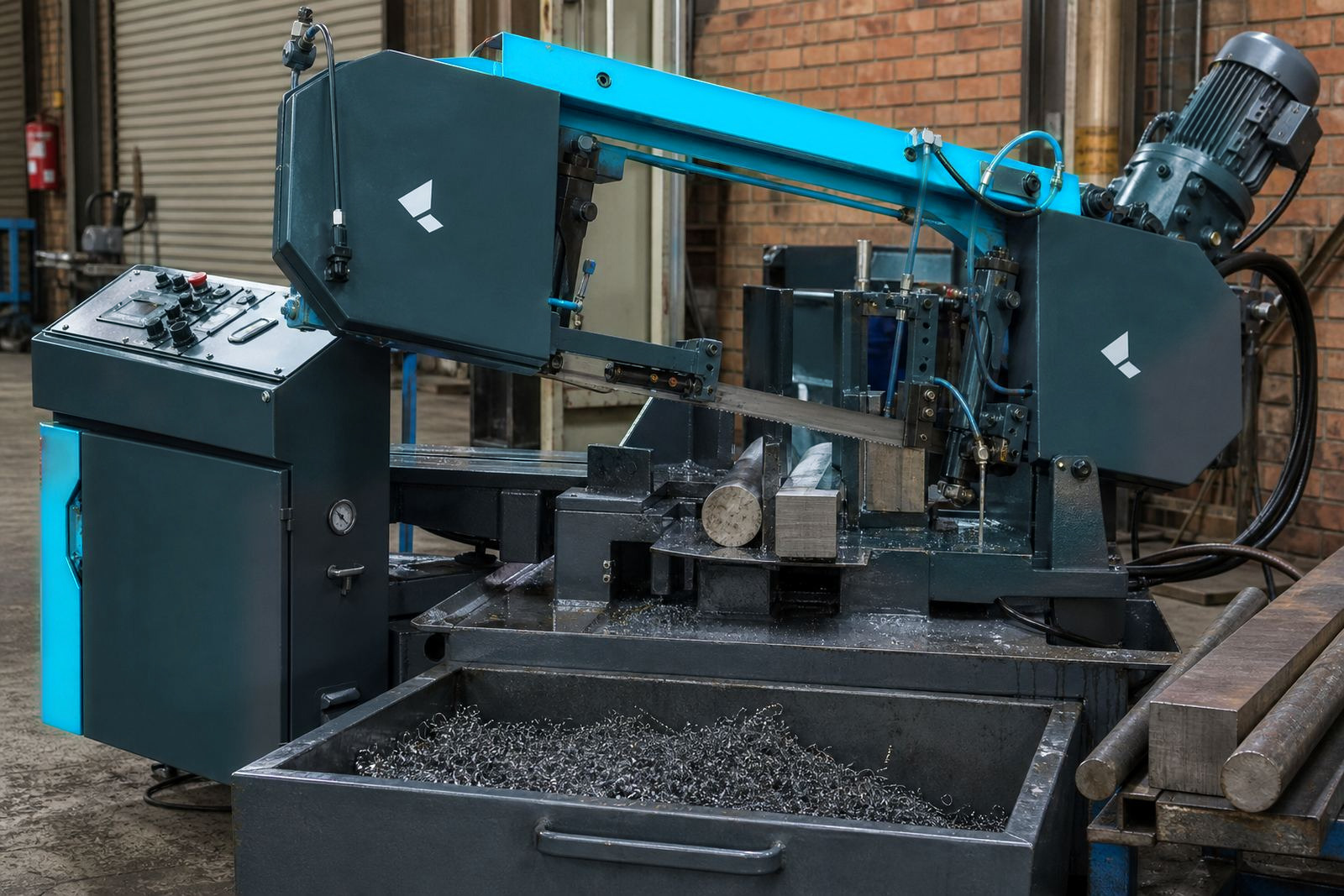
A fabrication team in Alberton cutting mixed steel sections might use one saw for solid rounds, another for tube and angle, and a manual saw for awkward trim work. If the same blade is pushed through all of it, the teeth wear unevenly and the cut quality drops. For that setting, M42 can be the better choice because it handles a broader mix without constant changes.
The real gain comes from pairing the right blade with the right job. One blade may need a finer pitch for thin wall work, while another needs a wider body and coarser teeth for bar stock. Starter kits help a new shop get a sensible first set of blades without guessing at every size. Stock standardisation also helps larger workshops keep fewer blade types on the shelf and still cover the common cuts.
When a blade fails early, the cause is often the edge material and the other conditions around it. A review of the break point, chip colour, cut sound and machine setup usually tells more than the blade box does.
What the team checks before a blade goes out
For M42 and other blade types, the practical checks are straightforward. Choose a blade that matches the machine, the material and the cut pattern.
- Length verification against the machine wheel size
- Tooth pitch selection for section size and wall thickness
- Blade width selection for the saw and guide set
- Run-in guidance for the first cuts
- Feed speed advice for the metal being cut
- Coolant checks where the saw uses fluid
- Blade failure review after an early break
In Johannesburg, Pretoria, Vereeniging, Durban and Cape Town workshops, that approach keeps the conversation grounded in the cut itself. M42 is useful because it sits in the middle ground between everyday carbon blade work and more demanding cutting. Used with the right pitch and settings, it gives a clean practical answer for a lot of metalwork jobs.