What the chip is telling you at the saw
On a clean cut, chips should leave the blade in a steady pattern that suits the material and the tooth form. If the chips look too fine, too long, or oddly coloured, the blade is often working outside its comfort zone. On bandsaw and hacksaw jobs, that usually means the tooth pitch is wrong for the section size or the feed is pushing harder than the teeth can clear.
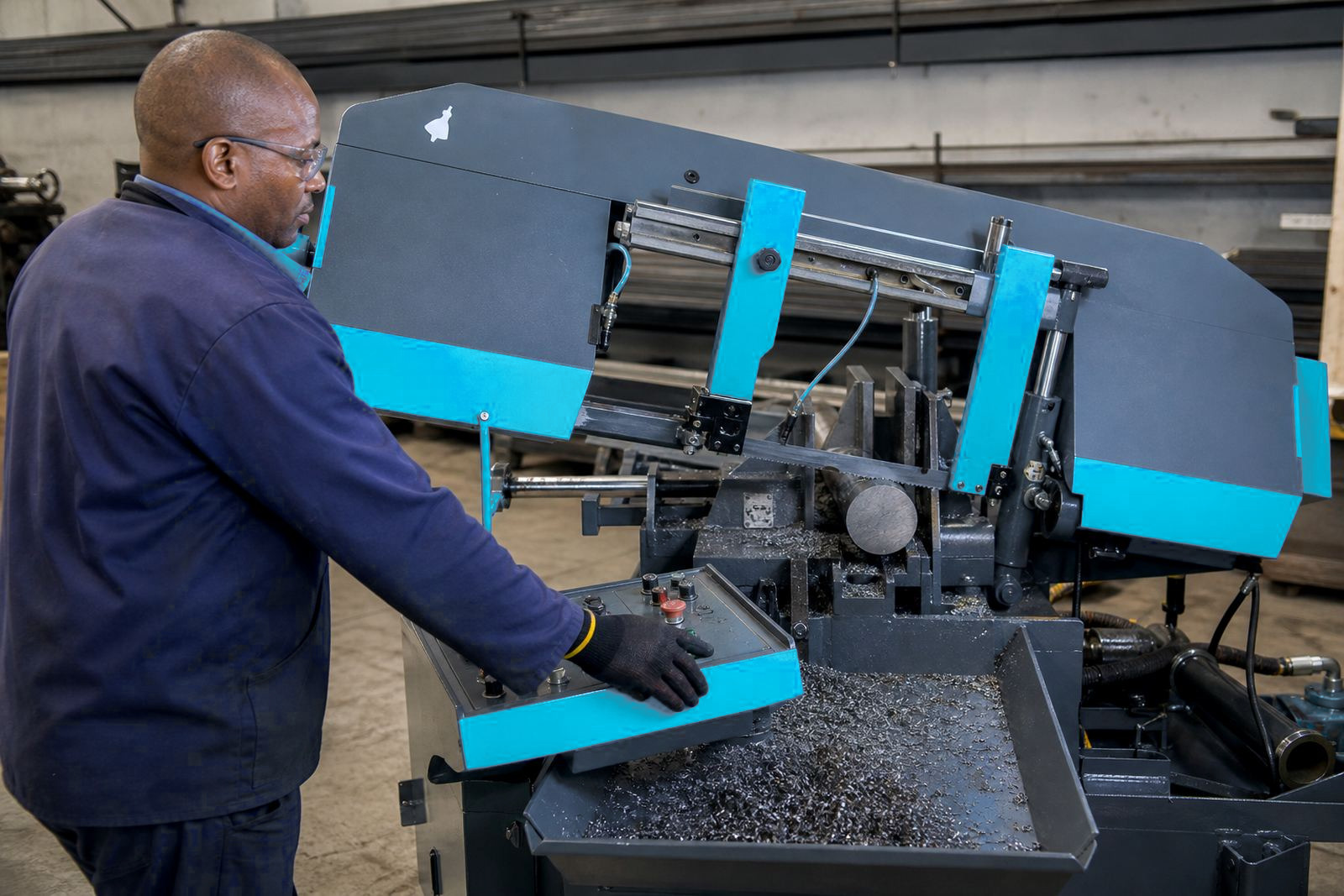
Chip shape shows how the tooth is loading and clearing. A blade that packs chips into the gullets starts rubbing, then heat rises and the cut drifts away from a straight, tidy finish.
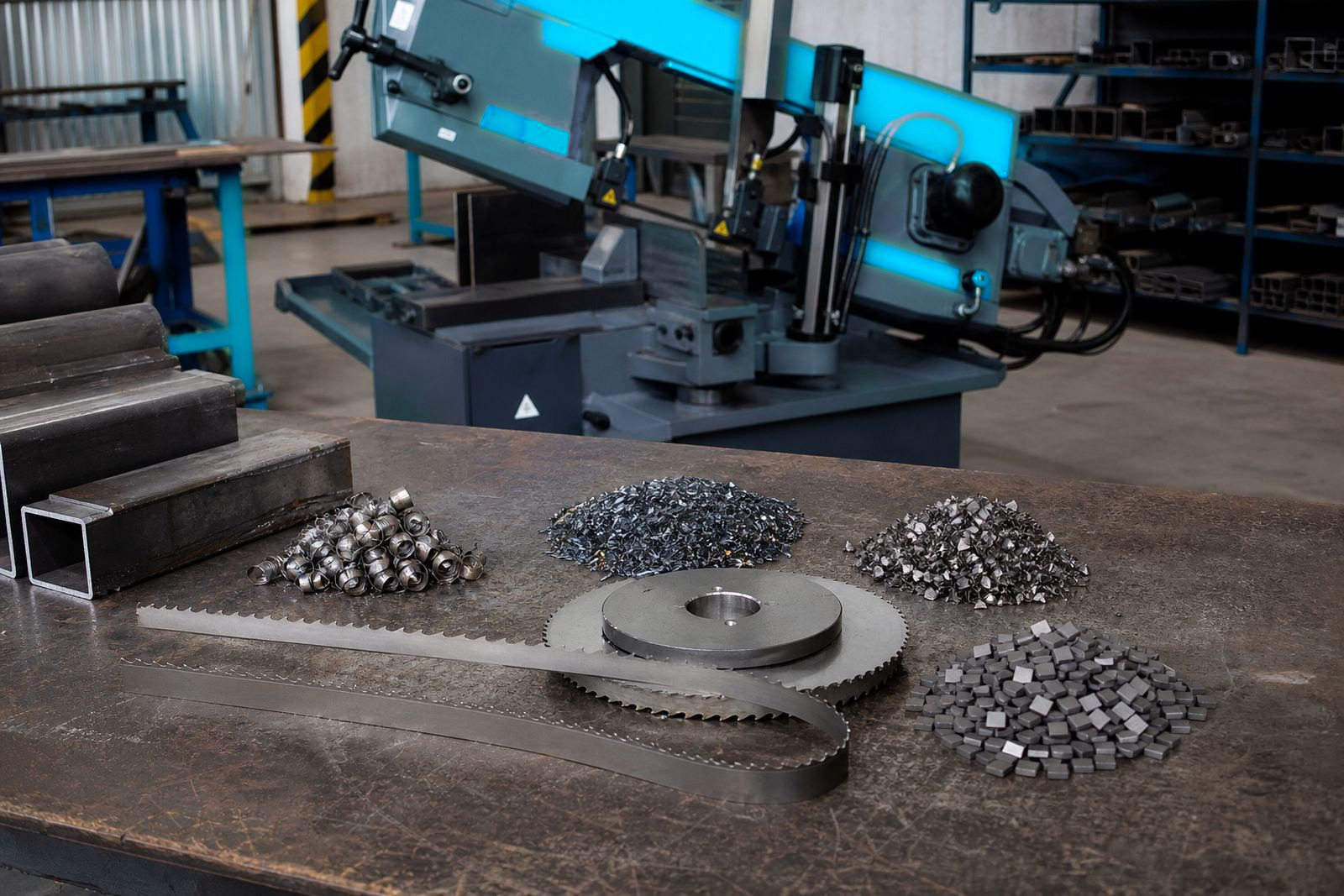
Fine powder, tight curls, and what each one suggests
Very fine powder usually means the teeth are scraping instead of cutting. That can happen when the pitch is too fine for the section, or when the feed is too light and the blade is skating over the work. Tight, even curls are healthier on many mild steel jobs, as long as they are not blue or burnt at the edges.
Long stringy chips can be useful on some materials, but on a saw they often mean the pitch is too coarse for the wall thickness or solid bar diameter. In a workshop in Alrode, that shows up often when a general purpose blade is asked to handle thin tube in one hour and heavy bar the next, without a pitch change.
- Powdery chips: pitch too fine, feed too light, or dull teeth
- Blue chips: heat is building, often from poor coolant or excess speed
- Long strings: gullets are not clearing well enough
- Short broken curls: usually a healthier match, if the cut stays straight
When the colour of the chip changes
Chip colour gives a rough view of heat. Bright silver chips usually mean the cut is cool enough, while straw, brown or blue tones show rising temperature. Heat can come from too much speed, poor coolant flow, worn set on the tooth line, or a blade width that is not supported properly by the machine guides.
On stainless and tougher carbon steels, heat builds quickly if the feed is timid and the blade rubs. In that case the saw can make blue chips but still cut slowly, which is a poor sign. A proper run-in on a new bi-metal blade helps the edge settle before full production pressure is applied.
Pitch, width and thickness work together
Chip shape cannot be read on pitch alone. Tooth pitch, blade width and blade thickness all shape the result. A variable pitch blade can quiet vibration on mixed sections, while a fixed pitch blade may suit repeated work on one size of material. Thin wall sections usually need a finer pitch and lighter feed, while solid bars can take a coarser pitch if the gullets have room to clear the chip.
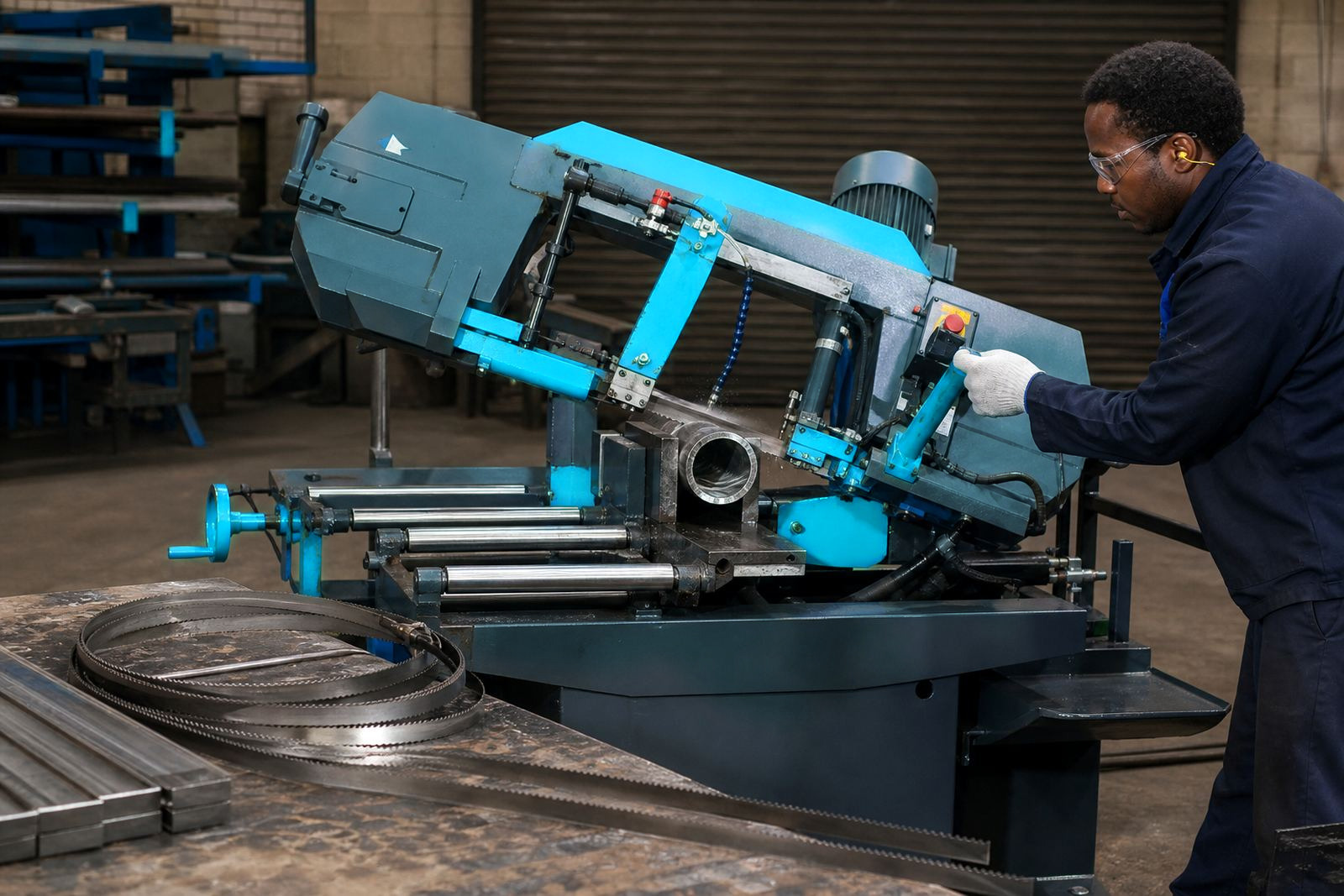
Width is the next check. Narrower blades turn better on manual saws and smaller machines, but they can wander if pushed through heavy section. Wider blades hold line better on larger machines with guides set for the blade body.
- Thin wall tube: finer pitch, lighter feed, careful set
- Solid round bar: coarser pitch, steady feed, good chip clearance
- Mixed bundles: variable pitch can reduce vibration
- Manual saws: choose a blade that clears chips without forcing the frame
A Durban job that showed the problem early
A workshop in Durban was cutting mild steel tube for gate work and flat bar for brackets on the same machine. The chips from the tube were dusty and the chips from the flat bar were long and curled back into the cut. The saw was running one blade across both jobs, and the pitch was a poor match for the thinner section.
After a blade change, the tube cut stopped looking scorched and the chip shape settled into short curls. The flat bar still needed a firm feed, but not a hard shove. The difference came from matching the tooth pitch to the main section size and checking coolant delivery before the next batch started.
Run-in, feed and coolant change the chip fast
New blades need a measured run-in. On bi-metal M42 blades, a lighter first stage helps the tooth edges settle before full feed is used. If the run-in is rushed, the chip can turn dark and the teeth wear unevenly across the set. Feed speed should be firm enough to cut, but not so hard that the chips jam in the gullets.
Coolant is just as important. A steady coolant film helps carry heat away and keeps the chip from welding to the tooth face. Where coolant is weak or poorly aimed, chips often come off discoloured and the cut face turns rougher than it should.
- Start with a controlled run-in on new blades
- Match feed to the material, not to habit
- Keep coolant reaching the tooth line
- Watch for chip packing in the gullets
Reading chip shape before the blade fails
Chip shape is often the first warning before a blade breaks down. A change from short curls to dust, or from bright chips to blue ones, can point to a tooth pitch mismatch, poor machine fit, or a guide issue. If the cut starts to wander and the chips look ragged, the blade may be losing set or the material may be moving under load.
For South African workshops that cut structural steel, tubing, solid bar and mixed offcuts, a quick chip check can save a lot of wasted blade life. That is where blade width selection, tooth pitch selection and length verification work together, especially when starter kits or stock standardisation are being set up for more than one saw.