What straight set teeth are doing at the cut line
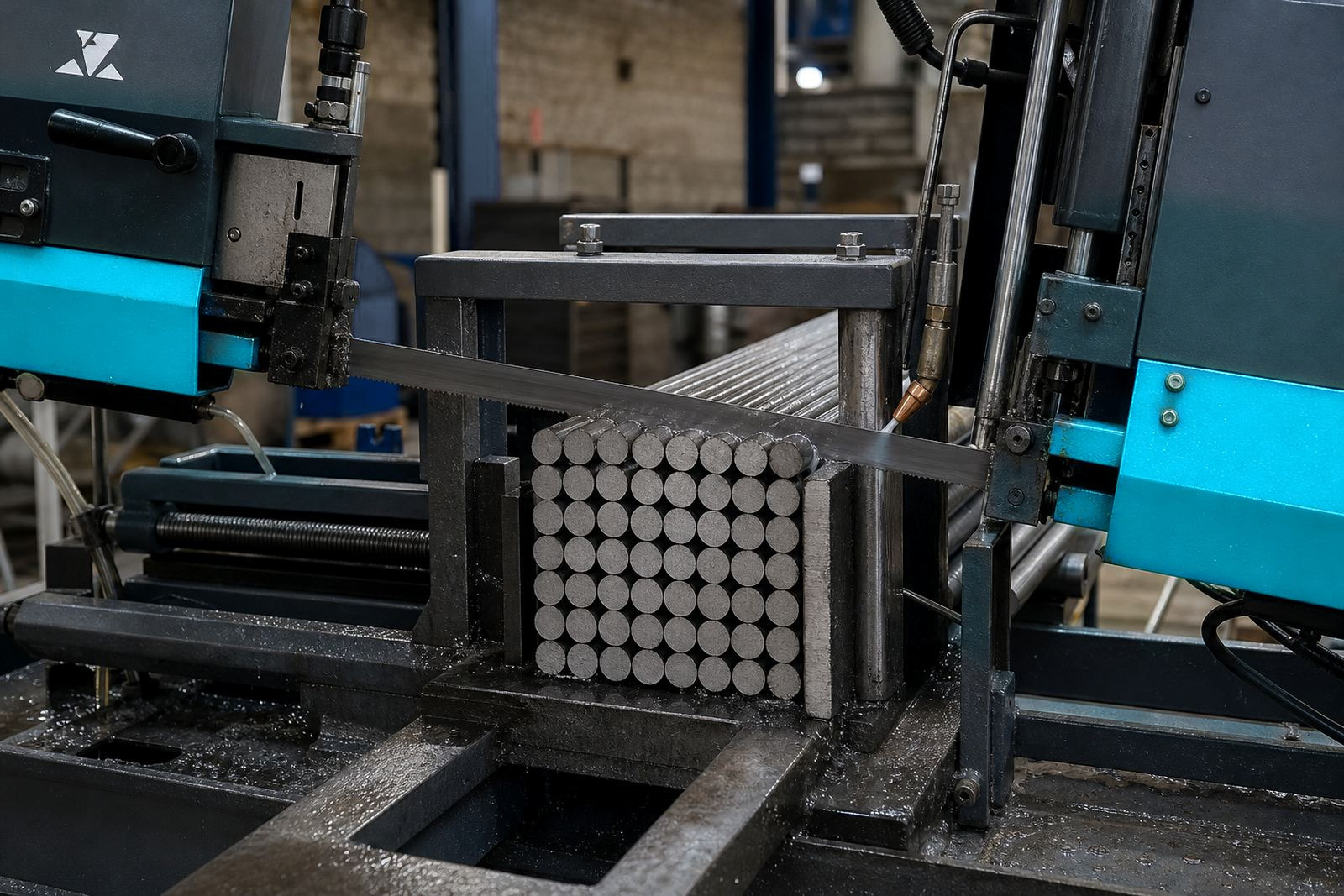
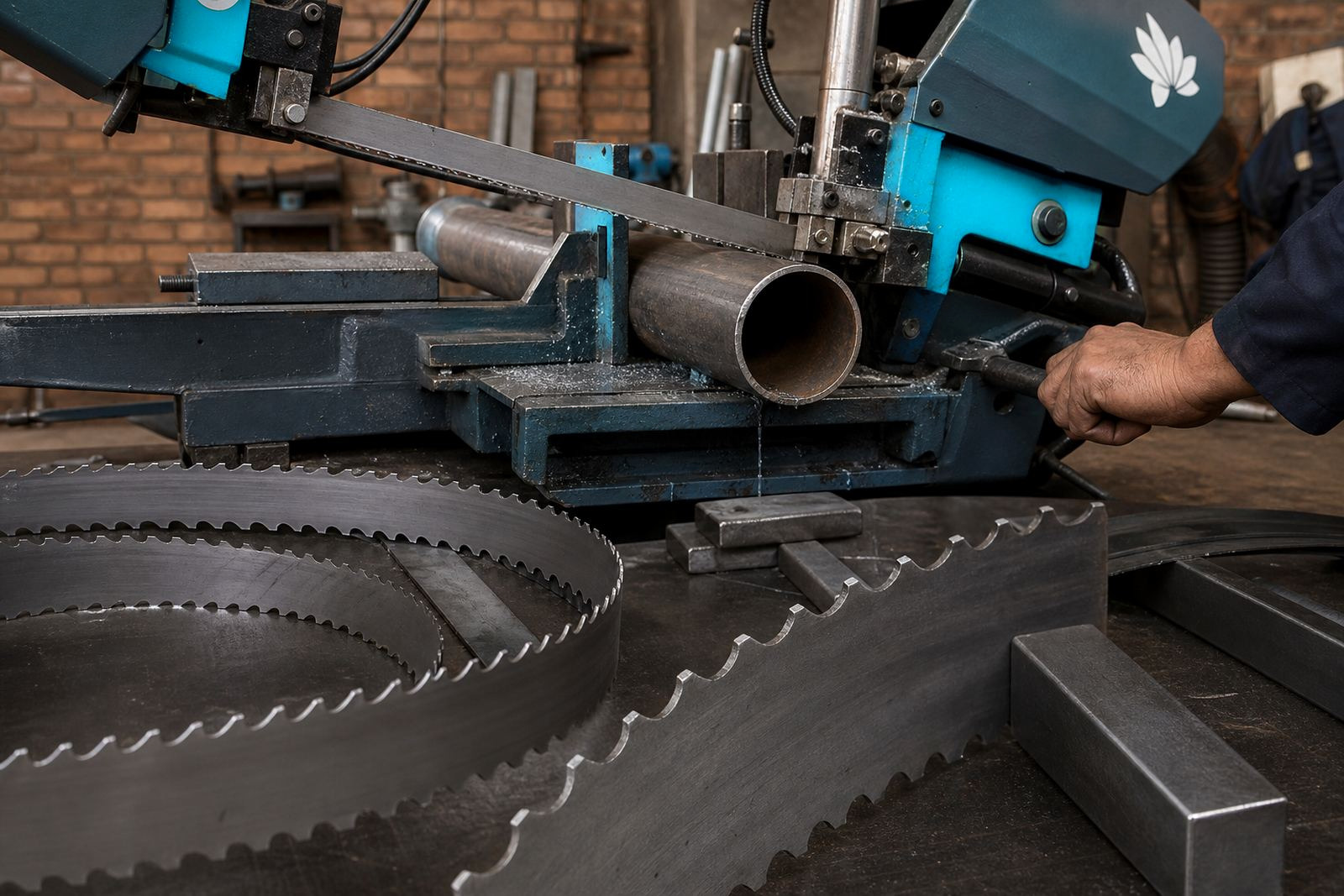
Straight set teeth place the blade teeth in a left-right pattern, so the kerf stays open while the blade moves through steel, mild bar, tube or section. In workshop hand sawing, an open kerf lets the blade run free, so it does not heat up, drift or lose bite. Straight set is often used where the operator wants a steady cut on material that is not too heavy for the blade section.
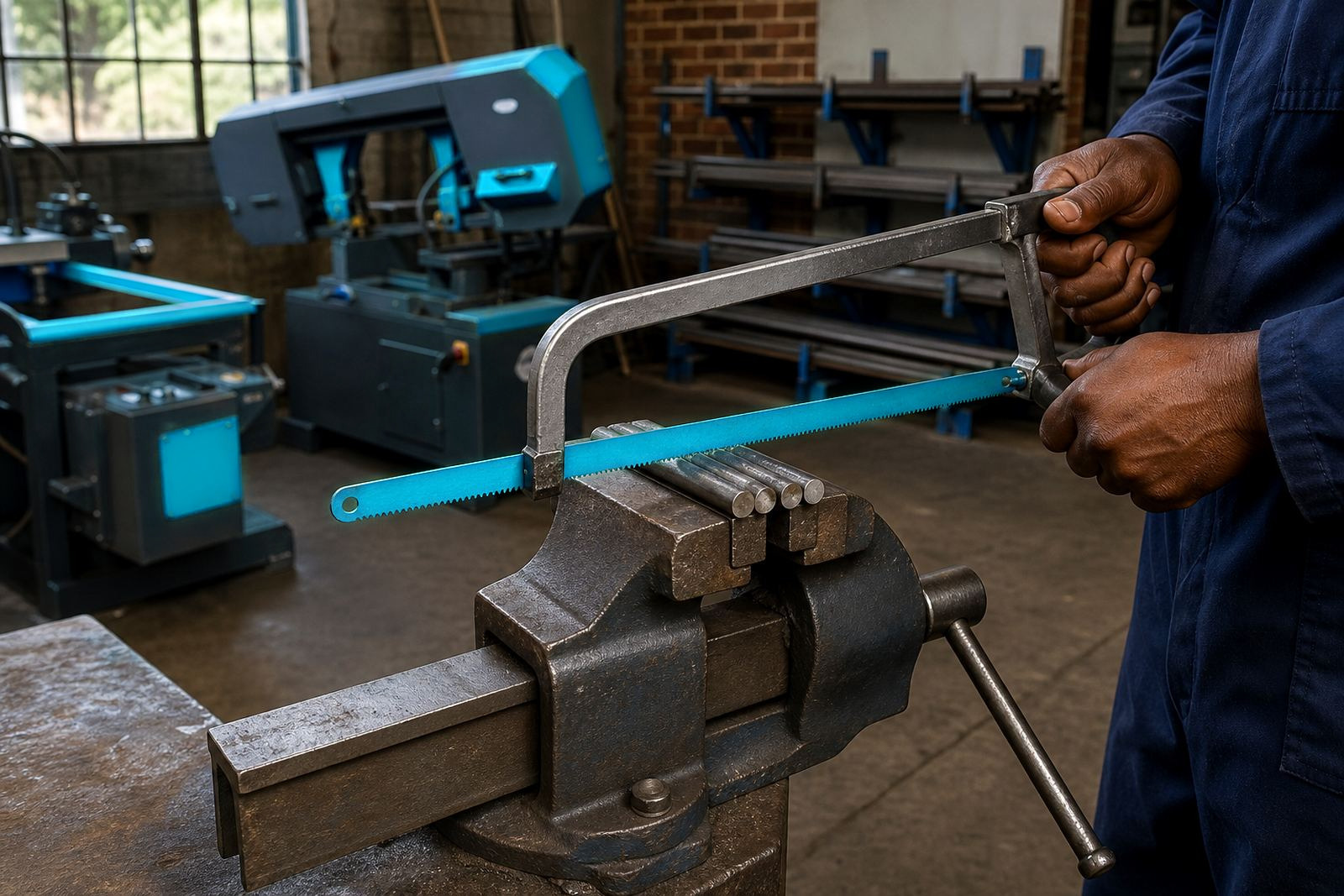
On a hacksaw frame, straight set teeth give a familiar feel on the stroke. On a bandsaw blade, the same basic tooth action still needs the right pitch and tension, otherwise the blade will snag or wander. The set has to suit the thickness of the stock, and it has to suit how the saw is fed, as well as the material name on the rack.
Pitch and tooth count need to match the job
Tooth pitch, often shown as TPI, changes how many teeth are in contact with the work at once. Small solid sections and thin wall tube suit fine pitch. Coarser pitch clears chips better on thicker bar and heavier profiles. If the pitch is wrong, the blade either clogs or skates across the face without biting cleanly.
- Thin wall tube usually needs a finer pitch to stop snagging.
- Medium section steel often cuts well with a balanced pitch choice.
- Heavy solid bar needs more tooth space for chip clearance.
- Variable pitch can calm vibration on mixed-section work.
Variable pitch helps when the cut passes through uneven cross-sections. It interrupts the rhythm of the teeth, which can reduce chatter on long runs or mixed bundles. Shops cutting a batch of offsets, offcuts and odd lengths need a variable pitch, since a single fixed pitch would fight the workpiece.
Blade width, thickness and set change the feel
Blade width controls how much support the blade has through the cut. Wider blades track straighter on larger machines and tougher work, while narrower blades can turn more easily on smaller frames or tighter manual work. A thin blade may cut freely but needs better control from the operator and the machine guides.
The set must suit the blade body and the material. Too much set wastes effort and leaves a rough edge. Too little set lets the sides rub, especially on long cuts where heat builds along the blade. In humid coastal towns like Durban, stored blades also need proper protection because surface rust quickly changes how the teeth behave at the start of cutting.
- Wider blades suit straighter work and stronger guidance.
- Narrower blades help where the frame or guide arrangement is tighter.
- More set can help chip clearance, but only to a point.
- Blade thickness affects stability, heat and operator feel.
Bi-metal M42 and carbon steel do different jobs
Bi-metal blades with a high-speed tooth edge are commonly used where the shop wants better wear resistance on steel and a longer working life between changes. They hold up well on repetitive cutting, especially where the material mix shifts between light structural pieces and harder solid stock. Carbon steel blades are still useful for manual sawing and lighter duty work, especially where the cut list changes often and the budget has to stay sensible.
The choice is about blade type and control. A bi-metal blade can tolerate more demanding work, but if feed is too aggressive or speed is wrong, the teeth still suffer. Carbon steel wants careful handling, proper run-in and a steadier touch. On both types, coolant or cutting fluid helps with heat and chip flow when the job calls for it.
Run-in, feed and speed decide how long the blade keeps working
New blades need a run-in period so the tooth edges do not strip early. That means lighter feed at the start, then a steady increase once the teeth have settled. A hard first cut can round the points or chip the set before the blade has even proved itself.
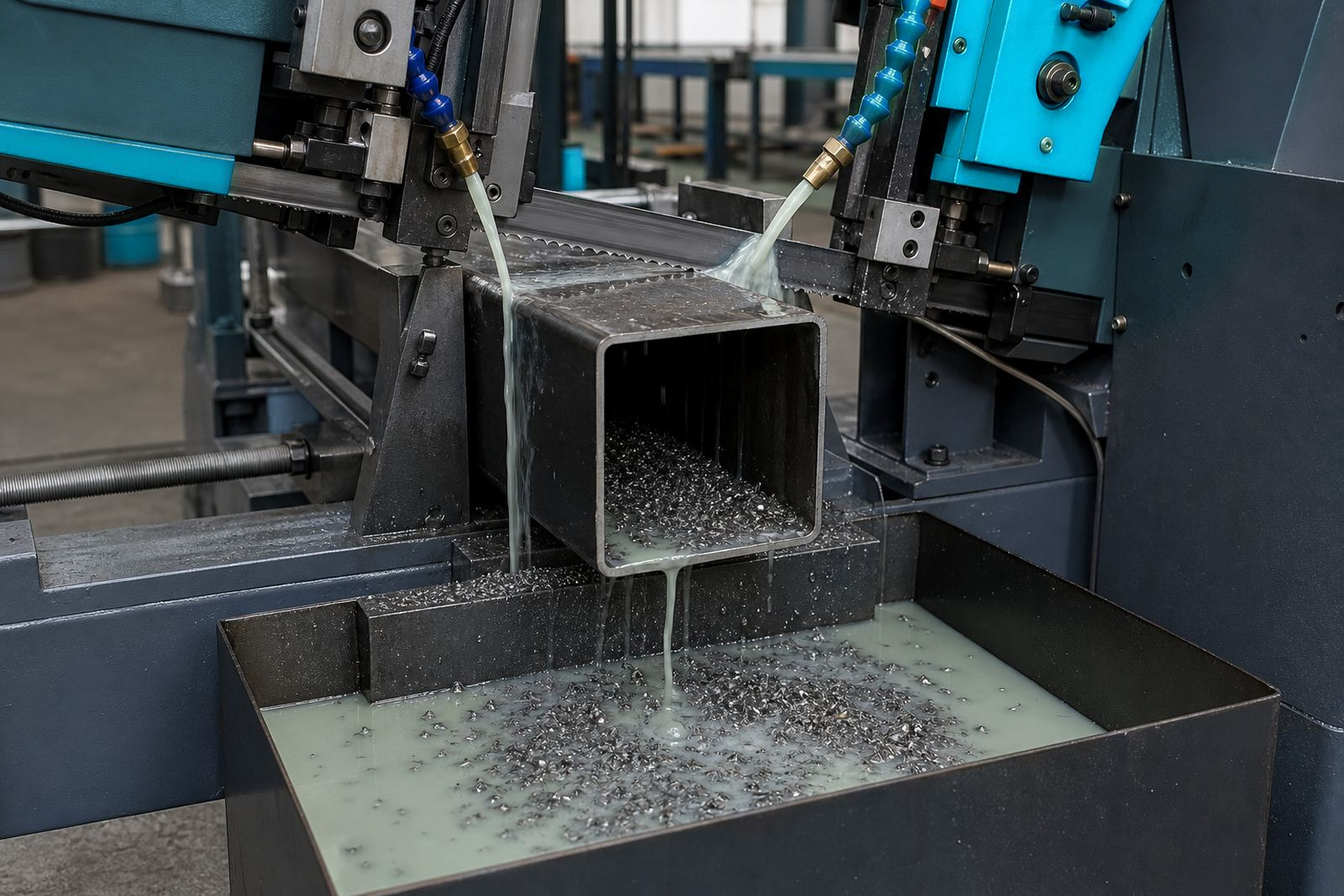
Feed speed should suit the chip form. If the chips come off as fine dust, the feed may be too light. If the teeth grab and judder, the feed may be too heavy or the pitch too coarse for the section. Check coolant on powered saws because heat changes the cut, especially on stainless steel and bundled stock. On a manual saw, use a clean stroke and stable clamping and let the teeth do the cutting.
- Start with a gentle run-in on new blades.
- Watch chip shape instead of forcing the stroke.
- Keep the work clamped square to reduce twist.
- Add coolant on stainless and thick sections.
When straight set fits Alrode workshops and field jobs
In Alrode and the wider Alberton industrial area, many workshops cut angle, tube, flat bar and round stock for gates, repairs and fabrication work. Straight set teeth are useful on those jobs when the operator wants a blade that enters cleanly and keeps the kerf open on hand saw frames or lighter machine work. The same logic applies on site in Vereeniging, Pretoria or Germiston when a crew needs a reliable blade for a manual cut and does not want to burn time on poor tooth choice.
MoreCut Saws handles blade selection, weld-to-length service and length verification for workshops across South Africa. The team also checks machine fit, starter kit planning and stock standardisation, which helps when one workshop uses several saws and each frame takes a different blade length. Sibusiso Dawood leads the business with Anika Nortje, Pieter Moonsamy, Lerato Zungu, Themba Chetty and Chanel Jacobs, and the work stays close to the real cutting conditions that shops deal with every day.
Signs a straight set blade is the wrong fit
A blade that squeals, wanders or leaves heavy burrs is telling you something. The pitch may be wrong, the set may be too aggressive, or the feed may be too high for the material and the machine. If the cut face shows heat tint, blue marks or hooked teeth on exit, the blade is working harder than it should.
A quick blade failure review often starts with the basics: tooth count, blade width, material thickness, guide condition and clamping. In many shops, that check saves a second bad cut and a wasted length of stock. When the same fault keeps returning, the issue is often the way the saw is being loaded and fed, along with the blade.