Angle iron bites differently at each corner
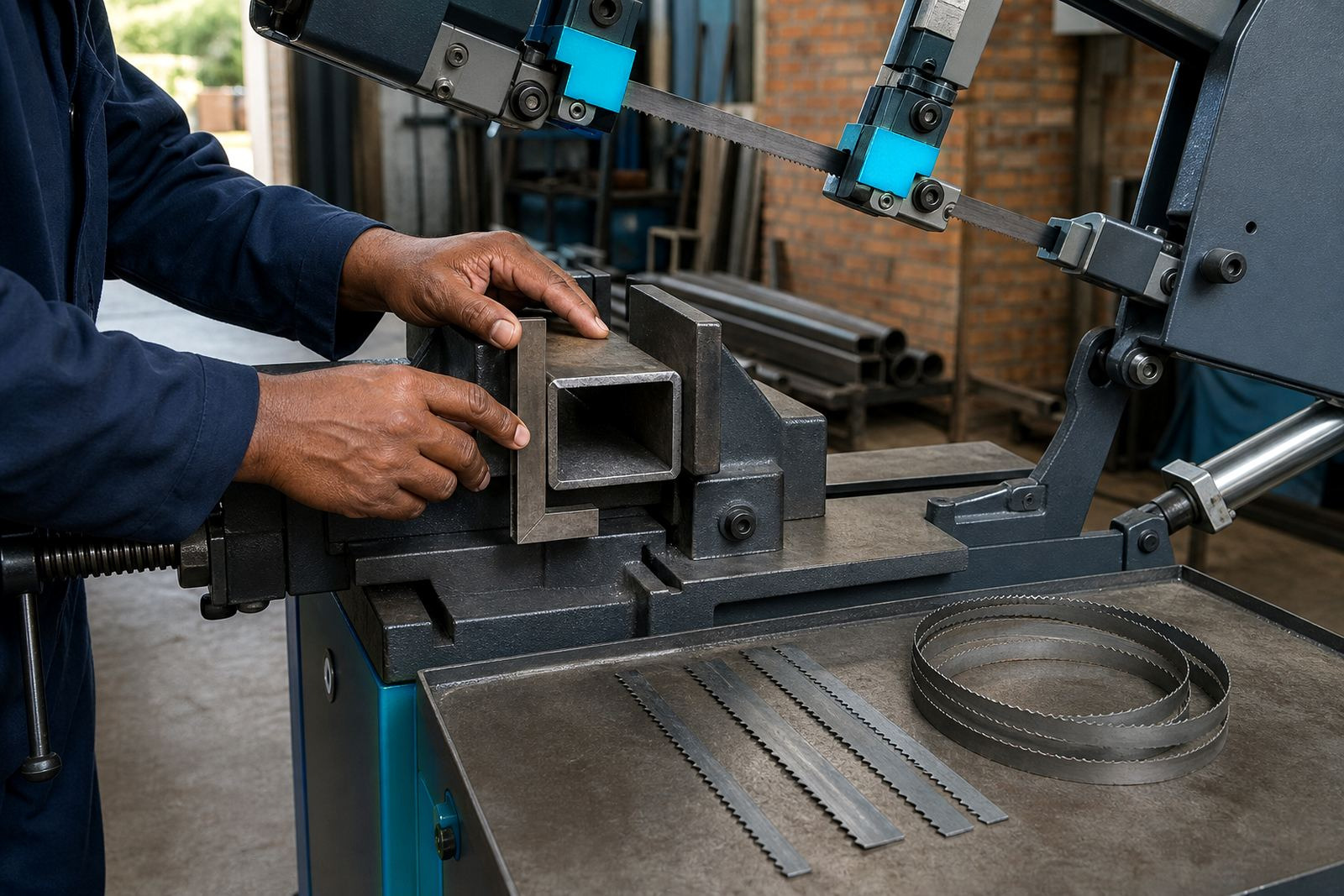
Angle iron is cut with the blade meeting one leg, then the other, with a gap between them. That change in contact makes some teeth work hard while others are still settling into the cut. For thin angle, a finer pitch usually keeps more teeth engaged. Heavier sections need a coarser pitch and a blade body that can keep straight under pressure.
Width comes in here too. Longer straight cuts track better with a wider blade, while a narrower blade can cope better where the section is awkward or the saw throat is tight. If the material wall is light, too much feed can strip the set off the teeth and leave the cut wandering. Run-in is worth attention, especially on fresh bi-metal blades, because a soft start helps the edge form before full load is applied.
- Use a tooth pitch that keeps several teeth in contact at once.
- Match blade width to the machine and the section size.
- Reduce the feed if the cut begins to chatter or squeal.
- Check coolant flow on stainless or thicker mild steel.
Channel cuts need steady contact through the open side
Channel section creates uneven engagement because the blade enters an open profile, then meets the web and flanges in stages. That means the tooth load changes during the same cut. A variable pitch blade helps reduce harmonic chatter on many structural jobs, especially where the machine and material lengths are not perfectly uniform. For shorter runs, a standard pitch can still work well if the cut face is stable and the feed is consistent.
The open shape can tempt operators to push harder, but a controlled feed gives better life and a straighter finish. On channels with scale or surface rust, the first few teeth take extra punishment. If the blade is too fine, gullets fill too quickly and the cut heats up. Too coarse and the teeth skip instead of slicing. Coolant helps carry away heat and keeps chips from welding to the tooth face, which is common when the cut runs hot.
When a workshop uses the same machine for mixed section work, blade selection should be based on the thickest part of the job, not the easiest piece in the pile. That approach cuts down on repeated tooth damage and avoids unnecessary blade swaps.
Beam work is about width, set and tooth strength
Beam cutting places a different demand on the blade because the section is broad, heavy and often uneven in wall thickness. The web and flanges can change the load several times before the cut is complete. A bi-metal blade with the right tooth form usually gives better service on structural beam than a carbon blade, especially where the workshop sees frequent use.
Width and thickness should suit the machine and the cut length. A blade that is too narrow may twist when it meets a hard corner or a weld seam, while one that is too thick can strain smaller saw wheels. The tooth set needs to be even, otherwise the blade will drift and leave a coarse face that needs extra cleanup. For manual saw support, the operator also needs a feel for feed pressure, because a heavy hand can reduce blade life very quickly.
- Use a stronger blade body for broad, heavy sections.
- Confirm machine fit before loading a new width.
- Inspect the tooth set if the cut starts to pull sideways.
- Keep the gullets clear of packed chips and swarf.
Pitch choice changes with wall thickness and mixed bundles
Tooth pitch is a number on the box. It needs to suit the thinnest and thickest parts in the same bundle, plus any spaces between section walls. A fine pitch helps on small wall thickness and light profile work, but it can clog when the cut moves into heavier stock. Coarser teeth clear chips faster, though they need enough material in the cut to stay supported.
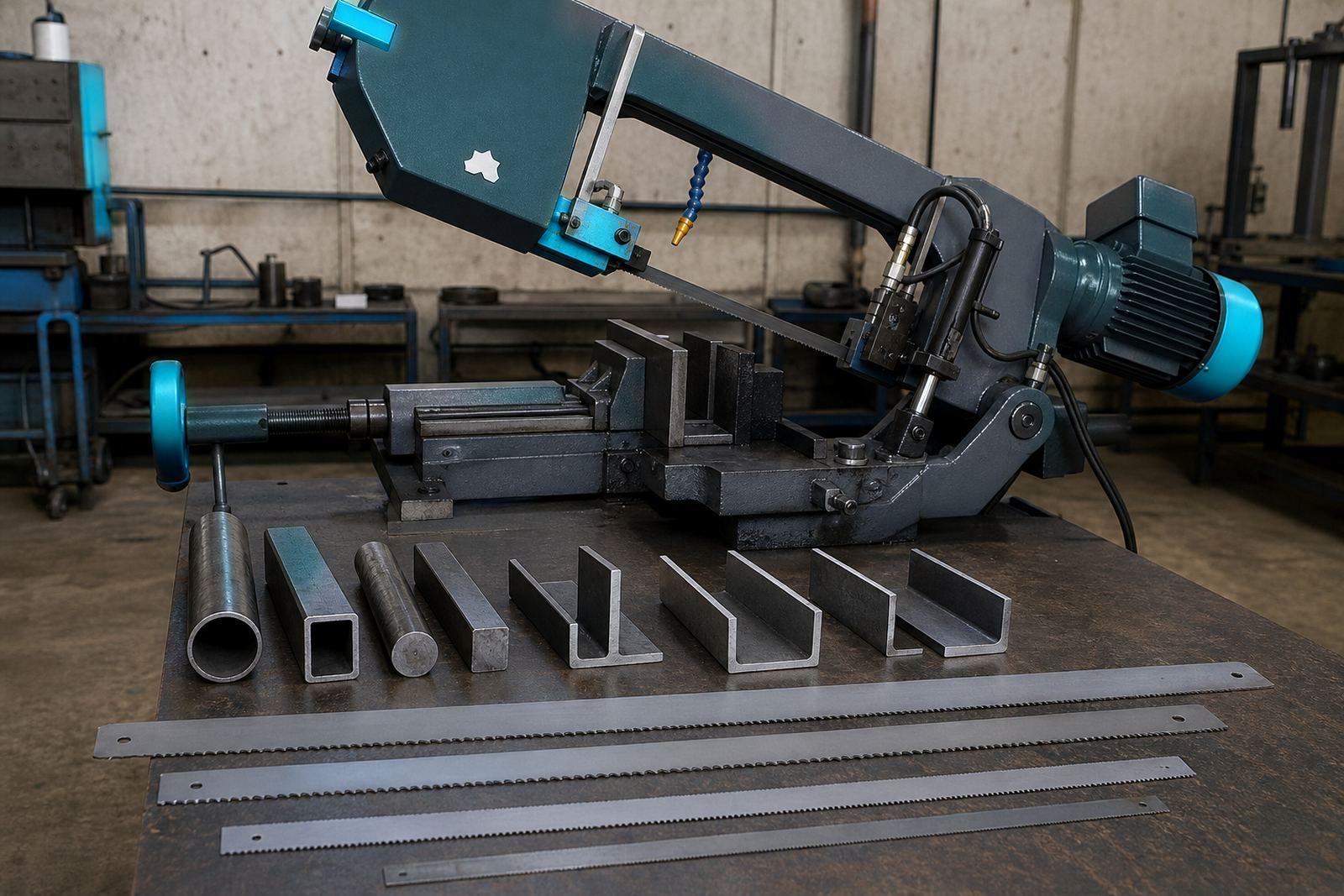
For mixed bundles, variable pitch often gives a calmer cut because it breaks up the rhythm of the teeth entering the material. Angles, channels and beams sorted together by the yard need a cut plan that suits structural packs. Feed speed should stay steady enough for the blade to work, but not so high that the gullets overfill. If the cut begins to howl, the usual causes are wrong pitch, poor coolant, or feed that is too aggressive for the material.
Starter kits help workshops that want one clear blade plan for common section sizes. A good kit covers the regular jobs without carrying dead stock that never leaves the shelf. Blade selection help is important when a machine has run the same setting for years and no one has checked whether the cut mix has changed.
Run-in, coolant and failure signs at workshop level
Before full production load, let a new blade run in briefly so the tooth tips settle. Skipping that step often shows up later as micro-chipping, rough finishes or a blade that wanders early in its life. Coolant should reach the teeth before the cut starts heating up, not after the blade is already smoking. On structural steel, hot chips and dry cutting can shorten life fast, especially where the material has mill scale or older rust.
Blade failure review starts with the cut face, then the chip shape, then the sound the machine makes. Clean curls usually point to a workable combination of pitch and speed. Powdery chips can mean too much feed or a dull edge. Blue staining, teeth stripped on one side, or a cut that leans all the time point to a machine fit issue, poor tracking or blade width that does not suit the saw.
In Alrode, a fabrication shop handling angle for gates and beams for supports may run one saw all week on mixed stock. Length verification, machine fit check and stock standardisation help there. The right blade for the job is part of the answer, and the machine setup must carry it too.
Alrode workshop example for mixed section orders
A small fabrication team in Alberton might cut angle for frames, channel for brackets and beam for support members in the same shift. If the blade is chosen only for the thickest beam, the lighter angle may cut slowly and leave extra burr. If the blade is picked too fine for the beam, the teeth will struggle and the cut will pull hot. The practical answer is to map the usual section sizes, then choose a blade width, thickness and pitch range that sits in the middle of that mix.
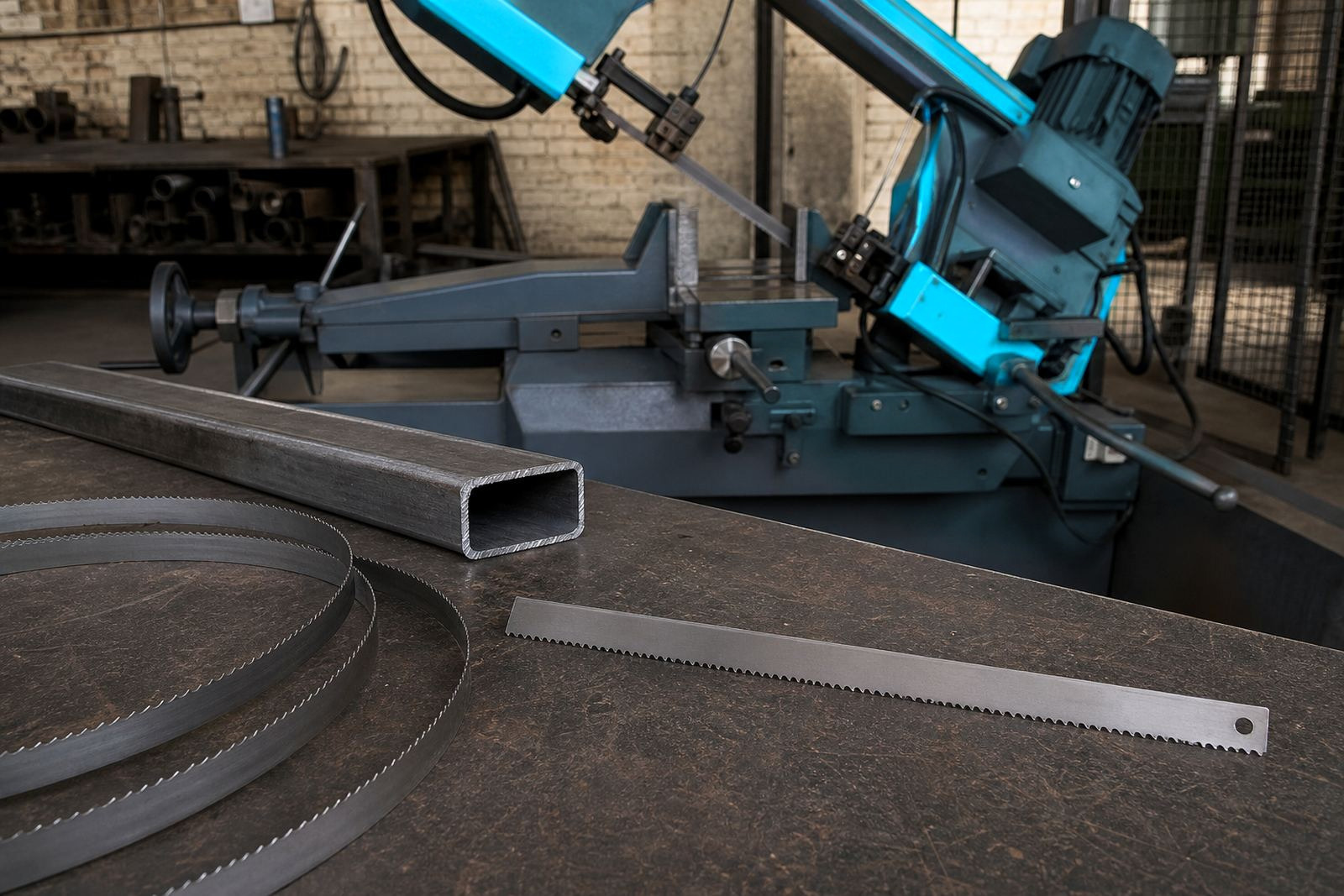
That is also where weld-to-length service helps. A workshop sometimes needs only a full coil. Sometimes a known length blade, welded correctly and checked for fit, is the cleaner option. It keeps stock tidy and reduces the chance of fitting an off-size blade just to finish a job. In Durban’s humid air, store material well and protect it from rust, because surface condition affects the first cut more than many people expect.
For Johannesburg, Pretoria, Vereeniging, Durban and Cape Town, the working habits differ, but the blade logic stays the same. The section shape sets the tooth load, the machine sets the limits, and the operator controls the feed. Get those three aligned and the cut face shows it straight away.