
What tension does before the first stroke
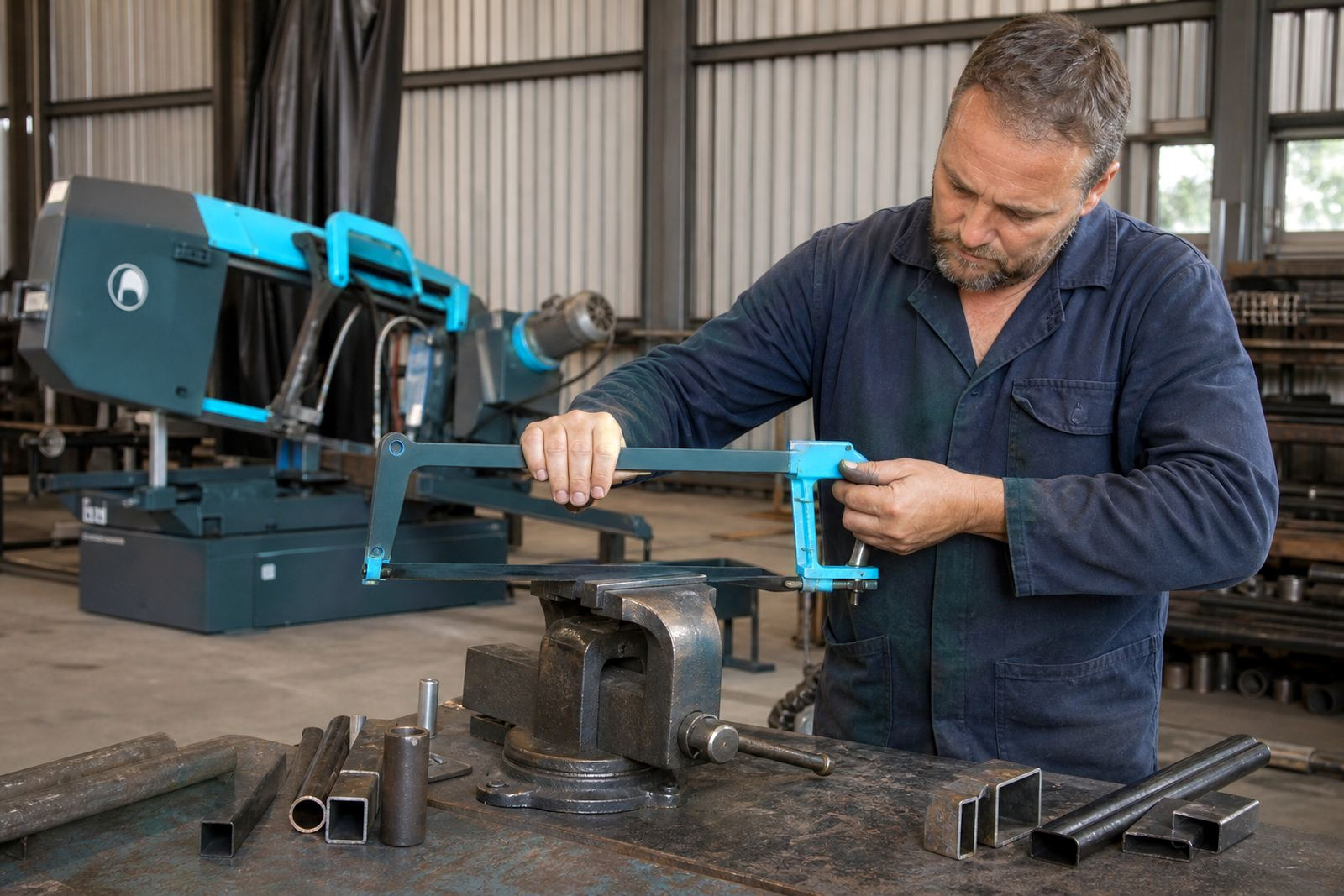
Frame tension keeps the blade tight. It also controls how the teeth enter the metal, how much the blade flexes in the cut, and whether the saw tracks in a straight line or starts to snake. On a manual saw, a loose blade tends to twist under hand pressure, which leaves a curved cut face and extra filing later. Too much tension can be just as unhelpful, because a blade that is pulled beyond its comfort range may crack at the set or bow in the middle of the stroke.
For general metalwork, a tensioned blade should feel firm without sounding strained. The blade must sit square in the frame, with the teeth facing forward and the line of cut set before the first stroke. If the material is clamped poorly or the frame is cocked to one side, no amount of extra force will rescue the cut. A clean start depends on steady hands, a straight line and a frame that does not chatter against the workpiece.
Blade thickness, width and set change the feel
Hand saws are often treated as if the frame does all the work, but the blade geometry shapes the cut too. Wider blades resist sideways flex better, which helps when cutting thicker mild steel, flat bar or square tube. Narrower blades can turn more easily in tight access, though they are easier to wander if the cut is pushed too hard. A thinner blade bends more readily and needs careful guidance from the operator.
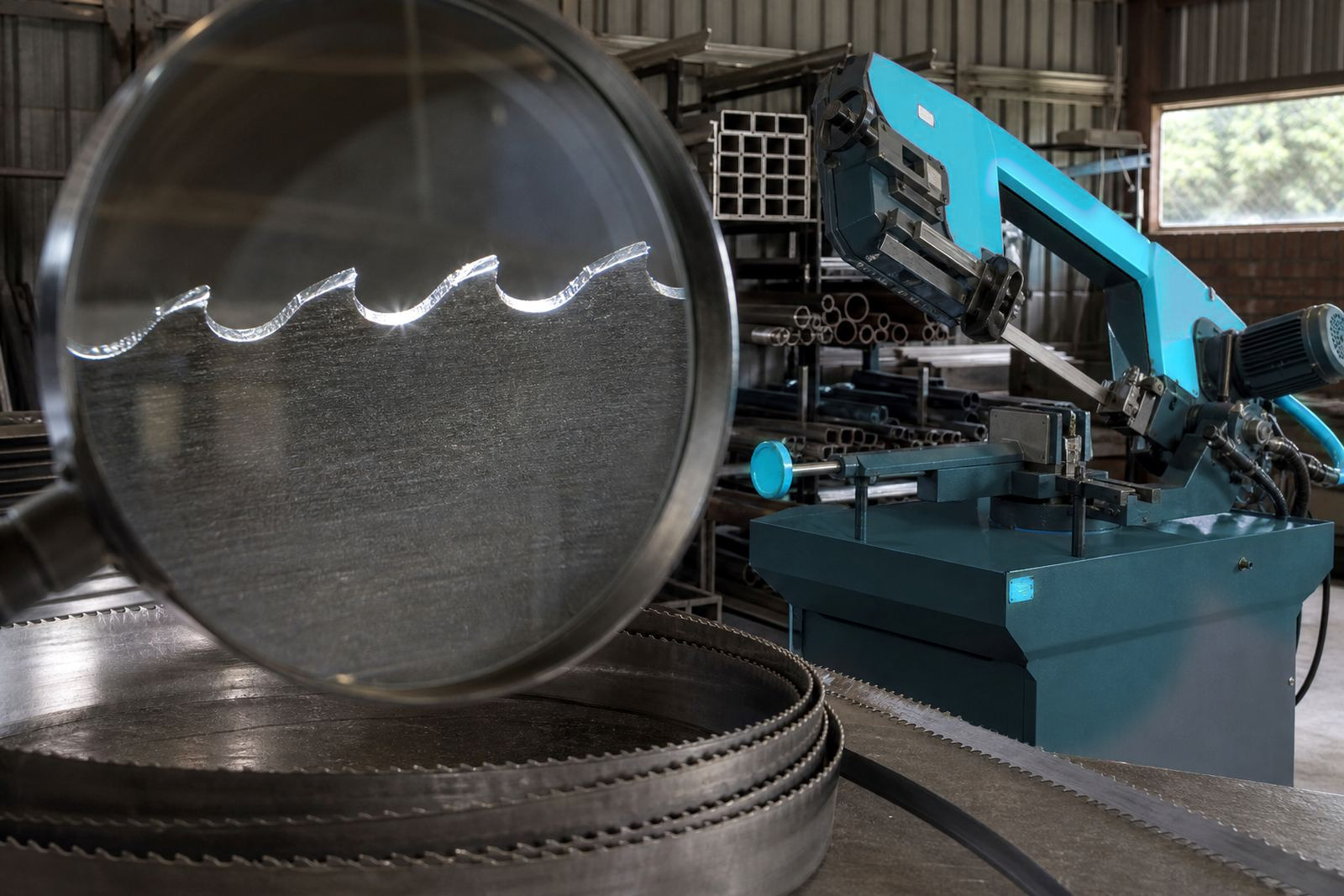
The tooth set also affects the cut. A blade with a proper set clears the kerf and moves through the metal instead of rubbing in the slot. If the set is damaged, uneven or worn flat, the cut drifts and the blade heats up. That is when operators often blame the frame, when the real issue is a tired blade that no longer clears the cut properly.
- Wider blades suit longer straight cuts and firmer control.
- Narrow blades help where access is tight or the cut turns slightly.
- Uneven set can pull the saw off line and leave a rough finish.
Choosing tooth pitch for the material in front of you
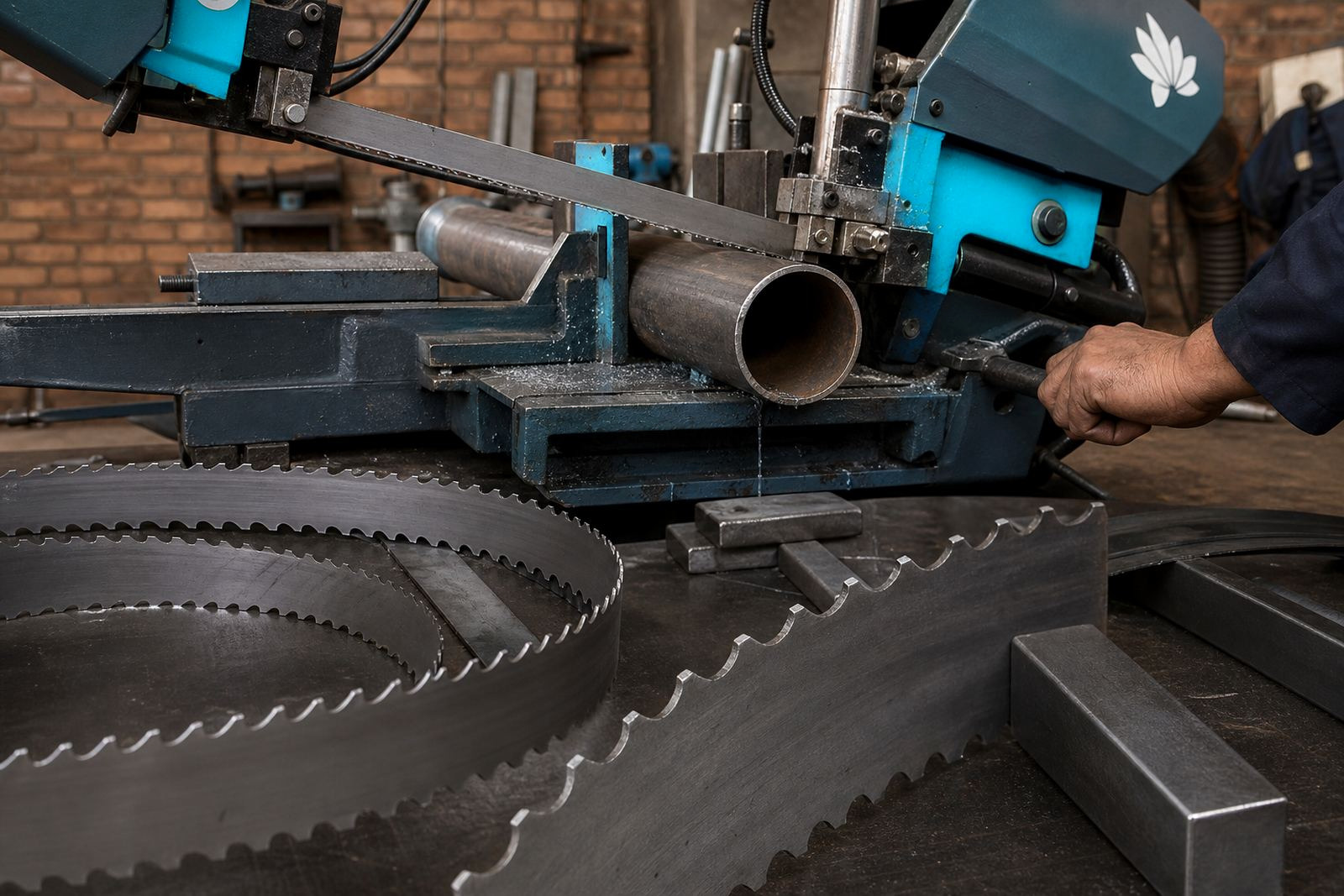
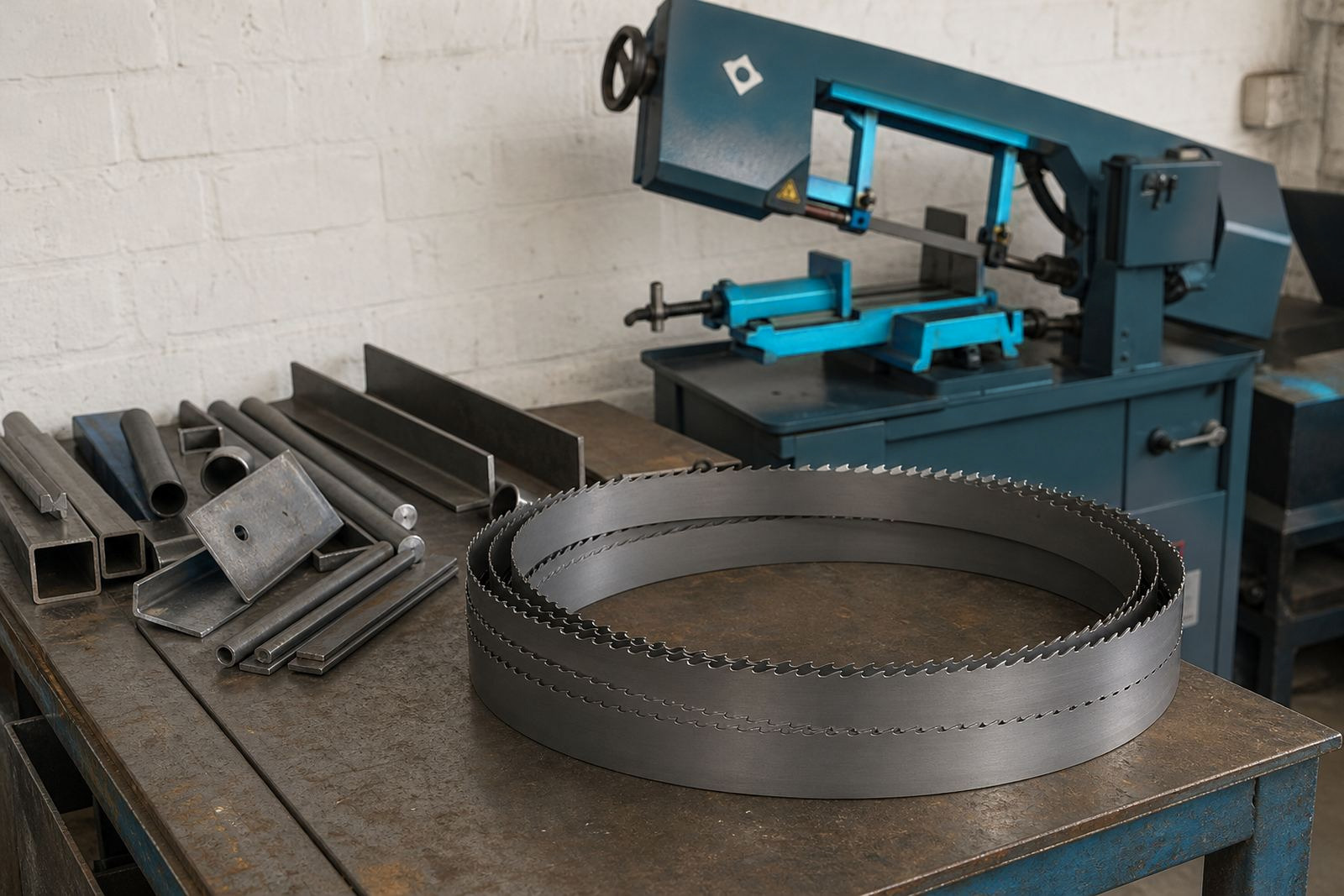
Tooth pitch, usually listed as TPI, should match the section size and wall thickness. Coarser pitches work better on thicker material because more than one tooth stays engaged at once. Fine pitches suit thinner wall sections and smaller solid stock, where a coarse tooth can grab and chatter. Variable pitch blades can soften the vibration on mixed stock, especially where the same frame sees different jobs in one week.
For workshops in Alberton, Germiston and the wider East Rand, the same frame may cut angle iron in the morning, then stainless offcuts or mild steel tube later in the day. A blade that suits all three jobs only does so if the pitch and frame tension are balanced properly. If the blade is wrong for the material, the operator compensates with force, and that is where straightness starts to go missing.
Run-in habits that save a new blade
New blades need a short run-in period so the cutting edges settle before heavy pressure is applied. Use a reduced feed rate and a calm stroke for light, steady first cuts. That lets the teeth bed in evenly instead of losing a few edges all at once. After that, the cut can move back to normal pressure, provided the frame is still holding the blade straight.
Good run-in practice also helps the operator learn the sound of a healthy cut. A smooth, even hiss is better than a harsh growl or a jumping stroke. Once the saw starts to drag, the feed should be eased off before the blade overheats. In a small manual cutting area, that discipline saves more blades than any amount of hard pushing ever will.
- Start with light strokes on the first few cuts.
- Let the teeth seat before increasing feed pressure.
- Stop and inspect if the cut begins to drift or chatter.
Coolant, heat and the small signs of trouble
Check coolant on manual and powered metal saws alike, because heat changes how the blade behaves. When a blade runs hot, the set can lose its edge, the kerf may narrow and the cut can start leaning to one side. Even a simple hand saw benefits from proper lubrication on tougher material, especially stainless, solid bar or heavier sections that need a patient cut.
In a humid coastal area such as Durban, the blade body and frame also need attention between jobs so moisture does not sit on the teeth. Surface rust, gummy residue and old swarf all add friction. If a blade feels sticky in the cut, the issue may come from a mix of heat, poor lubrication and worn tooth edges.
A practical job in Alrode, with the frame set correctly
A workshop in Alrode phoned for help on a stack of mild steel angle and small box section for a maintenance job. The cuts were wandering, and the team had already swapped blades twice. The problem turned out to be a loose frame setting combined with a coarse pitch blade that was too aggressive for the thinner wall sections. Once the blade width was matched to the job and the tension reset, the cuts settled down and the finish improved without extra filing.
Treat the frame as part of the cutting system for better value. Tooth pitch, blade width, set and hand pressure all need to work together. For teams cutting across Johannesburg, Pretoria, Vereeniging, Cape Town and Durban, the same advice holds: a straight cut begins before the first stroke, before the blade starts to wander.
- Check that the blade sits square in the frame.
- Match tooth pitch to the wall thickness or section size.
- Keep the feed steady without forcing the stroke.
- Replace blades that have lost set or cut unevenly.