Heat moves fast when steel starts to bite
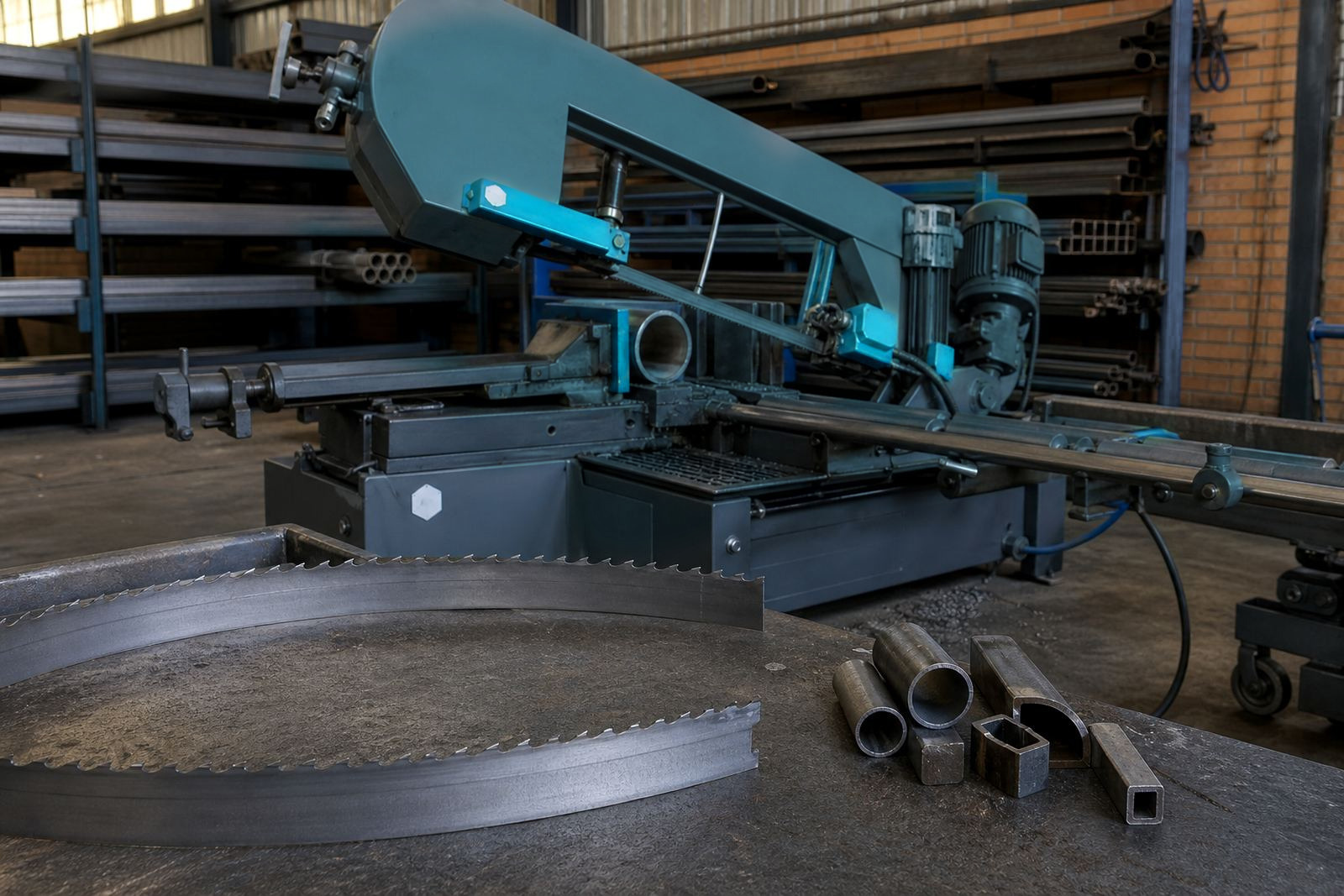
When a bandsaw blade or hacksaw blade enters metal, friction builds at the tooth tip and along the side of the blade. That heat does not remain in one place for long. It spreads into the blade body, the workpiece and the chips that are being cut free. Coolant helps control that heat before it turns into blue edges, hard spots and a blade that sounds tired long before its time.
On mild steel, stainless and hollow sections, the difference is often heard before it is seen. A dry cut can start to squeal, the chips may turn powdery and the blade can wander once the teeth lose their clean bite. With a steady coolant flow, the cut stays calmer, the chips break cleaner and the set on the teeth lasts better through the job.
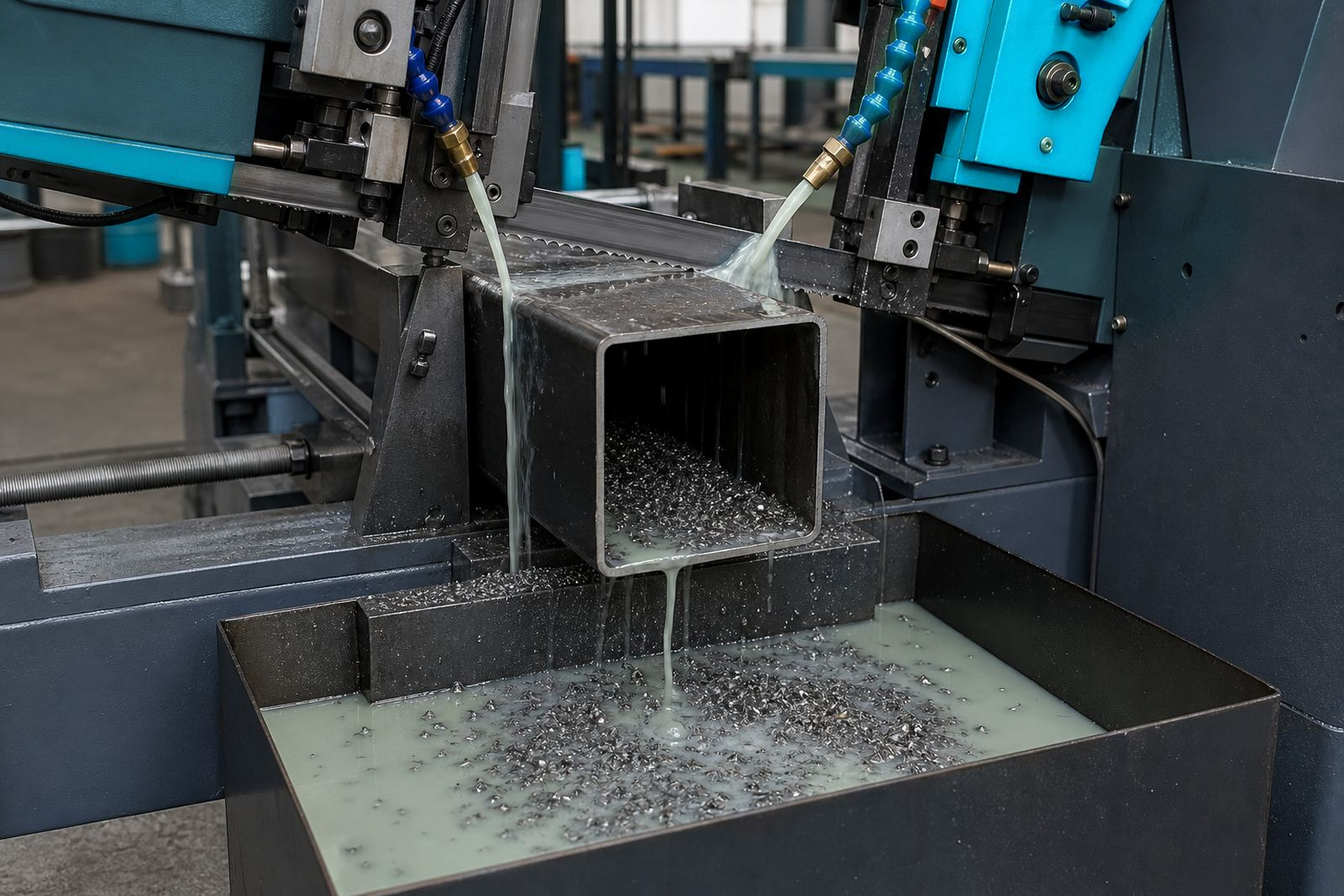
For workshops in Alrode, Germiston and Boksburg, coolant needs to land on the tooth line. A mist that misses the tooth line will not help much. The liquid needs to reach the cutting zone instead of the frame or the vice.
Flow at the cut is the part that counts
Good coolant use is about placement, volume and consistency. The fluid must meet the blade right where the teeth enter the material and where the chip exits the kerf. If the stream is weak or off target, the blade still runs hot and the chips can pack into the gullets. That raises drag, weakens the tooth edge and can leave a rougher finish than the machine should give.
- Direct the flow to the tooth entry point instead of the side of the blade.
- Keep enough volume to wet the cut line through the full stroke or feed cycle.
- Watch for chip build-up in the gullet area on small sections and thin wall tube.
- Check that the coolant is not splashing away before it reaches the cut.
A well-aimed stream helps the blade clear chips and keep temperature in a safer range. Long cuts too can build heat slowly and change the feel of the cut halfway through the bundle.
Blade type, tooth form and coolant work together
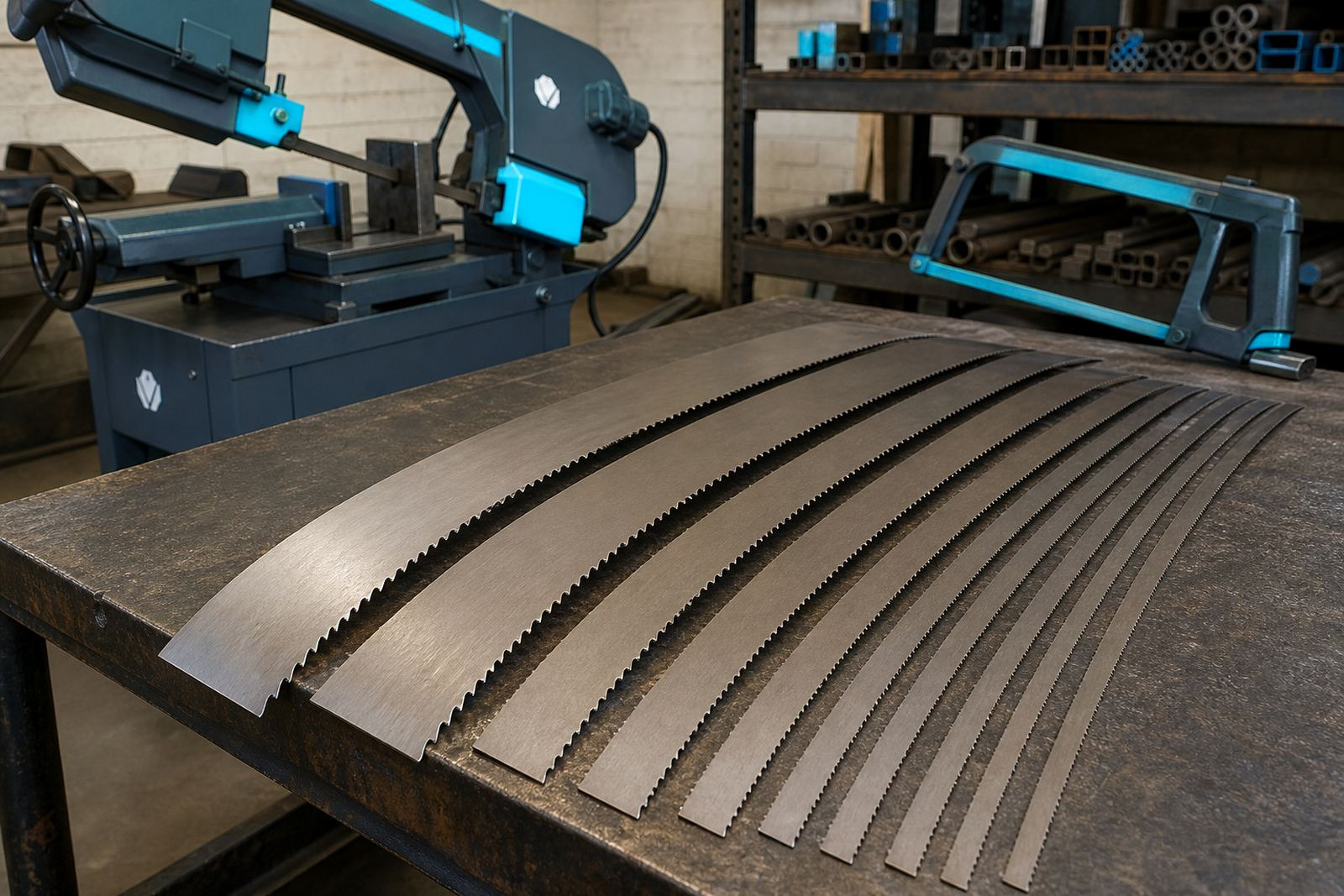
Bi-metal blades with a hard tooth edge and flexible backing usually tolerate harder work better than carbon steel blades, but both still need coolant. A fine tooth pitch, such as a higher TPI pattern, loads up faster on thin material and needs cleaner chip evacuation. A variable pitch blade can soften vibration, yet it still needs the cut zone kept clear and cool.
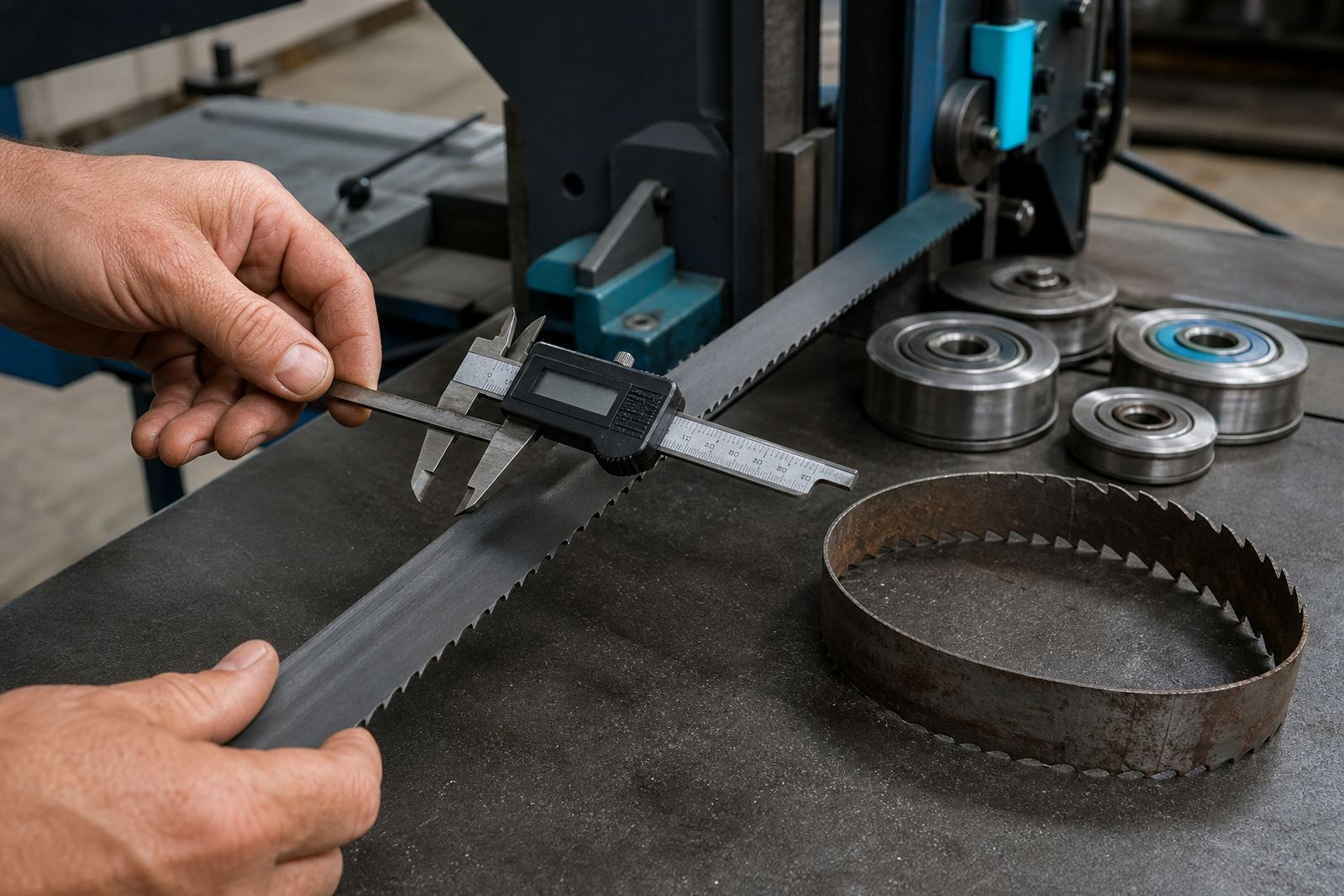
Blade width and thickness also shape coolant needs. Narrow blades on smaller machines can build heat quickly because there is less steel carrying that load. Wider blades, used for straighter cuts in solid bar or structural profiles, still need the teeth cooled and lubricated where the work starts to resist.
Give it a run-in as well. A new blade should not be driven hard from the first cut. The tooth tips need a sensible start so the edge can settle. Coolant supports that run-in by lowering local heat, which helps the tooth edge keep its shape instead of blunting early.
What poor coolant habits do to the cut
When coolant is ignored or misapplied, the signs usually show up in the cut before the blade fails completely. The saw may need more feed pressure to keep moving. The kerf can widen unevenly. Chips may stick to the teeth and leave shiny trails on the blade body. On manual saws, the operator often notices the handle effort rising on the same job that used to feel ordinary.
That extra strain can shorten blade life, distort the cut face and increase chatter on light frames. In workshop work, those small losses add up across repeated cuts, especially where mild steel, angle iron and tube are cut every day. A proper coolant check is part of blade care.
- Dark, burnt chips usually point to too much heat at the tooth line.
- Chatter often means feed, speed or coolant placement needs attention.
- Gummy chip build-up can suggest poor flow or the wrong tooth pitch for the job.
- Blade cracks often start after heat and vibration have been left unchecked.
Matching coolant practice to the material on the bench
Different materials ask for different handling. Mild steel normally cuts well with steady flood to the teeth and a moderate feed. Stainless needs cleaner chip removal and closer control of heat, because work hardening can make the cut nasty if the blade rubs instead of shearing. Aluminium and softer non-ferrous material need enough lubrication to prevent chip welding on the tooth face, though the blend and delivery must suit the machine.
On a Cape Town job where coastal humidity already keeps metal surfaces damp, a workshop may still need full coolant use on longer bundle cuts to stop the blade heating unevenly. In Pretoria or Vereeniging, where heavier section work is common, the issue can be chip packing on thicker profiles. The principle stays the same: the coolant must help the teeth bite cleanly and clear the cut without building extra drag.
Manual saw support often needs a more hands-on check because the operator controls feed by feel. A good setup uses enough coolant to keep the cut calm without washing chips into the wrong part of the machine. That balance is part of fitting the blade to the saw and setting the coolant correctly.
A Johannesburg workshop example from the floor
A small metalwork shop in Johannesburg Supply may be cutting mild steel tube in the morning and solid bar later in the day. Heavier pieces later in a batch heat the blade, and the cut gets louder. If the coolant stream is pointed too high or the filter is clogged, the blade heats unevenly and the cut face can pick up marks. Once the flow is corrected and the feed is eased into the work, the saw settles down and the chips clear more cleanly.
That kind of correction is common in local workshops because the same machine often handles mixed work. A starter kit may help a new team set the blade width, tooth pitch and coolant use for the first set of jobs. After that, length verification and blade failure review can show whether the issue sits with coolant delivery, feed rate or the wrong blade choice for the stock.
Our blade welding technician and technical support team work with workshops across South Africa to set up welded-to-length blades, pick the pitch and check whether the coolant is doing its job at the cut line. Coolant helps keep the tooth edge cool, clean and steady at the cut line, which keeps the cut under control.
A small coolant check before the next cut
Before the next job, it helps to look at the stream, the chip colour and the feel of the feed. If the blade sounds dry or the chips start clinging, the cut may need a coolant check before anything else is changed. That check is often quicker than replacing a blade that was only struggling because the cut zone was starved of flow.
- Confirm the fluid reaches the tooth entry point.
- Check the cut for heat tint, chip packing and chatter.
- Match coolant use to the pitch, width and thickness of the blade.
- Watch how the blade behaves after run-in and before full production feed.
For shops that cut metal every day, coolant is an essential part of the cutting system. It protects the blade, helps the machine work more evenly and keeps the cut closer to what the job needs.