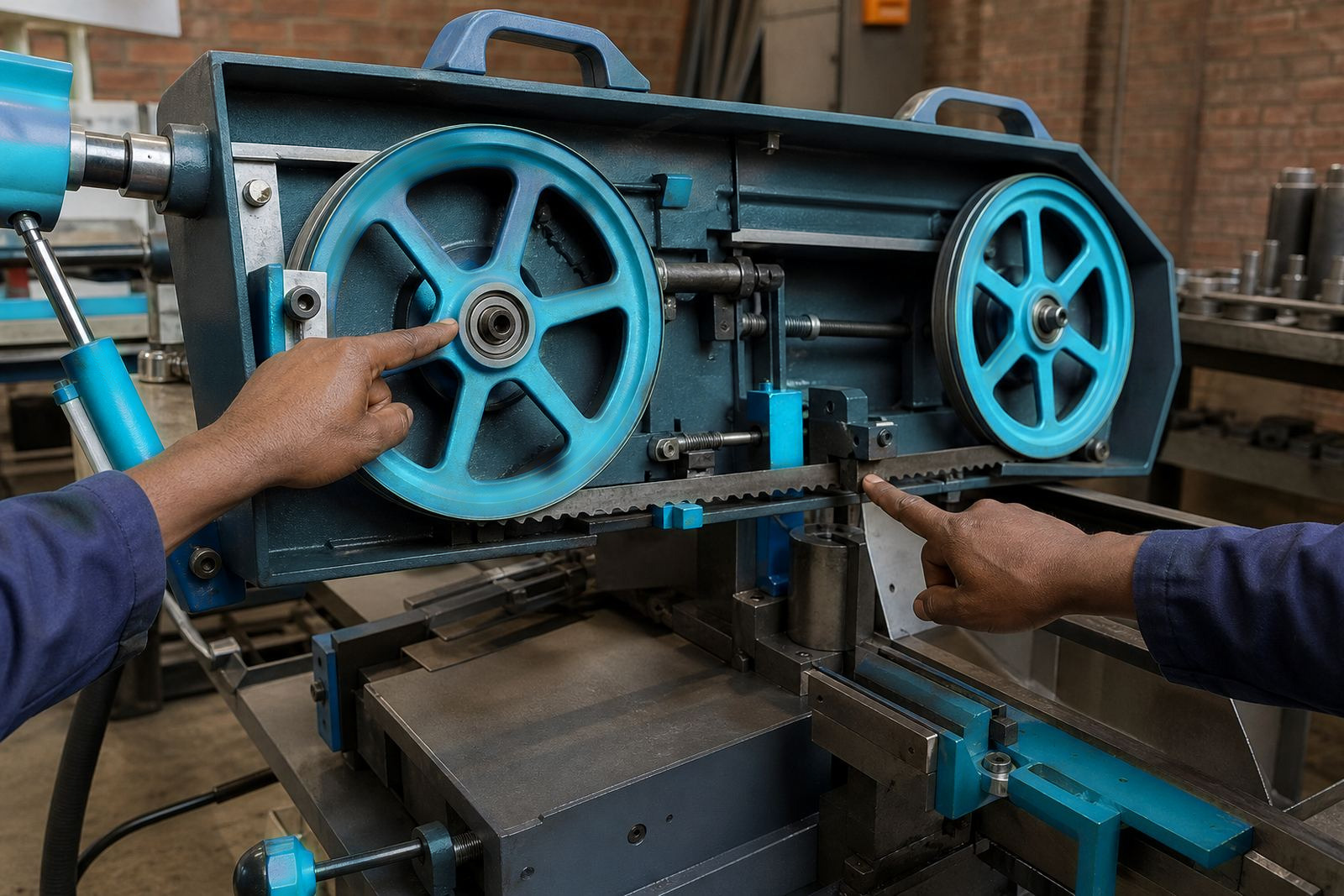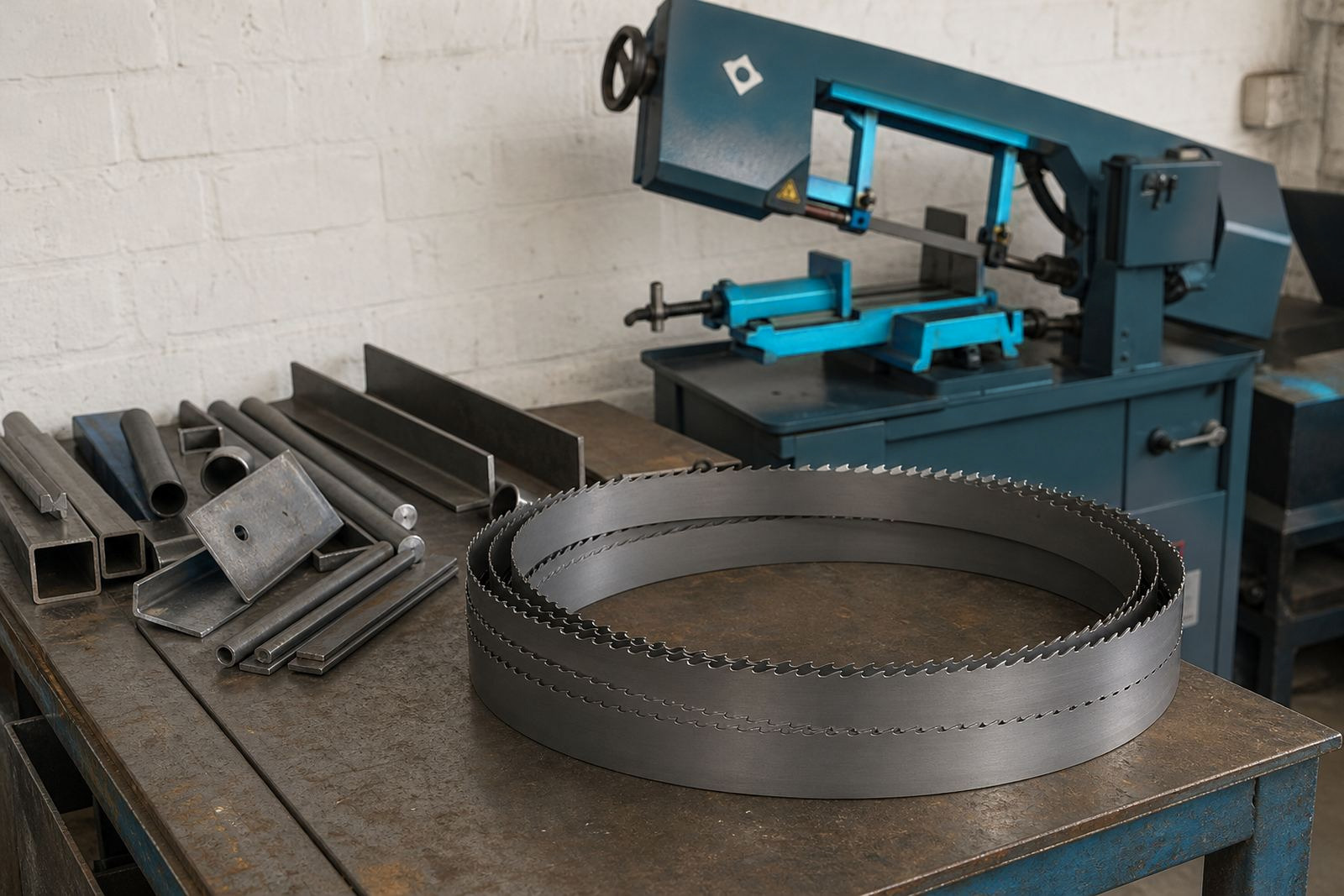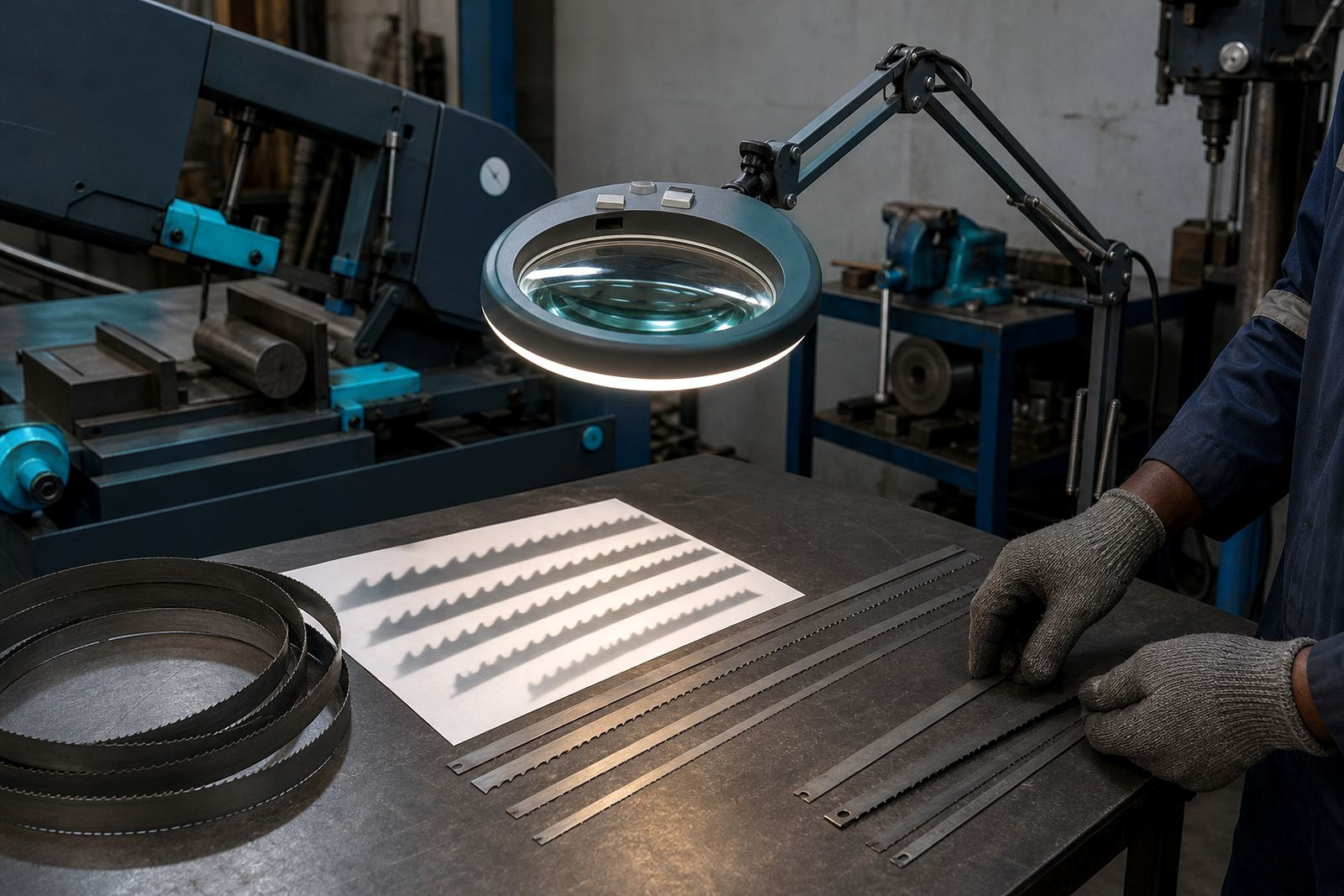

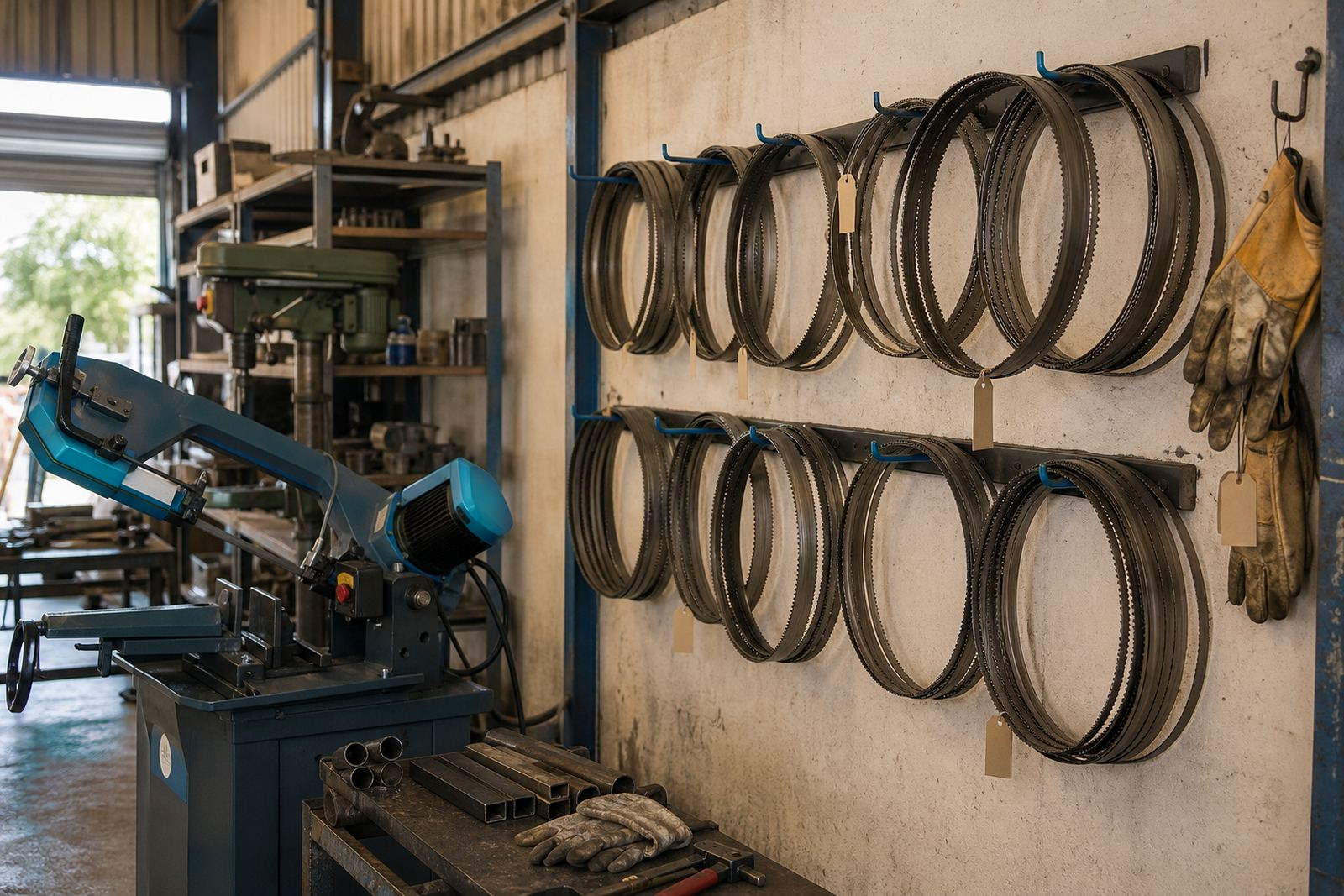
Where coils should sit when the day gets busy
A blade coil should stay flat, dry and supported, not leaned in a corner where it can take a set or pick up a nick from other steel stock. In an Alrode workshop, the usual mistake is to hang blades near offcuts, where a hurried reach can catch a tooth edge or bend the coil out of shape.
Store each blade loop on a separate shelf, rack hook or labelled bin, away from damp floors, cutting fluids and grinding dust. If the shop faces coastal humidity on the Durban side, a sealed cupboard or lidded crate helps reduce surface rust on carbon steel blades and the fine film that can build on bi-metal stock.
- Keep coils on shelves or racks, away from the floor and traffic routes.
- Separate new stock from used or returned blades.
- Keep the storage point close to the saw fitment area.
- Mark each bay for blade width, tooth pitch and length.
Sorting by width, pitch and length without confusion
Blades get mixed up when every coil looks the same. A 20 mm bi-metal blade and a 13 mm carbon steel blade may both fit a cupboard, but they do not belong in the same pile if the team needs to match them to different saws and jobs.
Use a simple naming system that includes width, thickness, tooth pitch and whether the blade is variable pitch. For example, a label might show 27 mm x 0.9 mm, 4 to 6 TPI, and the intended material range. That saves time when a fitter is setting up for thin-wall tube one hour and solid bar the next.
We confirm length too. A welded-to-length blade should be marked after welding and checked before it goes onto the rack. If a coil is for starter kit planning, keep the pack contents together so the workshop does not lose the right guide card, spare blade and fitment note.
- Write the blade size on the tag, not only on the box.
- Group similar TPI ranges together.
- Keep welded lengths in a separate bay.
- Use colour marks for fast visual sorting.
How to stop rust, set and tooth damage
Rust begins where moisture sits still. A blade that is wiped dry before storage lasts better than one left with coolant residue or fingerprints on the coil. In Gauteng, a workshop can go from dry morning air to damp evening conditions, so a little discipline with cleaning makes a difference.
Keep heavy parts off the top of any blade coil. The pressure can flatten the set at the tooth edge or leave a twist that shows up only when the blade is running. Keep the blade relaxed, not forced into a tight shape smaller than its natural coil radius.
Tooth damage is easy to miss. One bent tooth can start a bad cut, then the blade begins to wander or chatter. A quick visual check before storage is worth doing, especially after a blade has been removed from a machine for a material change or a failure review.
- Wipe away coolant and cutting sludge before shelving.
- Keep oil or corrosion protection light and even.
- Never clamp a coil under a heavy bundle.
- Check tooth tips for bends, chips and flattened set.
Storage habits that help the next cut
Good storage keeps blades neat and helps the team identify the right blade without guesswork. It also supports better feed and speed decisions later, because the team can identify the right blade without guesswork. If the coil is clearly marked, the saw operator can focus on the job instead of testing the rack one bundle at a time.
When blades are stored by job type, the workshop can match material and machine more cleanly. A wider blade with a coarser pitch may be set aside for straight cutting on solid sections, while a narrower blade with finer teeth can be kept for smaller stock or manual saw support. That way the right tool is at hand when a deadline is tight and the floor is full.
- Keep a log of used blades that need review.
- Return spare blades to the same marked bay.
- Store starter kits with their matching notes.
- Separate blades for production saws and manual saws.
A Durban case that shows the point
A coastal fabrication shop in Durban was keeping spare blades in an open steel cage near wash-down traffic. The coils were safe enough at first glance, but the outer wraps started showing surface marks and one blade picked up a kink where a bundle had slid against it.
We would treat that store as a handling problem, not a blade problem. The fix was plain: closed bins for carbon stock, tagged racks for bi-metal stock, and a separate shelf for welded lengths. The crew also began marking run-in guidance on the blade tag so the fitter knew which blade needed a lighter start on the machine.
Once the storage area was tidier, the team stopped wasting time tracing the right width or TPI through mixed bundles. The job flow improved because the blades were easier to find, easier to inspect and less likely to be damaged before they ever reached the saw.
- Move blades away from wash-down splash zones.
- Label storage by blade family and machine use.
- Keep first-use blades apart from returned stock.
- Note any coolant or set issues on the tag.
A small storage routine that pays off every week
A workshop can do without a complex setup. It needs a repeatable one. A five-minute end-of-shift check can cover cleaning, tagging, inspection and put-away. That is usually enough to stop a coiled blade from being wedged behind a vice, bent under an offcut, or lost in a pile of mixed consumables.
For teams in Johannesburg, Pretoria, Vereeniging, Cape Town or Germiston, the same habits hold true. Keep the blades dry, sorted and visible. Keep the labels readable. Keep used blades separate from ready stock. A clean storage point saves handling time and lowers the chance of fitting the wrong blade to the wrong material.
MoreCut Saws works with blade selection, weld-to-length, machine fit checks and failure review, so storage can tie neatly into the way a workshop already runs. When the rack is organised, the next cut starts with less confusion and fewer surprises.
- Inspect the rack before the area is closed for the day.
- Replace torn labels and faded size marks.
- Store blades where the team can reach them safely.
- Keep the oldest stock visible so it is used first.