What a raker set actually changes in the cut
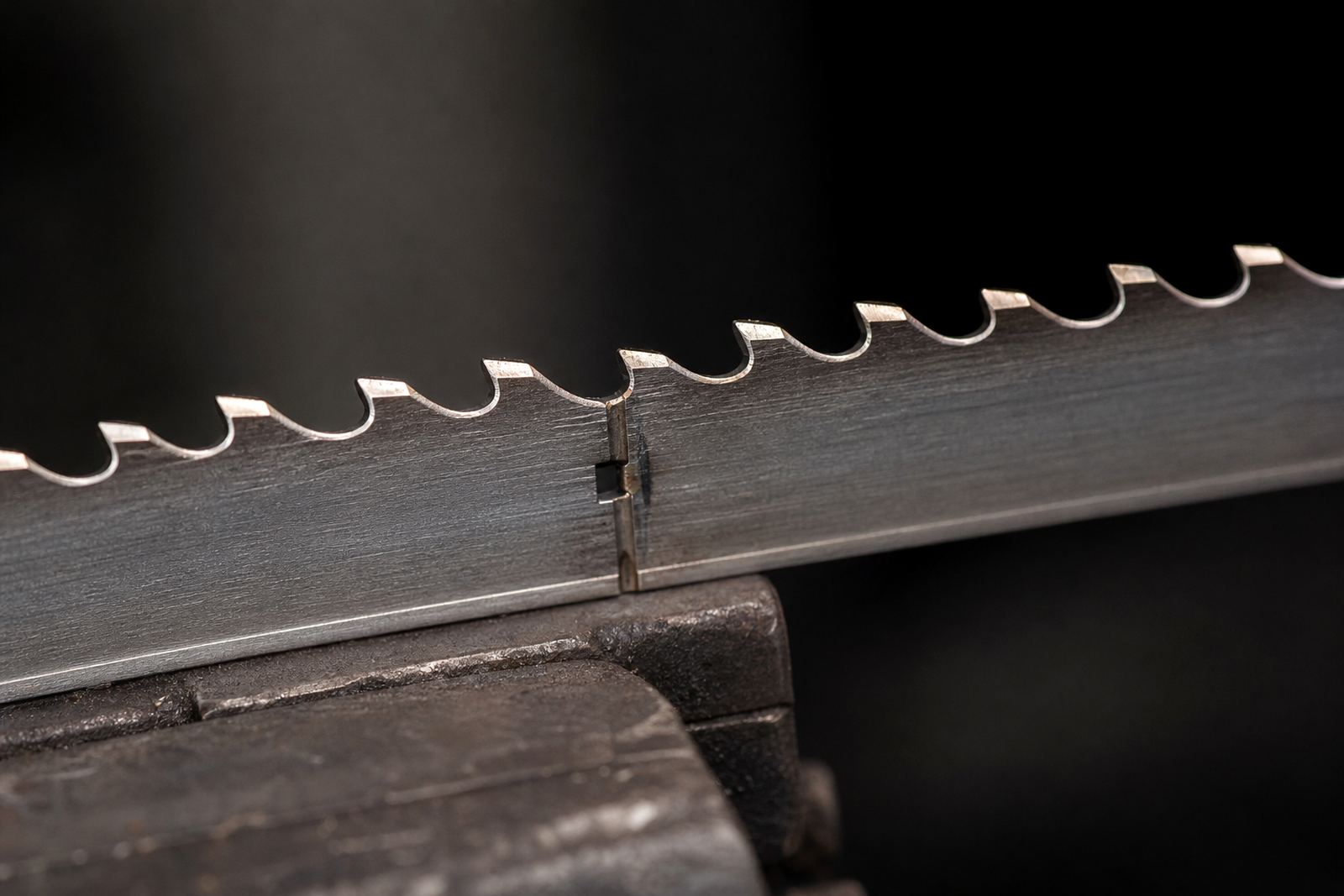
A raker set blade uses repeating groups of teeth with a deeper tooth between cutting teeth. That deeper tooth, the raker, clears space for chips and helps reduce packing in the cut. On steel sections, pipe, solid bar and mixed offcuts, that can keep the blade moving instead of rubbing.
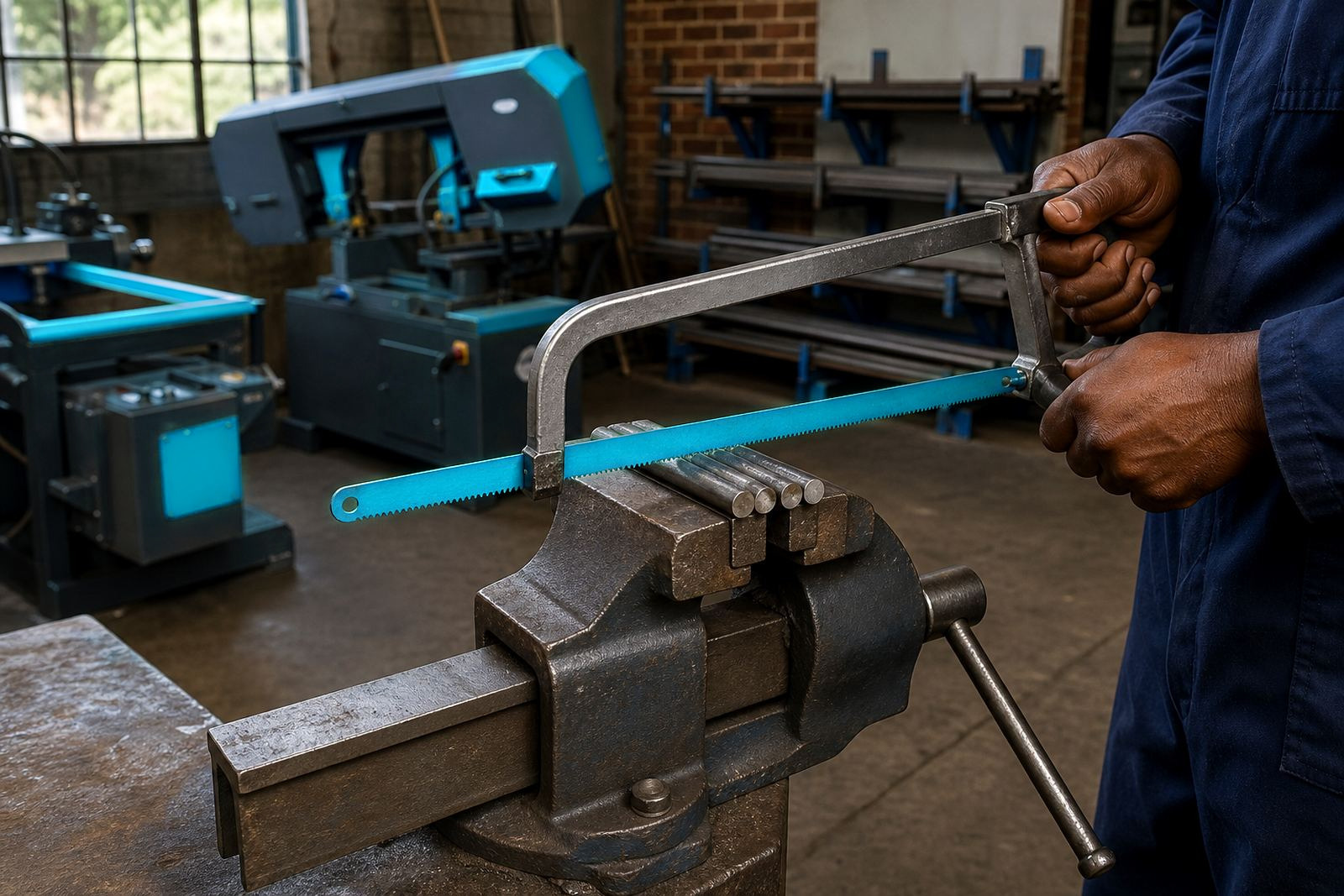
The pattern is useful where the work size shifts through the day. One job may be a bundle of thin wall tube, the next a heavier angle or round bar. A raker set can give a steadier cut than a plain uniform tooth pattern when the material and section size vary, especially on a manual saw where the operator must feel the feed.
It still needs the right tooth pitch. Too fine and the gullets clog. Too coarse and fewer teeth share the load, so the blade can snatch on lighter sections. A blade that fits the material has a calmer sound, cleaner chips and less wandering through the cut.
The jobs that usually suit raker set blades
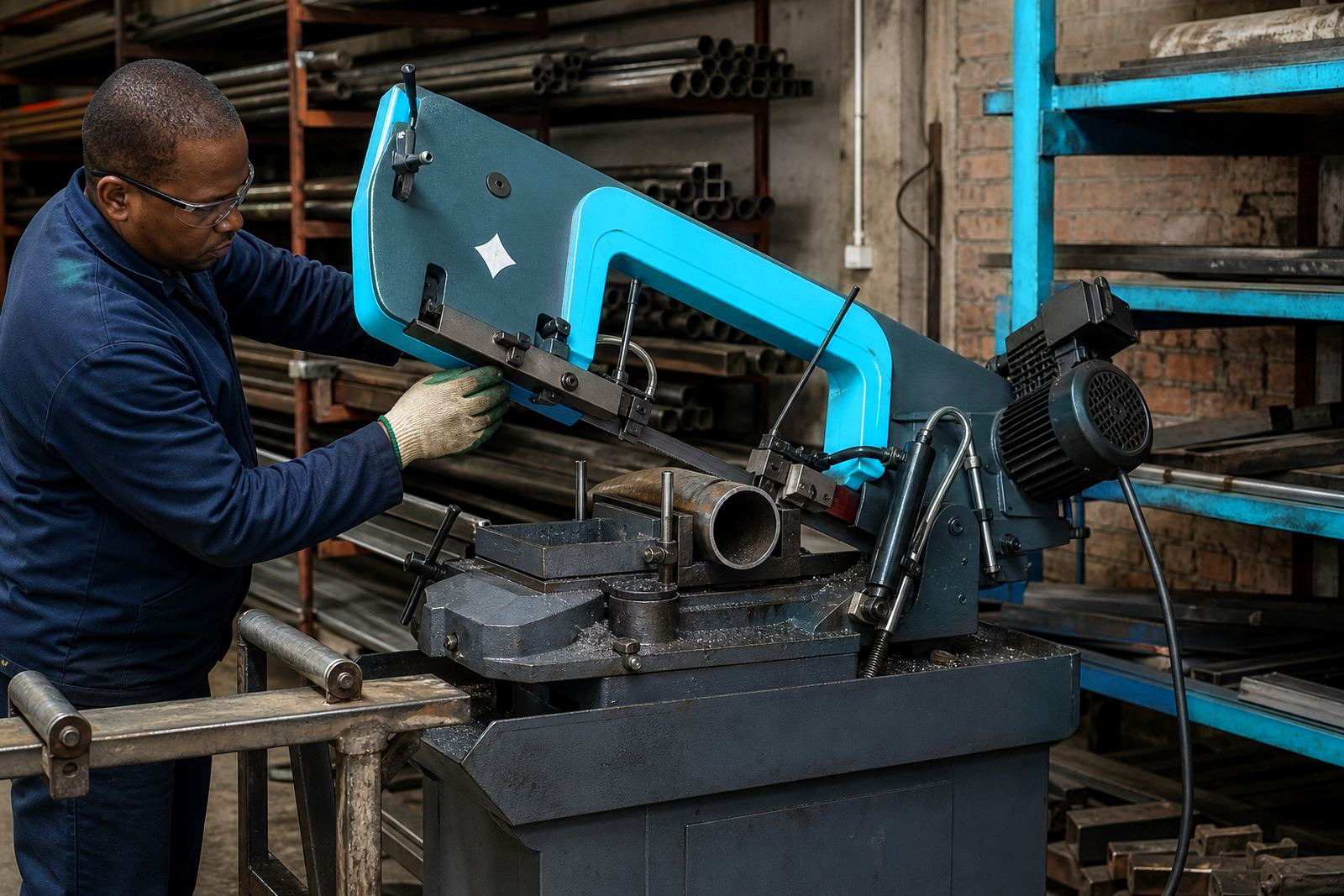
These blades often suit general metalwork shops, repair benches and fabrication yards that cut a mix of mild steel profiles. They are common where a blade must handle solid sections one hour and hollow material the next. In that setting the extra chip clearance is useful, especially when the operator is feeding by hand.
- Angle iron, flat bar and channel in mixed sizes
- Round bar and solid mild steel stock
- Structural offcuts that change thickness often
- Manual saw work where feed pressure is not constant
- Workshop cutting where one blade must cover several jobs
For high volume repeat work on one exact section, a different tooth pattern may be better. Blade selection needs a proper look at the material, bundle size and machine type. A raker set is practical, but it is not a cure for every cut.
Tooth pitch, blade width and thickness need to match
On bandsaw blades, tooth pitch is usually read as TPI. Thin wall material suits fine pitch, while heavier sections suit coarser pitch. Variable pitch can help reduce vibration on long cuts and mixed profiles, but the blade still needs the right body width and thickness for the saw.
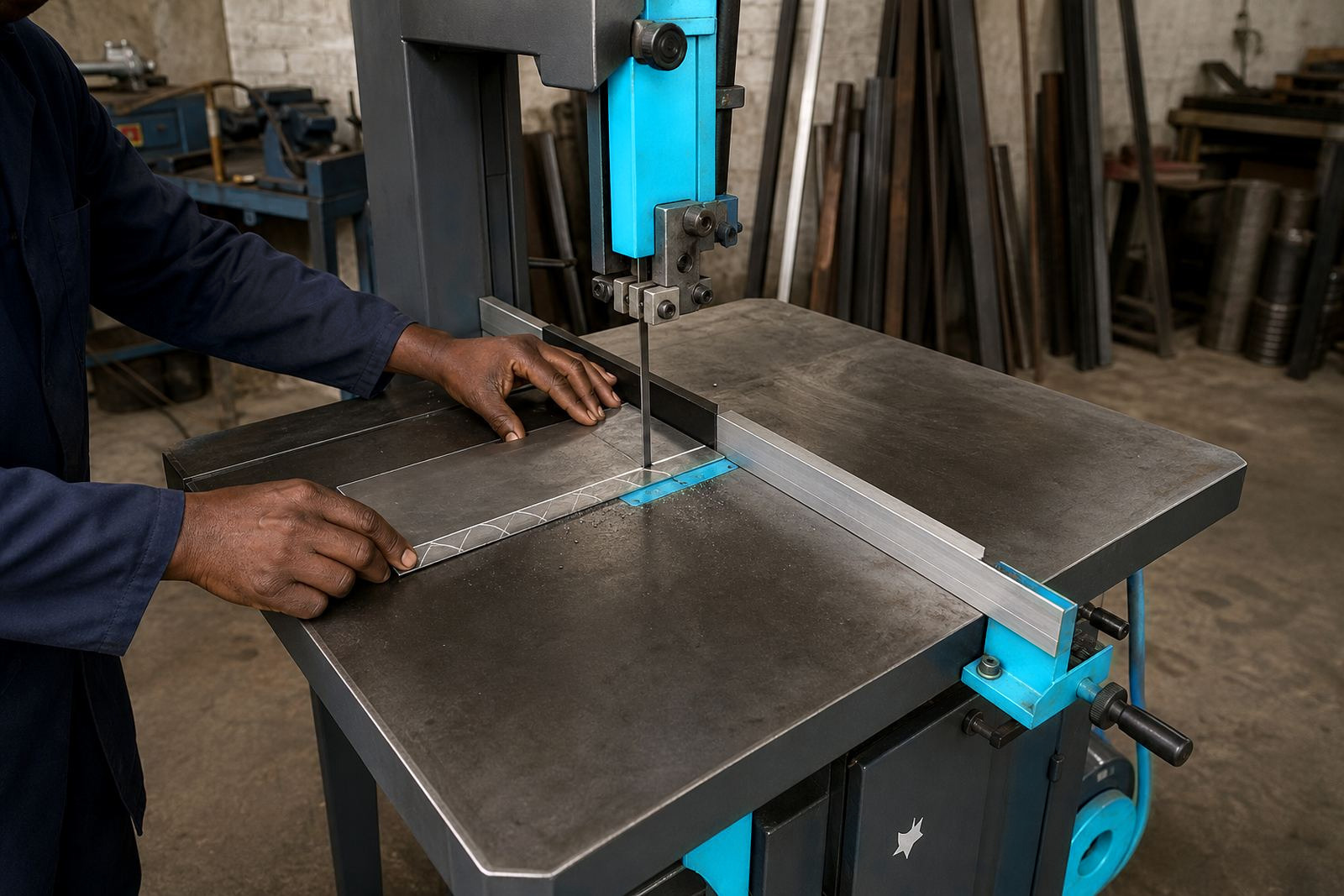
Blade width affects tracking and straightness. A wider blade tends to hold a straighter line on heavier work, while a narrower blade can suit tighter machine guides or smaller saws. A thicker blade stands up better to the load, but only if the machine can tension and guide it properly.
Raker set blades are often chosen when the workshop wants a bit more tolerance in everyday cutting. That said, if the teeth are too aggressive for the section, the blade will chatter and the cut face can go rough. The best setting is the one that lets the teeth bite, then clear, then bite again without strain.
Feed, speed and coolant for longer blade life
A good blade can still struggle with the wrong feed rate. Too much pressure makes the teeth dig in and twist. Too little feed lets the teeth rub, which heats the cut and wears the blade faster. On mild steel, a steady feed is usually better than a stop-start push from the operator.
We also set the cutting speed. A fast blade on the wrong material can leave blue teeth and a rough finish. A slower pace may be safer on harder stock, especially when the saw is working through a solid section rather than tube. Coolant helps carry heat away and flush chips from the gullet on long runs and in warm coastal air where blades already work hard.
- Start with a light feed on the first contact
- Increase pressure only after the blade is tracking cleanly
- Direct coolant into the cut, not onto the floor
- Watch chip colour and shape for signs of heat
- Back off if the saw starts to squeal or chatter
Run-in makes a new blade last longer
A new blade, especially a bi-metal blade, needs a proper run-in. The teeth are sharp at first, and if the operator pushes too hard in the opening cuts the edges can chip early. A short run-in period with lighter feed helps the tooth tips round off evenly.
On raker set blades, the pattern depends on each tooth doing its share. If the leading teeth are damaged early, the blade starts cutting unevenly and the cut face gets rough. On a workshop floor in Alberton, that shows up as more noise, more heat and more time spent correcting the saw.
A carbon steel blade can still be useful on lighter manual work, but it generally asks for more care on heat and feed. For tougher mixed work, bi-metal blades with the right pitch are usually the steadier option. The choice depends on the machine, the stock and how the blade will be used from one shift to the next.
Local cutting rooms and what goes wrong first
In Alrode and the wider Alberton area, many workshops cut stock that arrives with scale, rust or a bit of surface dirt. Heavy feed and a blade choice that is too fine can wear teeth faster, even when the job still runs well. On a humid week, store blades with care, because blades left open to damp air can pick up surface corrosion before they ever reach the saw.
A common mistake is fitting the wrong blade width for the machine, then compensating with more feed. Another is using a fine pitch on thick solid bar because the cut looks neat at first. The blade may look fine for a few cuts, then the gullets pack and the set starts to fail unevenly.
For a shop doing work between Johannesburg, Pretoria and Durban, one practical route is to keep a small blade plan instead of guessing each time. That may include starter kits, weld-to-length blades, and a standard pitch for regular sections, with a second blade type for heavier stock or manual saw support.
A plain way to check whether the blade is right
The first clues are sound, chip shape and cut finish. A blade that is right for the job tends to cut steadily, with chips that clear the gullets and no harsh vibration through the frame. If the saw is fighting the material, the blade choice usually needs attention before the machine does.
- Check whether the tooth pitch suits the wall thickness
- Confirm that blade width matches the guide system
- Look at run-in marks and tooth wear across the blade
- Check coolant flow and chip clearing at the cut
- Review feed speed before changing the whole setup
Blade failure review is useful when the same issue keeps returning. A broken tooth line, cracked back, or stripped set often points to feeding, pitch choice, guide alignment or a mismatch between the saw and the stock. Once the cause is clear, the next blade has a better chance of behaving properly.