Start with the material first
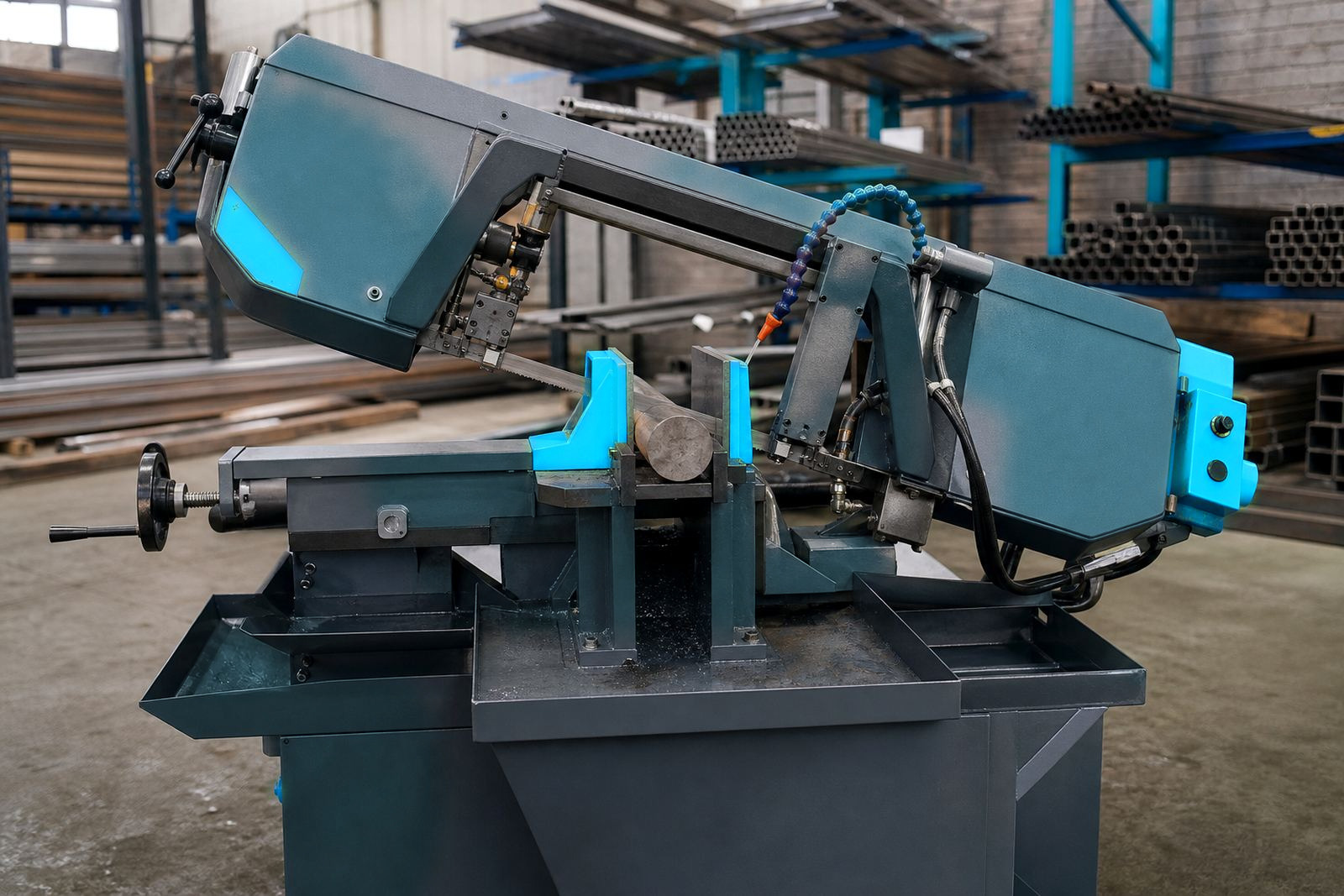
A horizontal saw works best when the blade choice follows the metal first. Mild steel, structural sections, solid bar, stainless and mixed offcuts all ask for different tooth forms, and the wrong match shows up quickly as noise, heat or chipped teeth.
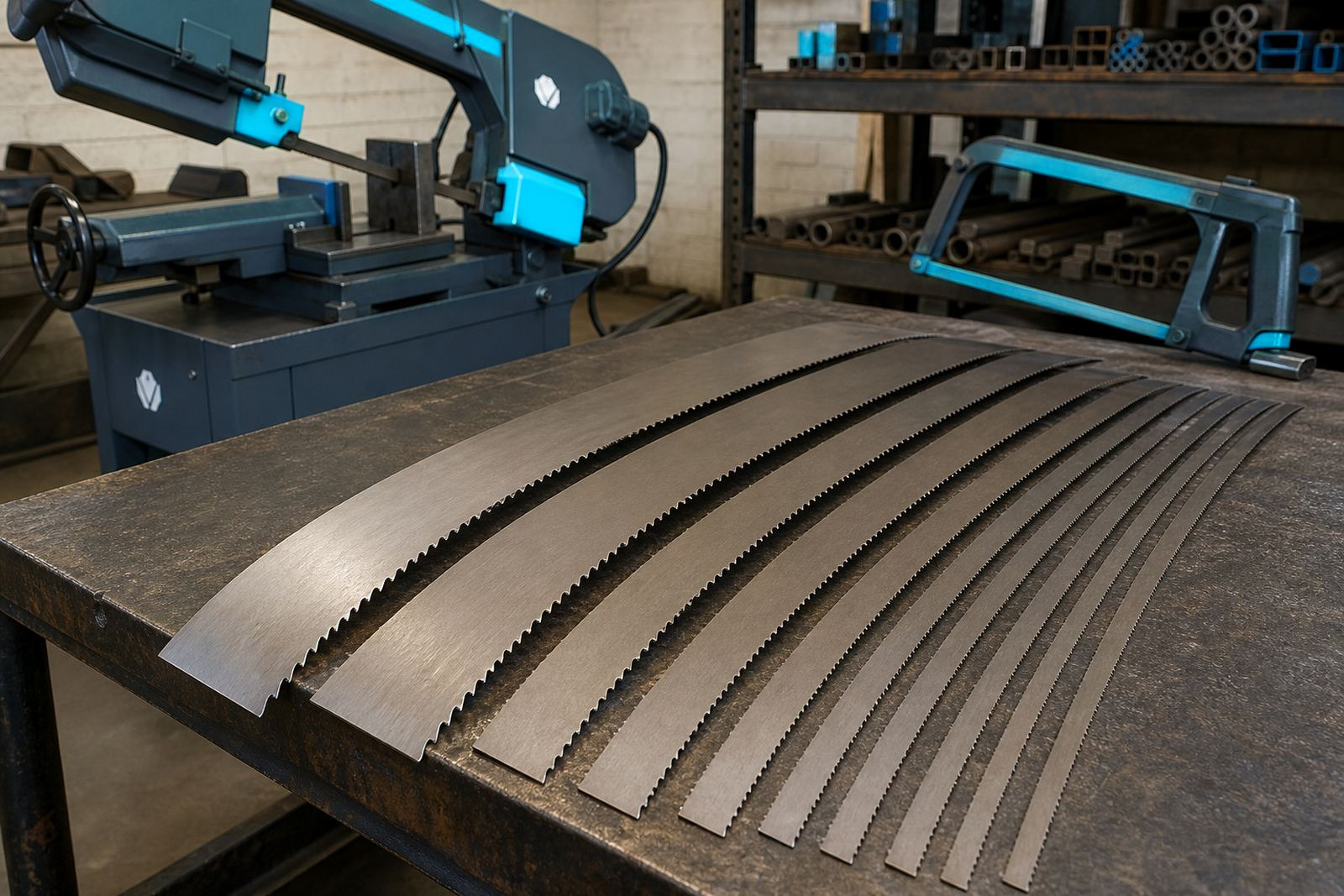
For thinner wall tube, a finer tooth pitch gives more teeth in the cut and steadier engagement. For heavier sections and solid material, a coarser pitch clears chips better. Variable pitch blades help on mixed profiles because they reduce chatter and spread the load across the blade set.
- Thin-wall tube usually needs a finer TPI.
- Solid rounds and heavy sections need a coarser pitch.
- Mixed bundles benefit from variable pitch blades.
- Harder alloys need steadier feed and better coolant control.
Bi-metal and carbon steel blades do different work
Bi-metal blades with an M42 tooth edge are common on workshop saws because they hold up well on repetitive metal cutting. The backer stays flexible, while the tooth edge keeps its cutting life for longer than a plain carbon blade in many jobs. Carbon steel blades still have a place for lighter duty cutting, manual saws, and jobs on a budget rather than long service life.
Blade thickness is the next check. A thicker blade can resist twist better on larger machines, but it needs a saw that is set up well. A thinner blade can suit lighter frames and smaller wheel diameters, though it may need more care on heavier stock.
- Bi-metal suits regular workshop cutting.
- Carbon steel works for lighter or manual use.
- Thicker blades add stiffness on larger saws.
- Blade thickness must suit wheel size and guide setup.
Tooth pitch, set and chip clearing
Tooth pitch is often shortened to TPI, and it has a direct effect on cut quality. Too fine a pitch on a thick section can clog the gullets, overheat the teeth and slow the cut. Too coarse a pitch on thin material can grab and leave a rough edge. The saw should always keep several teeth in the cut.
Tooth set and rake also affect the cut. Teeth with the right set clear the kerf properly, while a poor set can make the blade track badly. If the cut starts to snake, or the blade leaves washboard marks, the blade may be wrong for the job or already tired.
In Alrode we often see workshops using one blade for everything, then wondering why the saw drifts on some days and burns on others. A small stock plan with two or three common sizes can make the cutting bay steadier and easier to manage.
Feed, speed and run-in need to work together
Horizontal saws do not reward guesswork on feed rate. If the feed is too heavy, the teeth bite too hard and the blade can crack at the weld or strip teeth from the edge. Lighten the feed too much and the blade rubs, builds heat and wears the blade faster.
Run-in is worth doing properly on new blades. A fresh blade should begin with lighter feed so the tooth tips can settle before full production work. That first stage needs more care on hard material and larger cross sections. Coolant should also reach the cut evenly, because dry cutting raises heat fast and leaves chips packed in the gullets.
- Start a new blade with reduced feed.
- Keep the speed matched to the material.
- Use coolant to carry heat away and flush chips.
- Check that the chip stream is fine and free from powdery or blue chips.
A dull cut edge is often a setup issue as well as a blade issue. Feed and speed that suit mild steel may be wrong for stainless or thicker bar, so the operator needs to listen to the saw and watch the chip shape. Long, curled chips usually tell a better story than sparks or dust.
Blade width, machine fit and wheel tracking
One detail that is easy to overlook is blade width. Many horizontal saws cut straighter with a wider blade on larger sections, and the guides and wheels must be aligned properly. A narrower blade can cope better with small-radius work and lighter frames, though it may wander if the machine is not true.
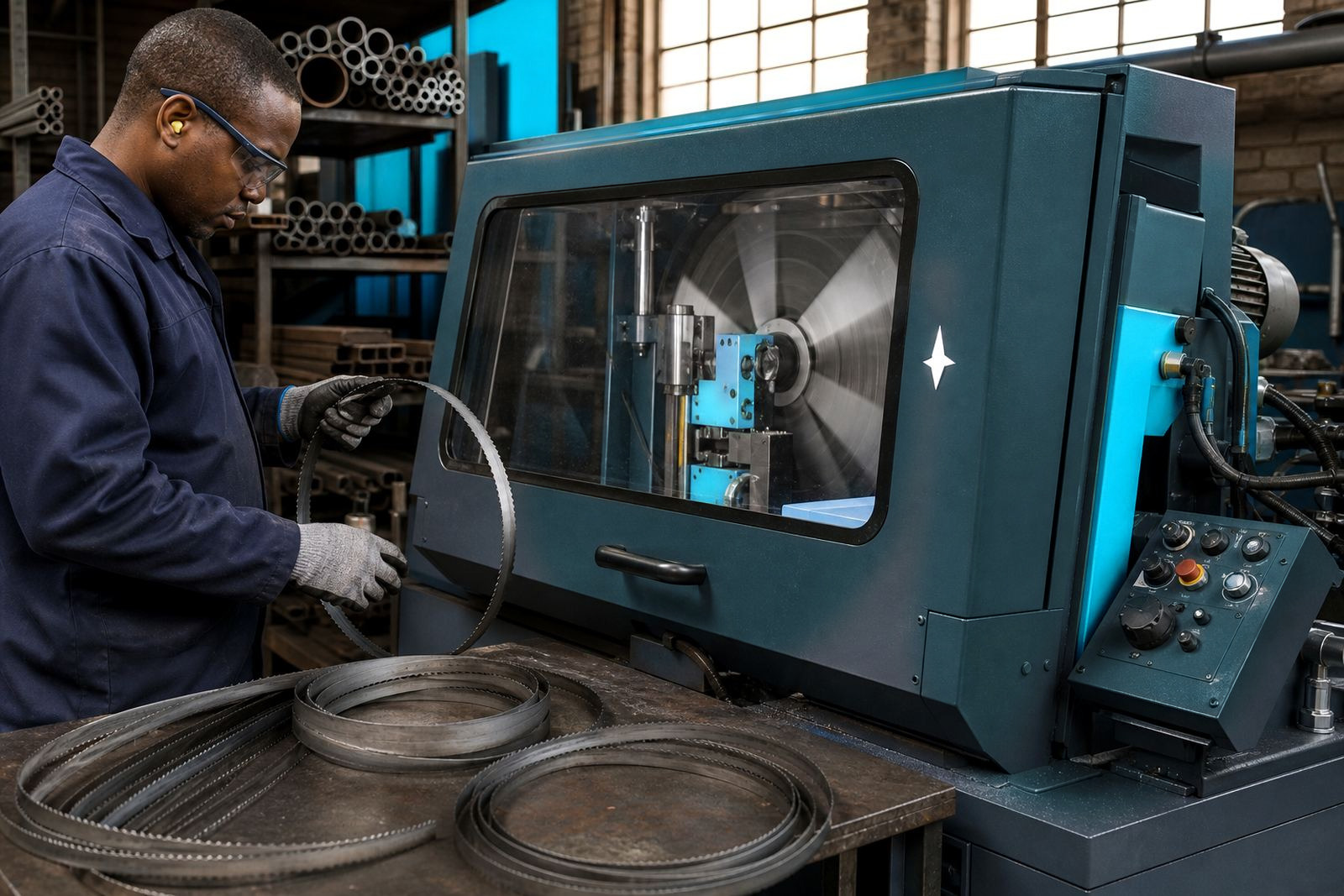
Machine fit checks should include wheel condition, guide wear, tension and the weld area. A good weld must pass through the guides without a step. If the weld is too proud or too narrow, the blade can snag or break early. Checking length carefully helps keep tension and tracking stable, even when the mismatch is small.
In Johannesburg and Pretoria workshops, a blade that is a few millimetres off in length can cause endless fine tuning at the machine. In Durban, humid air and coolant mix can affect storage and rust, so blades need clean handling and dry stock rotation. Those local details change the daily rhythm more than people expect.
- Check wheel condition before fitting a new blade.
- Verify weld quality before the blade goes into service.
- Match blade width to the saw frame and guides.
- Store spare blades flat, dry and labelled by size.
Starter kits and standard stock make workshops calmer
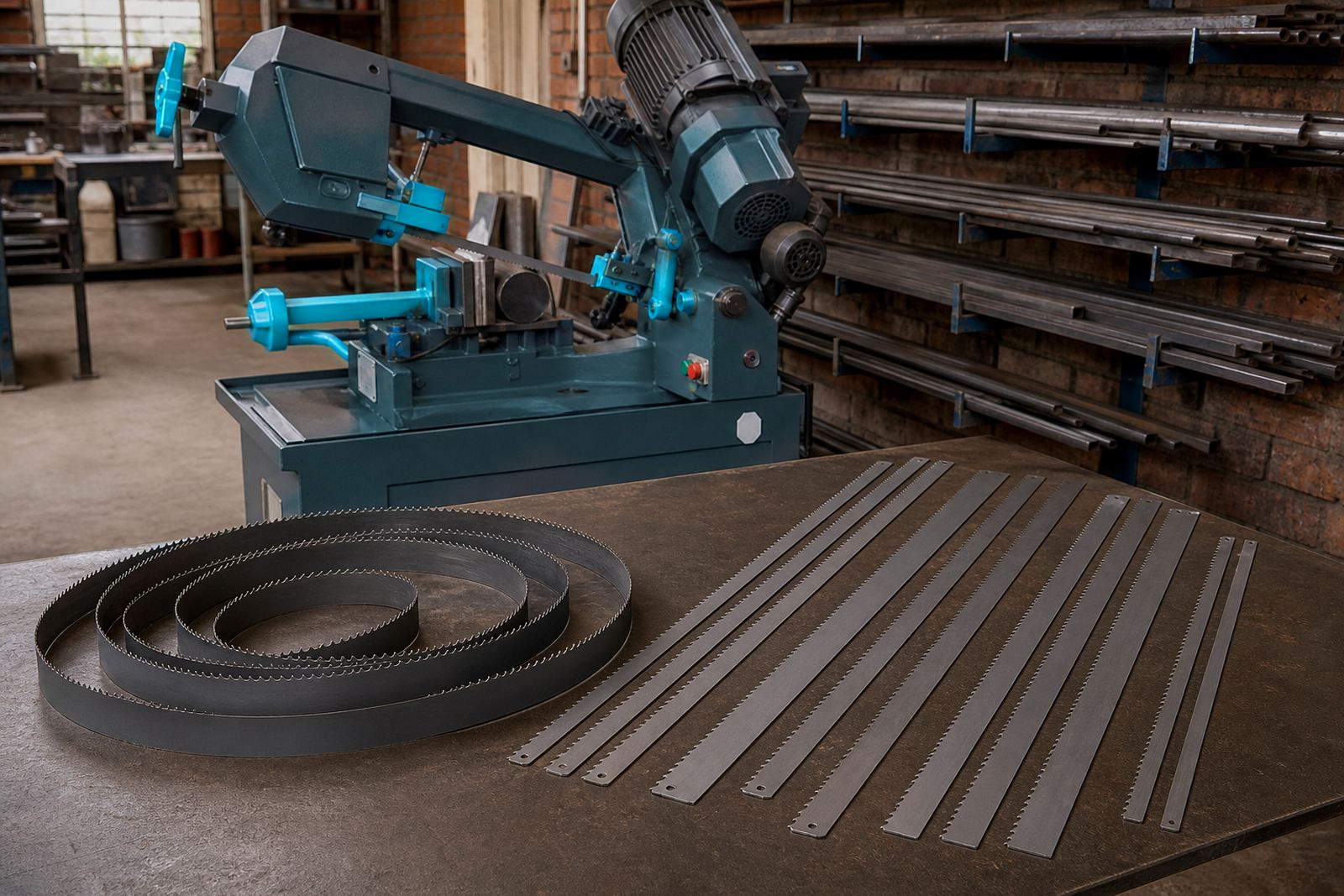
Starter kits help a new workshop avoid guesswork. A sensible kit usually includes one or two blade widths, a practical range of tooth pitches and a clear note on which material each blade suits best. So the team can keep the saw moving without reaching for a random blade every time a new job lands on the bench.
Standardising stock also helps when several branches or shifts use the same saws. If the team in Vereeniging and the team in Cape Town use different blade habits for the same material, the saw room gets messy. One agreed set of sizes, plus simple run-in and coolant notes, keeps the cutting routine more even.
A weld-to-length service suits machines that need a specific blade length local stock does not match exactly. A workshop can cut shelf sizes and keep tighter control over what sits on hand. For manual saw support, the same logic applies, only the feed and guide pressure become even more important because the operator carries more of the control.
A practical shop-floor example from Alberton
A fabrication team in Alrode brings in mixed offcuts, including tube, flats and solid bar. One blade will not suit every cut, so the crew keeps a finer pitch blade for lighter tube work and a coarser pitch blade for heavy sections. They also keep a short note near the saw on feed, speed and coolant so the operator does not have to guess after a shift change.
That kind of routine saves time and reduces blade failures. It also makes blade failure review easier, because the team can trace whether the problem came from poor fit, the wrong TPI, weak coolant coverage or a feed setting that was too aggressive for the material. A saw that is watched closely usually tells you what it needs before it fails badly.