Width is the first choice that changes the cut
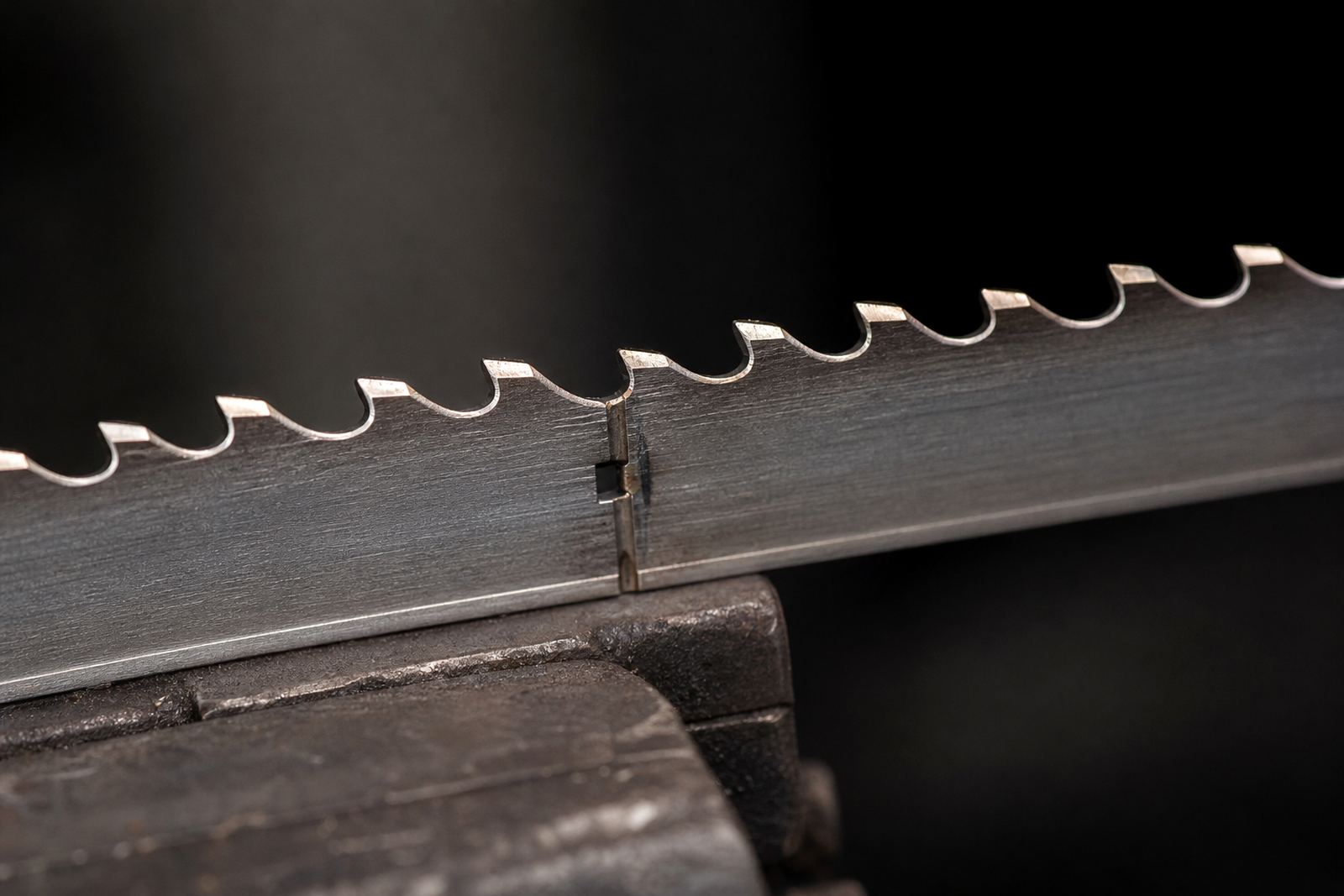
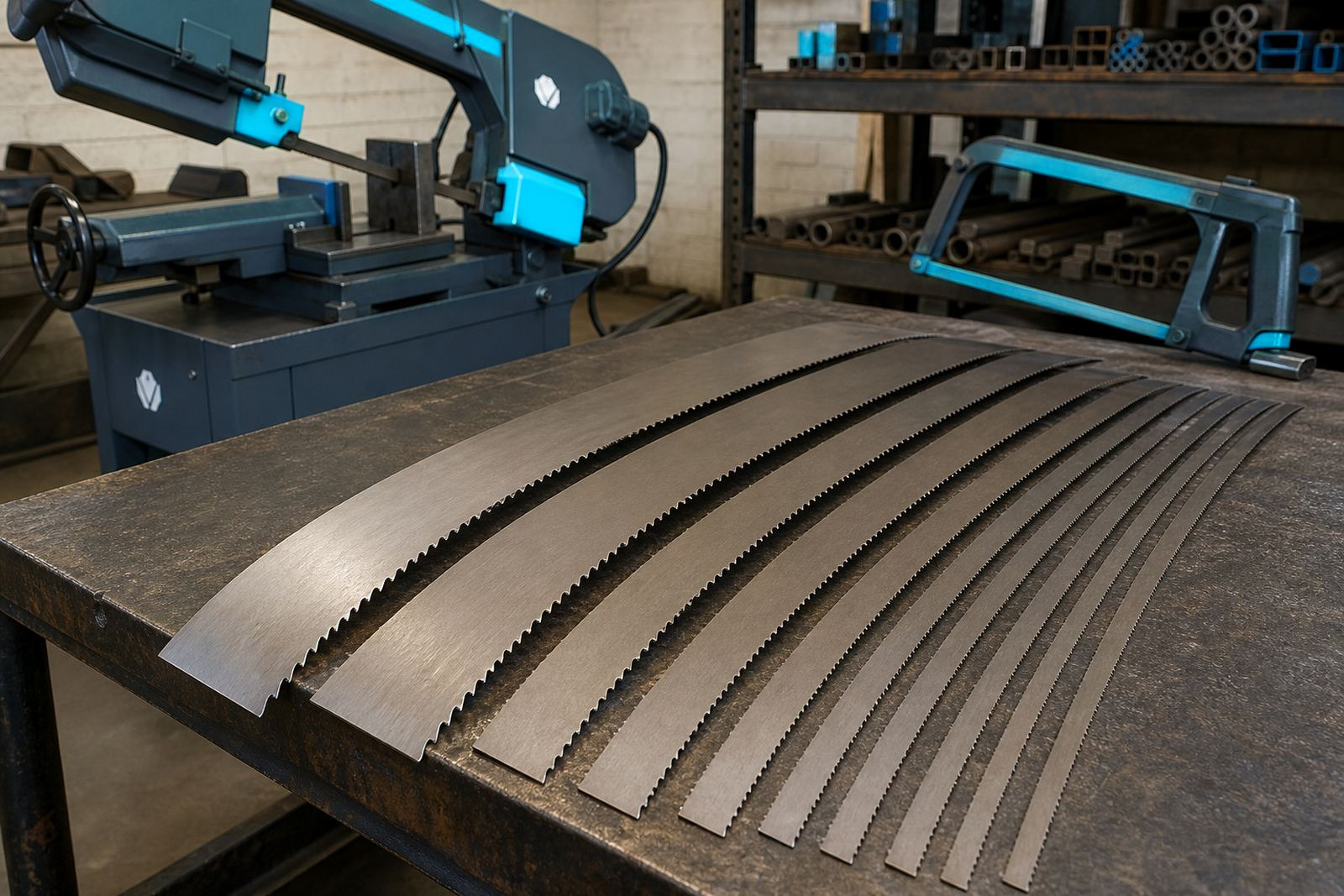
Blade width is the distance from the tooth tip to the back edge of the blade. Wider blades resist twisting better, so they hold a straighter line through square bar, solid round, structural sections and thick plate. Narrower blades bend more easily, which helps when the job calls for tighter curves or irregular profiles.
On bandsaws, width works together with machine guides, wheel size and the rigidity of the frame. A blade that is too wide for a small saw can ride badly on the wheels and feel stiff in the cut. A blade that is too narrow on a heavy horizontal saw may wander when the operator pushes too hard or when the material has scale and uneven faces.
- Wide blades suit straight cutting and heavier section work.
- Narrow blades suit curved work and lighter saws.
- Match width to the machine and the material.
Straight work and curve work ask for different widths
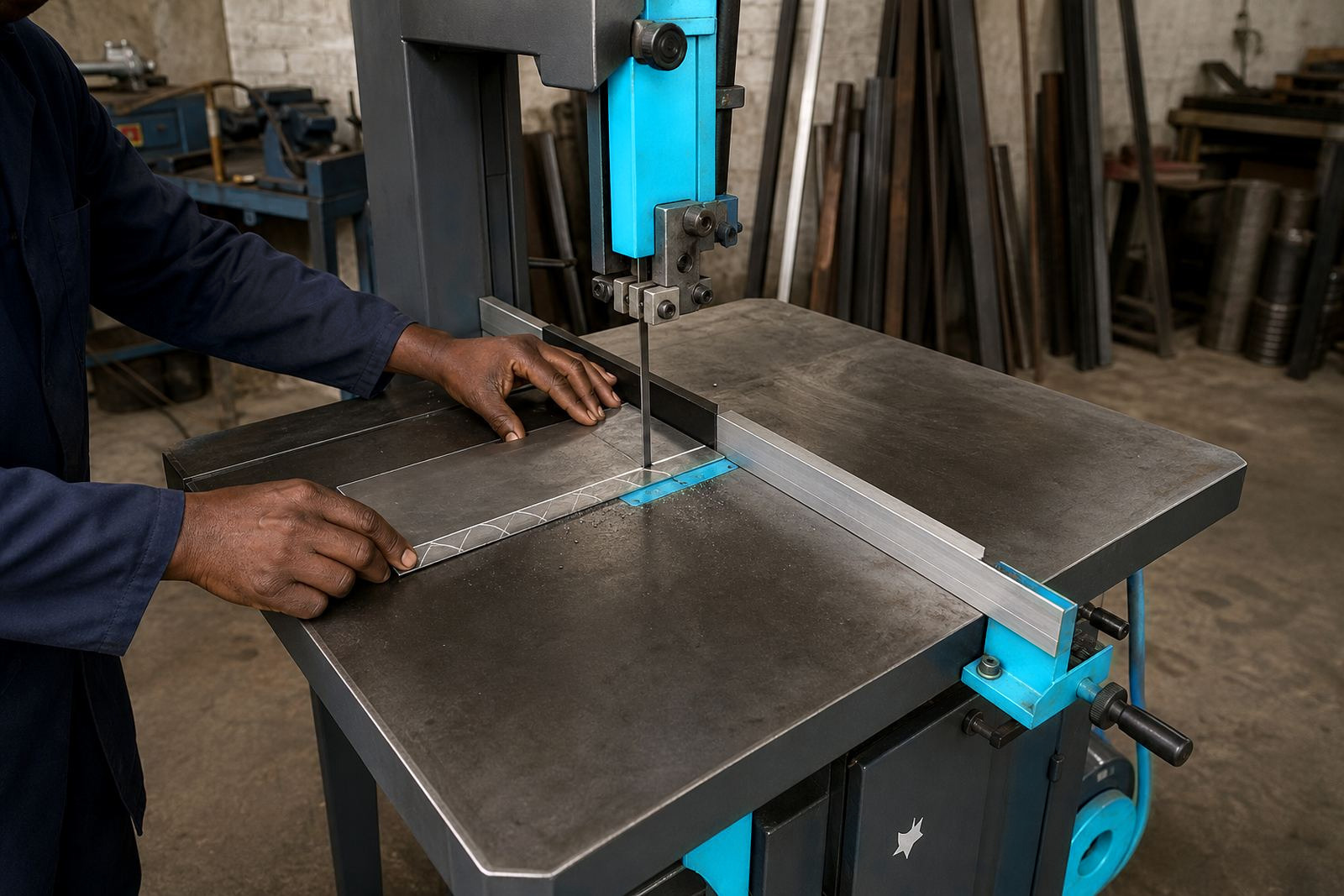
For steel fabrication, the width choice is often guided by the shape of the cut before the steel is even loaded. If the job is a straight cut through tube, angle iron or bar, a wider blade usually tracks better and leaves a cleaner line. If the blade has to follow a radius or cut around a profile, a narrower blade gives the saw more freedom without forcing the tooth line sideways.
Use the blade width that suits the curved cut. If the blade is too narrow for the thickness of the work, it can drift, pinch or buckle. In practice, the width must sit inside the machine limits and suit the smallest radius that needs to be followed.
- Wider blades give better straight-line control.
- Narrower blades help on curves and shaped work.
- Very tight curves need a blade that can flex without kinking.
How width affects tracking on the wheels and guides
Tracking is the way the blade runs on the saw wheels and through the guide blocks or bearings. Width changes that behaviour at once. A broad blade stays flatter on the wheel crown and resists side movement, which helps when the operator wants a repeatable cut. A narrow blade can sit more easily on a smaller wheel, but it may need closer guide setting to stop side flex.
When a blade is the wrong width for the saw, the signs are usually plain. The cut may drift, the back of the blade may rub, or the teeth may pull off line in thicker material. In our branch work around Alberton and Germiston, this often shows up on older manual saws where the guides are worn and the wheel faces are not set cleanly.
- Blade width affects wheel contact and guide pressure.
- Correct tracking helps the blade stay true under load.
- Worn guides make width choice less forgiving.
Tooth pitch still has to suit the chosen width
Width is one part of the blade spec. Tooth pitch, set and blade thickness still need to match the job. A wide blade with the wrong tooth pitch can still cut badly if the tooth gullets fill too fast or the cut chips badly. In metalwork, the usual rule is to keep several teeth in the cut at all times, with the pitch chosen for the section size and the wall thickness.
Bi-metal blades with a tougher tooth edge are common for mixed workshop work, while carbon steel blades are often used on lighter manual sawing and simpler materials. Variable pitch can calm vibration on longer cuts. The blade width then supports the tooth pattern, instead of fighting it.
- Pitch and width need to work as one spec.
- Variable pitch helps on noisy or vibrating cuts.
- Thicker work usually needs a different pitch from thin wall tube.
Run-in, feed pressure and coolant change the result
A good width choice can still fail if the blade is run too hard in the first few cuts. Give a new blade a sensible run-in with a light feed and steady speed so the tooth edges settle. Pushing a wide blade too hard early on can set up tooth damage, heat spots and tracking trouble that shows up later as wandering or early wear.
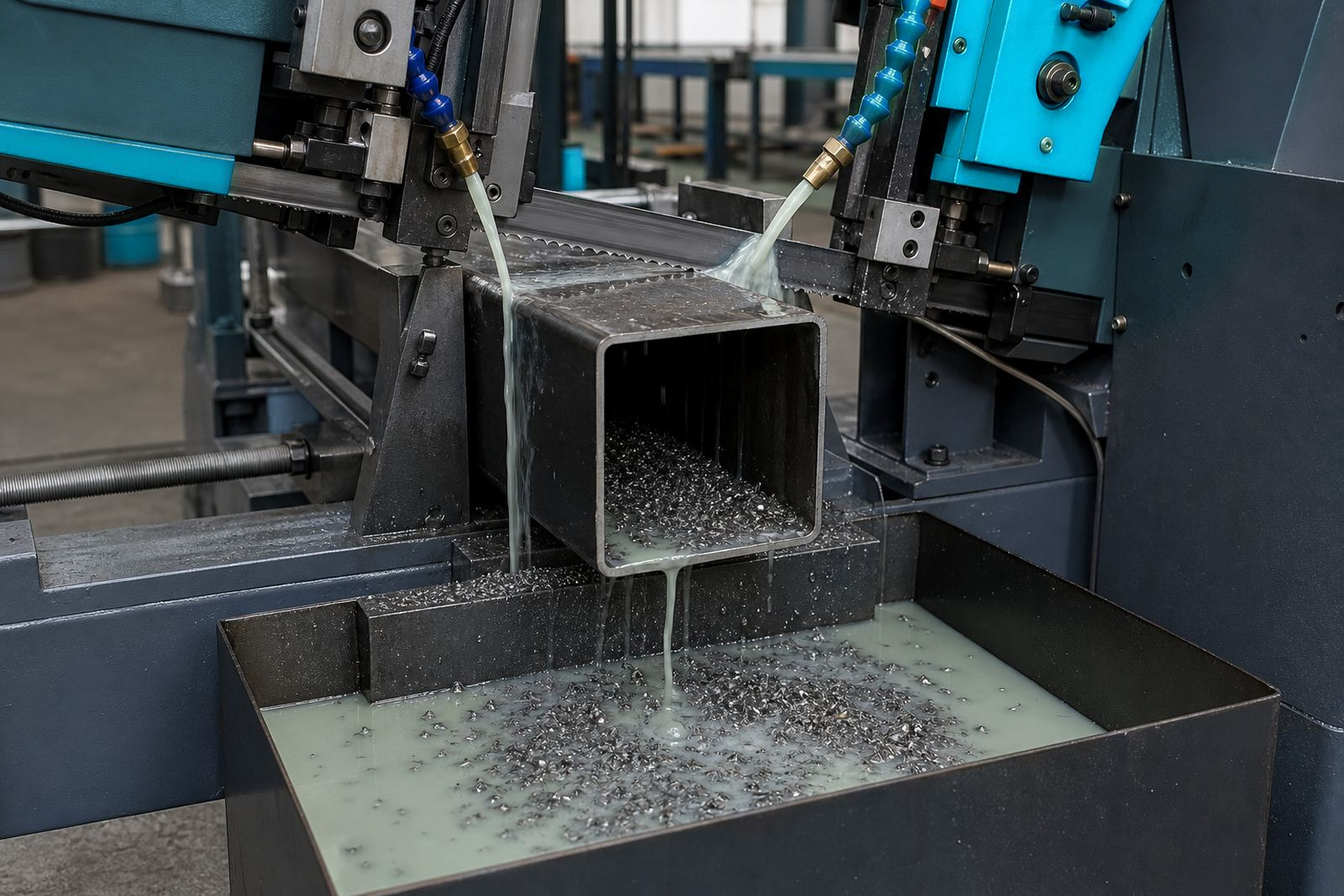
Feed speed is set at the same time. Too much pressure will force the blade off line, especially when the material has hard scale or a skin from hot rolling. Coolant helps carry heat away and clears chips, which is important on longer cuts and on machines that run for much of the shift. On Durban jobs, where humidity and moisture can affect stored stock, keeping blades dry and clean is important too.
- Run-in protects the tooth edge.
- Feed pressure must suit the width and the material.
- Coolant helps control heat and chip carry.
A practical width choice for an Alberton workshop
A fabrication shop in Alrode cutting mixed material for a frame repair may use one blade for straight section work and another for shaped offcuts. A wider blade can stay true on the structural pieces, while a narrower blade is kept for curved trim and repair work on lighter section. If the machine is a manual horizontal saw, the operator may also need a more forgiving width to suit slower feeding and hand control.
That is where blade width selection, machine fit check and length verification help. A shop that keeps a standard set of widths can reduce confusion at the bench and make blade changes more predictable. For workshops across Johannesburg, Pretoria, Vereeniging, Durban and Cape Town, the right width depends on the saw frame, the material mix and how often curved work appears in the week.
- One width suits each workshop job.
- Standardising widths helps with stocking and fitting.
- Local machine condition changes the best choice.
When the blade keeps drifting or biting
If a blade keeps drifting, first check whether the width suits the saw and the job. Then look at guide setting, wheel alignment, tooth pitch and the state of the material. A wide blade forced into a tight curve will complain at once. A narrow blade asked to rip heavy section may flex, chatter and lose line.
Blade failure review usually shows a small chain of causes rather than one single fault. The wrong width, a poor feed rate, a dry cut with no coolant, or a blade that was never run in properly can all show up together. Width decisions work best with the machine, the material and the cut shape in front of you, with no guesswork.
- Drift is often a width and setup issue together.
- Feed, coolant and run-in all affect blade life.
- Check the full cutting setup before changing to another blade.