Thin wall stock makes the first bite unforgiving
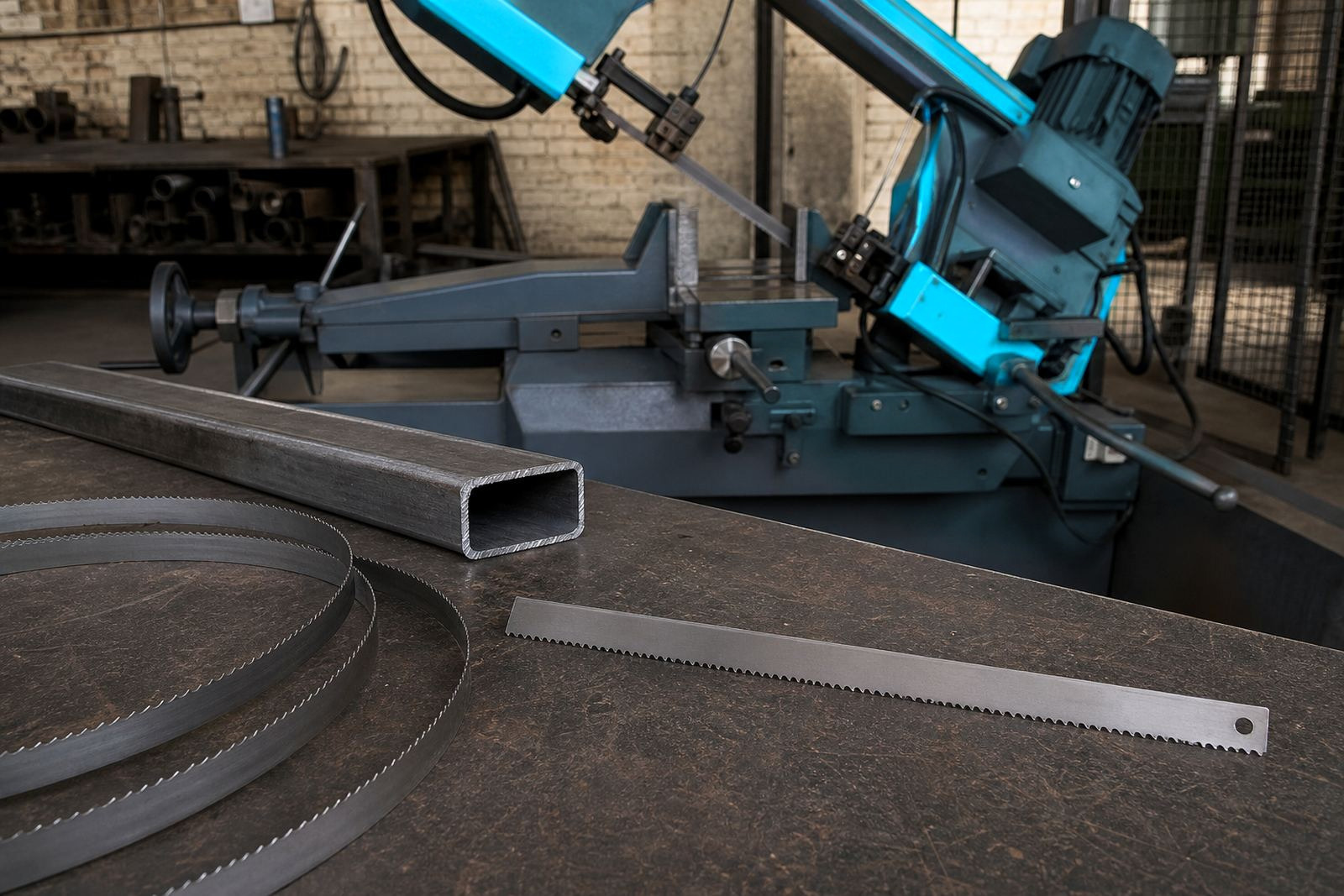
Thin wall tube and light section bar can strip teeth when the blade drops into the cut too hard. The wall flexes, the tooth hook digs in, then the blade snaps from cutting to skidding. That is hard on both bandsaw blades and hacksaw blades, especially where the operator is pushing for speed instead of a controlled entry.
On aluminium or mild steel tube, a coarse pitch can leave only one or two teeth engaged. That sounds aggressive, but it often means the load is too concentrated. A finer or variable pitch blade gives a steadier bite, and the cut starts with less chatter and less tooth breakage.
- Keep the first contact light on thin wall material.
- Use a pitch that keeps several teeth in the cut.
- Check that the vice grips the tube without crushing it.
Bundles change the load on every tooth
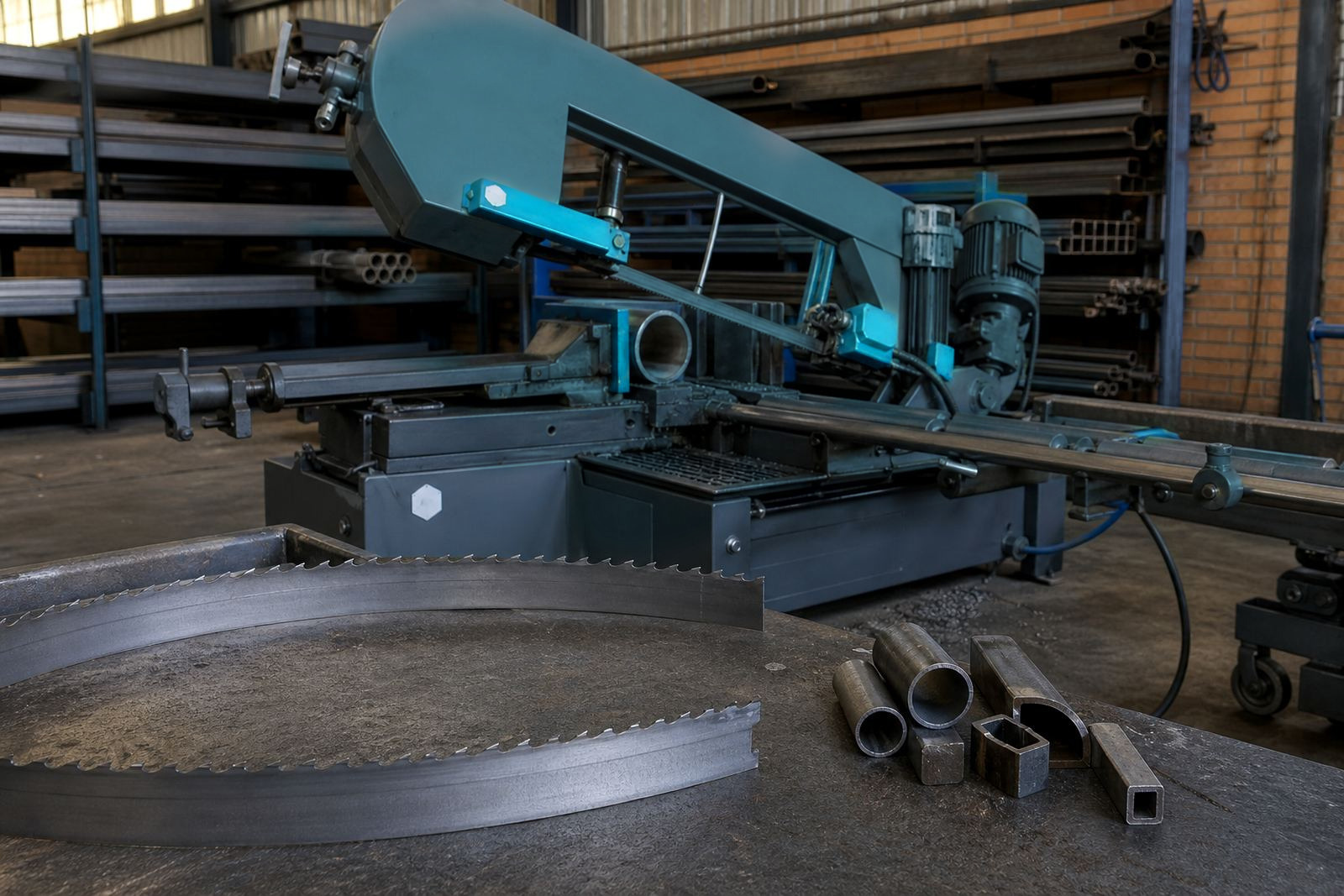
When several bars or tubes are clamped together, the blade does not meet one steady face. It moves from air to steel, then across gaps, then back into steel again. That repeated change in load can strip teeth if the feed stays too heavy or if the bundle is loose and vibrates.
Bi-metal M42 blades usually cope better here than plain carbon steel because the tooth edge carries more wear resistance. Even so, the tooth pitch must suit the bundle count and the smallest section in the pack. Pick a blade width with enough beam strength, because a narrow blade can twist and lose the cut line.
- Bind the bundle so the pieces cannot shift.
- Match pitch to the smallest wall thickness in the pack.
- Use steady feed, not a hard push at the start.
Hard starts set the teeth up for failure
A hard start means the blade hits a shoulder, scale edge, weld seam or misaligned face before it is moving cleanly. That shock loads the leading teeth and can tear them off in a short section. In workshop terms, the cut often looks fine for a few strokes then suddenly the tooth line is gone on one side.
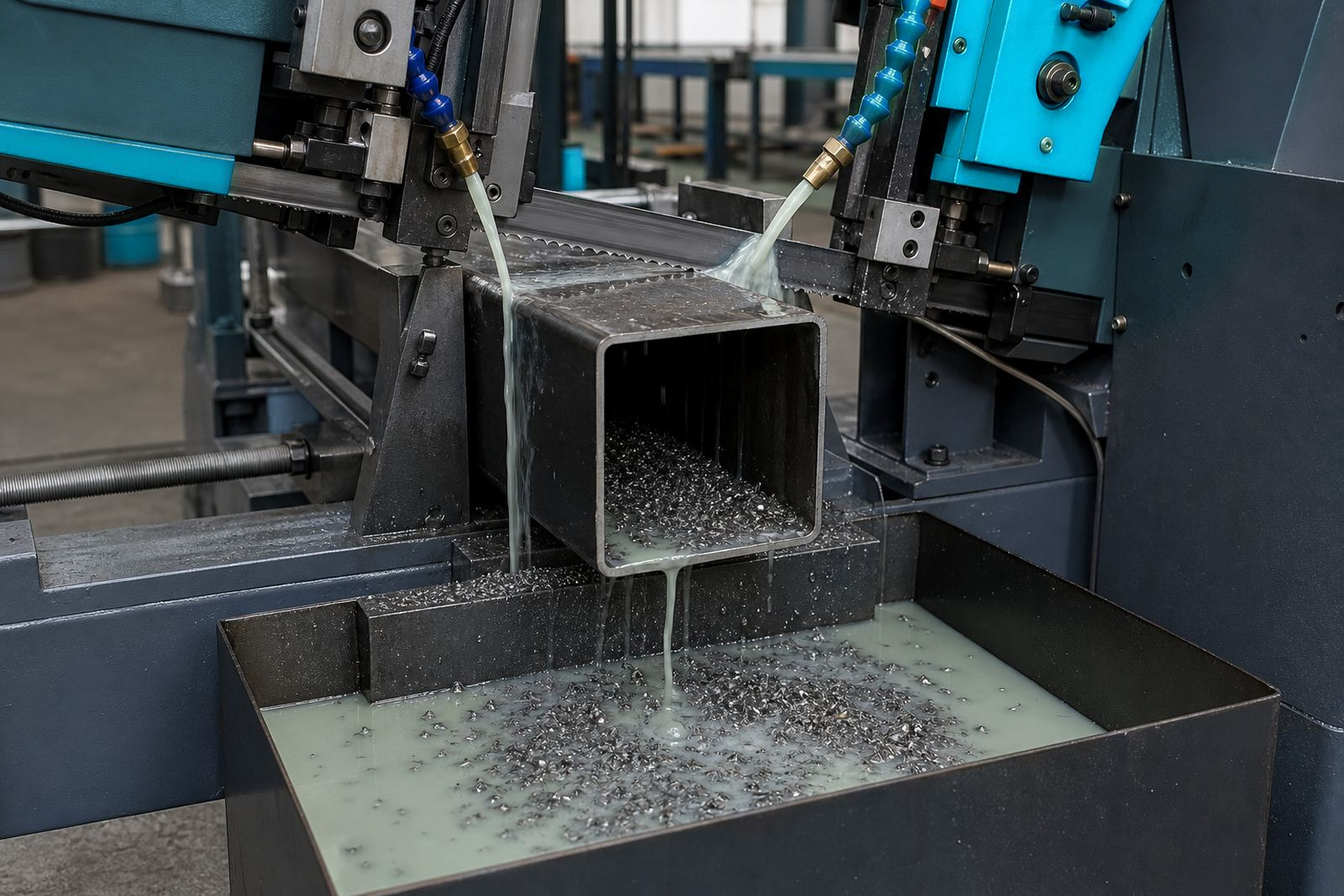
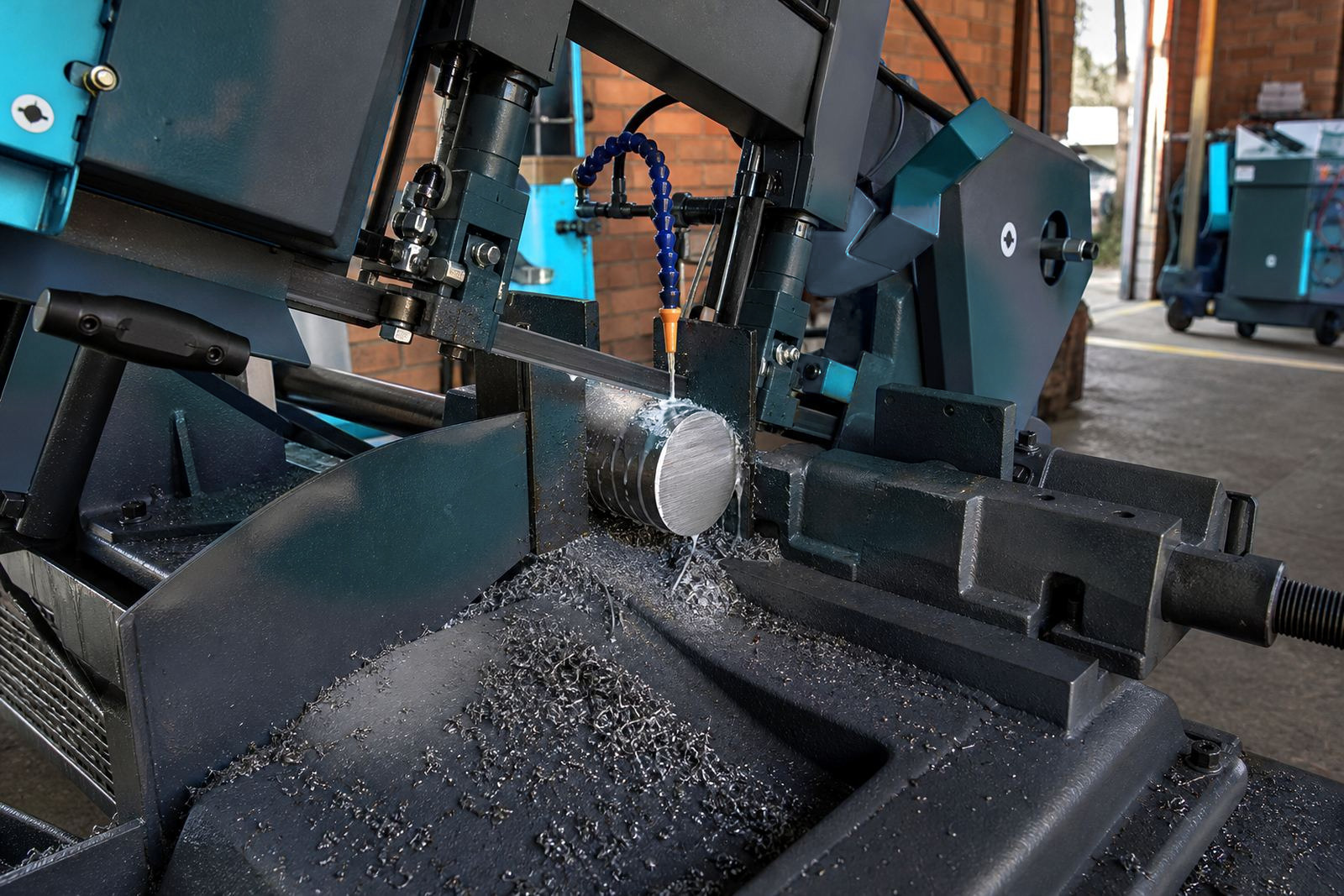
A good run-in helps here. During the first period, a new blade needs gentler use so the teeth polish in and do not chip out. Feed and speed should suit the material, and coolant helps keep the edge stable where friction climbs fast. If the saw is dry and the work is hot, the tooth set can suffer much sooner.
- Break in a new blade with lighter feed.
- Remove heavy scale before the cut where possible.
- Check alignment before the blade meets the work.
Pitch and set have to work together
Tooth pitch is a number on the box. It changes how many teeth share the cut, how much chip each tooth takes, and whether the blade clears the swarf well enough to stay sharp. On thin wall material, too few teeth in contact causes snatching. On thick stock, too many teeth can pack the gullets and overheat the blade.
Tooth set is the next check. If the set is uneven, the blade wanders and one side of the teeth carries most of the work. That uneven load strips teeth early, especially on manual saws where the operator feeds by feel and the cut can wander when the frame flexes.
For many metalwork jobs, the answer is a balanced blade choice rather than a harder push. A proper width, a suitable thickness, and a pitch that matches the section work better than forcing a blade that is simply too coarse for the job.
What the workshop can check before the next cut
Strip-outs are often a setup issue that looks like a blade issue. A quick machine check saves time and keeps the next blade from failing in the same way. In Alrode and across the south side of Johannesburg, we see the same pattern on cutting bays that handle mixed stock all week, one job is tube, the next is solid bar, then someone tries a bundled cut with the same blade still in the machine.
- Check blade tension and wheel tracking.
- Confirm the vice holds square and firm.
- Match feed speed to the material and section size.
- Run coolant on powered saws and hard stock.
- Inspect for worn guides or damaged teeth before refitting.
A blade failure review helps separate material issues from machine fit issues. If the saw keeps stripping teeth in the same place, the fault may sit in the guides, the vice or the way the job is clamped. On both band saws and manual hacksaw frames, a small misalignment can lead to repeated tooth loss.
A local case from a South African fabrication floor
A fabrication shop working on thin wall pipe for site rails was stripping teeth on nearly every second cut. The team had moved from solid bar to tube, but kept the same coarse blade and the same feed habit. The first tooth bites were hard, the tube moved slightly in the vice, and the blade was taking a shock load before the run-in had settled.
After a machine fit check and a new blade selection, the cut changed. A finer variable pitch blade, better clamping, and lighter feed at entry reduced the snatching. Coolant was also checked because the shop was cutting long runs in warm conditions, and the blade edge was running hotter than it should. The fix was straightforward and better suited to the job.
That is often the point with stripped teeth. The blade may be acceptable, but not for that material, that bundle, or that cutting habit.
Starter kits and weld-to-length service for mixed workshops
Workshops that handle different profiles need more than one blade type on the shelf. Starter kits help with a sensible mix of tooth pitches and widths, so the team does not force one blade across every job. Weld-to-length service also helps when a saw takes a specific blade size and the next cut schedule does not wait for a special order.
MoreCut Saws in Alrode, Alberton supplies bandsaw blades and hacksaw blades for metalwork across Johannesburg, Pretoria, Vereeniging, Durban and Cape Town. The useful part is blade selection help that looks at the material, section size, machine type and cut quality needed. If teeth keep stripping, the answer is usually in the combination, not one single factor.