What TPI changes at the cut face
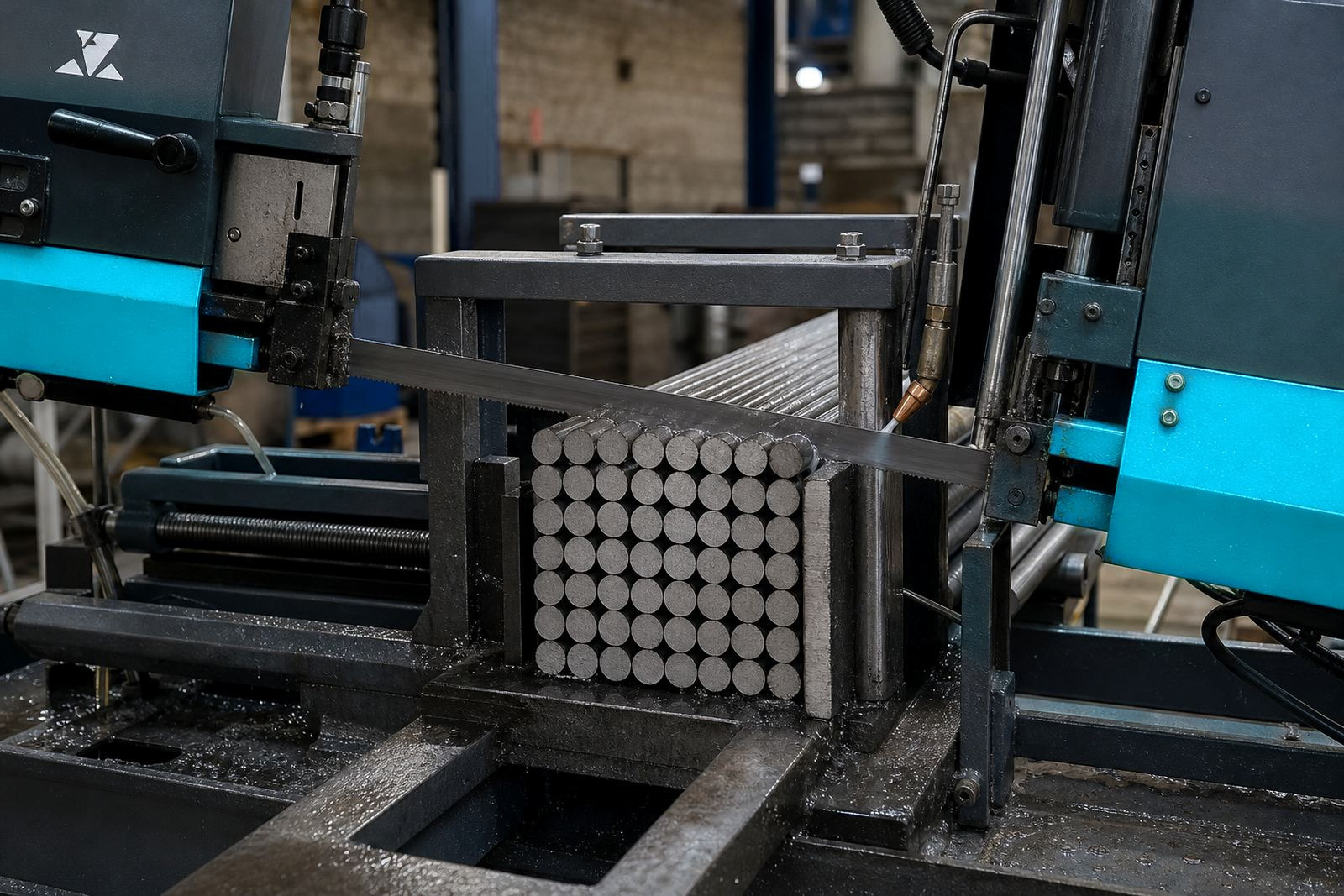
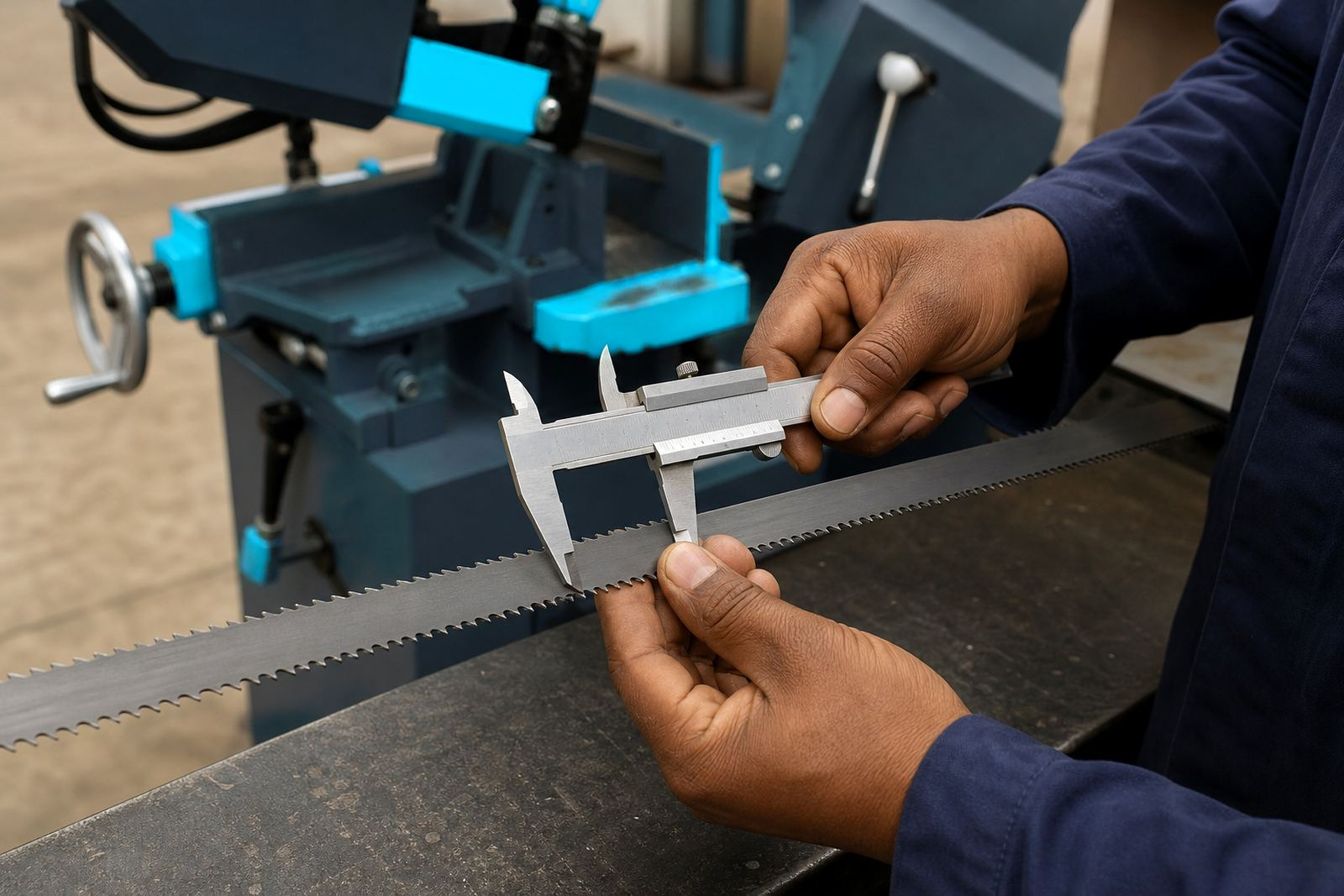
TPI is the number of teeth along one inch of blade length. A low TPI blade has fewer, larger teeth and deeper gullets, so it clears thick swarf well on solid bar, heavy wall tube and bundled sections. A high TPI blade puts more teeth into the cut, which spreads the load and gives a cleaner finish on thin wall material and smaller stock.
In practice, pitch affects how hard each tooth bites. Too coarse for a thin section and the blade can snag or chatter. Too fine for a heavy section and the gullets pack with chips, heat climbs and the teeth lose their edge far too quickly.
Picking pitch for the material in front of you
Material thickness is checked along with material type. Mild steel flat bar, stainless tube and solid shaft all want different tooth spacing. As a rule of thumb, at least 3 teeth should be in contact with the work, and ideally around 6 to 12 for thinner sections. That balance keeps the cut controlled without forcing the blade to rub.
- Solid round bar and thick sections usually suit a lower TPI.
- Thin tube, light channel and sheet sections need a higher TPI.
- Mixed bundles often need a middle pitch with variable spacing.
- Harder alloys usually benefit from slower feed and steadier pressure.
Variable pitch blades help where the section changes through the job, because the uneven tooth spacing breaks up vibration. Workshops that cut both stock lengths and odd offcuts on the same machine need consistent results.
Blade width, set and thickness
TPI never works alone. Blade width shapes the cut path, thickness affects stiffness, and tooth set determines how wide the kerf runs through the material. On bigger machines and heavier sections, a wider blade tracks straighter, while a narrower blade turns more easily on smaller saws and manual machines.
Tooth set also has a real effect. Enough set clears the cut and reduces binding, while too much set can leave a rougher finish and wear blades sooner. When a blade feels like it is drifting, the cause is often pitch and other factors too. Check width, set, guide condition and machine alignment.
- Wider blades suit straighter cuts and heavier frames.
- Narrower blades handle tighter radii and lighter machines.
- Correct set keeps the cut open without wasting material.
- Blade thickness must match the saw's wheel and guide setup.
Run-in habits that protect the edge
Even the right TPI needs a careful start. Fresh bi-metal blades and carbon steel blades benefit from a short run-in period with lighter feed pressure. That helps the tooth tips settle before they are asked to bite hard into full-depth cuts.
If a blade is pushed too hard from the first cut, the teeth can micro-chip and lose life very quickly. A steady feed, correct blade speed and a little patience at the start usually pay off later. Let the blade do the cutting instead of forcing it through the work.
- Start with reduced feed for the first few cuts.
- Keep blade speed matched to the metal being cut.
- Watch the chip shape and heat at the cut line.
- Check that coolant reaches the tooth line on long cuts.
Coolant, chips and heat on South African shop floors
In Durban, where humidity can be high and stock sits longer, coolant and storage discipline need more care than many people expect. Wet swarf sticks to the blade and swells around the gullets if coolant flow is poor. That creates drag and can make a correct pitch feel wrong.
Coolant checks belong in the normal routine. The fluid needs to reach the cut and carry heat away. If the blade is singing, blueing or leaving a rough burr, the pitch may be fine but the feed, speed or coolant delivery may need attention.
Alrode workshops often cut mixed sections all week, from small prep work to heavy fabrication. In that setting, blade choice has to suit the machine and the stock list, plus the sample pieces used in practice.
A local example from Alberton to Cape Town
A fabrication team in Alberton may run one machine on solid bar in the morning and thin tube after lunch. If the same blade is left on both jobs, the cut quality usually swings with the material. A starter kit with a few carefully chosen pitches can keep the changeover sensible, instead of forcing one blade to do everything.
For long stock runs, stock standardisation helps too. Send us your common section sizes and we narrow the TPI, blade width and length for the week. That saves wasted cuts and makes weld-to-length blade service easier to plan around actual demand.
- Know the common section sizes before choosing pitch.
- Choose a blade to suit the saw frame and guide arrangement.
- Keep a separate pitch for thin wall work where possible.
- Review failures so the next blade starts on better terms.
When a blade keeps failing, look past the tooth count
Repeated breakage can mean the pitch is wrong. Feed pressure, wheel condition, guide wear, blade tracking and machine fit can all turn a good blade into a short-lived one. If teeth strip, the cut wanders or the blade overheats, a blade failure review is worth doing before the next coil or pack is opened.
MoreCut Saws works with bandsaw blades and hacksaw blades for metalwork, including bi-metal and carbon options, plus blade selection help for workshops across Johannesburg, Vereeniging, Pretoria, Durban and Cape Town. The right pitch is a big part of the job and affects everything that follows.